
California’s history and culture are shaped by its diverse peoples and important events. You can explore its indigenous tribes, Spanish missions, and the progression to Mexican and American rule, which all influenced its identity. The Gold Rush brought rapid growth and migration, creating a melting pot of cultures, industries, and challenges. Today, California’s vibrant traditions, innovations, and social movements reflect its dynamic past. Stay curious—there’s much more to uncover about what makes California unique.
Key Takeaways
- Indigenous tribes like the Luiseños inhabited California for thousands of years, developing complex cultures and trade networks before European contact.
- Spanish missions established in the 18th century, shaping California’s religious, cultural, and agricultural foundations.
- California transitioned from Mexican to American control in the mid-19th century, marked by the Gold Rush and statehood in 1850.
- The Gold Rush sparked rapid population growth, urbanization, and economic development, transforming California’s society and environment.
- Today, California’s culture reflects its diverse roots, including Native, Spanish, Mexican, and immigrant influences, alongside modern social and environmental challenges.
Indigenous Foundations and Early Inhabitants
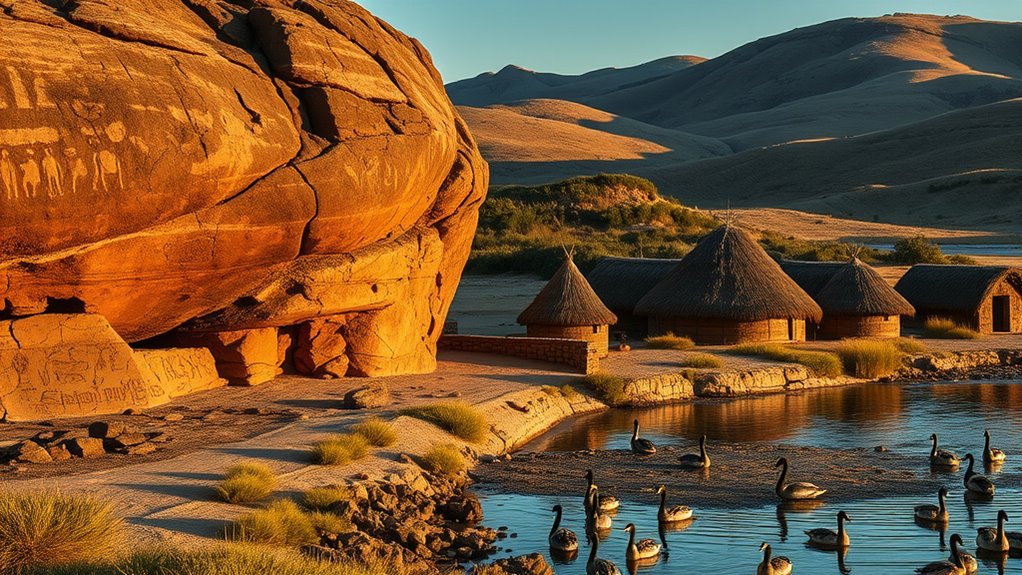
Have you ever wondered who first called California home? You might be surprised to learn that Native American tribes, like the Luiseños, inhabited the land long before Europeans arrived. These tribes developed rich cultures, languages, and social structures, thriving in California’s diverse ecosystems—from coastlines to deserts and mountains. They relied on hunting, fishing, and farming to sustain themselves, creating complex trade networks across regions. As early explorers like Sebastián Rodríguez Cermeño navigated the coast in 1595, they encountered these vibrant communities. Unfortunately, contact with Europeans brought diseases and displacement, devastating native populations over time. Despite these hardships, Indigenous peoples’ deep-rooted presence laid the foundation for California’s history, culture, and identity that still resonate today. Their indigenous heritage continues to influence California’s cultural landscape and contemporary communities.
Spanish Settlement and Mission Era

The arrival of Spanish explorers in 1769 marked the beginning of California’s European settlement, introducing a new chapter in its history. You witness Gaspar de Portolá’s expedition establishing the first mission, San Diego de Alcalá, and Junípero Serra’s efforts to convert Native Americans. Over time, a chain of 21 missions forms, creating centers for religious, cultural, and agricultural life. These missions are accompanied by presidios and pueblos, solidifying Spanish claims. You see Native populations being integrated into colonial society, often through forced labor and religious conversion. The mission era transforms the landscape with European farming, livestock, and architecture. By 1833, secularization shifts control from church to civil authorities, ending the mission period but leaving lasting cultural and societal impacts on California’s development. Additionally, the mission system played a significant role in shaping California’s cultural landscape and its historical identity.
Transition From Mexican to American Rule
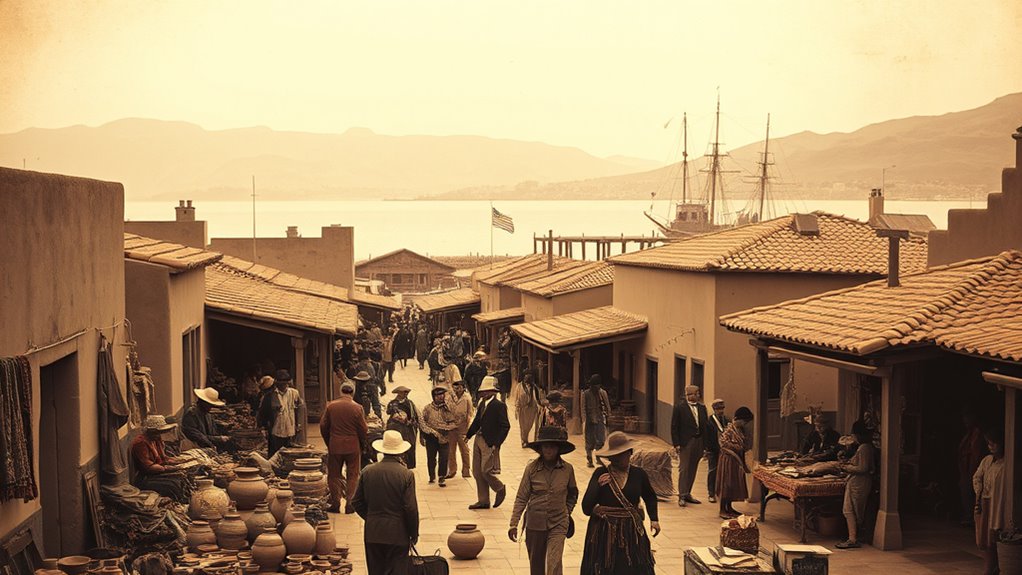
How did California change from Mexican to American control? After Mexico gained independence in 1821, California became a Mexican territory, with local Californios controlling land and politics. Tensions grew as American settlers arrived, seeking new opportunities. The Mexican government’s secularization of missions in 1833 redistributed land to ranchers, shifting power away from the church. Conflicts like the Bear Flag Revolt in 1846 signaled rising unrest, with American settlers declaring independence from Mexico. The U.S. and Mexico fought the Mexican-American War, ending with the Treaty of Guadalupe Hidalgo in 1848. This treaty ceded California to the United States, marking a dramatic political and social shift. California evolved from Mexican rule to becoming part of the U.S., setting the stage for rapid growth and change.
Gold Rush and State Formation

What triggered California’s rapid transformation from a sparsely populated frontier to a bustling state? The discovery of gold at Sutter’s Mill in 1848 drew thousands of prospectors and settlers. As you arrive, you see bustling towns and growing cities emerging almost overnight, fueled by economic opportunity. The population boom made California urgent to organize politically, leading to its statehood in 1850. This rapid growth reshaped its environment, society, and economy. The table below highlights key impacts:
| Impact | Description | Result |
|---|---|---|
| Population Surge | Mass migration from US and abroad | Urban growth, diversity |
| Economic Development | Gold mining, trade, infrastructure expansion | Wealth, infrastructure boost |
| Social Changes | Native displacement, new communities | Cultural blending, conflict |
This period also marked the beginning of significant environmental changes, which continue to influence California today.
Modern Cultural Influences and Challenges

California’s modern cultural landscape is shaped by its diverse population and ongoing social movements that challenge old norms. You see this in the state’s push for environmental sustainability, civil rights, and social justice. Immigrants from around the world bring new languages, cuisines, and traditions, enriching California’s arts, music, and festivals. However, the state also faces challenges like wildfires, water shortages, and skyrocketing housing costs that threaten its social fabric. You witness efforts to address these issues through policy reforms and community activism. Native American heritage and Spanish-Mexican roots remain essential, celebrated through cultural sites and education. California’s evolving identity reflects a dynamic blend of history and innovation, constantly reshaping its cultural landscape amid ongoing struggles for equity, sustainability, and recognition. The influence of projectors in home entertainment underscores the importance of technological advancements in shaping modern lifestyles and cultural experiences.
Frequently Asked Questions
How Did Native Tribes Sustain Their Cultures After European Contact?
You can see that native tribes sustained their cultures after European contact by maintaining traditional practices, languages, and ceremonies despite pressures to assimilate. They adapted by blending old customs with new influences, creating cultural resilience. Many tribes gathered for storytelling, dances, and rituals, passing knowledge through generations. Additionally, some tribes established cultural centers and participated in activism to preserve their heritage and reclaim their sovereignty, ensuring their identities endured.
What Role Did Indigenous Languages Play in California’s History?
Indigenous languages in California served as essential connections to their cultures, histories, and identities. You can see how these languages fostered social bonds, transmitted oral traditions, and preserved unique worldviews across tribes. Despite colonization efforts to suppress them, many Native communities fought to keep their languages alive through storytelling, teaching, and cultural practices. Today, these languages remain a powerful symbol of resilience and play a key role in cultural revitalization efforts.
How Did California’s Early Missions Influence Local Architecture?
You might think early missions simply built churches, but they actually shaped California’s architecture profoundly. These structures combined European styles with local materials, creating simple yet durable designs. Ironically, their influence endures, inspiring modern buildings and preserving Spanish colonial charm. You’ll notice their thick adobe walls and bell towers still dominate California towns, blending history with everyday life, a demonstration to how these missions quietly sculpted the state’s architectural identity.
What Were the Impacts of the Gold Rush on Native Communities?
The Gold Rush devastated native communities by causing displacement, violence, and loss of land. You might see how thousands of prospectors flooded their territories, leading to conflicts and environmental destruction that disrupted traditional ways of life. Diseases brought by newcomers also decimated populations. As a result, native peoples faced cultural erosion, forced relocation, and a significant decline in their numbers, fundamentally altering their communities and long-term survival.
How Are Contemporary Native American Tribes Preserving Their Heritage Today?
You see that contemporary Native American tribes actively preserve their heritage through language revitalization programs, cultural festivals, and traditional practices like dance and crafts. They establish museums and cultural centers to educate others and maintain their history. Many tribes also work to protect sacred sites and advocate for their rights. These efforts help keep their identities alive, ensuring future generations understand and honor their rich traditions and ancestral roots.
Conclusion
Just like a mighty river flowing through time, California’s history weaves together diverse currents—indigenous roots, Spanish missions, and golden dreams. Each chapter adds depth to its story, shaping a vibrant culture that’s both resilient and ever-changing. As you explore this land’s past, remember you’re part of its ongoing journey. Embrace the flow, for California’s history is a river that invites you to plunge in and discover its endless, fascinating depths.