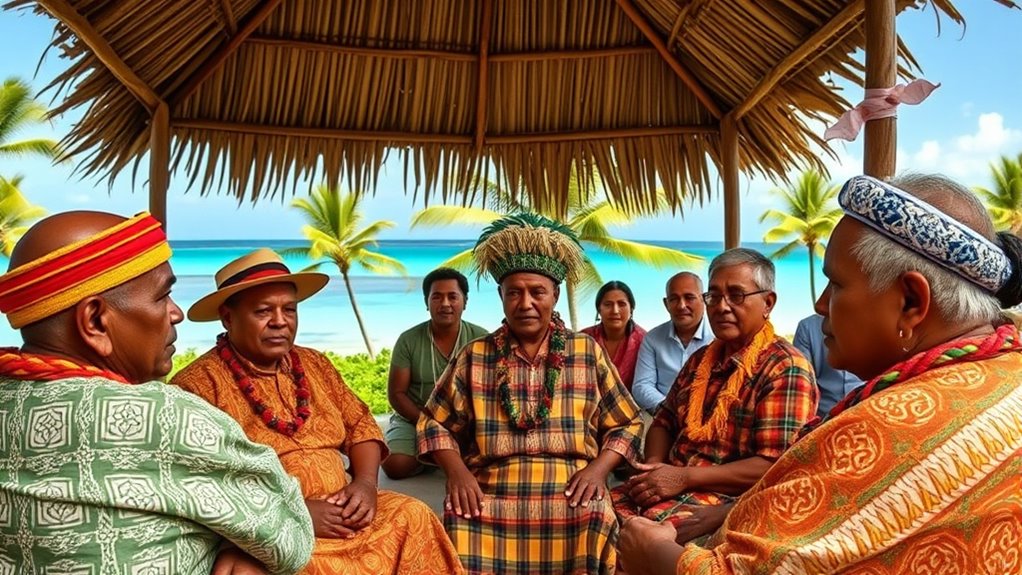

Samoa’s Fa’a Samoa shapes its modern governance by emphasizing respect, community consensus, and traditional leadership. You’ll see elders and matai play key roles in decision-making, blending traditional customs with political processes. The village councils operate based on cultural values, ensuring harmony and collective well-being. This integration preserves Samoa’s identity while adapting to modern needs. If you explore further, you’ll discover how these enduring traditions continue to influence the country’s governance today.

Get travel and outdoor gear delivered free — and shop member deals
- Fast, free delivery on millions of items
- Access to Prime Big Deal Days deals on October 6–7
- Prime Video, Amazon Music and more included
Key Takeaways
- Traditional village councils (fono) guide decision-making through consensus, emphasizing respect and harmony in governance.
- The matai system maintains cultural authority, influencing both local and national leadership based on respect and tradition.
- Samoa blends customary practices with parliamentary systems, integrating cultural values into modern political processes.
- Elders and community leaders act as custodians of culture, ensuring decisions align with Fa’a Samoa principles.
- Cultural emphasis on service, respect, and collective well-being shapes policies and social stability in governance.

Samoa’s Fa’a Samoa culture is the heart of the island nation’s identity, shaping daily life, social relationships, and community values. This deep-rooted way of life influences how decisions are made, how leadership is exercised, and how the community functions as a whole. When you look at Samoa’s governance, you see a unique blend of traditional cultural practices and modern political systems. At the core of this blend are cultural traditions that have been passed down through generations. These traditions emphasize respect for elders, communal harmony, and the importance of consensus. They guide not only personal conduct but also public decision-making processes, ensuring that everyone’s voice is heard in a respectful and orderly manner.
Samoa’s culture centers on respect, harmony, and consensus shaping daily life and governance.
In Samoa, communal decision making isn’t just a concept; it’s a living practice that sustains social cohesion. Village councils, known asfono, serve as the primary forum where community members gather to discuss issues affecting their lives. These councils operate on principles rooted in Fa’a Samoa, where elders and leaders act as custodians of tradition. When a matter arises—whether it’s about land, resources, or social disputes—decisions aren’t made unilaterally. Instead, everyone participates in a collective dialogue, ensuring that all perspectives are considered. This process fosters a sense of shared responsibility and mutual respect. It’s a system that values consensus over conflict, reinforcing the social fabric of the community. Additionally, the matai system plays a vital role in maintaining the cultural identity within governance structures.
You notice that this traditional approach influences the way modern governance functions. The matai system, a chiefly title-based leadership structure, coexists with Samoa’s parliamentary government. Matai, or chiefs, hold significant influence not only in their villages but also in national politics. They serve as custodians of cultural traditions and play a crucial role in mediating between the community and government authorities. Their authority is rooted in respect and consensus, embodying the principles of Fa’a Samoa. When decisions are made at the national level, leaders often consult community elders to ensure policies align with cultural values. This integration of traditional and modern governance helps maintain social stability and cultural integrity.
Ultimately, Samoa’s Fa’a Samoa culture shapes modern governance by embedding traditional values into contemporary political structures. It reminds you that leadership isn’t just about authority; it’s about service, respect, and collective well-being. Decisions are made with an eye toward harmony and communal benefit, ensuring that progress doesn’t come at the expense of cultural identity. Through this ongoing balance, Samoa preserves its rich cultural heritage while adapting to the demands of the modern world.
Samoa traditional leadership books
As an affiliate, we earn on qualifying purchases.
As an affiliate, we earn on qualifying purchases.
Frequently Asked Questions
How Does Fa’A Samoa Influence Samoa’S Legal System?
You see, Fa’a Samoa influences Samoa’s legal system by emphasizing cultural preservation and shaping legal adaptation. Traditional customs guide community disputes and social responsibilities, ensuring laws respect Samoan values. You’ll notice that legal processes often incorporate customary practices, blending modern legislation with traditional authority. This approach preserves cultural identity while allowing the legal system to adapt, fostering respect for heritage and ensuring laws remain relevant and effective within Samoa’s unique societal context.
What Role Do Traditional Leaders Play in Government?
Imagine traditional leaders standing at the heart of Samoa’s community, embodying leadership roles that guide daily life. They influence decisions, mediate disputes, and uphold customs, acting as crucial links between the people and government. Their community influence fosters respect and unity, ensuring cultural values persist. In modern governance, these leaders shape policies subtly, blending customary authority with formal institutions, strengthening the nation’s social fabric and reinforcing the importance of tradition in contemporary Samoa.
How Are Customary Practices Integrated Into Modern Policies?
You see that customary practices are integrated into modern policies through cultural negotiations, where leaders and community members collaborate to find common ground. This process guarantees that policies respect traditional values while addressing contemporary needs. Community consensus plays a vital role, as it helps legitimize decisions and fosters social harmony. By balancing tradition with modern governance, Samoa maintains its cultural identity while progressing effectively in the modern world.
What Challenges Does Fa’A Samoa Face in Contemporary Governance?
You face fierce friction in balancing cultural preservation with economic development. Fa’a Samoa’s traditions challenge modern governance by demanding respect for customs while fostering progress. Political policies often puzzle practitioners, as preserving practices like matai system conflicts with contemporary initiatives. This cultural clash complicates decision-making, making it tough to forge forward. Despite these difficulties, Samoa endeavors to sustain its sacred customs, seeking harmony amid the hustle of modern governance and the heartbeat of tradition.
How Does Fa’A Samoa Impact Youth Participation in Politics?
You see, Fa’a Samoa influences youth participation in politics through traditional gender roles, which often encourage young men to take leadership roles while limiting opportunities for young women. However, it also promotes youth empowerment by emphasizing respect and community involvement. This balance shapes how young people engage politically, fostering a sense of responsibility and leadership skills, yet it also presents challenges in ensuring equal gender representation and open participation for all youth.
As an affiliate, we earn on qualifying purchases.
Conclusion
So, next time you think about modern governance, imagine Samoa’s Fa’a Samoa as a wise old chief, refusing to hand over his traditional siva to the shiny new government. It’s like trying to teach an ancient canoe new tricks—sure, it might wobble, but it still sails strong. Embracing this culture isn’t just about tradition; it’s about stubbornly clinging to identity while the world spins on. Who knew governance could be so charmingly old-fashioned?
As an affiliate, we earn on qualifying purchases.
Matai system educational materials
As an affiliate, we earn on qualifying purchases.
As an affiliate, we earn on qualifying purchases.
Fall Picks
fall essentials
As an affiliate, we earn on qualifying purchases.