
Hawai‘i’s endemic honeycreepers show how evolution creates amazing diversity in isolated island environments. Their unique beak shapes and bright colors reflect rapid adaptation to different habitats. Hybridization among species complicates their classification and affects their survival. Threats like habitat loss, predators, and disease threaten these birds. Conservation efforts focus on habitat restoration and genetics management. To discover how these fascinating birds continue to evolve and face challenges, explore further into their complex world.
Key Takeaways
- Hawai‘i’s honeycreepers evolved diverse beak shapes and vibrant plumage due to island-specific habitats and ecological niches.
- Isolation and environmental diversity have driven rapid speciation among honeycreeper populations.
- Hybridization among honeycreepers complicates taxonomy and can both enhance genetic diversity and threaten species integrity.
- Conservation efforts focus on habitat preservation, controlling invasive predators, and disease management to protect endemic honeycreepers.
- Hybridization presents both risks and potential benefits, requiring careful management to maintain genetic diversity and species survival.

Hawai‘i’s honeycreepers are a striking example of evolution’s creativity, as they have adapted uniquely to the islands’ diverse habitats. These vibrant birds, with their specialized beak shapes and colorful plumage, showcase how isolation and environmental variety can drive rapid speciation. Over time, different populations have evolved distinct traits, making each species a reflection of its specific ecological niche. However, their evolutionary story is complicated by hybridization events, where closely related honeycreeper species interbreed. These hybridization events can blur species boundaries, creating genetic mixing that complicates conservation efforts. While some hybrids may introduce beneficial genetic diversity, they also threaten the genetic integrity of pure species. As habitat loss and introduced predators continue to threaten native populations, hybridization can either accelerate adaptation or lead to genetic swamping, increasing the risk of extinction for some honeycreepers. You need to understand that conserving these birds involves more than just protecting individual species; it demands managing hybridization and ensuring the preservation of their unique genetic lineages. Additionally, understanding the role of color accuracy in visual adaptation can shed light on their survival strategies.
The conservation challenges faced by Hawai‘i’s honeycreepers stem from multiple sources. Habitat destruction from agriculture, urban development, and invasive plant species has diminished their living spaces. Additionally, the introduction of non-native predators like rats, cats, and mongoose has decimated many populations, especially during breeding seasons. Diseases such as avian malaria, spread by introduced mosquitoes, have further decimated the already fragile honeycreeper populations at lower elevations. These threats create a complex scenario where the survival of each species depends on carefully balancing habitat preservation, controlling invasive species, and mitigating disease impacts. Conservationists often grapple with limited resources and the difficulty of restoring habitats that are increasingly fragmented. Furthermore, they face the challenge of maintaining genetic diversity, especially when hybridization events threaten to dilute distinct species traits. You must realize that efforts like captive breeding, habitat restoration, and invasive species control are crucial steps, but they require ongoing commitment and adaptive management to overcome these intertwined challenges.
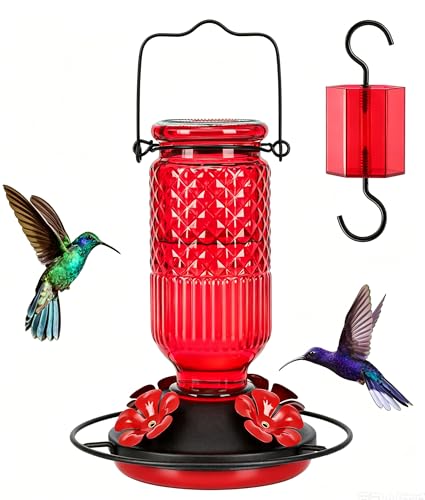
FEED GARDEN Glass Hummingbird Feeder for Outdoors Hanging, 16 oz Leak-Proof Nectar Feeder with Bee Guards & Ant Moat, 4 Metal Flower Feeding Ports, 360° Perch Ring, Easy Refill & Clean, Red
- Bee & Ant Protection: Includes ant moat and pest-resistant ports
- Leak-Proof Design: 16 oz capacity with durable gasket prevents spills
- Easy Maintenance: Wide-mouth glass for simple cleaning and refilling
As an affiliate, we earn on qualifying purchases.
As an affiliate, we earn on qualifying purchases.
Frequently Asked Questions
How Do Honeycreepers Contribute to Hawai‘I’s Ecosystem?
You might not realize it, but honeycreepers play a crucial role in Hawai‘i’s ecosystem. They support pollination partnerships by feeding on flowers and transferring pollen between plants, aiding reproduction. Additionally, they help with seed dispersal, consuming fruits and spreading seeds across the landscape. These actions maintain plant diversity and health, ensuring the stability of Hawai‘i’s unique environment. Without honeycreepers, many native plants could struggle to survive and thrive.
What Are the Main Threats to Honeycreeper Populations?
You should know that honeycreepers face significant threats like disease transmission and habitat loss. Disease, especially avian malaria and pox, spreads easily among these birds, reducing their populations. Habitat loss from deforestation and development also diminishes their living spaces and food sources. These combined pressures make honeycreepers vulnerable, and without conservation efforts, their numbers could decline further. Protecting their habitats and controlling disease spread are essential for their survival.
How Do Honeycreepers Adapt to Urban Environments?
Imagine a delicate thread weaving through a bustling city—your honeycreeper adapts to urban life through behavioral changes. You notice they become more bold, explore new food sources, and adjust their singing to compete with city noise. This urban adaptation symbolizes resilience, as they find ways to thrive despite the chaos. Their ability to modify behaviors showcases nature’s flexibility, allowing these birds to coexist with human development.
Are There Any Ongoing Conservation Programs for Honeycreepers?
You should know that ongoing conservation programs for honeycreepers include captive breeding efforts and habitat restoration projects. These initiatives aim to increase population numbers and improve their natural environments. By participating or supporting these programs, you can help protect these unique birds from threats like habitat loss and disease. Conservationists work tirelessly to guarantee honeycreepers thrive again in their native Hawai‘i, keeping their populations sustainable for future generations.
How Can Individuals Help Protect Hawaiian Honeycreepers?
You might think protecting honeycreepers is up to scientists, but actually, you can make a difference. Ironically, by planting native plants and creating bird-friendly landscapes, you help restore their habitat and food sources. Your efforts support these endemic birds’ survival, making your yard a safe haven. Small actions like these can considerably impact honeycreepers, ensuring future generations can enjoy their vibrant presence on Hawai‘i’s islands.

Hontry 8×42 Binoculars with IPX6 Waterproof Protection
- Clear 8x Magnification: Steady, true-to-life views
- IPX6 Waterproof & Floating: Resistant to water, floats after immersion
- Durable Rubber Body: Comfortable grip, withstands outdoor conditions
As an affiliate, we earn on qualifying purchases.
As an affiliate, we earn on qualifying purchases.
Conclusion
You’ve seen how Hawai‘i’s honeycreepers evolved into over 50 distinct species, each uniquely adapted to their environments. This incredible diversification highlights the power of island evolution, where isolation fuels rapid change. Did you know that over 80% of these honeycreepers are now endangered? It’s a stark reminder of how fragile this delicate evolutionary story is. Protecting these birds means preserving a crucial chapter of nature’s ongoing, extraordinary evolutionary journey.

Xaila Bird UV Light Replacement for Standard Avian Sun Lamp OEM
- UV Light Kit: Includes 2.4% UVB bird bulb
- Cage Light Fixture: Clip-on reflector with compact fluorescent bulb
- Feather Color Enhancement: Promotes feather growth and coloration
As an affiliate, we earn on qualifying purchases.
As an affiliate, we earn on qualifying purchases.

Running Silver: Restoring Atlantic Rivers And Their Great Fish Migrations
As an affiliate, we earn on qualifying purchases.
As an affiliate, we earn on qualifying purchases.