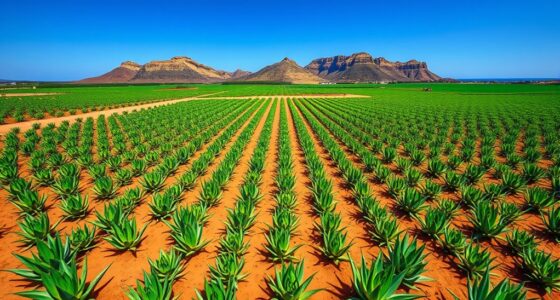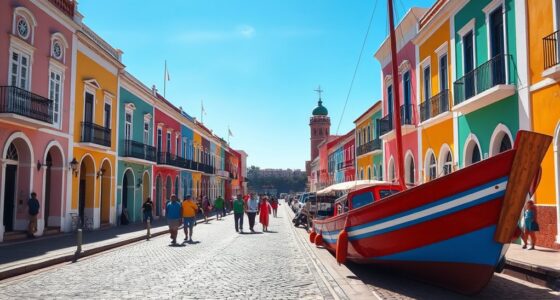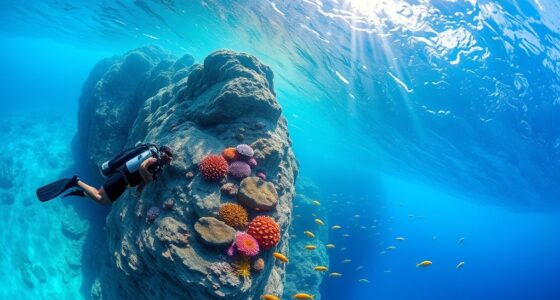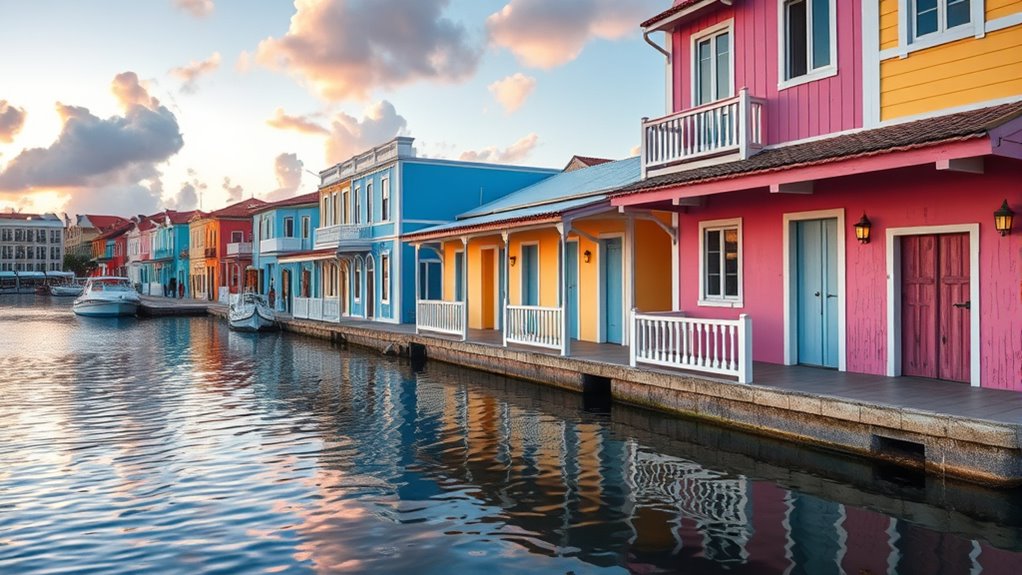

The pastel colors on Curaçao’s Handelskade come from practical choices made by past residents. Bright hues made buildings easier to spot in tropical weather, helping merchants and sailors identify their homes or shops from afar. Over time, these functional colors became a part of local culture, symbolizing trust, hope, and happiness. Their vibrant appearance today reflects both history and resilience. Keep exploring to discover how this colorful tradition continues to shape Curaçao’s unique identity.
Key Takeaways
- Bright pastel colors helped buildings stand out in tropical weather and aided navigation for sailors and merchants.
- The colors were practical choices to protect structures from humid climate weathering.
- Pastel hues became a cultural expression symbolizing hope, happiness, and resilience.
- They visually enhanced the historic architecture, blending practicality with aesthetic appeal.
- The vibrant palette now embodies Curaçao’s identity, cultural pride, and enduring colonial history.

If you visit Curaçao, one of the most striking sights you’ll encounter is the colorful Handelskade, where vibrant pastel buildings line the waterfront. These buildings aren’t just visually stunning; they tell a story rooted in history, culture, and practicality. The architecture you see is a prime example of colonial architecture, reflecting centuries of Dutch influence on the island. When you walk along the quay, you’re walking through a living museum where the design and colors of each building serve both aesthetic and functional purposes. Originally, these structures were built for trade and commerce, with their narrow, tall facades maximizing space in a bustling port. The colonial style is evident in the gabled roofs, large windows, and decorative details, all of which point back to the Dutch colonial era that shaped Curaçao’s identity.
The vibrant pastel colors painted on these buildings are more than just eye-catching; they carry deep symbolism rooted in local traditions and practical considerations. Historically, the bright hues served as a way to make buildings stand out in a tropical environment where the sun and salty air could quickly erode paint and materials. These colors also helped merchants and sailors identify their homes or shops from a distance, making navigation easier in a busy port. Over time, these practical choices evolved into a cultural statement, with each color holding specific meanings. For instance, blue might symbolize trust and stability, green could represent hope or fertility, while yellow often signifies happiness and energy. The pastel palette also provided a way to combat the dullness of weathered wood and plaster, giving the buildings a lively, fresh appearance despite the humid climate. Additionally, the use of vivid colors became a way to express local identity and resilience, turning practicality into a form of cultural pride.
The use of pastel shades became a defining feature of Curaçao’s identity, blending colonial architecture with local color symbolism. As a visitor, you’ll notice how these colors create a harmonious yet lively environment, capturing the island’s spirit of resilience and creativity. The pastel buildings of Handelskade don’t just serve as a picturesque backdrop; they reflect a layered history of colonization, adaptation, and cultural expression. Every hue tells a story, connecting you to the island’s past and its ongoing tradition of blending practicality with beauty. So, when you gaze upon these colorful facades, remember that they are more than pretty pictures—they are a vibrant testament to Curaçao’s rich history and the enduring influence of colonial architecture and symbolism.

Willemstad: A Stunning Coffee Table Picture Book – For Travelers & Culture Lovers
As an affiliate, we earn on qualifying purchases.
As an affiliate, we earn on qualifying purchases.
Frequently Asked Questions
Are the Pastel Colors on Handelskade Historically Authentic or Modern Additions?
You might wonder if the pastel colors on Handelskade are historically authentic or just modern restoration. While originally, the buildings had more subdued hues, over the years, vibrant pastel shades became popular. Today, the colorful facades are mostly the result of modern restoration efforts, aiming to preserve the lively look. So, though inspired by history, the current palette is largely a modern interpretation to maintain the area’s charm.
How Do Local Residents Feel About the Colorful Paintwork?
People praise the vibrant views of Curaçao’s Handelskade, feeling proud of its colorful charm. You’ll find locals love the lively hues, boosting their pride and enhancing the area’s aesthetic appeal. They see the pastel palette as a perfect presentation of their cultural character, sparking smiles and admiration. For residents, the cheerful colors symbolize community, creativity, and a mesmerizing Caribbean coast, making the Handelskade a beloved landmark that truly reflects their local pride.
Have the Colors Changed Over the Centuries or Remained Consistent?
You might wonder if the colors on Handelskade have changed over centuries. They’ve largely remained consistent, reflecting the historical color significance tied to Curaçao’s vibrant culture. Cultural preservation efforts help maintain these pastel hues, honoring tradition and identity. While some slight variations occurred due to weathering or repainting, the overall palette stays true to its historical roots, celebrating the island’s unique heritage and picturesque charm.
What Materials Are Used for Painting the Historic Buildings?
You see, traditional paint is used to bring the historic buildings to life, layered with care through preservation techniques. These materials include lime-based paints and eco-friendly pigments, chosen for their durability and vibrancy. You notice how each brushstroke preserves the past, ensuring the colors stay bright and true over time. This thoughtful process keeps the Handelskade’s pastel charm alive, blending history, artistry, and sustainable practices seamlessly.
Do Other Caribbean Towns Feature Similarly Colorful Architecture?
You’ll notice many Caribbean towns share vibrant, colorful architecture, reflecting their colonial influence and rich history. These lively hues boost tourism appeal, making destinations more inviting for visitors. Towns like San Juan in Puerto Rico or Willemstad in Curaçao showcase similar pastel buildings, creating picturesque scenes that celebrate their cultural heritage while attracting tourists seeking charming, photogenic spots. This colorful style is a hallmark of Caribbean coastal towns, emphasizing their colonial past and lively atmosphere.

LUYMFSY 3D Curacao Willemstad Fridge Magnet, Colorful Dutch Colonial Houses Design, Resin Material, 7.8cm x 5.7cm, Souvenir Collectible
- Authentic Curacao Souvenir: Colorful 3D Willemstad architecture
- Compact Size: 7.8cm x 5.7cm for versatile use
- Durable Resin Material: Resists fading and scratching
As an affiliate, we earn on qualifying purchases.
As an affiliate, we earn on qualifying purchases.
Conclusion
As you walk along Curaçao’s Handelskade, you can’t help but appreciate how these pastel-colored buildings tell a story of resilience and vibrant history. Their hues aren’t just pretty; they’re a demonstration to cultural pride and adaptation over time. Remember, beauty is in the eye of the beholder—and in this case, it’s also rooted in history. As the saying goes, “A picture is worth a thousand words,” and these colors speak volumes about Curaçao’s rich legacy.

ABEIER Outdoor Acrylic Paint Set, 15 x 8.45 oz, Waterproof & UV Resistant
- Weatherproof and UV Resistant: Resists fading, peeling, cracking in harsh weather
- 15 Vibrant Colors: Rich, professional-grade hues in large 8.45oz bottles
- Multi-Surface Adhesion: Bonds to rocks, wood, metal, ceramics, and walls
As an affiliate, we earn on qualifying purchases.
As an affiliate, we earn on qualifying purchases.
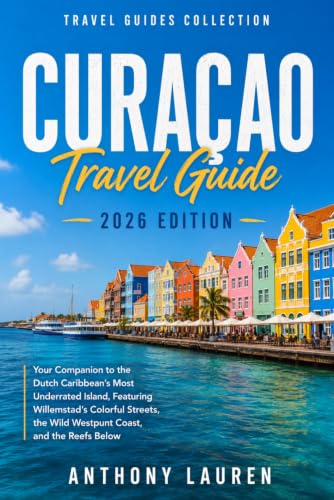
Curacao Travel Guide 2026 Edition: Your Companion to the Dutch Caribbean's Most Underrated Island, Featuring Willemstad's Colorful Streets, the Wild Westpunt Coast, and the Reefs Below
As an affiliate, we earn on qualifying purchases.
As an affiliate, we earn on qualifying purchases.