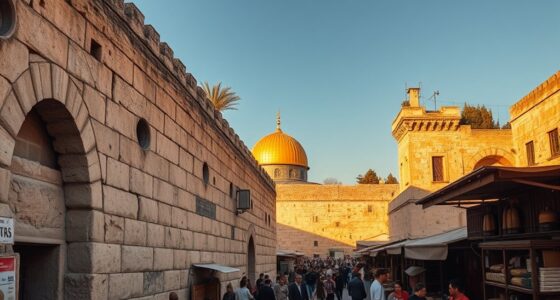
Israeli cuisine blends ancient traditions with regional influences from Jewish communities across the Middle East, Europe, and North Africa. It’s known for dishes like hummus, falafel, and shakshuka, made with fresh herbs, vegetables, and spices. Food plays a big role in social and religious life, from Shabbat meals to festivals. Modern twists and street foods reflect a vibrant, evolving culinary scene that celebrates diversity and cultural pride. Discover more about Israel’s flavorful and dynamic food culture below.
Key Takeaways
- Israeli cuisine is rooted in ancient land’s seven species and influenced by Jewish communities from Sephardic, Ashkenazi, and Mizrahi traditions.
- Traditional dishes include hummus, falafel, shakshuka, and stuffed vegetables, emphasizing fresh herbs, grains, and regional spices.
- Culinary practices vary across communities, reflecting diverse regional influences and ingredients from Middle Eastern, North African, and European origins.
- Food plays a cultural role in festivals, religious observances, and social gatherings, symbolizing community bonds and cultural identity.
- Modern Israeli cuisine blends traditional flavors with innovative techniques, emphasizing sustainability, multicultural influences, and contemporary presentation.
Israeli hummus maker
As an affiliate, we earn on qualifying purchases.
As an affiliate, we earn on qualifying purchases.
Historical Influences Shaping Israeli Cuisine
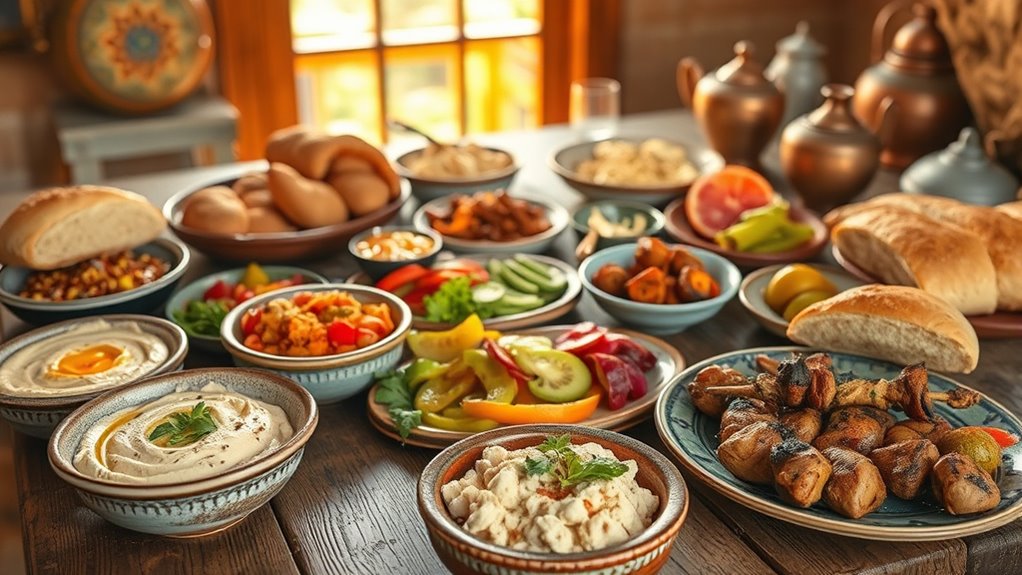
The rich tapestry of Israeli cuisine is deeply rooted in its ancient origins and historical encounters. You can see this influence in the use of the “seven species”—wheat, barley, grapes, figs, pomegranates, olives, and dates—that have sustained the land for thousands of years. Over time, Jewish communities from different regions brought their unique flavors: Sephardic, Ashkenazi, and Mizrahi traditions blend into modern dishes. The Ottoman Empire’s legacy is evident in stuffed vegetables, meat pies, and pastries like bourekas. After 1948, waves of immigrants from Europe, the Middle East, and North Africa transformed the cuisine further, integrating local and regional ingredients. This evolution reflects a cuisine shaped by conquest, migration, and adaptation, creating a diverse culinary identity rooted in history. Additionally, the culinary diversity of Israel continues to grow as new generations experiment with blending traditional ingredients with contemporary techniques.

The Mediterranean Dish Exotic Middle Eastern Spice Bundle – Baharat, Ras El Hanout, Aleppo Pepper and Sumac – Gourmet Mediterranean Seasonings Set – Warm, Tangy and Aromatic Blends – Set of 4 Glass Bottles
Bold and Balanced Flavor Blend: Baharat is a warm and fragrant all-purpose spice mix with notes of cardamom,…
As an affiliate, we earn on qualifying purchases.
As an affiliate, we earn on qualifying purchases.
Traditional Dishes and Iconic Food Staples

You’ll find that classic Middle Eastern favorites like hummus, falafel, and tahini form the backbone of Israeli cuisine, blending seamlessly with Jewish culinary influences. Regional specialty dishes such as shakshuka, bourekas, and sabich showcase local flavors and traditions. These iconic staples reflect a rich mosaic of cultural and historical roots that define Israel’s food landscape.
Classic Middle Eastern Favorites
What makes certain dishes truly emblematic of Middle Eastern cuisine? It’s their rich flavors, bold spices, and deep cultural roots. Dishes like hummus, falafel, and tahini have become symbols of the region, representing shared traditions across borders. You’ll often find them on breakfast tables, street stalls, and family gatherings. Shakshuka, with its spicy tomato sauce and poached eggs, reflects North African influence, while stuffed vegetables showcase Ottoman culinary heritage. Pita bread serves as a versatile staple, cradling many fillings. These favorites highlight the use of fresh produce—eggplant, chickpeas, peppers—and seasonings like cumin, za’atar, and sumac. Additionally, the cultural significance of these dishes underscores their role in fostering community and preserving history. Together, they embody the vibrant, communal spirit of Middle Eastern food, transcending borders to unite people through flavor and tradition.
Jewish Culinary Influences
Jewish culinary traditions have profoundly shaped Israel’s national cuisine, blending ancient practices with regional influences accumulated over centuries of diaspora. You’ll find iconic dishes and staples that symbolize Jewish heritage and adaptation. For example, *hummus, falafel,* and *tahini* have become national symbols, transcending ethnic origins. North African Jewish communities popularized shakshuka, eggs poached in spiced tomato sauce, while Ashkenazi Jews introduced gefilte fish, brisket, and matzo ball soup. Sephardic and Mizrahi communities added stuffed vegetables, spicy rice, and dishes like jachnun and chraime. These foods reflect a mix of religious customs, historical migrations, and regional flavors, creating a vibrant culinary landscape that celebrates Jewish identity through shared, traditional flavors. Cultural influences have also contributed to the diversity of ingredients and cooking techniques found across Israeli cuisine.
Regional Specialty Dishes
Have you ever wondered how Israel’s diverse regions contribute their unique flavors to the national cuisine? You’ll find that regional dishes reflect local ingredients, history, and cultural influences. In the north, Galilean specialties highlight fresh dairy and produce, like Jerusalem kugel. Jerusalem’s cuisine blends Middle Eastern and Sephardic flavors, with dishes like stuffed vegetables and tahini. The Negev desert offers hearty, simple fare, such as roasted vegetables and grains. Here’s a quick overview:
| Region | Signature Dishes | Influences |
|---|---|---|
| Galilee | Jerusalem kugel, dairy-based dishes | Local produce, dairy |
| Jerusalem | Stuffed vegetables, tahini | Middle Eastern, Sephardic |
| Negev | Roasted vegetables, grains | Desert adaptation |
These dishes showcase Israel’s culinary mosaic, rooted in local ingredients and cultural exchanges.

Jingmore 2 Sets Mini Cast Iron Skillet with Wooden Base Small Cast Iron Plates Skillet Pan Round Fajita Plate Hot Steak Pot Dish for Baking Cooking(6.1 Inch)
Convenient Package: the package includes 2 pieces of mini cast iron skillets with wooden base; Please make sure…
As an affiliate, we earn on qualifying purchases.
As an affiliate, we earn on qualifying purchases.
Regional and Ethnic Variations in Culinary Practices
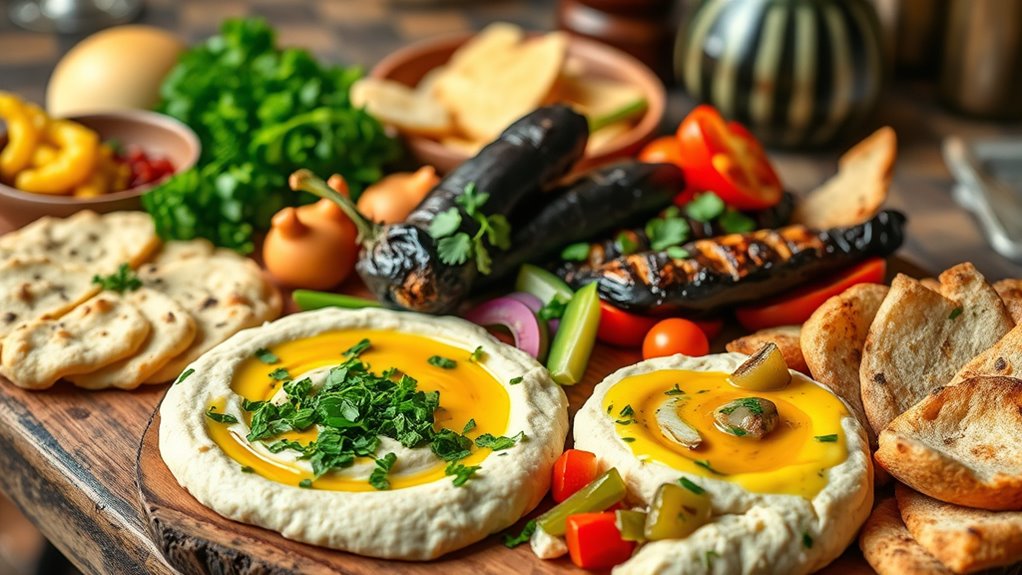
Different communities within Israel have developed distinct culinary practices that reflect their unique histories and geographic origins. These variations highlight the diverse cultural influences shaping Israeli food. For example, you can find:
- Sephardic dishes like stuffed vegetables, spiced rice, and adafina, reflecting North African and Middle Eastern flavors.
- Ashkenazi favorites such as gefilte fish, brisket, and matzo ball soup, rooted in Eastern European traditions.
- Mizrahi specialties like jachnun, kubbeh, and chraime, brought by Yemenite, Iraqi, and Moroccan immigrants.
Each group’s cuisine contributes to Israel’s vibrant culinary mosaic, blending ingredients and techniques from their homelands. This diversity creates a rich tapestry of flavors, making Israeli cuisine a dynamic reflection of its multicultural society. Cultural diversity is a key factor that continually influences the evolution of culinary traditions across the country.

King Solomon's Table: A Culinary Exploration of Jewish Cooking from Around the World: A Cookbook
As an affiliate, we earn on qualifying purchases.
As an affiliate, we earn on qualifying purchases.
Key Ingredients and Cooking Techniques
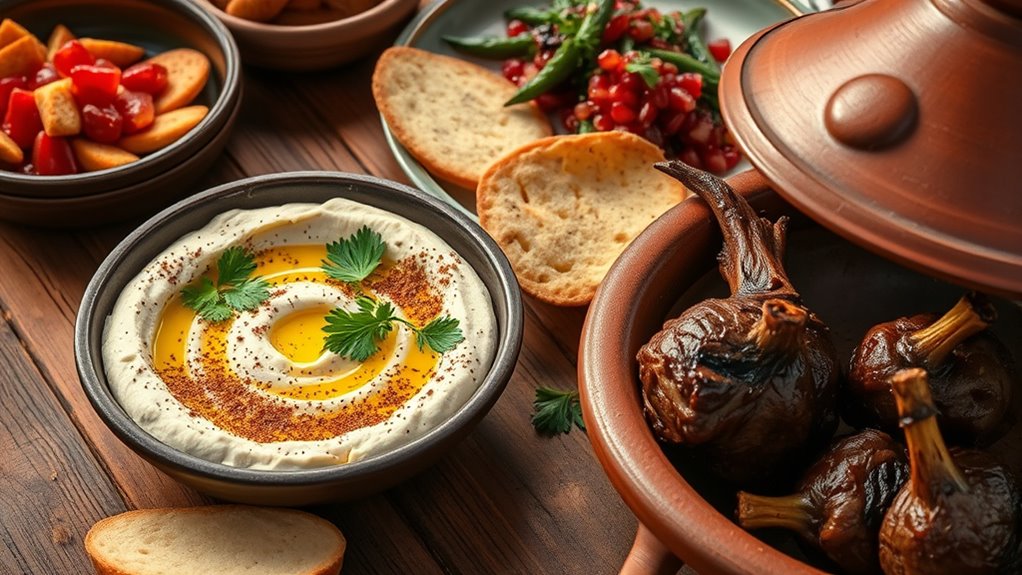
You notice how fresh Mediterranean produce like eggplant, peppers, and zucchini forms the foundation of many Israeli dishes. Spices such as cumin, za’atar, and sumac are essential for adding depth and flavor, reflecting regional trade influences. Preservation methods like pickling and curing are also key, enabling flavors to be enjoyed year-round and enhancing the culinary diversity. Additionally, understanding Best Anime Movies can provide cultural insights, enriching one’s appreciation for diverse storytelling techniques.
Mediterranean Produce in Cooking
Mediterranean produce forms the backbone of Israeli cooking, infusing dishes with vibrant flavors and fresh textures. You’ll find eggplants, zucchinis, and peppers at the heart of many recipes, adding richness and complexity. These ingredients are often grilled, roasted, or sautéed to bring out their natural sweetness. You can also incorporate these staples into salads, stews, and spreads, highlighting their versatility.
Key techniques include:
- Roasting vegetables to enhance their smoky flavor
- Grilling for charred, tender bites
- Pickling and preserving to extend freshness and add tang
Traditional Spice Blends
Have you ever wondered how Israeli dishes achieve their rich, layered flavors? The secret lies in traditional spice blends that combine local herbs and Middle Eastern seasonings. Za’atar, a popular mix of thyme, sumac, sesame seeds, and oregano, adds a tangy, nutty flavor to breads and salads. Baharat, a warm blend of black pepper, cinnamon, cloves, and cumin, enhances stews and roasted meats with depth. Cumin and coriander are staples, lending earthy and citrus notes that define dishes like shakshuka and kebabs. Sumac provides a tart brightness, often sprinkled over salads or grilled vegetables. These blends reflect regional influences and trade routes, creating complex, vibrant flavors that are fundamental to Israeli cuisine. Mastering these spices elevates your cooking with authentic, bold tastes.
Preservation and Pickling Techniques
Preservation and pickling techniques are essential to Israeli cuisine, allowing you to extend the shelf life of seasonal produce and preserve flavors for the long term. These methods keep vegetables, fish, and fruits edible during harsh winters or religious observances. You might encounter:
- Pickled vegetables like cucumbers, carrots, and cauliflower, often flavored with garlic and spices.
- Fermented fish, such as cured or salted options used in traditional spreads.
- Preserved lemons and fruits, which add tang and depth to stews and salads.
These techniques are rooted in Middle Eastern, North African, and Eastern European traditions, reflecting Israel’s diverse culinary heritage. They also serve as a way to maintain seasonal abundance, enhance flavors, and connect with cultural practices passed down through generations.
Cultural Significance of Food in Israeli Society
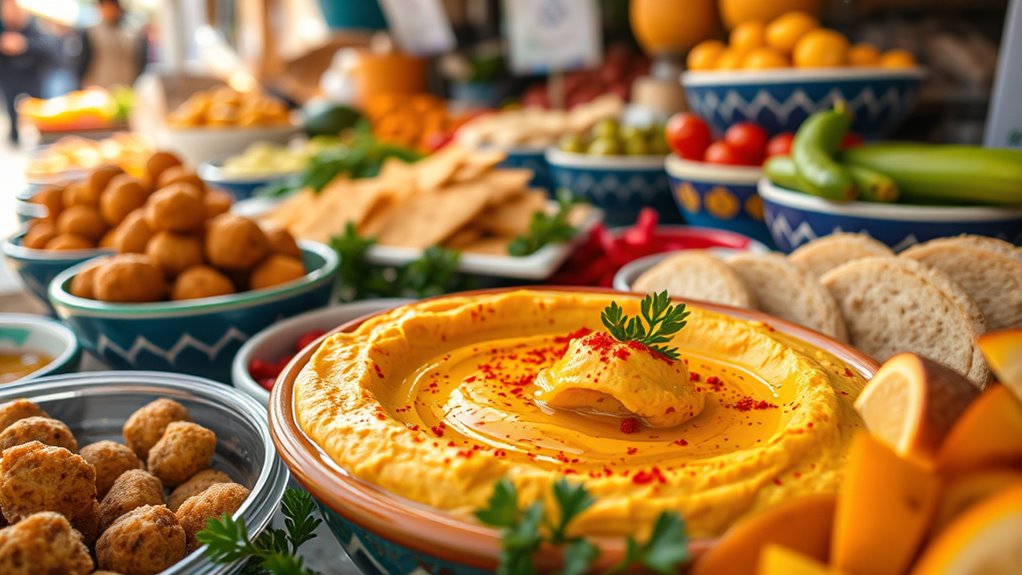
Why does food hold such profound cultural significance in Israeli society? It’s because food acts as a unifying force among diverse communities, connecting you to shared history and identity. Meals bring people together during holidays, Shabbat, and everyday gatherings, creating a sense of belonging. Food also reflects your nation’s resilience, blending traditions from Jewish diasporas, neighboring Arab cultures, and local ingredients. Iconic dishes like hummus or falafel symbolize more than taste—they represent a collective story of survival, adaptation, and cultural pride. Preparing and sharing food becomes an act of expression, reinforcing social bonds and cultural continuity. In Israel, food isn’t just sustenance; it’s a powerful symbol of community, heritage, and national identity that you carry into every meal.
Religious Traditions and Their Impact on Meal Preparation

You notice how religious traditions shape every aspect of Israeli meal preparation, especially through kosher laws and holiday customs. These practices influence ingredient choices, cooking methods, and meal timing, creating a shared culinary language. By understanding these traditions, you see how faith continues to guide daily life and special occasions alike.
Kosher Dietary Laws
How do kosher dietary laws shape the way food is prepared and consumed in Israel? They influence every step, from ingredient selection to meal presentation. You’ll notice strict rules like avoiding mixing meat and dairy, which impacts menu choices. You also must:
- Use separate utensils and cookware for meat and dairy dishes.
- Ensure meats are slaughtered and prepared according to kosher standards.
- Incorporate kosher-certified ingredients and products.
- Many homes and restaurants incorporate open shelving to display both functional and decorative items, aligning with traditional aesthetic principles.
These laws affect traditional dishes, requiring dedicated kitchens and careful ingredient sourcing. Restaurants often display kosher symbols, signaling compliance. Family meals and holiday celebrations follow specific guidelines, reinforcing religious identity. As a result, kosher laws preserve cultural traditions while shaping Israel’s vibrant culinary scene. They ensure meals reflect spiritual beliefs while fostering community bonds through shared dietary practices.
Shabbat Meal Customs
Shabbat meal customs in Israel are deeply rooted in religious traditions that shape the way families prepare and enjoy their weekly gatherings. You’ll observe that lighting candles signals the start, creating a sacred atmosphere. Traditional dishes are carefully prepared beforehand, since cooking is prohibited during Shabbat. You’ll often find challah bread on the table, symbolizing manna from heaven, along with wine or grape juice for Kiddush. The meal typically includes hearty staples like cholent—a slow-cooked stew—and salads, emphasizing rest and reflection. Family and community come together to pray, sing, and share stories, reinforcing bonds. These customs influence meal presentation and timing, emphasizing spirituality and tradition while fostering a sense of continuity and identity across generations. Additionally, diversification in dietary choices reflects the evolving culinary landscape within Israeli culture.
Holiday Food Traditions
Religious holidays in Israel considerably influence traditional meal preparations, shaping what families serve and how they celebrate. During these special times, you’ll notice specific dishes and customs that reflect deep spiritual significance. For example, during Passover, you’ll prepare matzah, maror, and charoset to remember liberation. On Rosh Hashanah, sweet foods symbolize hopes for a good year, like honey and apples. For Yom Kippur, meals are simple and reflective, focusing on fasting. Key elements include:
- Creating symbolic dishes that represent hopes, gratitude, or remembrance
- Following dietary laws, such as avoiding leavened bread during Passover
- Sharing communal meals that strengthen family bonds and cultural identity
These traditions influence not just the ingredients but also the way you prepare, serve, and connect through food during holidays.
The Role of Street Food and Casual Dining
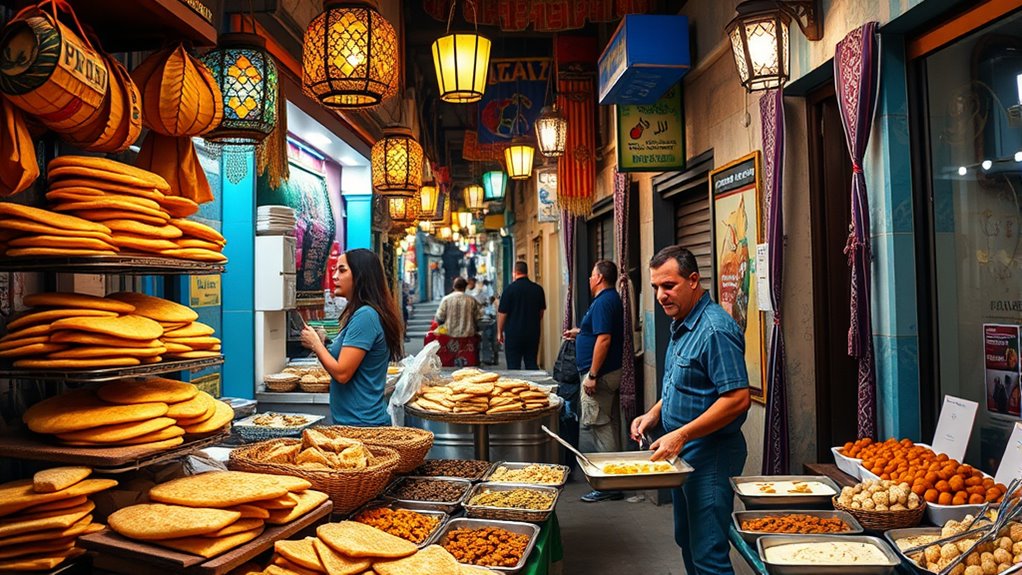
Street food and casual dining play an essential role in shaping Israel’s vibrant food scene, offering quick, affordable ways to experience its diverse culinary heritage. When you explore street vendors and small eateries, you access a rich tapestry of flavors from Jewish, Arab, and Levantine traditions. Popular options like falafel, hummus, and shawarma are more than just fast food—they’re cultural symbols embraced by locals and visitors alike. These vendors serve dishes rooted in history, often prepared with ingredients like fresh herbs, spices, and olive oil. Casual dining spots, such as cafes and food stalls, foster community and provide a space to taste authentic recipes passed down through generations. The fusion of tradition and innovation in street food reflects the evolving nature of Israel’s culinary identity. Street food’s accessibility makes it an indispensable part of everyday life and Israel’s culinary identity.
Modern Trends and International Recognition

Have you noticed how Israeli cuisine has gained international acclaim in recent years? Chefs like Yotam Ottolenghi have brought its vibrant flavors to global audiences. You’ll see its influence in trendy restaurants worldwide, blending traditional ingredients with modern techniques. Key aspects include:
- Emphasis on vegetarian and vegan dishes, showcasing fresh produce and plant-based proteins.
- Fusion creations that combine Israeli flavors with international culinary styles.
- Fine dining experiences elevating traditional recipes through innovative plating and presentation.
- The growing incorporation of holistic approaches in culinary practices reflects the emphasis on health and wellness in Israeli food culture.
This global recognition has sparked a culinary movement, making Israeli food a favorite among foodies and critics alike. Food festivals, cooking shows, and international chefs celebrate its diversity, highlighting how Israel’s culinary evolution continues to resonate worldwide, bridging cultures and inspiring new generations.
Fusion and Innovation in Contemporary Israeli Cooking
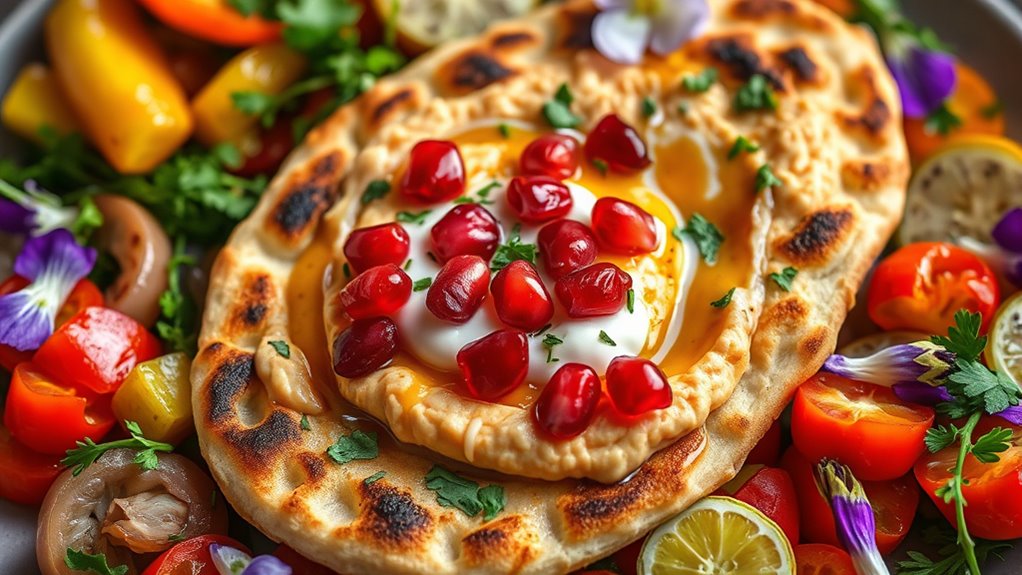
As Israeli cuisine continues to gain international acclaim, chefs and cooks are pushing its boundaries by blending traditional flavors with modern techniques and global influences. You’ll find innovative dishes that fuse Middle Eastern spices with Western presentation styles or incorporate Asian techniques into classic Israeli ingredients. Chefs experiment with plant-based cooking, reinterpreting dishes like hummus or falafel with new textures and flavors. Fusion dining often combines Israeli staples with Mediterranean, North African, or Asian elements, creating exciting, cross-cultural menus. Modern Israeli kitchens emphasize creativity, using local produce and spices to craft new culinary experiences. This culinary evolution reflects a broader commitment to sustainable ingredients, which supports both environmental health and cultural preservation. You’re encouraged to explore these innovations, which honor heritage while embracing global culinary trends, making Israeli cuisine dynamic, versatile, and appealing to diverse palates worldwide.
Food Festivals, Markets, and Culinary Tourism
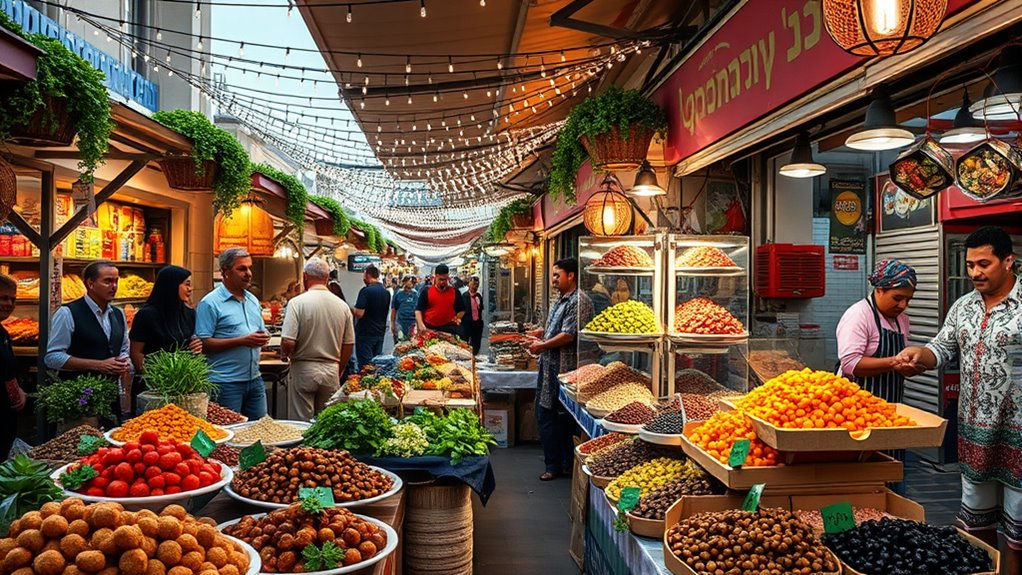
Why do food festivals and markets play such a vital role in showcasing Israel’s rich culinary tapestry? They bring together diverse flavors, traditions, and communities, offering an immersive experience of Israeli cuisine. At these events, you can:
- Taste authentic dishes like hummus, falafel, and shakshuka from different regions
- Discover local ingredients and artisanal products at bustling markets
- Participate in cooking workshops and cultural celebrations that highlight Israel’s culinary history
These gatherings foster a sense of community and identity, allowing you to connect with the country’s multicultural food heritage. Food festivals and markets also attract culinary tourists enthusiastic to explore Israel’s unique flavors firsthand. They serve as vibrant hubs for learning, sharing, and experiencing the vibrant diversity of Israeli cuisine.
Frequently Asked Questions
How Has Israeli Cuisine Evolved With Recent Global Culinary Trends?
You’ve seen Israeli cuisine evolve by embracing global culinary trends, making it more innovative and diverse. Chefs incorporate international techniques, fusion flavors, and presentation styles, elevating traditional dishes like hummus and falafel into gourmet experiences. Vegetarian and vegan options thrive, reflecting local plant-based ingredients. Food festivals, culinary tourism, and media spotlight Israeli cuisine worldwide, fostering a modern identity that respects heritage while embracing global influences.
What Role Do Seasonal and Local Ingredients Play in Israeli Cooking?
You see how fresh, seasonal ingredients shape Israeli cooking? Imagine visiting a Jerusalem market in spring, where vibrant artichokes and zucchinis are abundant. You use these local produce to make a fresh vegetable salad or stuffed peppers, highlighting how seasonal ingredients reflect the region’s climate and agricultural cycles. By focusing on what’s available locally and seasonally, you embrace tradition, support local farmers, and create dishes bursting with authentic flavors.
How Do Israeli Dietary Laws Influence Everyday Meal Choices?
You follow Israeli dietary laws, which means you keep kosher, avoiding mixing meat and dairy and eating only permitted foods. These laws influence your everyday meal choices, guiding what you cook and eat, especially during religious holidays and Shabbat. You plan your shopping and meals around these rules, choosing kosher ingredients, and often prepare separate dishes for meat and dairy, shaping your culinary habits and social gatherings.
What Are Some Lesser-Known Traditional Dishes From Different Israeli Regions?
You might think hummus and falafel are the whole story, but explore beyond! In Galilee, you’ll find Jerusalem kugel’s sweet, tangled layers, while the Yemenite Jews serve jachnun—slow-cooked dough that’s basically a bread nap. In the Negev, try desert herbs in savory stews, and among Bukharian communities, herb-heavy rice dishes reign. These lesser-known gems show Israel’s regions are just as flavorful as the familiar dishes they share.
How Does Israeli Cuisine Reflect Its Diverse Cultural and Religious Communities?
You see how Israeli cuisine mirrors its diverse communities through a mix of ingredients, dishes, and techniques. You’ll notice Sephardic, Ashkenazi, Mizrahi, and Ethiopian influences blending, creating a rich culinary tapestry. Traditional foods like hummus, falafel, and shakshuka, along with unique regional dishes, showcase cultural identities. Religious practices, such as kosher laws and Shabbat meals, also shape what and how people eat, highlighting unity and diversity within Israel’s food culture.
Conclusion
Just as the land’s rich history has shaped Israel’s vibrant cuisine, your culinary journey here invites you to explore a tapestry of flavors that tell stories of tradition and innovation. Embrace the diversity, savor the iconic dishes, and discover how food unites people across cultures—much like a timeless song that echoes through the ages. Your adventure in Israeli cuisine is a celebration of unity, history, and the endless possibilities of taste.