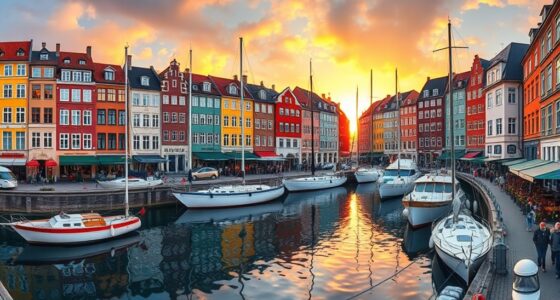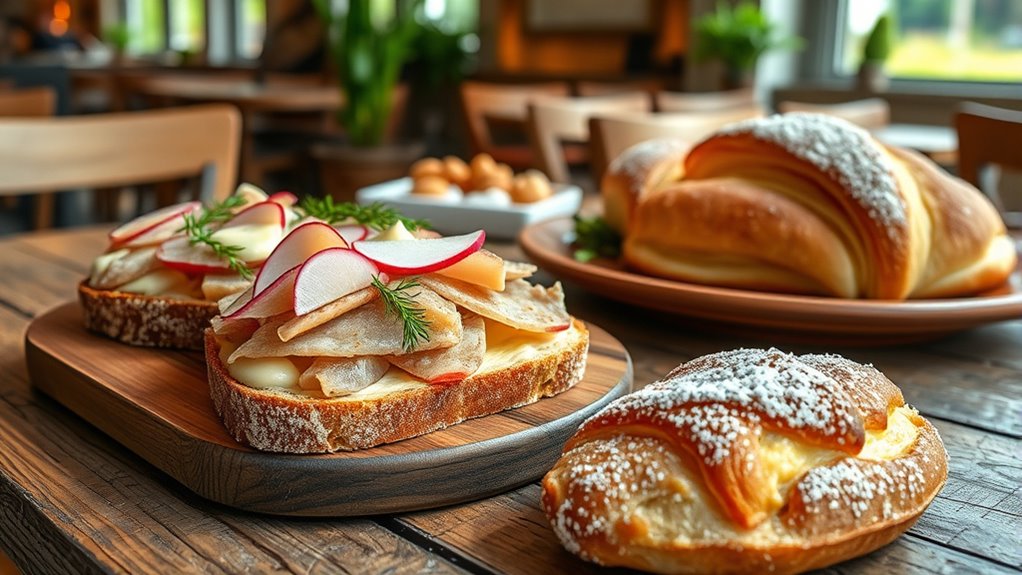

Denmark’s cuisine combines hearty, traditional dishes rooted in rural and coastal origins, featuring rye bread, open-faced smørrebrød, pork, and fresh fish. Food plays a key role in social gatherings, celebrating togetherness during holidays like Christmas. Modern movements like the New Nordic emphasize local, seasonal ingredients and sustainability, blending tradition with innovation. Exploring Denmark’s food customs reveals a rich cultural history and evolving culinary landscape that highlights community, resourcefulness, and environmental consciousness. Stay with us to uncover more about this fascinating food heritage.

Get travel and outdoor gear delivered free with Prime
- Fast, free delivery on millions of items
- Prime Video, Amazon Music and more included
- Member-only deals all year
Key Takeaways
- Danish cuisine has roots in rural, agricultural traditions, emphasizing locally sourced ingredients like rye, pork, and fish.
- Iconic dishes include smørrebrød (open-faced sandwiches) and flæskesteg (roast pork), reflecting national pride.
- Modern movements like New Nordic focus on sustainability, seasonal ingredients, and innovative preservation techniques.
- Food plays a vital social role, fostering community through traditional celebrations such as Christmas and Midsummer.
- Emphasis on dairy, bread, and hearty flavors underscores Denmark’s cultural and culinary heritage.
As an affiliate, we earn on qualifying purchases.
Historical Evolution of Danish Cuisine
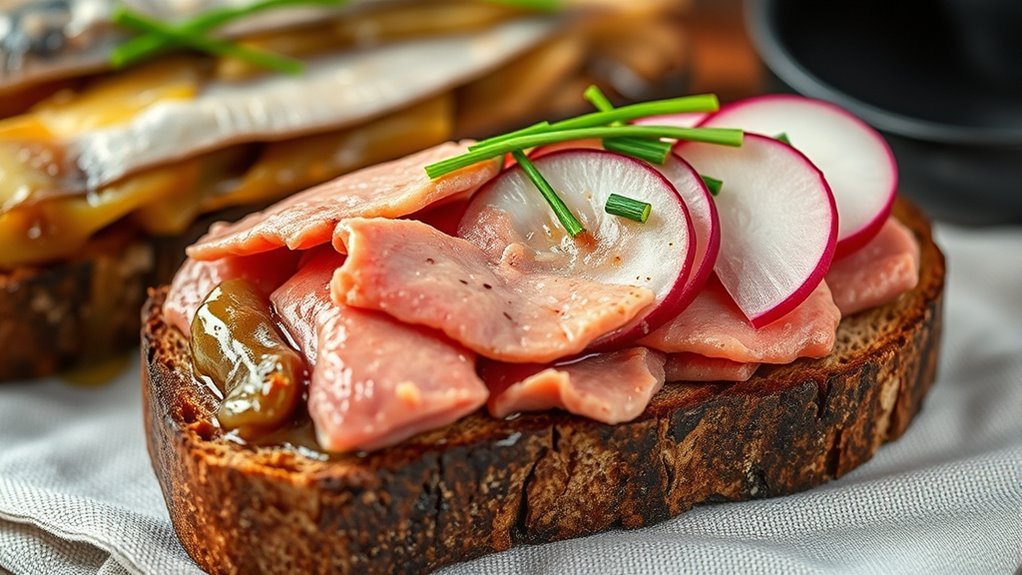
Danish cuisine has evolved considerably over centuries, rooted in the country’s rural and agricultural history. You’ll find that early dishes relied heavily on locally available ingredients like rye, barley, dried peas, and fresh fish, reflecting a focus on sustainability and seasonality. Before the industrial revolution around 1860, peasant communities mainly prepared hearty, simple meals from what they could grow or catch. As industrialization took hold, the availability of fresh meat, vegetables, and dairy improved, leading to more diverse dishes. Innovations like wood-burning stoves and meat grinders enabled new recipes such as frikadeller and medisterpølse. Over time, Denmark’s culinary landscape shifted from basic sustenance to include refined dishes, influenced by technological advances and evolving food practices that laid the groundwork for modern Danish cuisine.
smørrebrød open-faced sandwich set
As an affiliate, we earn on qualifying purchases.
As an affiliate, we earn on qualifying purchases.
Core Ingredients and Traditional Staples

Rye bread, pork, fish, cabbage, root vegetables, and dairy products form the heart of traditional Danish cuisine. You’ll find rye bread, or rugbrød, as a staple for open-faced smørrebrød sandwiches topped with pickled herring, cold cuts, or eggs. Pork, especially fried pork belly (stegt flæsk), is considered the national dish, often served with potatoes and parsley sauce. Fish like cod, plaice, and pickled herring are integral, prepared fried, breaded, or preserved. Cabbage and root vegetables such as carrots, beets, and potatoes provide seasonal sustenance and are preserved for winter months. Dairy products, including milk, butter, and cheese, support daily meals and baking traditions. These ingredients reflect Denmark’s reliance on local, seasonal produce cultivated and preserved to sustain the population year-round. Additionally, many dishes incorporate whole, unprocessed foods, emphasizing freshness and traditional preparation methods.
As an affiliate, we earn on qualifying purchases.
Iconic Dishes and Typical Meals

You’ll find that Danish cuisine has some iconic dishes that truly represent its culinary identity. Classic smørrebrød features open-faced rye bread topped with everything from pickled herring to roast beef, showcasing the country’s rich tradition of hearty, flavorful bites. The national pork dish, fried pork belly with potatoes and parsley sauce, highlights Denmark’s love for simple, satisfying comfort food, while seafood toppings add a festive touch to special meals. Additionally, traditional dishes often incorporate cultural symbolism, emphasizing the importance of heritage and community in Danish food practices.
Classic Danish Smørrebrød
Classic smørrebrød stands out as an essential element of Danish cuisine, showcasing the country’s rich culinary heritage. You’ll find it as an open-faced sandwich, built on dense rye bread topped with various ingredients like pickled herring, roast beef, eggs, or shrimp. Each topping reflects local ingredients and seasonal flavors, making smørrebrød both versatile and iconic. It’s often enjoyed during lunch or social gatherings, emphasizing simplicity and craftsmanship. To visualize, here’s a quick overview:
| Base Ingredient | Common Toppings | Garnishes |
|---|---|---|
| Rye bread | Pickled herring | Fresh dill |
| Roast beef | Onion rings | |
| Egg salad | Lemon wedge | |
| Shrimp | Mayonnaise | |
| Liver pâté | Pickles |
This tradition highlights Denmark’s resourcefulness and love for hearty, flavorful bites. Culinary heritage plays a significant role in shaping these traditional recipes and presentation styles.
National Pork Dish
Have you ever tasted Denmark’s most iconic pork dish, stegt flæsk? If not, you’re missing out on a true Danish classic. This hearty dish features crispy pork belly slices, usually fried until golden and served with boiled potatoes, parsley sauce, and pickled red cabbage. To fully appreciate it, keep in mind:
- The pork is typically seasoned with salt and pepper, then pan-fried to achieve a crispy exterior.
- Boiled potatoes act as a neutral base, balancing the richness of the pork.
- Parsley sauce adds a fresh, herby touch that complements the savory flavors.
- The dish’s traditional preparation emphasizes simplicity and quality ingredients, hallmark traits of Danish cuisine.
This dish reflects Denmark’s love for simple, flavorful ingredients prepared with care. It’s a hearty, satisfying meal rooted in traditional Danish cuisine and perfect for cold days.
Festive Seafood Toppings
Seafood plays a prominent role in Danish festive meals, especially when it comes to topping traditional open-faced sandwiches, known as smørrebrød. During celebrations, you’ll find these sandwiches adorned with pickled herring, fresh shrimp, or smoked salmon, showcasing Denmark’s rich fishing heritage. Pickled herring, often marinated in onion, mustard, or dill, is a classic topping for special occasions. Shrimp, served with mayonnaise and dill, adds a fresh, light touch, while smoked salmon provides a luxurious flavor. These toppings are usually layered on dark rye bread, creating a balance of textures and flavors. Festive seafood smørrebrød embody Denmark’s coastal traditions, celebrating the bounty of the sea in hearty, colorful, and visually appealing ways. They’re a staple at Christmas, Midsummer, and other joyful gatherings. Additionally, seafood preservation techniques like pickling and smoking ensure the freshness and flavor of these toppings are maintained, highlighting Denmark’s resourceful approach to utilizing local seafood.
As an affiliate, we earn on qualifying purchases.
The Rise of the New Nordic Culinary Movement
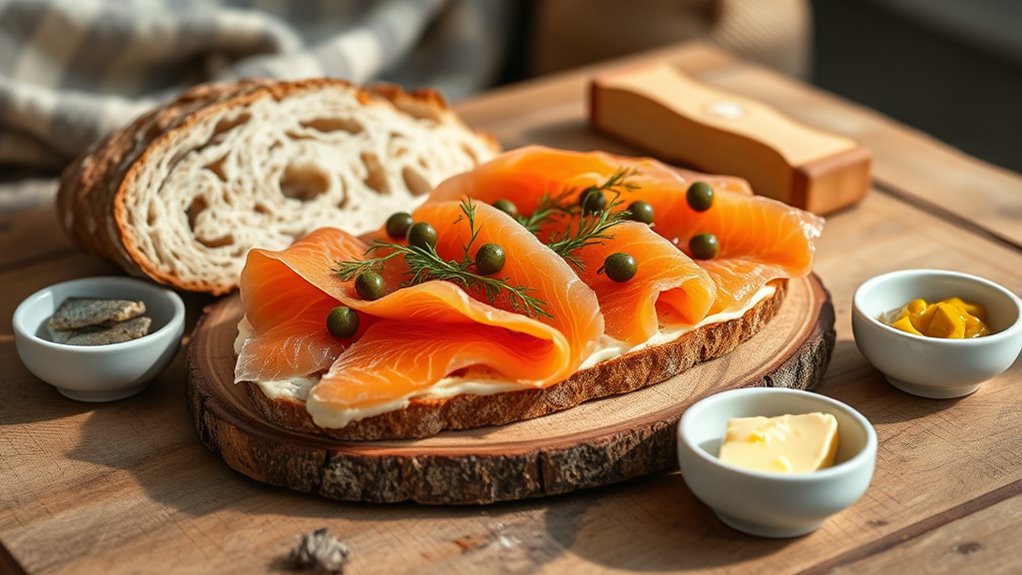
You’ll notice that the New Nordic culinary movement emphasizes using local ingredients and sustainable practices to create fresh, seasonal dishes. Chefs like Claus Meyer reimagine traditional recipes with a modern twist, highlighting regional produce and wild ingredients. This approach not only honors Denmark’s culinary roots but also pushes the country’s cuisine onto the global gourmet stage. Additionally, local sourcing plays a vital role in ensuring the freshness and quality of these innovative dishes.
Emphasis on Local Ingredients
The New Nordic culinary movement has revolutionized Danish cuisine by placing a strong emphasis on local, seasonal ingredients. You’ll find that chefs prioritize regionally available produce, wild game, shellfish, and fungi, reflecting Denmark’s natural landscape. This approach encourages you to:
- Use ingredients at their peak freshness, ensuring better flavor and quality.
- Respect seasonal cycles, which guides ingredient selection and menu design.
- Support local farmers and fishermen, bolstering regional economies and reducing environmental impact.
Additionally, specialized equipment like sustainable harvesting tools often supports the responsible collection of wild ingredients, aligning with the movement’s eco-conscious philosophy.
Sustainable Culinary Practices
The emphasis on local and seasonal ingredients in modern Danish cuisine naturally extends into sustainable culinary practices championed by the New Nordic movement. You’ll find that chefs prioritize wild game, shellfish, and foraged mushrooms, reducing reliance on imported foods. Seasonal eating guides sourcing, ensuring ingredients are harvested at peak freshness and minimal environmental impact. You’re encouraged to support regional farmers and fisheries, promoting eco-friendly practices and preserving Denmark’s culinary heritage. Techniques like fermentation, pickling, and drying are revived not only for flavor but also to extend shelf life and reduce waste. By choosing local, seasonal, and minimally processed foods, you actively participate in Denmark’s commitment to sustainability—helping to protect natural resources while enjoying innovative, flavorful dishes rooted in tradition. Incorporating sustainable practices such as responsible sourcing and waste reduction further enhances the environmental benefits of modern Danish cuisine.
Modern Gourmet Interpretations
Modern gourmet interpretations of Danish cuisine have transformed traditional flavors into innovative, sophisticated dishes that appeal to contemporary palates. This movement, led by renowned chefs like Claus Meyer and restaurants such as Noma, emphasizes local, seasonal ingredients with a focus on sustainability. You’ll find new takes on classic ingredients, blending science, artistry, and respect for tradition. To understand this movement better, consider:
- Using wild game, shellfish, and foraged mushrooms during specific seasons
- Reinterpreting traditional preservation techniques in modern tasting menus
- Combining local produce with global culinary influences for unique flavor profiles
- Incorporating market research to anticipate and meet evolving consumer tastes and preferences.
This approach elevates Danish food, making it globally recognized while honoring its roots. It’s about balancing innovation with respect for the land and history, creating a vibrant, evolving culinary scene.
Dairy and Bread: Foundations of Danish Food Culture

Dairy and bread form the backbone of Danish food culture, reflecting centuries of agricultural tradition and communal effort. You’ll find that rye bread, especially dense and dark, is central to most meals, serving as the base for smørrebrød—those iconic open-faced sandwiches topped with fish, meats, or eggs. Dairy products like milk, butter, and cheese have grown in importance since the rise of cooperatives in the late 19th century, ensuring quality and accessibility. You’ll notice that dairy cooperatives, such as Arla, continue to supply these staples. Alongside, baked goods like pastries and cookies are customary, often enjoyed during celebrations or daily routines. Together, dairy and bread symbolize simplicity, sustainability, and tradition, laying the foundation for Denmark’s hearty and communal culinary identity. Incorporating traditional ingredients like fiber-rich foods such as rye bread can enhance nutritional value while maintaining cultural authenticity.
Cultural Significance and Social Aspects of Food
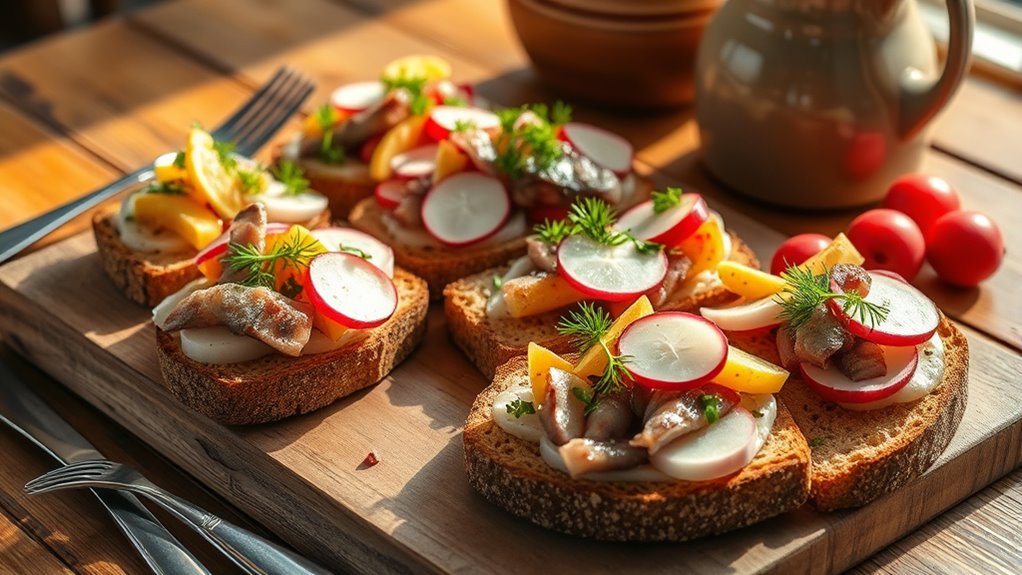
Food in Denmark plays a vital role in shaping social bonds and cultural identity, serving as more than just nourishment. It brings people together through shared meals, traditions, and community events. You’ll find that Danish meals often emphasize togetherness, especially during celebrations like Christmas and Midsummer. These gatherings highlight three key aspects:
Food unites Danes through tradition, community, and pride during celebrations and everyday life.
- Tradition: Maintaining recipes and practices passed down generations strengthens cultural roots.
- Community: Food fosters social cohesion, whether at family tables, workplaces, or festivals.
- Identity: Dishes like smørrebrød and flæskesteg symbolize national pride and local heritage.
Frequently Asked Questions
How Has Danish Cuisine Influenced International Culinary Trends?
You’ve probably noticed Danish cuisine’s influence through the global popularity of New Nordic cooking, especially with restaurants like Noma leading the way. This movement emphasizes local, seasonal ingredients and modern techniques, inspiring chefs worldwide. Danish chefs have helped redefine gourmet dining by blending traditional flavors with sustainability and innovation. Their work has set new standards, encouraging other cuisines to focus on regional ingredients and environmentally friendly practices, shaping international culinary trends today.
What Role Do Seasonal Ingredients Play in Everyday Danish Cooking?
You’ll find seasonal ingredients at the heart of Danish cooking, transforming your everyday meals into a celebration of nature’s bounty. Imagine fresh fish and crisp vegetables in winter, or ripe berries and vibrant greens during summer, each ingredient harvested at its peak. These seasonal treasures guarantee your dishes burst with flavor, connect you to the land’s rhythm, and honor Denmark’s deep-rooted tradition of using what’s freshest and most available.
Are Vegetarian or Vegan Options Widely Available in Denmark?
Yes, vegetarian and vegan options are widely available in Denmark. You’ll find numerous restaurants, cafes, and grocery stores offering plant-based dishes, reflecting the growing popularity of sustainable eating. Many traditional eateries now incorporate vegetarian choices, and innovative chefs create modern vegan versions of classic Danish favorites. Urban areas like Copenhagen are especially known for their vibrant vegan scene, making it easy for you to enjoy diverse, delicious plant-based meals across the country.
How Do Traditional Danish Desserts Compare to Other European Sweets?
You’ll find that traditional Danish desserts are lighter and fruit-focused compared to many European sweets, emphasizing seasonal berries and stewed fruits like rødgrød. Unlike rich, creamy French or Italian desserts, Danish treats often use simple ingredients like berries, apples, or rhubarb, prepared as compotes or puddings. They favor modest, hearty flavors that highlight natural sweetness, aligning with their culinary emphasis on freshness and seasonal ingredients.
What Are Modern Innovations Blending Old Danish Recipes With Contemporary Cuisine?
You won’t believe how Danish chefs are reinventing classics with bold, modern twists. They blend traditional recipes like frikadeller and smørrebrød with innovative techniques, locally sourced ingredients, and contemporary plating. Think reimagined seafood dishes, Nordic-inspired vegetarian options, and seasonal flavors that honor history while enthralling new palates. This fusion creates a dynamic culinary scene that seamlessly marries Denmark’s rich heritage with the excitement of modern gastronomy.
Conclusion
As you explore Danish cuisine, you’ll find it’s a tapestry woven with history, tradition, and innovation. From hearty breads to refined New Nordic dishes, each bite tells a story of cultural resilience and creativity. Remember, food isn’t just sustenance—it’s a mirror reflecting Denmark’s soul. So, savor every flavor, for in doing so, you partake in a timeless dance between past and present, where every meal becomes a chapter in a living culinary story.
Evergreen bestsellers Picks
bestsellers
As an affiliate, we earn on qualifying purchases.