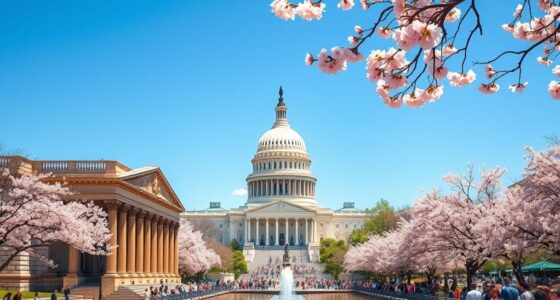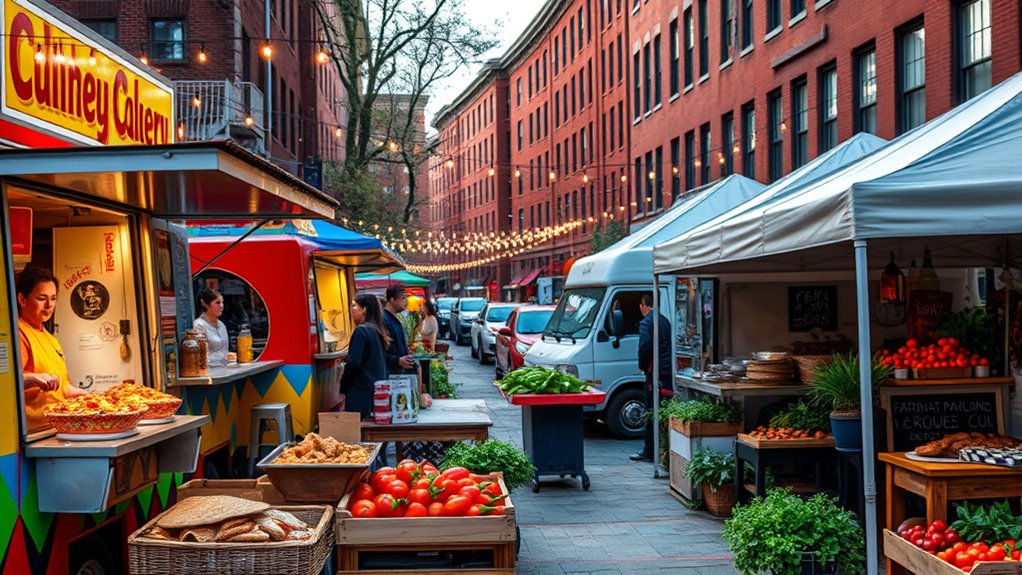

The cuisine and culinary traditions of the District of Columbia showcase a vibrant blend of multicultural flavors, historic eateries, and innovative movements. You’ll find iconic restaurants like Old Ebbitt Grill and Ben’s Chili Bowl reflecting the city’s history, alongside diverse ethnic cuisines like Ethiopian, Latin American, Greek, and West African. Modern trends emphasize farm-to-table practices, markets, and sustainability. If you explore further, you’ll discover how D.C.’s food scene continues to celebrate its rich heritage and evolving culinary identity.
Prime for Young Adults — start your free trial
Fast free delivery, streaming and member deals for eligible 18–24 year olds.
As an affiliate, we earn on qualifying purchases.
Key Takeaways
- D.C.’s cuisine has roots in 1800s public eating houses, shaped by politics, culture, and migration, reflecting resilience and community.
- The city boasts diverse ethnic cuisines, including Ethiopian, West African, Latin American, and Greek, driven by its multicultural population.
- Historic venues like Old Ebbitt Grill and Ben’s Chili Bowl symbolize D.C.’s evolving identity and cultural heritage.
- Modern trends feature fusion cuisine, food markets like Union Market, and sustainable, farm-to-table practices supporting local farmers.
- African American culinary contributions and community-driven initiatives play a vital role in preserving and celebrating D.C.’s culinary legacy.
Washington D.C. historic restaurant gift set
As an affiliate, we earn on qualifying purchases.
As an affiliate, we earn on qualifying purchases.
The Roots of D.C. Dining: Early Establishments and Influences
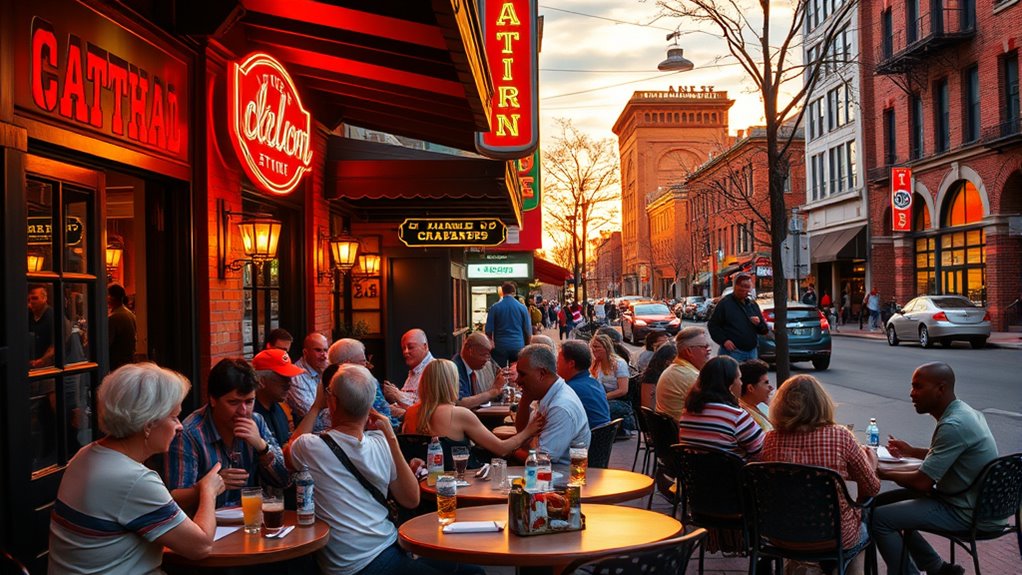
The roots of D.C. dining trace back to the 1800s, when public eating houses first appeared along Pennsylvania Avenue. You can imagine stepping into these early establishments, where locals and visitors gathered for simple, hearty meals. These venues laid the foundation for the city’s culinary scene, serving as social hubs in a rapidly growing capital. As D.C. expanded, so did its food offerings, influenced by politics, culture, and migration. You might not realize that these early eateries provided more than sustenance—they fostered community and helped shape the city’s identity. From modest taverns to grand establishments, each played a role in establishing D.C. as a place where food became intertwined with history and civic life. Additionally, the introduction of early culinary influences helped diversify and enrich the city’s gastronomic landscape, laying the groundwork for today’s vibrant dining scene.
As an affiliate, we earn on qualifying purchases.
Historic Eateries That Define the City’s Culinary Heritage
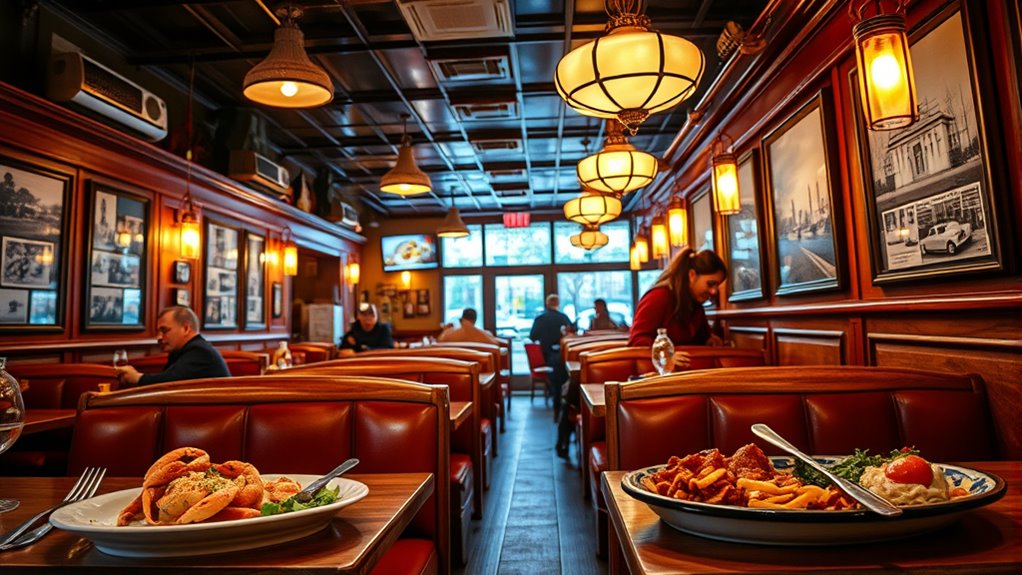
You can’t explore D.C.’s culinary history without mentioning Old Ebbitt Grill and Ben’s Chili Bowl. These iconic eateries have served the city for generations, shaping its food culture and community spirit. Their stories reflect the city’s evolving identity and enduring traditions. Additionally, many of these historic establishments have adapted their menus and decor to honor local history and cultural heritage, further enriching the city’s culinary landscape.
Old Ebbitt Grill
Old Ebbitt Grill stands as a cornerstone of Washington, D.C.’s culinary history, having operated continuously since 1856. You can’t visit the city without experiencing its historic ambiance and classic American fare, especially its renowned oysters. Located near the White House, it’s a favorite spot for locals and visitors alike, offering a glimpse into the city’s past. Inside, you’ll find vintage decor that transports you to a bygone era, while the lively atmosphere reflects its long-standing role in D.C.’s social scene. The menu emphasizes traditional dishes with a focus on fresh seafood and hearty American classics. Whether you’re grabbing a quick bite or enjoying a leisurely dinner, Old Ebbitt Grill provides a rich, authentic taste of D.C.’s culinary heritage. Additionally, the restaurant’s commitment to using fresh ingredients ensures a high-quality dining experience that has kept it a beloved establishment for generations.
Ben’s Chili Bowl
Ben’s Chili Bowl stands as a legendary symbol of Washington, D.C.’s vibrant culinary scene, embodying the city’s rich history and cultural resilience. Since opening in 1958, it’s become a gathering place for locals and visitors alike, serving iconic half-smokes and chili dishes that define D.C.’s soul. You’ll find that its walls echo stories of civil rights, politics, and community activism. This historic eatery has weathered social changes and remains a beacon of Black entrepreneurship and cultural pride. Whether you’re grabbing a quick meal or soaking in the lively atmosphere, Ben’s Chili Bowl offers more than just food—it’s a symbol of the city’s enduring spirit and diverse heritage. It’s a must-visit spot to experience D.C.’s culinary and cultural legacy firsthand. Additionally, the restaurant’s history is closely linked to the city’s broader cultural heritage, making it a meaningful destination for those interested in exploring D.C.’s multifaceted identity.
As an affiliate, we earn on qualifying purchases.
International Flavors Shaping D.C.’s Food Scene

Thanks to its diverse population, D.C.’s food scene is a vibrant mosaic of international flavors that continuously shape its culinary identity. You’ll find influences from around the world, creating a rich and dynamic dining experience. Immerse yourself in authentic Ethiopian dishes like injera and tibs, or explore Latin American flavors through pupusas and empanadas. Mediterranean options like Greek mezze and modern twists on traditional recipes are also common. African diaspora cuisines, such as Ethiopian and West African, thrive in the city’s vibrant neighborhoods. Here’s what you can expect:
- Ethnic restaurants celebrating Asian, African, and Latin American cuisines
- Fusion dishes blending global techniques with local ingredients
- Cultural food festivals showcasing international chefs
- Markets offering exotic spices and ingredients
- Neighborhood hotspots with authentic global flavors
As an affiliate, we earn on qualifying purchases.
The Impact of the Farm-to-Table Movement on Local Cuisine
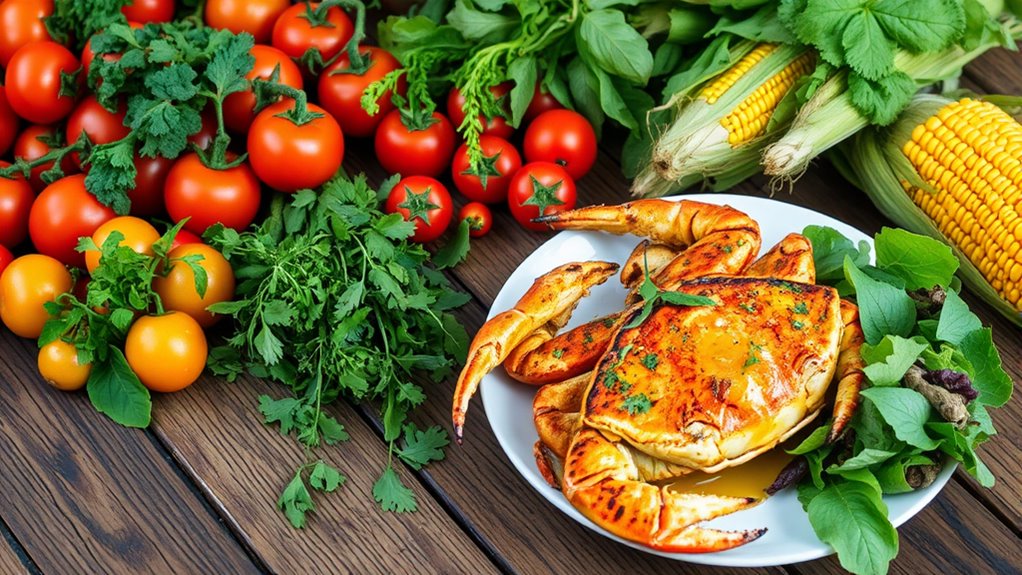
The farm-to-table movement has considerably reshaped D.C.’s culinary landscape by emphasizing fresh, locally sourced ingredients in restaurant menus. You’ll notice more eateries partnering with nearby farms to guarantee seasonal produce, organic meats, and dairy make their way onto your plate. This approach encourages chefs to create dishes that reflect the region’s agricultural offerings, promoting sustainability and supporting local farmers. As a diner, you benefit from fresher flavors and healthier options, while the community gains economic strength through increased farm revenue. Restaurants frequently update their menus to match what’s in season, fostering a connection between you and the local food system. Overall, this movement makes your dining experience more authentic, responsible, and aligned with regional agricultural practices. Additionally, the integration of smart indoor gardens in local food production can further enhance the availability of fresh, seasonal ingredients year-round.
Vibrant Markets and Food Hubs in the Capital
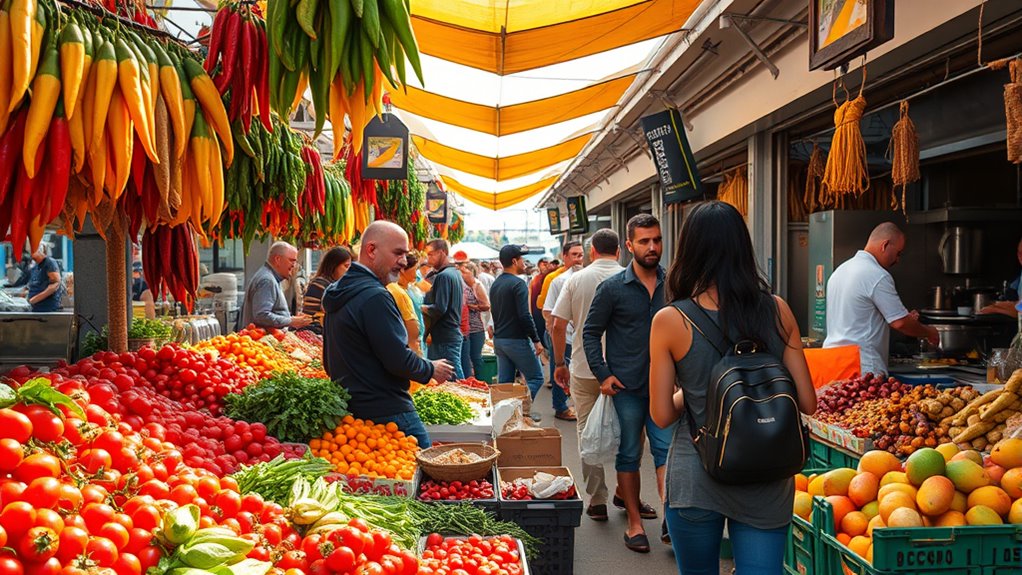
Vibrant markets and food hubs serve as the heartbeat of D.C.’s culinary scene, offering a dynamic space where local farmers, artisans, and chefs converge to showcase the city’s rich food culture. You can explore diverse offerings, from fresh produce to handcrafted goods, and experience the city’s multicultural flavors firsthand. These hubs foster community connections and support sustainable practices. Highlights include:
Discover D.C.’s vibrant markets where local artisans, farmers, and chefs showcase diverse, multicultural flavors and sustainable practices.
- Union Market: A modern culinary destination with artisanal vendors and innovative eateries.
- Eastern Market: A historic spot filled with fresh produce, baked goods, and local crafts.
- Columbia Heights: An eclectic neighborhood home to international markets and diverse cuisines.
- Adams Morgan: Known for global food stalls and vibrant street food.
- Georgetown Waterfront: Upscale dining with scenic river views.
These venues energize D.C.’s culinary landscape, inviting you to taste and discover local flavors daily. Incorporating sustainable practices helps ensure these food hubs remain vital and resilient for future generations.
Modern Trends and Innovations in D.C. Gastronomy
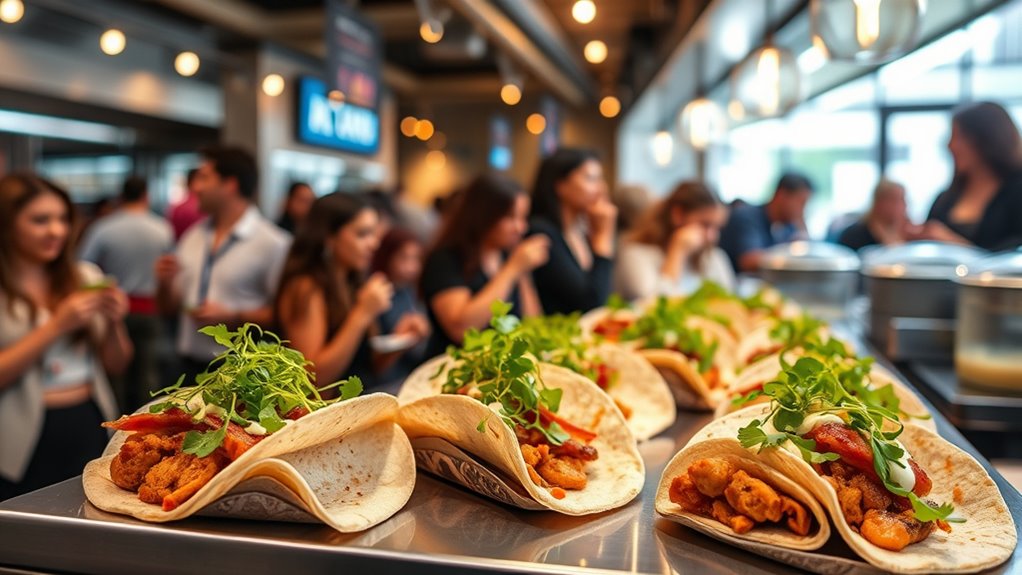
Modern trends and innovations are reshaping D.C.’s culinary scene, making it a hub for creative experimentation and sustainable practices. You’ll notice many restaurants blending global flavors through fusion cuisine, offering exciting new dishes that combine traditional techniques with modern ingredients. Innovative dining experiences, like pop-up events and food festivals, bring community engagement and excitement. You may also find educational programs that teach about sustainable food systems, connecting diners to local farms and seasonal ingredients. Celebrity chefs have helped elevate D.C.’s reputation, infusing the city with international influence. The farm-to-table movement continues to grow, emphasizing locally sourced ingredients that support area farmers and promote environmental responsibility. Additionally, many establishments are adopting local sourcing practices to reduce carbon footprints and strengthen community ties. Overall, D.C.’s culinary scene thrives on innovation, sustainability, and a dynamic mix of cultural influences.
African American Culinary Contributions and Legacy
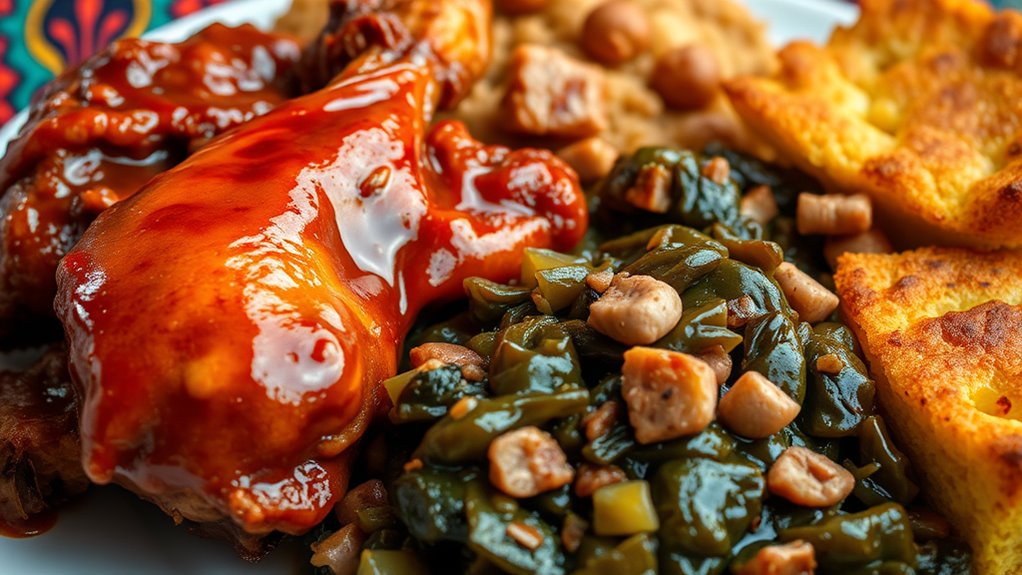
African American chefs and entrepreneurs have played a pivotal role in shaping D.C.’s culinary landscape, introducing flavors, techniques, and traditions that continue to influence the city’s food scene today. Their legacy is evident in iconic eateries, inventive soul food, and community-driven culinary initiatives. They helped establish beloved establishments like Ben’s Chili Bowl, a symbol of resilience and cultural pride. Their influence extends to soul food’s rich flavors, which remain central to D.C.’s identity. African American culinary contributions also include:
African American chefs have shaped D.C.’s culinary scene with iconic eateries and rich soul food traditions.
- Pioneering innovative takes on traditional dishes
- Creating platforms for Black-owned restaurants
- Fostering community through food events
- Preserving cultural heritage via culinary storytelling
- Mentoring new generations of Black chefs
- The ongoing sustainability efforts within these culinary traditions ensure their relevance and resilience for future generations.
Their impact guarantees that African American culinary traditions remain vibrant and celebrated across D.C. today.
Notable Chefs and Culinary Personalities of D.C
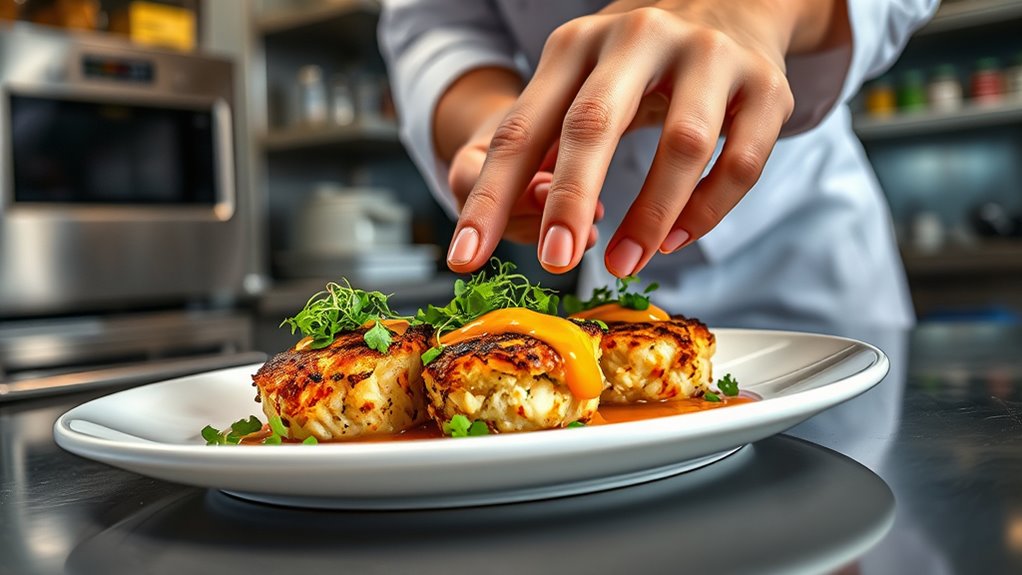
You’ll discover that D.C. has been shaped by influential chefs and culinary personalities who push the boundaries of local cuisine. These innovators bring fresh ideas, blending tradition with modern techniques, and gaining recognition both citywide and beyond. Their stories highlight how individual creativity continues to define the city’s vibrant food scene. Additionally, many of these chefs draw inspiration from global flavors, creating innovative dishes that reflect the city’s diverse cultural influences.
Influential Local Chefs
Some of the most influential figures shaping D.C.’s culinary scene are renowned chefs and personalities who bring innovation, authenticity, and a deep connection to the city’s diverse food culture. These chefs have helped define the local palate through their creativity and dedication. For example, you might follow chefs like:
- Kwame Onwuachi, known for blending African and American flavors with modern techniques
- Edouardo Jordan, bringing Southern comfort food with a contemporary twist
- Priya Krishna, elevating Indian cuisine with inventive dishes
- Ned Bell, focusing on sustainable seafood and farm-to-table practices
- Maryam Montague, showcasing Middle Eastern flavors with a fresh perspective
Each chef contributes unique styles that elevate D.C.’s culinary reputation and inspire new generations of cooks. Additionally, many of these chefs incorporate cultural heritage into their menus, enriching the city’s culinary diversity.
Culinary Innovators and Legends
Culinary innovators and legends in D.C. have shaped the city’s vibrant food scene through their groundbreaking techniques and visionary approaches. You’ll find their influence in everything from upscale dining to community-focused eateries. These chefs push boundaries with fusion cuisines, sustainable practices, and cultural storytelling. Their creativity elevates D.C. beyond traditional American fare, making it a hub for culinary experimentation. Here’s a snapshot of some notable figures:
| Chef/Personality | Specialty | Notable Achievement |
|---|---|---|
| José Andrés | Tapas, Spanish cuisine | Revolutionized D.C. dining scene |
| Spike Gjerde | Farm-to-table | Promotes sustainability |
| Tanya Holland | Soul Food | Celebrates African American heritage |
| Carla Hall | Southern & Comfort Food | TV personality & community advocate |
The Cultural Significance of D.C.’s Food and Dining Traditions
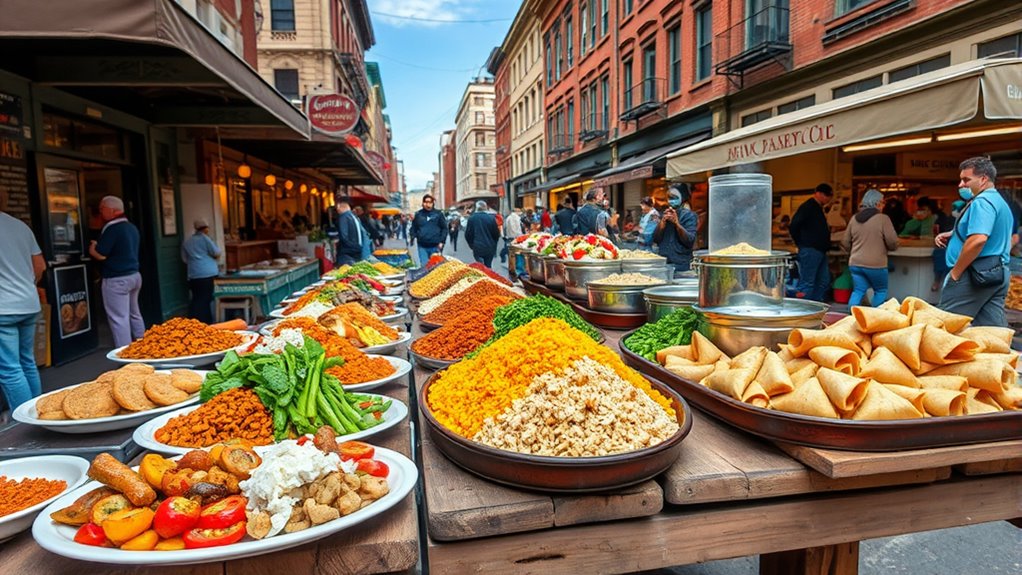
D.C.’s food and dining traditions serve as a vibrant reflection of its diverse history and cultural identity. Your experience with D.C.’s cuisine reveals stories of resilience, community, and change. These traditions highlight the city’s roots in early establishments, African American influence, and presidential patronage. They also embody the city’s evolving multiculturalism and commitment to sustainability. As you explore, you’ll see how food fosters social bonds, preserves heritage, and celebrates innovation.
- Celebrates African American resilience and cultural expression
- Honors political history through historic restaurants
- Reflects ethnic diversity with global flavors
- Supports local farmers and sustainable practices
- Fosters community and social engagement through markets and food festivals
Frequently Asked Questions
How Has D.C.’s Political History Influenced Its Culinary Evolution?
Your understanding of D.C.’s political history reveals how it shaped the city’s culinary scene. You see that presidential patronage influenced iconic restaurants like Harvey’s, while political activism and social change led to the rise of diverse ethnic cuisines, such as Ethiopian and Latin American. You notice how desegregation opened dining opportunities, fostering inclusivity. Overall, politics has driven innovation, diversity, and the growth of community-centered eateries in D.C.
What Role Do Immigrant Communities Play in Shaping D.C.’s Food Scene?
You’ll find that immigrant communities greatly shape D.C.’s food scene, with nearly 20% of residents born abroad. You can experience this diversity through authentic Ethiopian injera, flavorful Latin American pupusas, or Greek mezze at local restaurants. These communities bring their traditions, ingredients, and cooking techniques, making the city’s culinary landscape vibrant and eclectic. Their influence guarantees that D.C. offers a rich, multicultural dining experience for everyone to enjoy.
You’ll notice that seasonal and local ingredients greatly influence D.C. restaurant menus by ensuring dishes are fresh and flavorful. Chefs often update their offerings according to what’s in peak season, supporting local farmers and promoting sustainability. This approach allows you to enjoy ingredients at their best, fosters community connections, and keeps menus dynamic and innovative, reflecting the region’s agricultural bounty and commitment to environmentally conscious dining.
In What Ways Do Historic Venues Preserve D.C.’s Culinary Heritage?
You might think historic venues just preserve old buildings, but they actively keep D.C.’s culinary heritage alive by maintaining traditional recipes, cooking techniques, and stories behind iconic dishes. When you dine at places like Old Ebbitt Grill or Ben’s Chili Bowl, you’re experiencing a taste of the past that connects you to the city’s rich history. These venues foster community pride and keep local food traditions vibrant for future generations.
What Are Emerging Trends in D.C.’S Innovative Dining Experiences?
You’ll notice that D.C.’s innovative dining experiences focus on fusion cuisine, blending traditional techniques with global flavors. You can enjoy unique pop-up events, food festivals, and interactive chef-led classes that make dining memorable. Many venues embrace sustainability and local ingredients, offering seasonal menus that change often. This trend encourages social interactions, cultural exchange, and supports community development, making dining in D.C. not just about food but also about engaging, educational, and memorable experiences.
Conclusion
As you explore D.C.’s vibrant culinary scene, you’ll discover a city where flavors collide like a fireworks display, creating a feast for your senses. From historic eateries to innovative trends, the District’s food scene is nothing short of legendary. Embrace its diverse influences and rich traditions—you’ll find that D.C. isn’t just a city; it’s a culinary universe waiting to be tasted. Get ready to indulge in a dining experience that’s truly out of this world.
NFL season / tailgating Picks
team gear
As an affiliate, we earn on qualifying purchases.