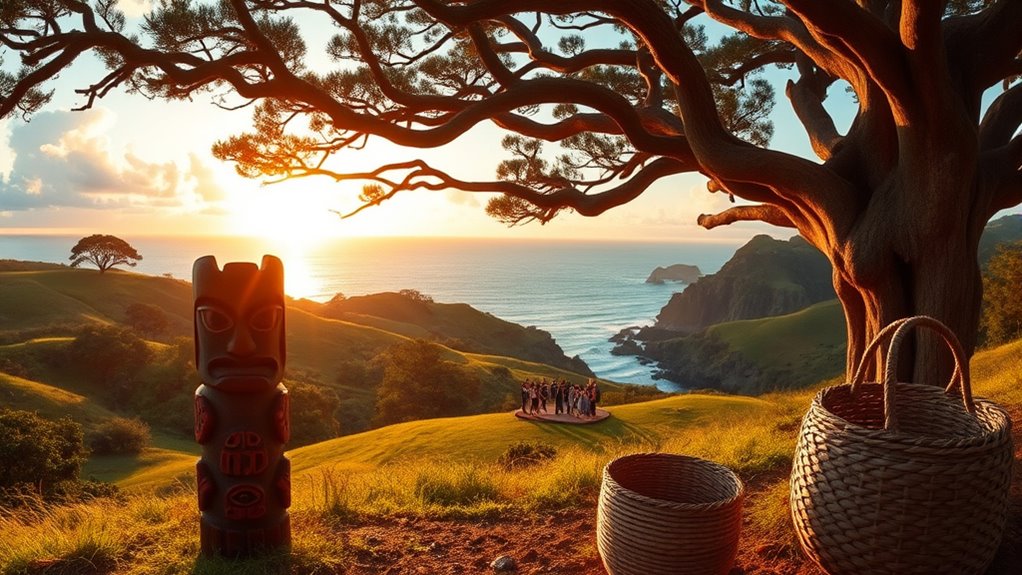

You’re exploring the rich history and vibrant culture of New Zealand, which begins with early Māori settlers arriving from Polynesia around 1250–1300 CE. Their unique society, traditions, and spiritual practices are now celebrated through a Māori revival, language, and arts. European contact in the 17th century brought new influences, leading to the Treaty of Waitangi and conflicts that shaped modern society. If you continue, you’ll uncover how these events combined to create New Zealand’s distinct bicultural identity today.
Key Takeaways
- Māori arrived around 1250–1300 CE, developing a rich culture rooted in land, mythology, language, and spiritual practices.
- European contact began in the 17th century, leading to colonization, land conflicts, and the signing of the Treaty of Waitangi in 1840.
- New Zealand became a nation through social reforms, military contributions in world wars, and active international diplomacy.
- Māori cultural revival emphasizes language revitalization, traditional arts, and recognition of Treaty rights and land claims.
- Contemporary New Zealand promotes biculturalism, Māori representation, and reconciliation, integrating Māori culture into national identity.
Early Māori Settlement and Cultural Foundations
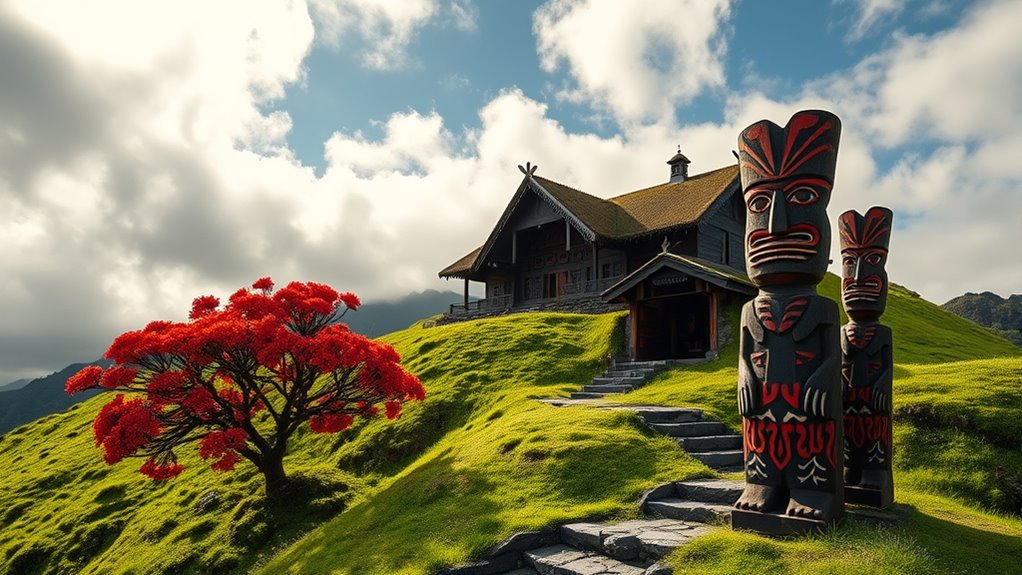
The first Māori settlers arrived from eastern Polynesia around 1250 to 1300 CE, establishing a distinct culture on New Zealand’s islands. You’d find that they lived in tribal groups called iwi and hapū, with strong bonds to land and ancestors through whakapapa. They practiced gardening, fishing, and hunting native birds, creating tools and ornaments from available resources. Over time, their language, mythology, and social structures evolved uniquely, shaping a rich cultural identity. Spiritual practices like the haka and tapu (sacred restrictions) played essential roles in daily life and ceremonies. You’d notice their deep connection to nature and land, which influenced their worldview and traditions. These early foundations laid the groundwork for Māori society, culture, and identity that persists today. High context communication also played a significant role in maintaining social harmony and transmitting knowledge within Māori communities.
European Encounters and Initial Contact
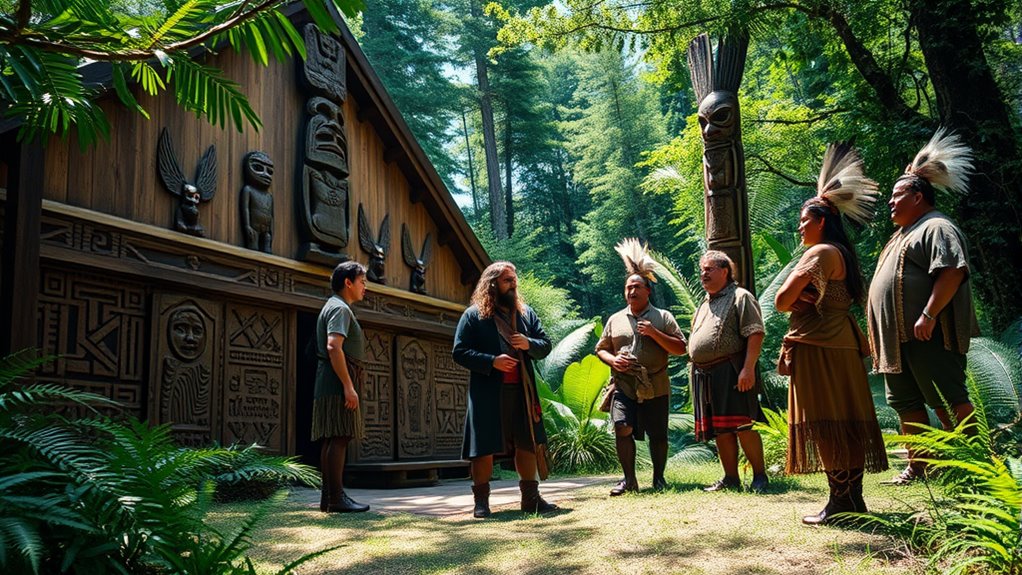
How did European explorers first impact New Zealand? When Abel Tasman arrived in 1642, he was the first European to set eyes on the islands, sparking initial curiosity and cautious interactions with Māori. James Cook’s voyages in 1769–1770 mapped the coastline, establishing detailed charts and opening the door for future contact. Early Europeans, including sealers, whalers, and traders, arrived seeking resources and wealth, bringing new technologies and ideas. Missionaries introduced Christianity and literacy, influencing Māori spiritual practices and social structures. These encounters created exchanges but also tensions, especially as Europeans began to settle more permanently and influence Māori land and society. The introduction of muskets and European goods disrupted traditional ways, setting the stage for deeper colonial interactions. Additionally, Natural Language Processing (NLP) advancements have played a role in understanding and documenting these historical encounters more comprehensively through analysis of texts and records.
The Treaty of Waitangi and Colonial Beginnings

When European settlers arrived in New Zealand, they sought to establish control and secure land, leading to the signing of the Treaty of Waitangi in 1840. This agreement aimed to balance British sovereignty with Māori land rights, but differences in language and interpretation caused ongoing disputes. As a result, the land and political landscape changed rapidly, with colonial authorities expanding their influence. You should understand that the treaty’s dual versions created tensions that still affect New Zealand today. The treaty marked the beginning of formal colonization, shaping societal structures and land ownership. The conflicting interpretations of the treaty’s texts continue to influence sovereignty debates and land rights issues in the country.
Conflicts and Social Change in the 19th Century
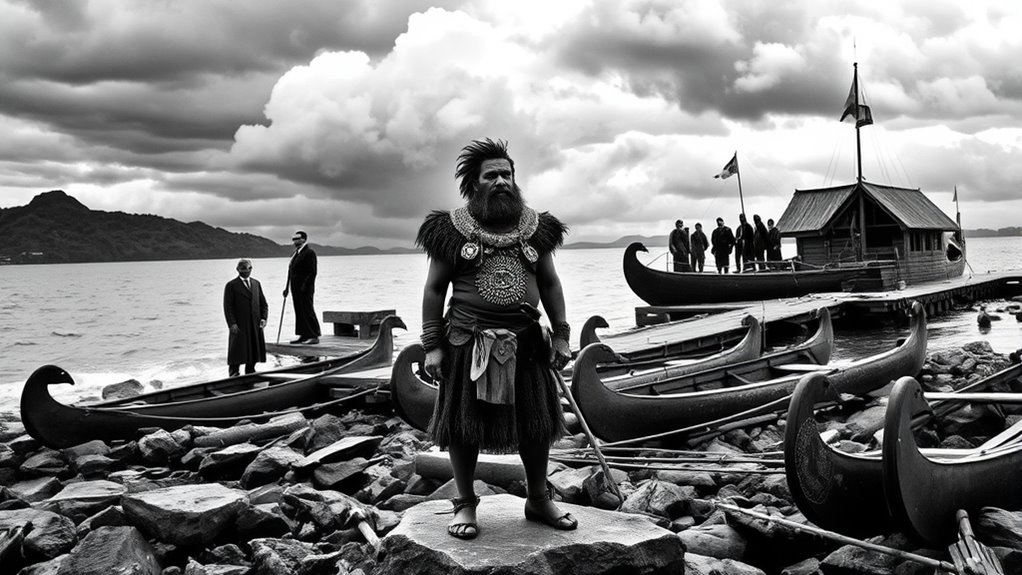
Throughout the 19th century, conflicts over land and sovereignty dramatically transformed New Zealand society. The New Zealand Wars (1840s–1870s) pitted colonial forces against Māori over land control, leading to significant fighting in Waikato and Taranaki. You see, Māori resistance persisted beyond warfare; at Parihaka, leaders like Te Whiti and Tohu organized peaceful protests, which the government suppressed. These conflicts caused land confiscations, reducing Māori landholdings and weakening their social structure. Meanwhile, economic growth from wool, gold rushes, and railway expansion encouraged settlement but also intensified land disputes. Social change came through reforms like the 1877 Education Act and women’s suffrage in 1893, shaping a society grappling with its colonial past and the loss of Māori land and sovereignty. Additionally, the ongoing struggle for Māori land rights highlighted the lasting impacts of these conflicts on indigenous communities.
Path to Nationhood and Global Engagements

You see that the Treaty of Waitangi played a pivotal role in shaping New Zealand’s nationhood and its ongoing relationship with Māori. As you explore the country’s history, you’ll notice how wartime contributions in both World Wars established New Zealand’s presence on the global stage. Additionally, the nation’s active role in international diplomacy reflects its evolving identity and commitment to global engagement. The country’s dedication to cultural preservation continues to influence its international relationships and domestic policies.
Treaty of Waitangi Significance
The Treaty of Waitangi holds a pivotal place in New Zealand’s journey toward nationhood and its place on the global stage. It marked the formal agreement between Māori chiefs and the British Crown, shaping sovereignty and land rights. However, differences between the English and Māori versions led to ongoing disputes over authority and land ownership. This treaty became the foundation for New Zealand’s legal and political development, influencing how the nation balances Māori culture with its Western governance. Recognizing its significance has driven efforts toward reconciliation, land claims, and cultural revival.
- Acknowledges Māori as tangata whenua, or indigenous people
- Sparks ongoing debates about sovereignty and land rights
- Serves as a basis for legal and political reconciliation
- Influences New Zealand’s bicultural identity and global image
Wartime Contributions
Rising to the challenge of global conflict, New Zealand’s wartime contributions played a crucial role in shaping its national identity and international reputation. During World War I and II, thousands of New Zealanders fought overseas, notably at Gallipoli and North Africa, demonstrating resilience and bravery. These sacrifices fostered a sense of unity and pride, solidifying New Zealand’s place on the world stage. Your participation in these conflicts also helped establish New Zealand as a confident, independent actor in global affairs. Here’s a quick overview:
| Conflict | Key Contributions | Impact |
|---|---|---|
| World War I | Gallipoli campaign, overseas infantry | National identity, ANZAC legacy |
| World War II | North Africa, Pacific, Europe theaters | Global recognition, military reputation |
| Post-War Efforts | Peacekeeping, NATO involvement | International engagement |
These efforts mark a pivotal step toward the nationhood and global engagement you see today.
International Diplomacy Roles
How did New Zealand establish its role on the global stage through diplomacy? You see, since gaining self-governance, New Zealand actively participated in international organizations like the League of Nations and United Nations. The country promoted peace, disarmament, and human rights, often advocating for nuclear-free policies. New Zealand’s diplomatic efforts also include peacekeeping missions, environmental treaties, and fostering regional partnerships in the Pacific. These actions reflect its commitment to sovereignty and global responsibility. Additionally, New Zealand has engaged in data privacy and ethical considerations to ensure responsible use of information in its diplomatic initiatives.
Māori Revival and Cultural Resurgence
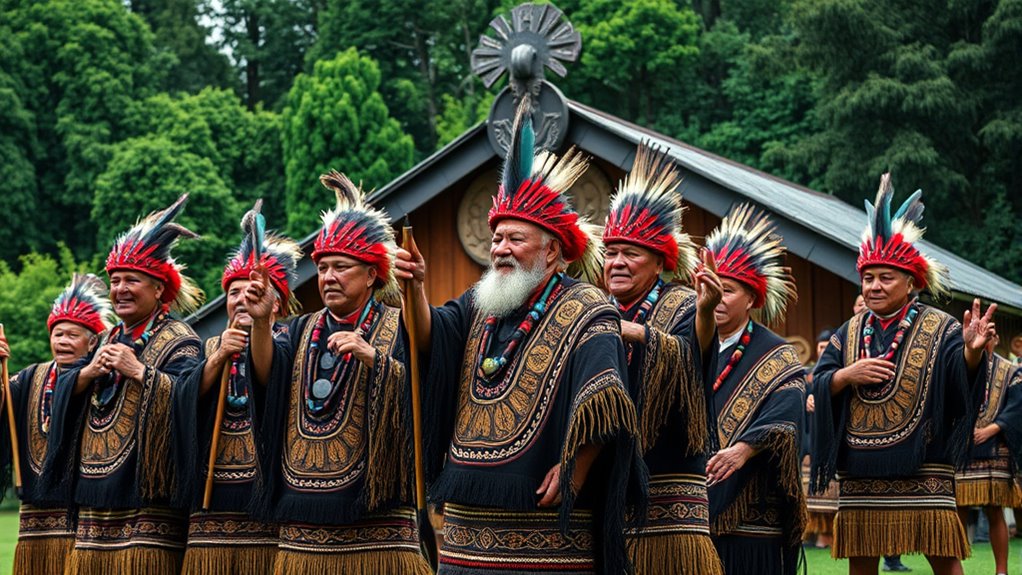
Since the late 20th century, the Māori community has actively worked to reclaim and celebrate its cultural heritage, sparking a widespread revival across New Zealand. You’ll notice a renewed pride in te reo Māori (the language), with schools and media incorporating it daily. Traditional arts like carving, weaving, and kapa haka (performing arts) have flourished, restoring ancient skills and stories. Māori activism for land rights and recognition gained momentum, leading to the establishment of the Waitangi Tribunal in 1975. Additionally, the cultural renaissance has inspired a new generation to embrace and preserve Māori customs and traditions. Today, Māori symbols, language, and customs are integrated into national identity, ceremonies, and public life. This resurgence strengthens Māori cultural identity, preserves traditions for future generations, and fosters a sense of pride and belonging throughout the country.
Contemporary Society and Bicultural Identity
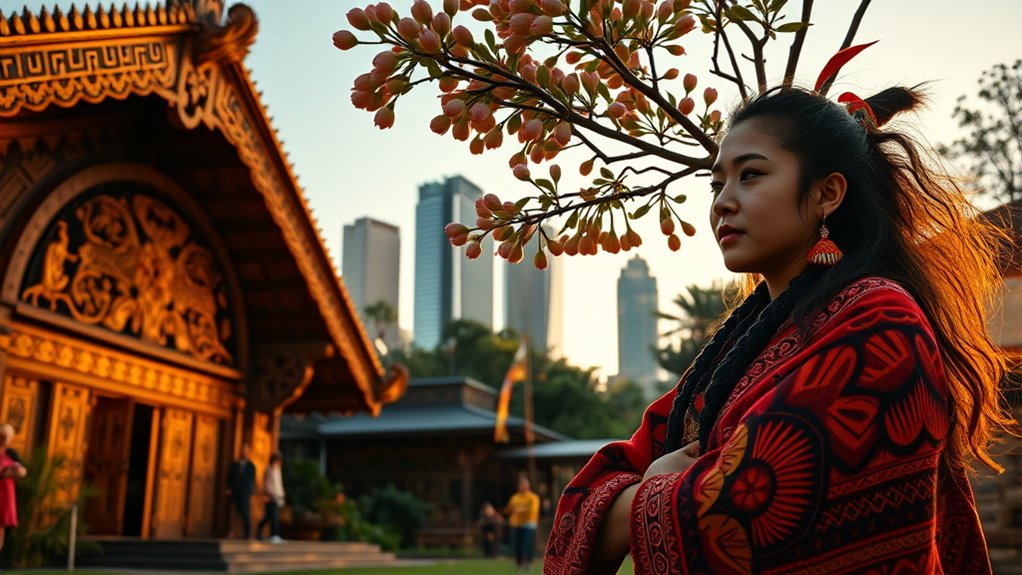
You’re likely aware that the Māori language has seen a strong revival, becoming an important symbol of cultural identity. Progress on treaty settlements has helped address historical grievances and foster reconciliation. Additionally, bicultural governance initiatives now promote shared decision-making, reflecting New Zealand’s commitment to honoring both Māori and Pākehā perspectives. The country’s intelligence community also plays a role in safeguarding its cultural heritage and national security.
Māori Language Revival
The Māori language has experienced a remarkable revival in contemporary New Zealand society, reflecting a renewed pride in indigenous culture and identity. You now see Māori words in everyday conversations, schools, and media, showing a strong commitment to revitalization. This movement honors Māori heritage and promotes bicultural understanding. Government support, such as official language status and Māori language programs, fuels this growth. Community efforts, including kapa haka performances and language nests, help preserve and teach Māori to new generations. You can also participate in language courses or embrace Māori customs, strengthening your connection to the culture. Additionally, research highlights the importance of artistic expression in fostering a deeper appreciation and understanding of Māori traditions and stories.
- Celebrations like Māori Language Week boost awareness and participation
- Official bilingual signage promotes daily use of Māori and English
- Schools integrate Māori language and history into curricula
- Media outlets increase Māori content, normalizing its use
Treaty Settlements Progress
Efforts to settle historical grievances through Treaty of Waitangi settlements have become a central part of New Zealand’s journey toward bicultural reconciliation. You see, these settlements acknowledge past injustices, especially land confiscations and breaches of the Treaty. The Waitangi Tribunal, established in 1975, investigates claims and recommends reparations, including financial compensation, land transfers, and cultural redress. Over the years, successive governments have negotiated with Māori iwi and hapū, resulting in numerous settlements that restore some land and resources and recognize Māori rights. These agreements foster a sense of justice and help rebuild trust between Māori and Pākehā communities. While challenges remain, the progress in settling grievances demonstrates New Zealand’s commitment to acknowledging its history and fostering a more inclusive, bicultural national identity. Additionally, ongoing efforts in AI-supported data analysis are improving the efficiency and transparency of the settlement process, ensuring that more grievances are addressed fairly and promptly.
Bicultural Governance Initiatives
Contemporary New Zealand actively incorporates bicultural governance initiatives to recognize and honor Māori sovereignty and cultural values. You’ll see this reflected in government structures, policies, and public ceremonies that acknowledge Māori principles and language. These efforts aim to create a more inclusive society where Māori perspectives influence decision-making.
- Co-governance arrangements, like those in fisheries and forests, share authority between Māori and the Crown.
- The Waitangi Tribunal provides a platform for addressing historical grievances and land claims.
- Māori language revitalization is embedded in official signage, education, and media.
- Māori representation in local and national politics fosters shared decision-making and cultural recognition.
These initiatives strengthen bicultural relationships and embed Māori identity into New Zealand’s national fabric.
New Zealand’s Role in the Modern World
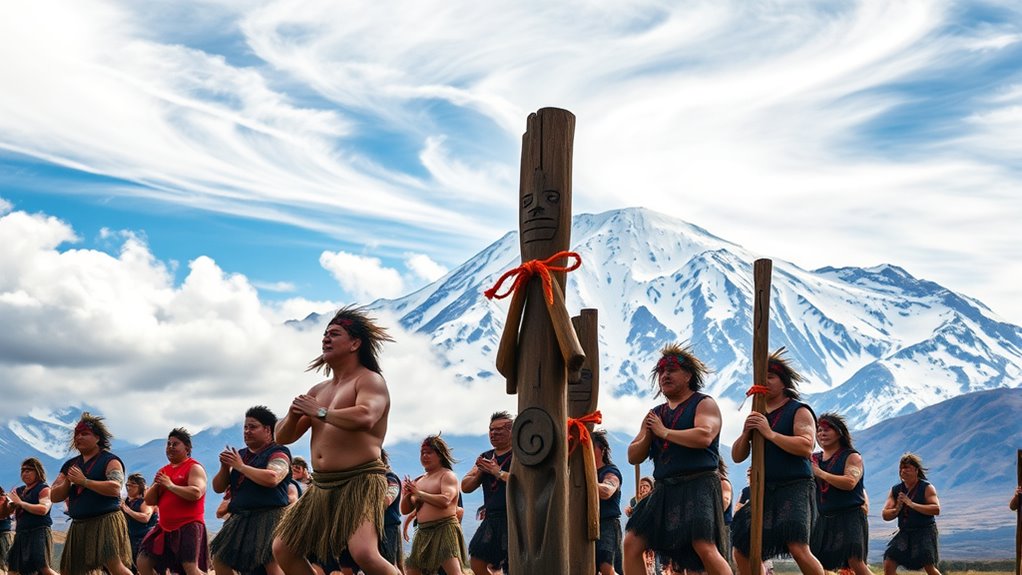
New Zealand plays an influential role on the global stage by actively engaging in international diplomacy, peacekeeping, and environmental efforts. You see, the country often advocates for climate action, working to protect its unique landscapes and promote sustainable development worldwide. It’s also a leader in peacekeeping missions, contributing troops and resources to support stability in conflict zones. New Zealand champions human rights and promotes multilateral cooperation through organizations like the United Nations. The nation’s commitment to environmental sustainability is evident in policies that combat climate change and preserve native ecosystems. Additionally, New Zealand fosters strong diplomatic relations, emphasizing diplomacy and collaboration. Its active participation in global issues reflects a desire to shape a more sustainable, peaceful, and equitable world for future generations.
Frequently Asked Questions
How Did MāOri Society Adapt After European Contact?
After European contact, you see Māori society adapt through adopting new technologies like muskets, which changed warfare. You notice increased trade and the influence of Christianity, leading to cultural shifts. Land disputes and conflicts, such as the Māori Wars, challenge traditional ways. Despite these changes, you observe Māori maintaining strong ties to land, language, and customs, while also integrating new ideas that shape their evolving social and spiritual life.
What Are the Key Symbols of MāOri Culture Today?
Māori culture today shines like a carved meeting house, rich with symbols of identity. The koru, resembling new fern fronds, represents growth and renewal, while the haka roars with ancestral pride. The tiki embodies spiritual connection, and the Māori language breathes life into daily conversations. These symbols weave a vibrant tapestry of heritage, reminding you of a resilient people whose traditions continue to flourish amid modern landscapes.
How Has the Treaty of Waitangi Impacted Modern Land Rights?
The Treaty of Waitangi considerably impacts your land rights today. It recognized Māori ownership, but disputes over its interpretation led to land loss and grievances. You’re affected by the Waitangi Tribunal, which seeks to address historic injustices and settle claims. Co-governance initiatives and legal protections now help preserve Māori land and culture. Overall, the treaty remains central to ongoing efforts for land justice and reconciliation in New Zealand.
What Role Did Women Play in New Zealand’s History?
Women in New Zealand have played a essential role in shaping the nation’s history. You contributed to societal progress by fighting for voting rights, becoming the first country to grant women the vote in 1893. You actively participated in social and political movements, influencing reforms and advocating for equality. Your efforts helped establish a progressive, inclusive society where women’s voices continue to shape national identity and policy.
How Does New Zealand Balance MāOri and PāKehā Identities Now?
You see, New Zealand actively balances Māori and Pākehā identities by embracing biculturalism and promoting mutual respect. You’re encouraged to participate in Māori language, customs, and ceremonies, while also celebrating Pākehā traditions. The government supports co-governance initiatives and Māori land rights through the Waitangi Tribunal. This approach fosters a society where both cultures coexist, enriching the national identity without diminishing either group’s significance.
Conclusion
As you explore New Zealand’s rich history and vibrant culture, you witness a tapestry of tradition and transformation. From Māori mastery to modern multiculturalism, the island’s inspiring influence invites you to embrace its enduring spirit. Celebrate the stories of resilience, renewal, and unity that shape this beautiful land. Truly, New Zealand’s story is a splendid saga of strength, spirit, and significance—a mesmerizing call to cherish and champion its cultural core.