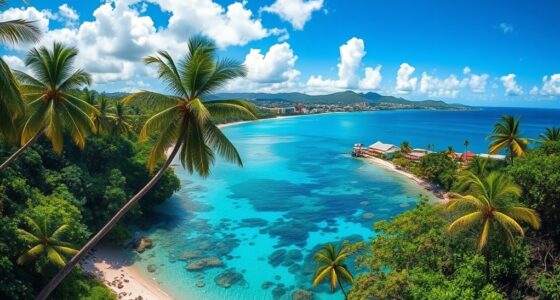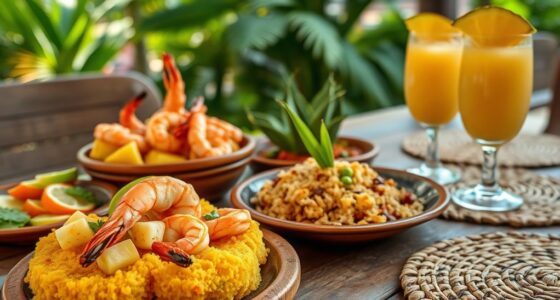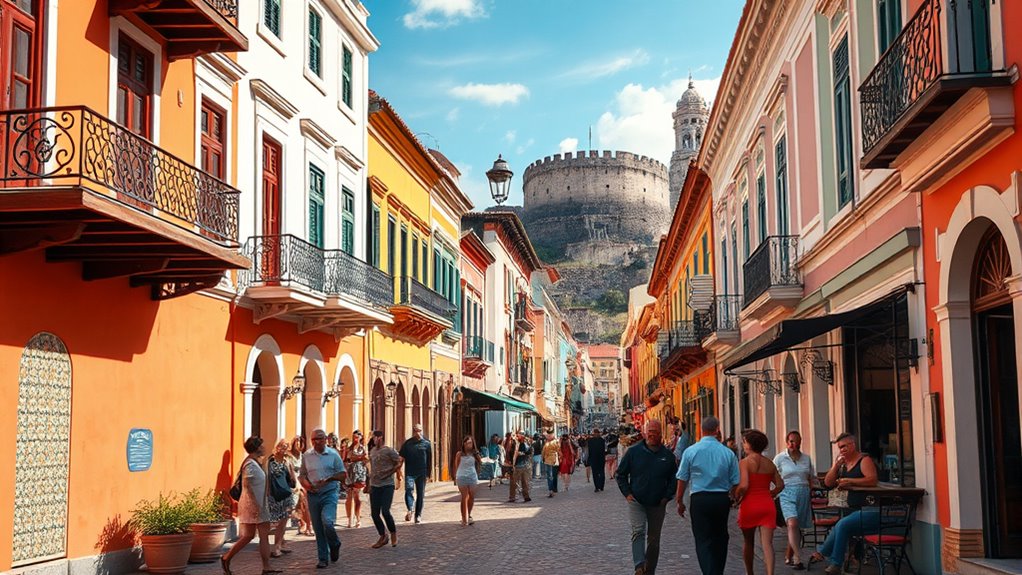
Puerto Rico’s history and culture blend indigenous Taino roots, Spanish colonial influences, African traditions, and modern American ties. You’ll see this mix in the island’s vibrant art, lively music like bomba and plena, and flavorful cuisine such as mofongo and arroz con gandules. Despite challenges like natural disasters and economic struggles, Puerto Ricans showcase resilience, preserving their heritage through festivals, historic sites, and community spirit. To uncover more about this rich heritage, keep exploring the island’s story.

Get travel and outdoor gear delivered free with Prime
- Fast, free delivery on millions of items
- Prime Video, Amazon Music and more included
- Member-only deals all year
Key Takeaways
- Puerto Rico’s history is shaped by its indigenous Taino roots, Spanish colonization, and American control, creating a rich cultural fusion.
- Taino society was organized into villages led by caciques, with a spiritual life centered around nature and ancestors.
- The island’s culture features vibrant music, dance, and cuisine blending indigenous, Spanish, and African influences.
- Heritage preservation efforts protect archaeological sites, historic landmarks, and cultural symbols vital to Puerto Rican identity.
- Despite challenges, Puerto Rico demonstrates resilience through community spirit, cultural pride, and ongoing efforts to sustain its traditions.
Puerto Rican cultural art prints
As an affiliate, we earn on qualifying purchases.
As an affiliate, we earn on qualifying purchases.
Indigenous Roots and Pre-Colonial Society
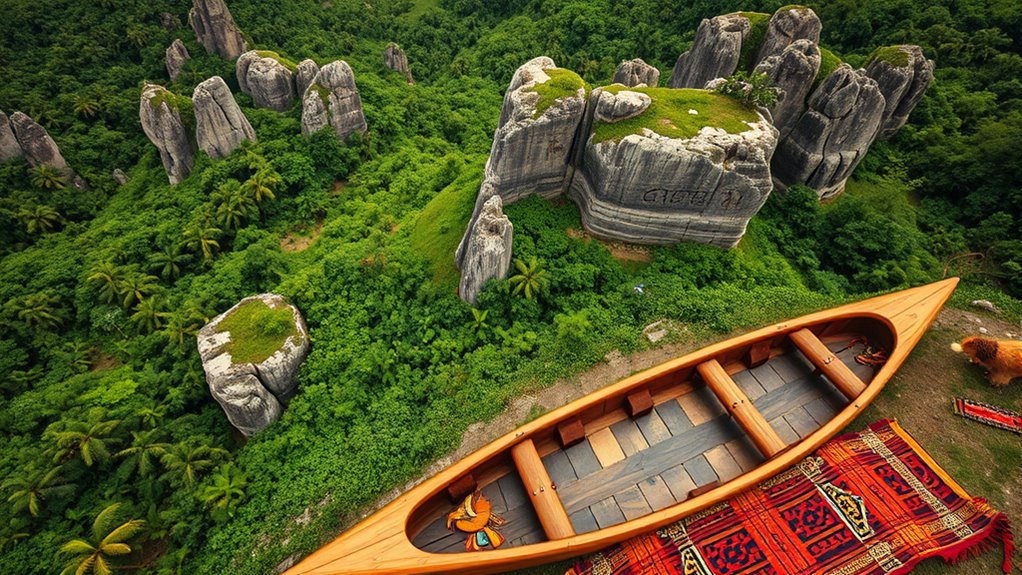
Before European contact, Puerto Rico was inhabited by ancestors of the Arawaks, specifically the Taino people, who migrated from present-day Venezuela. You’d find their society organized into small villages called yucayeques, led by caciques or chiefs. The Taino people developed a rich spiritual life and a complex social structure. Agriculture formed the backbone of their economy, with crops like cassava and sweet potatoes, complemented by fishing and craftsmanship. Their communities thrived on shared resources and cultural traditions. You can still see remnants of their influence today in place names and cultural practices. Despite hardships brought by colonization, the Taino legacy remains a essential part of Puerto Rican identity, symbolizing resilience and deep-rooted history.
Puerto Rican bomba plena music CD
As an affiliate, we earn on qualifying purchases.
As an affiliate, we earn on qualifying purchases.
Spanish Conquest and Colonial Foundations
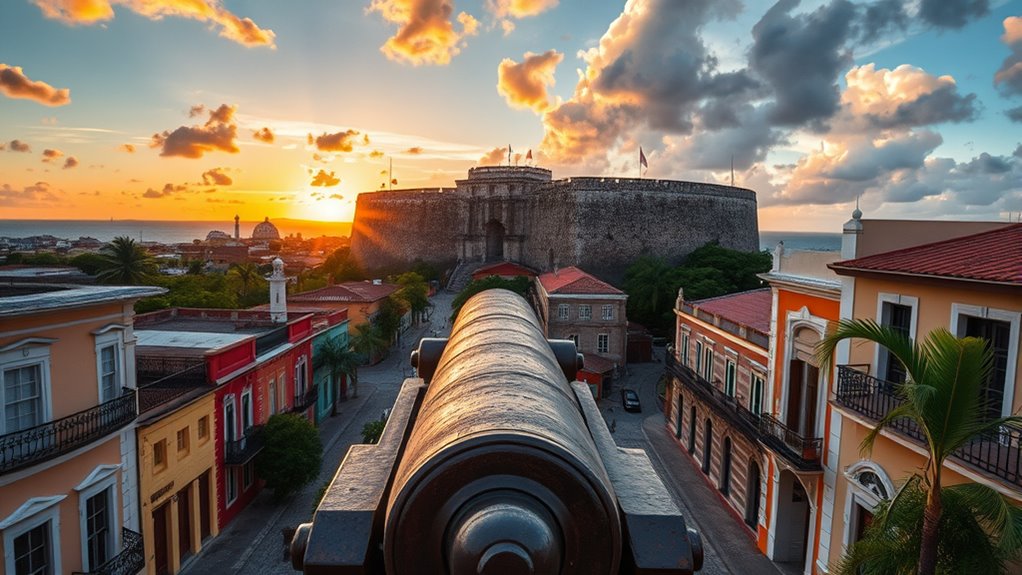
When Columbus arrived in 1493, he claimed Puerto Rico for Spain, marking the start of colonial rule. You’ll see how the Taino society, with its complex culture and social structure, was disrupted by Spanish settlement. The Spanish established towns and cultivated sugar, transforming the island’s economy and laying the foundation for its colonial identity. Additionally, the introduction of European influences significantly altered the island’s cultural landscape.
Arrival of Columbus
Christopher Columbus’s arrival in Puerto Rico on November 19, 1493, marked a pivotal moment in the island’s history, initiating Spanish exploration and conquest. You witness how this event transformed the island’s fate, leading to colonization and cultural shifts. The arrival set in motion key developments:
- Columbus names the island San Juan Bautista, later exchanging names with the city.
- Spanish settlers establish the first settlements, including San Juan, the future capital.
- African slaves are brought in, adding to the island’s diverse population and labor force.
This initial contact opened the door for Spanish dominance, reshaping Puerto Rico’s social, political, and economic landscape. The event marks the beginning of centuries of colonial influence that would define Puerto Rican history for generations.
Taino Society & Culture
The arrival of Columbus and subsequent Spanish conquest dramatically altered the lives of Puerto Rico’s indigenous inhabitants, the Taino people. You might imagine their society as vibrant and organized, centered around chiefs called caciques. They practiced agriculture, fishing, and crafted tools and ornaments from natural materials. Their spiritual life involved ceremonies honoring nature gods and ancestors. When the Spanish arrived, everything changed: their land was taken, their population decimated by disease and violence, and their culture suppressed. You’ll see this shift reflected in their social and economic structures, which were replaced by colonial systems. Here’s a quick snapshot:
| Aspect | Description |
|---|---|
| Society | Organized into small villages called yucayeques |
| Leaders | Caciques or chiefs |
| Economy | Agriculture, fishing, craftsmanship |
| Spirituality | Ceremonies honoring nature gods |
| Decline | Population drastically decreased due to disease and violence |
Additionally, their traditional art forms and oral histories suffered significant suppression during the colonial period.
Spanish Settlement & Economy
Spanish settlers arrived in Puerto Rico in 1493, establishing a new chapter of conquest and colonization. You will see that their presence transformed the island’s economy and society. First, they introduced agriculture, especially sugar cane, which became a key export. Second, they built settlements like San Juan, turning it into a strategic port and administrative hub. Third, they brought enslaved Africans, adding to the cultural mix and labor force. These factors laid the groundwork for Puerto Rico’s colonial economy. Over time, the economy shifted from indigenous practices to plantation agriculture and trade under Spanish rule. This era also saw the establishment of churches, forts, and infrastructure that shaped the island’s colonial identity and economic foundation for centuries. Resources and tools played a crucial role in supporting the development of the colonial economy during this period.
As an affiliate, we earn on qualifying purchases.
Transition to American Control and Political Changes
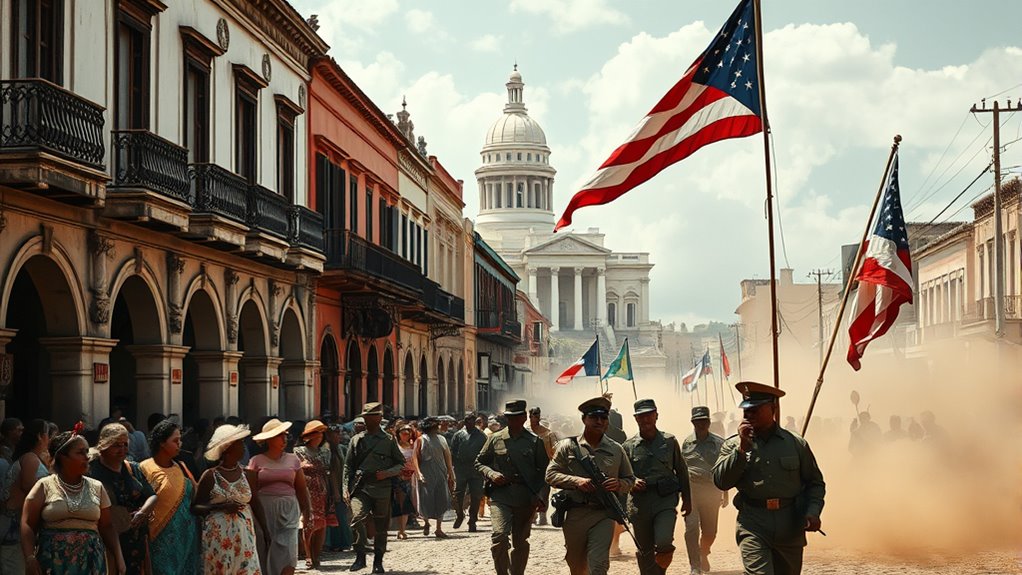
When the United States invaded Puerto Rico in 1898 during the Spanish-American War, they quickly took control of the island, marking a significant shift in its political landscape. You experience major changes as the U.S. establishes a military government, replacing Spanish rule. The Treaty of Paris transfers sovereignty, and in 1900, the Foraker Act creates limited self-government with a U.S.-appointed governor. In 1917, the Jones Act grants U.S. citizenship, but full voting rights remain out of reach. The island’s economy and governance become integrated into the U.S. system. Political parties like the Popular Democratic Party and independence advocates shape debates about the island’s future. These shifts influence Puerto Rico’s identity, sovereignty, and relationship with the U.S. Today, the legacy of this progression still impacts the island’s politics. Understanding the political changes helps clarify ongoing discussions about Puerto Rico’s status.
As an affiliate, we earn on qualifying purchases.
Cultural Fusion and Artistic Expressions
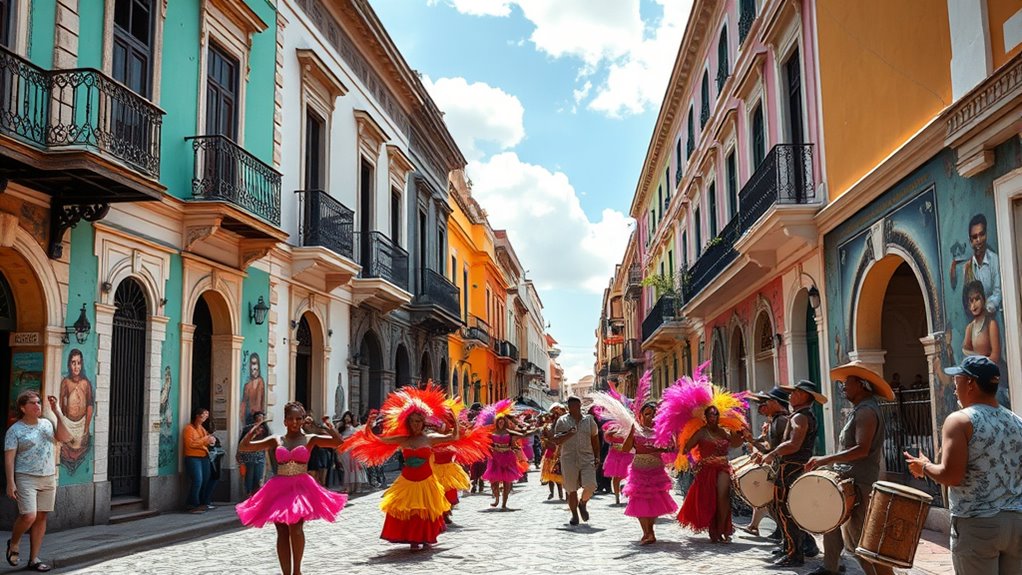
You can see the rich cultural fusion of Puerto Rico in its vibrant music, dance, and cuisine, which blend indigenous, Spanish, and African influences. Traditional forms like bomba and plena showcase this mix through rhythmic movements and storytelling, while dishes like mofongo highlight unique culinary traditions. These artistic expressions reflect a dynamic history that continues to shape Puerto Rico’s identity today. Additionally, contemporary Mazda Tuning practices influence the customization and personalization of vehicles, paralleling the island’s continuous cultural evolution.
Indigenous, Spanish, African Roots
Have you ever noticed how Puerto Rico’s vibrant culture reflects a dynamic blend of indigenous, Spanish, and African influences? This fusion shapes your island’s art, cuisine, and traditions. You can see it in:
- The visual arts, where Taino symbols merge with Spanish colonial motifs and African patterns.
- The cuisine, blending Spanish dishes like arroz con gandules with African seasonings and indigenous ingredients.
- The crafts and textiles, which incorporate Taino carvings, Spanish embroidery, and African beadwork.
- The use of traditional instruments and musical styles that combine indigenous rhythms, Spanish melodies, and African percussion, illustrating the deep musical heritage present in Puerto Rican culture.
These roots intertwine, creating a rich cultural tapestry that’s alive in everyday life. You experience this fusion not just through visual arts but also in the stories, customs, and expressions that define Puerto Rican identity today.
Traditional Music and Dance
What makes Puerto Rican music and dance so enchanting is how they embody the island’s rich cultural fusion. You feel this blend through rhythms like bomba and plena, which combine African beats with indigenous melodies. These dances express stories, history, and community pride, often performed during festivals or celebrations. You’ll notice the lively percussion, call-and-response singing, and energetic movements that reflect resilience and joy. The musical styles serve as a bridge connecting Taino roots, Spanish influences, and African traditions. Rhythmic diversity is a hallmark of Puerto Rican musical expression, highlighting the island’s vibrant cultural tapestry. Below is a glimpse of the key elements:
| Style | Origin | Characteristic |
|---|---|---|
| Bomba | African | Percussion-driven, dance-focused |
| Plena | Spanish/African | Storytelling, singing with drums |
| Salsa | Caribbean/US | Social dance, vibrant rhythms |
| Aguinaldo | Spanish Christmas | Festive, vocal harmonies |
Unique Culinary Heritage
Puerto Rican cuisine reflects the island’s vibrant cultural fusion, blending indigenous Taino ingredients, Spanish culinary traditions, and African flavors into a distinctive and flavorful tapestry. You’ll notice this mix in iconic dishes like mofongo, arroz con gandules, and pasteles. To understand its richness, consider: 1. The use of plantains and yuca, rooted in Taino agriculture. 2. The seasoning of sofrito, combining garlic, peppers, and herbs from Spanish influence. 3. The incorporation of spices and ingredients like okra and black beans from African traditions. This culinary heritage isn’t just about flavors; it’s an artistic expression of Puerto Rico’s history. Local cooks skillfully combine these elements, creating a vibrant, evolving food scene that celebrates cultural diversity and community pride, often reflected in the artistic expressions of traditional cooking techniques.
Modern Challenges and Resilience
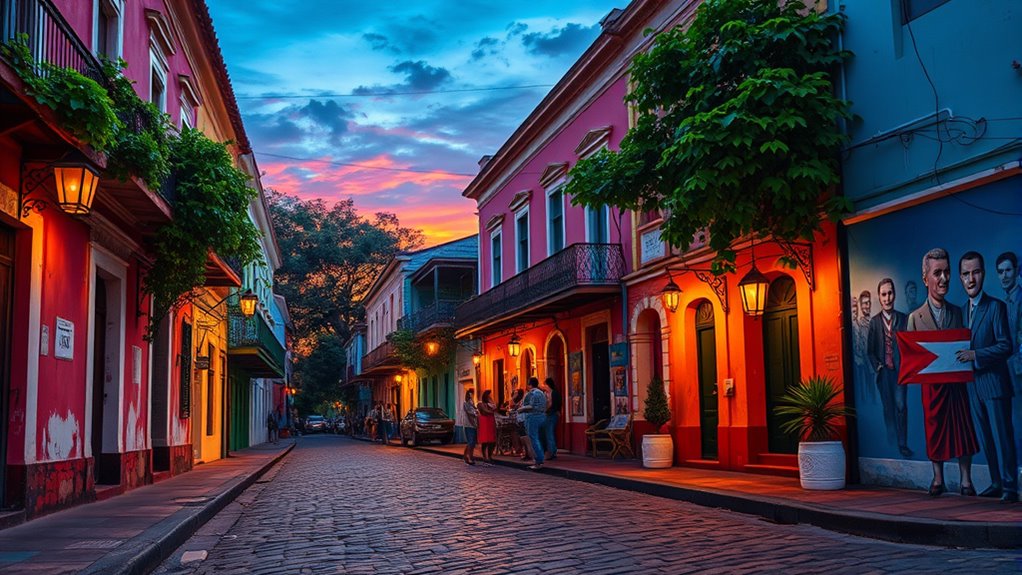
Despite facing ongoing economic difficulties, natural disasters, and political uncertainties, Puerto Rico demonstrates remarkable resilience. The island continues to recover from hurricanes like Maria in 2017, rebuilding infrastructure and revitalizing communities. Economic challenges, including a deep debt crisis, remain, but Puerto Ricans adapt through innovation and community efforts. Natural disasters highlight the importance of resilience, prompting improvements in disaster preparedness and response. The ongoing debate about Puerto Rico’s political status reflects a strong desire to shape its future, whether through statehood or independence. Despite these hurdles, the island’s vibrant culture, unity, and determination sustain its identity. You see this resilience in everyday life—people helping neighbors, thriving in arts and music, and pushing forward despite adversity. Puerto Rico’s strength lies in its enduring spirit, which is also reflected in its disaster preparedness strategies.
Significant Sites and Heritage Preservation
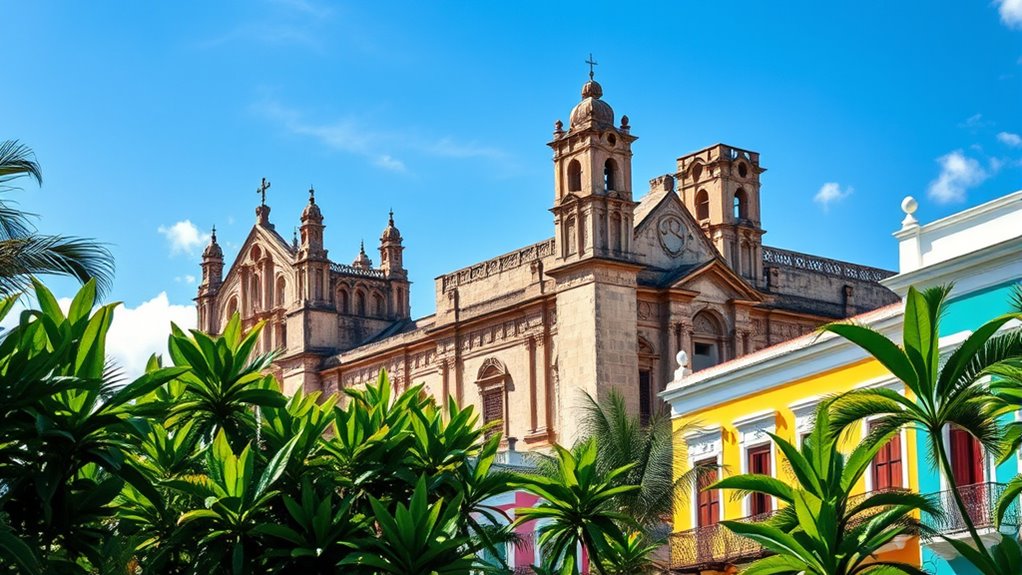
Have you ever wondered how Puerto Rico preserves its rich history and cultural identity through its landmarks? You can explore various sites that showcase its heritage. The key ways include:
- Restoring historic structures like La Fortaleza, the oldest governor’s mansion in continuous use, and the San Juan National Historic Site, which protects the city’s colonial walls and forts.
- Promoting heritage through museums such as the Museo de Las Américas, which displays indigenous and colonial art, and the Casa Blanca, a former residence of Ponce de León.
- Implementing preservation laws that safeguard archaeological sites and cultural landmarks, ensuring future generations can connect with their roots. These efforts celebrate Puerto Rico’s vibrant history and reinforce its cultural identity.
- Recognizing the importance of cultural symbols and heritage preservation in maintaining a collective identity and spiritual connection to the past.
Frequently Asked Questions
How Did Taino Spiritual Beliefs Influence Modern Puerto Rican Culture?
You can see Taino spiritual beliefs influence modern Puerto Rican culture through traditional music, dance, and festivals that celebrate indigenous heritage. You might notice symbols and motifs in art and crafts that reflect their spiritual connections to nature and ancestors. Indigenous stories and legends are still shared, shaping cultural identity. These influences foster a sense of pride and continuity, reminding you of Puerto Rico’s deep-rooted indigenous spirituality.
What Role Did African Traditions Play in Puerto Rican Music and Dance?
African traditions play a essential role in Puerto Rican music and dance by introducing energetic rhythms and percussion styles like bomba and plena. You can hear their influence in the syncopated beats and call-and-response patterns that energize local performances. These cultural elements reflect African origins, blending seamlessly with Spanish and indigenous influences, creating a vibrant, dynamic musical scene that celebrates Puerto Rico’s diverse heritage and lively community spirit.
How Has Puerto Rico’s Political Status Evolved Over the Past Century?
Like a ship steering shifting tides, Puerto Rico’s political status has evolved considerably over the past century. You’ve seen it shift from Spanish rule to U.S. territory, gaining U.S. citizenship in 1917, and facing debates over statehood, independence, or enhanced autonomy. This ongoing journey reflects a desire to find its true self, balancing allegiance and identity, much like a traveler seeking their rightful destination amid changing currents.
What Are Some Lesser-Known Indigenous Archaeological Sites on the Island?
You should explore sites like Cueva del Indio, where petroglyphs and carvings reveal Taino spiritual life. Visit Tibes Indigenous Ceremonial Center, an important archaeological site with artifacts and remnants of ceremonial practices. Don’t miss Playa de Ponce, home to underwater Taino artifacts visible through snorkel. These lesser-known sites give you deeper insight into Puerto Rico’s indigenous history, showcasing their artistry, rituals, and daily life beyond the well-known landmarks.
How Do Contemporary Puerto Ricans Celebrate Their Mixed Heritage Today?
You celebrate your mixed heritage through vibrant festivals, traditional dances like bomba and plena, and delicious cuisine blending Spanish, African, and indigenous flavors. You participate in events such as Día de San Juan and Three Kings Day, which honor your diverse roots. Music, art, and storytelling also play key roles, allowing you to preserve and share your unique cultural identity. These celebrations reflect pride in your rich, multicultural background.
Conclusion
As you explore Puerto Rico’s history, you walk through a vibrant tapestry woven with ancient threads and bold new colors. Each chapter adds depth to its rich mosaic, like a resilient tree standing tall amidst storms. The island’s culture blooms anew with every generation, a living sculpture shaped by time and spirit. Embrace its journey—where past and present dance together—creating a timeless masterpiece of resilience and pride that invites you to stand rooted in its enduring legacy.
Halloween Picks
halloween
As an affiliate, we earn on qualifying purchases.