
Puerto Rican cuisine is a vibrant mix of indigenous Taíno, Spanish, and African influences, creating bold flavors and colorful dishes. You’ll find staples like rice, beans, plantains, and seafood prepared with diverse cooking techniques such as frying, roasting, and stewing. From street snacks to festive holiday feasts, Puerto Rican food celebrates culture through hearty ingredients and lively presentation. Exploring these culinary traditions reveals how history and community shape every bite—there’s much more to discover beneath the surface.
Key Takeaways
- Puerto Rican cuisine blends indigenous Taíno, Spanish, and African influences, creating bold flavors and diverse cooking techniques.
- Essential ingredients include plantains, yuca, rice, beans, seafood, and tropical fruits, forming signature dishes like mofongo and lechón asado.
- Street food features fritters, turnovers, and seafood snacks, varying regionally to reflect local ingredients and cultural heritage.
- Celebratory foods such as pasteles, arroz con gandules, and coquito are central to Puerto Rican festivities and family gatherings.
- Modern adaptations focus on healthier cooking methods, incorporating lean proteins, whole grains, and fresh produce while maintaining traditional flavors.
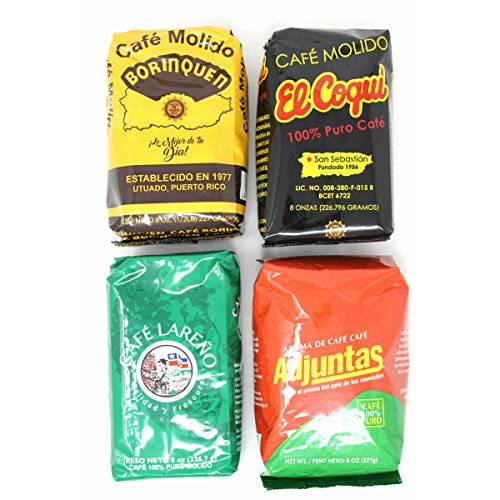
Bold Puerto Rican Coffee Variety Mix – Cafe Borinquen, Coqui, Lareno, Adjuntas (1 – 8oz Pack of Each)
- Package Includes: 4 different 8oz coffee bags
- Ideal Gift: Perfect for bold coffee enthusiasts
- Taste the Island: Experience Puerto Rican coffee flavors
As an affiliate, we earn on qualifying purchases.
As an affiliate, we earn on qualifying purchases.
The Foundations of Puerto Rican Flavors: Indigenous, Spanish, and African Influences
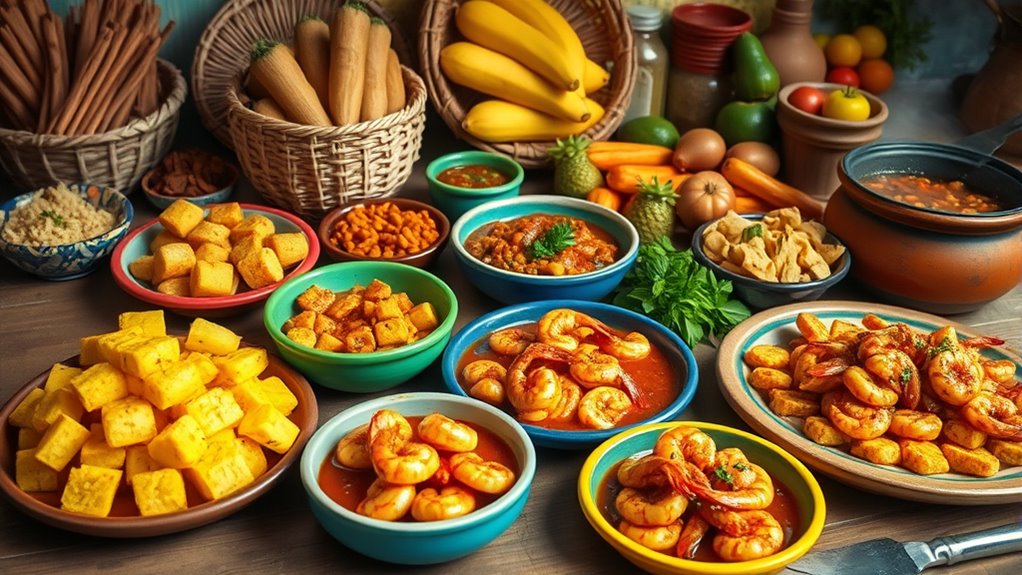
The rich flavors of Puerto Rican cuisine stem from a vibrant fusion of indigenous, Spanish, and African influences that have shaped its culinary landscape over centuries. You’ll notice the use of native Taíno ingredients like plantains, yuca, and root vegetables, which form the base of many dishes. Spanish colonizers introduced rice, beans, olive oil, and cooking techniques like frying and stewing, adding depth and variety. African traditions contributed slow-cooked meats, okra, and bold spices such as coriander and cumin. This blend creates a unique culinary identity, evident in dishes like mofongo, which combines mashed plantains with garlic and pork cracklings. The cuisine reflects a dynamic history that celebrates diverse flavors and cooking methods, making Puerto Rican food truly distinctive. Additionally, color accuracy in traditional presentations and cooking techniques enhances the visual appeal and authenticity of Puerto Rican dishes.

Iberia Saladito Lightly Salted Plantain Chips , 20 Oz.
- Tasty and Versatile: Crunchy plantain chips with sea salt
- Natural Snack Alternative: Made with 100% natural plantains
- Healthy and All Natural: Cholesterol-free, gluten-free, non-GMO
As an affiliate, we earn on qualifying purchases.
As an affiliate, we earn on qualifying purchases.
Essential Ingredients and Signature Dishes of Puerto Rican Cuisine
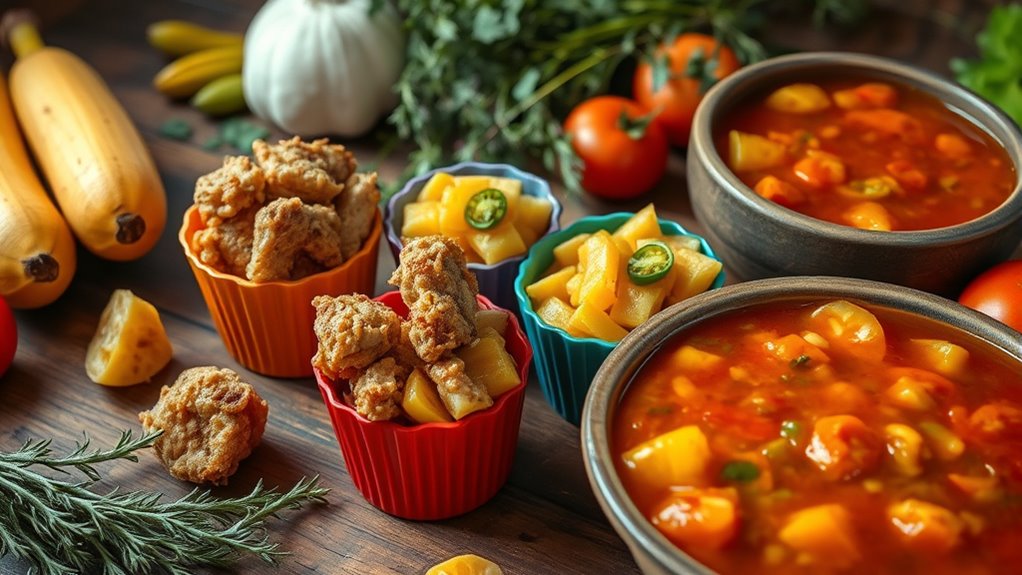
Puerto Rican cuisine is defined by its vibrant ingredients and iconic dishes that showcase a rich cultural heritage. You’ll find plantains, yuca, and root vegetables at the heart of many meals, reflecting indigenous influences. Staples like rice and beans create everyday comfort foods, often served with roasted or stewed meats such as pork, which dominates the protein scene. Signature dishes include mofongo—mashed plantains with garlic and pork cracklings—and lechón asado, a flavorful roast pork. Tropical fruits like mango and guava add sweetness, while seafood like shrimp and conch bring freshness. You’ll also encounter popular street foods such as alcapurrias and empanadillas, deep-fried and filled with savory ingredients. These ingredients and dishes form the foundation of Puerto Rican culinary identity, blending heritage and flavor.

Healthy Rican Adobo Sazon Sofrito Seasoning and Herbs Mix Dry Non GMO No Preservatives MSG Artificial Coloring Gluten Free Diabetes Keto Friendly Whole 30 Approved (Regular Variety Bundle)
- Clean and Natural: No additives, MSG, or artificial ingredients
- High-Quality Ingredients: Made in USA with non-GMO, no preservatives
- Versatile Flavor Enhancer: Perfect for meats, rice, beans, and stews
As an affiliate, we earn on qualifying purchases.
As an affiliate, we earn on qualifying purchases.
Popular Street Food Delights and Snack Offerings
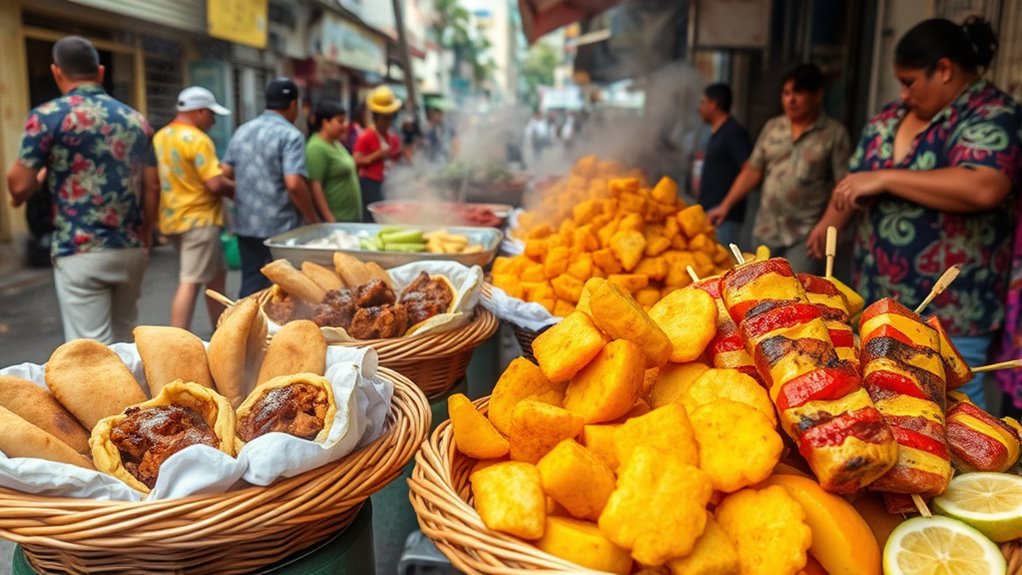
When exploring Puerto Rican street food, you’ll find a variety of classic fritters and turnovers that showcase local flavors. These snacks, like alcapurrias and empanadillas, are widely enjoyed and often reflect regional twists. You’ll also notice regional specialties and variations that add unique touches to these popular street offerings. Incorporating traditional farmhouse decor elements can also provide insight into the rustic charm of Puerto Rican culinary settings.
Classic Fritters and Turnovers
Classic fritters and turnovers are among the most popular street food treats in Puerto Rico, offering a delicious taste of local culinary traditions. You’ll find alcapurrias, made from grated root vegetables like taro or yuca, stuffed with seasoned ground meat, then deep-fried to crispy perfection. Empanadillas are another favorite—savory turnovers filled with beef, seafood, or potatoes, fried until golden. Rellenos de papa feature mashed potatoes shaped around flavorful fillings, then fried for a crispy exterior. These snacks showcase Puerto Rico’s fusion of indigenous, Spanish, and African influences, especially through the use of fried dough and rich fillings. Whether enjoyed as a quick bite on the street or at a festive gathering, these fritters and turnovers deliver bold flavors and satisfying textures that define Puerto Rican street food culture. Incorporating smart cooking methods can enhance the preparation of these traditional snacks, making them healthier and more convenient to prepare at home.
Popular Street Snack Options
Street food in Puerto Rico offers a vibrant array of snacks that showcase the island’s rich culinary blend. When wandering through markets and street corners, you’ll encounter flavors influenced by Taíno, Spanish, and African traditions. These snacks are quick, flavorful, and perfect for a taste of local life. You might enjoy:
- Alcapurrias: fritters made from grated root vegetables stuffed with meat, then deep-fried.
- Empanadillas: crispy turnovers filled with ground beef, seafood, or potatoes.
- Arepas: fried cornmeal cakes, sometimes stuffed with cheese or meats.
- Rellenos de papa: seasoned mashed potato croquettes filled with meat or vegetables.
- Chicharrones: crunchy pork cracklings, often enjoyed as a snack or topping.
These options offer an authentic, flavorful experience of Puerto Rican street food.
Regional Specialties and Variations
Have you ever noticed how Puerto Rican street foods vary across regions, offering unique flavors and specialties? In the coastal areas, seafood-filled snacks like camarones empanizados (breaded shrimp) dominate, while inland regions feature hearty fritters and croquettes. In the mountainous areas, you’ll find more traditional offerings, such as roasted pork and tamales. Regional twists also appear in street foods like alcapurrias and rellenos de papa, which differ in filling and seasoning. These variations reflect local ingredients and cultural influences, creating a vibrant street food scene across the island. The regional culinary diversity showcases the rich cultural heritage and local resourcefulness of Puerto Rico.
Puerto Rican street food snack kit
As an affiliate, we earn on qualifying purchases.
As an affiliate, we earn on qualifying purchases.
Celebratory Foods and Traditional Holiday Menus
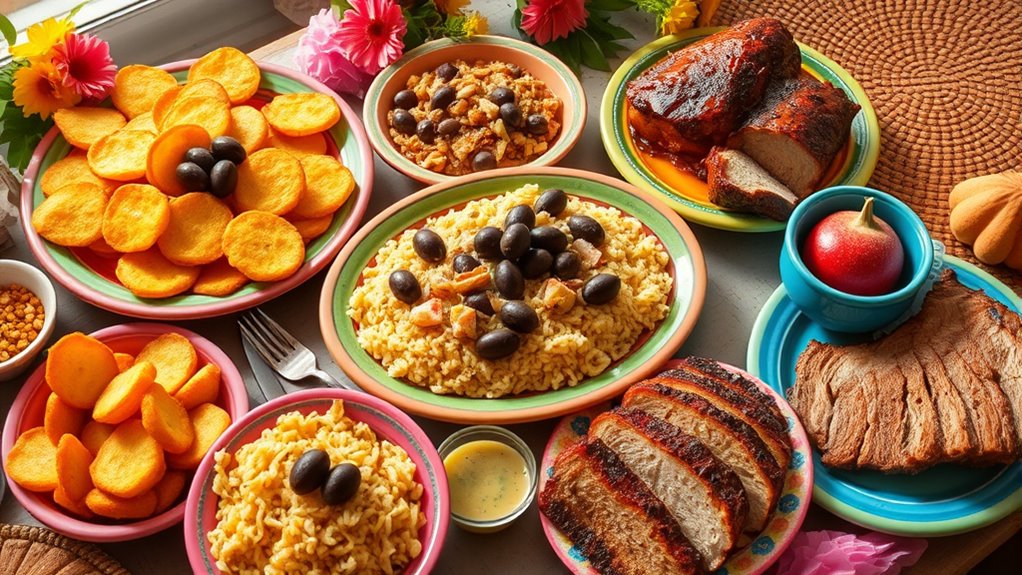
During special occasions, Puerto Ricans gather around hearty holiday menus that feature dishes like pasteles and arroz con gandules. You’ll find festive desserts such as tembleque and drinks like coquito shared among family and friends. These foods celebrate tradition and bring everyone together in joyful celebration. Incorporating leadership skills in organizing community events can enhance collaboration and ensure memorable festivities.
Holiday Feast Staples
Puerto Rican holiday feasts center around hearty, flavorful dishes that celebrate tradition and community. These staples bring families together and showcase the island’s rich culinary heritage. You’ll often find dishes that blend indigenous, Spanish, and African influences, creating a vibrant menu. The centerpiece is usually roasted pork, like lechón asado or pernil, seasoned with local spices. Accompanying it are rice and beans, often arroz con gandules, flavored with sofrito and pigeon peas. Traditional sides include plantains—fried tostones or sweet amarillos—and root vegetable stews. For dessert, coconut-based treats like tembleque are popular. These staples reflect Puerto Rico’s festive spirit and culinary history, ensuring every celebration feels warm, flavorful, and uniquely Puerto Rican.
Textile Line offers a variety of patterns and techniques that can inspire creative culinary presentation or handcrafted holiday decorations, adding a personal touch to festive gatherings.
Festive Desserts and Drinks
Festive desserts and drinks add a sweet and spirited touch to Puerto Rican holiday celebrations, reflecting a blend of indigenous, Spanish, and African traditions. You’ll often enjoy coquito, a creamy coconut eggnog spiced with cinnamon, loved during Christmas and New Year’s. Tembleque, a smooth coconut milk pudding, is a popular dessert served at gatherings. For treats, pasteles are wrapped in banana leaves, filled with spiced meat or roots, and enjoyed during Navidad. You might also indulge in mallorcas, sweet bread rolls dusted with powdered sugar, perfect with coffee. Drinks like pitorro, a potent rum, are sipped during festivities. These desserts and beverages symbolize Puerto Rico’s rich cultural fusion, adding warmth and sweetness to your holiday celebrations.
Cooking Techniques and Meal Presentation in Puerto Rico
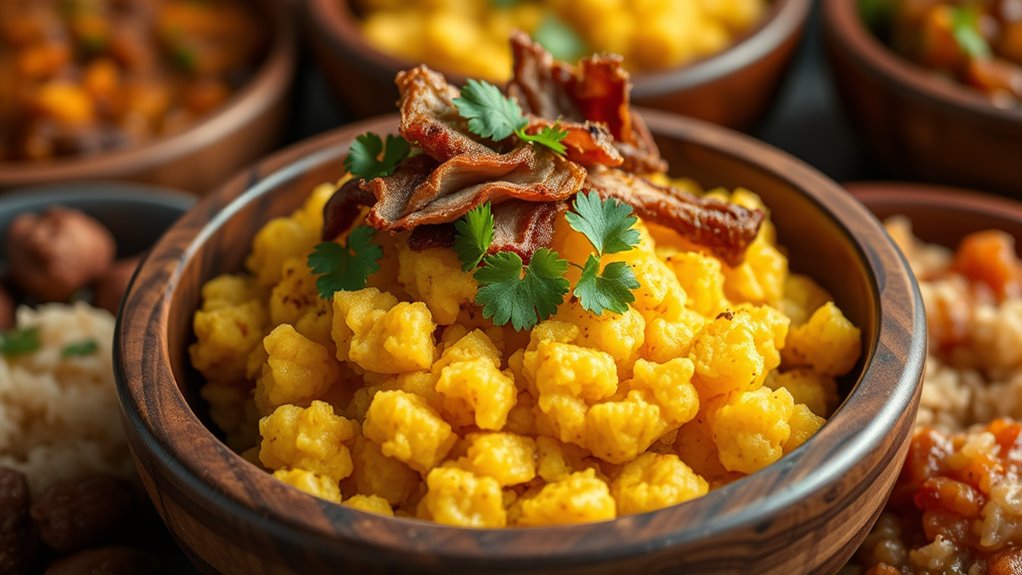
Cooking techniques in Puerto Rican cuisine are rooted in a blend of indigenous, Spanish, and African traditions, resulting in a diverse array of methods that define the island’s flavors. You’ll find frying as a common technique for snacks like tostones and alcapurrias, creating crispy textures. Roasting whole pigs, or lechón asado, is a festive highlight, while stewing meats with sofrito develops rich, tender flavors. Grilling and baking appear in regional dishes, adding variety. Meals are usually served family-style, with rice, beans, and sides arranged on large platters. To enhance presentation, vibrant garnishes like fresh herbs and tropical fruits are added. These techniques reflect Puerto Rico’s cultural fusion and commitment to bold, flavorful dishes. Incorporating traditional cooking methods helps preserve the authenticity of Puerto Rican culinary artistry.
Modern Twists and Healthier Approaches to Classic Puerto Rican Dishes

As chefs and home cooks look for ways to enjoy Puerto Rican flavors with a healthier twist, many are reimagining traditional dishes to suit modern dietary preferences. They’re grilling instead of frying, baking instead of roasting, and reducing oil, salt, and pork in favor of leaner proteins like fish and chicken. Brown rice replaces white rice, adding fiber and nutrients, while fresh fruits and vegetables boost vitamins and antioxidants. Creative substitutions, such as using plant-based ingredients or incorporating whole grains, help maintain authentic flavors without excess calories or fats. These adaptations allow you to savor classic dishes like mofongo and arroz con gandules in a lighter, more nutritious way, blending tradition with wellness for a contemporary culinary experience. Incorporating nutritional improvements into traditional recipes can enhance both flavor and health benefits without sacrificing cultural authenticity.
Frequently Asked Questions
What Are the Health Benefits of Traditional Puerto Rican Ingredients?
You benefit from traditional Puerto Rican ingredients because they’re packed with nutrients. Plantains and root vegetables provide fiber, vitamins, and antioxidants that support digestion and immunity. Beans and fresh seafood offer lean protein and fiber, promoting heart health. Tropical fruits like mango and guava supply vitamin C and antioxidants, reducing inflammation. Using fresh ingredients, you get natural flavors and fewer preservatives, making your meals healthier and more nourishing.
How Do Regional Differences Influence Puerto Rican Cuisine?
Regional differences dramatically diversify Puerto Rican cuisine. In coastal areas, you’ll find fresh seafood and lighter, breezy dishes, while inland regions favor hearty, homey stews and robust roasts. Mountainous zones showcase mountain-grown ingredients like yams and root vegetables, adding unique flavors. You adapt your dishes based on local landscapes and available ingredients, creating a colorful culinary canvas that celebrates Puerto Rico’s diverse geography and cultural influences.
Are There Specific Beverages That Complement Puerto Rican Dishes?
You should try sipping coquito, a rich, spiced coconut eggnog, to complement Puerto Rican dishes, especially during holidays. Fresh fruit juices like passion fruit or guava also pair well, balancing savory flavors. Rum-based cocktails, such as piña colada or mojitos, are popular choices to enhance meals with their invigorating taste. Non-alcoholic options like tamarind or hibiscus drinks add a sweet, tangy touch to your dining experience.
What Are the Origins of Popular Puerto Rican Cooking Techniques?
You’ll find that Puerto Rican cooking techniques stem from indigenous, Spanish, and African roots. You use roasting, like with lechón, which traces back to Taíno methods. Frying, common in snacks like tostones and alcapurrias, reflects African influence. Stewing with sofrito, a blend of herbs and spices, was brought by Spaniards. These techniques blend seamlessly, creating the vibrant, flavorful dishes Puerto Rico is known for today.
How Has Puerto Rican Cuisine Evolved in Recent Years?
Puerto Rican cuisine has blossomed like a vibrant garden, blending tradition with innovation. You’ll notice healthier twists, such as grilling instead of frying and using brown rice. Chefs experiment with new flavors, incorporating global influences while honoring classics. This evolution keeps the cuisine fresh, exciting, and accessible, inviting you to enjoy familiar tastes with a modern, health-conscious touch that celebrates Puerto Rico’s rich culinary heritage in every bite.
Conclusion
Exploring Puerto Rican cuisine is like uncovering a vibrant tapestry woven with rich history and bold flavors. From indigenous roots to Spanish and African influences, each dish tells a story. You’ll find that their culinary traditions are as lively as a fiesta, blending old and new with passion. Embrace these flavors and techniques, and you’ll taste the heart and soul of Puerto Rico in every bite—a true feast for the senses.