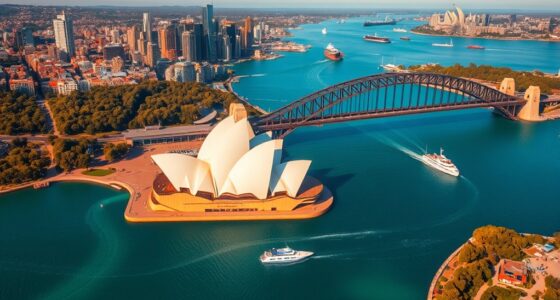
Australia’s history and culture are deeply rooted in its Indigenous heritage, with over 65,000 years of continuous traditions expressed through art, stories, and spiritual beliefs. European exploration began in the 18th century, leading to colonization and nation-building efforts like federation in 1901. The country’s growth was shaped by gold rushes, social movements, and evolving identities reflected in symbols, art, and multiculturalism. Explore further to uncover how these elements weave together Australia’s unique story.

Get travel and outdoor gear delivered free with Prime
- Fast, free delivery on millions of items
- Prime Video, Amazon Music and more included
- Member-only deals all year
Key Takeaways
- Indigenous Australians have maintained continuous cultural practices for over 65,000 years, emphasizing land connection through stories, art, and ceremonies.
- European exploration began in the 18th century, leading to colonization, displacement of Indigenous peoples, and the formation of a unified nation in 1901.
- The Gold Rush era of the 1850s transformed Australia’s demographics, urbanization, and multicultural society.
- Social movements fought for civil rights, gender equality, and Indigenous recognition, shaping modern Australian society and laws.
- National symbols like the Southern Cross and Indigenous art reflect Australia’s cultural diversity and evolving identity.
Australian Indigenous art prints
As an affiliate, we earn on qualifying purchases.
As an affiliate, we earn on qualifying purchases.
Indigenous Heritage and Cultural Legacy

Australia’s Indigenous peoples have inhabited the continent for over 65,000 years, making their culture one of the oldest continuous traditions in the world. You can see their deep connection to the land through stories, art, and ceremonies passed down through generations. These communities developed complex social systems and spiritual beliefs centered around “Dreamtime,” which explains the origins of the land, animals, and people. Their ecological knowledge allowed them to sustainably manage the environment for thousands of years. Despite colonization and its impacts, Indigenous culture remains vibrant, with languages, art, and traditions still alive today. The preservation of their cultural practices is a testament to their resilience and ongoing legacy. The 1967 referendum marked a turning point, helping recognize Indigenous Australians and supporting efforts to preserve and celebrate their rich heritage. Their legacy is integral to Australia’s national identity.
As an affiliate, we earn on qualifying purchases.
European Exploration and Colonial Foundations
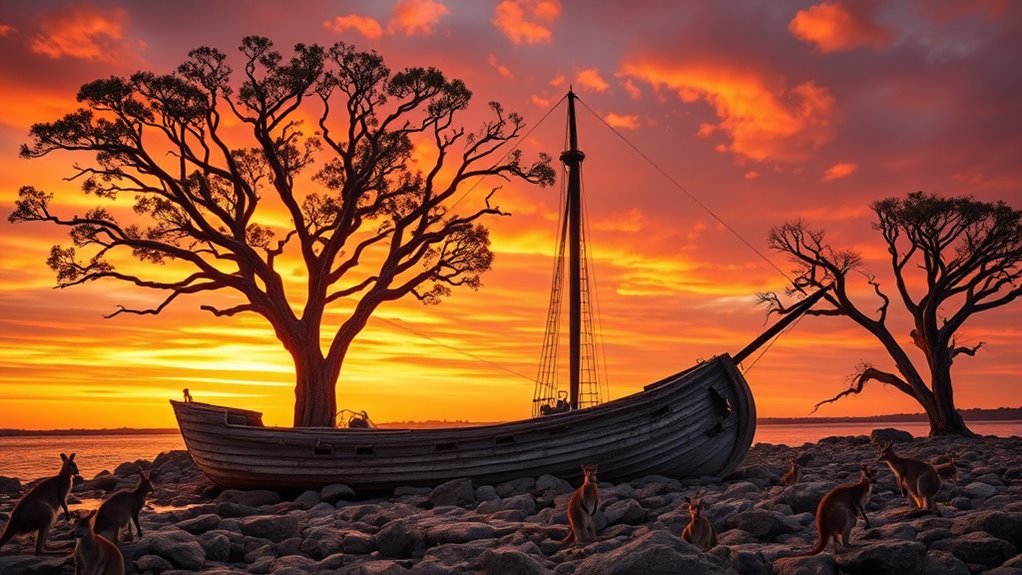
European explorers began charting the continent’s coastlines in the 18th century, with Captain James Cook’s landing in 1770 marking a pivotal moment. His detailed mapping laid the groundwork for British claims. In 1788, the First Fleet established a penal colony at Sydney Cove, initiating European settlement. Over time, Britain expanded its control, claiming the entire continent by 1827. This colonization brought profound change, including displacement and conflict with Indigenous peoples. Key developments include:
- The 1808 Rum Rebellion, a rare armed political uprising.
- The founding of Brisbane as a penal settlement in 1825.
- The gradual introduction of British laws and governance systems.
- The expansion of settlements across the coast and interior.
- The establishment of trade and communication routes.
- The advancement of navigation technology, which facilitated exploration and expansion efforts.
These events set the stage for Australia’s transformation from a distant land to a growing colony.
Australian history documentaries DVD
As an affiliate, we earn on qualifying purchases.
As an affiliate, we earn on qualifying purchases.
Economic Growth and the Gold Rush Era

The gold rushes of the 1850s brought rapid demographic changes, attracting migrants from around the world and transforming local communities. These new populations spurred the development of infrastructure like telegraphs and railways, connecting regions and supporting economic growth. As a result, Australia’s society and economy experienced significant shifts that laid the groundwork for future nation-building. The influx of wealth and migrants also contributed to the emergence of a diverse cultural identity, enriching Australia’s social fabric.
Gold Rush Demographic Shifts
Have you ever wondered how the gold rushes transformed Australia’s population? During the 1850s, discoveries in New South Wales and Victoria sparked a massive influx of people, fueling rapid growth. You’d see a surge in diverse migrants, including Chinese workers, Europeans, and Americans, all seeking fortune. This migration reshaped social dynamics and demographics, leading to significant cultural shifts. Additionally, the migration patterns during this period contributed to the development of multicultural communities across the colonies.
- Population in Victoria tripled within a decade, reaching over 530,000.
- Chinese migrants faced discrimination, including anti-Chinese riots like Lambing Flat.
- Urban centers expanded as new towns emerged around goldfields.
- Infrastructure like telegraph lines connected isolated regions.
- Social hierarchies and labor systems adapted to accommodate new economic opportunities.
These shifts laid the foundation for Australia’s evolving cultural and demographic landscape.
Infrastructure and Migration
During the gold rushes of the 1850s, Australia’s rapid economic growth was driven by a surge in migration and infrastructure development. As thousands of prospectors and migrants arrived, cities like Melbourne and Sydney expanded quickly, prompting governments to build roads, bridges, and telegraph lines. The 1872 Overland Telegraph connected Australia to the world, boosting communication and trade. Railways linked major colonies, facilitating movement and commerce. This period also attracted diverse international migrants, including Chinese workers, who contributed to economic and cultural fabric but sometimes faced racial tensions. The infrastructure investments laid the foundation for Australia’s modernization, supporting industries and urban growth. This era also saw the development of communication networks, which played a vital role in connecting remote regions to urban centers. This era shaped Australia’s social landscape and set the stage for its future development as a unified nation.
Australian cultural symbols flag
As an affiliate, we earn on qualifying purchases.
As an affiliate, we earn on qualifying purchases.
Federation and the Formation of a Nation

How did Australia transform from a collection of separate colonies into a unified nation? You witness a period of intense debate, collaboration, and national pride in the late 19th century. Key events included:
- Constitutional conventions in the 1890s, leading to the drafting of the Australian Constitution.
- Prominent leaders like Sir Henry Parkes inspiring federation ideals through speeches such as the 1889 Tenterfield Oration.
- The 1901 federation, when six colonies united under a federal government, establishing a national identity.
- Expansion of infrastructure, like the rail networks connecting major cities, boosting internal unity.
- Rising Australian nationalism, fostering a shared cultural and political identity that laid the foundation for the modern nation.
- The constitutional conventions played a crucial role in shaping the legal framework that allowed the colonies to unify peacefully.
This process marked Australia’s progression from separate colonies to a single, self-governing nation.
Social Movements and Political Transformations
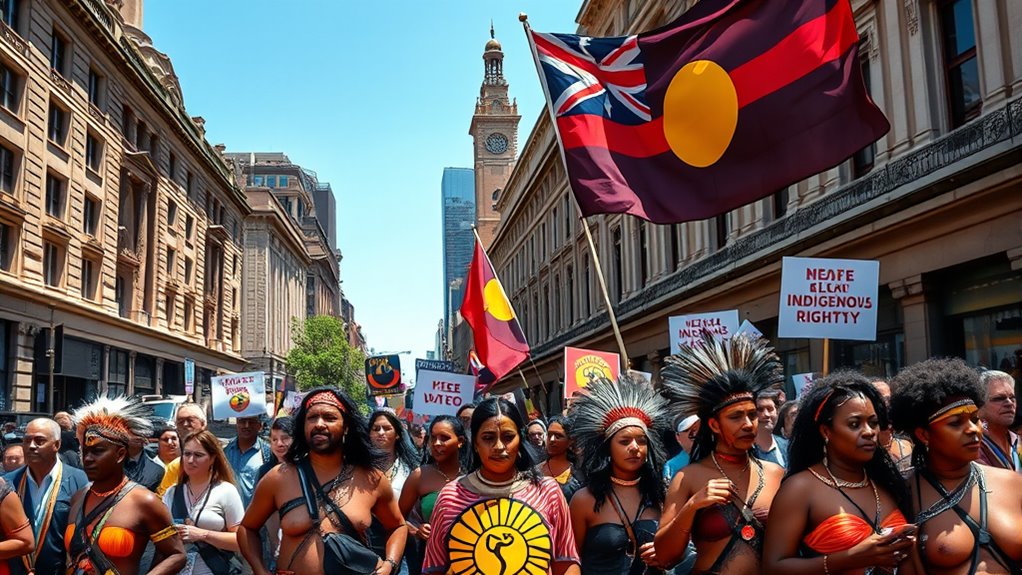
As Australia moved toward nationhood, social movements and political changes began shaping its identity and policies. You’d see efforts to unify diverse colonies through federation, driven by leaders like Sir Henry Parkes. Over time, policies like the White Australia Policy reflected racial attitudes, restricting immigration and shaping social hierarchies. Indigenous Australians fought for recognition, culminating in landmark legal wins like the 1992 Mabo Decision, which challenged terra nullius. Post-war immigration reforms brought more multiculturalism, transforming Australian society. Movements advocating for civil rights, gender equality, and Indigenous reconciliation gained momentum, influencing legislation and national discourse. These social and political shifts define Australia’s journey from colonial roots to a more inclusive, diverse nation committed to reconciliation and social justice. Additionally, the evolving sound design techniques and technologies have played a role in documenting and expressing these cultural transformations through media and storytelling.
Symbols, Arts, and Contemporary Identity
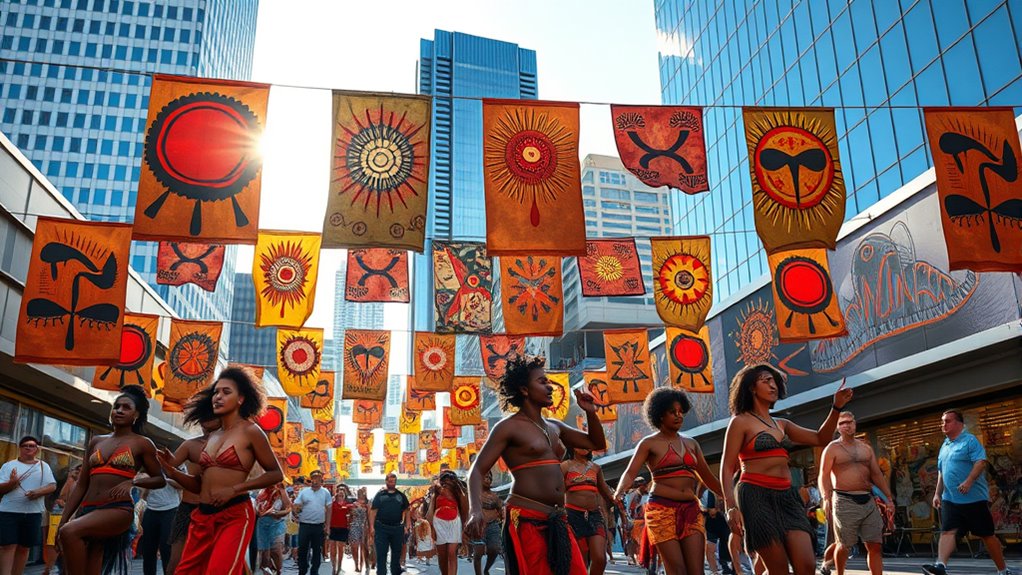
What symbols best capture Australia’s unique identity? You see them in iconic landmarks, cultural expressions, and national symbols. These elements reflect the blend of Indigenous heritage, British roots, and multicultural influences shaping modern Australia.
- The Sydney Opera House, an architectural marvel symbolizing innovation and cultural vibrancy
- The Southern Cross constellation on the flag, representing the nation’s geographical identity
- Aboriginal art and dot paintings, illustrating spiritual stories and land connection
- Surfing culture, embodying the love for the ocean and outdoor lifestyle
- Indigenous symbols embedded in contemporary design, honoring ancient traditions amidst modernity
These symbols, arts, and cultural practices forge a sense of belonging and pride. They reveal Australia’s evolving identity, rooted in history yet embracing diversity and innovation. Additionally, understanding the cultural symbolism behind these elements helps to deepen appreciation for Australia’s rich and diverse heritage.
Frequently Asked Questions
How Have Indigenous Cultures Been Preserved Despite Colonization?
You can see Indigenous cultures persist through their ongoing connection to land, language, and traditions. Many communities actively teach their languages, hold cultural ceremonies, and pass down stories from generation to generation. Despite colonization, they’ve maintained spiritual beliefs and ecological knowledge. Efforts like cultural revitalization programs and legal recognitions help preserve these traditions, ensuring that Indigenous identity and heritage continue to thrive in modern Australia.
What Is the Impact of the Stolen Generations Today?
You should know that the Stolen Generations profoundly impact Indigenous communities today, with estimates of over 1,000 children still missing or unaccounted for. This trauma continues to cause intergenerational grief, identity struggles, and social disadvantages. Many Indigenous Australians face ongoing discrimination and marginalization. Recognizing this pain is vital to fostering understanding, healing, and reconciliation. Your awareness can help support efforts toward justice and rebuilding trust with Indigenous communities.
How Did Immigration Shape Australia’s Multicultural Society?
Immigration shapes Australia’s multicultural society by bringing diverse cultures, languages, and traditions, enriching the national identity. You see this in vibrant communities, varied cuisines, and multicultural festivals that promote understanding and inclusiveness. Immigration also influences the economy, workforce, and social policies, fostering innovation and resilience. By embracing different backgrounds, you help build a more inclusive Australia where everyone’s culture contributes to the nation’s unique and dynamic identity.
What Role Did Women Play in Australia’s History?
Women played crucial roles in shaping Australia’s history by advocating for rights, participating in social movements, and contributing to economic growth. You can see their influence in early suffrage campaigns, where women fought for voting rights, and in wartime efforts, where many served as nurses and volunteers. Women also helped build communities, support Indigenous reconciliation, and push for social reforms, leaving a lasting legacy in Australia’s social and political landscape.
How Does Indigenous Art Influence Contemporary Australian Culture?
You see that Indigenous art profoundly influences contemporary Australian culture by blending ancient stories with modern expression. You might notice its vibrant paintings, bark art, and dot techniques in galleries and public spaces, inspiring artists and designers nationwide. Indigenous motifs often symbolize land, identity, and spirituality, fostering respect and understanding. This art form shapes Australia’s identity, connecting past and present, and encourages you to appreciate the rich cultural heritage that continues to evolve today.
Conclusion
As you explore Australia’s rich tapestry, you see the ancient Aboriginal artworks blending with modern skylines, stories echoing through bustling cities and quiet deserts alike. The land’s history, from sacred traditions to vibrant cities, shapes a resilient identity that continues to evolve. You feel the spirit of a nation born from diverse journeys, a place where ancient roots and contemporary dreams intertwine beneath endless blue skies and shimmering horizons, inviting you to discover its timeless story.
Halloween Picks
halloween
As an affiliate, we earn on qualifying purchases.