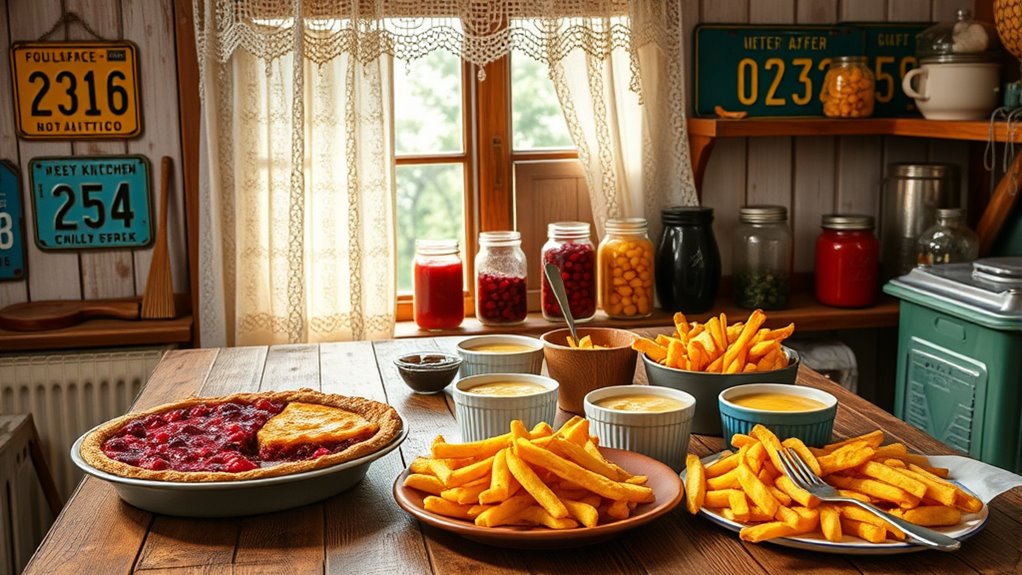

Idaho’s cuisine centers on its famous potatoes, often enjoyed baked, mashed, or as innovative dishes like potato pancakes. You’ll find fresh fish like rainbow trout prepared simply by grilling or smoking, reflecting Idaho’s outdoor culture. The Basque influence brings bold flavors and hearty meats to the table, while Native American staples like bannock and camas root highlight tradition. Emerging food trends incorporate local ingredients in inventive ways. Explore further to discover the full depth of Idaho’s vibrant culinary heritage.
Key Takeaways
- Idaho is renowned for its potatoes, often featured in traditional dishes like baked potatoes, pancakes, and creative desserts.
- Freshwater fish such as rainbow trout and kokanee salmon are central to Idaho’s cuisine, prepared through grilling, smoking, and baking.
- Native American foods like bannock and camas root reflect Idaho’s cultural heritage and land connection.
- The Basque community influences local cuisine with hearty meats, chorizo, and pintxos, emphasizing communal dining.
- Emerging culinary trends incorporate foraged ingredients, local herbs, and fusion techniques showcased at festivals and farmers markets.

Joie Mr Potato Y-Shaped Peeler, Cute Kitchen Gadget for Vegetables and Fruit, Create Long Wide Veggie Pasta Strands, Stainless Steel Blade
- Contains: Includes 1 Y-shaped potato peeler
- Efficient Peeling: Removes skins and creates wide veggie strips
- Durable Material: Made from stainless steel and plastic
As an affiliate, we earn on qualifying purchases.
As an affiliate, we earn on qualifying purchases.
Idaho’s Iconic Potato Dishes

Idaho’s iconic potato dishes are the heart of the state’s culinary identity. You’ll find baked Idaho potatoes served with a variety of toppings, from sour cream and chives to chili and cheese, making every bite comforting and familiar. For a twist, try Idaho potato and huckleberry pancakes, blending grated potatoes with sweet, wild berries for a unique flavor. Don’t miss the ice cream potato, a clever dessert mimicking a baked potato but made from vanilla ice cream, cocoa, and whipped cream. Potatoes are everywhere—in sides, mains, and even community events—showcasing their importance in Idaho’s food culture. Whether you prefer classic baked potatoes or creative innovations, these dishes celebrate Idaho’s rich potato heritage and culinary creativity.

Lodge Seasoned Cast Iron Skillet 12 Inches – PFAS-Free, Non-Toxic Cookware – Use with an Oven, Stove, Grill, or Campfire – Naturally Non-Stick & Oven Safe
- Quality Cast Iron Construction: Excellent heat retention and durability
- Pre-Seasoned Non-Stick Surface: Ready to use with even cooking
- Heavy-Duty & Long-Lasting: Designed for durability and versatile use
As an affiliate, we earn on qualifying purchases.
As an affiliate, we earn on qualifying purchases.
Freshwater Fish and Seafood in Idaho
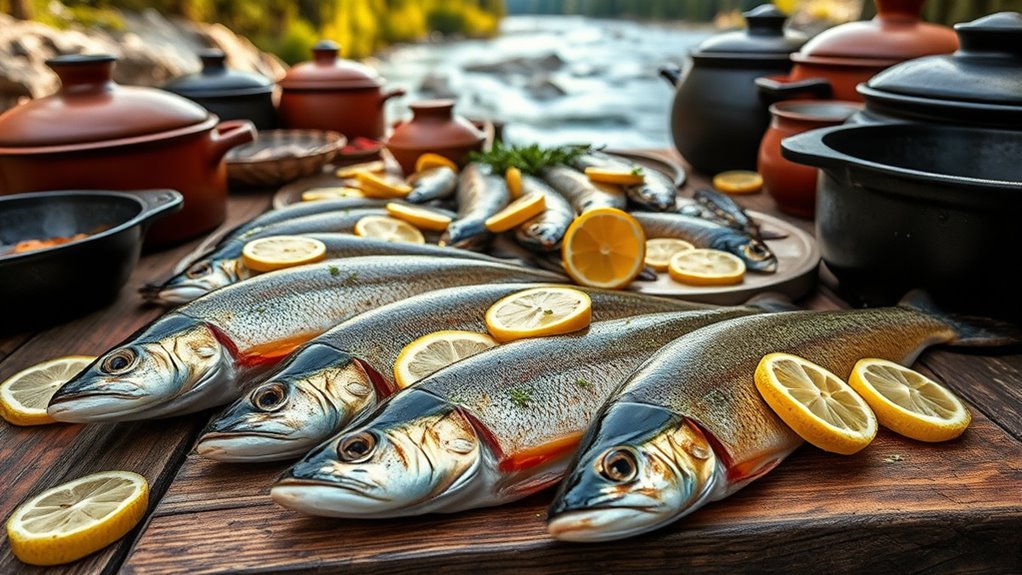
Idaho’s rivers and lakes are home to popular fish species like rainbow trout, which you’ll often find prepared in classic dishes such as Trout almondine. You might also encounter regional seafood dishes like ceviche, showcasing fresh fish cured with citrus. Whether grilled, smoked, or pan-fried, fish plays a crucial role in Idaho’s outdoor-inspired culinary scene. Decoding modern slang can help you understand the cultural significance of these traditional preparations among local communities.
Popular Fish Species
Have you ever wondered which freshwater fish reigns supreme in Idaho? It’s the rainbow trout, and it’s everywhere—from lakes and rivers to your plate. You’ll likely find it grilled, pan-fried, or smoked, highlighting its mild flavor and tender texture. Rainbow trout’s popularity stems from Idaho’s abundant waters and outdoor fishing culture. Another common species is the Arctic grayling, known for its vibrant fins and delicate taste, often caught for sport more than cuisine. Kokanee salmon, a landlocked sockeye, graces local menus as well, especially during seasonal runs. While fish like bass and catfish are less common, they’re still available in some lakes. Overall, Idaho’s freshwater fish scene is centered on trout, celebrated for its versatility and connection to outdoor traditions. Additionally, the use of electronic scoring in modern pinball machines reflects technological advancements that have influenced recreational activities worldwide.
Classic Preparation Methods
Freshwater fish in Idaho are typically prepared through methods that highlight their delicate flavors and tender textures. Grilling is popular, giving the fish a smoky flavor, while pan-frying retains moisture with a crispy exterior. Smoking adds depth and richness, especially for trout. Baking is simple, enhancing natural taste without overpowering it. Here’s a visual of common techniques:
| Method | Description | Flavor Profile |
|---|---|---|
| Grilling | Charred surface, smoky aroma | Bold, smoky |
| Pan-frying | Crispy skin, tender flesh | Savory, crispy |
| Smoking | Slow-cooked with wood smoke | Rich, aromatic |
| Baking | Even heat, preserves moisture | Mild, tender |
| Ceviche | Citrus-marinated, raw seafood | Bright, tangy |
These methods keep Idaho’s freshwater fish fresh, flavorful, and versatile. Cooking techniques play a significant role in preserving the integrity of the fish’s natural flavors.
Regional Seafood Dishes
Did you know that Idaho’s lakes and rivers offer a treasure trove of delicious freshwater fish dishes? You can enjoy freshly caught rainbow trout, a local favorite, prepared in classic ways like pan-fried or grilled. Trout almondine, with its buttery almond sauce, highlights the state’s culinary creativity. Despite being landlocked, Idaho restaurants serve ceviche, curing fish with citrus for a invigorating twist. Smoked salmon and fish chowders also showcase the state’s fishing bounty. Fish is often grilled or pan-fried, emphasizing simple, flavorful preparations that celebrate Idaho’s outdoor heritage. Whether at casual diners or upscale eateries, freshwater fish dishes are a staple, connecting you to Idaho’s natural landscape and the rich traditions of its fishing communities.

Bounty Foods Indian Fry Bread Mix, 16 oz, Authentic Native American Recipe
- Authentic Native American Recipe: Native American-style fry bread
- Simple 5-Ingredient Mix: No artificial ingredients or preservatives
- Versatile Uses: Navajo tacos, scones, burritos, desserts
As an affiliate, we earn on qualifying purchases.
As an affiliate, we earn on qualifying purchases.
Basque Culinary Heritage and Its Influence
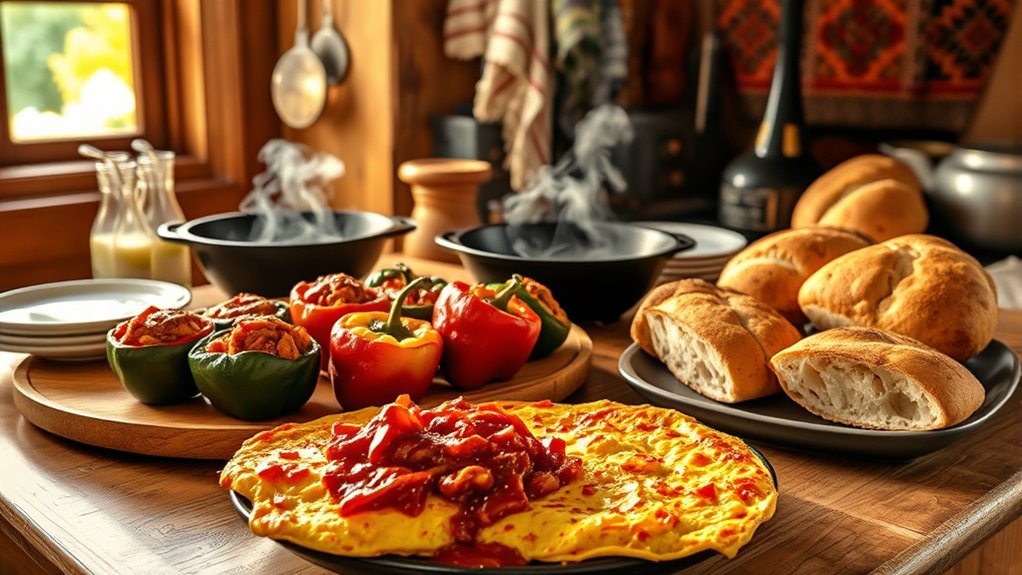
Boise’s vibrant Basque community has profoundly shaped Idaho’s culinary landscape, infusing local cuisine with bold flavors and communal dining traditions. You’ll notice this influence in dishes like chorizo, which adds a spicy, savory punch to breakfast plates, sandwiches, and tapas. Basque pintxos, small skewered bites, are popular in Boise’s restaurants, encouraging sharing and socializing. The community’s festivals, especially San Inazio, showcase hearty foods, grilled meats, and lively music, reflecting their rich heritage. Basque-style stews and roasted meats emphasize flavor and tradition, often cooked over open flames or in communal kitchens. This culinary heritage fosters a sense of community and resilience, making Basque flavors a distinctive and enduring part of Idaho’s diverse food scene. Additionally, cultural preservation efforts help maintain and celebrate these traditional recipes and practices for future generations.

Smokehouse Little Chief Front Load Smoker, Low to Mid Temperature Smoker for Fish, Jerky, Cheese, Sausage & Other meats, Smoke Up to 25 Pounds of Meat & Fish
- Steady Low Temperature: Maintains 165°F for optimal smoking
- Easy to Use: Plug-and-play operation, no Wi-Fi needed
- Large Capacity: Holds up to 25 pounds of meat or fish
As an affiliate, we earn on qualifying purchases.
As an affiliate, we earn on qualifying purchases.
Native American Food Traditions and Staples
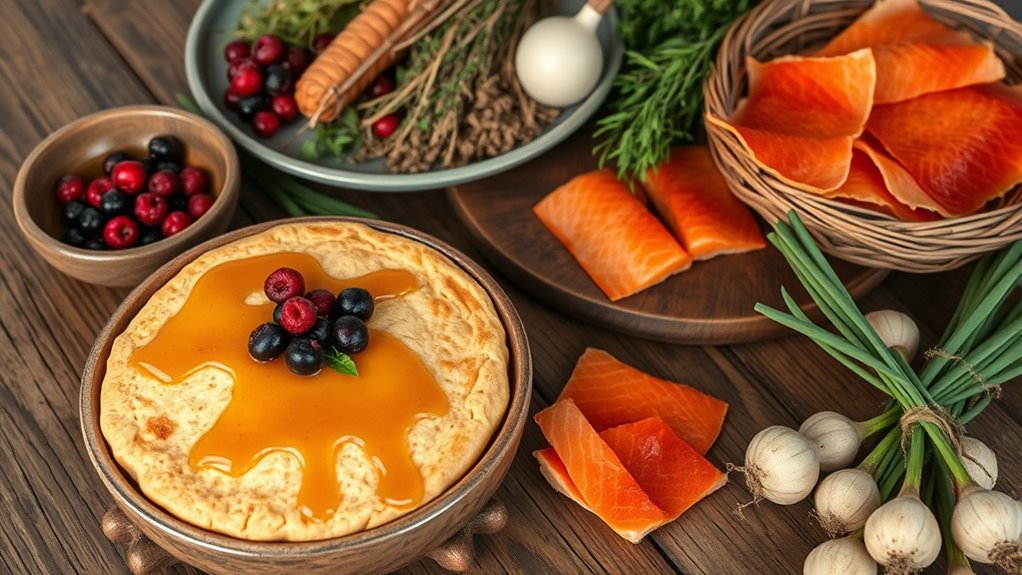
You can explore how Bannock, a traditional fry bread, remains an essential part of Native American food culture in Idaho, symbolizing community and heritage. These foods hold deep cultural significance, connecting tribes to their history and land through shared dishes and rituals. Recognizing these traditions offers insight into the enduring influence of Native cuisine on Idaho’s culinary landscape. Additionally, traditional farming practices have historically supported the cultivation of native crops like corn and beans, further enriching the region’s culinary heritage.
Bannock: Traditional Fry Bread
What makes bannock a beloved staple in Native American cuisine is its simple yet versatile nature. You can enjoy it plain, sweetened with honey or jam, or as a base for savory fillings like Indigenous tacos. Its dough is easy to prepare, using basic ingredients like flour, water, and a pinch of salt, making it accessible and adaptable. Traditionally cooked over open flames or hot stones, bannock’s crispy exterior and soft interior make it perfect for sharing at gatherings or ceremonies. Its cultural significance runs deep, symbolizing community and resilience. Today, you’ll find bannock at powwows, festivals, and farmers markets, where it continues to connect Native traditions with contemporary culinary expressions. Its enduring popularity highlights its role as a symbol of Native identity. Understanding traditional foods helps appreciate the cultural importance of dishes like bannock beyond their ingredients and preparation methods.
Indigenous Food Staples
Native American food traditions are deeply rooted in Idaho’s history, shaping the region’s culinary identity through essential staples like bannock, camas root, and game meats. Bannock, a fry bread, remains a versatile dish served plain or with toppings. Camas root, harvested from the camas prairie, was a crucial carbohydrate source, often roasted or dried for later use. Game meats like venison and elk played crucial roles in traditional diets, providing protein and sustenance. These staples reflect the resourcefulness and connection to the land. To better understand their significance, consider this table:
| Staple | Preparation Method | Cultural Significance |
|---|---|---|
| Bannock | Fried or baked | Symbol of community and survival |
| Camas Root | Roasted, dried | Sacred food, seasonal harvest |
| Game Meats | Roasted, smoked, stewed | Essential for sustenance and tradition |
Furthermore, the landscape of Idaho provided the resources necessary for these food traditions to thrive, highlighting the importance of the environment in shaping indigenous diets.
Cultural Significance of Foods
Native American food traditions remain an essential part of Idaho’s culinary landscape, reflecting a deep connection to the land and history. Bannock, a fry bread, symbolizes resilience and cultural identity, often shared at gatherings and celebrations. It’s versatile—served plain, sweetened, or filled with savory ingredients—highlighting its importance in daily life and special events. Traditional foods like camas root and game meats once sustained tribes and continue to honor ancestral practices. These foods embody respect for nature, seasonal cycles, and community bonds. Today, Native foods are increasingly recognized at powwows, farmers markets, and cultural festivals, preserving heritage and educating others. Incorporating specialty teas and traditional food preparation techniques into modern cooking helps keep these rich culinary traditions alive. Your appreciation of Idaho’s Native American foods offers insight into the rich history, spirituality, and enduring traditions that shape the state’s diverse culinary identity.
Ranching, Beef, and Meat-Centric Cuisine
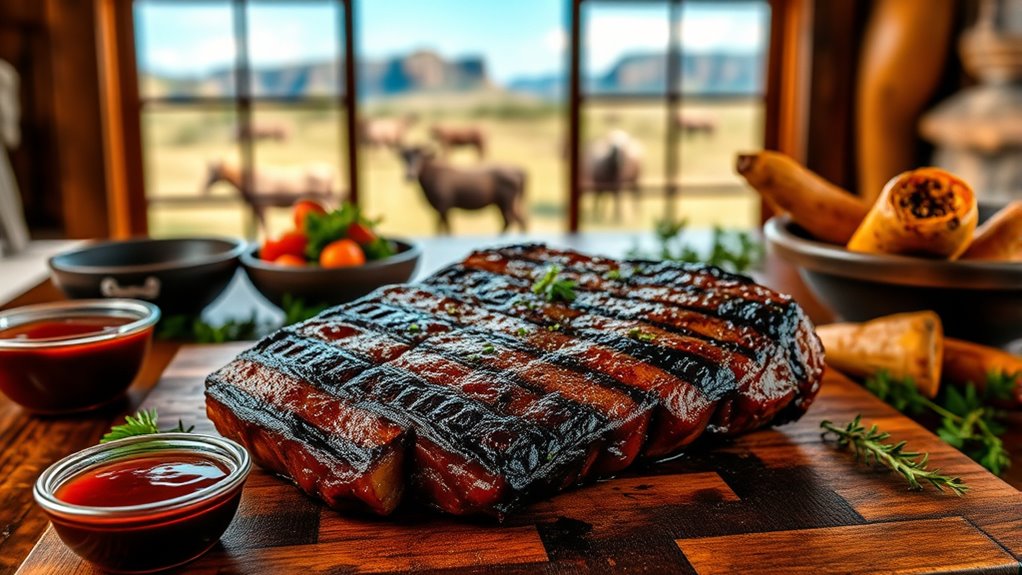
Idaho’s rich ranching heritage deeply influences its culinary landscape, making beef and other meats central to many traditional dishes. You’ll find hearty favorites like grilled lamb chops with mint pesto and classic beef steaks at local steakhouses. Idaho’s signature dish, finger steaks—battered, deep-fried beef strips—has been a staple since the 1950s. Ranch-style BBQs showcase the region’s smoky, flavorful meats, and beef cuts dominate menus across urban and rural areas alike. You may also encounter:
Idaho’s culinary roots shine through hearty beef dishes like finger steaks and grilled lamb chops.
- Battered, deep-fried beef strips (finger steaks)
- Grilled lamb chops with mint pesto
- Hearty steakhouse fare
- Classic meat-and-potatoes meals
These dishes reflect Idaho’s cattle industry and its deep-rooted meat-centric culinary traditions. Meat preservation techniques and a focus on traditional methods contribute to the enduring popularity of these hearty dishes.
Unique Ingredients and Emerging Food Trends
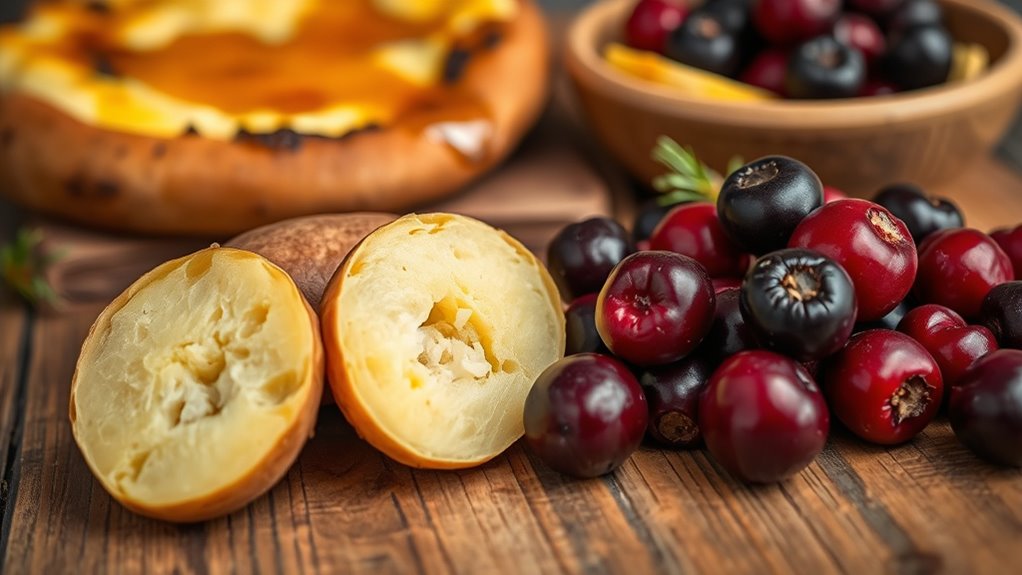
While Idaho’s ranching traditions remain a cornerstone of its culinary identity, modern trends are bringing new ingredients and innovative flavors to the forefront. You’ll find wild huckleberries used in pancakes, jams, and desserts, showcasing local foraging. Food trucks and high-end eateries experiment with global influences like Latin American ceviche or Asian-inspired dishes, blending traditional and modern techniques. Regional confections like Owyhee butter toffee add a sweet twist, while craft beverages highlight local ingredients. You might also explore unique, farm-fresh ingredients such as camas root or native herbs, integrating them into contemporary dishes. This evolving culinary scene celebrates Idaho’s heritage while embracing innovation, offering you fresh flavors and exciting culinary experiences that reflect both tradition and modern creativity. Additionally, understanding home improvement concepts can inspire local chefs and home cooks alike to create inviting spaces that showcase Idaho’s rich culinary diversity.
The Role of Food Festivals and Farmers Markets

Food festivals and farmers markets play an essential role in showcasing Idaho’s rich culinary heritage and fostering community connections. They offer a platform for local producers, chefs, and artisans to share Idaho’s flavors and traditions. When you visit these events, you’ll find a variety of fresh, regional ingredients and unique dishes that reflect the state’s farming and fishing roots. Many markets highlight Idaho’s famous potatoes, huckleberries, and locally caught fish, providing direct access to quality ingredients. These gatherings also promote sustainable practices and support small businesses.
- Sampling homemade potato dishes and huckleberry treats
- Meeting farmers, fishermen, and artisans face-to-face
- Learning about Idaho’s culinary history and traditions
- Participating in cooking demos and cultural celebrations
Fusion and Modern Culinary Innovations
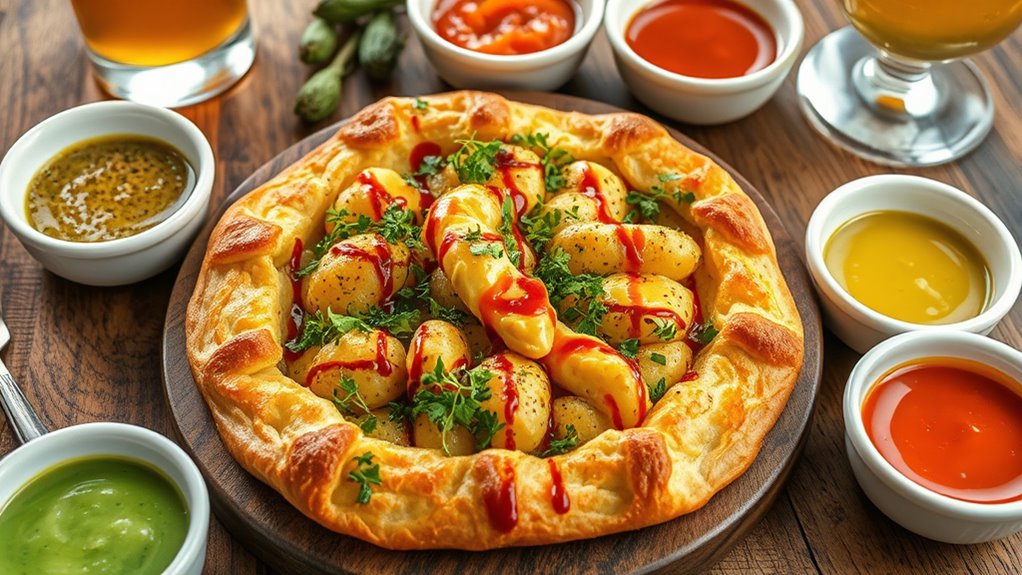
Fusion and modern culinary innovations are transforming Idaho’s traditional food scene by blending local ingredients with global flavors and contemporary techniques. You’ll find chefs experimenting with Idaho potatoes, creating dishes like potato sushi rolls or potato crusted quiches that fuse classic ingredients with new ideas. Food trucks and upscale restaurants alike incorporate international influences, such as Latin American ceviche or Asian-inspired stir-fries, using Idaho’s fresh fish and produce. Modern techniques like sous-vide cooking or molecular gastronomy are applied to traditional dishes, elevating them for a new audience. Local foraged ingredients, like huckleberries, are incorporated into desserts and sauces with innovative twists. These culinary innovations celebrate Idaho’s heritage while embracing global trends, making the food scene vibrant and exciting for adventurous eaters like you.
Frequently Asked Questions
How Has Idaho’s Potato Industry Influenced Local Food Culture Beyond Traditional Dishes?
Your potato industry has shaped Idaho’s food culture far beyond traditional dishes by inspiring creative culinary experiments. You’ll find innovative uses like Idaho potato pancakes with huckleberries and even ice cream potatoes, showcasing local ingenuity. Potatoes also influence social gatherings, festivals, and farm-to-table menus, emphasizing their cultural importance. This industry’s impact encourages you to explore unique, modern dishes that celebrate Idaho’s agricultural roots while blending new flavors and techniques.
What Are Some Lesser-Known Freshwater Fish Species Popular in Idaho Cuisine?
You might be surprised, but besides rainbow trout, Idaho chefs also love to feature mountain whitefish and cutthroat trout. Mountain whitefish, with its delicate flavor and flaky texture, often gets pan-fried or smoked, while cutthroat trout, Idaho’s state fish, makes for a beautiful, flavorful grilled or baked dish. These lesser-known species add variety and local pride to Idaho’s freshwater cuisine, delighting adventurous eaters craving authentic, regional flavors.
How Does Basque Cuisine Uniquely Shape Idaho’s Communal Dining Traditions?
You find that Basque cuisine shapes Idaho’s communal dining by emphasizing hearty, shared dishes like chorizo and pintxos. When you gather for meals, you often enjoy these flavorful, savory bites together, fostering a sense of community. Festivals and gatherings showcase Basque traditions, where everyone participates in cooking and sharing food. This emphasis on togetherness and robust flavors makes Idaho’s dining culture warm, lively, and deeply rooted in Basque influence.
In What Ways Do Native American Foodways Continue to Impact Idaho’s Modern Culinary Scene?
You’ll find Native American foodways greatly influence Idaho’s modern culinary scene, with Bannock featured at many events and markets. Nearly 94% of tribes in Idaho celebrate their heritage through food, keeping traditions alive. Native ingredients like camas root and game meats inspire chefs and home cooks alike. This enduring connection fosters a sense of identity and respect, blending ancient flavors with contemporary dishes, enriching Idaho’s diverse culinary landscape.
What Innovative Uses Are Emerging for Idaho’s Native Ingredients in Contemporary Dishes?
You’ll see native ingredients like camas root and bannock gaining new life in modern dishes. Chefs are incorporating camas into inventive gluten-free breads and desserts, while bannock is being transformed into gourmet appetizers, sandwiches, or even fusion-style street food. These ingredients connect you to Idaho’s heritage, blending traditional flavors with contemporary techniques, and making native foods a vibrant part of today’s culinary scene.
Conclusion
So, if you think Idaho’s culinary scene is just about potatoes, think again. You’re stepping into a world where freshwater fish, Basque flavors, Native American traditions, and bold meat dishes collide in a flavor explosion that could blow your taste buds to the moon. With food festivals and innovative twists, Idaho’s cuisine isn’t just food — it’s an epic adventure. Get ready to feast like you’ve never feasted before, because this food scene is out of this world!