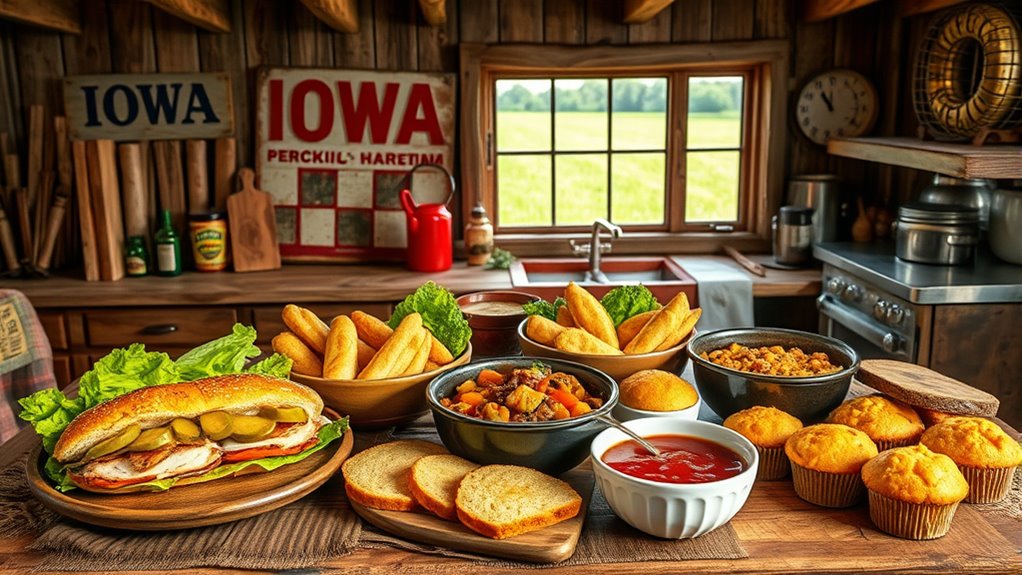

Iowa’s cuisine reflects its diverse immigrant roots, with German sausages, Scandinavian pastries, and Czech kolaches shaping its flavors. You’ll find historic food preservation methods like smoking and pickling, plus signature dishes like Maid-Rite sandwiches and creamy dairy treats. Amish and Mennonite communities add hearty, traditional fare, while regional gems like Twin Bings and local ice creams highlight local pride. To discover more about Iowa’s rich food history, explore the traditions and innovations that continue to evolve today.

Get travel and outdoor gear delivered free — and shop member deals
- Fast, free delivery on millions of items
- Access to Prime Big Deal Days deals on October 6–7
- Prime Video, Amazon Music and more included
Key Takeaways
- Iowa’s cuisine blends European immigrant influences, such as German sausages, Scandinavian pastries, and Czech kolaches, reflecting regional tastes.
- Food preservation methods like smoking, pickling, and curing historically supported winter sustenance and fostered community bonding.
- Signature dishes include Maid-Rite sandwiches, sweet corn, pork tenderloin, and dairy products like Blue Bunny ice cream, showcasing agricultural bounty.
- Amish and Mennonite communities in Kalona emphasize from-scratch, wholesome foods like homemade noodles and seasonal fruit pies.
- Modern practices integrate sustainable farming with AI technology, while preserving culinary heritage through family recipes, food museums, and festivals.
As an affiliate, we earn on qualifying purchases.
Roots of Iowa’s Culinary Heritage: Immigrant Influences
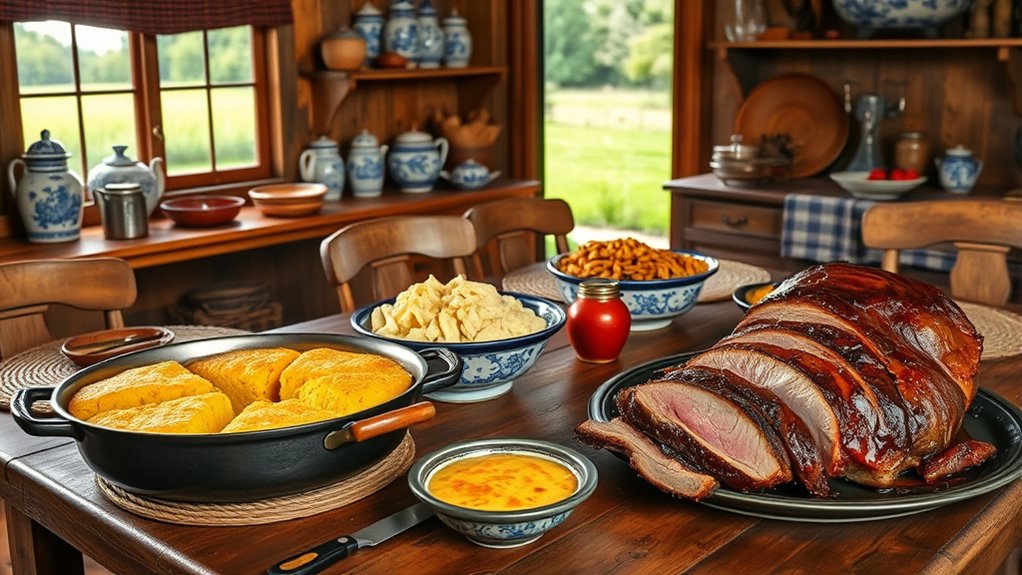
Iowa’s culinary heritage is deeply shaped by the diverse waves of European immigrants who settled in the state. You can taste their influence in the hearty German sausages, sauerkraut, and traditional breads that continue to be enjoyed today. Scandinavian settlers introduced pastries like lefse and rich dairy products, shaping Iowa’s dairy traditions. Czech immigrants brought beloved kolaches, with regional variations that reflect local tastes. Danish influences appear in apple cakes, æbleskiver pancakes, and Dutch letters, which were originally for Sinterklaas Day but are now popular year-round. These immigrant communities not only carried recipes but also shaped holiday meals with lutefisk and Scandinavian pastries. Their culinary contributions form the foundation of Iowa’s diverse and flavorful food landscape. Incorporating authentic ingredients and traditional cooking methods helps preserve these rich culinary traditions for future generations.
As an affiliate, we earn on qualifying purchases.
Historic Communal Kitchens and Food Preservation Practices
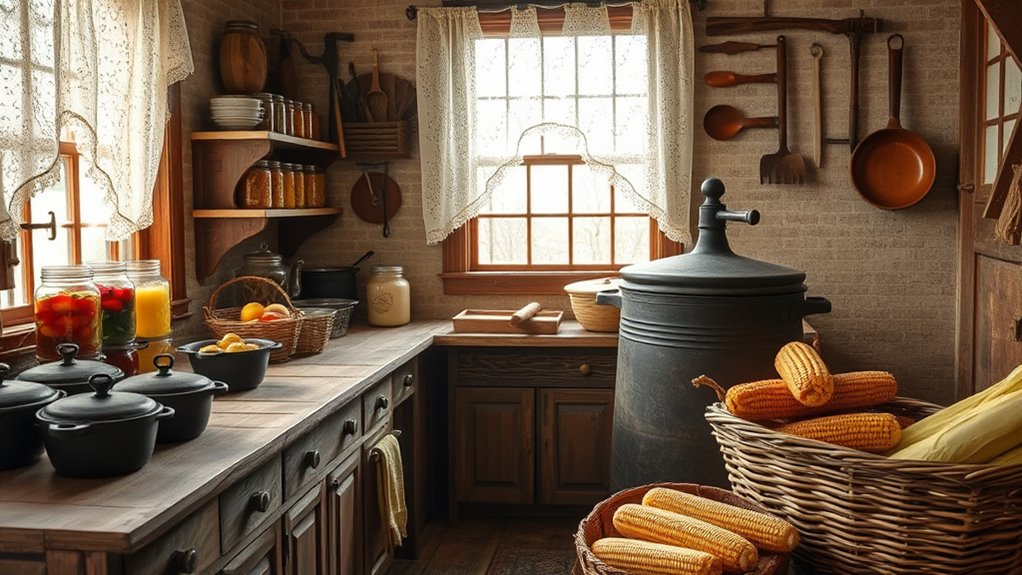
Historic communal kitchens played a vital role in shaping Iowa’s food traditions, especially in the early days of settlement when self-sufficiency and resourcefulness were essential. These kitchens brought communities together to prepare large meals using ingredients from orchards, gardens, and smokehouses. Preservation methods like smoking, pickling, and curing helped families store food for winter, fostering a culture of resourcefulness. Imagine a bustling kitchen with shared ovens, smokehouses, and pantry shelves lined with jars of pickled vegetables and cured meats. Food preservation techniques were crucial for survival during harsh winters and contributed significantly to communal cohesion.
As an affiliate, we earn on qualifying purchases.
Signature Iowa Dishes and Food Innovations
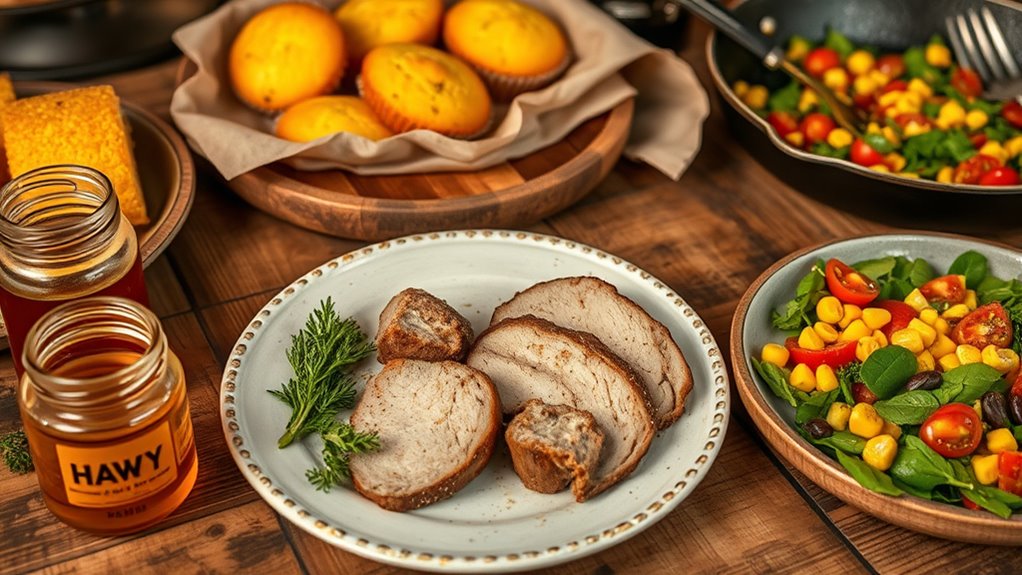
Many of Iowa’s signature dishes and food innovations have roots in its rich immigrant and communal histories, blending tradition with creativity. You’ll find classic foods like Maid-Rite sandwiches, a loose-ground beef creation served on soft buns, and sweet corn, a summer staple. The state’s dairy industry shines through Le Mars and Blue Bunny ice cream, making ice cream an Iowa icon. Other notable innovations include Blue Bunny’s frozen treats, Iowa-made Twin Bings, and AE Dip ice cream cones. You’ll also see chili paired with cinnamon rolls, a school lunch favorite. These dishes reflect Iowa’s agricultural bounty and inventive spirit.
- Maid-Rite sandwiches, quick and customizable
- Sweet corn and pork tenderloin staples
- Dairy products like Blue Bunny ice cream
- Unique local treats like Twin Bings
- The use of collagen and hyaluronic acid in eye patches highlights the importance of beneficial ingredients in skincare.
Food preservation canning supplies
As an affiliate, we earn on qualifying purchases.
As an affiliate, we earn on qualifying purchases.
Amish and Mennonite Food Traditions in Kalona
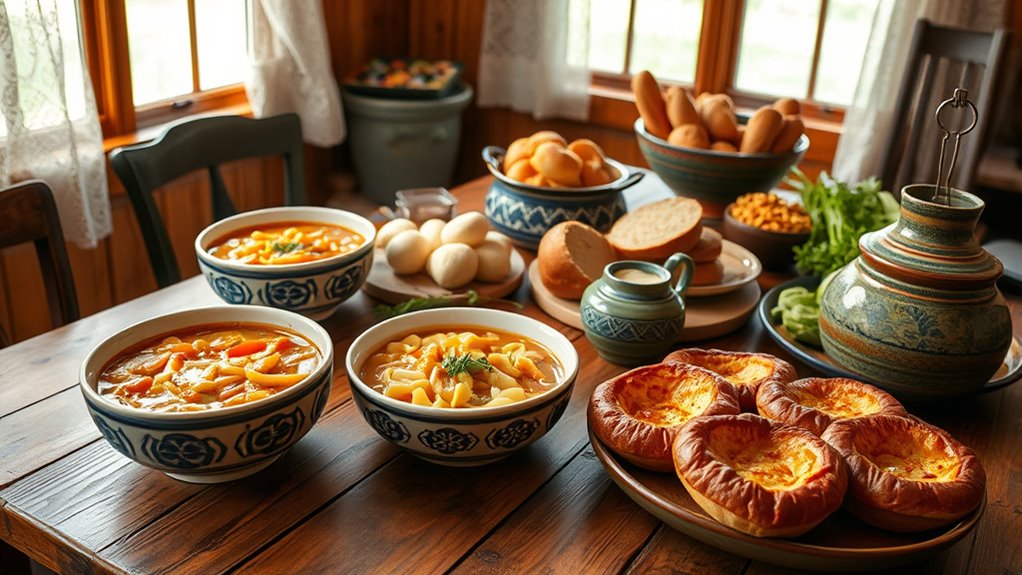
Have you ever experienced the hearty, simple flavors of Amish and Mennonite cuisine in Kalona? When you visit, you’ll notice meals focus on from-scratch preparations using fresh, local ingredients. Think homemade egg noodles, creamy cheeses, and flavorful pies filled with seasonal fruits. These communities prioritize wholesome, no-frills dishes that reflect their values of simplicity and self-sufficiency. Family-style dining is common, often served in warm, welcoming settings that emphasize community and faith. You might savor hearty casseroles, preserved fruits, or freshly baked bread, all made without artificial additives. The food isn’t just about sustenance—it’s a reflection of tradition, craftsmanship, and a way of life rooted in agricultural roots and strong family bonds. Visiting Kalona offers an authentic taste of this enduring, community-centered cuisine.
Regional Recipes and Hidden Culinary Gems

Exploring Iowa’s culinary landscape reveals a treasure trove of regional recipes and hidden gems that reflect the state’s diverse cultural roots. You’ll find lesser-known dishes that tell unique stories, often passed down through families or uncovered in local cafes. These recipes showcase Iowa’s rich immigrant history and agricultural abundance. Some standout hidden gems include: – Ingalls Butter Cookies, a simple treat rooted in local history – Regional variations of kolaches, differing between eastern and western parts of the state – Unique dishes from estate kitchens like Cedar Rapids’ former servants’ recipes – Local bakery specialties that highlight Iowa’s diverse heritage. Additionally, traditional cooking techniques such as baking and steaming are key to creating authentic regional flavors. These lesser-known recipes often remain cherished by longtime residents and food enthusiasts alike, offering a taste of Iowa’s authentic, evolving culinary identity beyond the well-trodden classics.
Evolving Food Trends and Contemporary Innovations
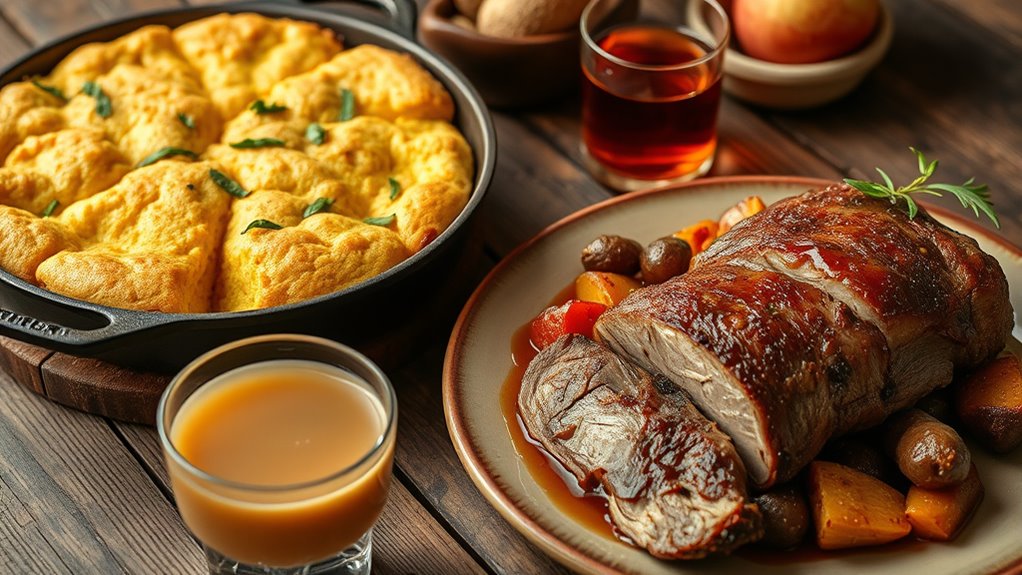
Iowa’s culinary scene is experiencing a vibrant shift as chefs and home cooks embrace modern trends that honor tradition while pushing boundaries. You’ll notice farm-to-table dining becoming more popular, using locally sourced beef, pork, and produce to create innovative dishes. Many cooks are reimagining traditional Iowa recipes with fresh ingredients and contemporary techniques, blending heritage with creativity. Food festivals like Ice Cream Days and seasonal events in the Amana Colonies highlight community-driven innovation and local pride. Food blogs and cookbooks now showcase both historic recipes and new twists, ensuring Iowa’s culinary traditions stay relevant. This fusion of progress and preservation reflects Iowa’s evolving identity—respecting its roots while embracing future flavors. Incorporating farmhouse-style decor elements into culinary spaces can further celebrate the region’s rustic charm and artisanal craftsmanship.
Celebrations and Seasonal Food Events in Iowa
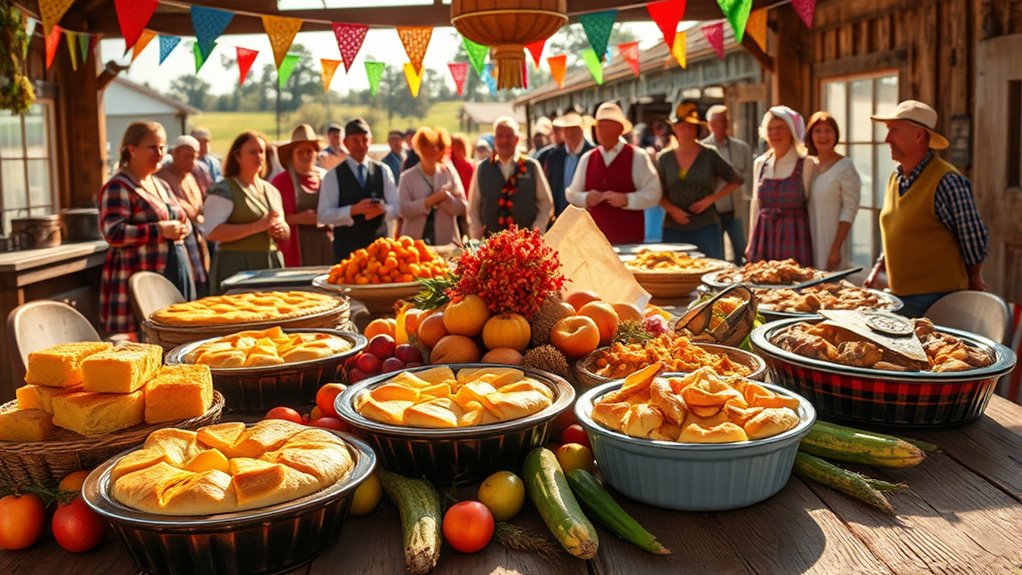
Throughout the year, Iowa hosts a variety of celebrations and seasonal food events that highlight the state’s rich culinary heritage and community spirit. You can enjoy festivals like the Iowa State Fair, which features classic foods such as corn on the cob, pork chops, and deep-fried treats. Autumn brings harvest festivals showcasing homemade sausage, breads, and hearty German-inspired dishes from the Amana Colonies. Winter holiday events often celebrate Scandinavian traditions with lutefisk, Scandinavian pastries, and church suppers. Summer events include ice cream socials and farmers’ markets emphasizing fresh, local produce.
Some key highlights include:
- Iowa State Fair with its iconic foods
- Harvest festivals in the Amana Colonies
- Winter Scandinavian holiday gatherings
- Summer ice cream and farmers’ markets
The Role of Local Ingredients and Sustainable Practices
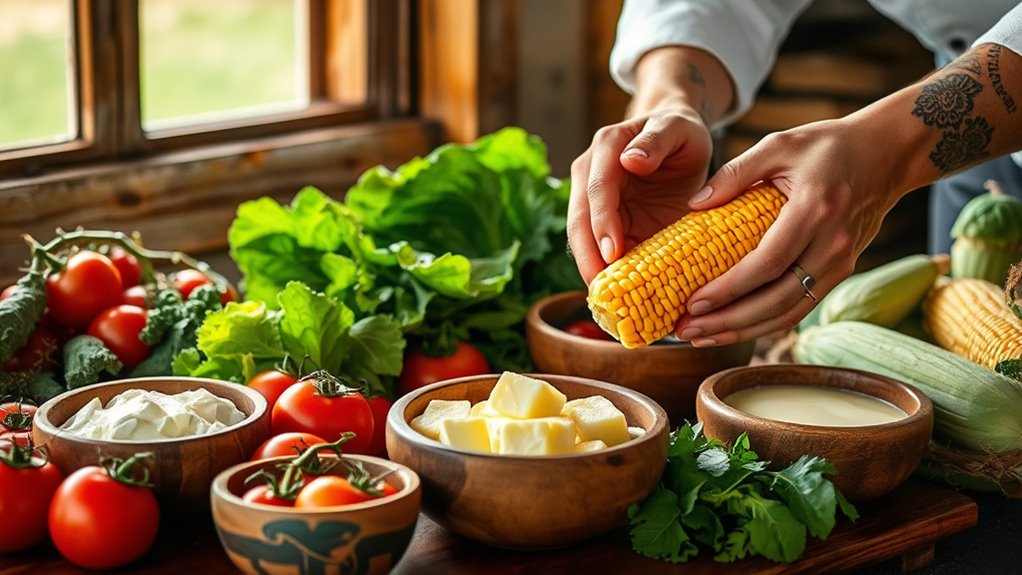
Local ingredients and sustainable practices are at the heart of Iowa’s evolving culinary scene, shaping how food is grown, prepared, and enjoyed across the state. You’ll find farms and markets emphasizing fresh, seasonal produce like sweet corn, tomatoes, and leafy greens, directly supporting local growers. Many chefs prioritize farm-to-table dining, sourcing meats, dairy, and vegetables from nearby farms committed to sustainable practices. You can enjoy dishes made with organic grains, free-range meats, and locally produced cheeses, reducing transportation and carbon footprint. Community-supported agriculture (CSA) programs and farmers’ markets make it easy for you to access fresh ingredients while supporting local economies. These practices not only preserve Iowa’s agricultural heritage but also promote environmental responsibility, ensuring the state’s food traditions remain healthy and sustainable for future generations. Additionally, embracing AI bifurcation in agricultural technology can help optimize resource use and further promote sustainability in farming practices.
Preserving and Documenting Iowa’s Food Heritage
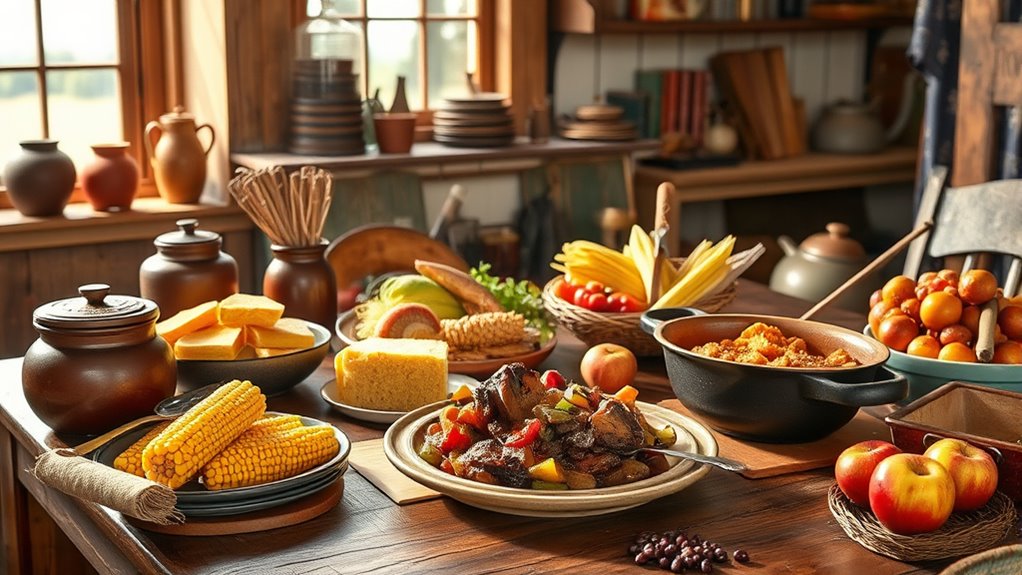
Preserving Iowa’s food heritage involves actively recording recipes, stories, and culinary traditions before they fade away. You can do this by visiting museums, collecting family recipes, and documenting oral histories from local cooks. These efforts keep Iowa’s diverse food roots alive for future generations. To better understand this, consider these key approaches:
Preserve Iowa’s culinary heritage by recording recipes, stories, and traditions for future generations.
- Supporting local food museums and heritage centers
- Interviewing elders and community members about traditional dishes
- Preserving recipes through cookbooks and digital archives
- Participating in seasonal food festivals and events that celebrate local cuisine
- Engaging in relationship building activities with community members to foster trust and collaboration in cultural preservation efforts
Frequently Asked Questions
How Have Modern Chefs Influenced Iowa’s Traditional Food Scene?
Modern chefs influence Iowa’s traditional food scene by blending classic flavors with innovative techniques and local ingredients. You’ll see farm-to-table dishes that honor Iowa’s roots while adding contemporary twists, like reinvented Maid-Rite sandwiches or creative uses of sweet corn and pork. They also experiment with presentation and new culinary styles, making the state’s food culture more dynamic. This evolution keeps Iowa’s culinary traditions fresh, relevant, and appealing to both locals and visitors.
What Role Do Food Festivals Play in Preserving Iowa’s Culinary Identity?
Food festivals play a essential role in preserving Iowa’s culinary identity by celebrating local ingredients, traditional recipes, and regional flavors. You get to experience the state’s rich heritage firsthand, whether through ice cream days, harvest festivals, or cultural celebrations. These events encourage community involvement, support local farmers and artisans, and pass down culinary traditions to future generations, ensuring Iowa’s unique food culture stays vibrant and alive.
Are There Any Unique Iowa Food Customs for Specific Holidays?
You’ll find that Iowa’s holiday customs celebrate community, tradition, and hearty flavors. During Christmas, you might enjoy Swedish lutefisk or Scandinavian pastries, while Thanksgiving often features hearty dishes like mashed potatoes, stuffing, and regional specialties like pork tenderloin sandwiches. In autumn, harvest festivals highlight homemade sausages, breads, and pickled vegetables. These customs bring families together, honor immigrant roots, and keep Iowa’s rich culinary heritage alive through festive foods and shared traditions.
How Does Iowa Incorporate Indigenous Ingredients Into Its Cuisine?
You’ll find Iowa incorporates indigenous ingredients into its cuisine through dishes featuring corn, beans, squash, and wild game, reflecting Native American roots. Local cooks often use heirloom corn varieties in breads, tortillas, and side dishes. You might also see wild berries and herbs in recipes or traditional preparations like fry bread and venison stews, honoring the state’s Native heritage and blending it with contemporary culinary practices.
What Are Some Lesser-Known Immigrant Dishes Still Enjoyed Today?
You’ll find lesser-known immigrant dishes still enjoyed in Iowa, like Czech kolaches filled with fruit or cheese, and Scandinavian lefse, a soft flatbread. Danish æbleskiver pancakes and Dutch letters shaped like ‘S’ also remain popular at local bakeries. German smoked sausages, Radish salad, and hearty dumpling soups from the Amana Colonies continue to be cherished. These dishes reflect Iowa’s rich immigrant heritage, keeping traditions alive in everyday meals.
Conclusion
As you explore Iowa’s culinary landscape, think of it as a rich tapestry woven with threads of tradition, innovation, and community. Every dish tells a story, like a chapter in a well-loved book, inviting you to taste history and embrace new flavors. By celebrating these vibrant food traditions, you help keep Iowa’s culinary heritage alive—an enduring feast for the senses that gets more delicious with each generation.
Halloween Picks
halloween
As an affiliate, we earn on qualifying purchases.