
Spain’s cuisine is a vibrant mix of regional flavors, from Galicia’s pulpo á feira to Valencia’s iconic paella. You’ll find hearty meats, delicious sausages, fresh seafood, and crusty bread everywhere. Small plates, or tapas, are a social staple, offering flavors like patatas bravas and jamón serrano. Savor sweet treats like churros con chocolate and enjoy drinks like sangría. To discover more about Spain’s rich culinary traditions, explore below.

Get travel and outdoor gear delivered free with Prime
- Fast, free delivery on millions of items
- Prime Video, Amazon Music and more included
- Member-only deals all year
Key Takeaways
- Spain’s cuisine is highly regional, featuring dishes like paella, tortilla española, gazpacho, and pulpo á feira, reflecting local climate and culture.
- Traditional foods include bread varieties, cured sausages like jamón ibérico, and hearty meat stews such as cocido madrileño.
- Coastal regions are famed for fresh seafood preparations like seafood paella, suquet de peix, and pescaíto frito.
- Tapas culture emphasizes social dining through small plates like patatas bravas, croquetas, and pintxos, fostering community and conversation.
- Spanish meals are social events with customs like late dining, “la sobremesa,” and sharing food, celebrating community and cultural heritage.
As an affiliate, we earn on qualifying purchases.
Regional Diversity of Spanish Cuisine
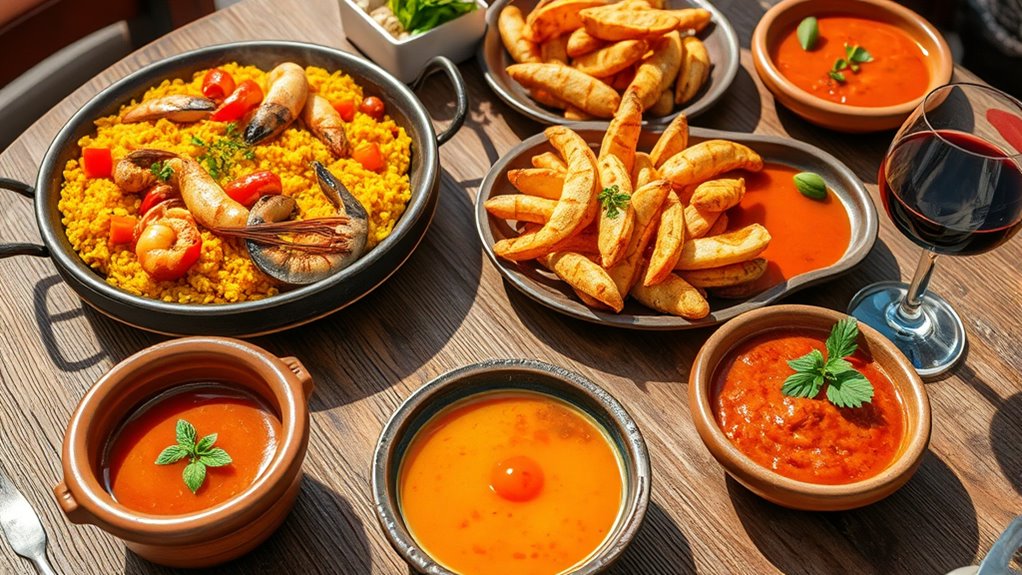
Have you ever wondered why Spanish cuisine varies so much from one region to another? It’s because each area’s climate, history, and agriculture shape its flavors and dishes. In Galicia, you’ll find pulpo á feira—tender octopus seasoned with paprika and olive oil—reflecting its maritime heritage. Moving to Asturias, fabada stew with white beans and pork showcases the region’s hearty produce. In central Spain, cocido stews—like Madrid’s cocido madrileño—highlight robust, comforting flavors. Along the Mediterranean coast, rice dishes like paella originate from Valencia, incorporating local ingredients like seafood and saffron. Meanwhile, southern Andalusia’s hot climate influences cold soups such as gazpacho, with Moorish history evident in ingredients and preparation. This regional diversity makes Spanish cuisine uniquely rich and varied. Additionally, the regional diversity of Spanish cuisine is often celebrated through local festivals and traditional cooking techniques that have been passed down through generations.
As an affiliate, we earn on qualifying purchases.
Iconic Dishes That Define Spain
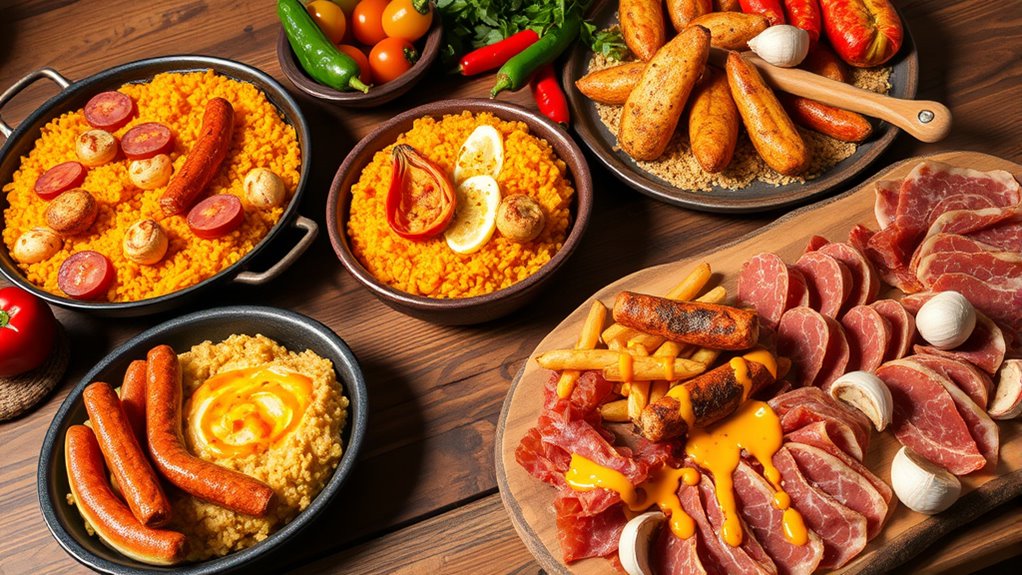
Spain’s culinary identity is best exemplified by a handful of iconic dishes that are celebrated nationwide. You can’t talk about Spain’s cuisine without mentioning paella, a saffron-infused rice dish from Valencia loaded with seafood, chicken, or rabbit. It’s a symbol of Spanish gastronomy, often enjoyed with friends. The Tortilla Española, a simple yet hearty omelet made with potatoes and eggs, is a staple in tapas bars and households alike. Gazpacho and salmorejo showcase Andalusia’s love for chilled tomato-based soups, perfect for hot days. Pulpo á feira highlights Galicia’s love for tender octopus seasoned with paprika. Finally, croquetas, with their creamy fillings of ham, chicken, or cod, are favorites for snacking or sharing. These dishes define Spain’s rich culinary traditions and vibrant flavors.
As an affiliate, we earn on qualifying purchases.
Bread, Sausages, and Meat Specialties
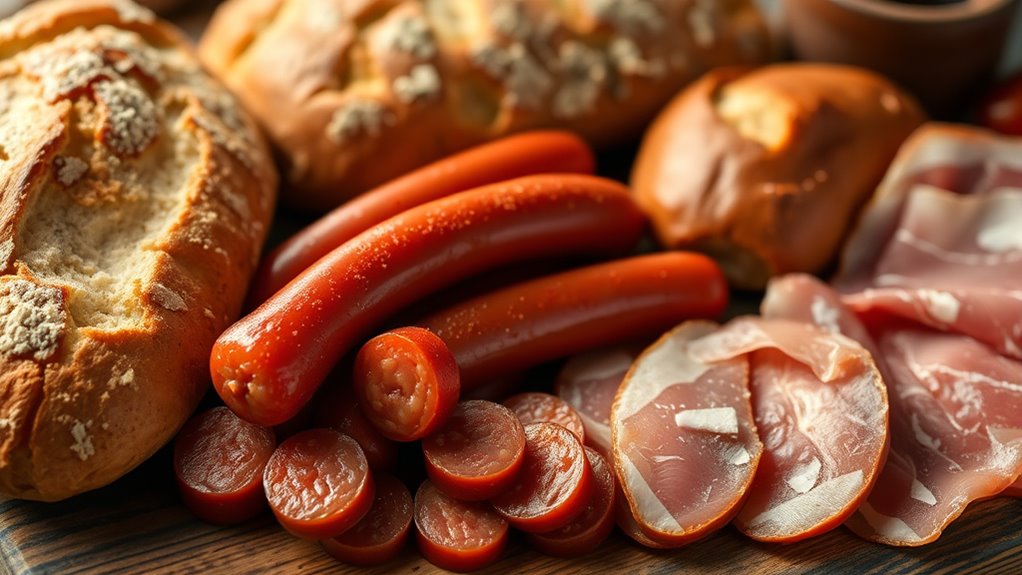
Bread and cured meats form the backbone of many Spanish culinary traditions, showcasing a rich heritage of craftsmanship and regional flavors. You’ll find varieties like crusty baguettes, rustic country loaves, and thin, crispy flatbreads. Popular sausages include chorizo, a spiced pork sausage with smoky paprika; and jamón ibérico, a melt-in-your-mouth cured ham. Meat specialties often feature slow-cooked stews like cocido, packed with tender meats and vegetables, or migas, made from stale bread, garlic, and chorizo. Imagine these ingredients coming together in your mind:
| Bread Types | Sausages | Meat Dishes |
|---|---|---|
| Crusty baguette | Chorizo spicy | Cocido stew |
| Rustic loaf | Jamón ibérico | Migas with chorizo |
| Flatbread | Longaniza | Roast lamb |
| Whole grain | Morcilla (blood sausage) | Grilled pork |
| Focaccia | Salchichón | Stewed beef |
As an affiliate, we earn on qualifying purchases.
Coastal Seafood Traditions and Favorites
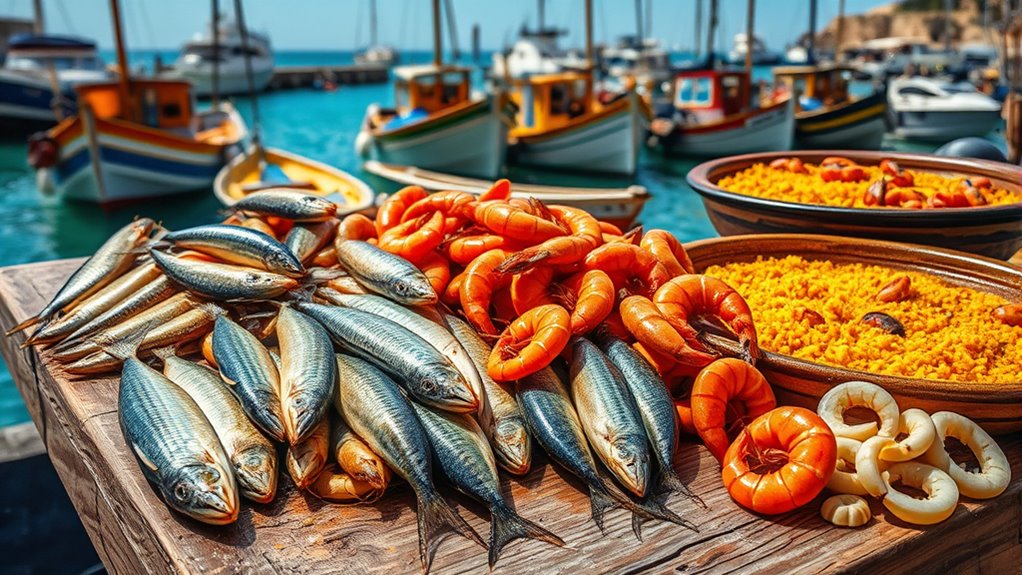
You’ll find that Spain’s coastal regions boast a wide variety of fresh seafood, from shellfish to fish caught daily. Traditional dishes like paella de marisco and pescaíto frito highlight local ingredients and flavors. Coastal cooking techniques such as grilling, frying, and steaming help preserve the freshness and enhance the natural taste of these seafood favorites.
Fresh Coastal Seafood Varieties
Coastal regions of Spain boast a rich variety of fresh seafood that plays a central role in their culinary traditions. You’ll find an abundance of fish, shellfish, and crustaceans caught daily from the Atlantic and Mediterranean. Popular options include sardines, anchovies, mussels, clams, and squid, often served grilled, boiled, or fried. These seafood varieties are the backbone of many regional dishes and tapas, emphasizing freshness and simplicity. The table below highlights some key seafood types and their common preparations:
| Seafood Type | Typical Preparation |
|---|---|
| Sardines | Grilled with lemon |
| Mussels | Steamed with white wine |
| Squid | Fried as calamari |
| Clams | Cooked in broth |
Traditional Fish Dishes
Have you ever tasted the vibrant flavors of traditional Spanish fish dishes? If not, you’re missing out on a rich culinary heritage rooted in coastal traditions. In Spain, fish is celebrated in countless recipes that highlight fresh ingredients and bold flavors. You might enjoy:
- Bacalao a la Vizcaína: Salted cod cooked in a rich tomato and pepper sauce, a Basque favorite.
- Suquet de Peix: A Catalan fish stew with potatoes, garlic, and saffron, showcasing local seafood.
- Merluza a la Koskera: Hake fillets with clams, asparagus, and peas, typical of the Basque Country.
These dishes reflect Spain’s coastal bounty and culinary ingenuity. They’re simple yet flavorful, emphasizing fresh fish prepared with regional techniques and ingredients. Utilizing AI-driven insights can help chefs and food enthusiasts discover new traditional recipes and perfect existing ones by analyzing regional flavor profiles and preparation techniques.
Coastal Cooking Techniques
Spain’s rich coastal waters have shaped a unique set of cooking techniques that highlight the freshness and diversity of seafood. You’ll find that grilling, frying, and steaming are common methods used to preserve flavor and texture. Pulpo á feira, for example, involves boiling octopus until tender, then serving it with paprika and olive oil. Pescaíto frito, a popular Andalusian dish, features small fish lightly battered and fried to crispy perfection. In coastal regions like Valencia and Catalonia, seafood paella is a signature dish, where rice is cooked with saffron, shellfish, and fish, often in a single pan. These techniques emphasize simplicity and freshness, allowing the natural flavors of the sea to shine through in every bite. Incorporating traditional cooking methods ensures that the authentic taste of coastal ingredients is maintained.
The Culture of Tapas and Small Plates
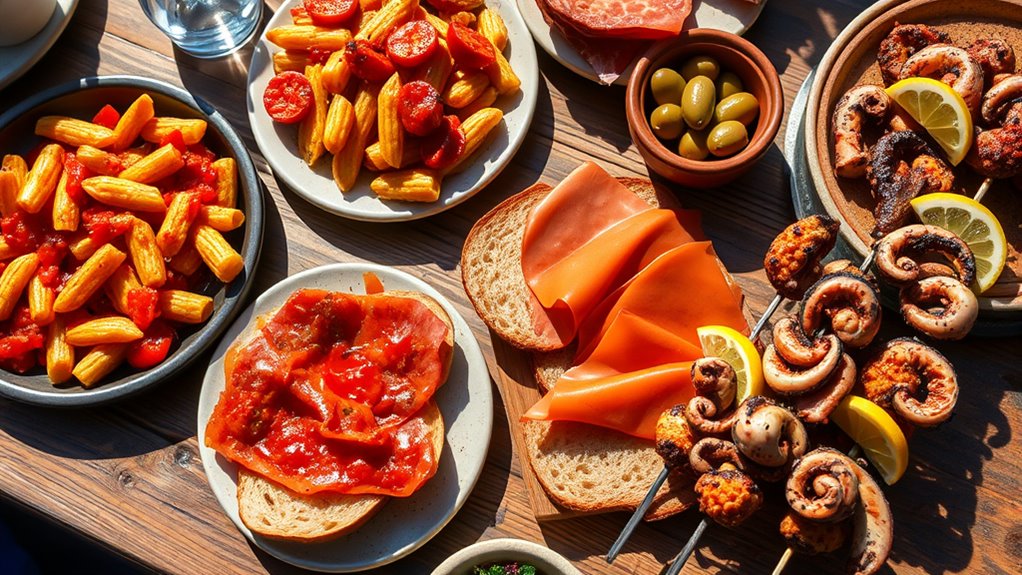
You’ll notice that tapas and small plates are at the heart of Spanish social life, with roots that trace back centuries. These dishes have evolved from simple bar snacks to a vibrant culinary tradition that encourages sharing and conversation. As you explore popular tapas, you’ll see how they embody Spain’s welcoming, communal spirit. Tapas culture plays a significant role in fostering social bonds and celebrating regional flavors across the country.
Origins and Evolution
The culture of tapas and small plates in Spain has deep historical roots that date back centuries, reflecting a blend of social, cultural, and culinary influences. Originally, bar owners placed a slice of bread or a small snack over drinks to keep flies away and prevent drunkenness. Over time, these snacks evolved into a social tradition, encouraging sharing and conversation. Tapas became a way to enjoy a variety of flavors without committing to full meals, fostering community and hospitality. As Spain’s regions developed their unique ingredients and techniques, tapas adapted to local tastes, creating a diverse culinary landscape. Today, tapas symbolize Spain’s lively, social dining culture and its rich history of regional diversity and communal eating.
- Tapas started as simple bar covers to protect drinks from insects.
- Regional ingredients shaped the unique flavors of local small plates.
- Sharing tapas turned into a social ritual that celebrates community.
Popular Tapas Dishes
Popular tapas dishes showcase the diverse flavors and regional specialties that define Spain’s vibrant social dining scene. When you order tapas, you’ll find dishes like patatas bravas—crispy potatoes topped with spicy tomato sauce—and croquetas filled with ham, chicken, or cod. In the Basque Country, pintxos are artfully presented skewers topped with ingredients like anchovies, peppers, or seafood. In Galicia, pulpo a la gallega features tender octopus seasoned with paprika and olive oil. Patatas bravas and jamón serrano are staples across the country, perfect for sharing with friends. These small plates encourage conversation and tasting a variety of flavors, making tapas a key part of Spain’s lively culinary culture. Each region adds its unique touch, creating a rich tapestry of flavors for every palate. Preppy Dog Names are popular among dog owners seeking trendy options that reflect a refined style.
Social Dining Customs
Social dining in Spain revolves around sharing small plates, which foster lively conversations and a relaxed atmosphere. When you go out, you’ll find yourself hopping from bar to bar, sampling different tapas and enjoying the company of friends. This tradition encourages mingling and keeps the mood festive. You might find yourself ordering a variety of dishes like patatas bravas or croquetas, then passing them around. It’s common to stay for hours, savoring each bite and chatting. Tapas bars often have a buzzing, communal vibe, perfect for socializing. Whether you’re in a lively city or a quiet village, this way of dining invites interaction and creates memorable experiences with others. Incorporating mindfulness practices can also enhance the enjoyment of shared dishes by promoting presence and appreciation during the meal.
Traditional Desserts and Popular Beverages

Traditional Spanish desserts and beverages showcase a rich blend of flavors and cultural influences across the country. You’ll find sweet treats like churros con chocolate, where thick hot chocolate complements crispy fried dough, perfect for breakfast or a snack. Crema catalana offers a creamy custard topped with caramelized sugar, similar to crème brûlée but with a distinct Catalan twist. For drinks, sangría is a popular summer choice, combining red wine, fresh fruit, and a splash of brandy or soda. Sidra, a sparkling cider from Asturias, is poured from a height to aerate it for an authentic experience. Coffee culture is vibrant too, with café con leche and cortado often enjoyed after meals. These desserts and drinks reflect Spain’s diverse regional tastes and social traditions, and understanding reliable, safe whole-home backup power options can ensure comfort during unexpected outages.
Social Rituals and Dining Customs in Spain
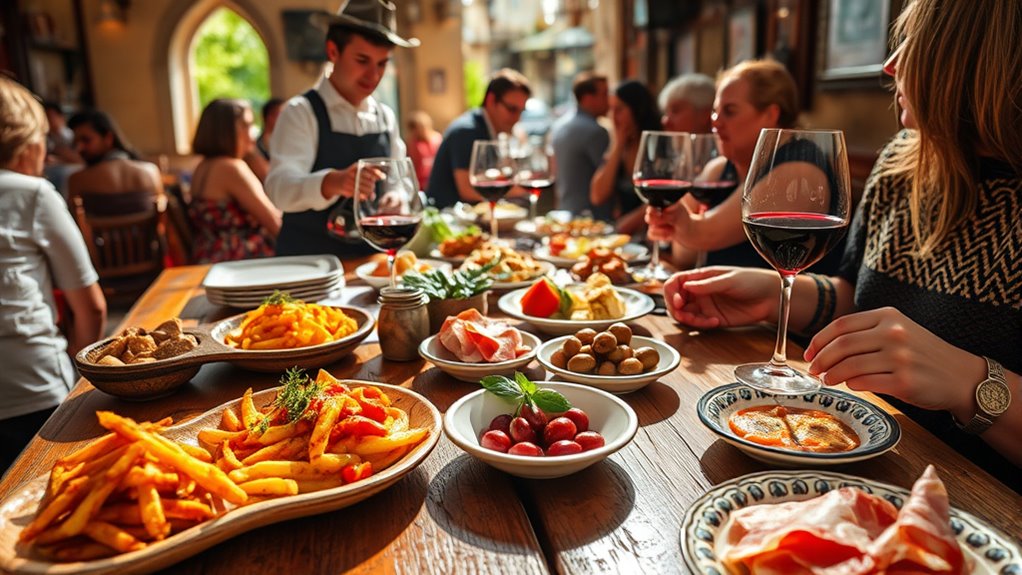
In Spain, dining is more than just a meal; it’s a social event that reflects the country’s vibrant culture and emphasis on community. When you sit down to eat, you’ll notice that meals are often lively gatherings, lasting for hours, especially during lunch and dinner. Sharing food is central, whether through tapas or family-style dishes, fostering conversations and connections. Spaniards typically dine late, with lunch around 2-3 pm and dinner after 9 pm. Social rituals include:
In Spain, meals are lively social gatherings that celebrate community and tradition.
- Enjoying tapas with friends, turning a quick snack into a social experience.
- Participating in the tradition of “la sobremesa,” lingering at the table after finishing to chat.
- Raising glasses in cheers with sangría or wine, celebrating friendship and good company.
- The use of ceramic dishes adds traditional charm to many Spanish meals, emphasizing the cultural importance of presentation and communal eating.
These customs make Spanish dining unique, warm, and unhurried.
Frequently Asked Questions
What Are the Main Influences Shaping Regional Spanish Cuisines?
You see that regional Spanish cuisines are shaped by a mix of climate, history, and local agriculture. Coastal areas like Galicia and Valencia focus on seafood, while inland regions like Madrid and Castile emphasize hearty stews and cured meats. Moorish influence is evident in ingredients like spices and preserved foods, and regional traditions reflect diverse cultural heritages, creating a vibrant tapestry of flavors unique to each part of Spain.
How Do Spanish Dining Customs Vary Across Regions?
You’ll notice that dining customs differ across Spain’s regions. In the north, you might gather for hearty stews and seafood, while in the south, tapas and cold soups are common. In central Spain, long, leisurely meals with multiple courses are typical. Coastal areas emphasize fresh seafood and shared dishes, and in the Basque Country, pintxos are enjoyed standing at bars. Each region’s customs reflect local traditions and climate.
What Ingredients Are Essential in Authentic Spanish Dishes?
Ingredients in authentic Spanish dishes are like the colors on a painter’s palette, vibrant and essential. You’ll need saffron for that golden hue in paella, fresh tomatoes for gazpacho, and high-quality olive oil to bring richness. Cured ham, chorizo, and salt cod also play key roles. Garlic, peppers, and regional herbs add depth, while rice and seafood often serve as the foundation—creating dishes full of bold, authentic flavor.
How Is Seafood Prepared Differently in Coastal Areas?
In coastal areas, you typically prepare seafood simply to highlight its freshness. You might fry fish like pescaíto frito, or serve seafood in paellas with saffron and vegetables. Grilled octopus, such as pulpo á feira, is common in Galicia, while shellfish and crustaceans are often served raw or steamed. You’ll also find seafood in cold soups like gazpacho de marisco, emphasizing light, fresh flavors suited to the hot climate.
What Are the Traditional Social Rituals Associated With Spanish Meals?
You gather with friends and family, sharing small plates or tapas, turning meals into lively social rituals. While you enjoy a glass of sangría or a café con leche, conversations flow freely, embodying Spain’s relaxed, communal spirit. Sometimes, you pour sidra from above, adding a playful touch. These rituals blend tradition and camaraderie, transforming eating into a cherished cultural experience that celebrates connection and joy.
Conclusion
So, after exploring Spain’s rich culinary tapestry, you might think you’ve uncovered all its secrets. But beware—just when you think you’ve tasted everything, a new tapa or regional specialty will surprise you. Spain’s food scene keeps you on your toes, making sure you never really “finish” your culinary journey. So, keep eating, keep exploring, and let the delicious irony of endless variety remind you: you’re forever a student in Spain’s tasty class.
Columbus Day / Indigenous Peoples' Day Picks
long weekend sales
As an affiliate, we earn on qualifying purchases.