
Melanesian cuisine is rooted in traditional ingredients like root crops, coconuts, seafood, and wild foods, prepared using earth ovens, fermentation, smoking, and drying techniques. You’ll find dishes reflecting cultural practices, community bonds, and ancestral connections, with staples like taro, yams, fish, and shellfish playing key roles. Modern influences blend with traditions, creating vibrant fusion dishes while preserving age-old methods. Explore further to discover the rich culinary heritage shaping Melanesia’s unique food traditions.
Key Takeaways
- Melanesian cuisine heavily relies on root crops, seafood, and traditional preservation methods like drying, smoking, and fermentation.
- Earth oven (umu) cooking and open fire techniques are central to preparing hearty, communal dishes.
- Food practices reflect cultural identity, involving rituals, offerings, and celebrations that strengthen social bonds.
- Contemporary influences introduce fusion cuisine, blending traditional ingredients with international flavors and modern cooking techniques.
- Food preservation and sustainable practices, including crop rotation and wild food gathering, are vital to food security and cultural heritage.
Staple Ingredients and Crops in Melanesian Cooking
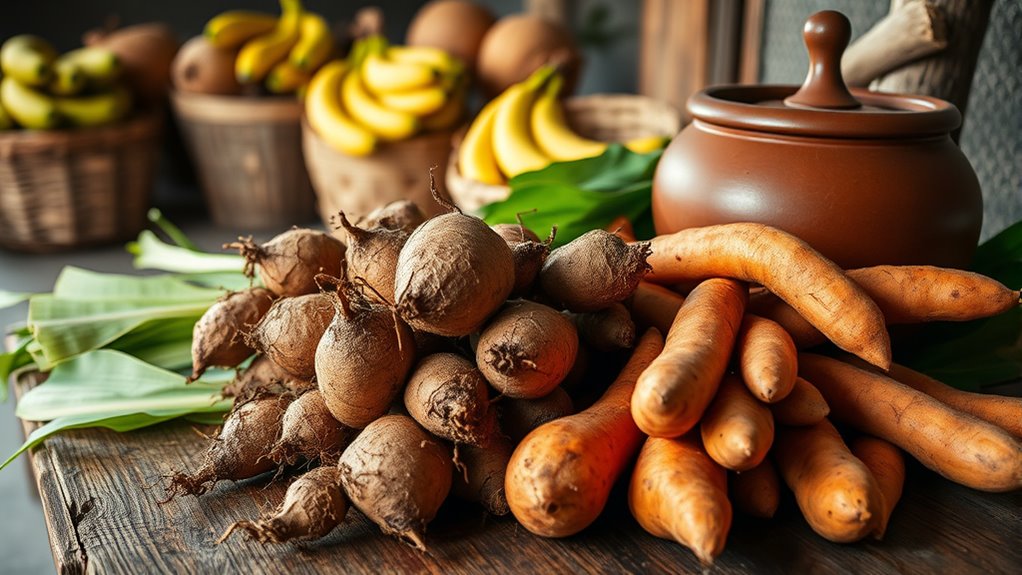
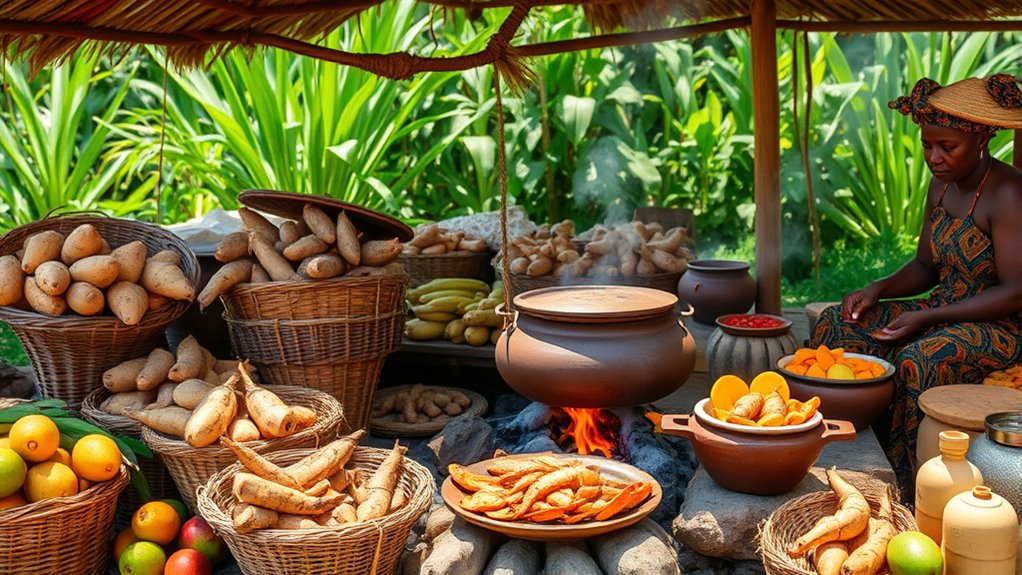
In Melanesian cuisine, staple ingredients and crops form the foundation of everyday meals, reflecting the region’s rich agricultural traditions. You’ll find root crops like taro, yams, sweet potatoes, cassava, and bananas, especially the rus banana, essential for sustenance. Coconut and its derivatives—milk, oil, sugar, and water—are crucial flavoring and cooking agents, used in many dishes. The *ngali* nut is also significant, both nutritionally and economically, often grown alongside crops like Chinese taro, yams, beans, and cassava in agroforestry systems. Wild foods such as ferns and native fruits like voh, gima, and sohvao supplement diets, especially in forested areas. Traditional practices like crop rotation and intercropping help maintain diversity, resilience, and sustainability in food production across Melanesia.
Main Protein Sources and Animal Products

Seafood dominates the protein sources in Melanesian diets, reflecting the region’s island geography. You’ll find fish, shellfish, and aquatic species widely harvested, forming the backbone of daily meals. Besides seafood, bushmeat like wild birds such as ghausu (doves) is common, often sustainably hunted. Domesticated animals also play a role—pigs, dogs, and chickens are traditional proteins that families raise. Coastal communities enjoy crabs, including coconut crabs, prized for their size and flavor. You’ll notice how these proteins are cooked using earth oven techniques or over open fire, preserving traditional flavors. Considerations like proper size and comfort are important for ensuring that food preparation is efficient and comfortable for cooks and diners alike.
Traditional Cooking Techniques and Methods
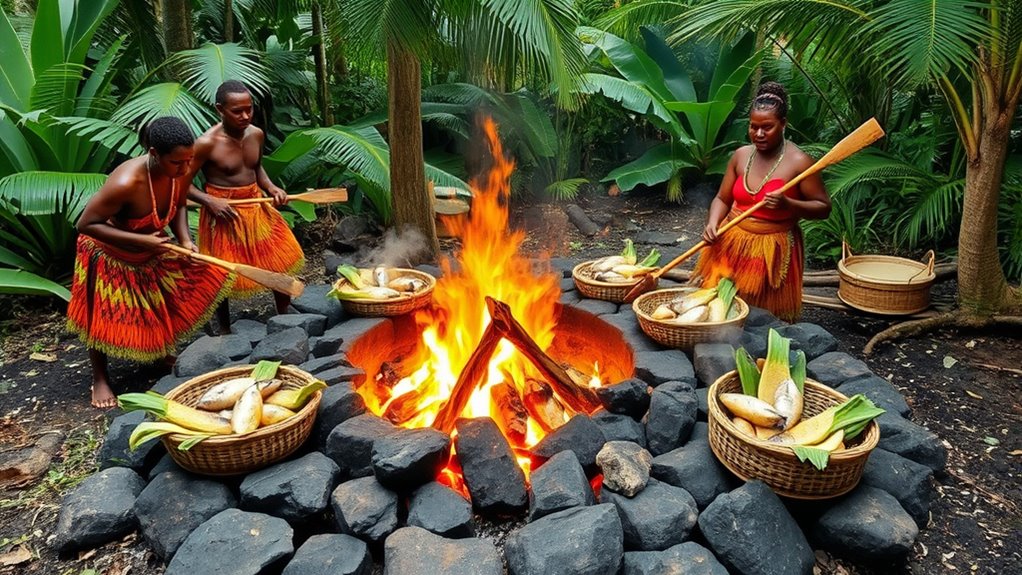
Traditional cooking techniques in Melanesia rely heavily on earth oven methods, which have been passed down through generations. You dig a pit, line it with hot stones, and place food inside, covering it with leaves and earth to trap the heat. This slow-cooking process tenderizes meats and root vegetables while infusing them with smoky flavors. You also use open fires and stones for grilling or roasting seafood, meats, and tubers. Stews and casseroles are common, often cooked with coconut milk, herbs, and spices, simmered over low heat for hours. Preservation methods include fermentation and drying, especially for fish and meats, helping communities store food for times of scarcity. These techniques reflect resourcefulness and a deep connection to the environment. Awareness of traditional seed consumption risks is important when preparing indigenous dishes.
Popular Dishes and Culinary Staples
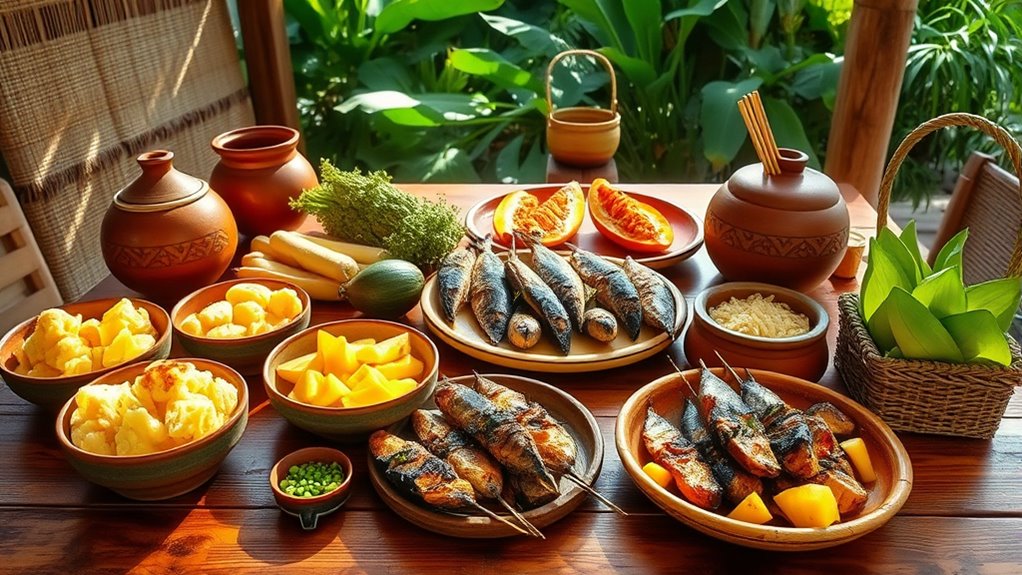
Many dishes in Melanesia revolve around staple ingredients like root crops, bananas, and coconut, which form the foundation of everyday meals. You’ll find these staples in many popular dishes and snacks. For example:
Melanesian cuisine centers on root crops, bananas, and coconut, vital to daily life and traditional flavors.
- Rus banana dishes, often boiled or fried, serve as quick energy sources.
- Root crop stews combine yams, taro, or sweet potatoes with fish or meat, cooked in coconut milk.
- Coconut-based dishes like crab in coconut sauce or coconut crab curry highlight the island’s flavors.
- Traditional snacks include roasted yams or bananas wrapped in banana leaves, enjoyed during gatherings.
These staples are versatile, sustaining communities and shaping regional flavors. They reflect Melanesia’s reliance on locally available ingredients and traditional cooking methods, creating hearty, flavorful dishes that connect people to their land and culture.
Food Practices and Cultural Significance
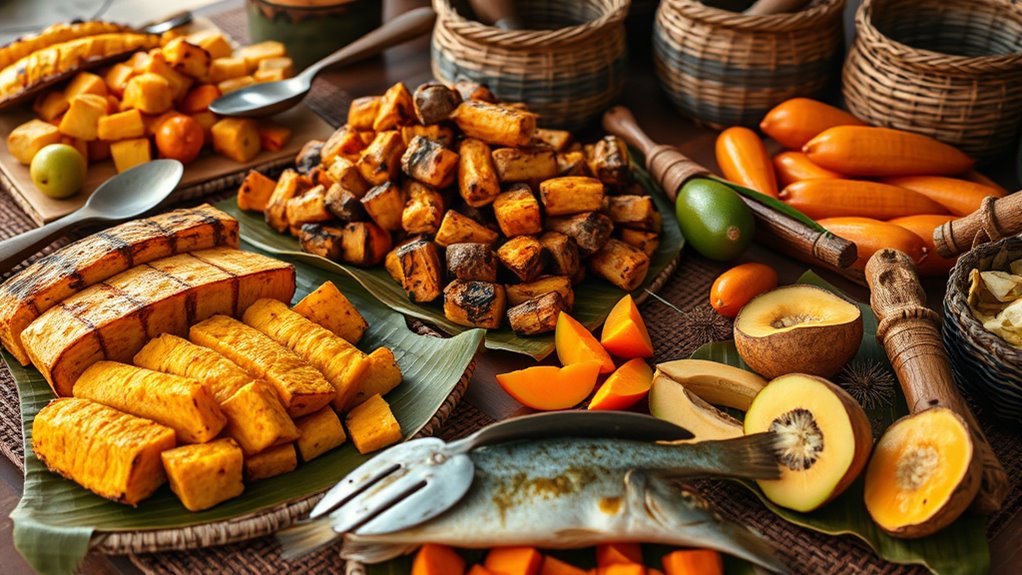
Your food choices in Melanesia reveal more than just nourishment—they reflect deep cultural identities and traditions. Cooking techniques like earth oven baking and fermentation are passed down through generations, strengthening social bonds. Shared meals during rituals and gatherings emphasize the importance of food in community life and cultural continuity. Additionally, the diverse food practices across islands showcase how local environments influence culinary customs and ingredients.
Food as Cultural Identity
Food in Melanesian societies goes beyond sustenance; it embodies cultural identity and reflects deep-rooted traditions. Your food choices and preparation methods reveal who you are and connect you to your ancestors. Traditional dishes, like root crop stews or seafood cooked in earth ovens, serve as symbols of community and heritage. You’ll find that:
- Celebratory feasts feature staple carbs shared among family and friends
- Food taboos regulate resource use and honor ancestral customs
- Indigenous ingredients like taro, yams, and coconut symbolize cultural resilience
- Rituals and social events revolve around specific foods, reinforcing social bonds
- The use of traditional cooking methods often involves electricity production from bike generators, highlighting sustainable practices in some communities.
Traditional Cooking Techniques
Traditional cooking techniques in Melanesia are deeply rooted in the region’s cultural heritage and reflect a close relationship with the environment. You’ll find earth oven methods, called umu, which involve heating stones and burying food underground to cook slowly and evenly. This technique preserves flavors and tenderizes meats and root crops, making use of locally sourced firewood and stones. Slow cooking with fire and stones is common for preparing stews and cassava dishes, often flavored with herbs and coconut milk. Fermentation and drying are also practiced to preserve fish and meats, especially in coastal communities. These methods not only maximize resource use but also reinforce cultural traditions, creating communal bonds through shared meal preparation and preserving indigenous culinary knowledge across generations.
Rituals and Social Bonds
In Melanesian societies, food practices serve as essential expressions of cultural identity and social cohesion. You’ll find that shared meals and traditional dishes strengthen community bonds and mark important events. Food rituals often involve specific protocols, like offering food to ancestors or elders before communal eating. During feasts, you might observe:
- *Sharing staple foods* like taro, yams, or seafood to foster unity
- *Offering food* as part of initiation or religious ceremonies
- *Preparing special dishes* for celebrations, symbolizing prosperity and respect
- *Participating in communal cooking* using earth ovens or open-fire methods, reinforcing tradition
These practices connect individuals to their heritage, emphasizing respect, reciprocity, and collective identity. Food isn’t just sustenance; it’s a crucial thread in the social fabric of Melanesian life.
The Role of Agriculture and Food Systems
| Crop/Resource | Usage/Significance |
|---|---|
| Taro, yams | Staple carbohydrates |
| Coconut | Cooking, flavoring, fats |
| *Ngali* nut | Nutrition, trade |
| Seafood, bushmeat | Protein sources |
| The cultivation of these crops is integral to local agriculture and food systems.
Preservation Methods and Food Security
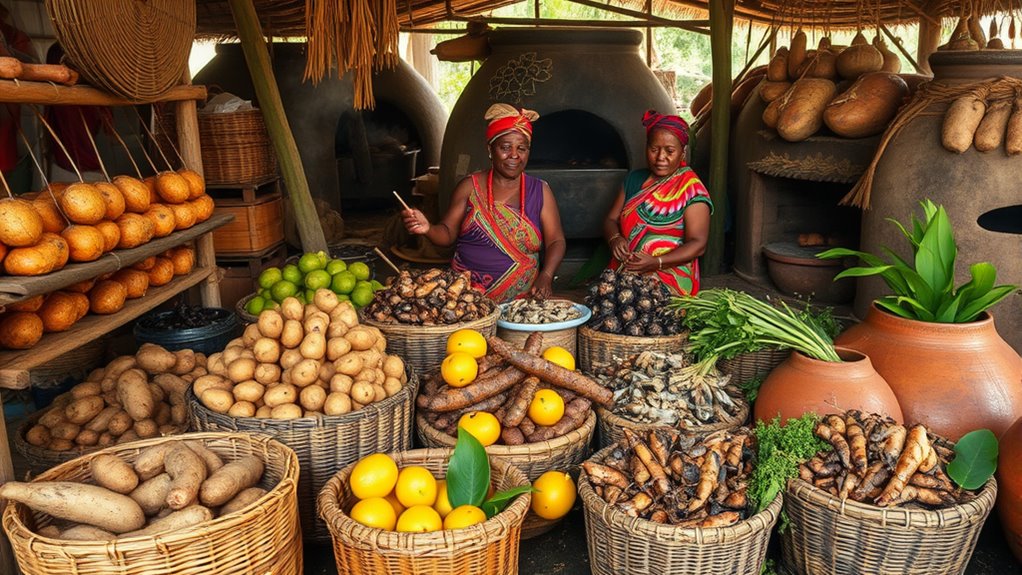
Melanesian communities have developed a variety of preservation methods to guarantee food security and maintain their dietary traditions. You might find they use techniques like drying fish and meats, which prevents spoilage and extends shelf life. Fermentation is also common, especially for fish and root crops, adding flavor and preserving nutrients. You’ll notice they often bury foods in earth ovens or store them underground to keep them cool and slow decomposition. Additionally, smoking and salting are traditional methods to preserve seafood and meats for longer periods. Implementing secure payment methods can help safeguard transactions related to food trade and distribution in these communities.
Contemporary Influences and Evolving Food Traditions
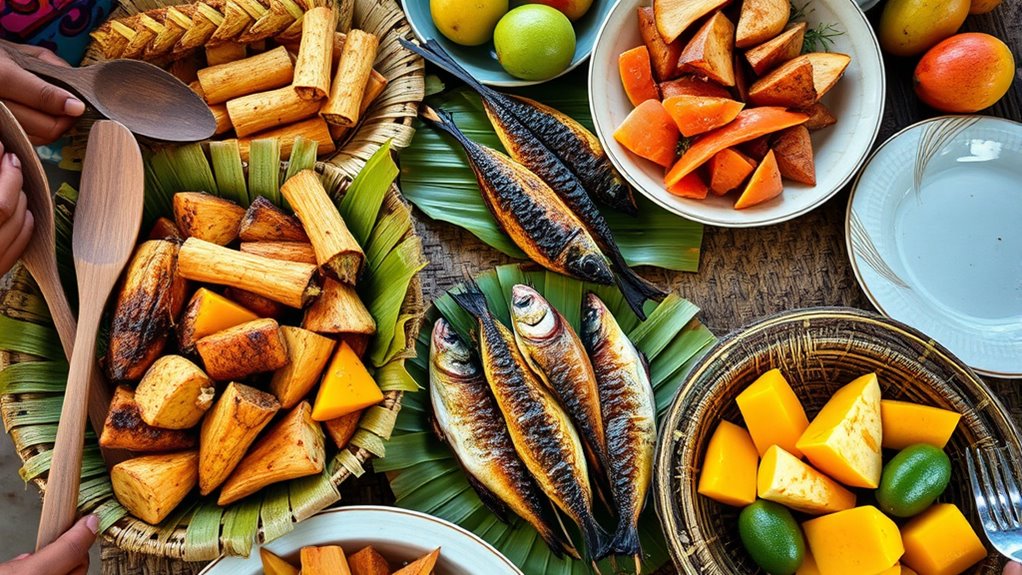
You might notice how global food trends are starting to influence Melanesian cuisine, introducing new ingredients and cooking styles. Many communities are blending traditional flavors with international techniques, creating exciting fusion dishes. This evolution reflects both openness to change and a desire to preserve cultural identity amid external influences. Additionally, empowering families in caregiving journeys can foster stronger community bonds that help sustain these culinary traditions through shared knowledge and support.
Global Food Trends Impact
Global food trends have considerably influenced Melanesian culinary practices, introducing new ingredients, cooking techniques, and dietary habits that blend with traditional customs. You might notice an increased use of imported spices, processed foods, and modern cooking methods like grilling or frying. These influences often complement local staples, creating fusion dishes or convenient snack options. Additionally, the incorporation of home organization principles can help communities manage the growing variety of food products more efficiently. You could encounter: – Fusion cuisine combining traditional ingredients with international flavors – Increased popularity of fast food and packaged snacks – Adoption of health-conscious trends like gluten-free or vegan options – Use of social media to promote and share innovative recipes While these trends expand culinary choices, many communities still preserve their authentic methods, balancing modern influences with age-old traditions. This evolving landscape shapes Melanesia’s vibrant, dynamic food scene today.
Fusion of Traditional Flavors
Contemporary influences are reshaping Melanesian cuisine by blending age-old flavors with modern techniques and ingredients. You’ll notice chefs incorporate international spices, herbs, and cooking styles into traditional dishes, creating exciting fusion options. For example, locally sourced seafood may be prepared with Asian-inspired sauces or served alongside Western-style sides, reflecting cross-cultural exchange. Urban restaurants and street food vendors experiment with new presentations, blending native root crops like taro and sweet potato with global ingredients like chili, garlic, and herbs. Young cooks and food entrepreneurs embrace these trends, preserving traditional methods while innovating to appeal to broader tastes. Additionally, incorporating authentic ingredients ensures that the culinary heritage remains vibrant even as it evolves. This fusion enriches Melanesian cuisine, honoring heritage while embracing change, making it dynamic and relevant in today’s globalized culinary scene.
Frequently Asked Questions
How Do Melanesian Communities Incorporate Traditional Spices Into Their Dishes?
You incorporate traditional spices into your dishes by using local herbs like wild ginger, which adds a pungent flavor, and achiote seeds for vibrant color and subtle taste. You often grind these spices fresh to enhance aroma and integrate them into stews, soups, or grilled meats. You might also use native spices during fermentation or drying processes, preserving their flavors and ensuring your dishes reflect Melanesian cultural authenticity.
What Are Common Methods for Harvesting and Processing Wild Forest Foods?
You venture into the forest, carefully searching for ripe wild foods. When harvesting, you use traditional tools like knives or sticks to gently collect ferns, fruits, and nuts without damaging the environment. Processing involves cleaning, fermenting, or drying to preserve flavors and nutrients. Sometimes, you ferment fish or fruits to intensify taste, sealing them in leaves or baskets. These methods keep forest foods fresh, flavorful, and connected to cultural practices.
How Do Seasonal Changes Affect Melanesian Food Availability and Consumption?
Seasonal changes greatly influence your food availability and consumption in Melanesia. During certain seasons, wild foods like fruits, greens, and nuts become plentiful, encouraging you to gather and incorporate them into your diet. Conversely, when resources are scarce, you rely more on stored or preserved foods, like dried fish or fermented roots. These seasonal shifts also shape traditional practices, ensuring sustainable harvesting and maintaining food security throughout the year.
In What Ways Do Modern Influences Impact Traditional Melanesian Culinary Practices?
You might think modern influences are just a sprinkle of ketchup on traditional dishes, but they’ve actually rewritten Melanesian culinary scripts. Fast food, imported ingredients, and global trends threaten to overshadow age-old cooking methods and local flavors. While you chase the latest food craze, you risk losing the authentic tastes and cultural stories carried by centuries of indigenous recipes. Embrace tradition before it’s replaced by a bland, homogenized menu.
How Is Food Used in Social and Ceremonial Events Across Melanesian Societies?
You see food play a central role in social and ceremonial events across Melanesian societies. You might share traditional dishes like stews or roasted meats during gatherings, symbolizing community, generosity, and cultural identity. Food often marks important rituals, celebrations, or rites of passage, reinforcing social bonds. You’ll notice that communal eating and offering food are ways to honor ancestors, foster unity, and uphold cultural values in these societies.
Conclusion
By embracing their vibrant vegetables, varied vittles, and vivid culinary customs, you can truly savor Melanesia’s magnificent meals. Whether you’re mastering traditional techniques or exploring evolving eats, you’ll discover a delightful dance of dishes, dishes, and diverse dining practices. Immerse yourself in this dynamic domain of deliciousness and dedication, where culture and cuisine collide in a captivating celebration of Melanesian food traditions. Enjoy every edible experience as you explore their rich, resilient food heritage.