

Sustainable travel in Africa allows you to experience incredible wildlife and vibrant cultures while supporting local communities and conservation efforts. Countries like Kenya, Rwanda, and South Africa prioritize eco-tourism, renewable energy, and community-led projects that protect natural habitats. Innovative trends like slow travel and eco-friendly accommodations make your trip responsible and enriching. If you keep exploring, you’ll discover how these efforts help preserve Africa’s natural beauty for future generations.

Get travel and outdoor gear delivered free with Prime
- Fast, free delivery on millions of items
- Prime Video, Amazon Music and more included
- Member-only deals all year
Key Takeaways
- Africa promotes eco-tourism through eco-lodges, renewable energy use, and wildlife conservation initiatives in countries like Kenya, Rwanda, and South Africa.
- Community-led tourism models empower local populations, creating jobs and supporting cultural preservation and socioeconomic development.
- Sustainable infrastructure investments, such as solar-powered accommodations and green transportation, reduce environmental impacts of travel.
- Eco-conscious travel practices, including slow travel and virtual experiences, help minimize carbon footprints and encourage responsible tourism.
- Challenges like limited infrastructure and funding are addressed through innovative solutions and international collaboration to enhance sustainable tourism.
As an affiliate, we earn on qualifying purchases.
Leading Countries in Sustainable Tourism Policies
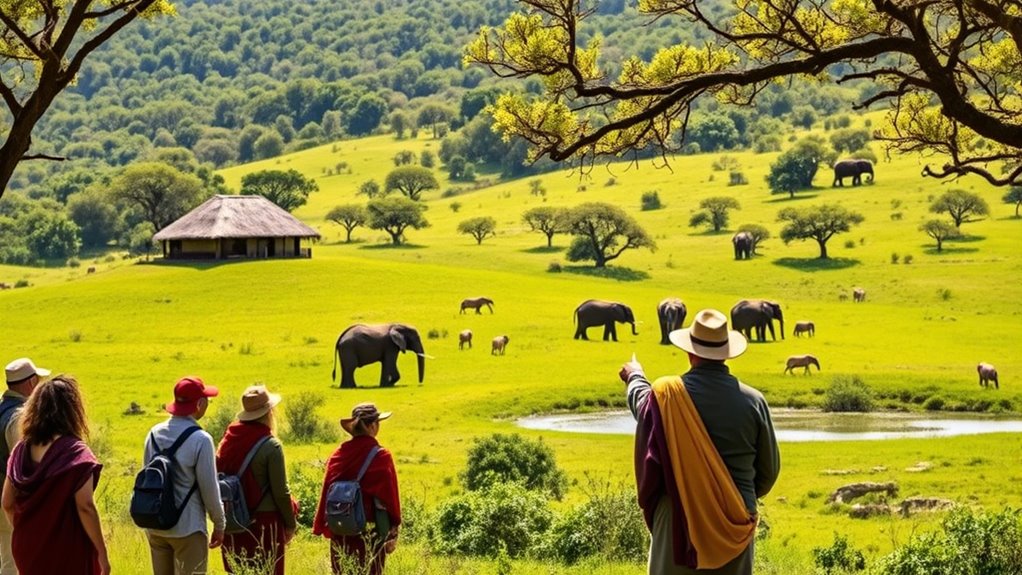
Several African countries stand out for their proactive approach to sustainable tourism policies, with Kenya, Rwanda, and South Africa leading the way. These nations have implemented frameworks that prioritize eco-friendly practices, wildlife conservation, and community involvement. Kenya integrates conservation with tourism by protecting wildlife habitats and supporting local communities through eco-tourism initiatives. Rwanda focuses on gorilla tourism, channeling fees into conservation and local development, ensuring benefits stay within communities. South Africa balances urban tourism with protected areas like Kruger National Park, emphasizing sustainable management and visitor education. These countries actively promote eco-conscious travel, invest in sustainable infrastructure, and foster policies that protect natural and cultural heritage, setting a strong example for responsible tourism across Africa. Additionally, embracing sustainable practices helps these nations maintain their rich biodiversity and attract environmentally conscious travelers.
As an affiliate, we earn on qualifying purchases.
Economic Contributions of Tourism Across Africa
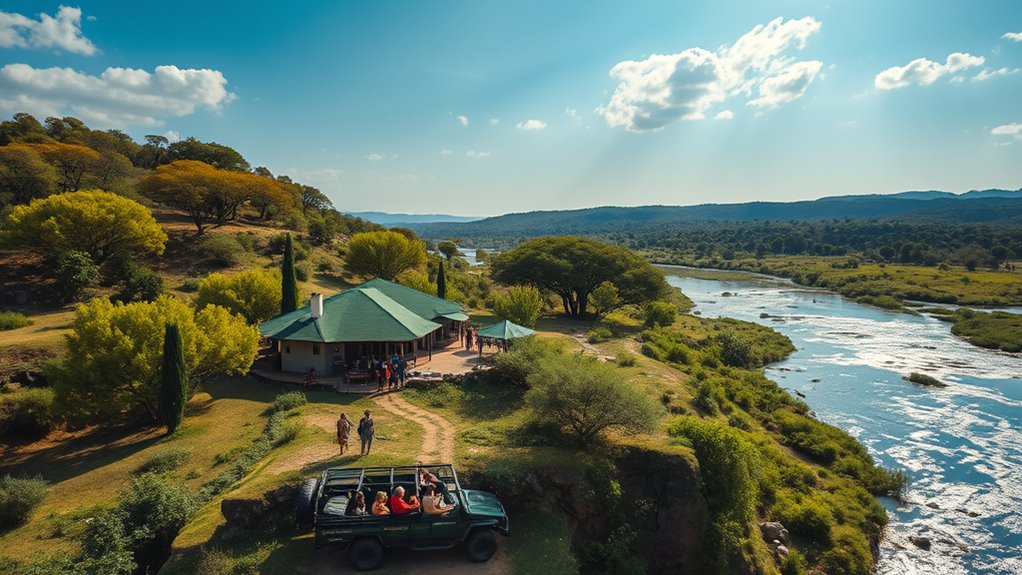
Tourism in Africa is a major driver of revenue and growth, bringing in billions of dollars each year. You’ll see how countries like South Africa, Egypt, and Kenya rely on visitors to support their economies and create jobs. Understanding these economic benefits highlights the importance of sustainable practices in maintaining long-term growth. Additionally, implementing eco-friendly tourism initiatives can help preserve natural resources while boosting economic gains.
Revenue Generation and Growth
Across Africa, the growth of tourism markedly boosts national economies through direct spending, job creation, and infrastructure development. As a traveler, your visits generate significant revenue, supporting local businesses, hotels, and transportation services. Countries like South Africa and Egypt see billions in tourism income yearly, fueling economic activity across sectors. Kenya’s tourism contributes around 10% of its GDP, with wildlife safaris and coastal resorts attracting millions of dollars. These funds enable governments to invest in infrastructure, from roads to airports, improving accessibility and safety. Increased tourist numbers also motivate private investments in eco-friendly accommodations and experiences. Additionally, the valuation of silver tableware reflects broader economic trends, including market demand and craftsmanship, which can be influenced by tourism and cultural exchange. Overall, tourism revenue fosters economic growth, enhances local livelihoods, and encourages sustainable development, ensuring that Africa’s rich cultural and natural assets continue to benefit communities long-term.
Local Economic Impact
Tourism considerably boosts local economies in Africa by creating jobs, supporting small businesses, and generating income for communities. When you visit eco-lodges or participate in community-led tours, you directly contribute to local livelihoods and help sustain cultural traditions. Many tourism initiatives employ residents, providing stable employment and reducing poverty. Tourist spending often supports small vendors, craft markets, and transportation services, fueling local entrepreneurship. Revenue from tourism also funds community projects like schools, health clinics, and conservation efforts. As you explore destinations, you help diversify local economies beyond agriculture or mining, fostering resilience and sustainable growth. Your travel choices promote equitable benefits, ensuring communities thrive while preserving their natural and cultural heritage for future generations. Additionally, implementing sustainable tourism practices can further enhance positive impacts on local communities and the environment.
As an affiliate, we earn on qualifying purchases.
Eco-tourism Innovations and Trends in 2025

Have you noticed how eco-tourism in 2025 is evolving beyond traditional travel methods? You now plan trips using virtual reality previews, connecting with local hosts before visiting. Slow travel is gaining popularity, encouraging longer stays and off-season visits that cut your carbon footprint. Community-driven innovations empower locals to design authentic cultural and ecological experiences, ensuring your visit benefits residents directly. Transparency has become essential; eco-lodges and tour operators regularly publish impact reports and guest testimonials to showcase sustainability efforts. Regenerative tourism models aim to leave destinations better than before, creating positive social and environmental effects. Furthermore, the integration of advanced AI bifurcation technologies helps optimize resource management and preserve delicate ecosystems. These trends make eco-tourism more immersive, responsible, and beneficial for both travelers and communities, shaping a more sustainable future for Africa’s natural and cultural treasures.
sustainable travel guidebook Africa
As an affiliate, we earn on qualifying purchases.
As an affiliate, we earn on qualifying purchases.
Community Engagement and Socioeconomic Benefits
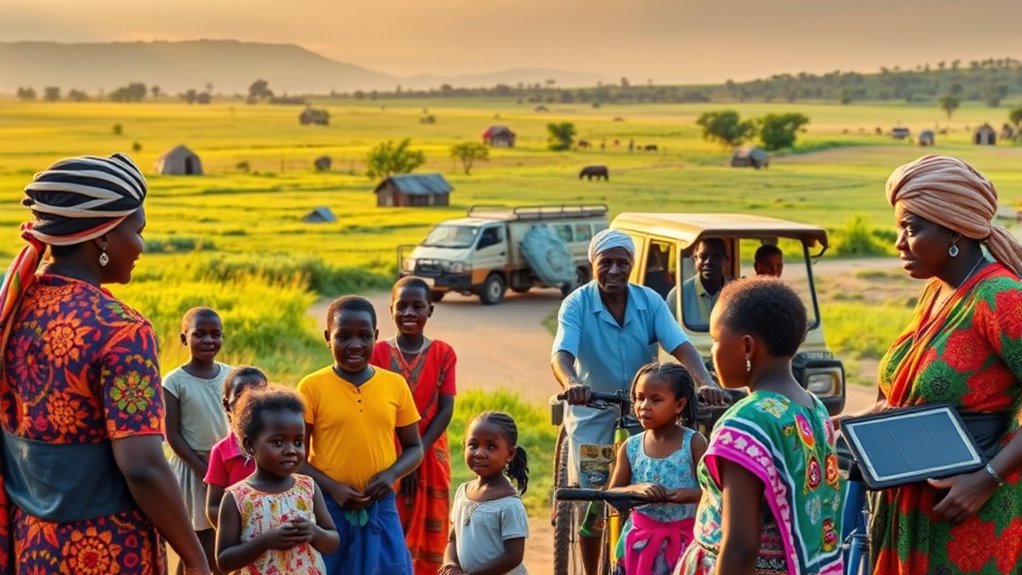
Community engagement lies at the heart of sustainable tourism in Africa, ensuring that local residents benefit directly from visitors’ presence. When you participate in community-led activities, you support local economies and foster cultural understanding. By choosing authentic experiences, you help:
- Create jobs for residents in eco-lodges, guiding, and craft sales
- Fund conservation efforts that protect wildlife and habitats
- Support local artisans and markets, preserving cultural traditions
- Promote socioeconomic development beyond agriculture and mining
Your involvement empowers communities, allowing them to manage tourism sustainably and share their heritage. These initiatives help reduce poverty, improve infrastructure, and strengthen local pride. When communities lead the way, tourism becomes a tool for meaningful, lasting benefits that uplift everyone involved.
Infrastructure Development and Safety Enhancements

As Africa’s popularity as a travel destination grows, governments and private sector actors are investing heavily in infrastructure development and safety enhancements. You’ll notice improved roads, airports, and transportation options making remote eco-sites more accessible while reducing environmental impact. Upgraded accommodations now emphasize eco-friendly designs, energy efficiency, and waste management, aligning comfort with sustainability. Digital connectivity has expanded, helping you plan trips seamlessly and stay connected during your stay. Safety measures, such as better policing, health protocols, and political stability efforts, boost traveler confidence. These investments strike a balance between accommodating increasing visitor numbers and protecting natural and cultural assets. Additionally, the adoption of self-watering plant pots techniques in eco-friendly accommodations demonstrates a commitment to sustainable resource management. By focusing on sustainable infrastructure, Africa guarantees that tourism growth benefits local communities and preserves the environment for future generations.
Notable Eco-friendly Destinations and Practices
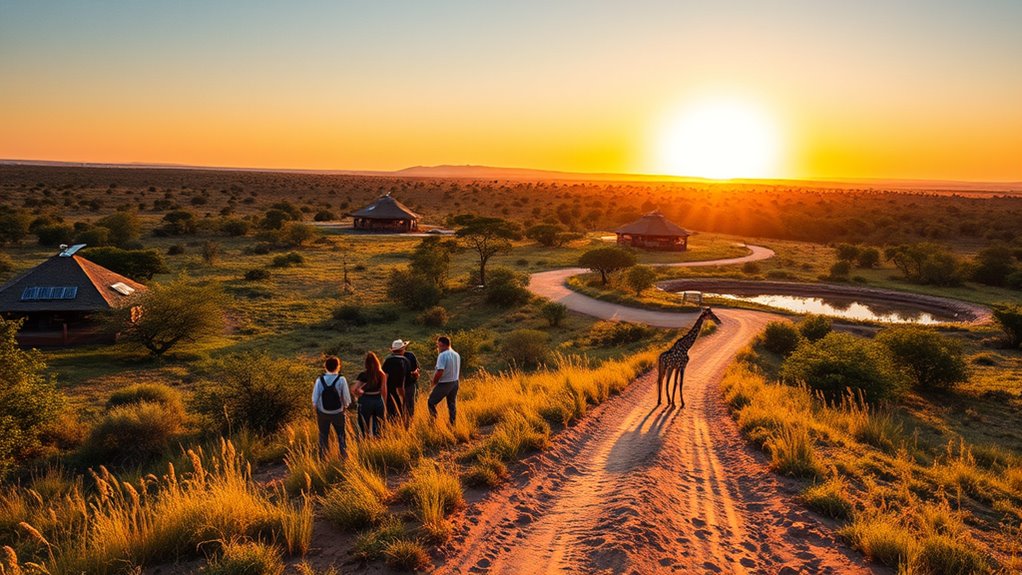
Many African destinations stand out for their commitment to eco-friendly practices, blending natural preservation with sustainable tourism. You’ll find innovative ways these places protect ecosystems while offering memorable experiences. For example:
- Kenya’s eco-lodges operate with solar power and rainwater harvesting, supporting wildlife conservation.
- South Africa’s Kruger National Park balances conservation with eco-friendly accommodations and guided tours.
- Rwanda’s gorilla trekking fees fund local community projects and habitat preservation.
- Botswana’s low-impact tourism limits visitor numbers, ensuring minimal environmental footprint while boosting eco-tourism revenue.
- Implementing antioxidant-rich practices in eco-tourism can further enhance the health benefits for visitors and local communities alike.
These destinations demonstrate how combining sustainable practices with tourism creates lasting benefits for ecosystems and communities alike. By choosing these spots, you help promote responsible travel that values conservation and local empowerment.
Challenges Faced in Sustainable Tourism Implementation
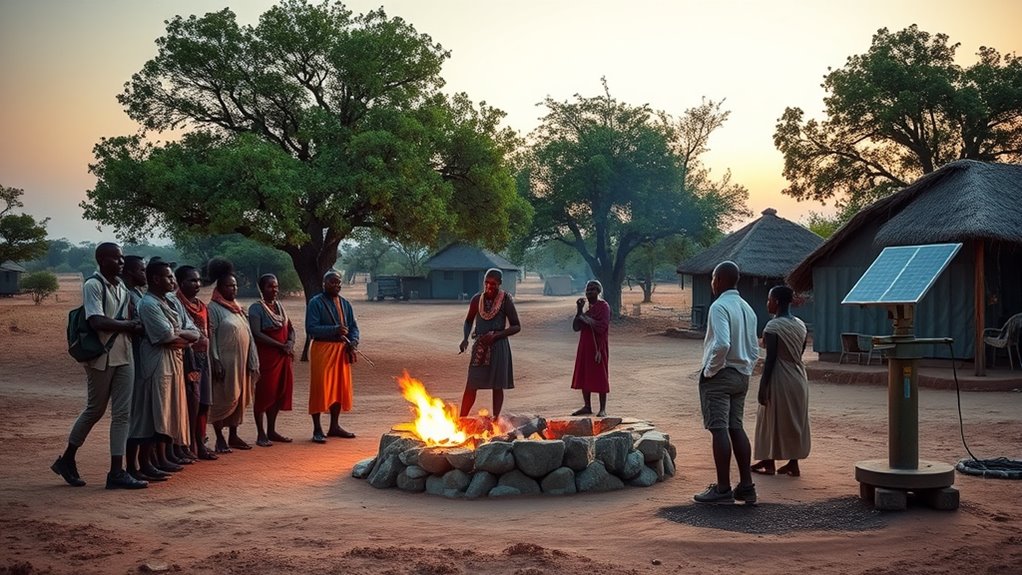
Implementing sustainable tourism in Africa faces significant hurdles, primarily due to limited infrastructure and financial constraints. Many regions lack reliable transportation, electricity, and water services, making eco-friendly development difficult. Funding shortages hinder the construction of green accommodations and conservation projects, especially in rural communities. Political instability and weak governance further complicate efforts, causing delays and uncertainty. Additionally, balancing economic growth with environmental preservation remains challenging, as local governments often prioritize short-term gains over long-term sustainability. Tour operators may lack resources to implement eco-friendly practices, and inadequate training hampers community involvement. These obstacles slow progress, risking environmental degradation and social inequities. Moreover, the absence of comprehensive navigation tools and resources further impedes effective planning and execution of sustainable initiatives. Overcoming these challenges requires targeted investments, policy reforms, and collaboration among stakeholders committed to sustainable tourism goals.
Opportunities for Growth and Conservation

You can tap into Africa’s potential by supporting eco-friendly infrastructure projects that reduce environmental impact. Community-led conservation initiatives empower locals to protect natural resources while benefiting from tourism. Additionally, innovative sustainable tourism models offer new ways to balance growth with conservation, ensuring long-term benefits for both people and the planet. Promoting holistic approaches to health and wellness can further support sustainable development by fostering resilient communities.
Eco-friendly Infrastructure Development
Eco-friendly infrastructure development presents a significant opportunity to balance tourism growth with environmental conservation across Africa. You can participate in this shift by supporting sustainable building practices that reduce energy and water use. Investment in green transportation options, like electric buses and solar-powered boats, minimizes carbon footprints. Eco-friendly accommodations, such as solar-powered lodges and low-impact campsites, blend comfort with conservation. These efforts include:
- Using locally sourced, sustainable materials in construction
- Installing renewable energy systems to power facilities
- Creating waste management solutions that prioritize recycling and composting
- Developing digital infrastructure that reduces paper use and enhances eco-awareness
Understanding projectors’ color accuracy can further help in designing eco-friendly visual displays that minimize energy consumption.
Community-Led Conservation Initiatives
Community-led conservation initiatives offer a powerful avenue for sustainable tourism growth, as local residents directly manage and benefit from protecting their natural and cultural assets. You can witness communities transforming their landscapes into thriving eco-tourism sites, ensuring long-term preservation. These initiatives foster shared ownership, empowering locals to protect wildlife, forests, and traditions. Imagine this:
| Community Role | Conservation Impact |
|---|---|
| Guide & Host | Authentic cultural experiences |
| Land & Wildlife Manager | Habitat preservation and protection |
| Craft & Food Producer | Economic benefits for locals |
| Educator | Raising awareness and sustainable practices |
| Innovator | Developing eco-friendly tourism models |
Innovative Sustainable Tourism Models
Innovative sustainable tourism models are transforming how destinations balance conservation with economic growth. You can now explore approaches that prioritize environmental health while supporting local communities. For example:
- Regenerative tourism aims to leave a positive impact, restoring ecosystems and communities.
- Virtual reality previews help travelers plan responsible trips, reducing unnecessary travel.
- Slow travel encourages longer stays and off-season visits, lowering environmental footprints.
- Community-driven experiences empower locals to design authentic cultural and ecological activities.
These models foster deeper connections between travelers and destinations, ensuring tourism benefits both nature and people. They promote transparency through impact reports and encourage responsible behaviors. By embracing these innovative approaches, you contribute to sustainable development and help preserve Africa’s rich natural and cultural heritage for future generations.
Frequently Asked Questions
How Do Local Communities Benefit Financially From Eco-Tourism Initiatives?
You benefit financially from eco-tourism initiatives because local communities often lead and manage these activities, earning direct income. Jobs at eco-lodges, guiding tours, and providing cultural experiences help reduce poverty and boost local economies. Tourism funds are reinvested into community projects and conservation efforts, creating a sustainable cycle of income. By supporting these initiatives, you help make sure that locals gain economically while preserving their environment and cultural heritage.
What Measures Ensure the Safety of Tourists Visiting Remote Eco-Sites?
You might think remote eco-sites are risky, but safety measures guarantee your well-being. Countries invest in improved transportation, reliable communication, and local guides trained in safety protocols. They also implement security checks, emergency response plans, and collaborate with local communities to monitor conditions. These efforts create a secure environment, so you can enjoy Africa’s pristine landscapes and wildlife without worry, knowing your safety is prioritized at every step.
How Is Waste Management Handled at Eco-Lodges and Sustainable Destinations?
You’ll find that eco-lodges and sustainable destinations prioritize waste management by implementing composting, recycling, and waste reduction programs. They often use biodegradable materials and encourage guests to minimize single-use plastics. Staff are trained to handle waste responsibly, and many destinations partner with local communities to guarantee proper disposal and reuse of waste. This approach helps protect the environment, preserves natural beauty, and supports the overall sustainability goals of the area.
What Training Do Local Residents Receive to Manage Eco-Tourism Activities?
You receive training in eco-tourism management, focusing on environmental conservation, hospitality skills, and cultural sensitivity. Local residents often participate in workshops led by conservation organizations or tourism operators, learning sustainable practices and customer service. This hands-on training equips you to manage eco-lodges, guide tours responsibly, and engage with visitors authentically. Your skills help protect natural resources, support community development, and ensure sustainable tourism experiences for travelers.
How Are Environmental Impacts Monitored and Reported in Sustainable Tourism?
You can monitor and report environmental impacts in sustainable tourism by tracking key indicators like wildlife health, habitat conditions, and resource usage. Many initiatives use impact reports, guest testimonials, and digital tools to document progress and challenges. Regular audits and community feedback help guarantee transparency, allowing you to adjust practices as needed. This ongoing process keeps tourism activities aligned with conservation goals and promotes accountability among stakeholders.
Conclusion
As you explore Africa’s vibrant landscapes, remember that sustainable tourism is your compass to preserving its beauty. By supporting eco-friendly destinations and responsible practices, you become part of a movement that’s shaping the continent’s future. Think of it as planting seeds today for a flourishing tomorrow. Your choices can turn travel into a powerful force for conservation, ensuring Africa’s wild wonders remain timeless treasures for generations to come.
Fall Picks
fall essentials
As an affiliate, we earn on qualifying purchases.