
Hawaiian cuisine blends native ingredients like taro, poi, and fresh seafood with influences from immigrant cultures such as Japanese, Chinese, and Portuguese. Traditional dishes like laulau, kalua pig, and lomi salmon highlight cultural heritage, while modern fusion brings new flavors. Local staple plate lunches and desserts like malasadas showcase Hawaii’s diverse culinary scene. Exploring these traditions and innovations reveals a vibrant, evolving food culture—continue to uncover Hawaii’s delicious legacy and contemporary twists.

Get travel and outdoor gear delivered free — and shop member deals
- Fast, free delivery on millions of items
- Access to Prime Big Deal Days deals on October 6–7
- Prime Video, Amazon Music and more included
Key Takeaways
- Hawaii’s cuisine combines native ingredients like taro, poi, and seafood with immigrant influences from Japan, China, and Portugal.
- Traditional cooking techniques include imu roasting, underground baking, and open-flame grilling, preserving cultural heritage.
- The Hawaiʻi Regional Cuisine movement emphasizes local sourcing, sustainability, and modern reinterpretations of native dishes.
- Popular dishes include plate lunches, laulau, kalua pig, poke, and unique desserts like malasadas and haupia.
- Fusion food and contemporary innovations reflect Hawaii’s multicultural identity and evolving culinary scene.
Hawaiian poi and taro root products
As an affiliate, we earn on qualifying purchases.
As an affiliate, we earn on qualifying purchases.
Traditional Native Hawaiian Dishes and Ingredients
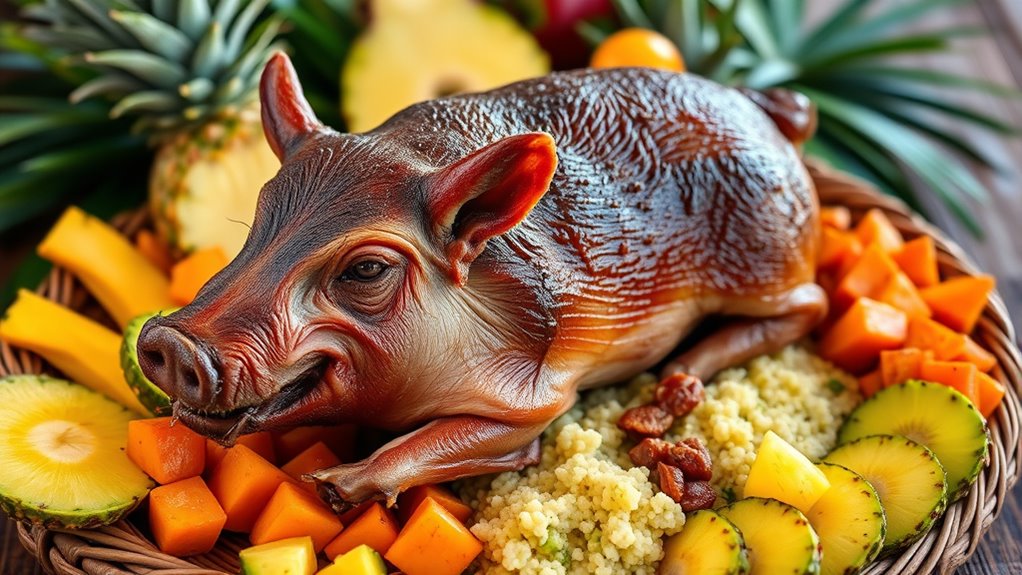
Native Hawaiian cuisine is rooted in simple, wholesome ingredients that have sustained the islands for centuries. You’ll find poi, a thick taro root paste, which is a staple starch, offering a slightly sour flavor from fermentation. Laulau wraps pork, beef, chicken, or fish in taro and ti leaves, then cooks them in an imu, an underground oven. Kalua pig, slow-cooked in an imu, is a beloved dish served with cabbage. Lomi salmon mixes salt-cured salmon with tomatoes and onions, served cold as a revitalizing side. You might also encounter opihi, edible limpets collected from rocky shores, considered a delicacy. These native ingredients and dishes reflect Hawaii’s rich cultural roots and deep connection to the land and sea. Additionally, traditional cooking methods like underground oven cooking highlight the ingenuity and cultural preservation inherent in Hawaiian culinary practices.
As an affiliate, we earn on qualifying purchases.
The Impact of Immigrant Cultures on Hawaiian Cuisine
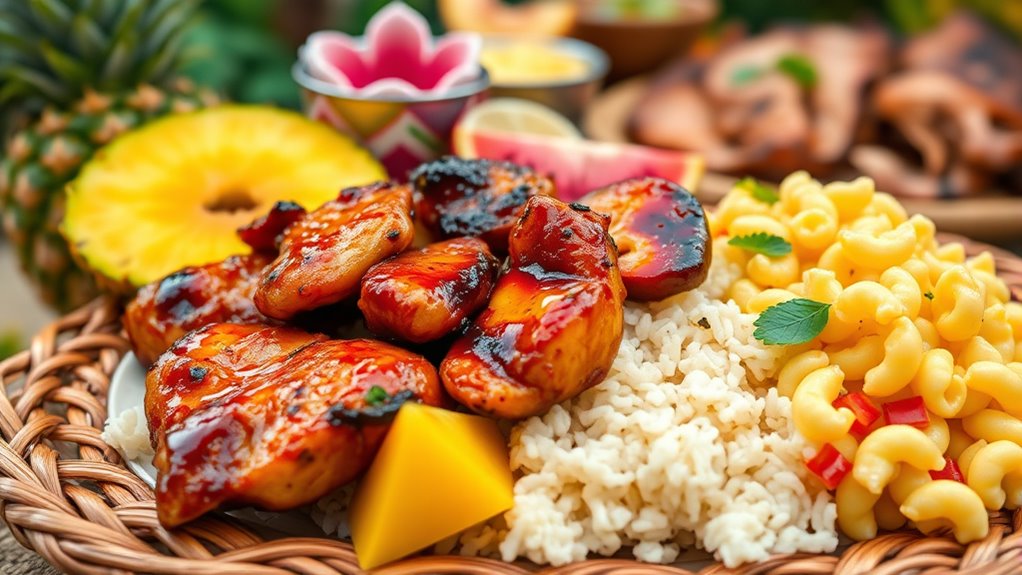
You’ll see how Chinese, Portuguese, and Japanese cultures have shaped Hawaiian cuisine through their unique dishes and ingredients. These immigrant groups introduced popular foods like manapua, malasadas, and saimin, blending seamlessly with native flavors. Their culinary influences create a rich, multicultural tapestry that defines modern Hawaiian food. Incorporating multifunctional kitchen tools has also helped preserve traditional cooking methods while adapting to contemporary lifestyles.
Chinese Culinary Influences
Chinese immigrants have left a lasting mark on Hawaiian cuisine, introducing flavors and dishes that have become integral to the island’s food culture. You’ll find preserved fruits like crack seed, which add a sweet-salty crunch to snacks. Manapua, a fluffy, steamed bun filled with savory pork, is a popular street food. The influence extends to cooking techniques, such as the use of soy sauce and preserved ingredients, adding depth to local dishes. Chinese culinary traditions also shaped the development of dishes like chow mein and other stir-fried favorites, which are now common in Hawaii’s diverse food scene. These flavors blend seamlessly into local fare, creating a unique fusion that reflects Hawaii’s multicultural history and the enduring legacy of Chinese cuisine on the islands. Incorporating whole-house water filtration systems can help ensure that the water used in preparing these traditional dishes remains pure and free of contaminants, enhancing both taste and safety for residents and visitors alike.
Portuguese Food Traditions
Portuguese immigrants have profoundly shaped Hawaiian cuisine, introducing hearty, flavorful dishes that have become beloved parts of local food culture. You’ll find malasadas, deep-fried doughnuts coated in sugar, a favorite treat often enjoyed at local bakeries and festivals. Portuguese sweet bread, soft and slightly sweet, is a staple for breakfast and sandwiches. These dishes reflect the community’s love for rich, comforting flavors. You might also notice their influence in local seafood dishes and the use of spices that add depth to traditional recipes. The Portuguese brought their baking techniques and ingredients, blending seamlessly into Hawaiian food traditions. Their culinary legacy endures in everyday meals and special celebrations, highlighting the lasting impact of their migration on Hawaii’s diverse palate. Additionally, the incorporation of cultural influences has enriched the complexity and diversity of Hawaiian cuisine, making it a vibrant tapestry of global flavors.
Japanese Fusion Elements
Japanese influence has left a distinct mark on Hawaiian cuisine, blending traditional flavors with local ingredients to create unique fusion dishes. You’ll notice this in staples like saimin, a noodle soup combining wheat egg noodles, dashi broth, and local toppings such as char siu and kamaboko. Japanese techniques also inspire the popular musubi, rice wrapped in nori with SPAM or sushi-grade fish, reflecting Hawaiian-Japanese culinary blending. Many restaurants serve ahi poke with soy sauce, sesame oil, and green onions, a fusion of Hawaiian and Japanese tastes. Additionally, chefs incorporate Japanese presentation styles and cooking methods into traditional dishes, elevating the cuisine’s diversity. This cultural exchange results in vibrant, innovative dishes that honor both Hawaiian roots and Japanese culinary traditions. The integration of culinary techniques further enriches the depth and authenticity of these fusion creations.
Hawaiian plate lunch serving dishes
As an affiliate, we earn on qualifying purchases.
As an affiliate, we earn on qualifying purchases.
The Hawaiʻi Regional Cuisine Movement and Its Principles

The Hawaiʻi Regional Cuisine Movement emphasizes using locally sourced ingredients and honoring Hawaii’s rich agricultural heritage. You’re encouraged to incorporate native staples like taro, sweet potato, and tropical fruits, supporting sustainable farming practices. The movement promotes respecting the land’s natural resources, aligning with traditional land divisions called ahupuaʻa that foster ecological balance. Chefs reinterpret native dishes with modern techniques while maintaining cultural significance, emphasizing freshness and ingredient integrity. Fishpond aquaculture is revitalized to ensure a steady seafood supply, blending ancient Hawaiian methods with contemporary sustainability. Instead of a melting pot, the movement sees Hawaii’s cuisine as a “stew” of diverse flavors, celebrating the coexistence of native, immigrant, and modern influences. Your focus is on authentic, sustainable, and innovative culinary expressions rooted in local tradition. Additionally, integrating sound healing science principles into culinary experiences can enhance diners’ overall well-being and deepen their connection to traditional practices.
As an affiliate, we earn on qualifying purchases.
Popular Local Dishes and Plate Lunch Culture
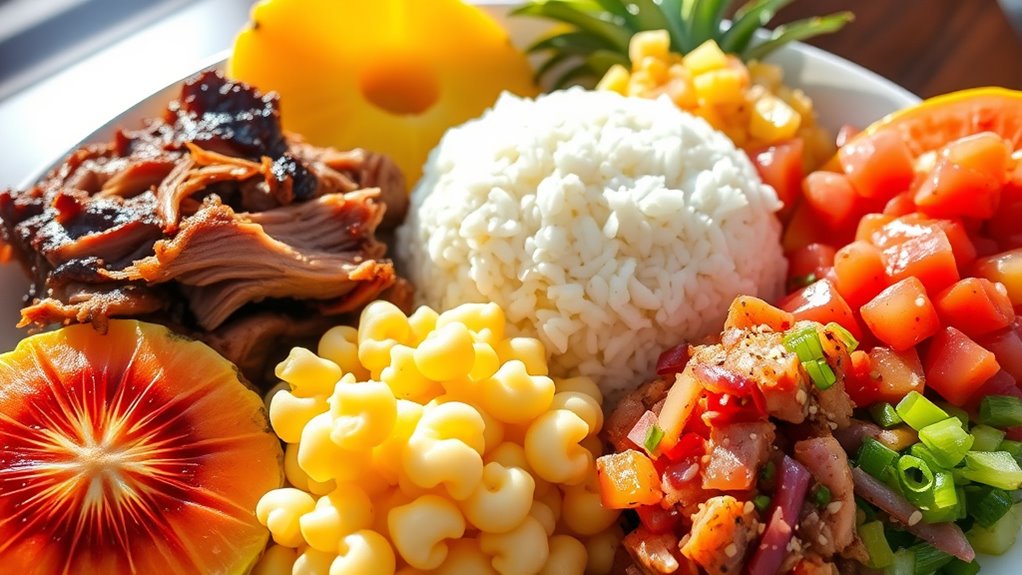
You’ll find that Hawaiian plate lunches and local dishes are central to the island’s food scene, blending tradition and innovation. Classic plates like loco moco and musubi reflect the diverse cultural influences that shape Hawaiian cuisine. These dishes showcase a rich fusion of flavors and ingredients, highlighting the unique culinary identity of Hawaii. Incorporating local ingredients and traditional cooking techniques, these dishes preserve cultural heritage while appealing to modern tastes.
Classic Hawaiian Plate Lunches
Hawaiian plate lunches are a beloved culinary tradition that showcases the island’s diverse flavors and cultural influences. When you order a plate lunch, you typically get a hearty serving of rice, macaroni salad, and a main entrée like kalua pig, BBQ chicken, or teriyaki beef. These meals reflect Hawaii’s multicultural heritage, blending native ingredients with immigrant influences. The dishes are simple yet satisfying, perfect for fueling outdoor activities or relaxing with friends. You’ll often find local favorites like loco moco, with a hamburger patty, rice, gravy, and fried egg, or musubi, a rice ball wrapped in seaweed topped with SPAM. Plate lunches are more than just food—they’re a communal experience, embodying Hawaii’s laid-back, inclusive spirit.
Iconic Local Dishes
Iconic local dishes in Hawaii capture the island’s rich culinary tapestry and laid-back spirit. You’ll find these dishes reflect native ingredients and cultural influences, creating a unique flavor profile. For example, poi offers a tangy taste of taro, while laulau combines tender meats wrapped in taro leaves. Kalua pig, slow-cooked in an imu, delivers smoky richness, and lomi salmon adds freshness with salt-cured salmon and vegetables. These dishes are often featured in plate lunches, a Hawaiian tradition combining rice, macaroni salad, and a main entrée. To help you get a quick overview, here’s a table of popular dishes:
| Dish | Description |
|---|---|
| Loco Moco | Hamburger patty over rice, topped with gravy and eggs |
| Musubi | Rice ball wrapped in nori, often with SPAM |
| Plate Lunch | Rice, meat, and sides like poi or laulau |
| Saimin | Noodle soup with local toppings |
Additionally, the plate lunch culture embodies the fusion of native ingredients and diverse culinary influences, making it a central element of Hawaiian dining.
Fusion Food Traditions
Fusion food traditions in Hawaii blend native ingredients with diverse cultural influences, creating a vibrant and dynamic culinary scene. You’ll find dishes that combine local staples like taro, pork, and seafood with flavors and techniques from Japanese, Chinese, Portuguese, and Filipino cuisines. For example, musubi wraps rice with nori and adds SPAM, reflecting Japanese-American fusion. Plate lunches serve hearty combinations of rice, macaroni salad, and favorites like kalua pig or BBQ. You might enjoy loco moco—rice topped with a burger patty, gravy, and a fried egg—or savor saimin, a noodle soup with local garnishes. Modern chefs reinterpret traditional dishes with contemporary twists, blending authenticity with innovation, and showcasing Hawaii’s multicultural identity through creative, flavorful dishes.
Cultural Significance of Luau and Traditional Cooking Methods

Luau and traditional cooking methods hold deep cultural significance in Hawaii because they serve as living expressions of community, history, and identity. When you participate in a luau, you’re part of a shared experience that honors Hawaiian heritage through food, dance, and storytelling. The imu, an underground oven, embodies ancient Polynesian techniques, slow-cooking pork and root vegetables that connect you to generations past. These methods weren’t just about nourishment—they foster social bonds and celebrate collective identity. Cooking in this way emphasizes respect for land and tradition, reinforcing a sense of belonging. In Hawaii, the luau remains a vibrant symbol of cultural resilience, reminding you that food is more than sustenance—it’s a powerful expression of aloha and cultural continuity. Additionally, these culinary traditions are often passed down through generations, ensuring that the cultural significance endures over time.
The Role of Taro and Other Native Crops in Hawaiian Foodways
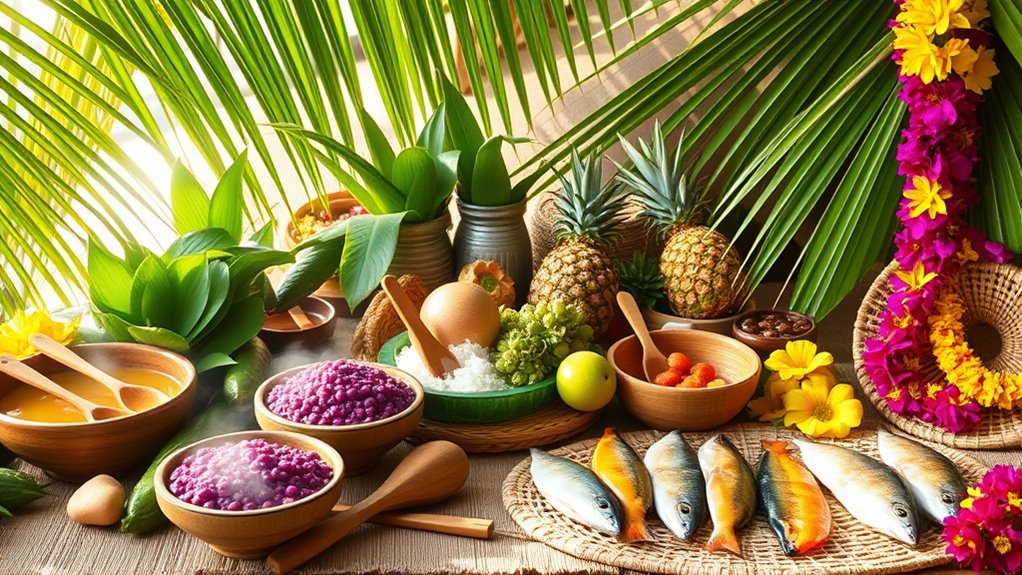
Taro and other native crops form the backbone of Hawaiian foodways, reflecting a deep connection between the land and culture. You recognize taro, or kalo, as more than just a food source; it’s a symbol of Hawaiian identity and spirituality. Taro roots are cultivated in traditional loʻi (wetland terraces), emphasizing sustainable practices. The most iconic dish, poi, is made by pounding cooked taro into a smooth paste and mixing it with water, creating a staple that sustains generations. Other native crops like sweet potatoes (uala), breadfruit, and mountain bananas also play essential roles in local cuisine, providing variety and nourishment. These crops are woven into cultural rituals and everyday meals, maintaining a sacred link to Hawaii’s ancestral roots. Collagen and hyaluronic acid are sometimes incorporated into traditional recipes or modern adaptations to enhance nutritional benefits and health.
Modern Culinary Innovations and Fusion in Hawaii
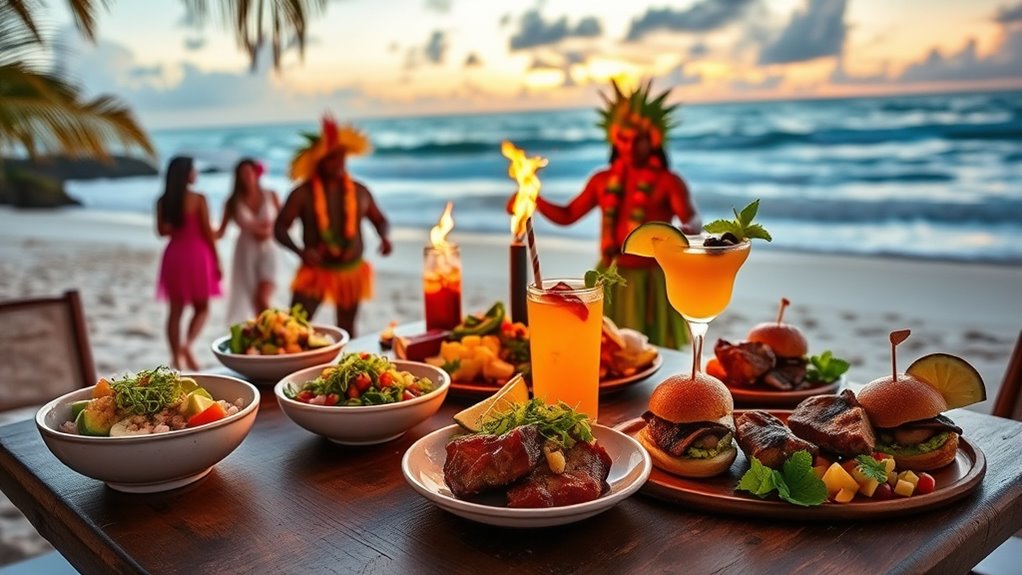
Modern Hawaiian cuisine is experiencing a dynamic transformation as chefs blend traditional ingredients with innovative techniques and global flavors. You’ll find local kalo, uala, and tropical fruits reimagined in creative dishes that honor their heritage. Chefs incorporate modern methods like sous-vide, molecular gastronomy, and plating artistry, elevating native ingredients. Fusion is everywhere—think poke bowls topped with kimchi, or lau lau infused with Spanish chorizo. International influences from Japanese, Filipino, Portuguese, and American cuisines merge seamlessly, creating exciting new flavor profiles. Food trucks and contemporary eateries serve up bold, inventive dishes that reflect Hawaii’s multicultural spirit. This ongoing evolution celebrates tradition while pushing culinary boundaries, making Hawaiian cuisine vibrant, diverse, and relevant in today’s global food scene.
The Rise of Food Trucks and Contemporary Hawaiian Eateries
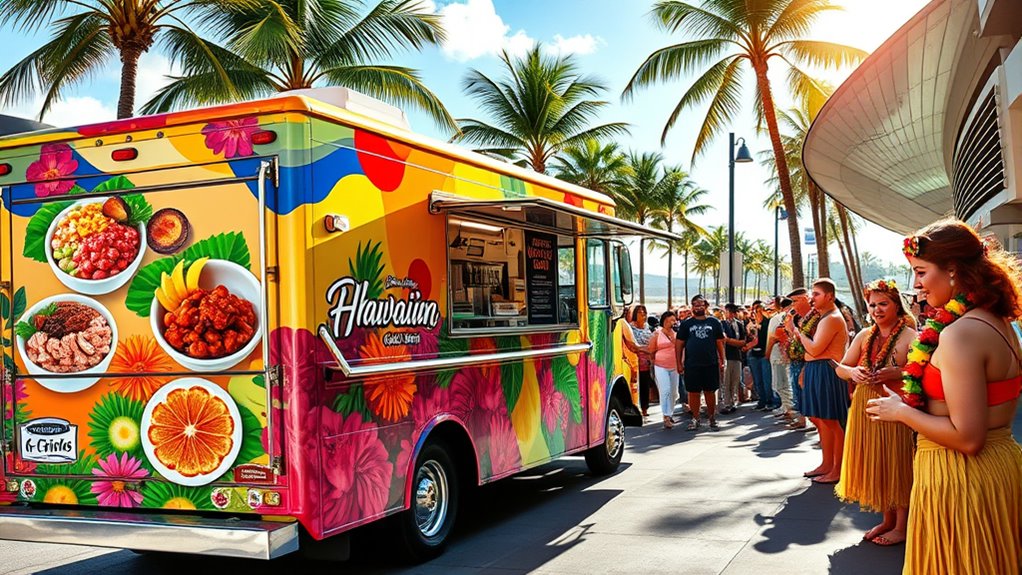
Food trucks and contemporary Hawaiian eateries have become vibrant symbols of the islands’ evolving culinary scene. They bring fresh energy, blending traditional flavors with modern techniques. You’ll notice four key trends:
Food trucks and Hawaiian eateries blend tradition with modern innovation, showcasing Hawaii’s vibrant evolving culinary scene.
- They serve fusion dishes like garlic shrimp tacos and poke bowls, combining local ingredients with global influences.
- Many trucks focus on sustainability, sourcing ingredients from nearby farms and emphasizing eco-friendly practices.
- The casual, mobile setup allows you to enjoy authentic Hawaiian flavors on the go—perfect for beach days or festivals.
- Chefs experiment with presentation, elevating street food into gourmet experiences without losing cultural roots.
These eateries showcase Hawaii’s dynamic food culture, making it accessible and exciting for locals and visitors alike. They reflect a modern take while honoring traditional tastes.
Preserving Heritage Through Traditional Food Practices

You can help keep Hawaiian heritage alive by understanding the cultural importance of traditional recipes and cooking methods. These practices connect you to the islands’ history and community spirit. Embracing and passing down techniques like imu roasting and poi making guarantees these traditions endure for future generations.
Cultural Significance of Recipes
Traditional Hawaiian recipes serve as essential links to the islands’ cultural heritage, embodying centuries of history, values, and community bonds. When you prepare dishes like poi, laulau, kalua pig, or lomi salmon, you’re preserving more than flavors — you’re maintaining ancestral stories and social connections. Here’s why these recipes matter:
- Cultural Identity: These dishes reflect Hawaiian history and the importance of land, family, and tradition.
- Community Bonding: Preparing and sharing native foods during luaus or gatherings strengthens relationships.
- Heritage Preservation: Passing recipes down keeps Hawaiian values alive across generations.
- Cultural Pride: Serving native dishes celebrates Hawaiian uniqueness and resilience amid outside influences.
Traditional Cooking Techniques
Hawaiian culinary heritage is vividly preserved through age-old cooking techniques that connect the present to the islands’ Polynesian roots. You’ll notice the use of imu, an underground earth oven, where meats like kalua pig and laulau are slow-cooked to tender perfection. This method involves digging a pit, layering hot rocks, and covering the food with leaves and soil, allowing it to cook for hours. Pounding taro root to make poi is another traditional technique, preserving the island’s staple carbohydrate while honoring ancestral practices. Fireless steaming, grilling, and open-flame cooking also remain popular, especially during luaus and community gatherings. These techniques not only retain authentic flavors but also serve as a living link to Hawaii’s cultural and culinary history.
Unique Hawaiian Desserts and Sweets
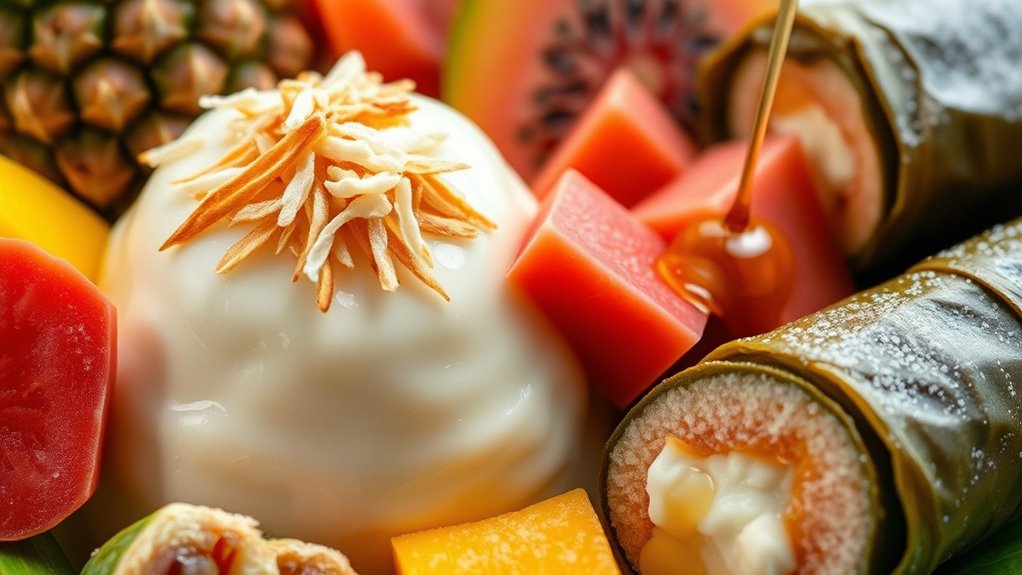
Unique Hawaiian desserts and sweets reflect a rich blend of cultural influences and local ingredients. As you explore, you’ll find treats that showcase Hawaii’s diverse heritage. Here are four popular options:
Discover the unique flavors of Hawaii’s rich cultural heritage through its traditional desserts and sweets.
- Malasadas – Deep-fried Portuguese doughnuts coated in sugar, crispy on the outside and soft inside.
- Haupia – Coconut milk-based pudding, often served as a cool, creamy dessert at luaus.
- Mochi – Chewy Japanese rice cake, sometimes filled with sweet red bean or ice cream.
- Kulolo – Rich, fudgy pudding made from taro and coconut milk, traditionally cooked in an imu.
These sweets highlight local flavors while celebrating the islands’ multicultural history, making Hawaiian desserts truly unique.
Frequently Asked Questions
How Do Local Hawaiian Ingredients Influence Modern Restaurant Menus?
You’ll notice that local Hawaiian ingredients like taro, uala (sweet potato), and tropical fruits heavily influence modern restaurant menus. Chefs incorporate these ingredients into innovative dishes, blending traditional flavors with contemporary techniques. They highlight island-grown produce to emphasize sustainability and cultural heritage. Whether in gourmet plates, fusion dishes, or desserts, you’ll see these native ingredients celebrated, creating a unique and authentic Hawaiian culinary experience that honors the land and its history.
What Are the Sustainable Practices Used in Hawaiian Seafood and Agriculture?
You can see sustainable practices in Hawaiian seafood and agriculture through efforts like revitalizing fishponds, which sustainably harvest seafood using traditional methods, and promoting aquaculture to reduce overfishing. Farmers focus on local, organic crops like taro and sweet potatoes, practicing crop rotation and land management that protect ecosystems. These practices help maintain Hawaii’s natural resources, ensuring future generations can enjoy fresh seafood and farm products while preserving the environment.
How Do Cultural Traditions Shape Hawaiian Food Presentation and Serving Styles?
Did you know that 85% of Hawaiian dishes are served family-style? You’ll notice that cultural traditions greatly influence how food is presented here. You might see large platters shared among friends or community, emphasizing connection and respect. Traditional luaus showcase this with imu-cooked meats and side dishes like poi and laulau, often laid out for communal feasting. This style reflects Hawaii’s deep-rooted value of togetherness in its culinary culture.
In What Ways Is Hawaiian Cuisine Adapting to Global Dietary Trends?
Hawaiian cuisine adapts to global dietary trends by incorporating health-conscious ingredients like organic, locally sourced produce and lean proteins. You’ll find more plant-based options, such as vegetarian poke bowls and veggie-filled laulau, reflecting wellness trends. Chefs also emphasize sustainable practices, reducing processed foods and focusing on farm-to-table concepts. These adaptations honor Hawaii’s culinary heritage while appealing to modern diets focused on health, sustainability, and diverse flavor profiles.
What Role Do Community and Family Play in Traditional Hawaiian Food Gatherings?
You gather with family and community around a steaming imu, the aroma of smoky kalua pig filling the air. Together, you share in the feast, passing dishes like laulau and poi, laughter echoing amid the clatter of plates. These gatherings strengthen bonds, honoring ancestors and cultural roots. In Hawaii, food isn’t just nourishment; it’s a celebration of unity, tradition, and the island’s vibrant spirit that brings everyone together.
Conclusion
As you explore Hawaii’s cuisine, you realize it’s like a vibrant tapestry woven from diverse threads—native flavors, immigrant influences, and modern innovations blending seamlessly. Just as elders pass down recipes like precious heirlooms, each dish tells a story of resilience and unity. When you taste a plate lunch or savor a traditional luau, you’re part of a living heritage that continues to evolve yet preserves its soul—truly, a feast of history and community.
Fall Picks
fall essentials
As an affiliate, we earn on qualifying purchases.