Arizona’s cuisine blends Native American ingredients like mesquite, prickly pear, and tepary beans with Spanish and Mexican influences, creating hearty dishes like frybread, tamales, and Sonoran hot dogs. Traditional cooking methods such as sun-drying, slow-cooking, and grilling keep cultural flavors alive. Food is a crucial part of community identity and celebrations, showcasing regional harvests and culinary innovation. To explore more about Arizona’s rich food traditions, there’s much more to discover.

Get travel and outdoor gear delivered free — and shop member deals
- Fast, free delivery on millions of items
- Access to Prime Big Deal Days deals on October 6–7
- Prime Video, Amazon Music and more included
Key Takeaways
- Arizona’s cuisine blends Native American, Spanish, and Mexican influences, featuring ingredients like chiles, mesquite, and prickly pear.
- Traditional methods include sun-drying, grinding mesquite into flour, and slow-cooking stews over open fires.
- Iconic dishes include Navajo frybread, Sonoran hot dogs, and chimichangas, reflecting regional and cultural fusion.
- Native ingredients such as mesquite, tepary beans, and agave are vital to culinary preservation and regional identity.
- Food festivals and farmers’ markets showcase local flavors, supporting community pride and culinary tourism.
As an affiliate, we earn on qualifying purchases.
The Roots of Arizona’s Food Heritage
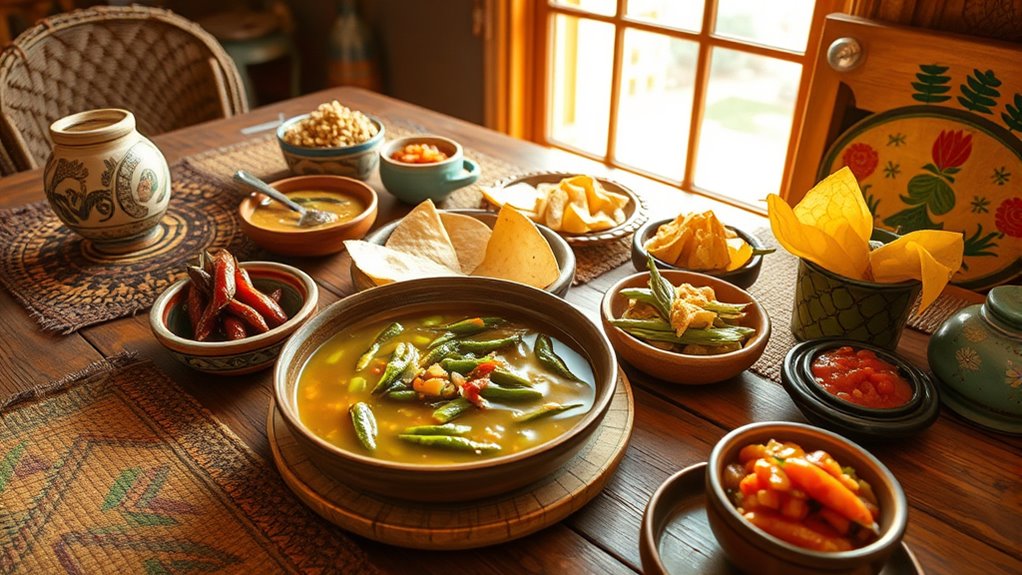
Arizona’s food heritage begins over 4,000 years ago with Native American agricultural traditions centered around the “three sisters”—corn, beans, and squash. You’d find these crops forming the foundation of diets across tribes like the Navajo, Hopi, and Apache. Native peoples mastered cultivating and harvesting these staples, using them in countless dishes. Mesquite pods and prickly pear also played essential roles, providing sweet flavors and fundamental nutrients. You can still taste this rich history today in traditional foods like Navajo frybread and mesquite-flour breads. These ingredients and techniques have been passed down through generations, shaping Arizona’s culinary identity. Native American farming practices, foraged foods, and cultural values remain central to the region’s food heritage, creating a resilient and vibrant culinary tradition. Regular maintenance and sustainable harvesting of native ingredients help preserve this food heritage for future generations.
As an affiliate, we earn on qualifying purchases.
Native American Ingredients and Staples
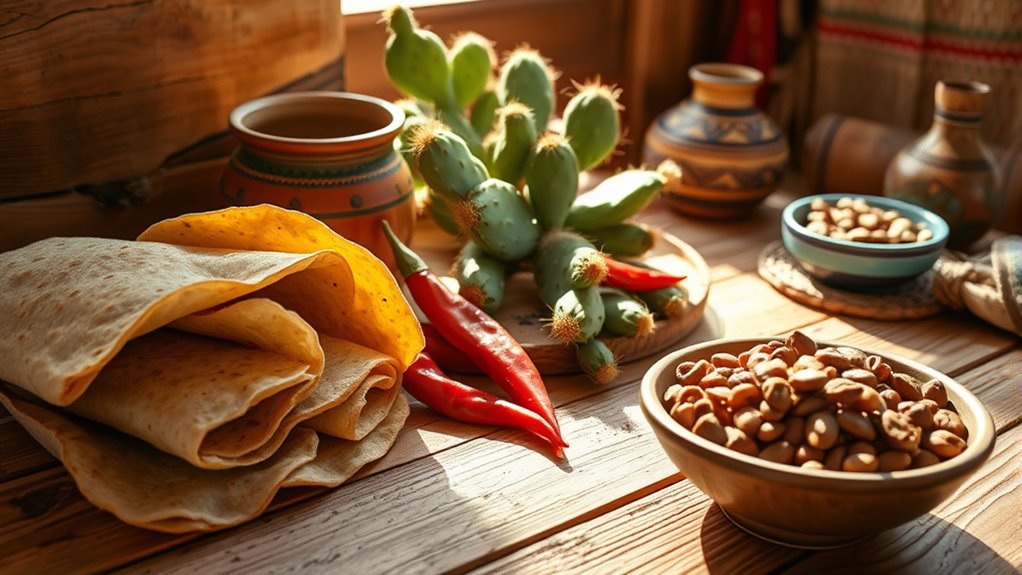
You can see how traditional Native crops like mesquite, tepary beans, and chiles form the foundation of Arizona’s cuisine. These ingredients have been preserved through methods like sun-drying and slow-cooking, ensuring their flavors and nutrients endure. Their continued use highlights the deep roots of indigenous foodways in the region’s culinary landscape. Additionally, the practice of shifting gears in traditional cooking methods reflects the adaptability and resourcefulness of Native American culinary techniques.
Traditional Native Crops
Native American crops form the foundation of Arizona’s traditional cuisine, with ingredients that have sustained indigenous communities for centuries. You’ll find mesquite pods, which are ground into sweet, protein-rich flour used in breads and tamales. Tepary beans, native to the Sonoran Desert, serve as a crucial drought-resistant protein source. Chiles, both fresh and dried, are central to regional flavor profiles, with local varieties adding unique heat and complexity. Prickly pear and agave plants were foraged for their edible pads, fruits, and sap, providing nutrition and flavor. Navajo-Churro sheep supply tender lamb, and wild foods like mesquite and wild berries continue to influence local dishes. These crops reflect Arizona’s deep Native roots and resilience, shaping the state’s culinary identity. Additionally, vetted sources highlight the importance of sustainable harvesting practices to preserve these traditional crops for future generations.
Indigenous Food Preservation
Food preservation has long been essential to Native American communities in Arizona, ensuring survival through harsh seasons and scarce resources. You’ll find that they used various methods to store and extend the life of their foods. For example, they sun-dried fruits like prickly pear and agave, making them portable and long-lasting. They also ground mesquite pods into flour, which could be stored and used later for breads and tamales. Additionally, carne seca, or dried meat, became a crucial protein source during winter months or droughts. You might notice these techniques still influence contemporary cuisine. Incorporating proper food storage techniques can help maintain the quality and safety of preserved foods over time.
As an affiliate, we earn on qualifying purchases.
The Influence of Spanish and Mexican Cuisines

Spanish colonial legacies introduced techniques like slow-cooking and preserved foods that still shape Arizona’s cuisine today. Mexican culinary traditions, brought by settlers and traders, influenced dishes with chiles, tortillas, and flavorful meats. Together, these cultures create a vibrant culinary fusion that defines Arizona’s food scene. The cultural heritage of these regions is also reflected in the use of authentic ingredients and cooking methods that continue to influence local chefs and home cooks alike.
Spanish Colonial Legacies
The arrival of Spanish explorers and settlers in the 16th century profoundly shaped Arizona’s culinary landscape, introducing new ingredients, techniques, and flavors that blended seamlessly with indigenous traditions. You’ll notice how Spanish colonization brought staples like chiles, garlic, and cumin, which became foundational in regional cooking. They also introduced methods such as slow-roasting meats and making stews, which still influence local dishes today. These legacies include:
- The use of dried chiles and spice blends to add depth to dishes
- The adoption of tortilla-making techniques and the incorporation of masa in recipes
- The creation of hearty stews and braised meats reflecting Spanish culinary styles
- The integration of STEM principles in traditional cooking methods, which continues to influence culinary techniques and food preparation today
These influences have persisted, creating a rich culinary heritage rooted in colonial history, shaping Arizona’s distinctive flavors and cooking methods.
Mexican Culinary Traditions
Mexican culinary traditions have profoundly shaped Arizona’s regional flavors, blending indigenous ingredients with centuries of Spanish influence. You’ll notice this fusion in dishes using chiles, corn, and beans, combined with European techniques. Local chiles, such as guajillo and hatch green chilies, add depth and heat, while masa from corn forms the base of many staples like tortillas and tamales. You might enjoy a Sonoran hot dog wrapped in bacon or a plate of carne seca with native flavors. Traditional methods like slow-roasting, grilling over mesquite wood, and hand grinding spices keep these customs alive. The influence extends to desserts and beverages, with recipes evolving from Spanish baroque traditions. Additionally, the use of specialized cookware like comals and molcajetes is common in traditional preparation methods. Overall, Mexican culinary traditions are woven into Arizona’s identity, creating a vibrant, flavorful tapestry that continues to thrive today.
As an affiliate, we earn on qualifying purchases.
Signature Dishes and Culinary Innovations
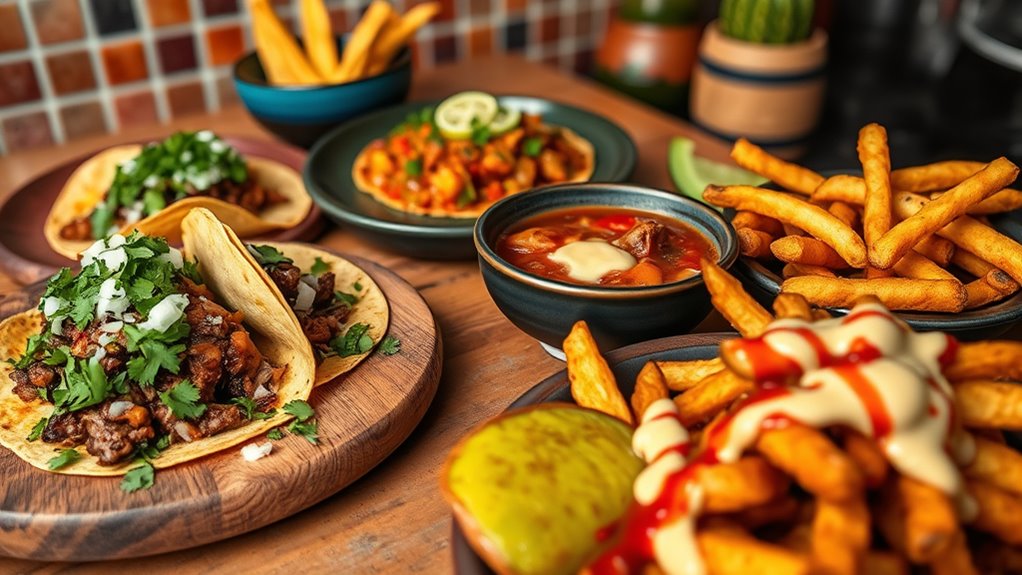
Arizona’s culinary scene is vibrant with innovative dishes that reflect its rich cultural history. You’ll find a blend of traditional flavors and modern twists that showcase local ingredients and creativity. For example, Navajo frybread, created in the 1860s, now serves as a base for Navajo tacos, blending Native heritage with contemporary cuisine. Cheese crisps, an Arizona invention, feature tortillas topped with cheese and roasted chiles, broiled to crispy perfection. Tucson’s famous chimichangas, deep-fried burritos, highlight regional innovation. Additionally, Sonoran hot dogs, wrapped in bacon and loaded with toppings, exemplify cross-border influence. Fiesta plates combine Mexican meats like barbacoa with American sides, reflecting culinary fusion. These dishes celebrate Arizona’s inventive spirit, honoring tradition while embracing new flavors. Incorporating low-carb meal options like turkey bean and tomato zoodle bowls illustrates how local chefs adapt traditional ingredients for health-conscious diners.
Modern Food Trends and Local Artisans
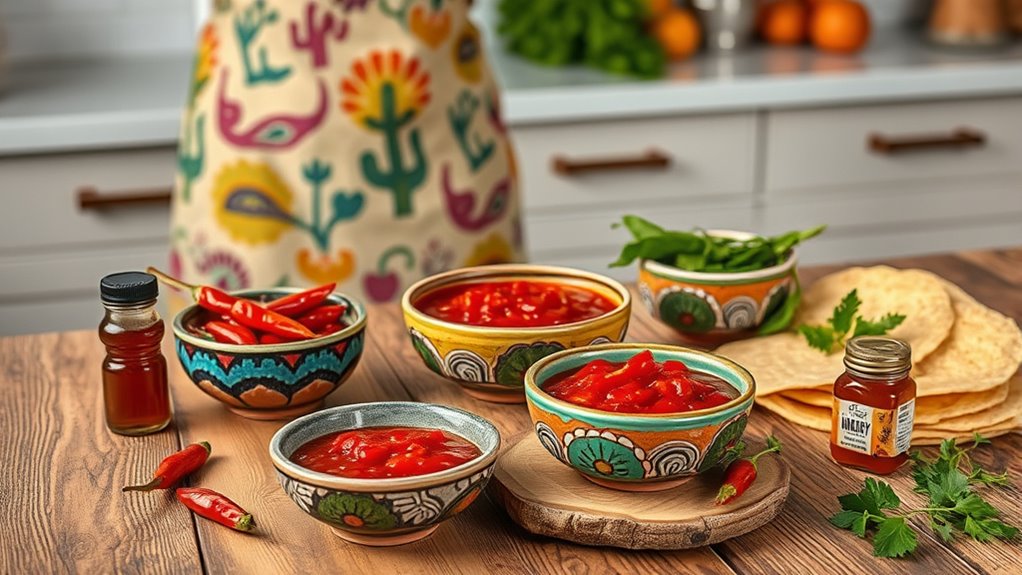
Have you noticed how modern food trends in Arizona are seamlessly blending tradition with innovation? You see chefs and artisans embracing native ingredients like mesquite flour, prickly pear, and chiles, transforming them into contemporary dishes and products. Local artisans craft unique items such as mesquite syrup, artisanal cheeses, and craft beers inspired by regional flavors. Farmers’ markets and food festivals celebrate these native crops, encouraging sustainable practices and supporting small producers. You’ll find innovative eateries that focus on farm-to-table concepts, emphasizing local sourcing and craftsmanship. Social media and culinary tourism further spotlight Arizona’s vibrant food scene, highlighting both heritage and new creations. This ongoing dialogue between tradition and innovation keeps Arizona’s culinary landscape fresh, authentic, and deeply connected to its rich cultural roots. Additionally, some chefs are experimenting with fusion cuisine, blending traditional flavors with modern techniques to create innovative dining experiences.
Traditional Cooking Methods and Techniques
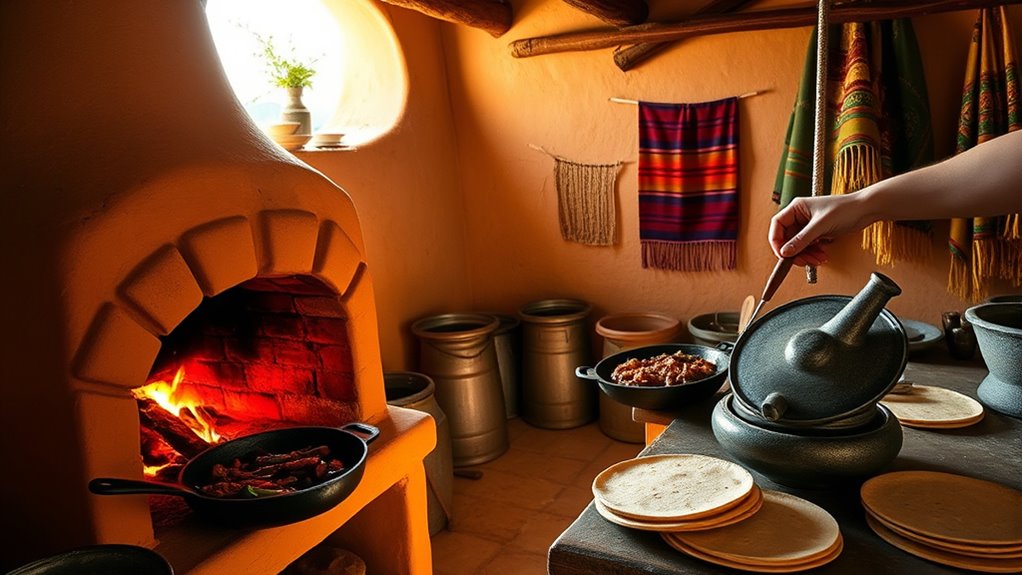
Traditional cooking methods in Arizona have shaped the region’s flavorful cuisine for centuries. You’ll find techniques like grinding corn with metates, a hand-held stone tool, which creates masa for tortillas and tamales. Slow-cooking in iron or copper pots over open fires was common for stews and beans, providing rich flavors. Preservation was essential, so drying fruits and vegetables in the sun or making carne seca (jerky) kept food edible year-round. Roasting and toasting spices and chiles by hand intensifies their flavors, adding depth to dishes. Today, mesquite-wood grilling is popular, imparting a smoky taste to meats. These methods reflect a deep connection to the land and a resourceful approach to cooking that has endured through generations. Modern electric grills are also used to enhance smoky flavors efficiently electric grills, blending tradition with convenience.
The Role of Food in Cultural Identity
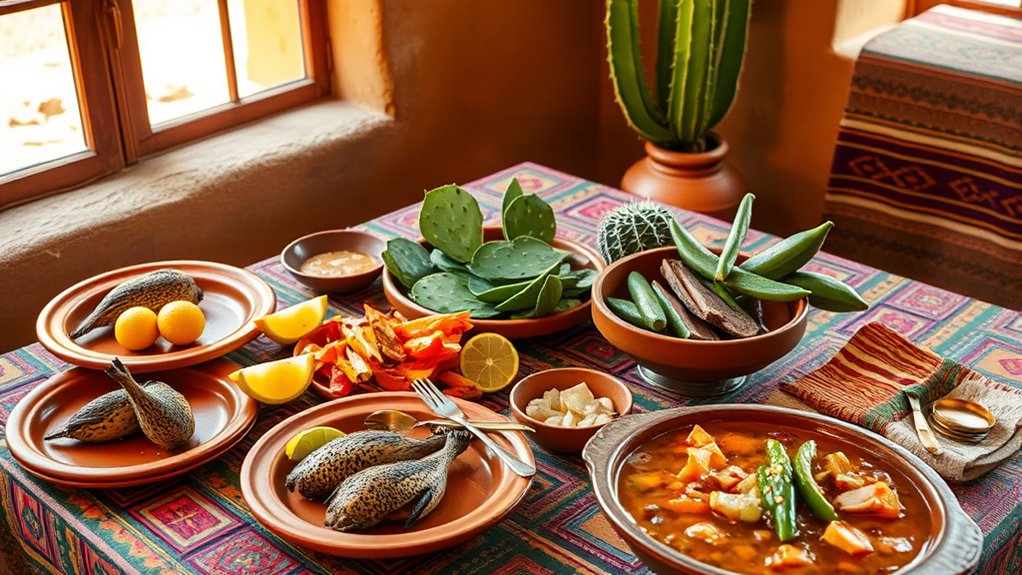
Food in Arizona serves as a powerful symbol of cultural identity, connecting communities to their histories, land, and traditions. It reflects the blending of Native American, Mexican, and European influences, shaping a shared sense of belonging. You see this in dishes like Navajo frybread, Sonoran hot dogs, and tamales—each telling stories of resilience and adaptation. The table below highlights key ingredients and dishes that embody this cultural tapestry:
| Ingredient | Dish | Cultural Significance |
|---|---|---|
| Mesquite flour | Breads, tamales | Native sustenance and ingenuity |
| Chiles | Salsas, chiles rellenos | Regional flavor and heritage |
| Navajo frybread | Frybread tacos | Cultural resilience and history |
| Sonoran hot dogs | Bacon-wrapped hot dogs | Cross-border exchange and innovation |
These foods foster community pride and preserve traditions, making Arizona’s culinary landscape a essential part of its cultural identity.
Agricultural and Economic Impacts on Cuisine
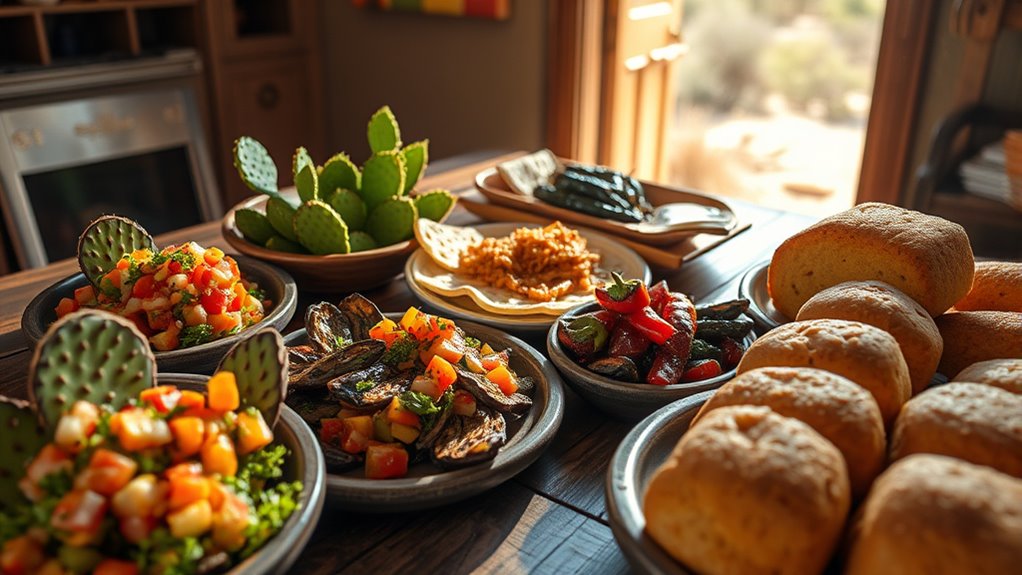
Arizona’s rich culinary heritage is deeply shaped by its diverse agricultural landscape and economic development. You benefit from local farms and ranches that produce ingredients integral to regional dishes. This agricultural base influences what’s available in markets and restaurants, shaping the cuisine’s flavors and traditions. The economy supports small-scale artisans and large producers alike, ensuring a variety of native and standard ingredients.
You’ll find that:
- Native crops like mesquite flour and Tepary beans thrive due to drought resistance and cultural significance
- Ranching of Navajo-Churro sheep provides authentic lamb for traditional dishes
- Food festivals promote local produce, boosting regional pride and economic growth
These factors sustain Arizona’s culinary diversity and connect you to its vibrant, evolving food scene.
Celebrations, Festivals, and Food Tourism
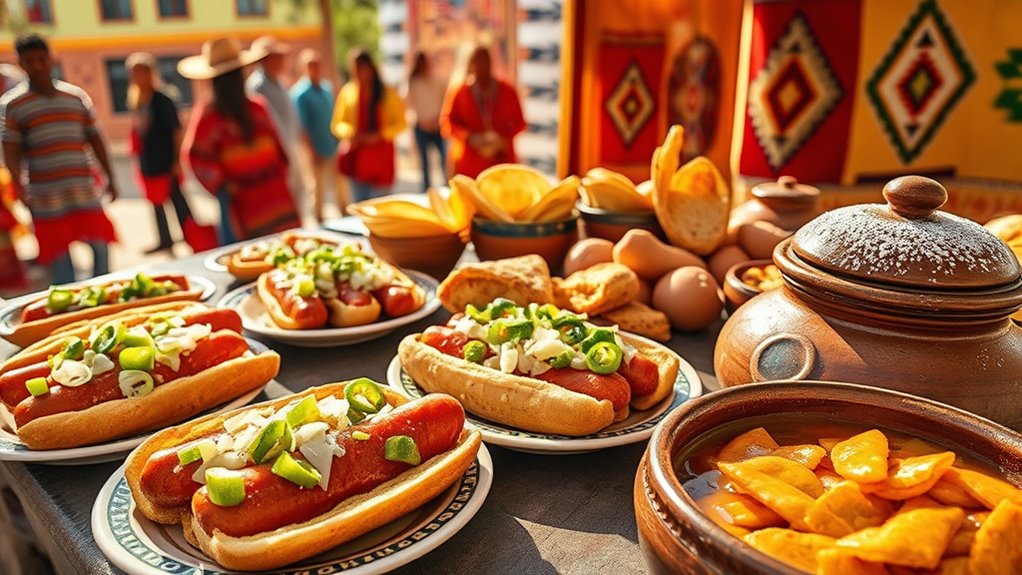
Have you ever experienced the vibrant energy of Arizona’s festivals, where local flavors take center stage? These events celebrate the state’s rich culinary heritage through lively food stalls, traditional dishes, and live demonstrations. Food tourism thrives here, drawing visitors enthusiastic to taste authentic frybread, Sonoran hot dogs, and tamale plates. Festivals like the Arizona Taco Festival and Fiesta de los Vaqueros showcase regional ingredients and culinary innovations. These gatherings foster community pride and attract culinary tourists seeking unique experiences. Here’s a snapshot of festival highlights:
| Festival Name | Key Food Focus |
|---|---|
| Arizona Taco Festival | Tacos, regional salsas |
| Fiesta de los Vaqueros | Barbecue, cowboy-style dishes |
| Sonoran Food Fest | Sonoran hot dogs, chiles |
| Native American Powwows | Traditional Native dishes |
These celebrations keep Arizona’s culinary traditions alive and evolving.
Frequently Asked Questions
How Do Native American Ingredients Influence Modern Arizona Dishes?
You can see Native American ingredients shaping Arizona dishes through staples like mesquite flour, which adds a sweet, smoky flavor to breads and tamales. Tepary beans provide a drought-resistant protein source in soups and stews. Chiles, especially local varieties, are key in flavoring many recipes. Wild foods like prickly pear and agave are still foraged and incorporated into modern dishes, honoring the land’s rich culinary history.
What Are the Regional Differences in Chiles Across Arizona?
You’ll notice Arizona’s chiles vary substantially across regions, with over 50 local varieties unique to the area. In northern Arizona, you’ll find milder, green chiles like Hatch and Anaheim, perfect for roasting and stuffing. In contrast, southern regions embrace hotter, dried red chiles like chiles de árbol and chipotles, integral to smoky, spicy dishes. These regional differences shape Arizona’s vibrant, diverse flavor profiles, reflecting its rich cultural mosaic.
How Has Arizona’s Culinary Scene Evolved in Recent Years?
You’ve seen Arizona’s culinary scene evolve by embracing both tradition and innovation. Restaurants now highlight native ingredients like mesquite flour and chiles, blending Native American, Mexican, and modern influences. Food festivals celebrate local crops, while chef-driven venues focus on sustainable sourcing. Street vendors serve iconic dishes like Sonoran hot dogs and frybread with fresh twists. This vibrant mix keeps Arizona’s food scene diverse, dynamic, and rooted in its rich cultural history.
What Role Do Indigenous Farming Practices Play Today?
You might think indigenous farming practices are just history, but they’re very much alive today. Native communities still grow traditional crops like tepary beans and mesquite, which are drought-resistant and nutrient-rich. These practices promote sustainable agriculture, preserve cultural heritage, and influence modern chefs who incorporate native ingredients into contemporary dishes. By honoring these methods, Arizona keeps its culinary roots strong and eco-friendly, blending tradition with today’s innovative food scene.
How Does Arizona Incorporate Multicultural Influences Into Its Cuisine?
You see Arizona’s cuisine as a vibrant blend of multicultural influences, where Native American, Mexican, and European flavors fuse seamlessly. You taste this in signature dishes like Navajo frybread, Sonoran hot dogs, and chiles roasted with native techniques. You notice local ingredients like mesquite flour and Tepary beans, highlighting the region’s diverse heritage. This culinary mix reflects ongoing cultural exchanges, making Arizona’s food scene both rich and uniquely its own.
Conclusion
Your journey through Arizona’s culinary landscape reveals a vibrant tapestry woven with history, culture, and flavor. Each dish tells a story, like a colorful mosaic reflecting centuries of tradition and innovation. As you savor these local treasures, remember that food isn’t just sustenance—it’s a heartbeat that connects you to the land and its people. Embrace these flavors, and let them inspire your own culinary adventure across Arizona’s rich and varied heritage.
Fall Picks
fall essentials
As an affiliate, we earn on qualifying purchases.