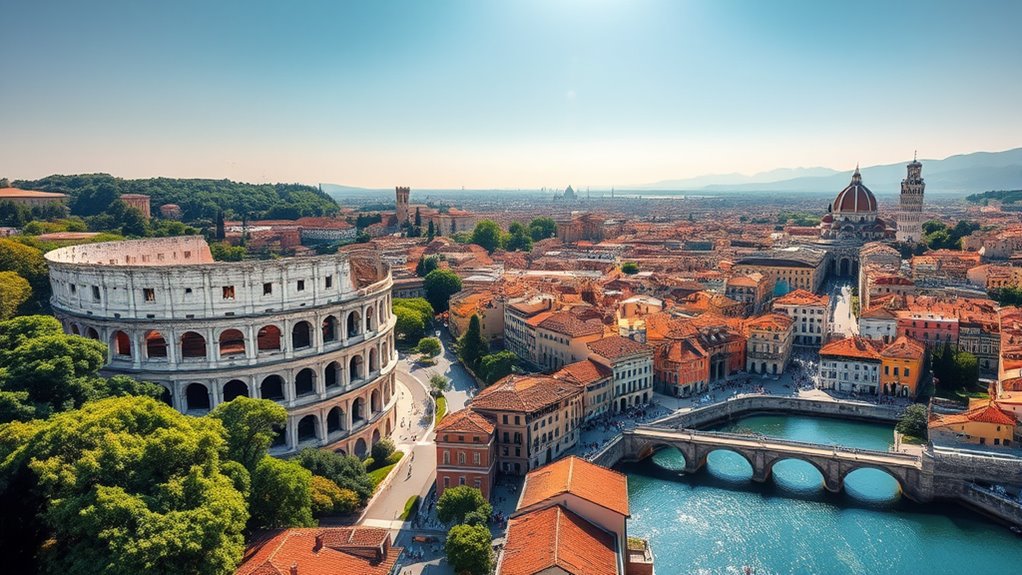

Italy’s top attractions include iconic landmarks like the Colosseum, Roman Pantheon, and Pompeii. You can explore world-renowned art at Florence’s Uffizi Gallery and see Michelangelo’s David at the Accademia. Don’t miss St. Peter’s Basilica in Vatican City and Venice’s romantic canals. With historic gardens and scenic sites, Italy offers endless unforgettable experiences. Keep exploring to discover more about these incredible destinations and why they should be on your travel list.
Key Takeaways
- Iconic ancient landmarks like the Colosseum, Roman Forum, and Pompeii attract millions of visitors annually.
- Renowned museums such as the Uffizi Gallery and Accademia Gallery showcase Italy’s world-class art.
- Religious sites like St. Peter’s Basilica and Duomo di Milano are must-visit spiritual landmarks.
- Vibrant cities like Rome, Florence, Venice, and Milan offer rich history, culture, and scenic beauty.
- Beautiful gardens, palaces, and scenic spots like Boboli Gardens and La Venaria Reale enhance Italy’s top attractions.

Rick Steves Italy (Rick Steves Travel Guide)
As an affiliate, we earn on qualifying purchases.
As an affiliate, we earn on qualifying purchases.
Must-See Landmarks and Cultural Hotspots
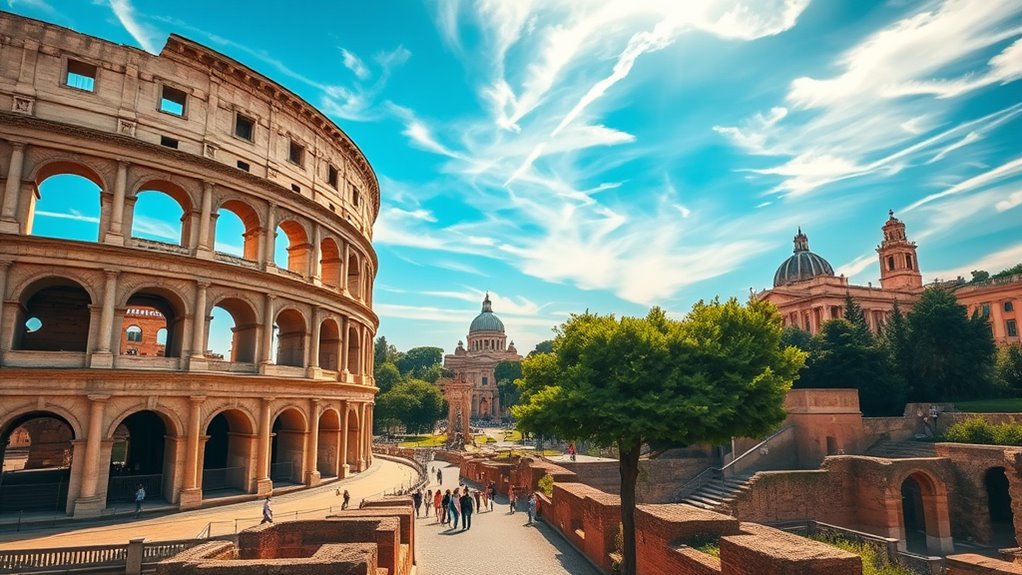
Are you ready to explore Italy’s rich history, stunning art, and vibrant cities? Italy is a treasure trove of iconic sites and cultural landmarks that draw millions of visitors each year. If you love ancient history, the Colosseum, Palatino, and Roman Forum in Rome are must-sees. These archaeological marvels attract over 5.6 million visitors annually, with 2023 seeing a record-breaking 12.3 million—an increase of 25% from the previous year. Walking through these ruins, you’ll feel connected to the Roman Empire’s grandeur and ingenuity. Just nearby, the Roman Pantheon continues to captivate, drawing more than 5 million visitors in 2023 after becoming a paid attraction. Its impressive dome and historical significance make it a highlight of any trip.
Italy’s ancient landmarks like the Colosseum and Pantheon drew over 12 million visitors in 2023, showcasing its rich history and enduring allure.
For a different kind of archaeological wonder, visit the Pompeii Archaeological Park. With about 2.4 million visitors annually, it’s Italy’s second most popular site. Walking through the preserved streets frozen in time offers a vivid glimpse into life during the Roman Empire. Less crowded but equally fascinating are the underground ruins of San Lorenzo Maggiore in Naples, where Greek and Roman history intertwine. The Catacombs of San Gennaro also in Naples offer an intriguing peek into early Christian burial practices and cultural history beneath the city streets.
Italy’s museums and galleries are equally impressive. In Florence, the Uffizi Gallery and Vasari Corridor draw close to 1.9 million visitors each year. These spaces house world-renowned masterpieces, including works by Botticelli and Leonardo da Vinci. The Accademia Gallery, also in Florence, is home to Michelangelo’s David and attracts over 1.25 million art lovers annually. In Rome, Castel Sant’Angelo serves as both a fortress and a museum, bringing in around 900,000 visitors each year. The Egyptian Museum, with its vast collection of artifacts, welcomes over half a million visitors, and the Borghese Gallery, famous for its exquisite art collection, draws nearly 500,000 annually.
Religious sites also top the list of Italy’s attractions. St. Peter’s Basilica in Vatican City is the most visited church in Italy, drawing pilgrims and tourists alike. Milan’s Gothic Cathedral, or Duomo di Milano, stands out as a must-see, as does the Florence Cathedral, a Renaissance masterpiece. The Sistine Chapel, with Michelangelo’s famous ceiling, remains a highlight for visitors exploring Vatican Museums. In northern Italy, the Basilica of Saint Anthony in Padua is a significant religious and cultural destination.
Italy’s cities themselves are destinations. Rome hosts around 25 million international visitors each year, thanks to its historic sites and vibrant culture. Florence, celebrated as the most walkable city globally in 2024, offers Renaissance art at every turn. Venice’s canals and St. Mark’s Basilica create a unique atmosphere that’s hard to match, while Naples offers archaeological sites, lively markets, and scenic parks. Milan, Italy’s fashion and business hub, combines modern energy with historic charm.
Finally, Italy’s gardens and palaces enchant visitors seeking beauty and history. The Boboli Gardens in Florence, with sculptures and lush landscapes, welcome over 700,000 visitors annually. Near Turin, La Venaria Reale’s royal palace and gardens attract around 600,000 visitors each year. The Royal Palace of Caserta, a UNESCO World Heritage site, draws approximately 440,000 tourists annually. Whether exploring ancient ruins, admiring world-class art, or wandering through stunning gardens, Italy’s top attractions promise unforgettable experiences.

Odebyata Roman Colosseum Statue Model, Ancient Roman Architecture Table Decor, Beige Resin Statue & Decor for History Enthusiasts
- Material: Durable beige resin construction
- Uses: Ideal for shelves, tables, and fireplaces
- Gift Idea: Great for history lovers and collectors
As an affiliate, we earn on qualifying purchases.
As an affiliate, we earn on qualifying purchases.
Frequently Asked Questions
What Are the Best Times of Year to Visit Italy’s Top Attractions?
You’ll enjoy visiting Italy’s top attractions best during spring (April to June) and fall (September to October), when the weather is mild and crowds are smaller. Summer (July and August) can be hot and busy, especially at popular sites. Winter (December to February) offers fewer tourists and festive atmospheres, but some attractions may have limited hours. Plan your trip around these seasons for a more enjoyable experience.
Are There Any Hidden Gems Near Italy’s Famous Landmarks?
You’ll be surprised to discover hidden gems near Italy’s famous landmarks. Just off the beaten path, you might stumble upon quiet vineyards near Florence, secret gardens beside Venice’s grand palaces, or ancient ruins tucked away in Rome’s backstreets. These lesser-known spots offer authentic experiences and breathtaking views without the crowds. Keep your eyes open—Italy’s hidden treasures await, and they promise unforgettable moments that deepen your adventure and reveal the country’s true soul.
How Accessible Are Italy’s Main Attractions for Travelers With Disabilities?
Italy’s main attractions are increasingly accessible for travelers with disabilities. Many sites, like museums, historic landmarks, and transportation hubs, now offer ramps, elevators, and guided assistance. You’ll find that major cities like Rome, Florence, and Venice prioritize accessibility, but some ancient sites may still have limitations due to preservation efforts. It’s best to plan ahead, contact venues in advance, and consider guided tours designed specifically for travelers with mobility challenges.
What Local Customs Should Travelers Be Aware of at Major Sites?
When visiting major sites, you should be aware of local customs like dress codes and respectful behavior. For example, at Vatican City, you’re expected to cover shoulders and knees, and speak softly. You might see others following similar rules, so dress modestly and behave quietly to show respect. Being aware of these customs helps you enjoy your experience and avoid unintentional offenses while exploring Italy’s rich cultural heritage.
Which Attractions Are Less Crowded but Equally Worth Visiting?
You should explore lesser-known sites like the Brera Art Gallery in Milan, the island of Procida near Naples, or the stunning Civita di Bagnoregio. These destinations are less crowded but offer incredible art, history, and scenery. You’ll enjoy a more relaxed experience without the crowds. Visiting these hidden gems gives you authentic Italian culture and beautiful sights, making your trip unique and memorable.

AOPNDTC Roma Souvenir Miniature Vatican City Skyline, Silver Metal Replica with Italian Flag Colors, Decorative Collectible, 3-inch
- Authentic Vatican Skyline Design: Detailed silver-toned replica with iconic architecture
- Italian Flag Colors: Decorated with green, white, and red accents
- Compact 3-Inch Size: Ideal for display or travel keepsake
As an affiliate, we earn on qualifying purchases.
As an affiliate, we earn on qualifying purchases.
Conclusion
As you wander through Italy’s timeless streets, you’ll feel history whispering from ancient ruins and vibrant piazzas. The scent of fresh pasta, the sparkle of sunlight on azure waters, and the echo of centuries past create a tapestry of unforgettable memories. Embrace the lively energy and serene beauty around every corner. Italy isn’t just a destination; it’s a heartbeat, inviting you to immerse yourself in its rich, enthralling soul.

Florence With No Regrets Travel Guide: Plan a Realistic First Visit with 1–4 Day Itineraries, Museum Tips, Where to Stay, Food, Shopping, Tuscany Trips … Mistakes. (Lucas Feldman Travel Guides)
As an affiliate, we earn on qualifying purchases.
As an affiliate, we earn on qualifying purchases.