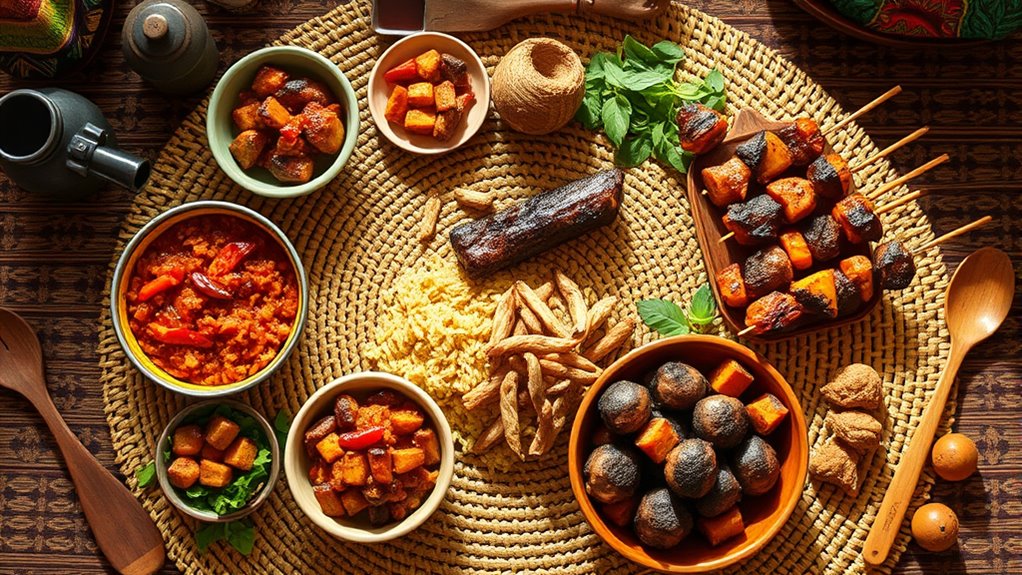

African cuisine reflects a vibrant mix of regional flavors, cooking techniques, and cultural traditions. From West Africa’s bold spices and stews to East Africa’s hearty grains and grilled meats, each region showcases unique ingredients and methods. North Africa features aromatic spices and slow-cooked tagines, while Central Africa highlights peanut sauces and smoked dishes. Exploring these culinary practices reveals the deep cultural roots and shared heritage across the continent. Continue exploring to uncover the rich diversity behind African food traditions.
Key Takeaways
- Africa’s diverse climates and resources foster unique regional cuisines like West African jollof rice and North African couscous.
- Traditional cooking techniques such as slow cooking, marinating, fermenting, and smoking are central to African culinary heritage.
- Shared meals and communal eating strengthen social bonds, emphasizing celebration and cultural identity across African societies.
- Ingredients like peanuts, cassava, spices, and palm oil are fundamental, reflecting regional availability and flavor profiles.
- Food in Africa symbolizes cultural history, environment, and community, serving as a vital expression of heritage and tradition.
Diversity and Commonalities in African Food Culture
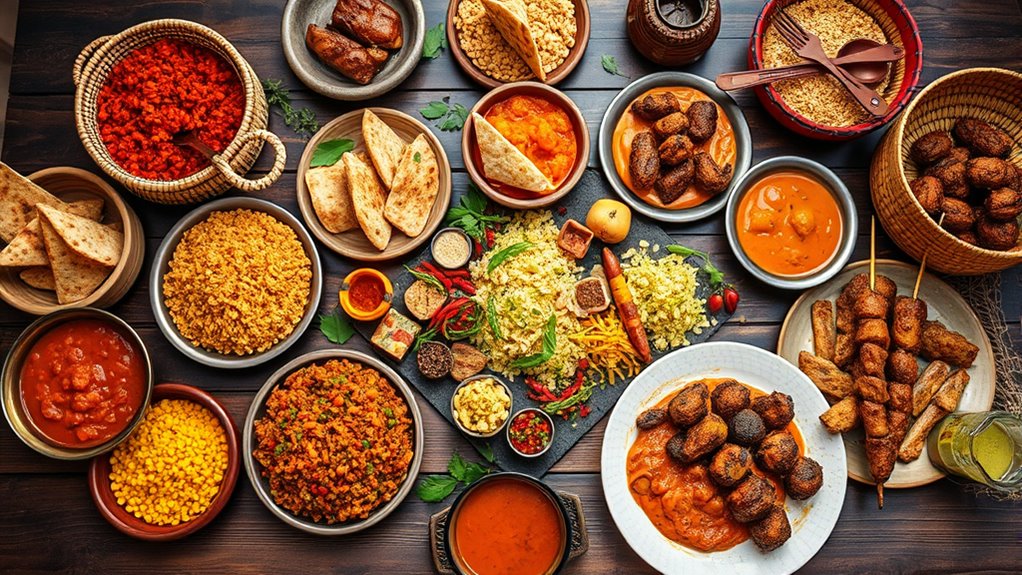
African food culture is remarkably diverse, reflecting the continent’s rich variety of climates, resources, and traditions. You’ll find an array of ingredients like grains, vegetables, fruits, and meats, each prepared with local techniques. Despite these differences, many shared values unify African cuisine. Meals are often communal, emphasizing social bonds and celebration. Spices, herbs, and chilies play a pivotal role in creating bold flavors, whether in North African tagines or East African stews. Cultural identity is deeply woven into food, with dishes representing history, environment, and community. Whether you’re savoring a West African jollof rice or a Southern African pap, you’ll notice that food isn’t just sustenance—it’s a way to connect, share, and preserve traditions across the continent. Traditional dishes often embody these cultural expressions and serve as symbols of heritage.
West African Culinary Classics
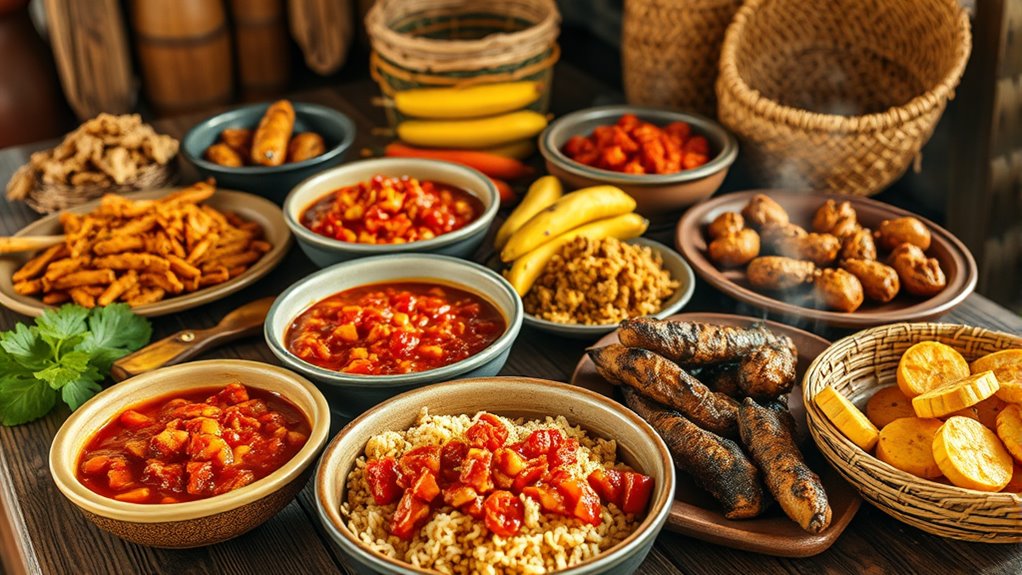
West African culinary classics showcase bold flavors and vibrant ingredients that define the region’s food culture. You’ll find iconic dishes like spicy Jollof rice and hearty peanut stews, prepared using traditional techniques such as slow cooking and marination. Food in West Africa holds deep cultural significance, often serving as a symbol of community and celebration. Understanding safe food handling practices is essential to preserve authenticity and ensure health standards in traditional cooking.
Iconic Dishes and Flavors
Among the most celebrated dishes in West African cuisine are Jollof rice, peanut stews, and fufu, each bursting with bold flavors and vibrant colors. Jollof rice combines tomatoes, peppers, and spices, creating a smoky, spicy base often topped with meats or fish. Peanut stews like Mafe and Domoda feature rich, creamy peanut butter blended with vegetables and meats, delivering hearty, nutty flavors. Fufu, made from cassava, yams, or plantains, offers a smooth, stretchy texture perfect for scooping up soups and stews. You’ll also encounter Yassa, a marinated chicken or beef dish with onions and citrus, and Bissap, a invigorating hibiscus drink with a tangy sweetness. These dishes exemplify West Africa’s love for bold spices, layered flavors, and communal eating.
Traditional Cooking Techniques
Have you ever wondered how traditional West African dishes develop their rich flavors? You’ll find that slow cooking and layering of spices are key techniques. Stews like peanut Mafe or Yassa often require marinating meats in spice blends and onions overnight, enhancing depth. You’ll use clay pots or heavy-bottomed pots to simmer ingredients gently, preserving flavors. Grinding spices and herbs into pastes with mortar and pestle releases essential oils and intensifies taste. One-pot cooking is common, allowing ingredients to meld together fully. Grilling and roasting meats over open flames or charcoal bring out smoky notes, especially for dishes like Sukuma Wiki or grilled fish. These methods preserve nutrients and infuse dishes with authentic flavors that define West African cuisine. Incorporating Glycolic Acid in skincare routines can also improve skin texture, revealing a healthier glow that complements your culinary adventures.
Cultural Significance of Food
Food is more than just sustenance in West African cultures; it serves as a powerful symbol of identity, tradition, and community. When you share dishes like Jollof rice or peanut stews, you’re participating in a cultural ritual that unites people and honors ancestors. Meals often play a central role in celebrations, rites of passage, and communal gatherings, reinforcing social bonds. Preparing and enjoying traditional foods connects you to your heritage and preserves stories passed down through generations. Food also marks important events, such as weddings and festivals, reaffirming cultural values and history. Incorporating traditional serving ware and presentation styles further enhances the cultural experience. By embracing these culinary practices, you help keep West African traditions alive, fostering a sense of belonging and respect for your community’s rich cultural legacy.
Flavors and Staples of East Africa
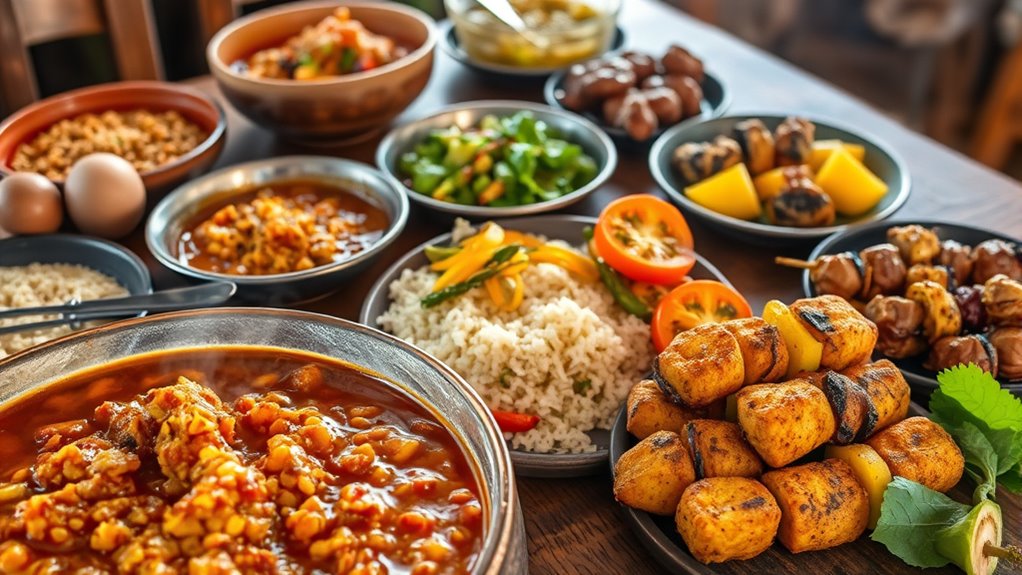
What makes East African cuisine distinctive are its bold flavors and simple, hearty ingredients. You’ll find staples like maize, plantains, and greens, often prepared with aromatic spices and fresh herbs. These ingredients form the backbone of many dishes, offering robust taste and satisfying textures. The region’s flavors are influenced by indigenous crops and trade, blending earthy, spicy, and tangy notes.
| Staple | Description |
|---|---|
| Ugali | Cornmeal porridge, served with stews or meats. |
| Injera | Sourdough flatbread, used as a utensil. |
| Sukuma Wiki | Leafy green stew, often with meat. |
| Nyama Choma | Roasted meats, usually goat or beef. |
| Matooke | Steamed green bananas, served as a side. |
Iconic Dishes of Southern Africa
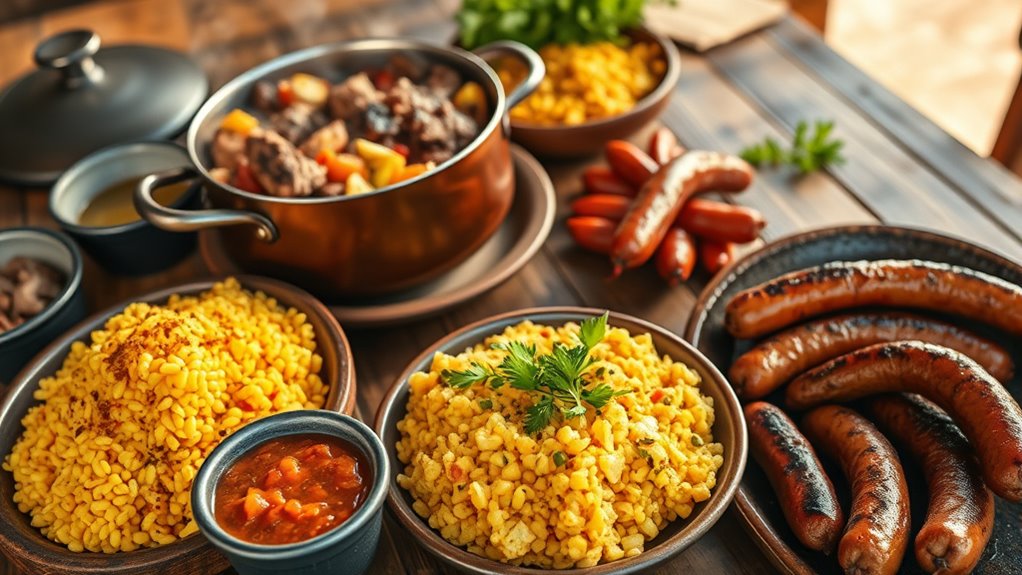
Southern African cuisine boasts a rich array of iconic dishes that reflect its diverse cultural influences and culinary traditions. You’ll find pap, a ground maize porridge, often served with hearty stews or grilled meats like boerewors. Bobotie stands out as a savory meat pie flavored with spices and dried fruits, perfect for sharing. Sosaties, marinated meat skewers, are a common barbecue treat, especially during a braai, South Africa’s beloved outdoor grill tradition. You might also indulge in malva pudding, a sweet dessert soaked in a creamy sauce made with apricot jam. These dishes showcase the region’s love for bold flavors, communal eating, and grilling over open flames, embodying the vibrant culinary spirit of Southern Africa. Additionally, the use of traditional cooking methods, such as open-flame grilling and slow braising, enhances the authentic flavors of these dishes and highlights the region’s culinary traditions.
North African Recipes and Traditions
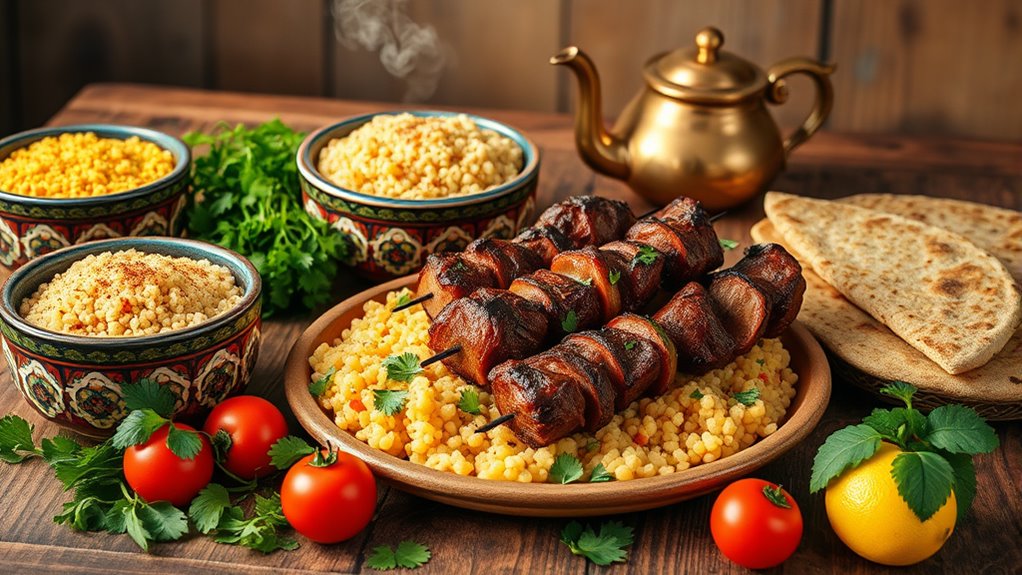
North African cuisine is renowned for its bold flavors and aromatic spices that reflect centuries of cultural exchange and tradition. You’ll notice the use of spices like cumin, coriander, cinnamon, and saffron, which create rich, layered tastes. Dishes like couscous are central, often served with vegetables, meats, or fish, showcasing communal eating. Tagine, a slow-cooked stew, is a hallmark, prepared in a special earthenware pot that enhances flavors. Soups like harira, made with lentils, chickpeas, and tomatoes, are popular during Ramadan. You’ll also find flaky msemen and fried brik pastries as snacks or breakfast options. These recipes emphasize slow cooking, blending spices, and shared meals, reflecting North Africa’s deep-rooted culinary traditions and cultural diversity. Additionally, the use of aromatic spices is integral to creating the complex flavors that define North African dishes.
Central African Ingredients and Cooking Styles
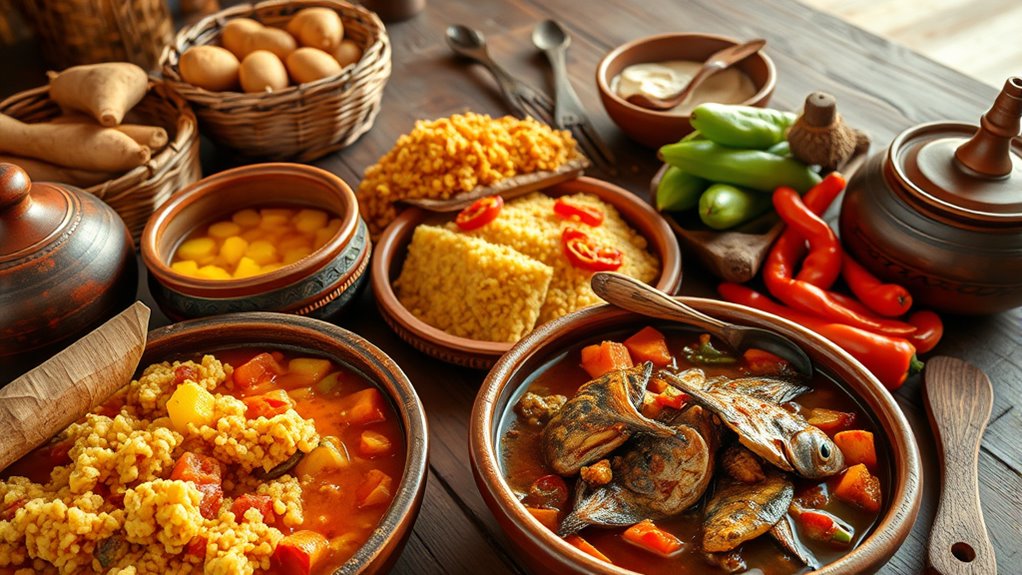
Central African cuisine centers around rich, flavorful ingredients and simple cooking techniques that highlight local produce and traditional practices. You’ll find peanuts, palm oil, and cassava as staples, used to create hearty stews and side dishes. Steaming fish in banana leaves, known as Liboke, is common, preserving moisture and flavor. Chicken cooked in peanut sauce, Poulet à la Moambe, exemplifies the region’s love for nut-based flavors. You’ll also encounter Mwanga, a versatile plantain dish, prepared by frying, boiling, or stewing. These dishes emphasize slow-cooking and layering flavors, often using spices and herbs native to the area. Incorporating traditional cooking methods such as smoking and fermenting further enhances the depth of flavors in Central African dishes. Your experience with Central African cooking involves combining simple ingredients with time-honored methods, resulting in meals that are both satisfying and deeply rooted in local traditions.
Frequently Asked Questions
How Do African Culinary Traditions Vary Among Different Ethnic Groups?
You see that African culinary traditions differ among ethnic groups through unique ingredients, cooking methods, and flavors. You might notice some groups favor spicy stews, while others prefer grilled meats or starchy staples like fufu and ugali. You’ll also observe distinct use of herbs, spices, and fermentation techniques. These differences reflect cultural identities and histories, making each group’s cuisine a meaningful expression of their heritage and social practices.
What Role Does Food Play in African Social and Religious Ceremonies?
You see, food plays a crucial role in African social and religious ceremonies. You’re often involved in preparing, sharing, and consuming special dishes that symbolize unity, tradition, and spirituality. These meals mark important events like births, weddings, and harvests, fostering community bonds. You might also use specific foods or drinks in rituals, believing they carry spiritual significance, connect you with ancestors, or honor deities.
Are There Common Cooking Techniques Shared Across African Cuisines?
You’ll find that many African cuisines share cooking techniques like slow cooking, braising, and steaming, which help develop rich flavors. Grilling and roasting are also common for meats, while pounding and grinding ingredients create pastes and spices. You often use communal cooking methods, like large pots or open flames, emphasizing social bonds. These techniques highlight the importance of flavor, tradition, and community in African culinary practices.
How Has Colonial History Influenced Modern African Culinary Practices?
You’re likely to notice that colonial history subtly shapes African culinary practices today. It introduced new ingredients like wheat and sugar, blending with traditional staples. This fusion creates unique flavors and dishes, enriching local cuisines. Colonial influences also brought new cooking tools and techniques, making cooking more diverse and adaptable. While preserving their roots, Africans have beautifully woven these foreign elements into their culinary identities, creating vibrant, evolving food cultures.
What Are Emerging Trends Shaping Contemporary African Food Culture?
You see, emerging trends are transforming African food culture by blending traditional flavors with global influences. You’re likely to notice more fusion dishes, innovative street food, and a focus on sustainable ingredients. Chefs and entrepreneurs embrace modern techniques while honoring local ingredients, making dishes more accessible worldwide. Social media also plays a big role, helping you discover new culinary innovations and connect with diverse African food experiences.
Conclusion
You might think African cuisine is all about spicy stews and hearty grains, but it’s so much more. From fragrant spices to unique cooking styles, each region offers something special. Don’t overlook the diversity—it’s what makes African food truly remarkable. Embrace the flavors, and you’ll find a rich culinary world that’s both exciting and authentic. Ready to explore? Your taste buds are in for an unforgettable journey!