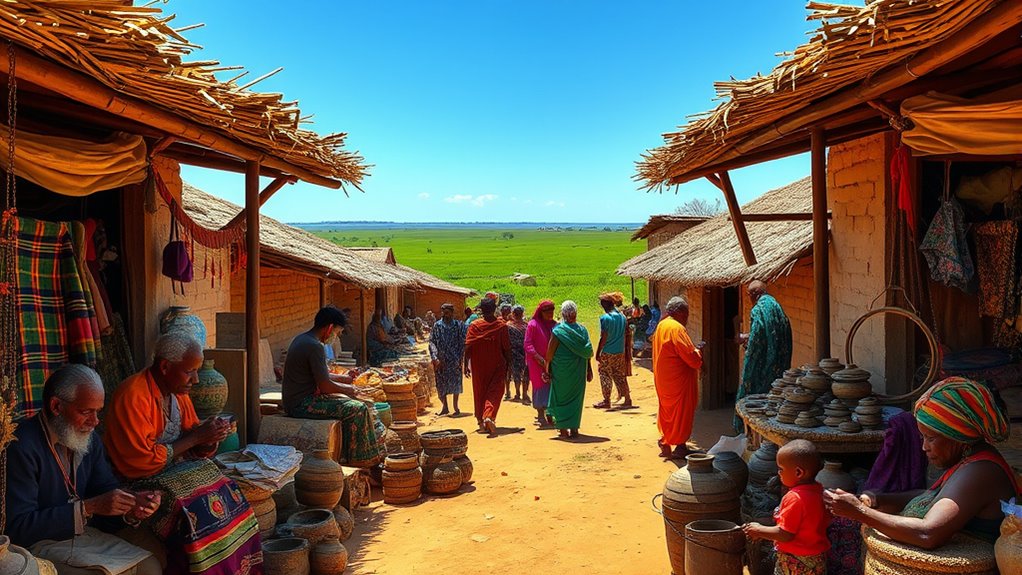

Africa’s history and culture span thousands of years, from the emergence of Homo sapiens in East Africa to ancient civilizations like Egypt that pioneered writing and architecture. You’ll find diverse societies with rich traditions, vibrant art, music, and languages. European colonization left lasting impacts, but many nations fought for independence and now face modern challenges. Exploring Africa’s heritage reveals a continent full of resilience, innovation, and global influence—stay curious to uncover its fascinating stories and ongoing cultural legacy.
Key Takeaways
- Africa is known as the “cradle of humankind,” home to early humans and ancient civilizations like Egypt and Nok.
- Rich trade networks and diverse societies shaped Africa’s cultural practices, art, music, and social structures.
- European colonization imposed borders, exploited resources, and suppressed indigenous languages and traditions.
- Post-independence leaders and movements fostered nation-building amid ongoing political and economic challenges.
- Africa’s art, music, and literature have influenced global culture, reflecting its diverse history and cultural resilience.
Origins of Humanity in Africa

Africa is widely recognized as the birthplace of modern humans, with Homo sapiens first emerging in East Africa at least 200,000 years ago. You stand at the roots of human history, where early humans developed complex tools, mastered fire, and began to adapt to diverse environments. Over time, these ancestors migrated out of Africa, spreading across continents and shaping the course of human evolution. Your origins are deeply tied to Africa’s rich landscapes and resources, which fostered innovation and survival. This shared heritage connects you to a long lineage of ancestors who laid the foundation for modern societies. Understanding this origin highlights Africa’s essential role in human history, emphasizing that your story begins in this cradle of humankind. Additionally, the development of complex tools and cultural practices by early humans further illustrates the ingenuity that originated in Africa.
Early Civilizations and Technological Advances
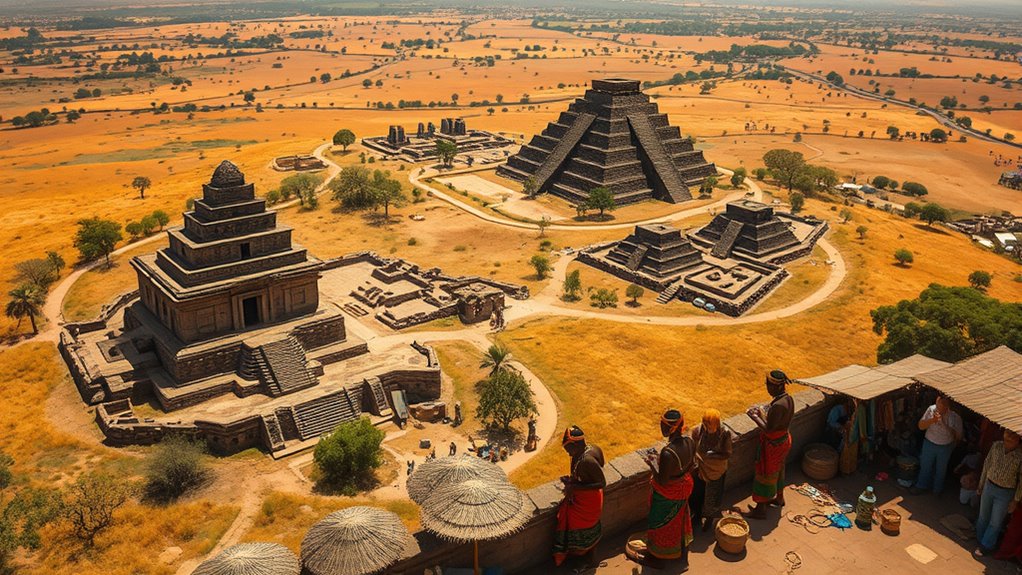
Emerging as early centers of innovation, ancient civilizations in Africa laid the groundwork for complex societies and technological progress. You can see this in how they developed unique advancements that shaped history.
Ancient African civilizations pioneered innovations that shaped human history and technological progress.
- The Egyptians pioneered hieroglyphic writing, monumental architecture like pyramids, and early irrigation techniques, boosting agriculture and urban growth.
- The Nok culture in West Africa created remarkable terracotta sculptures and may have been among the first to develop ironworking technology.
- The Kingdom of Kush mastered iron smelting and trade, influencing neighboring regions and establishing a powerful civilization in what is now Sudan.
- The development of cultural heritage in these civilizations reflects a deep connection to their environment and societal values, fostering innovations that endured over centuries.
Rich Tapestry of Pre-Colonial Societies
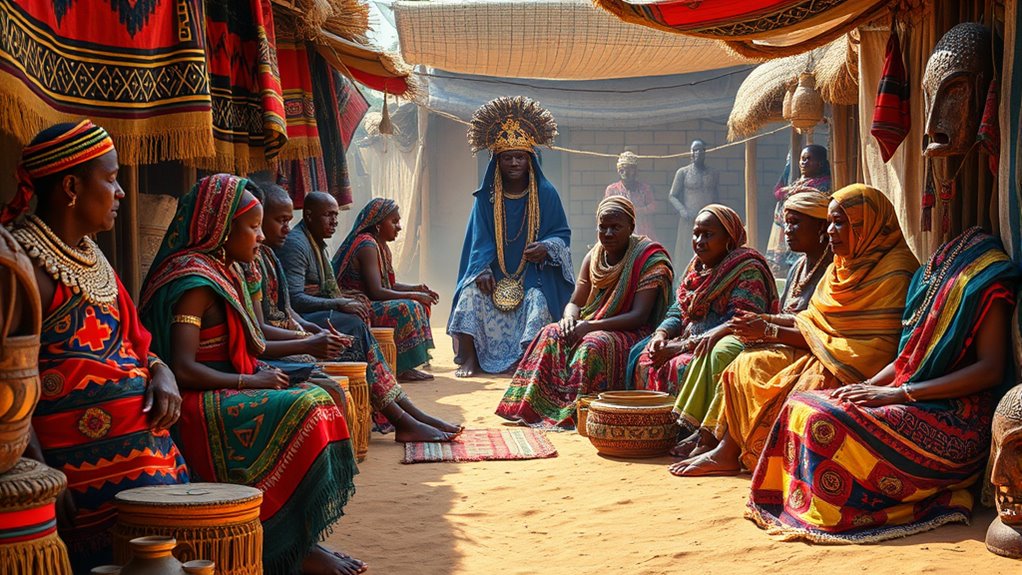
You can see how Africa’s pre-colonial societies featured a wide range of political systems, from centralized kingdoms to decentralized chiefdoms. These societies thrived thanks to flourishing trade networks that connected regions across the continent and beyond. Together, these diverse structures and vibrant trade routes created a rich and complex cultural landscape that still influences Africa today. The diversity of these societies is reflected in their social organization, which varied greatly depending on geographical and cultural factors.
Diverse Political Systems
Before European contact, societies across the continent developed a remarkable diversity of political systems, reflecting their unique cultural, geographic, and social contexts. You’d find monarchies, councils, and decentralized structures shaping communities. Here are three examples to contemplate:
- The Kingdom of Ghana and Mali relied on centralized monarchs supported by elaborate court systems and wealth from trade.
- The city-states of Ife and Benin operated through sophisticated governance, combining rulers with spiritual authority and administrative councils.
- The Igbo communities practiced a decentralized, democratic system with no single ruler, relying on consensus among elders.
This variety highlights Africa’s rich political landscape, where governance adapted to local needs and traditions, creating resilient and diverse societies.
Flourishing Trade Networks
Trade networks in pre-colonial Africa created a vibrant web connecting different regions, cultures, and economies across the continent. You explore bustling marketplaces, trading gold, salt, textiles, and ideas. These routes linked distant societies, fostering wealth and cultural exchange. Trans-Saharan routes connected West Africa to North Africa and the Middle East, promoting the spread of goods and beliefs. Empires like Mali and Songhai thrived on trade, accumulating immense wealth. Here’s a quick overview:
| Region | Key Trade Goods |
|---|---|
| West Africa | Gold, salt, kola nuts |
| North Africa | Textiles, spices, camels |
| East Africa | Ivory, spices, slaves |
| Central Africa | Copper, iron, forest products |
| Mediterranean | Manufactured goods, wine |
Trade in Africa shaped societies, fostering innovation, wealth, and cross-cultural connections. Trade routes played a crucial role in the development of these rich societies.
The Impact of European Colonization

European colonization reshaped Africa by drawing borders without regard for existing societies, often splitting communities and cultures. Colonial powers exploited resources for their own benefit, leaving behind economic and environmental scars. They also imposed policies that suppressed local cultures, languages, and political systems, disrupting Africa’s rich heritage. Additionally, the introduction of diverse and unique planter designs often disregarded traditional agricultural practices, further impacting indigenous ways of life.
Artificial Borders Imposed
Have you ever wondered how Africa’s current borders came to be? The borders you see today were largely drawn during European colonization, ignoring existing cultures and societies. These artificial lines divided tribes, languages, and regions, often splitting communities or forcing together groups with little shared history. This disruption impacted political stability and fueled conflicts that still persist.
Here are three key impacts:
- Disruption of social cohesion – borders ignored ethnic and cultural boundaries, causing tension.
- Political instability – new borders led to weak governance and ongoing conflicts.
- Resource conflicts – dividing regions created disputes over land and wealth, fueling violence.
These borders, imposed without African input, continue to shape the continent’s challenges and identity today.
Resource Exploitation Practices
The borders drawn during colonization didn’t just split communities—they also paved the way for widespread resource exploitation. European powers extracted Africa’s minerals, gold, and crops to fuel their economies, often disregarding local needs. This led to the depletion of natural resources and suppressed traditional industries. You can see this pattern in the table below, illustrating key commodities, colonial countries, and consequences:
| Commodity | Colonial Power | Impact |
|---|---|---|
| Gold | Britain | Wealth diverted, local economies harmed |
| Diamonds | Belgium | Environmental damage, social disruption |
| Cocoa | France | Economic dependence, resource depletion |
| Copper | Germany | Land degradation, forced labor |
| Oil | Italy | Ecological harm, colonial control |
This exploitation disrupted indigenous economies and laid foundations for ongoing resource conflicts.
Cultural Suppression Policies
As colonizers imposed their rule across Africa, they actively suppressed local cultures, languages, and traditions to establish dominance. They did this through policies aimed at erasing indigenous identities and replacing them with European customs. Here are three key ways they achieved this:
- Banning indigenous languages and promoting European languages in schools and government.
- Destroying cultural sites and artifacts to undermine local heritage and history.
- Forcing Western education that prioritized European knowledge and devalued traditional practices.
- The suppression of cultural expression further hindered the transmission of traditional knowledge and customs across generations.
These policies aimed to weaken social cohesion and control African populations by erasing their cultural roots. Even today, the legacy of these suppression policies influences efforts to revive and preserve indigenous languages and traditions across the continent.
Pathways to Independence and Nation-Building
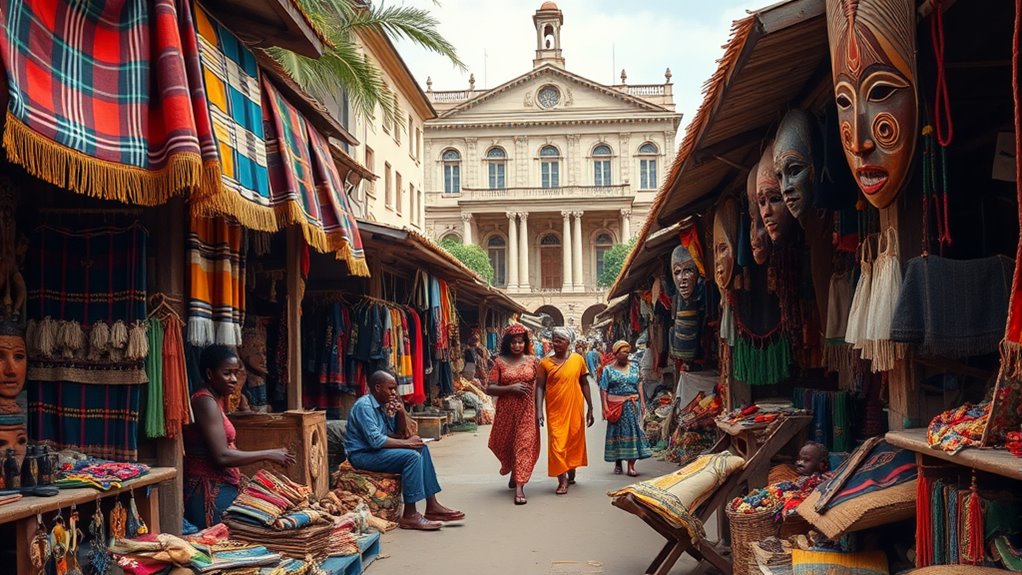
What drove African nations to pursue independence? You’d see that after centuries of European colonization, Africans wanted control over their land, resources, and future. World Wars, especially, exposed the contradictions of colonial rule, inspiring demands for self-determination. Political leaders like Kwame Nkrumah in Ghana and Jomo Kenyatta in Kenya mobilized people through nationalist movements, emphasizing pride and unity. The formation of organizations like the Organization of African Unity in 1963 fostered solidarity and coordinated efforts for independence. Resistance took many forms—from protests and strikes to armed rebellion—challenging colonial authorities. As colonial powers weakened post-World War II, pressure built. By the 1950s and 1960s, many countries achieved sovereignty, marking a new chapter focused on rebuilding and establishing their own governments and identities. Ethical Hacking approaches played a role in safeguarding new nations’ digital infrastructure during this period of transition.
Challenges and Conflicts in Contemporary Africa
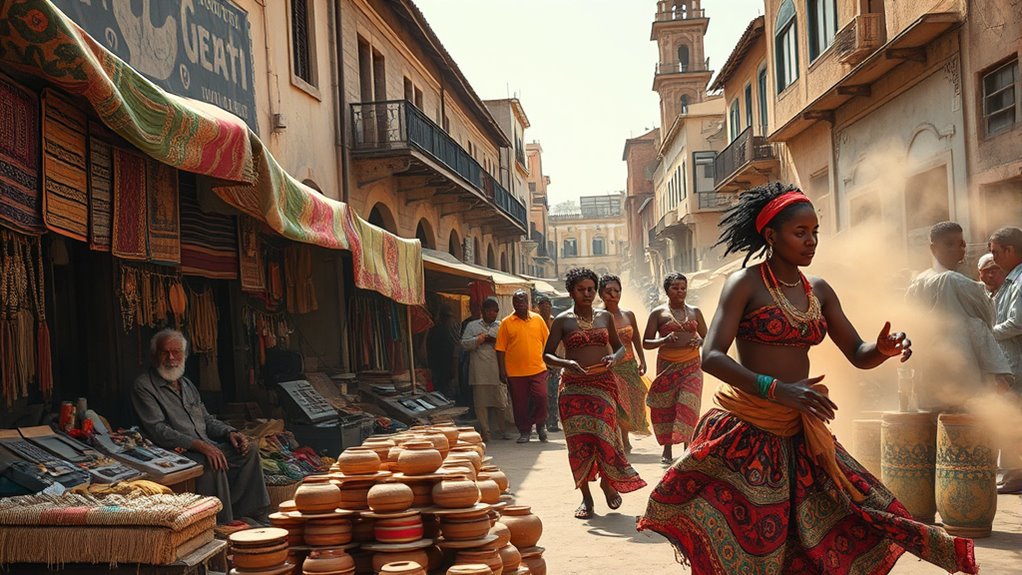
Despite gains in independence and development, many African countries face ongoing challenges that hinder stability and growth. You’ll see issues like:
Despite progress, Africa still faces challenges like instability, conflict, and economic hardship that impede growth.
- Political instability and coups: Governments often struggle with corruption, authoritarian rule, and power struggles, disrupting progress.
- Conflicts and violence: Ethnic tensions, civil wars, and insurgencies, such as Boko Haram, threaten peace and safety.
- Economic hardships: Dependence on resource exports, poverty, and inadequate infrastructure limit development and access to essential services.
These problems are often rooted in colonial legacies, weak institutions, and external influences. Addressing them requires strong leadership, regional cooperation, and sustainable policies to promote stability, security, and economic resilience across the continent. For example, fostering institutional capacity can help countries implement effective governance and reduce corruption.
Cultural Heritage: Art, Music, and Literature
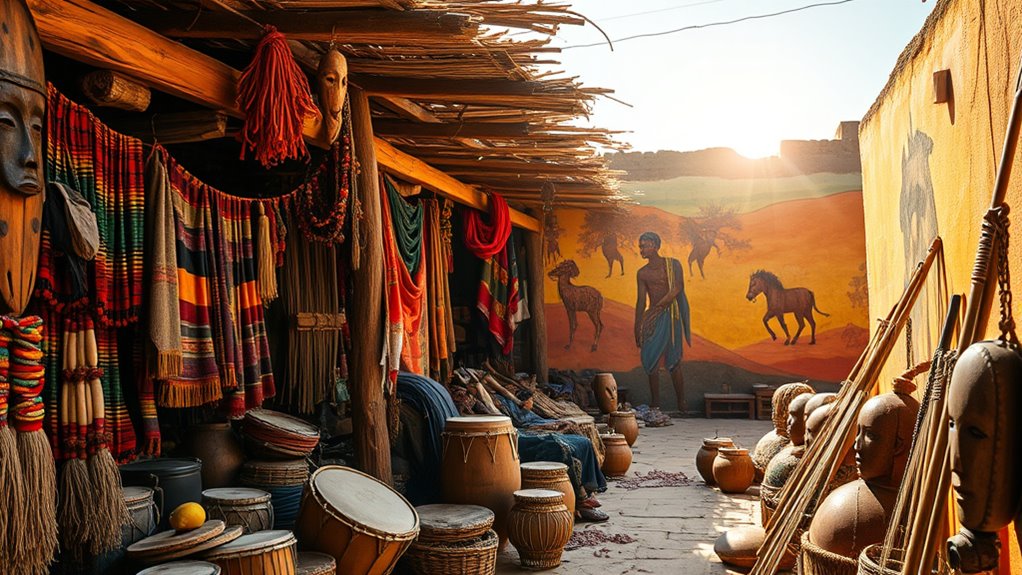
Immersed in a rich tapestry of traditions, Africa’s art, music, and literature serve as vibrant reflections of its diverse cultures and histories. You’ll find ancient carvings, textiles, and pottery that tell stories of ancestors. Music genres like jazz, blues, and hip-hop have roots in African rhythms, inspiring global scenes. Literature from Chinua Achebe to Ngũgĩ wa Thiong’o explores identity and resistance. Here’s a snapshot of some key cultural expressions: Art Forms, Music Genres, and Literary Figures.
Africa’s Global Influence and Cultural Expressions
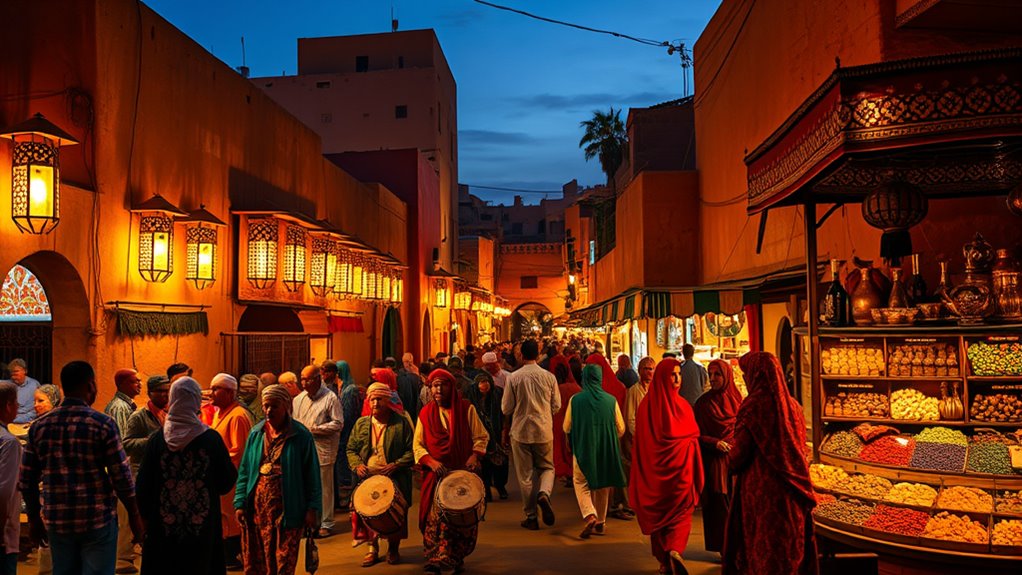
Africa’s cultural expressions have profoundly shaped global arts, music, and fashion, influencing trends and inspiring countless creators around the world. You can see this impact in how jazz, blues, and hip-hop trace their roots to African rhythms and oral traditions. African art, from ancient Nok terracottas to modern designs, continues to inspire contemporary artists. Additionally, African fashion, with vibrant textiles and bold patterns, influences global runways and streetwear. The use of endemic species in traditional art and craftwork showcases the deep connection between biodiversity and cultural heritage.
Frequently Asked Questions
How Did Ancient African Civilizations Influence Global Trade Routes?
You see, ancient African civilizations like Egypt, Kush, and Carthage played a huge role in shaping global trade routes. They controlled key crossings, like the Sahara, and traded gold, salt, and spices, connecting Africa to the Middle East, Europe, and Asia. Their innovations in navigation, commerce, and cultural exchange helped establish essential networks that still influence world trade today.
What Role Did Indigenous Religions Play Before the Spread of Islam and Christianity?
Before Islam and Christianity spread, indigenous religions played a crucial role in shaping African societies. You would see these beliefs influencing daily life, governance, and cultural practices through rituals, ceremonies, and spiritual leaders. These religions often honored ancestors, nature spirits, and gods, fostering community cohesion. They also guided moral codes and social harmony, deeply embedding spirituality into the fabric of life across diverse regions and civilizations in Africa.
How Have African Languages Evolved Through Colonial and Post-Colonial Periods?
Did you know Africa has over 2,000 languages today? You’ll see these languages have evolved considerably during colonial and post-colonial times. European powers introduced their languages, like English, French, and Portuguese, which blended with indigenous tongues. As a result, many Africans speak multilinguals, mixing local dialects with colonial languages. Post-independence, efforts to preserve native languages increased, but global influence and urbanization continue to shape language use across the continent.
What Are Some Lesser-Known African Innovations in Science and Technology?
You might not know that many African societies pioneered innovations like ancient medical practices using herbal remedies, which influenced world medicine. Additionally, the Kingdom of Kush developed early ironworking techniques, advancing tools and weapons. In modern times, countries like Nigeria and South Africa have made strides in telecommunications and renewable energy. These lesser-known inventions showcase Africa’s rich history of scientific and technological ingenuity that continues to impact the world today.
How Is African Cultural Identity Preserved Amid Globalization Today?
You can maintain your African cultural identity today by celebrating and sharing your traditions, languages, and stories within your community and online. Support local artists, musicians, and artisans to keep cultural expressions alive. Participate in festivals and cultural events, teach younger generations about your heritage, and promote African history globally. Embracing your roots while engaging with modern influences helps guarantee your unique identity remains vibrant and resilient amid globalization.
Conclusion
Africa is like a vibrant tapestry, woven with threads of ancient history, rich culture, and resilient spirit. As you explore its stories, you see how each strand contributes to a magnificent whole that continues to evolve. Embrace the journey through its past and present, understanding that Africa’s heartbeat echoes in every corner of the world. Its legacy is a beacon, guiding future generations with strength, creativity, and hope.