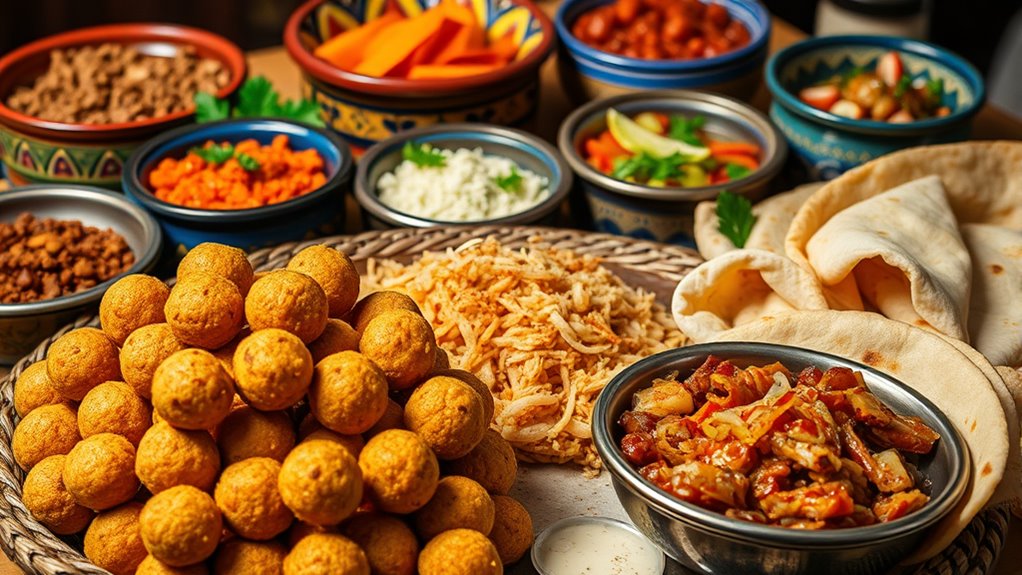

Egyptian cuisine stems from ancient staples like bread, grains, and vegetables, combined with rich influences from Greek, Roman, and Arab cultures. You’ll find traditional dishes rooted in baking innovations, use of spices, and shared communal meals that celebrate history and social bonds. Rituals and festivals often feature bread, beer, and layered dishes, reflecting deep cultural significance. If you continue exploring, you’ll discover how these traditions remain vibrant in modern Egyptian culinary practices.
Key Takeaways
- Egyptian cuisine is rooted in ancient staples like bread from emmer wheat and barley, with traditional dishes showcasing historical ingredients.
- Baking innovations, including diverse bread shapes and communal ovens, have shaped Egypt’s culinary techniques over millennia.
- Cultural exchanges introduced new ingredients such as spices, rice, and citrus, enriching traditional Egyptian recipes.
- Food plays a vital role in social rituals, festivals, and funerary offerings, reinforcing community bonds and cultural identity.
- Modern Egyptian cuisine blends traditional flavors with contemporary trends, maintaining staples like ful medames and street foods like koshary.
Ancient Foundations: Staples and Ingredients
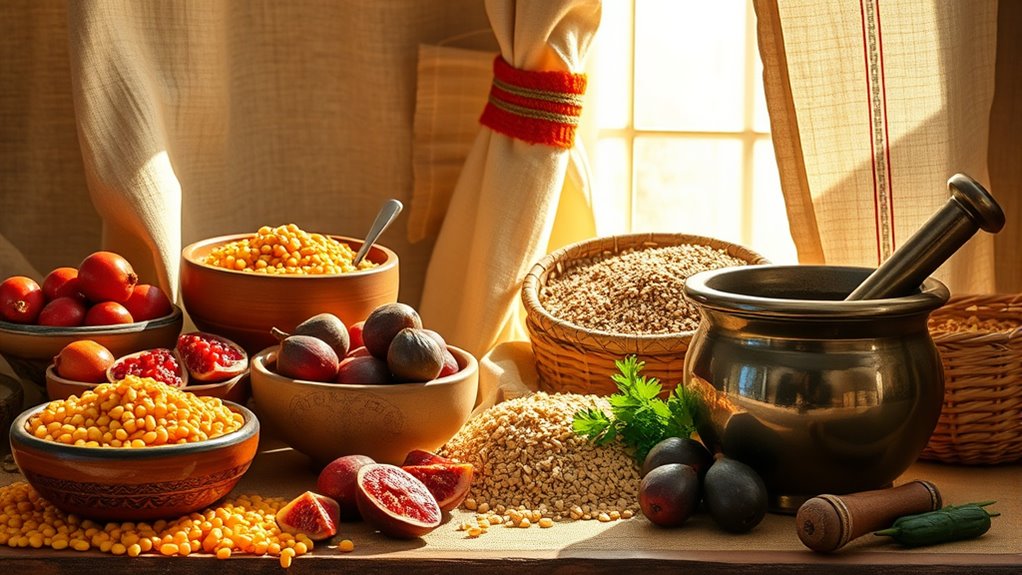
Ancient Egyptian cuisine was built on a foundation of simple yet essential ingredients that sustained its people for millennia. You’d find bread made from emmer wheat and barley as the core of daily meals, with hundreds of preserved loaves discovered in tombs. Beer was a common daily beverage, often brewed from the same grains used for bread, playing a crucial role in rituals and social life. Vegetables like onions, lettuce, cucumbers, and legumes such as lentils provided vital nutrients. Meat was costly, reserved mainly for the elite, so most relied on plant-based foods. Unique staples like tiger nuts—eaten fresh, dried, or roasted—complemented the diet. These ingredients formed the backbone of ancient Egyptian sustenance and culture. Notably, the use of staple foods like bread and beer underscores their significant influence on Egyptian social and religious practices.
Baking Techniques and Culinary Innovations

Egyptians revolutionized baking by developing a variety of techniques that allowed them to craft diverse bread types, from flatbreads and cones to spherical shapes and even objects resembling animals. You can see this innovation in how they shaped dough to serve different purposes, whether for daily meals or special occasions. They used simple tools like stones or embers to bake, and occasionally added leavening agents for lighter loaves. Fats, oils, and eggs were incorporated to enrich bread textures. Public bakeries and communal ovens enabled mass production, ensuring hygiene and consistency. These advancements contributed significantly to ancient culinary practices and influenced later cultures’ baking methods.
Historical Influences Shaping Egyptian Cuisine

The culinary landscape of Egypt has been shaped by a series of historical influences that introduced new ingredients, techniques, and flavors over millennia. Greek settlers during the Ptolemaic period brought crops like peaches, pears, and apricots, along with advanced irrigation methods. The Roman Empire expanded the spice repertoire, adding rice, black pepper, and eggplants through Red Sea ports. Arab conquests introduced sugar cane, citrus fruits, and rice, transforming the cuisine and establishing Cairo as a gastronomic hub under the Fatimids. Medieval Egypt saw the rise of markets and street vendors, serving diverse urban populations. These influences combined with indigenous ingredients, creating a rich, layered culinary tradition that persists today, reflected in dishes like ful medames, molokheya, and baklava. Additionally, cultural exchanges over centuries have continually enriched Egyptian cuisine, blending various culinary heritages into its unique flavor profile.
Food in Society, Rituals, and Celebrations

Food plays a central role in shaping social bonds and cultural identity across Egypt, serving not only as sustenance but also as a symbol of tradition and community. You’ll find that meals are integral to rituals, celebrations, and spiritual practices. During funerals, food offerings like bread and beer honor the deceased and ensure their journey to the afterlife. Public feasts, especially during religious festivals or state occasions, showcase culinary grandeur with numerous dishes shared among many. Markets and street vendors reflect the importance of food in daily social life. To deepen this connection, consider:
Food unites communities in Egypt through rituals, festivals, and daily social life, celebrating tradition and cultural identity.
- Offering bread and vegetables in religious and funerary rituals
- Participating in communal feasts during festivals like Eid
- Celebrating special occasions with layered dishes such as Fattah
- Understanding the significance of cultural traditions in shaping Egypt’s culinary practices
These traditions reinforce Egypt’s rich cultural fabric through food.
Modern Traditions and Cultural Significance
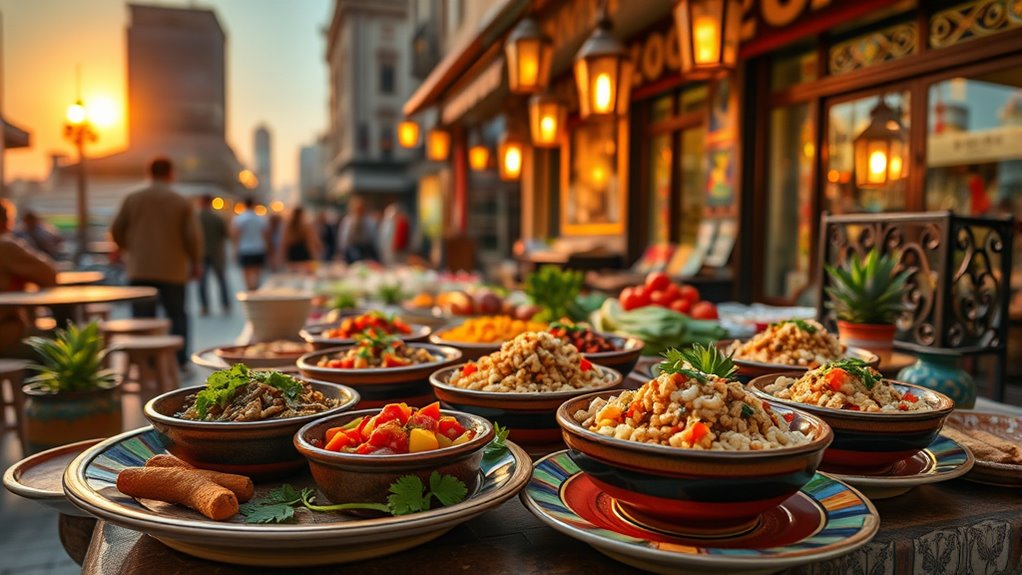
Modern Egyptian culinary traditions continue to reflect a deep respect for history while embracing contemporary influences. You’ll find staples like eish baladi and ful medames still dominating breakfasts nationwide, connecting you to centuries of tradition. At the same time, new dishes and fusion styles appear in urban restaurants, blending local flavors with international trends. Food remains central to social gatherings and celebrations, symbolizing unity and cultural pride. Street food culture thrives, offering familiar tastes like koshary and taameya, keeping ancient practices alive. Modern chefs experiment with presentation and ingredients, yet many still use traditional methods passed down through generations. This blend of old and new highlights Egypt’s ongoing relationship with its culinary past, shaping a vibrant, evolving food scene that honors tradition while welcoming change. Additionally, the rise of AI tools in culinary research and marketing influences how modern Egyptian cuisine is promoted and preserved.
Frequently Asked Questions
How Did Ancient Egyptian Cuisine Influence Modern Egyptian Cooking?
Ancient Egyptian cuisine influences your modern cooking through staples like bread, ful medames, and molokhia, which remain popular today. You still enjoy traditional methods like baking bread on stones and using local ingredients such as lentils and vegetables. Rituals and social customs, like communal feasts, persist in today’s celebrations. These enduring practices connect your contemporary dishes to Egypt’s rich history, preserving flavors and techniques that span thousands of years.
What Role Did Religious Beliefs Play in Ancient Egyptian Food Practices?
Imagine sacred rivers whispering blessings into your bowl—that’s how religious beliefs shaped ancient Egyptian food practices. You’re guided to offer bread and beer to gods and ancestors, believing these sustenances guarantee divine favor and eternal life. Rituals imbued everyday meals with spiritual significance. You observe strict purity laws, preparing food as sacred gifts, turning simple ingredients into symbols of reverence, harmony, and the divine connection between heaven and earth.
How Have Trade Routes Impacted Egyptian Ingredients and Flavors Over Centuries?
Trade routes transformed Egyptian ingredients and flavors over centuries by introducing new crops, spices, and cooking techniques. You’ll find evidence of this in the incorporation of rice, black pepper, and citrus fruits, which arrived through Red Sea ports. These exchanges enriched your culinary options, blending indigenous staples with foreign influences, creating a vibrant, diverse cuisine that reflects centuries of cultural interaction and trade’s essential role in shaping Egyptian food.
What Are the Traditional Methods of Preserving Egyptian Foods Historically?
You might imagine ancient Egypt’s food preservation methods as a dance of ingenuity—drying, salting, fermenting, and storing in cool, underground cellars. You’d salt meats and fish to keep them edible, dry vegetables and herbs in the sun, and ferment grains into beer or sourdough. These techniques, like a timeless song, guaranteed food lasted through seasons, echoing Egyptian resourcefulness and respect for nature’s cycles.
How Did Social Hierarchy Affect Food Distribution in Ancient Egypt?
You see that social hierarchy in ancient Egypt greatly influenced food distribution. The elite and ruling classes had access to expensive meats, fine bread, and imported spices, while common people relied mainly on plant-based foods like bread, vegetables, and legumes. You’d notice that special foods, like wealthy dishes or offerings, were reserved for the upper class or religious ceremonies, emphasizing status and wealth through what people ate.
Conclusion
As you explore Egypt’s rich culinary traditions, you connect with a history that’s as vibrant as its flavors. Imagine sharing a bubbling pot of koshari with loved ones during a family gathering, feeling the warmth and togetherness that food brings. By embracing these ancient recipes and modern twists, you keep Egypt’s culinary legacy alive, creating new memories while honoring centuries of tradition. Your journey through Egyptian cuisine becomes a heartfelt celebration of culture and community.