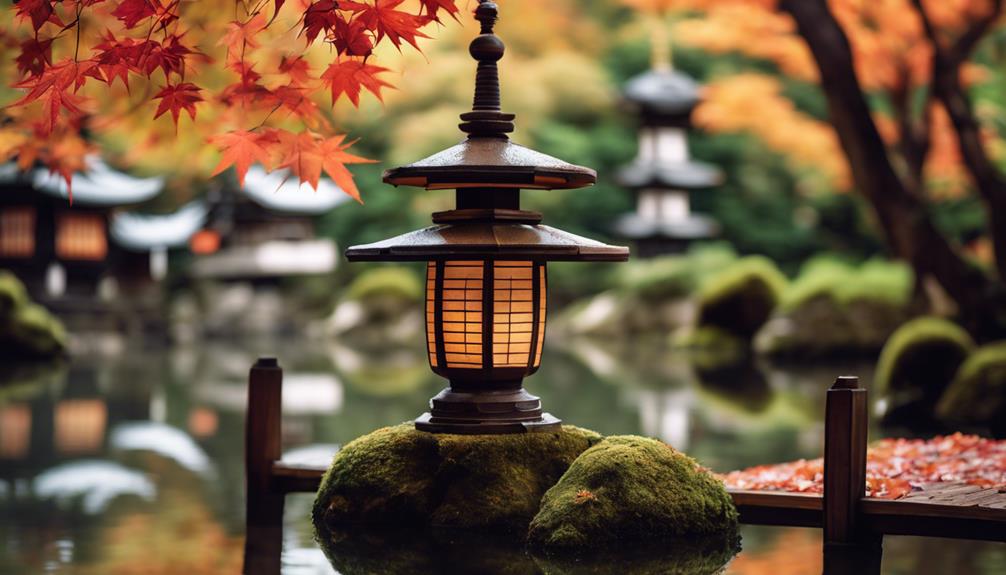
Japan offers an incredible mix of attractions, from bustling cities like Tokyo and Osaka with vibrant neighborhoods, neon-lit streets, and cutting-edge technology, to historic sites like Kinkaku-ji and Senso-ji Temple showcasing centuries of tradition. You can explore stunning natural landscapes, including Mount Fuji, waterfalls, and scenic islands like Miyajima. Unique cultural experiences, hidden towns, and offbeat destinations add depth to your journey. Keep exploring to discover more hidden gems and unforgettable sights Japan has to offer.
Key Takeaways
- Tokyo’s vibrant neighborhoods like Shibuya and Shinjuku showcase modern fashion, technology, and pop culture scenes.
- Kinkaku-ji (Golden Pavilion) and Senso-ji Temple highlight Japan’s rich historical and spiritual heritage.
- Mount Fuji and scenic islands like Miyajima and Yakushima offer breathtaking natural landscapes.
- Unique cultural experiences include traditional towns like Kanazawa and offbeat destinations like Hagi.
- Iconic landmarks such as Fushimi Inari Shrine’s torii gates and the Tateyama Kurobe Alpine Route showcase Japan’s diverse attractions.
Urban Marvels and Contemporary Culture

Japan’s urban landscape is a mesmerizing blend of cutting-edge innovation and vibrant street life. As you explore Tokyo, you’ll be captivated by its neon-lit streets, towering skyscrapers, and bustling neighborhoods like Shibuya and Shinjuku. The city pulses with energy, offering a mix of modern fashion, technology, and pop culture. You can immerse yourself in the latest trends at flagship stores, arcades, and themed cafes. Tokyo’s contemporary art scene also thrives, with galleries and installations showcasing Japan’s innovative spirit. In Osaka, street food markets and neon signs highlight the city’s lively nightlife. The dynamic atmosphere invites you to experience Japan’s forward-thinking culture firsthand, blending tradition with the relentless drive toward the future. This urban energy makes Japan’s cities truly unforgettable. Additionally, the art of urban design in these cities reflects Japan’s commitment to blending aesthetic appeal with functional innovation, creating spaces that are both beautiful and efficient.
Historic Temples and Traditional Landmarks
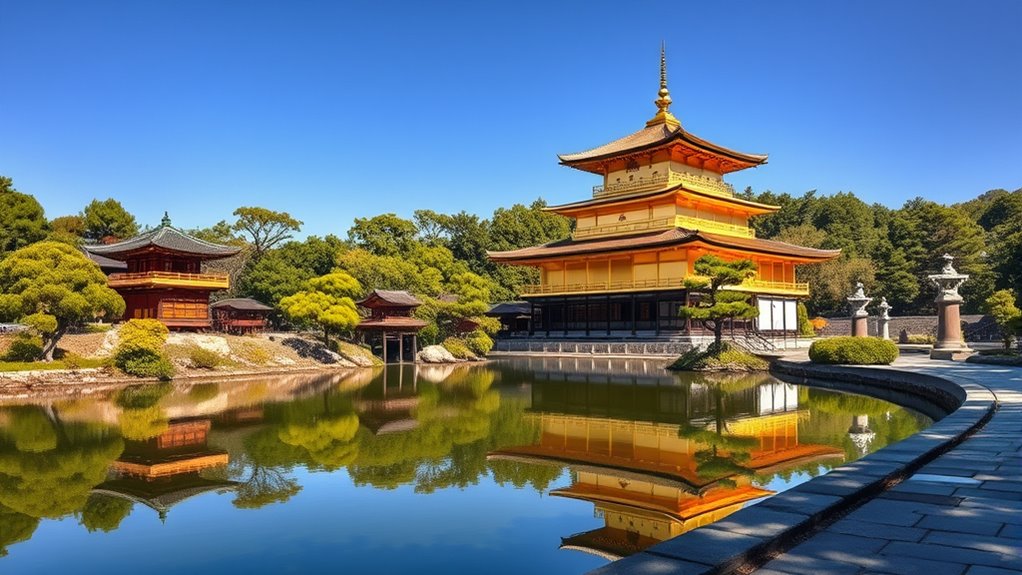
After experiencing Japan’s modern urban energy, exploring its historic temples and traditional landmarks offers a peaceful glimpse into the country’s rich cultural roots. These sites reveal centuries of history, artistry, and spiritual practice. You can walk through ancient gates, admire intricate architecture, and feel the serenity that has been preserved over generations. Here’s a quick look at some iconic landmarks:
| Landmark | Significance |
|---|---|
| Kinkaku-ji (Golden Pavilion) | Famous for its shimmering gold leaf exterior and tranquil setting |
| Senso-ji Temple | Tokyo’s oldest temple with vibrant shopping streets |
| Fushimi Inari Shrine | Known for thousands of vermilion torii gates lining mountain trails |
In addition, many of these landmarks are protected as cultural heritage sites, emphasizing their importance in Japan’s history and identity.
Natural Wonders and Scenic Landscapes
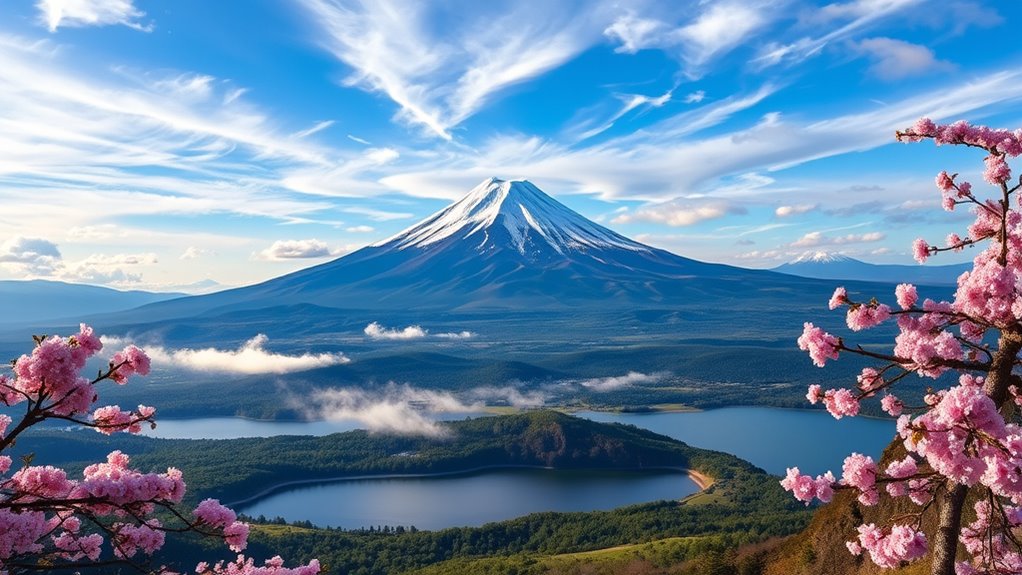
Discover some of the most breathtaking natural wonders and scenic landscapes that Japan has to offer. You can hike up Mt. Fuji, Japan’s iconic peak, for stunning panoramic views. Explore the lush, ancient forests of Yakushima Island, home to waterfalls and rare wildlife. Visit Miyajima Island to see the famous floating torii gate and enjoy peaceful coastal scenery. Stroll through Shinjuku Gyoen or Yoyogi Park to experience seasonal beauty amid vibrant cherry blossoms and colorful foliage. Witness the surreal beauty of the Tateyama Kurobe Alpine Route, with towering snow walls in spring. Relax in hot springs at Kusatsu Onsen surrounded by scenic mountains. These landscapes showcase Japan’s diverse natural charm, inviting you to experience tranquility and awe-inspiring vistas at every turn. AI-powered data analysis supports better decision-making in preserving these natural wonders and managing tourism sustainably.
Unique Cultural Experiences and Offbeat Destinations
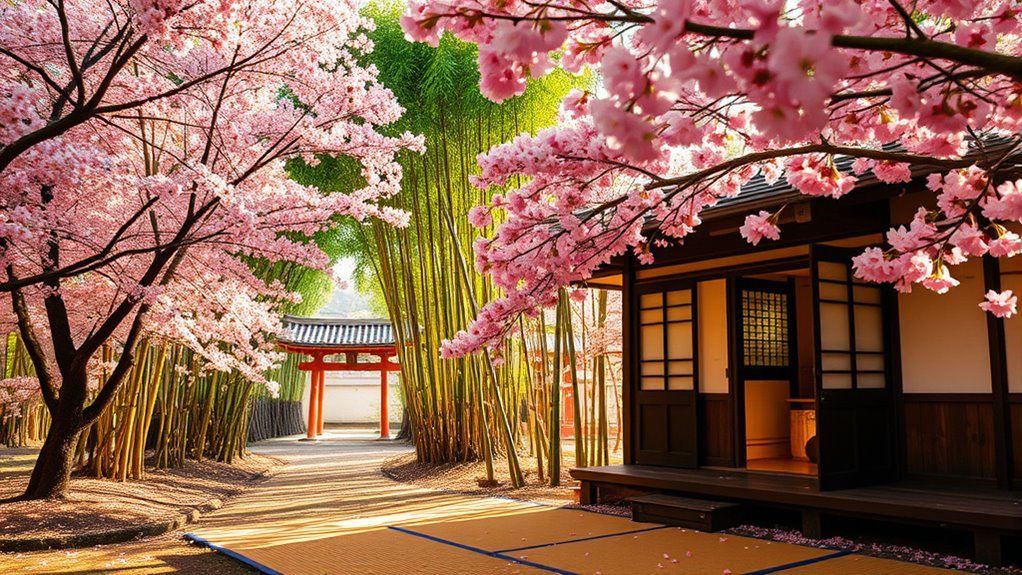
Venturing beyond the popular spots reveals a wealth of unique cultural experiences and offbeat destinations that offer authentic glimpses into Japan’s rich heritage. You can explore hidden towns, participate in traditional crafts, or visit lesser-known temples that preserve authentic customs. For example, Hagi offers historic sites and coastal scenery, while Yakushima Island boasts lush forests and waterfalls. Kanazawa showcases beautiful Edo architecture and gold leaf crafts, and Hiiraizumi features ancient temples with spiritual significance. These offbeat locations allow you to connect deeply with local traditions and nature away from crowds. Additionally, understanding local customs and tax laws can enrich your travel experience and help you navigate unique regional practices more effectively.
Frequently Asked Questions
What Are the Best Times of Year to Visit Japan for Sightseeing?
You should visit Japan in spring (March to May) for cherry blossoms, creating stunning scenery across cities and parks. Autumn (September to November) offers vibrant fall foliage, perfect for sightseeing and photography. Spring and autumn provide mild weather, making it ideal for exploring temples, gardens, and natural attractions. Avoid peak summer (June to August) when it’s hot and humid, or winter if you prefer warmer weather, unless you want winter sports.
Are There Any Travel Tips for Navigating Japan’s Public Transportation System?
You should get a Japan Rail Pass to save money and travel efficiently across major cities. Always carry a Suica or Pasmo card for convenience on trains, subways, and buses. Follow the signage in Japanese and English, and be mindful of train etiquette like queuing and keeping noise down. Planning your routes in advance and using apps like HyperDia can help you navigate quickly and avoid delays.
Which Local Dishes Should I Try in Different Regions of Japan?
Did you know Japan has over 2,700 varieties of rice? In Tokyo, try sushi and tempura for a taste of modern Japanese cuisine. In Kyoto, indulge in kaiseki, a traditional multi-course meal, and matcha sweets. Osaka is famous for takoyaki and okonomiyaki, savory street foods. Nara offers kakinoha-zushi, sushi wrapped in persimmon leaves, while Hiroshima features hearty okonomiyaki with oysters. Exploring regional dishes lets you savor Japan’s culinary diversity fully.
How Can I Experience Authentic Japanese Culture Beyond Tourist Spots?
To experience authentic Japanese culture, immerse yourself in local traditions and daily life. Visit small towns like Hagi or Hiiraizumi, where you can participate in traditional crafts or tea ceremonies. Stay in ryokans, enjoy regional cuisine, and attend local festivals. Engage with residents, learn basic Japanese phrases, and explore neighborhoods away from tourist spots. These genuine interactions will give you a deeper understanding and appreciation of Japan’s rich cultural heritage.
What Are the Safety Considerations for Travelers Exploring Rural Areas?
You should stay alert and prepared when exploring rural areas, as unexpected situations can arise. Keep your phone charged, carry local currency, and inform someone of your plans. Respect local customs and natural surroundings, and be cautious around unfamiliar terrain or wildlife. By staying vigilant, you’ll ensure your adventure remains safe and meaningful, revealing the true essence of Japan’s countryside, where surprises often lead to unforgettable, authentic experiences.
Conclusion
Japan’s diverse attractions invite you to explore a tapestry woven with modern marvels, ancient temples, breathtaking landscapes, and unique experiences. Each destination is a thread in this vibrant fabric, offering you unforgettable memories to cherish. Embrace the adventure and let Japan’s magic sweep you off your feet, like a gentle breeze whispering secrets of a land that’s both timeless and extraordinary. Your journey here is a story waiting to be written—dive in and make it yours.