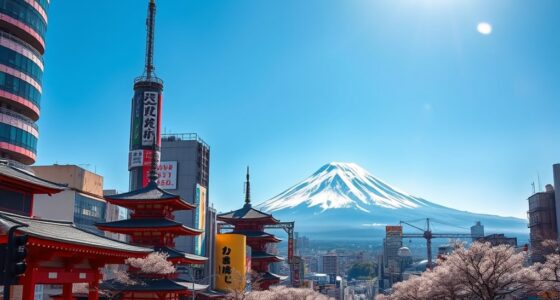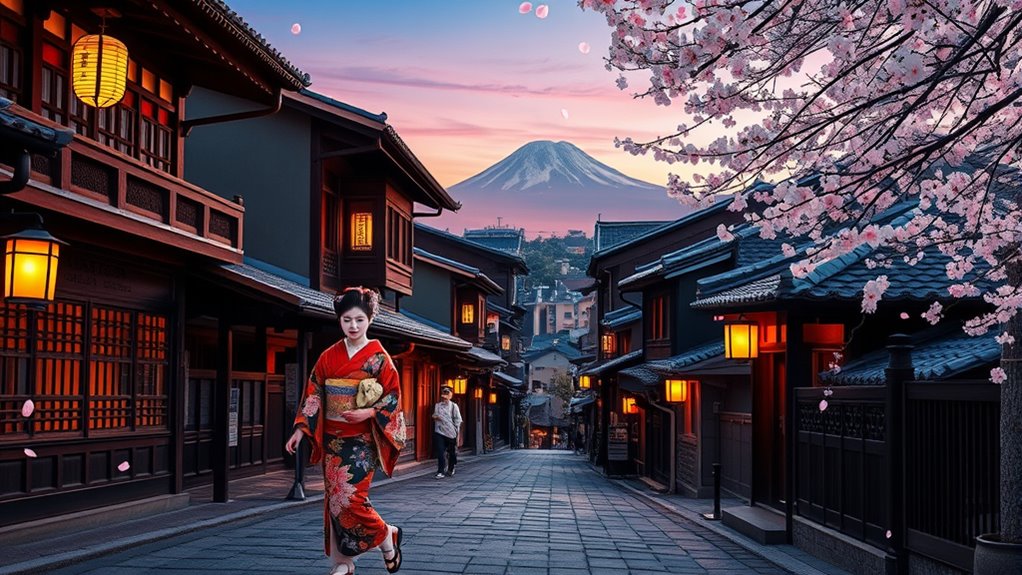

Japan’s history spans from ancient times with the Jomon pottery and the rise of the Yamato clan, through periods of cultural brilliance like the Heian era and Tokugawa isolation. The Meiji Restoration brought rapid modernization, transforming Japan into a global power. Postwar, Japan rebounded with economic growth and technological innovation. Today, you can see a blend of tradition and modernity in its arts, architecture, and customs. Exploring Japan’s history and culture reveals a fascinating journey that continues to evolve.
Key Takeaways
- Japan’s history spans from prehistoric Jomon pottery and Yayoi rice culture to imperial rule, feudal samurai society, and modern industrialization.
- Cultural developments include Buddhism, traditional arts like tea ceremony, calligraphy, and the literary masterpiece *The Tale of Genji*.
- The Edo period’s isolation fostered unique arts such as ukiyo-e prints, Kabuki theater, and haiku poetry.
- The Meiji Restoration modernized Japan, adopting Western governance, industry, and military, transforming it into a global power.
- Contemporary Japan blends ancient traditions with innovation, emphasizing cultural preservation, modern arts, and technological advancements.
Early Japan: From Prehistory to the Nara Period
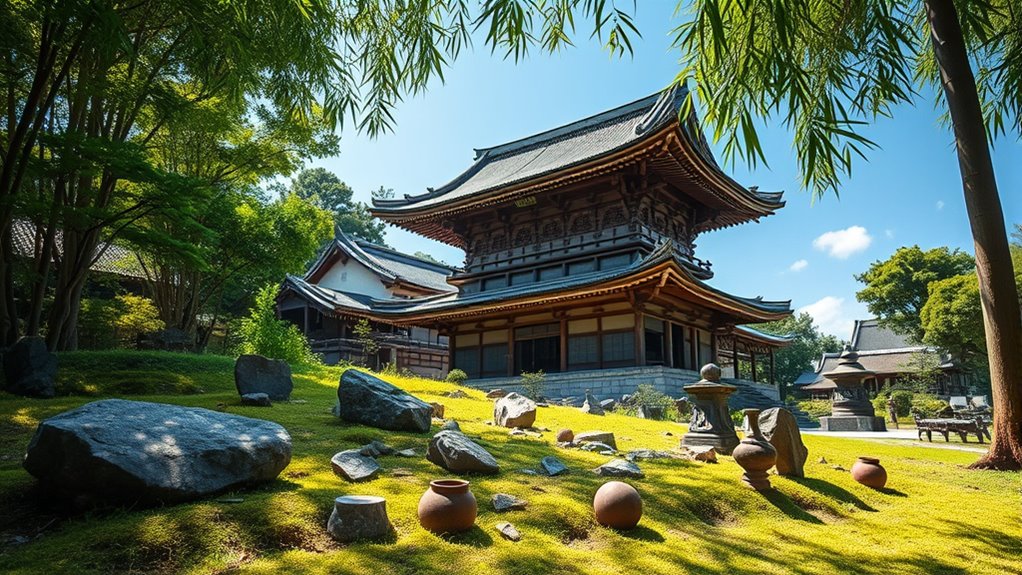
Japan’s early history begins in prehistoric times, when the Jomon people created the earliest known Japanese culture. You’d notice their distinctive rope-patterned pottery, which reflects their craftsmanship and spiritual beliefs. As time passed, the Yayoi culture arrived, bringing rice farming, metal tools, and wheel-thrown pottery. These innovations transformed society and set foundations for future development. During the Tomb period, large burial mounds called kofun appeared, signaling the rise of powerful clans like Yamato, which established an imperial lineage. Around 646 CE, Japan adopted Chinese-style bureaucratic reforms and Buddhism during the Taika Reform, marking a shift toward centralized governance. This period culminated in the Nara era, where Japan established its first permanent capital and began shaping its cultural and administrative identity. The influence of early cultural exchanges with neighboring regions played a significant role in shaping these developments.
The Classical Era and Feudal Foundations
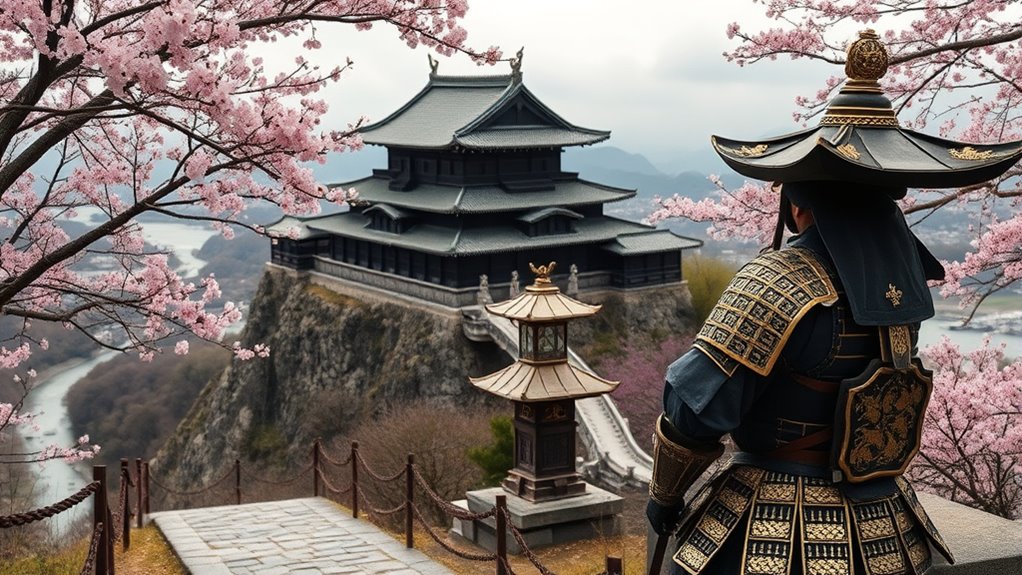
Following the consolidation of early political structures, the Classical Era and Feudal Foundations saw the rise of powerful clans and sophisticated court culture. You witness the dominance of the Yamato clan, which established the imperial lineage and centralized authority. During this period, Buddhism spreads, influencing art, architecture, and governance, while Chinese writing and bureaucratic systems reshape administration. The Heian period marks Japan’s cultural zenith, with courtly elegance, poetry, and literary masterpieces like *The Tale of Genji*. As political power shifts to regional samurai clans, the Kamakura shogunate emerges, initiating military rule and feudal governance. You observe a society balancing aristocratic court life with the growing influence of warrior classes. This era lays the groundwork for Japan’s enduring social hierarchy, blending tradition with political evolution. Additionally, the influence of anime movies during this time reflects Japan’s rich cultural development, blending traditional themes with evolving storytelling techniques.
The Edo Period: Isolation and Cultural Flourishing
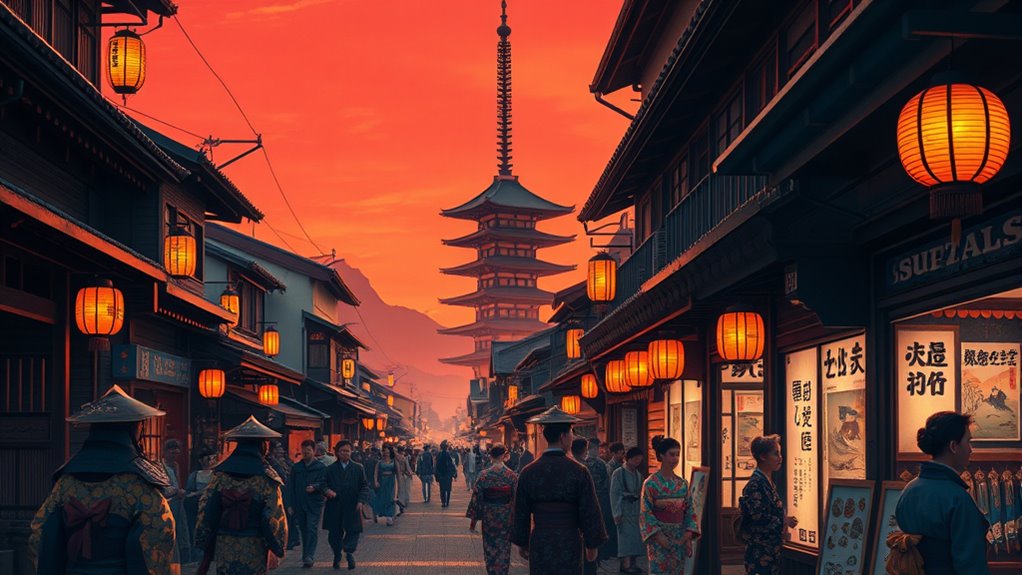
During the Edo Period, the Tokugawa shogunate established a strict policy of national isolation, known as sakoku, which kept Japan largely closed off from foreign influence. This policy limited trade to Dutch and Chinese merchants at Nagasaki and banned Christianity, suppressing foreign religious ideas. Despite these restrictions, Japan experienced a remarkable cultural renaissance. Urban centers like Edo, Osaka, and Kyoto thrived, fostering vibrant arts such as Kabuki theater, ukiyo-e woodblock prints, and haiku poetry. You’d notice the rise of a merchant class that supported these cultural developments. The period also saw advancements in architecture, literature, and tea ceremony traditions. Although isolation limited external contact, internal cultural innovation flourished, laying a foundation for Japan’s unique blend of tradition and creativity that endures today.
The Meiji Restoration: Modernization and Expansion
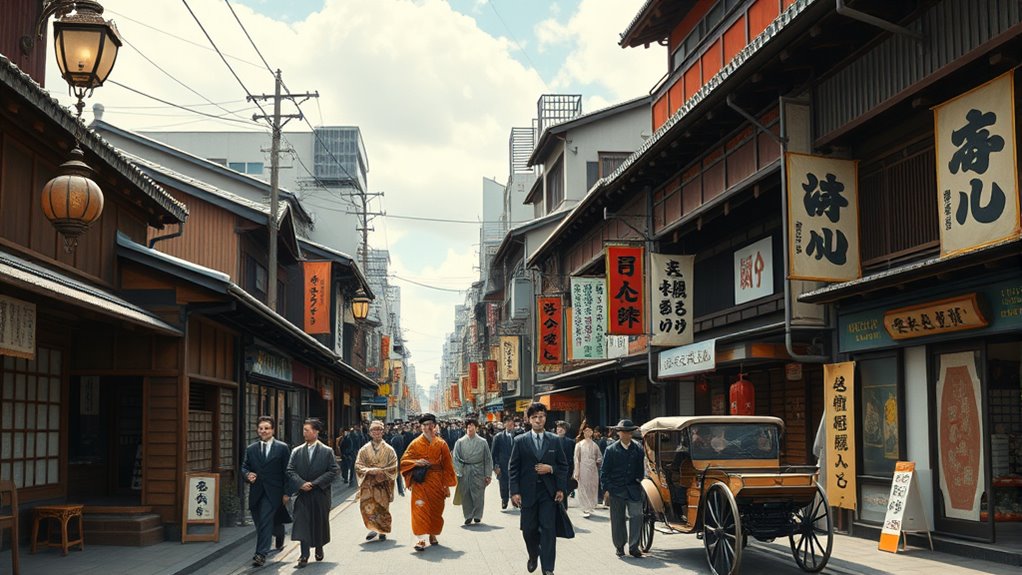
Have you ever wondered how a country transformed itself so rapidly in just a few decades? During the Meiji Restoration, Japan shifted from feudal isolation to a modern industrial power. You play a key role in this change by observing three major steps:
- Reinstating Imperial Power: The shogunate ended in 1868, and Emperor Meiji took control, centralizing authority and ending samurai dominance.
- Modernizing Institutions: Japan adopted Western laws, established a constitutional government in 1889, and introduced universal education and military conscription.
- Rapid Industrial Growth: Building railways in 1872, expanding factories, and winning wars like the Sino-Japanese and Russo-Japanese signaled Japan’s rise as an imperial power. This period set the foundation for Japan’s future global influence.
The Taisho and Early Showa Years: Democracy and Militarism

The Taisho and early Showa years marked a complex shift in Japan’s political landscape, balancing the ideals of democracy with the rise of militarism. During the Taisho era, you see efforts to expand voting rights and promote political participation through measures like universal male suffrage in 1925. However, rising nationalism and economic instability fueled the growth of militarist groups, influencing government policies. As you move into the early Showa period, militarism intensifies. The military gains significant influence over politics, leading to aggressive actions like the Manchurian Incident in 1931 and invasion of China in 1937. Japan’s government becomes increasingly authoritarian, prioritizing imperial expansion and military strength. By the late 1930s, peaceful democracy gives way to a militarist state, culminating in Japan’s involvement in World War II. Understanding the role of militarism helps explain how Japan’s political landscape shifted during this period.
Postwar Recovery and Economic Boom
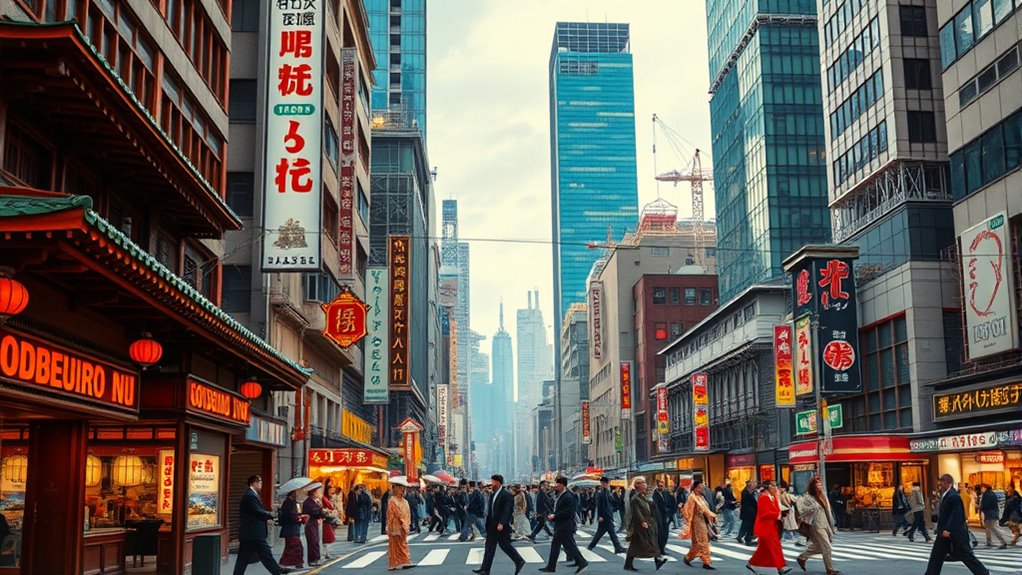
After Japan’s militarist era ended with its surrender in 1945, the nation faced the enormous challenge of rebuilding from widespread destruction. You play a role in this recovery by witnessing Japan’s rapid transformation. Here’s what you should know:
- The postwar period saw significant economic reforms, including land redistribution and labor rights, laying a foundation for growth.
- The 1950s and 1960s marked Japan’s economic miracle, driven by technological innovation, export industries, and government-business cooperation.
- Urban areas expanded quickly, with industries like automobiles and electronics fueling growth, making Japan a global economic powerhouse.
- The influence of cultural shifts and societal resilience also played a crucial role in Japan’s ability to adapt and thrive during this transformative period.
Through resilience and strategic planning, Japan recovered fast, transforming from wartime devastation into a thriving, modern society.
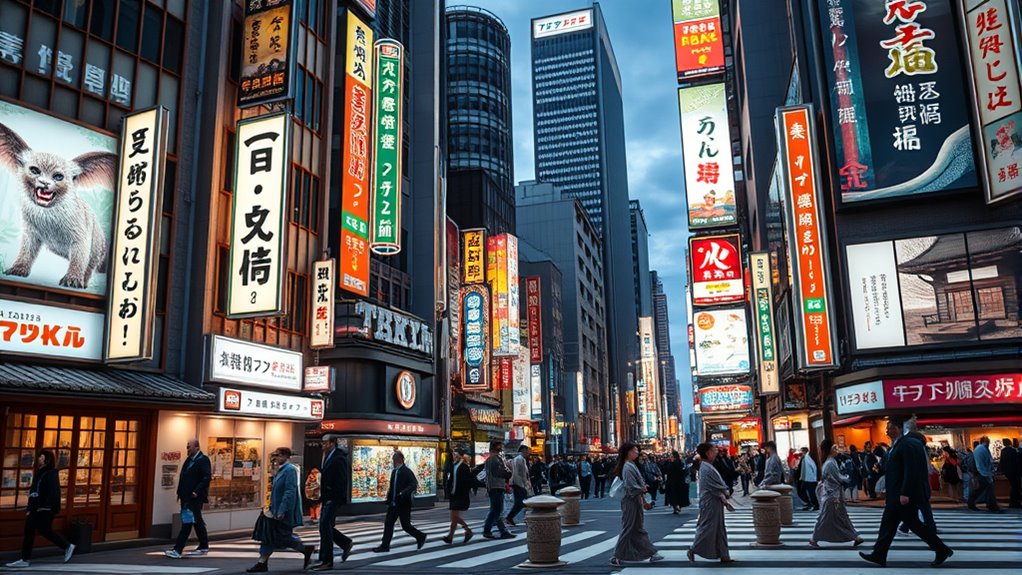
Contemporary Japan stands at the forefront of technological innovation while experiencing profound social changes. You witness rapid advancements in robotics, electronics, and renewable energy, shaping daily life and industry. Urban areas like Tokyo evolve with smart infrastructure, high-speed trains, and digital services that enhance convenience. Socially, Japan faces aging populations, declining birthrates, and shifting gender roles, prompting reforms in work, family, and education systems. You see increased multicultural influences as Japan opens up to global ideas, yet also grapple with maintaining traditional values. Technology drives new forms of entertainment, communication, and health care, blending innovation with cultural preservation. An understanding of alimony laws and divorce procedures can be important for those navigating personal transitions in Japan and abroad. These transformations reflect Japan’s resilience and adaptability, balancing cutting-edge progress with the need to address pressing societal challenges.
Cultural Heritage and Traditions in Modern Japan
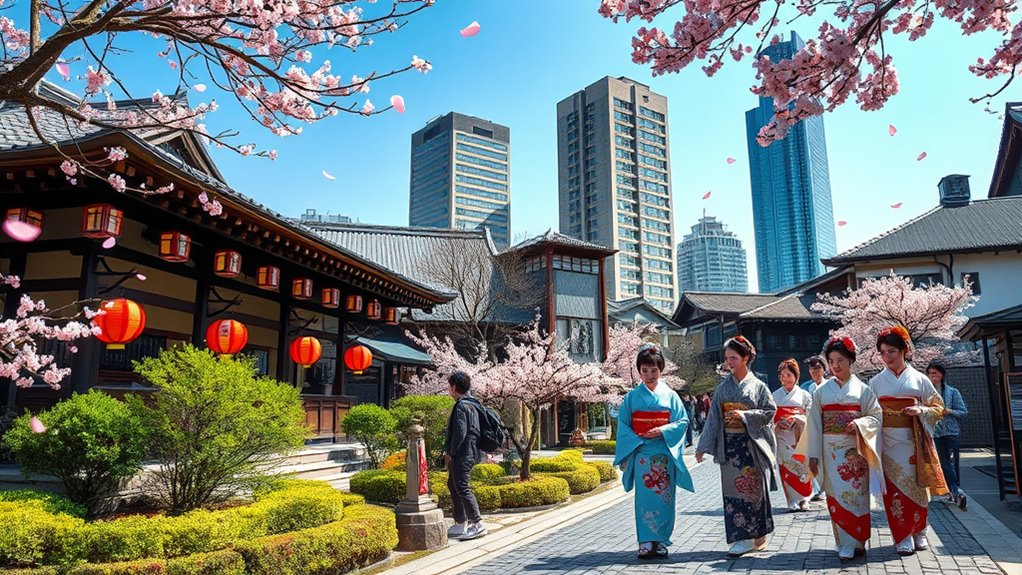
You can see Japan’s rich cultural heritage alive today through the preservation of traditional arts like tea ceremony, calligraphy, and ikebana. At the same time, modern cultural expressions such as anime, fashion, and contemporary music continue to evolve and gain global influence. This blend of old and new highlights how Japan balances honoring traditions with embracing innovation. Additionally, the use of diverse decorative planters in Japanese interior design reflects the cultural emphasis on harmony with nature.
Traditional Arts Preservation
Traditional arts remain an essential part of Japan’s cultural identity, even amid rapid modernization. You can see efforts to preserve these arts through various initiatives. For example:
- Cultural institutions like museums and galleries showcase traditional crafts such as ikebana, tea ceremony, and calligraphy, guaranteeing they’re accessible to the public.
- Government programs support artisans by providing funding, training, and licensing to keep traditional techniques alive.
- Community events and festivals celebrate heritage crafts, encouraging younger generations to learn and practice these skills.
- Crypto monitoring tools are also used by some organizations to track the popularity and valuation of traditional crafts in digital markets, helping artisans adapt to modern economic environments.
These efforts help maintain a connection to Japan’s history and cultural roots. By actively supporting artisans and promoting awareness, Japan ensures its traditional arts continue thriving in a modern world.
Modern Cultural Expressions
Modern Japan seamlessly blends its rich cultural heritage with innovative expressions, creating a vibrant landscape where tradition and modernity coexist. You’ll find ancient practices like tea ceremonies and calligraphy integrated into contemporary life, often fused with modern art, fashion, and technology. Pop culture phenomena, such as anime, manga, and J-pop, have gained global influence, showcasing Japan’s creative energy. Traditional craftsmanship, like kimono weaving and pottery, evolves through modern designs and sustainable methods. Architecture combines historical temples with sleek skyscrapers, reflecting Japan’s ability to honor its past while embracing the future. Festivals like Tanabata and Obon remain lively, celebrated with contemporary twists that appeal to younger generations. Additionally, innovations like electric bikes are increasingly incorporated into urban mobility, illustrating Japan’s commitment to blending tradition with sustainability. This dynamic blend of old and new defines Japan’s modern cultural identity, making it uniquely enthralling worldwide.
Frequently Asked Questions
How Did Japan’s Early Interactions Influence Its Cultural Development?
Your early interactions, especially with China and Korea, deeply shaped Japan’s culture. You adopted Chinese writing, Buddhism, and bureaucratic ideas, which transformed politics and religion. These exchanges introduced new art styles, literary forms, and technological innovations. As a result, you developed a unique culture that blended imported influences with native traditions, creating a rich, sophisticated society that values harmony, aesthetics, and spirituality, laying the foundation for Japan’s enduring cultural identity.
What Role Did the Samurai Play in Shaping Japanese Society?
You might think samurai were just warriors, but they shaped Japanese society profoundly. They established a strict code of conduct, Bushido, emphasizing loyalty, honor, and discipline, which influenced social values. Their governance during feudal times maintained stability and social order. Even today, samurai ideals impact modern Japanese culture, emphasizing respect, duty, and perseverance, revealing how their legacy continues to mold societal norms and personal conduct.
How Did Isolation Policies Affect Japan’s Technological Progress?
Your isolation policies, especially during the Edo period, limited Japan’s contact with the outside world, which slowed technological progress. You kept foreign influence at bay, restricting access to new ideas and innovations. While this helped preserve traditional culture, it also delayed industrial advancements. However, when Japan opened up in the late 19th century, you rapidly adopted Western technologies, transforming into a modern industrial nation.
In What Ways Did Western Ideas Transform Japan During the Meiji Era?
During the Meiji era, Western ideas completely transformed Japan, turning it into a blazing comet of modernization. You’d see Japan rapidly adopting Western technology, government systems, and education, making the country leap into the modern age overnight. Railways, factories, and a new constitutional government emerged almost like magic. You’d witness Japan’s culture blending tradition with Western innovation, propelling it from medieval isolation to a global power in record time.
How Does Japan Preserve Its Cultural Heritage Amid Modernization?
You can see Japan preserving its cultural heritage through careful maintenance of traditional arts, festivals, and architecture while embracing modernization. You actively support efforts like restoring historic temples, promoting tea ceremonies, and protecting intangible traditions like calligraphy and martial arts. Schools and communities also celebrate cultural events, ensuring future generations appreciate their roots, even as they adopt new technologies and ideas. This balance helps Japan honor its past while progressing forward.
Conclusion
As you explore Japan’s rich history, remember it’s like a timeless scroll, unfolding stories of resilience and beauty. From ancient temples to bustling cities, the spirit of samurai and artisans still whispers through modern streets. Just as a cherry blossom’s fleeting bloom captures life’s transient beauty, Japan’s culture invites you to cherish tradition while embracing change. Dive deep, and you’ll see how its past shapes every vibrant moment of today.