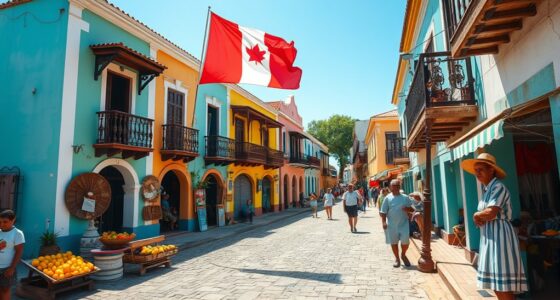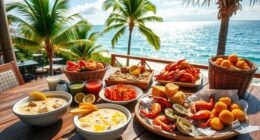

Discover Antigua and Barbuda’s vibrant cuisine, rooted in African, European, and indigenous traditions. You’ll find hearty dishes like saltfish with fungee, pepperpot, and ducana, made with fresh seafood, tropical fruits, and local vegetables from bustling markets. Street food like roti and quick bites showcase lively flavors, while family traditions and seafood from fishing communities influence every meal. To explore how history and modern influences shape this flavorful island cuisine, keep exploring further.
Key Takeaways
- Antigua and Barbuda’s cuisine combines African, European, and indigenous influences, featuring dishes like fungee, saltfish, and seafood stews.
- Local markets and fishing communities supply fresh tropical fruits, vegetables, herbs, and seafood essential to traditional recipes.
- Seafood such as conch, snapper, and grouper plays a central role, emphasizing the island’s rich fishing heritage.
- Traditional customs include community-focused meals like Sunday breakfast and religious observances with special dishes.
- Modern culinary innovations blend traditional flavors with global trends, creating diverse and contemporary Antiguan and Barbadian dishes.
Traditional Antiguan Dishes and Ingredients
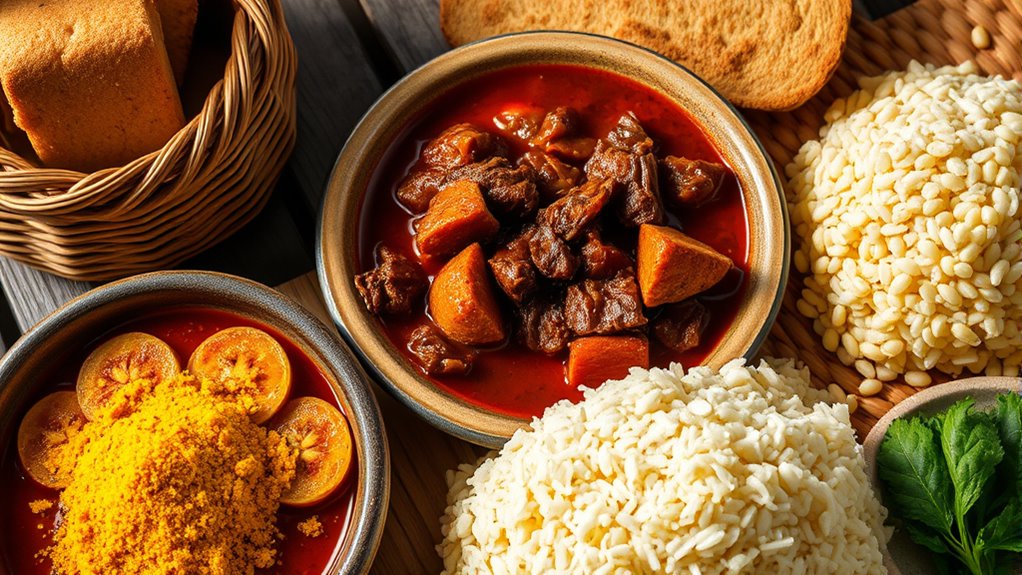
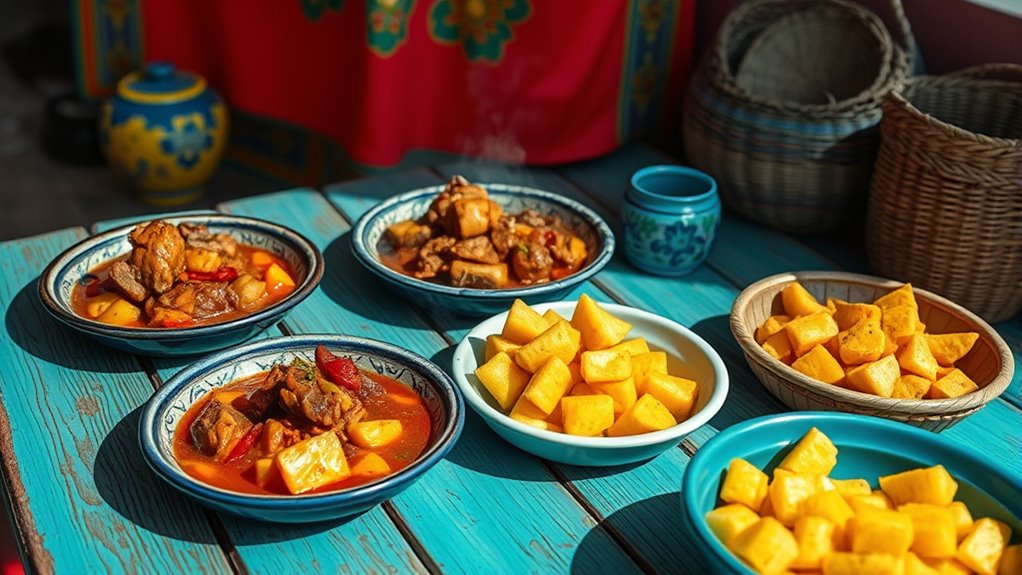
Traditional Antiguan dishes are rooted in a rich blend of African, European, and indigenous influences, showcasing the island’s diverse culinary heritage. You’ll find staples like fungee, a smooth cornmeal dish often served with pepperpot, a hearty stew of meat and vegetables. Saltfish, preserved with salt and dried, is a breakfast favorite, paired with sautéed vegetables or bread. Ducana, made from grated coconut and sweet potatoes, is traditionally enjoyed on Good Friday. Conch water, a flavorful soup with conch and spices, highlights local seafood. Ingredients like okra, spices, and local herbs play a essential role in creating bold flavors. These dishes reflect Antigua’s history of combining native ingredients with techniques brought by European settlers and African ancestors. Additionally, the use of traditional cooking methods helps preserve authentic flavors and cultural practices across generations.
Historical Roots of Antiguan Cuisine

The culinary landscape of Antigua and Barbuda has been shaped by a dynamic history of cultural encounters and adaptations. You can see this in how traditional ingredients and techniques blend over time.
- African roots introduced salting, drying, and the use of okra, shaping early cooking methods.
- British colonization impacted preservation techniques, making saltfish a staple.
- Indigenous influences brought local ingredients like yams and cassava into the mix.
- Caribbean fusion combines African, European, and indigenous flavors, creating a unique culinary identity.
- The use of essential oils in traditional medicine and cooking practices reflects the lasting influence of indigenous and colonial knowledge on local cuisine.
These layers of history reflect how Antigua’s food evolved through trade, colonization, and cultural exchange. You experience this rich past in every dish, from stews to street snacks, revealing a deep connection to the island’s diverse roots.
Signature Local Flavors and Popular Meals
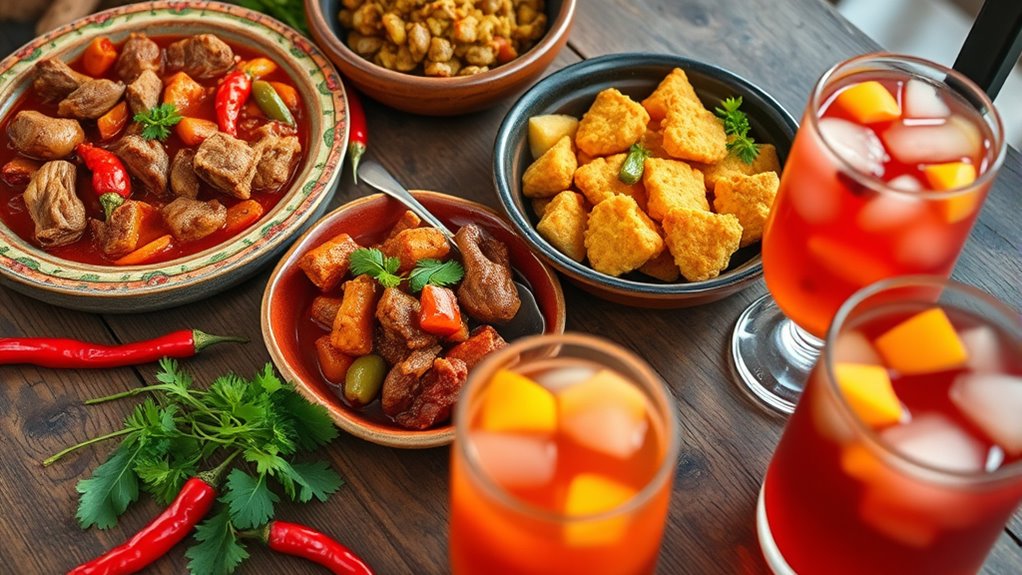
Ever wonder what flavors define Antigua and Barbuda’s vibrant culinary scene? You’ll notice bold, hearty tastes rooted in local ingredients and rich traditions. Fungee and Pepperpot stand out as iconic dishes—cornmeal combined with okra, served with savory meat and vegetable stews. Saltfish and Chop-up are breakfast staples, highlighting salted cod’s salty richness paired with sautéed vegetables. Ducana, made from coconut and sweet potatoes, offers a sweet, spiced flavor, especially on Good Friday. Conch Water provides a briny, flavorful seafood taste that captures the island’s marine bounty. Black Pudding and Rice reflect colonial influences, blending spices and textures. These meals showcase Antigua and Barbuda’s diverse culinary influences, blending indigenous, African, European, and Caribbean flavors into a vibrant, authentic food scene you won’t forget. Incorporating nutrient-dense ingredients like chia seeds can also enhance traditional dishes with added health benefits.
Street Food Culture and Quick Bites

Are you ready to explore Antigua and Barbuda’s vibrant street food scene? You’ll find quick bites that satisfy your cravings and showcase local flavors. Here are four popular options to try:
- Roti – Filled with curried vegetables or meats, easy to eat on the go.
- Saltfish with bread – A simple yet flavorful snack or breakfast staple.
- Peanut Punch – An invigorating, protein-packed drink perfect for a quick energy boost.
- Ting – The tangy grapefruit soft drink, great to cool down and revitalize.
Street vendors serve these delights with lively energy, making your experience authentic and memorable. Whether you’re grabbing a quick snack or exploring local flavors, Antigua’s street food culture offers vibrant, accessible bites that reflect the island’s culinary diversity. Understanding local ingredients enhances your appreciation of these popular street foods and their cultural significance.
Culinary Customs and Family Traditions
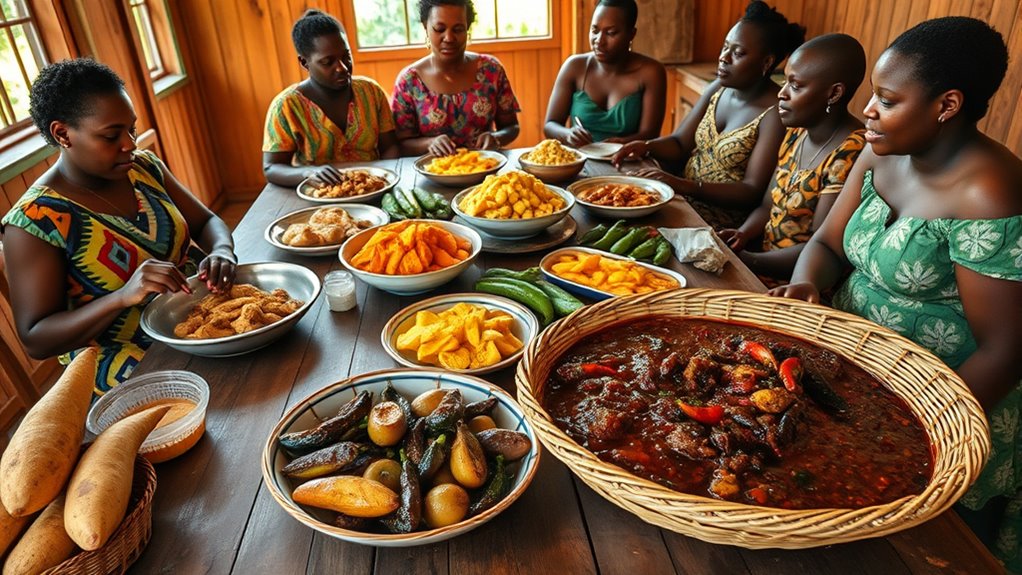
In Antigua and Barbuda, culinary customs are deeply rooted in family traditions and community bonds. You often find that meals are more than just sustenance—they’re a way to connect and celebrate shared heritage. Sunday breakfasts typically include saltfish with fungee or chop-up, prepared with care and passed down through generations. On Good Friday, families gather to enjoy ducanas, emphasizing the importance of religious and cultural observances. During special occasions, everyone pitches in to make labor-intensive dishes like pepperpot or goat water, showcasing family teamwork. Meals are often made with local ingredients, reflecting a deep respect for land and sea. Sharing food with relatives and neighbors reinforces unity and cultural pride, making culinary practices a crucial part of Antigua and Barbuda’s social fabric. Awareness of cultural practices can help preserve these traditions for future generations.
Influences From Around the World

Family gatherings and shared meals in Antigua and Barbuda often showcase traditional dishes, but the island’s cuisine also reflects a rich tapestry of global influences. You’ll find flavors from around the world woven into local dishes, creating a vibrant culinary scene. For example, multi-cultural influences are evident in the diverse spice blends and cooking techniques used across the island. These international influences enrich Antigua’s cuisine, making it a true melting pot of flavors that reflect its diverse cultural history.
Festive and Religious Food Celebrations
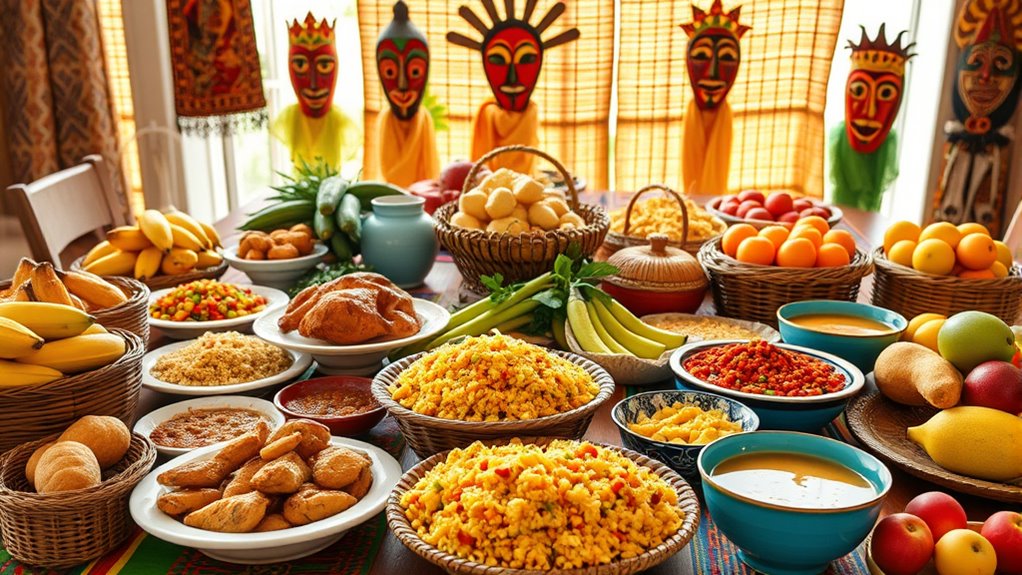
Festive and religious food celebrations are vibrant expressions of Antigua and Barbuda’s cultural heritage, bringing communities together to honor traditions through special dishes. During events like Carnival, people indulge in hearty foods such as jerk chicken, saltfish, and fungee. On Good Friday, families prepare ducana, a sweet coconut and sweet potato dish, symbolizing spiritual reflection. Celebrations often feature communal cooking and sharing, emphasizing unity and cultural pride. These occasions showcase local ingredients and time-honored recipes, maintaining their significance across generations. The culinary traditions remain a vital part of the country’s cultural identity, reflecting the diverse influences that have shaped the islands’ history and community life.
Fusion and Modern Takes on Classic Recipes

Antiguan cuisine continues to evolve as chefs and home cooks experiment with blending traditional flavors with contemporary techniques. You might find classic dishes transformed with a modern twist, making them more appealing to diverse tastes. Incorporating cultural adaptation into recipes allows for creative reinterpretations that honor heritage while embracing innovation.
- Fungee Fusion: Some chefs incorporate quinoa or millet instead of traditional cornmeal, adding new textures and nutritional benefits.
- Pepperpot Remix: Modern versions include slow-cooked stews with gourmet meats or plant-based proteins, while maintaining the hearty flavor.
- Saltfish Reimagined: Chefs create savory tarts or stuffed pastries using salted cod, combining local ingredients with international pastry techniques.
- Contemporary Roti: Filled with innovative combinations like curried seafood or vegan options, blending Caribbean spices with global culinary trends.
These adaptations respect tradition while embracing culinary innovation.
The Role of Local Markets and Food Sourcing

You’ll notice that local markets are the heartbeat of Antigua and Barbuda’s food scene, offering fresh produce that’s essential to traditional dishes. Fishing communities supply the island’s seafood, ensuring the flavors stay authentic and sustainable. These markets aren’t just places to buy food—they’re cultural hubs where community and tradition come together. The use of local produce directly influences the vibrant flavors and authenticity of the cuisine.
Fresh Produce Availability
Local markets play a vital role in ensuring fresh produce is readily available for Antiguan cuisine. These markets connect you directly to local farmers and vendors, guaranteeing top-quality ingredients. You can find a variety of fresh items, such as:
- Tropical fruits like mangoes, papayas, and bananas that add natural sweetness to dishes.
- Vegetables such as okra, sweet potatoes, and callaloo used in stews and side dishes.
- Herbs like thyme and cilantro that enhance flavors with fresh aroma.
- Local greens and leaves, essential for traditional recipes like fungee or pepperpot.
- The efficiency of electric power generation with bike generators can be harnessed to support local food preservation methods in some communities.
Local Fishing Communities
How do fishing communities shape the culinary landscape of Antigua and Barbuda? They’re the heartbeat behind fresh seafood, influencing local markets and food sourcing. Fish like snapper, grouper, and conch are staples, directly sourced from nearby waters. Fishers sell their catch daily at local markets, ensuring ingredients are fresh and authentic. This connection fuels traditional dishes like conch water and saltfish. The table below highlights key fish types and their uses:
| Fish Type | Common Dish | Cooking Method |
|---|---|---|
| Snapper | Grilled or fried fish | Grilling, frying |
| Conch | Conch water | Boiled, seasoned |
| Grouper | Stews and curries | Stewing, baking |
| Mackerel | Salted or smoked | Preserved, grilled |
| Yellowtail | Barbecue or stew | Grilling, simmering |
Your access to fresh catch directly impacts Antigua and Barbuda’s vibrant cuisine.
Market Cultural Significance
In Antigua and Barbuda, vibrant markets serve as the heartbeat of the island’s food culture, connecting residents and visitors to the freshest ingredients available. You’ll find stalls brimming with local produce, seafood, and spices that reflect the island’s rich culinary heritage. These markets are more than shopping spots—they’re social hubs where stories are shared and traditions passed down.
- You gain access to fresh, locally sourced ingredients, supporting small farmers and fishermen.
- Markets preserve cultural practices through traditional selling methods and recipes.
- They foster community bonding, with vendors and buyers forming lasting relationships.
- Markets also serve as a platform for showcasing indigenous foods like fungee, pepperpot, and fresh conch.
Visiting these markets immerses you in Antigua and Barbuda’s authentic food scene.
Frequently Asked Questions
What Are Some Lesser-Known Traditional Antiguan Desserts?
You might not know about traditional Antiguan desserts like Tamarind Balls, which blend sweet and tangy flavors, or Peanut Punch, a rich, creamy drink made with roasted peanuts and milk. Other lesser-known treats include Coconut Drops—sweet, chewy coconut candies—and Cassava Pudding, a hearty dessert made from grated cassava, sugar, and spices. These desserts showcase local ingredients and cultural influences, offering a delicious glimpse into Antigua’s sweet culinary heritage.
How Do Local Ingredients Influence Everyday Antiguan Cuisine?
Like a painter blending colors, local ingredients shape your daily Antiguan dishes. You’ll notice the use of fresh seafood, such as conch and fish, which add vibrant flavors. Root vegetables like sweet potatoes and yams bring natural sweetness, while spices from the island’s diverse influences add depth. You rely on these ingredients to craft hearty stews, flavorful roti, and traditional treats, making every meal a reflection of the land and sea.
Are There Any Unique Cooking Techniques Specific to Antigua?
You’ll find that Antigua uses unique cooking techniques like salting, drying, and smoking, which come from African traditions. These methods preserve ingredients and add depth to flavors. For example, saltfish is preserved through salting, giving it a distinct taste. You’ll also notice that slow-cooking stews like Pepperpot develop rich flavors over time, reflecting the island’s cultural mix and resourcefulness in preparing delicious, hearty meals.
How Has Tourism Impacted Antiguan Culinary Traditions?
Tourism has considerably influenced your culinary traditions by popularizing local dishes to visitors. You now find more restaurants offering traditional foods like fungee, pepperpot, and jerk chicken, often adapted for international tastes. This exposure encourages you to preserve authentic recipes while blending new flavors to appeal to tourists. As a result, your cuisine evolves, balancing cultural heritage with global influences, making Antigua’s food scene vibrant and diverse.
What Are Popular Beverages Paired With Antiguan Dishes?
You’ll find that popular beverages like Ting, a tangy grapefruit soda, and revitalizing peanut punch perfectly complement Antiguan dishes. These drinks not only enhance flavors but also help cool you down in the island’s warm climate. Don’t overlook local juices or coconut water, which add a natural sweetness. Pairing these beverages with your meal creates an authentic experience; they’re as essential as the food itself for a true taste of Antigua.
Conclusion
Just like a well-seasoned story, Antigua and Barbuda’s culinary traditions invite you to savor history, culture, and community in every bite. From vibrant street foods to festive feasts, their flavors reflect a rich tapestry woven through centuries, mirroring the island’s resilience and hospitality. As you explore these dishes, remember that food is more than nourishment—it’s a living legacy, echoing the timeless spirit of the Caribbean’s warm heart.