
The history and culture of Aruba blend indigenous roots, colonial influences, and modern growth. You’ll find that early inhabitants, like the Caquetios, left artifacts and traditions that still influence local life. Spanish and Dutch control shaped the island’s development, from fortifications to industry shifts. Today, Aruba’s vibrant festivals, diverse cuisine, and lively music reflect its rich cultural fusion. Exploring further reveals how these elements shape Aruba’s unique identity and ongoing pursuit of independence.
Key Takeaways
- Aruba’s history begins with indigenous Caquetios Arawak inhabitants, followed by Spanish and Dutch colonization shaping its cultural heritage.
- The island’s cultural identity blends indigenous, European, African, and modern influences, reflected in language, cuisine, and festivals.
- Key historical sites like Fort Zoutman symbolize Aruba’s colonial past and strategic importance during Dutch rule.
- Aruba’s festivals, including Carnival and Dera Gai, celebrate its diverse traditions and foster community pride.
- The island’s political evolution includes push for autonomy, leading to full self-governance within the Kingdom of the Netherlands.
Early Inhabitants and Pre-Colonial Roots
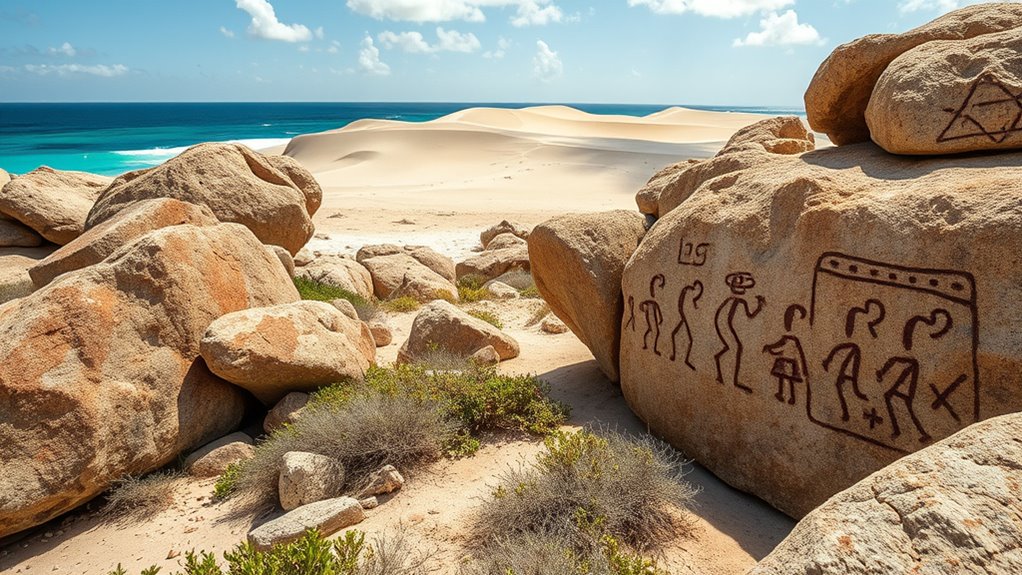
Aruba’s earliest inhabitants were the Arawak Indians from Venezuela, and evidence of their presence can still be seen today. You can find artifacts like red cave drawings, clay pottery, and stone tools that reveal their daily lives. These indigenous people, known as Caquetios, lived in small groups and survived by fishing, hunting small game, and gathering shellfish along the coast. Their settlements were spread across various parts of the island, leaving behind remnants of their culture. You won’t see large structures or fortified towns, as their communities were modest and peaceful. The environment shaped their way of life, and their connection to the land remains evident in archaeological sites. Their legacy provides a glimpse into Aruba’s pre-colonial history, long before European contact. Additionally, their relationship with the land and natural resources underscores the importance of biodiversity for sustaining indigenous lifestyles.
Spanish Influence and Colonial Beginnings
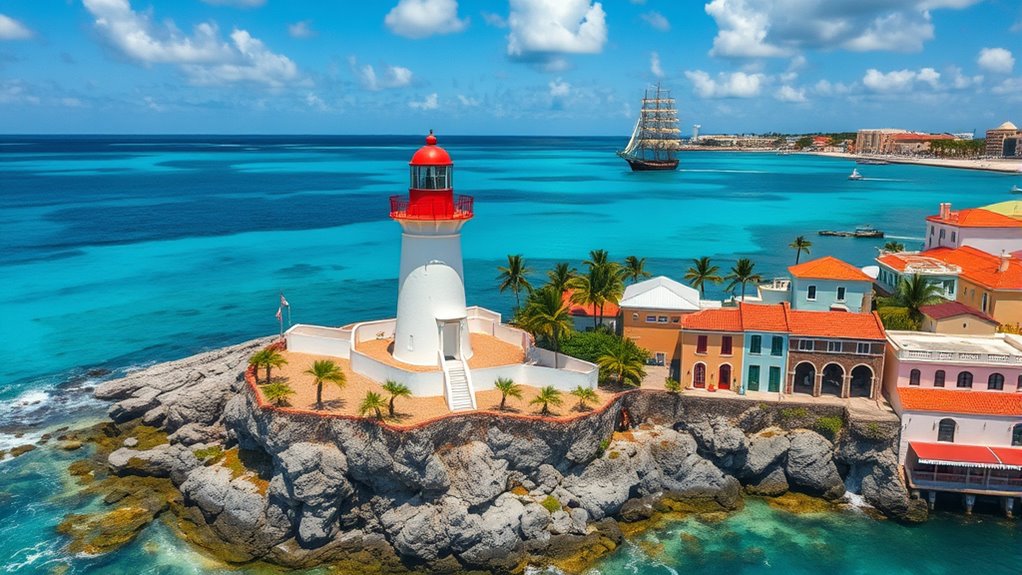
When the Spanish took control of Aruba in 1499, they left behind faint traces through place names and early influence. Although their rule was minimal due to Aruba’s lack of gold and resources, it shaped the island’s early history. You can still see remnants of this period in local names and the island’s initial contact with European powers.
Spanish Control and Names
Spanish control over Aruba began in 1499 when Alonso de Ojeda claimed the island for Spain, and by 1527, it was fully under Spanish rule. During this period, the Spanish left a faint mark through place names and occasional references, but they paid little attention to Aruba’s resources or development. The island’s arid environment and lack of gold meant it wasn’t a priority for colonization. Spanish explorers and settlers referred to the island using names that sometimes persisted in local maps and documents. Although Aruba remained largely neglected, Spanish influence subtly shaped its early identity. Today, remnants of this period, like Spanish place names, serve as reminders of the island’s colonial past and its connection to Spain’s vast empire. The colonial legacy of Spain’s rule can still be seen in some cultural aspects of Aruba today.
Impact of Early Spanish Rule
Although Spanish control over Aruba was relatively brief and largely neglectful, their influence left subtle traces that still echo today. You can see this in the island’s place names, which often retain Spanish origins, hinting at the early explorers’ presence. The Spanish also introduced their language and some cultural elements, blending into Aruba’s diverse heritage. During their rule, they captured and enslaved many Arawak people, affecting the island’s demographics and social fabric. Their neglect meant little development, leaving Aruba as a remote outpost rather than a thriving colony. Still, the Spanish’s brief tenure marked the beginning of European contact, setting the stage for future colonial powers. Their influence, though limited, contributed to Aruba’s complex history and cultural mosaic. Additionally, the Spanish presence laid foundational aspects of the island’s European heritage, which would influence later colonial interactions.
Dutch Rule and Strategic Developments
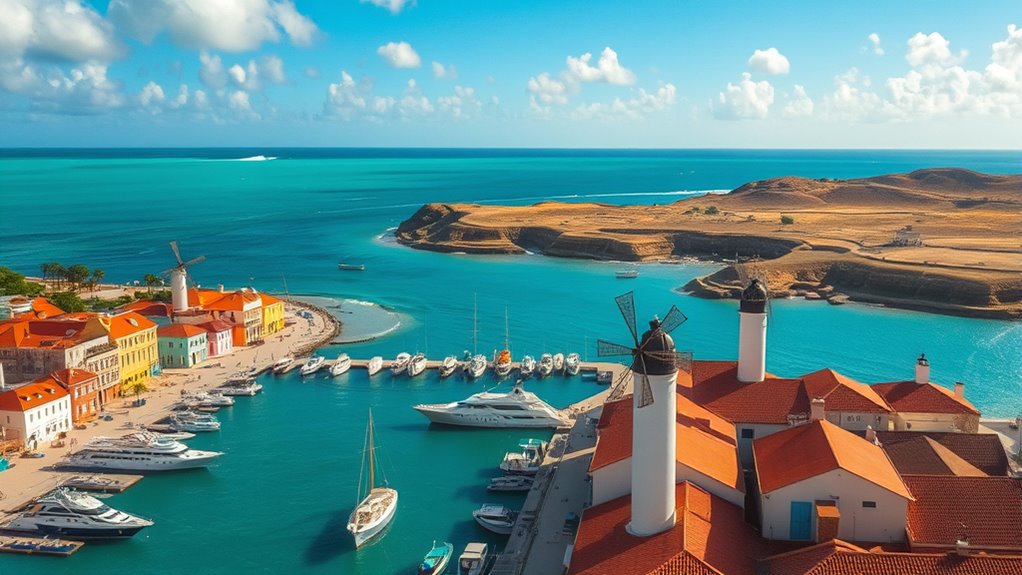
The Dutch took control of Aruba in 1636, recognizing its strategic value for salt production, defense, and trade routes. They quickly established a presence by building Fort Zoutman and the William III Tower in Oranjestad to secure the island. Dutch authorities utilized the remaining indigenous population to develop cattle ranches, which supplied meat across the Caribbean. During the early 19th century, Aruba briefly fell under British occupation from 1805 to 1816 but returned to Dutch control after the Anglo-Dutch Treaty of 1814. The Dutch focused on economic development, encouraging industries like gold mining, phosphate extraction, and aloe cultivation. These strategic efforts laid the groundwork for Aruba’s later economic transformations, positioning the island as a crucial hub within regional and global trade networks. Additionally, the Dutch promoted digital literacy among local populations to support the island’s modernization and economic diversification efforts.
Economic Growth and Industry Shifts
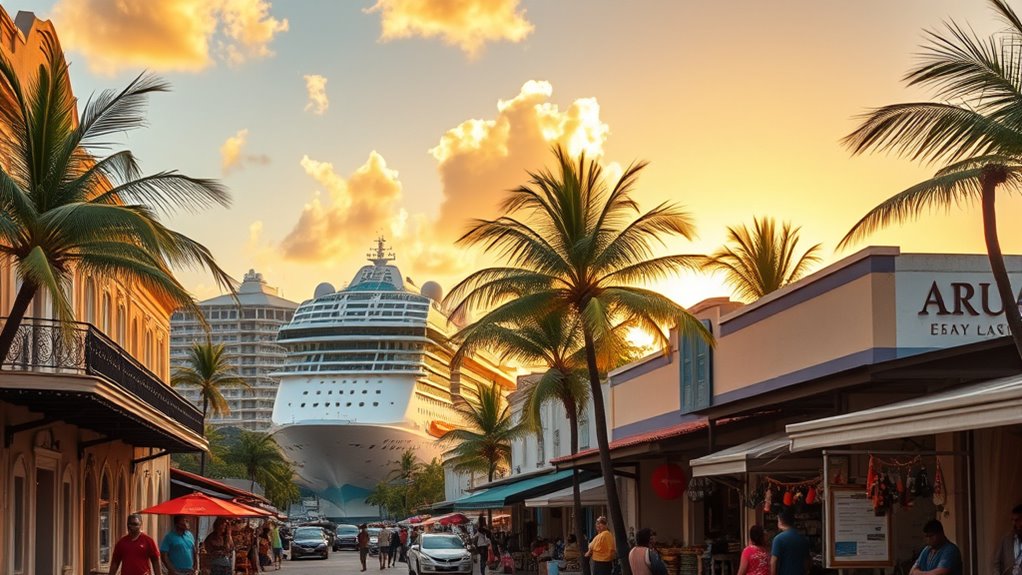
After establishing a strong strategic presence through fortifications and cattle ranching, Aruba began to diversify its economy in the 19th and early 20th centuries. You’ll see that gold mining started near Bushiribana in 1824, providing a temporary boost until 1916. Phosphate extraction also played a role from 1859 but eventually declined. Aloe vera cultivation became a major industry, making Aruba a leading exporter worldwide. The 1920s brought significant change with the establishment of oil refineries like Lago Oil and Transport Company, transforming the island’s economy and living standards. During World War II, the refinery supplied critical fuel to the Allies, highlighting Aruba’s strategic importance. These shifts shifted the island’s focus from traditional agriculture and mining to industrial production and energy, setting the stage for future economic developments. Additionally, the development of industrial infrastructure further supported Aruba’s economic transformation.
Political Progress and Autonomy Movements
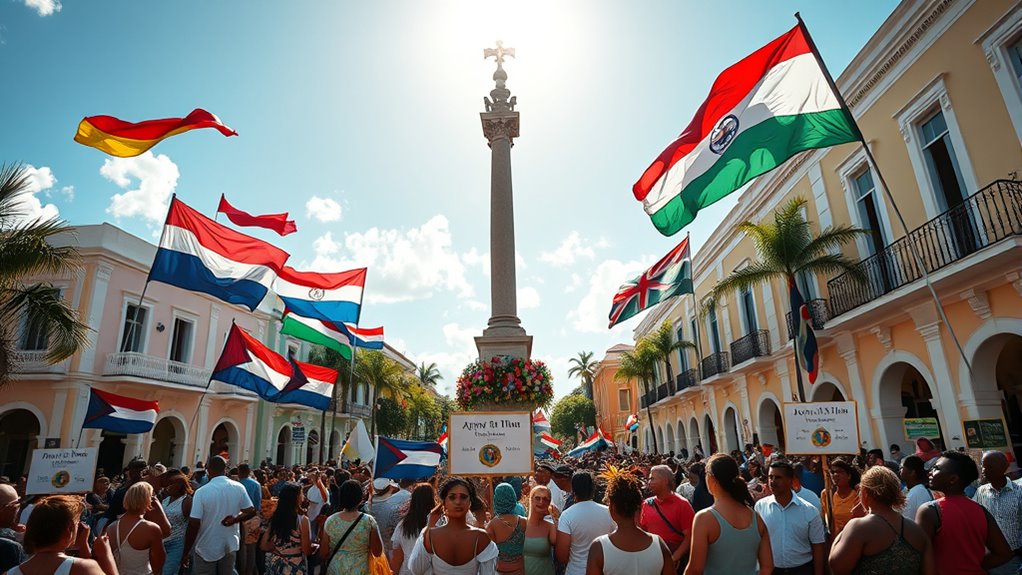
You’ve seen how Aruba’s political landscape has evolved over the years, from becoming part of the Netherlands Antilles to seeking greater self-rule. Movements led by figures like Betico Croes pushed for autonomy, culminating in Aruba gaining its own government in 1986. Today, debates about full independence continue to shape Aruba’s quest for self-determination within the Dutch kingdom. Additionally, ongoing discussions about political AI security vulnerabilities highlight the importance of safeguarding Aruba’s political processes in an increasingly digital world.
Aruba’s Path to Autonomy
Aruba’s journey toward greater autonomy unfolded through a series of determined political movements and negotiations, reflecting the island’s desire for self-governance. In 1954, Aruba became part of the Netherlands Antilles, gaining limited self-rule within the kingdom. By the 1970s, local leaders, particularly Betico Croes, championed independence and greater control over local affairs. Their activism led to increased political awareness and demands for autonomy. In 1983, Aruba signed an agreement with the Netherlands, paving the way for partial self-governance. The following year, Aruba achieved official autonomy in 1986, establishing its own government and constitution. Although a full independence referendum was proposed in 1996, it was postponed at Aruba’s request. Today, Aruba remains an autonomous country within the Kingdom of the Netherlands, balancing self-rule with ties to the Dutch monarchy. The development of self-governance has been central to Aruba’s political evolution and national identity.
Independence Movements and Outcomes
How did Aruba’s pursuit of independence shape its political landscape? You see, the drive for autonomy began in the 1980s, fueled by economic shifts after the oil refinery closed. Aruba’s leaders, led by Betico Croes, pushed for greater self-governance, culminating in the island’s official autonomy in 1986. This movement strengthened local political identity, giving Aruba control over its internal affairs while remaining part of the Kingdom of the Netherlands. The push for full independence gained momentum but was ultimately postponed in 1996, as Aruba prioritized stability and economic growth. Today, Aruba maintains a delicate balance—fully autonomous in many areas, yet still connected to the Netherlands. This pursuit of independence has profoundly shaped its political landscape, fostering a sense of local pride and self-determination. The autonomy process also encouraged the development of local institutions and governance structures that continue to influence Aruba’s political identity today.
Cultural Heritage and Traditions
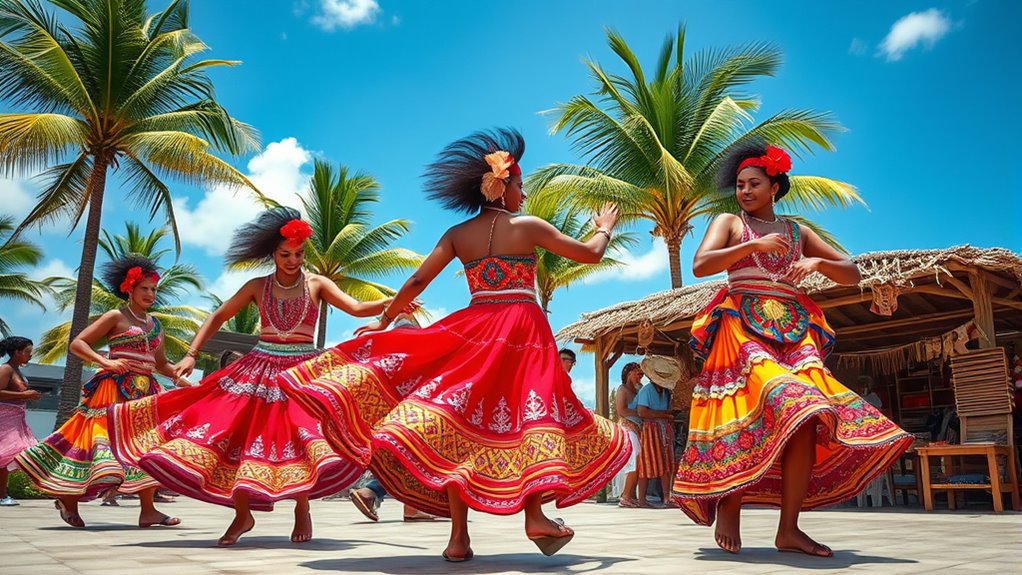
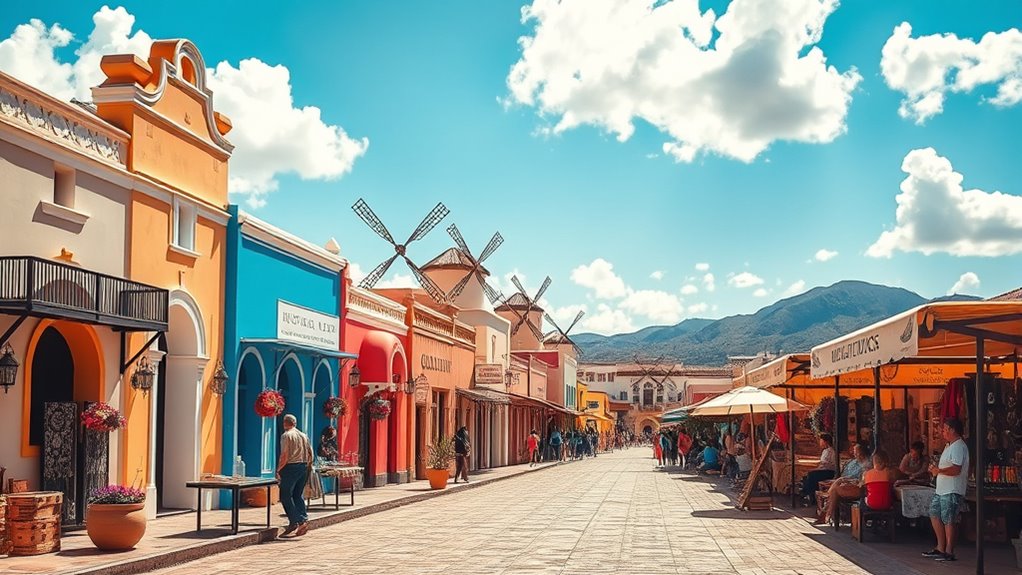
Cultural heritage and traditions in Aruba reflect a vibrant blend of influences from indigenous communities, European colonizers, African roots, and modern immigrants. You’ll see this diversity in your language, music, and festivals, creating a lively, unique atmosphere. Papiamento, a colorful local language, combines elements from Spanish, Dutch, African, and Portuguese. During Carnival, you’ll witness energetic parades, colorful costumes, and lively music rooted in African and European traditions. Traditional dishes like keshi yena and pastechi showcase local ingredients and influences. You’ll also find historic sites like Fort Zoutman, where Aruba’s past is preserved. This rich mix of cultures shapes Aruba’s identity, blending old customs with contemporary celebrations to make your experience authentic and memorable. Additionally, cultural exchange programs have contributed to the ongoing evolution of Aruba’s traditions, fostering a dynamic and inclusive community.
The Rise of Tourism and Modern Identity
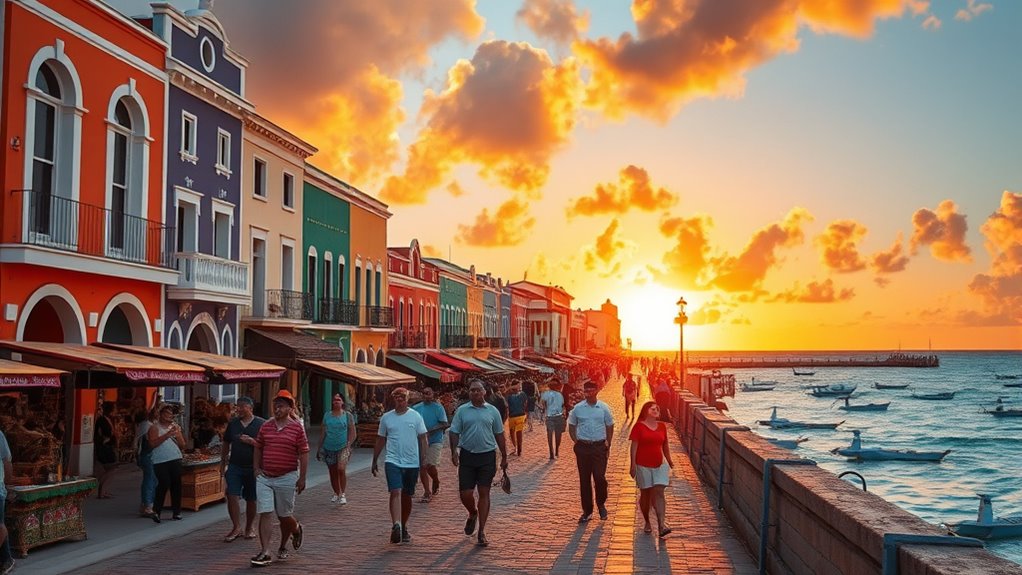
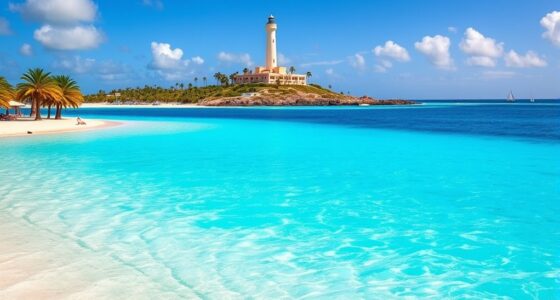
The rise of tourism has transformed Aruba into a vibrant destination renowned for its crystal-clear beaches, lively festivals, and welcoming atmosphere. You’ll notice how tourism reshaped the island’s economy, shifting focus from industry to hospitality, entertainment, and cultural experiences. Resorts, casinos, and cruise ships now line the coast, attracting visitors from around the world. This influx of travelers has encouraged the preservation and celebration of Aruba’s diverse heritage, blending Dutch, Spanish, African, and indigenous influences. You’ll find modern attractions alongside historic sites, creating a unique identity rooted in both tradition and innovation. As tourism flourished, Aruban culture evolved, emphasizing hospitality, environmental sustainability, and a sense of community that continues to define the island’s modern character. Additionally, the increasing influence of technological advancements has played a role in promoting Aruba as a forward-thinking destination, integrating digital innovations into its tourism and cultural sectors.
Celebrations, Festivals, and Cultural Expressions
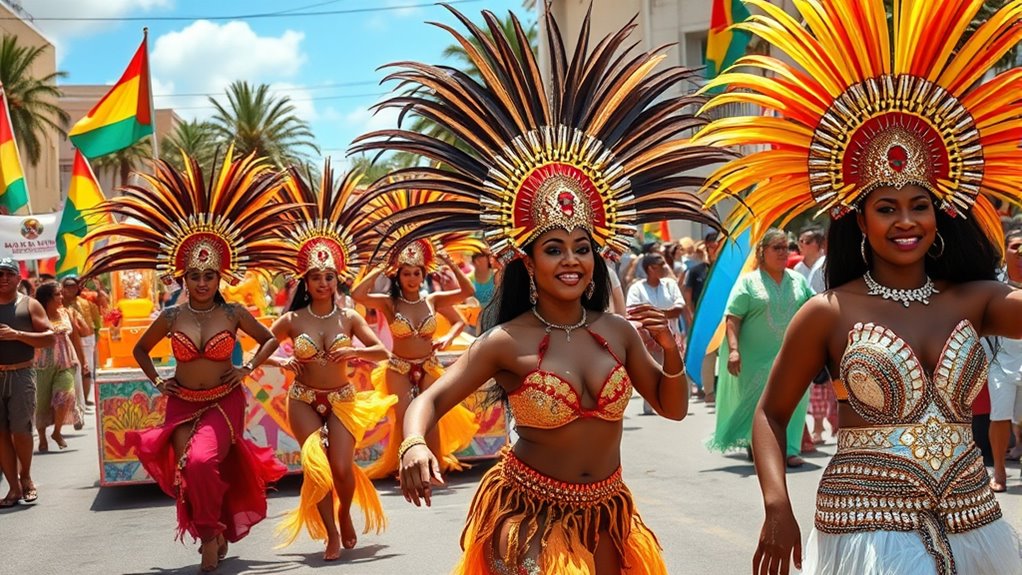
Celebrations and festivals are at the heart of Aruba’s vibrant community life, reflecting its rich blend of traditions and diverse influences. You’ll experience lively events like Carnival, where colorful parades, music, and dance showcase African, European, and indigenous roots. The Dera Gai festival highlights local costumes and storytelling, emphasizing Aruba’s cultural identity. Religious celebrations like Good Friday and the Feast of San Juan incorporate Catholic traditions with local expressions. These events bring people together, preserving Aruba’s history and fostering community pride.
| Festival/Event | Cultural Significance |
|---|---|
| Carnival | Celebrates freedom and history with vibrant parades |
| Dera Gai | Preserves storytelling and local costumes |
| Feast of San Juan | Honors Catholic traditions with music and dance |
| Aruba’s Independence Day | Celebrates national identity and heritage |
Frequently Asked Questions
What Are the Origins of Aruba’s Native Languages and Dialects?
You’ll find that Aruba’s native language, Papiamento, blends elements from African, Spanish, Portuguese, Dutch, and indigenous Arawak dialects. This creole language developed through contact among various cultures, reflecting the island’s diverse history. It’s spoken widely by locals and serves as a symbol of Aruban identity. The language’s roots trace back to the indigenous Caquetio people and later interactions with European colonizers, creating a unique linguistic tapestry.
How Did Aruba’s Indigenous Practices Influence Modern Local Traditions?
Your indigenous practices shape Aruba’s modern traditions through music, dance, and crafts that echo Arawak roots. You see these influences in the vibrant Carnival celebrations, traditional costumes, and storytelling that preserve Caquetios heritage. You experience it in local cuisine, with ingredients and recipes passed down through generations. You carry forward their connection to nature, fishing, and community, ensuring that Aruba’s indigenous spirit remains alive in your daily life and cultural expressions.
What Role Did Aruba Play in Regional Piracy and Maritime Trade?
You should know Aruba played a significant role in regional piracy and maritime trade, especially during Spanish neglect. Pirates and smugglers used the island’s strategic location to hide and conduct illicit activities, disrupting official trade routes. Its natural harbors and remote position made it an ideal base for pirates, which shaped its reputation and influenced the development of local defenses and trade practices in the Caribbean.
How Has Aruba’s Demographic Composition Evolved Over Centuries?
You see, Aruba’s demographic makeup has changed a lot over centuries. Initially, Arawak Indians lived there, surviving through fishing and gathering. When Europeans arrived, they brought enslaved Caquetios and later Dutch settlers, who established cattle ranches and built defenses. Over time, waves of immigrants from Africa, Europe, and the Caribbean arrived, creating a diverse community. Today, more than 90 nationalities live on the island, shaping its vibrant, multicultural identity.
What Are Unique Archaeological Sites Revealing Aruba’s Ancient History?
You’ll find Aruba’s archaeological sites like cave paintings and pottery that tell the tale of its earliest inhabitants. Red cave drawings and stone tools reveal the rich legacy of the Arawak Indians, showing how they lived off fishing and gathering. These sites are like windows into the past, offering clues about indigenous life and culture before European contact, proving that Aruba’s history is woven deep into its landscape.
Conclusion
Your journey through Aruba’s rich history shows how its vibrant culture and resilient spirit have shaped its identity. Like a colorful tapestry woven over centuries, each thread—whether Spanish, Dutch, or indigenous—adds depth and beauty. As you explore its festivals and traditions, remember that Aruba’s story is a living mosaic, constantly evolving yet proudly rooted in its past. Embrace this vibrant island, where history and culture blend seamlessly into a mesmerizing, enduring masterpiece.