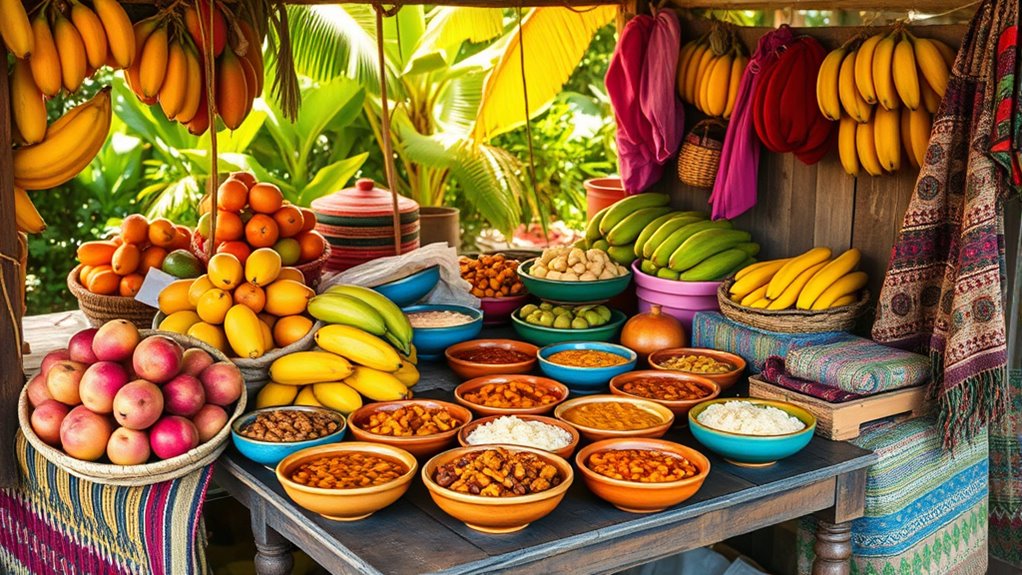

Belizean cuisine is a vibrant mix of indigenous, African, Yucatán, Caribbean, and European influences, creating a rich culinary tapestry. You’ll find iconic dishes like rice and beans with stewed chicken, street foods such as fry jacks and garnaches, and plenty of fresh seafood from coastal communities. Tropical fruits, herbs, and regional flavors play a key role in every meal. To discover more about Belize’s unique food traditions and regional specialties, continue exploring.
Key Takeaways
- Belizean cuisine reflects diverse cultural influences, including Mayan, Garifuna, Creole, European, and regional Caribbean traditions.
- Key ingredients include cassava, recado pastes, habanero peppers, tropical fruits, and coconut milk, shaping authentic flavors.
- Popular dishes feature rice and beans with stew chicken, fry jacks, garnaches, panades, and seafood specialties like ceviche.
- Coastal areas emphasize fresh seafood preparations such as conch fritters, fried fish, and lobster, highlighting maritime heritage.
- Belizean culinary customs promote communal dining, street food culture, and regional flavor profiles that celebrate cultural diversity.
The Diverse Cultural Roots of Belizean Cuisine
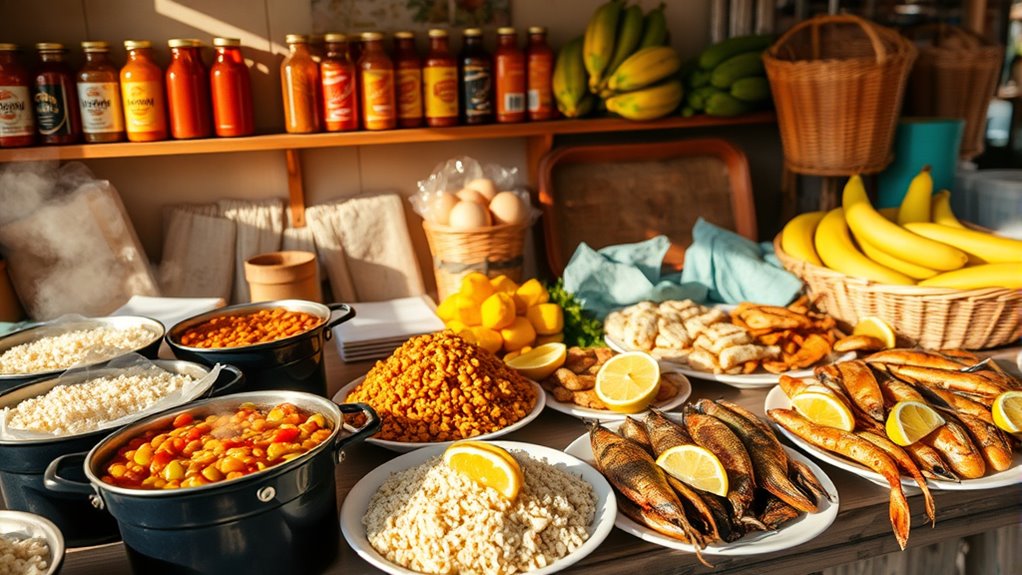
Belizean cuisine reflects a rich tapestry of cultural influences that have shaped its flavors and ingredients over centuries. You’ll notice Mayan roots in staples like maize, beans, and cassava, which feature prominently in traditional dishes like tamales and caldo. Garifuna culture adds unique elements such as cassava bread and seafood preparations, highlighting the importance of coastal ingredients. The Creole and Mestizo communities introduce seasoned stewed meats, often flavored with recado and black recado pastes, giving dishes their distinctive taste. British colonial history also leaves its mark, blending European techniques and creating fusion dishes that set Belize apart from other Latin American cuisines. This diverse heritage makes Belizean food vibrant, flavorful, and uniquely its own. Resources and Tools can be invaluable for exploring regional culinary traditions and understanding their historical significance.
Essential Ingredients That Define Belizean Flavors
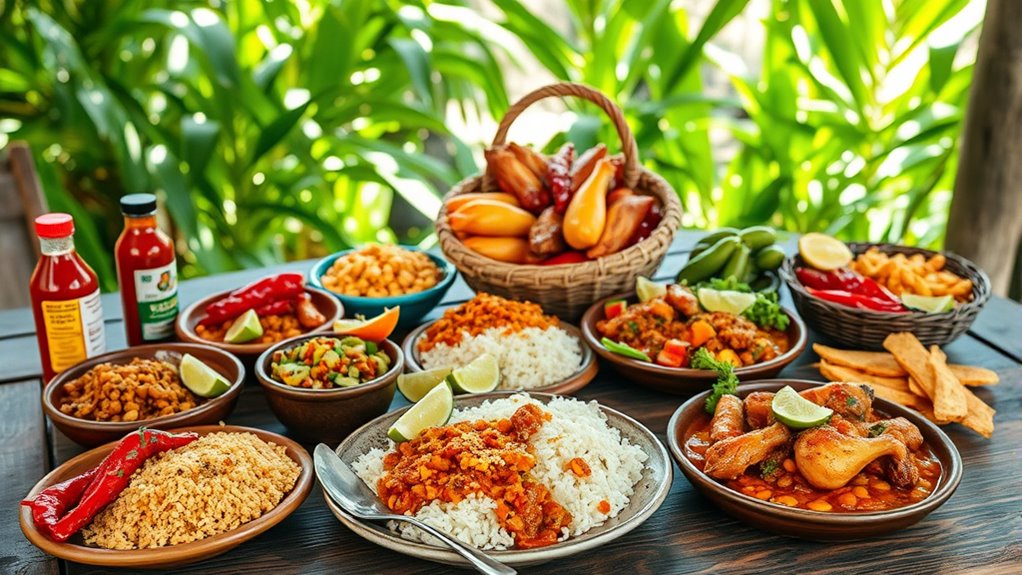
The vibrant flavors of Belizean cuisine stem from a core set of ingredients that give its dishes their distinctive taste and character. You’ll find these staples woven into many traditional recipes, creating bold and memorable flavors. Cassava, used in bread and tamales, is essential for texture and cultural authenticity. Recado and black recado—annatto-based pastes that season stews—impart a rich, earthy flavor and vibrant color. Habanero peppers—these fiery peppers—add heat and depth, especially in hot sauces and ceviche. Additionally, understanding the individual responses of children to divorce can help parents better support their emotional needs during family changes. Other key ingredients include tropical fruits, coconut milk, and a variety of fresh herbs. Together, they define Belizean flavors, making each dish uniquely vibrant and flavorful.
Classic Dishes That Capture Belize’s Culinary Spirit
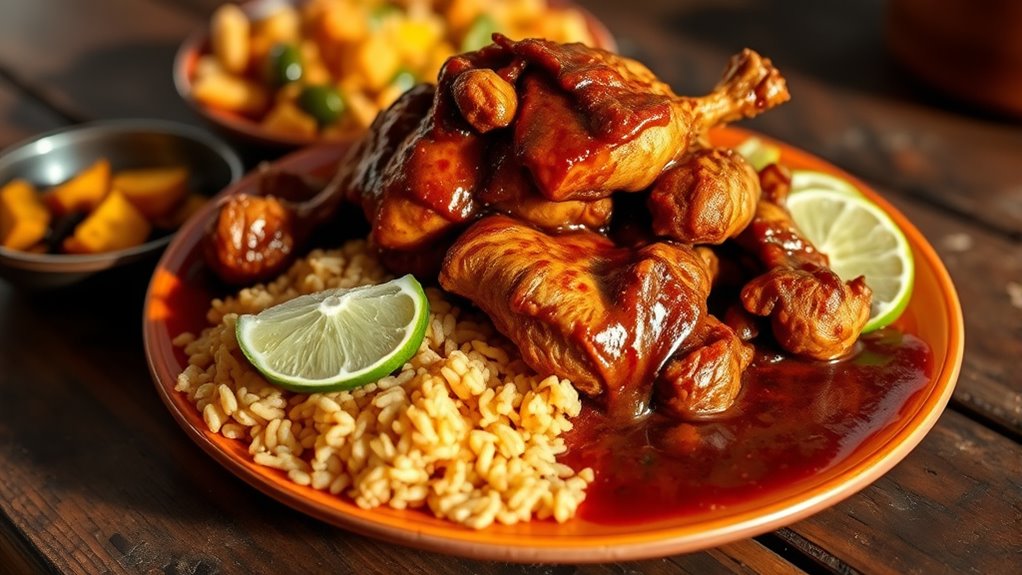
To truly experience Belize’s culinary spirit, you should taste its signature dishes that blend indigenous ingredients with cultural influences. One of the most iconic is rice and beans with stew chicken, a hearty dish seasoned with recado, coconut milk, and spices, representing the national flavor. Fry jacks are a popular breakfast, crispy fried dough often served with sweet or savory toppings. Ceviche showcases Belize’s coastal bounty—marinated seafood with lime, onions, and habanero peppers, served with tortilla chips. Tamales, wrapped in plantain leaves and filled with chicken or beans, reflect Mayan roots. Street foods like panades and garnaches highlight local flavors with fried corn pastries topped with beans, cheese, and salsa. These dishes embody Belize’s vibrant culinary identity.
The Structure of Meals and Traditional Eating Customs

You’ll notice that Belizean meals follow a daily pattern, with lunch being the main and most substantial meal. Breakfast often features fried dough, stewed meats, or tortillas, while snacks and lighter foods fill the gaps between main meals. Traditional customs emphasize sharing these meals with family and friends, reflecting the community’s warm and social spirit. Embracing cultural practices in meal sharing fosters stronger social bonds and reinforces community identity.
Daily Meal Patterns
In Belize, daily meal patterns reflect a vibrant blend of cultural traditions and regional influences, shaping how people eat throughout the day. You’ll find that breakfast often includes fry jacks, stewed chicken with refried beans, or flour tortillas to start the morning. Lunch is the largest meal, typically featuring rice and beans with stewed meat, complemented by sides like fried plantain or cole slaw. Dinner tends to be lighter but still flavorful, with seafood dishes such as ceviche or fried fish. The Belizean schedule also incorporates snacks like meat pies or garnaches, enjoyed throughout the day. To elevate your culinary experience, consider these key aspects:
- Emphasis on hearty midday meals
- Incorporation of seafood and traditional ingredients
- Preference for flavorful, spice-infused dishes
Traditional Belizean Dining Customs
Belizean dining customs reflect a lively and community-oriented approach to meals, emphasizing shared experiences and regional flavors. When you sit down to eat, expect meals to be social events, often with family or friends gathering around a central table. Lunch is the main meal, usually hearty and filling, featuring rice and beans with stewed or grilled meats and fresh salsas. Breakfast typically includes fry jacks, stewed chicken, or tortillas. You’ll notice that dishes are seasoned with recado, hot sauces, and tropical fruits, adding vibrant flavors. Street foods like garnaches and panades are common snacks, enjoyed while standing or walking. Beverages like Belikin beer or fresh fruit drinks complement the meal, fostering a relaxed, communal atmosphere. Belizean dining celebrates togetherness and regional culinary pride. Incorporating regional flavors and traditional seasonings enhances the authentic experience.
Coastal and Island Seafood Specialties
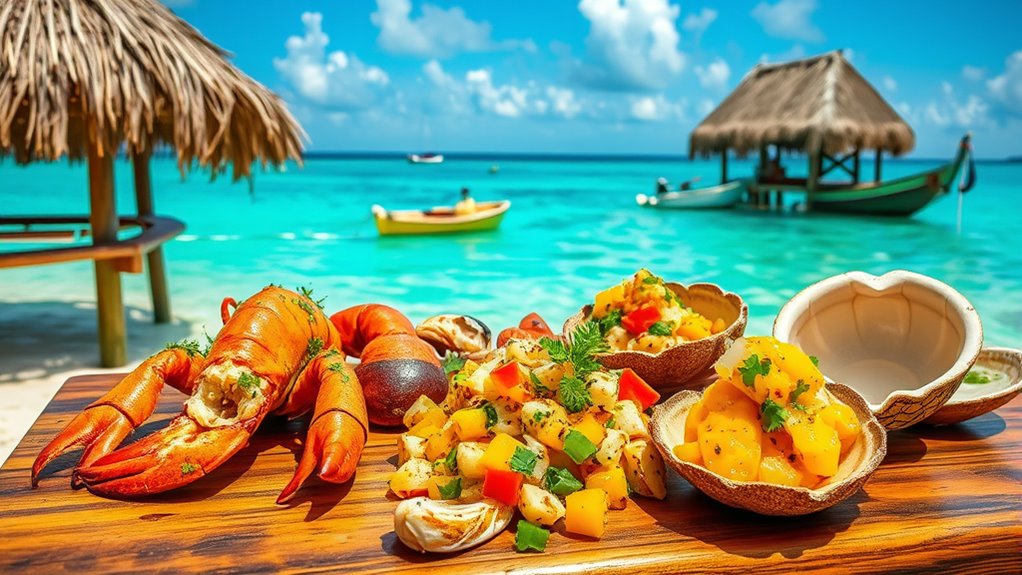
You’ll find that Belize’s coastal and island communities take pride in their fresh seafood varieties like conch, fish, and lobster. These ingredients feature prominently in traditional dishes such as ceviche, fried fish, and conch fritters. By pairing seafood with local staples like cassava bread and rice and beans, Belizean cuisine creates vibrant, flavorful coastal specialties. Additionally, the use of local ingredients highlights the importance of sustainable fishing practices in preserving Belize’s culinary heritage.
Fresh Seafood Varieties
Coastal and island communities in Belize boast a vibrant array of fresh seafood that plays a central role in local cuisine. You’ll find an impressive variety of catches, prepared in ways that highlight Belize’s rich maritime resources.
- Conch: Often served as fritters or ceviche, conch is a staple, prized for its tender texture and mild flavor.
- Shrimp: Used in salads, stews, and grilled dishes, Belizean shrimp are known for their sweetness and freshness.
- Octopus: Frequently featured in salads or stews, octopus showcases the diverse seafood bounty available along the coast.
These seafood varieties are typically paired with traditional staples like cassava bread or rice and beans, creating flavorful and authentic coastal meals. Additionally, the abundance of seafood in Belize reflects the sustainable fishing practices often employed by local communities to preserve these vital marine resources.
Traditional Coastal Dishes
Seafood takes center stage in Belize’s coastal and island cuisine, showcasing the country’s rich maritime bounty. You’ll find dishes like ceviche, where fresh shrimp, conch, or fish are marinated in lime juice, mixed with onions, cilantro, and habanero peppers, then served with crispy tortilla chips. Fried fish and conch fritters are popular street foods, often enjoyed with spicy sauces. Seafood is usually paired with traditional staples like cassava bread or rice and beans, adding hearty textures to lighter dishes. You might also encounter ceviche variations with octopus or lionfish, reflecting local adaptations. Hearty soups like cowfoot or chilmole incorporate coastal ingredients, highlighting Belize’s diverse seafood heritage and indigenous culinary influences.
Key Herbs, Spices, and Agricultural Staples

Belizean cuisine relies heavily on a vibrant array of herbs, spices, and agricultural staples that define its distinctive flavors. These ingredients form the backbone of many traditional dishes. You’ll find that annatto seeds (achiote) give dishes a rich color and subtle earthiness, while recado and **black recado** provide a unique, tangy spice paste used in stews and soups. **Habanero peppers add fiery heat and depth to hot sauces and marinades. As for staples, maize and beans—including red, black, and pinto varieties—are essential for hearty meals. Tropical fruits like mango, papaya, and guava balance savory flavors with sweetness. Finally, coconut milk enriches rice dishes and stews, creating the creamy textures characteristic of Belizean cuisine. Additionally, the use of traditional farming methods** helps sustain these ingredients and preserve Belize’s culinary heritage.
Street Food and Popular Snacks in Belize
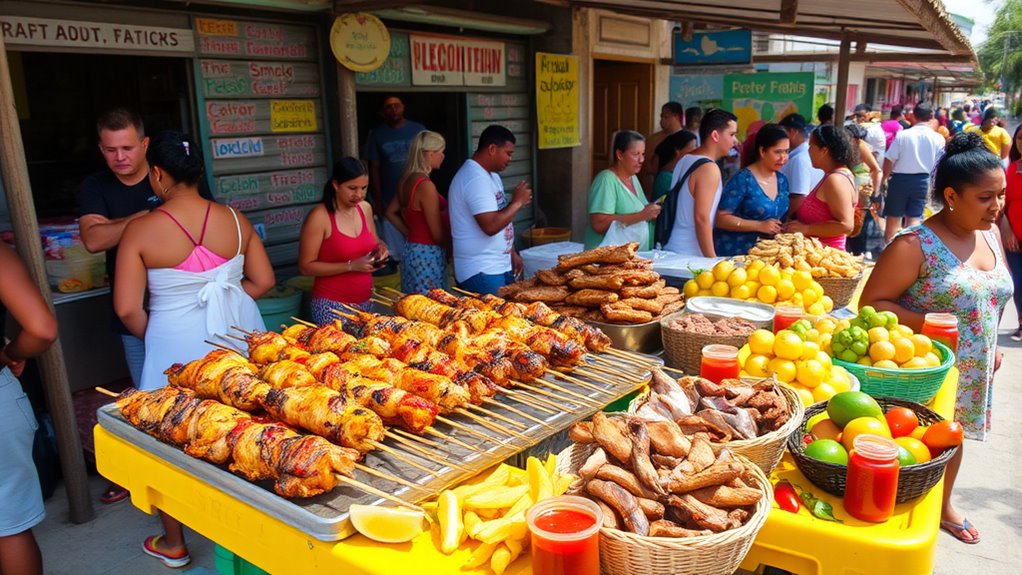
Street food and snacks play a vibrant role in Belize’s culinary scene, offering quick, flavorful bites that reflect the country’s diverse cultural influences. You’ll find dishes like fry jacks, crispy corn tortillas, and savory panades filled with fish or beans. Popular snacks include garnaches topped with beans, salsa, and cheese, perfect for on-the-go eating. Seafood features prominently—ceviche marinated with lime and habanero, conch fritters, and fried fish. Here’s a glimpse of Belize’s street food scene:
| Snack | Main Ingredients | Typical Pairings |
|---|---|---|
| Fry Jacks | Fried dough, sweet or savory | Jam, honey, eggs |
| Garnaches | Tortillas, beans, cheese | Hot sauce, cabbage salad |
| Panades | Corn dough, fish or beans | Salsa, lime |
| Ceviche | Seafood, lime, habanero | Tortilla chips |
| Conch Fritters | Conch meat, batter | Spicy dip |
Additionally, the preparation of street foods often reflects traditional culinary techniques that have been passed down through generations, emphasizing fresh ingredients and bold flavors.
The Role of Tropical Fruits and Sweets in Belizean Cooking
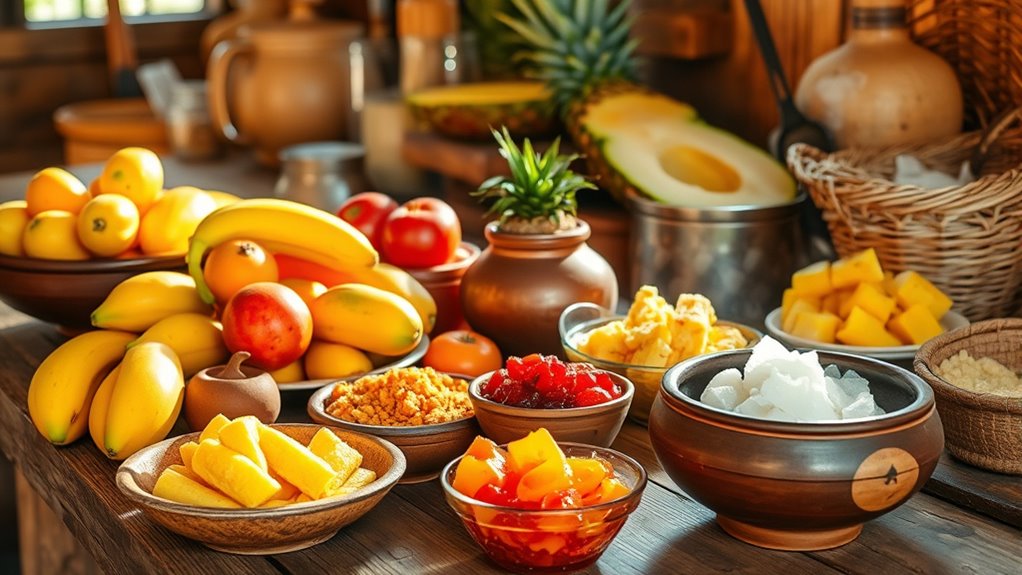
Have you ever noticed how tropical fruits and sweets add vibrant flavor and freshness to Belizean dishes? They play a pivotal role in balancing savory flavors and creating memorable desserts. Here are key aspects:
Tropical fruits and sweets bring vibrant flavor and freshness to Belizean cuisine.
- Fresh Fruit Incorporation: Mango, guava, and soursop are often served fresh, added to salads, or blended into drinks, enhancing dishes with natural sweetness and acidity.
- Desserts and Sweets: Fruits like papaya and pineapple are used in puddings, jams, and candies, providing a tropical twist to traditional treats.
- Sweet Sauces and Marinades: Fruits like mango and passionfruit are transformed into sauces, complementing seafood and meats for a sweet and tangy flavor profile.
- Incorporating natural materials such as coconut and banana leaves in presentation and cooking methods further emphasize Belize’s tropical bounty and enrich its culinary landscape with vibrant, natural flavors.
Fusion Flavors and Regional Culinary Influences

The vibrant flavors created by Belize’s tropical fruits and sweets set the stage for a rich tapestry of regional influences that shape the country’s culinary identity. You’ll notice how Mayan, Garifuna, Creole, Mestizo, and British traditions meld into unique fusion dishes. For example, the use of recado spice pastes and cassava bread reflects indigenous roots, while British colonial techniques introduce fusion elements like meat pies and stewed meats. Coastal communities blend Caribbean seafood flavors with local ingredients, creating dishes like ceviche and conch fritters. You’ll also find influences from neighboring Yucatán, evident in slow-roasted pork and regional soups. Additionally, the cultural exchange that has occurred over centuries continues to influence Belizean cuisine, leading to innovative dishes that honor both tradition and modern tastes. This culinary mix offers diverse flavors, showcasing Belize’s history of cultural exchange and regional adaptations that make its cuisine truly distinctive.
Frequently Asked Questions
How Has British Colonial History Influenced Modern Belizean Cuisine?
British colonial history influences your Belizean cuisine through fusion dishes and cooking techniques. You’ll notice elements like baked goods, pies, and certain cooking methods borrowed from British traditions. British spices and ingredients sometimes appear in local recipes, and the use of tea and beer reflects colonial influence. This blend creates a unique culinary identity that combines indigenous flavors with colonial traditions, enriching your Belizean food experience.
What Are the Traditional Methods of Preparing Belizean Seafood Dishes?
You typically prepare Belizean seafood dishes by marinating seafood like conch, shrimp, or fish in lime juice for ceviche, then serving it chilled with onions, cilantro, and habanero peppers. Grilling or frying seafood is common for main dishes, often seasoned with recado or black recado pastes. You might also use coconut milk or spices to enhance flavors, and serve seafood alongside cassava bread, rice, or plantains for a traditional touch.
Which Tropical Fruits Are Most Commonly Used in Belizean Desserts?
You probably think Belizean desserts are all about boring pastas and chocolates, but think again! The tropical fruits stealing the show are mango, soursop, papaya, and guava. These juicy, vibrant flavors jazz up puddings, drinks, and sweets, turning every bite into a tropical paradise. So next time you indulge, remember Belize’s secret weapon: nature’s colorful, sweet, and tangy fruits, making every dessert a lively fiesta.
How Do Belizeans Incorporate Indigenous Herbs Into Everyday Cooking?
You incorporate Belizean indigenous herbs like hoja santa, epazote, and avocado leaf into everyday cooking by adding them to soups, stews, and rice dishes for enhanced flavor. These herbs are often used fresh, chopped, or whole, infusing dishes with aromatic notes. For example, you might add hoja santa to chicken stews or epazote to bean dishes, enriching the traditional flavors and giving your meals that authentic Belizean touch.
What Are the Regional Variations in Belizean Culinary Traditions?
Imagine Belizean cuisine as a vibrant mosaic, each region adding its unique tile. Coastal areas emphasize seafood like ceviche and fried fish, rich in coastal flavors. The interior regions showcase hearty stews with recado and beans, reflecting agricultural roots. Maya-influenced highland dishes incorporate maize and cacao. These regional variations blend seamlessly, creating a culinary tapestry that celebrates Belize’s diverse geography and cultural history.
Conclusion
Belizean cuisine is a vibrant tapestry of cultures, flavors, and traditions, offering an authentic culinary experience. You might think it’s too diverse or complex to try, but embracing these flavors connects you to Belize’s rich history and community. Whether you’re savoring street food or homemade dishes, you’ll discover that its true magic lies in its warmth and variety. Immerse yourself—you’ll find that Belizean food isn’t just delicious, it’s a celebration worth experiencing firsthand.