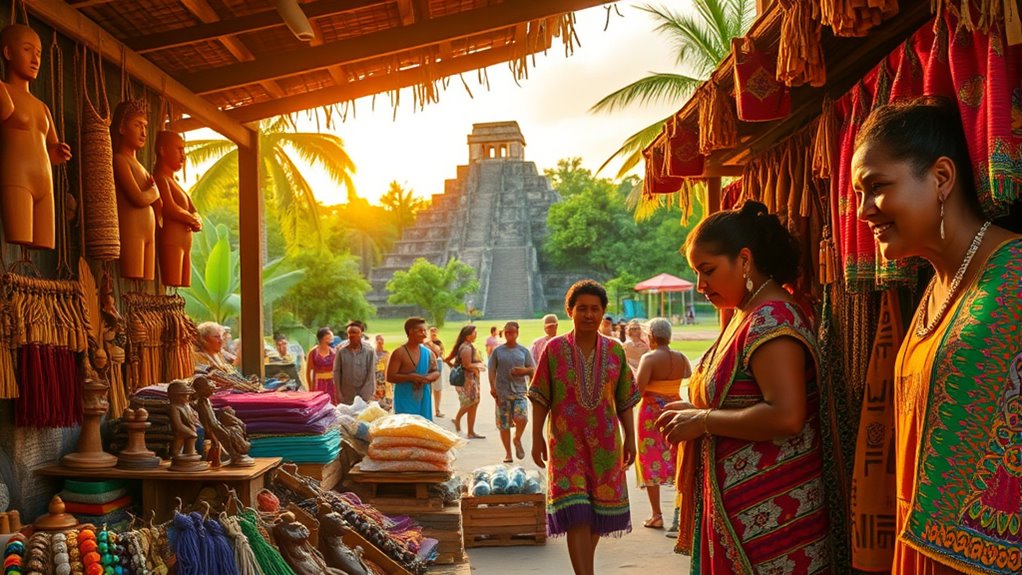

Belize’s history and culture blend ancient Mayan roots with colonial influences, shaped by early indigenous societies, Spanish encounters, and British settlements. You’ll find remnants of Mayan achievements in archaeological sites, while modern Belize celebrates a vibrant mix of Creole, Mestizo, African, and indigenous traditions. The country’s natural wonders, like coral reefs and rainforests, are key to its identity today. Exploring further reveals how Belize continues to honor its diverse heritage and resilience.
Key Takeaways
- Belize has a rich indigenous Mayan heritage with advanced ancient cities like Caracol and Xunantunich.
- It was colonized by the British, mainly for timber resources, after defeating Spanish claims in 1798.
- Belize gained independence in 1981, with a diverse culture blending Mayan, Spanish, British, African, and Creole influences.
- The country’s natural landscapes, including the Belize Barrier Reef and rainforests, are central to its cultural identity and eco-tourism.
- Belize’s history includes resilient resistance to colonial and foreign pressures, shaping its modern national pride and cultural preservation efforts.
The Ancient Maya and Early Indigenous Roots

The Ancient Maya civilization laid the foundation for Belize’s rich cultural heritage, inhabiting the region from around 1500 BC to 1200 BC and flourishing until approximately the 10th century AD. You can see their legacy in the impressive archaeological sites scattered across the country, like Caracol, Xunantunich, and Lamanai. These sites reveal advanced knowledge of astronomy, architecture, and agriculture. The Maya developed complex hieroglyphic writing, built grand cities, and created intricate art and pottery. Their society was organized into city-states, each ruled by a king, and they engaged in trade, warfare, and religious rituals. The Maya’s resilience and innovations laid the groundwork for Belize’s diverse cultural identity, which continues to honor their traditions and heritage today. Understanding ancient civilizations provides deeper insight into the enduring influence of Maya culture on Belize’s identity.
European Contact and Colonial Foundations
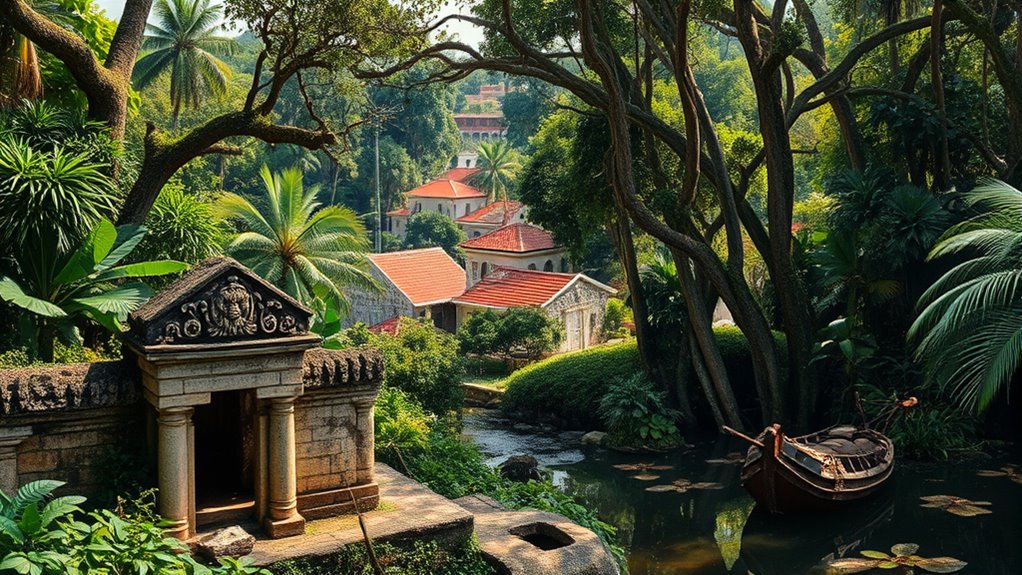
When Europeans arrived, the Mayan communities fought back against Spanish incursions, resisting colonization efforts for decades. Despite these efforts, British settlers known as the Baymen established themselves along the coast in the 17th century, claiming territory through treaties and conflict. Their presence eventually led to British control, shaping Belize’s colonial foundations and ongoing territorial disputes. The influence of British colonization also introduced European contact and colonial foundations, which significantly impacted the region’s social and political development.
Mayan Resistance Efforts
Despite European efforts to colonize Belize, the Maya fiercely resisted, shaping a history of prolonged conflict and resilience. When the Spanish arrived in 1508, you fought back through guerrilla tactics and uprisings, especially in 1546, when you expelled the Spanish temporarily. Your communities hid in dense jungles and caves, such as Chechem Ha, to evade capture and preserve your culture. Even as the Spanish control waned, your resistance persisted through ongoing skirmishes and strategic retreats. You adapted to colonial pressures by maintaining traditional practices and forging alliances. Your resilience kept your identity alive despite efforts to suppress it. This fierce resistance not only delayed colonization but also laid the foundation for your enduring cultural legacy in Belize today. Cultural resilience played a crucial role in preserving your rich traditions and identity throughout colonial challenges.
British Settlement and Claims
Did European powers truly understand the significance of Belize’s strategic location and rich resources? When the British arrived around 1638, they found a land overlooked by Spain but essential for its timber and access. You should know that:
- British settlers, called Baymen, began logging and establishing settlements along the coast.
- Despite Spanish protests, British expansion grew in the 1650s, with attacks and resistance from the Maya.
- The 1798 Battle of St. George’s Caye marked Britain’s decisive victory over Spain, ending Spanish claims.
- In 1862, Belize officially became a British Crown colony, known as British Honduras.
- British control relied on a system favoring land and trade, often using enslaved African labor until emancipation in 1838.
- European colonial strategies played a crucial role in establishing and maintaining British dominance in the region.
This foundation shaped Belize’s colonial identity and future independence.
The Rise of British Settlement and Economic Development
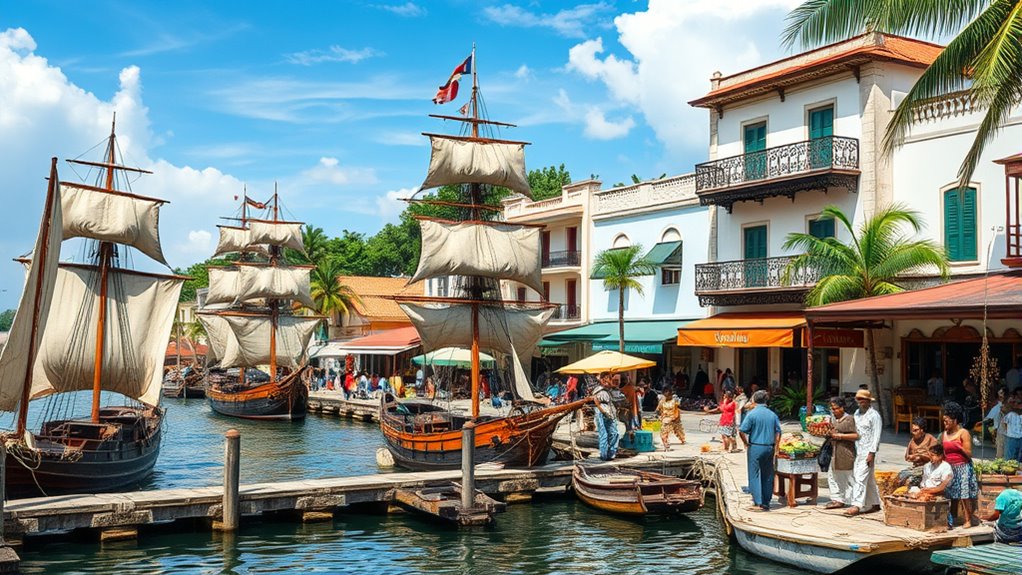
You can see how early British settlers, mainly pirates turned loggers, established a foothold along Belize’s coast around 1638. As the logging industry grew, it fueled economic development but also intensified territorial disputes with Spain and Guatemala. These conflicts shaped Belize’s colonial history and ongoing border tensions today. Recognizing the importance of professional help can be crucial for communities dealing with ongoing disputes and social tensions related to these historical conflicts.
Early British Arrivals
How did the arrival of British settlers mark the beginning of Belize’s colonial economy? When they arrived around 1638, they started exploiting the region’s natural resources, particularly the dense forests. As you explore this history, you’ll notice key developments:
- British settlers, mainly pirates turned loggers, established small settlements along the coast
- They focused on harvesting mahogany and cedar, essential for trade
- The settlement grew despite Spanish protests and occasional conflicts
- The Battle of St. George’s Caye in 1798 confirmed British dominance
- By 1862, Belize officially became a British Crown colony, shaping its economic foundation
- Resource extraction became the backbone of Belize’s early colonial economy, influencing its development for decades
These early arrivals set the stage for Belize’s future economic activities, driven largely by resource extraction and colonial enterprise.
Logging Industry Growth
The growth of Belize’s logging industry became the backbone of its colonial economy as British settlers expanded their operations along the coast. You see, the Baymen, mostly English and Scottish pirates turned entrepreneurs, capitalized on the abundant mahogany and cedar trees. They established sawmills and organized large-scale logging camps, exporting timber to Britain and other markets. This industry fueled economic growth and attracted more settlers, reinforcing British influence. As logging thrived, it shaped Belize’s social structure, creating a plantation-style economy dependent on enslaved African labor until emancipation. The industry also prompted infrastructure development, like roads and ports, to facilitate timber exports. Overall, logging became essential to Belize’s economic foundation, laying the groundwork for colonial prosperity and increasing British control over the region. Additionally, the industry contributed to the development of spiritual energy among the workers, as community bonds and cultural practices provided resilience amid challenging labor conditions.
Territorial Disputes Persist
Despite British settlement solidifying along the Belize coast, territorial disputes with neighboring countries, especially Guatemala, continued to challenge its sovereignty. You’ll see ongoing tensions, as Guatemala claims Belize’s territory based on historical reasons. These disputes influence diplomacy, border security, and regional stability. Key points include:
- Guatemala’s repeated claims and refusal to recognize Belize’s independence initially.
- The 1859 treaty, which aimed to settle disputes but left room for future disagreements.
- Diplomatic efforts, including OAS-mediated negotiations and appeals to the International Court of Justice.
- The presence of Belizean and Guatemalan military forces along contested borders.
- Ongoing calls from Guatemala to revisit territorial agreements, despite Belize’s sovereignty being internationally recognized.
- The territorial disputes continue to impact Belize’s regional relations and national identity today.
Pathway to Sovereignty and Post-Independence Challenges

Belize’s journey to sovereignty was marked by determined political activism and strategic negotiations, culminating in independence from Britain on September 21, 1981. You play a role in this history by witnessing the rise of nationalist leaders like George Cadle Price, who pushed for self-rule and fostered a sense of identity beyond colonial ties. The push for independence involved diplomatic efforts, negotiations over territorial disputes, and gaining international support. Even after independence, you see Belize face challenges like the Guatemalan claim, which threatened its sovereignty, and economic struggles from the legacy of colonialism. You also observe the resilience of Belizeans, who worked to build a unified nation, balancing multicultural identities while strengthening institutions and asserting their independence on the global stage. The development of homegrown leadership played a crucial role in maintaining national unity and fostering a sense of pride among citizens.
Political Evolution and Social Transformations

Following Belize’s push for independence and the establishment of its sovereignty, the nation’s political landscape continued to evolve through shifts in leadership and party dominance. You see, the People’s United Party (PUP), led by George Cadle Price, steered the move toward self-governance and independence. As the years passed, power rotated between the PUP and the United Democratic Party (UDP), shaping policy and national identity. Key elements include:
- Changes in government leadership, with prime ministers from both parties
- Ongoing border disputes with Guatemala, prompting diplomatic efforts
- Political protests and social movements advocating for justice
- Efforts to modernize institutions and strengthen democracy
- Public health advancements, like eliminating malaria in 2023
- The empowerment of independent sellers played a role in Belize’s economic development and community resilience.
These shifts reflect Belize’s journey from colonial rule to a stable, evolving democracy.
Cultural Diversity and Heritage Preservation
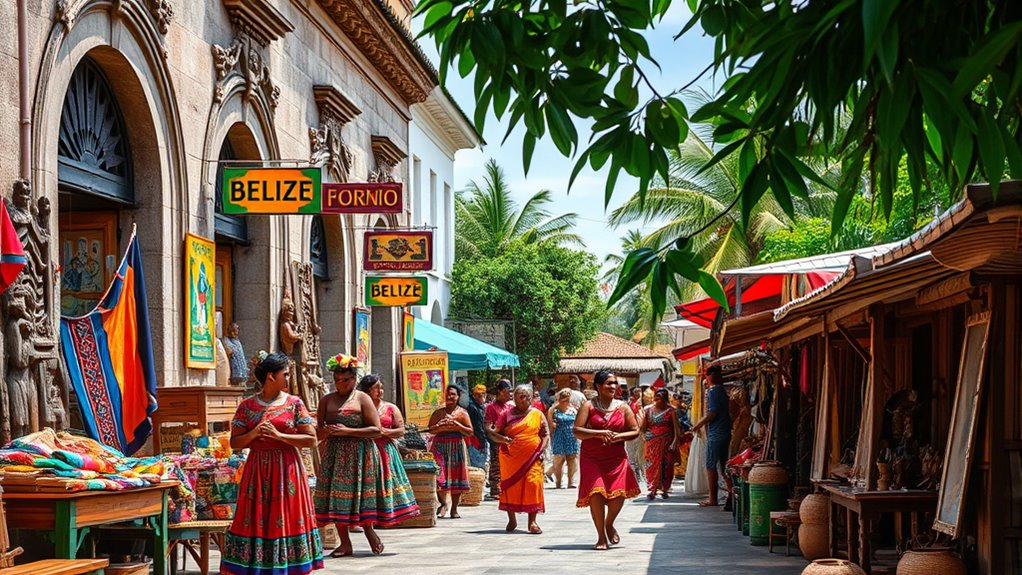
Belize’s rich cultural tapestry is a testament to its diverse heritage, blending Mayan traditions, Spanish influences, British colonial legacies, and African, Mestizo, and Creole cultures. You’re likely to see this diversity in everyday life, from colorful festivals to traditional crafts. Preservation efforts focus on maintaining indigenous Mayan practices, language, and archaeological sites, ensuring these traditions endure. The government and communities actively promote cultural education, celebrate historical events, and protect heritage landmarks. You’ll notice influences in Belize’s music, cuisine, and art, which reflect its multicultural roots. While modernization challenges heritage preservation, ongoing initiatives aim to honor the past while fostering national identity. This vibrant mix of cultures not only shapes Belizean identity but also enriches its unique character on the global stage.
Belize’s Natural Heritage and Contemporary Identity

Nestled between lush rainforests, vibrant coral reefs, and expansive savannahs, Belize’s natural heritage plays a crucial role in shaping its contemporary identity. You can see this influence in how Belize values ecological conservation and outdoor adventures. Its diverse ecosystems support rich wildlife, from jaguars to manatees. The Great Blue Hole and the Belize Barrier Reef are UNESCO World Heritage sites that attract eco-tourists worldwide. Belizeans also embrace their natural environment through festivals, sustainable tourism, and community-led conservation projects.
- Protecting marine and terrestrial biodiversity
- Promoting eco-tourism and sustainable practices
- Preserving ancient Mayan cave systems and forests
- Celebrating natural landmarks in cultural festivals
- Educating communities on environmental stewardship
Frequently Asked Questions
How Do Modern Belizeans Celebrate Their Indigenous Mayan Heritage?
You celebrate your indigenous Mayan heritage through vibrant festivals, traditional dances, and ceremonies that honor your ancestors. You participate in events like the Maya Day, showcasing traditional attire, music, and crafts. Many of you also visit archaeological sites, learn Maya language classes, and support local artisans. These activities help you preserve your culture, pass it on to future generations, and keep the rich legacy of the Mayan civilization alive in Belize today.
What Are Belize’s Most Significant Archaeological Sites Still Open to Visitors?
You can visit Belize’s most significant archaeological sites like Caracol, a sprawling Mayan city hidden in the jungle, and Xunantunich, famous for its towering pyramid and stunning views. Tikal in nearby Guatemala is also accessible for guided tours. These sites are open to visitors, allowing you to explore ancient Mayan architecture, learn about their history, and experience the rich cultural legacy firsthand amidst lush surroundings.
How Has British Colonial History Influenced Belize’s Current Legal System?
British colonial history greatly influences Belize’s current legal system. You’ll find that Belize’s laws and judicial structures are based on the British common law tradition, reflecting colonial legacy. The legal language is English, and court procedures follow British models. This influence persists today, shaping how justice is administered and how laws are interpreted, ensuring continuity with Britain’s legal principles and practices established during colonial rule.
What Role Do Festivals Play in Preserving Belize’s Multicultural Identity?
Festivals are the vibrant threads that weave Belize’s multicultural tapestry, keeping its diverse heritage alive. You participate in lively celebrations like Garifuna Settlement Day or the Mayan New Year, which serve as living stories of resilience and unity. These events act as cultural bridges, allowing you to honor ancestral traditions, share community spirit, and preserve the rich mosaic of Belize’s identity amid modern change.
How Does Belize Manage and Protect Its Diverse Natural Ecosystems Today?
You can see Belize actively manages and protects its diverse ecosystems through national parks, wildlife sanctuaries, and marine protected areas. You’re encouraged to support sustainable tourism and conservation programs like the Belize Audubon Society. The government enforces environmental laws and collaborates with international organizations to combat deforestation, preserve biodiversity, and restore habitats. By staying informed and responsible, you help make certain Belize’s rich ecosystems remain vibrant for future generations.
Conclusion
As you walk through Belize’s vibrant streets, it’s like stepping into a living tapestry—where ancient Mayan ruins peek through lush jungles, and colonial buildings stand alongside modern murals. This harmony of past and present reflects your journey through its history and culture. Belize’s story is a beautiful coincidence of tradition and progress, reminding you that its rich heritage and natural beauty are woven together, creating a unique identity that continues to evolve with every step you take.