
Caribbean cuisine blends indigenous, African, European, and Asian influences, creating vibrant flavors and bold dishes. You’ll find spices like Scotch bonnet peppers, allspice, and thyme, combined with coconut milk, seafood, and plantains. Each island has signature dishes like jerk chicken, ropa vieja, and mofongo, enriched by traditional techniques like slow-cooking and smoking. Explore further to uncover how these diverse flavors and methods shape the unique culinary traditions across the Caribbean.
Key Takeaways
- Caribbean cuisine is a vibrant fusion of indigenous, African, European, and Asian influences, reflected in diverse ingredients and cooking techniques.
- Bold spices like Scotch bonnet peppers, allspice, and thyme define the region’s signature flavors, often balanced with coconut milk.
- Traditional dishes include jerk chicken, ropa vieja, mofongo, and doubles, showcasing regional specialties and cultural heritage.
- Street foods such as doubles, conch fritters, and rum cakes exemplify the Caribbean’s rich culinary diversity and local ingredients.
- Cooking methods like marination, slow-cooking, smoking, steaming, and stewing develop deep, aromatic flavors across Caribbean dishes.
The Origins and Cultural Fusion of Caribbean Cooking
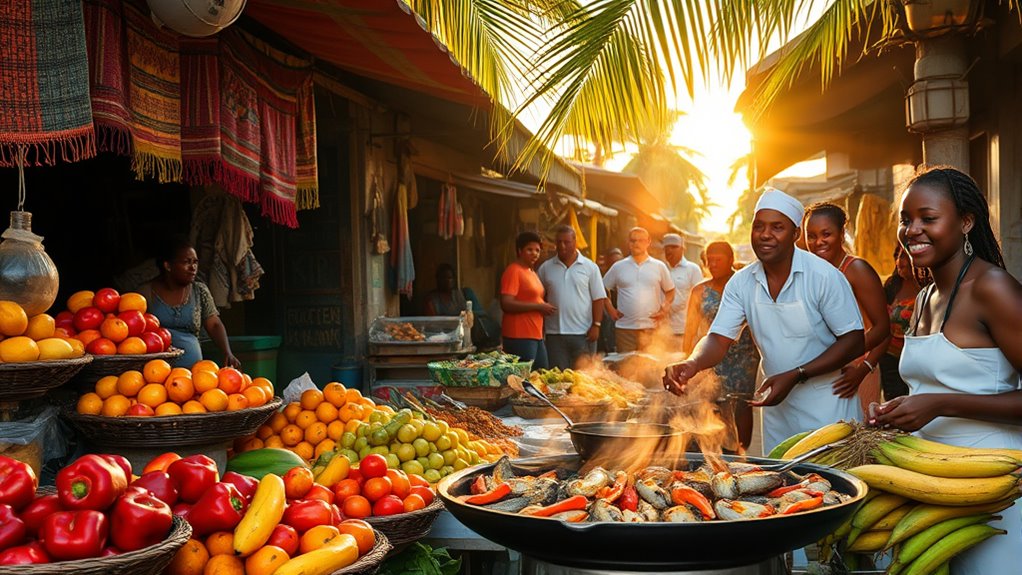
Caribbean cooking is a vibrant tapestry woven from the diverse cultures that have shaped the region over centuries. You’ll find that indigenous Arawak and Carib traditions form its foundation, but European, African, and Indian influences add rich layers. Spanish colonizers introduced spices, tomato-garlic sauces, and slow-cooking techniques, which still influence dishes like Cuban ropa vieja. African slaves brought seasoning methods, local ingredients, and created iconic dishes like jerk chicken from Jamaica’s Maroon communities. Indian indentured workers introduced curry spices and goat curry, common across islands like Trinidad and Guyana. These diverse elements blend continuously, creating a dynamic culinary landscape that reflects the region’s complex history. Your experience of Caribbean cuisine will reveal a fusion of native, African, European, and Asian flavors, each contributing to its uniqueness. Notably, the use of natural ingredients and traditional cooking methods further define the authenticity of Caribbean dishes.
Key Ingredients and Flavors That Define Caribbean Cuisine
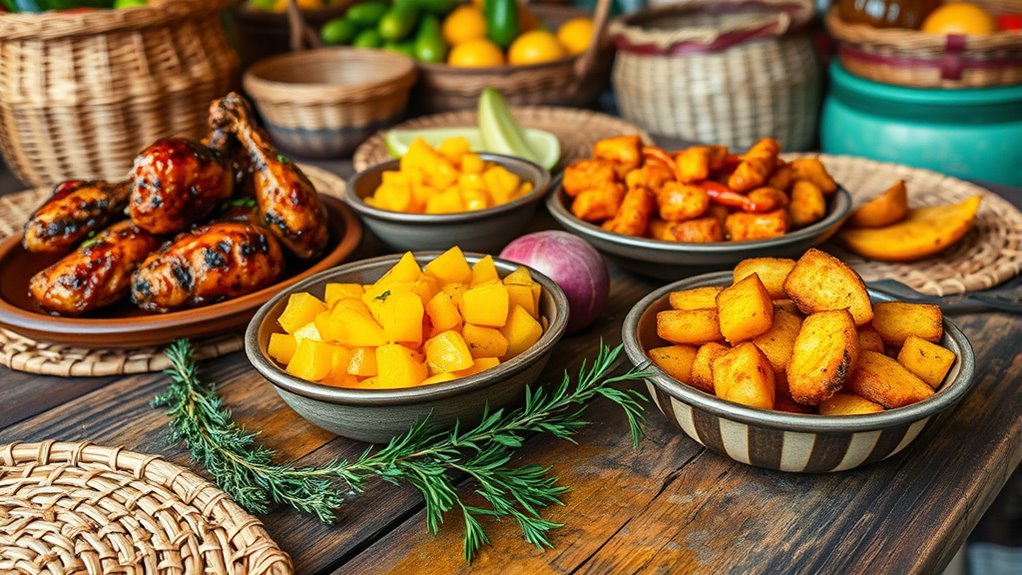
You’ll notice that bold spices and seasonings define the vibrant flavors of Caribbean dishes, from Scotch bonnet peppers to allspice and thyme. These intense flavors create the signature heat and aroma that make Caribbean cuisine so distinctive. Rich coconut milk also plays a key role, adding creaminess and depth to many traditional recipes.
Bold Spices and Seasonings
Bold spices and seasonings are the heartbeat of Caribbean cuisine, infusing dishes with vibrant flavor and complexity. You’ll notice the heat from Scotch bonnet peppers, which bring fiery intensity, balanced by aromatic herbs like thyme and ginger. Allspice, or pimento, adds warmth and depth, especially in jerk seasoning and stews. Garlic and bell peppers provide savory undertones, enhancing seafood, meats, and rice dishes. These spices aren’t just for heat—they build layers of flavor, making each bite memorable. You’ll find that Caribbean dishes rely on a careful blend of these seasonings to create bold, spicy, and fragrant profiles. The result is a cuisine that’s as lively and diverse as the cultures that shaped it.
Rich Coconut Milk
Rich coconut milk is a fundamental ingredient that lends Caribbean dishes their signature creaminess and depth of flavor. You’ll find it in many recipes, from rice and peas to hearty stews, adding richness and a subtle sweetness. When you cook with coconut milk, it helps balance spicy seasonings like Scotch bonnet peppers and allspice, creating a harmonious blend of flavors. Its smooth texture enhances seafood dishes, such as flying fish and shellfish, making them even more indulgent. Coconut milk also acts as a base for sauces and gravies, enriching slow-cooked meats like jerk chicken and goat curry. Its versatility makes it a key component in Caribbean cuisine, tying together the bold, tropical, and hearty elements that define the region’s culinary identity.
Signature Dishes and Regional Specialties Across the Islands

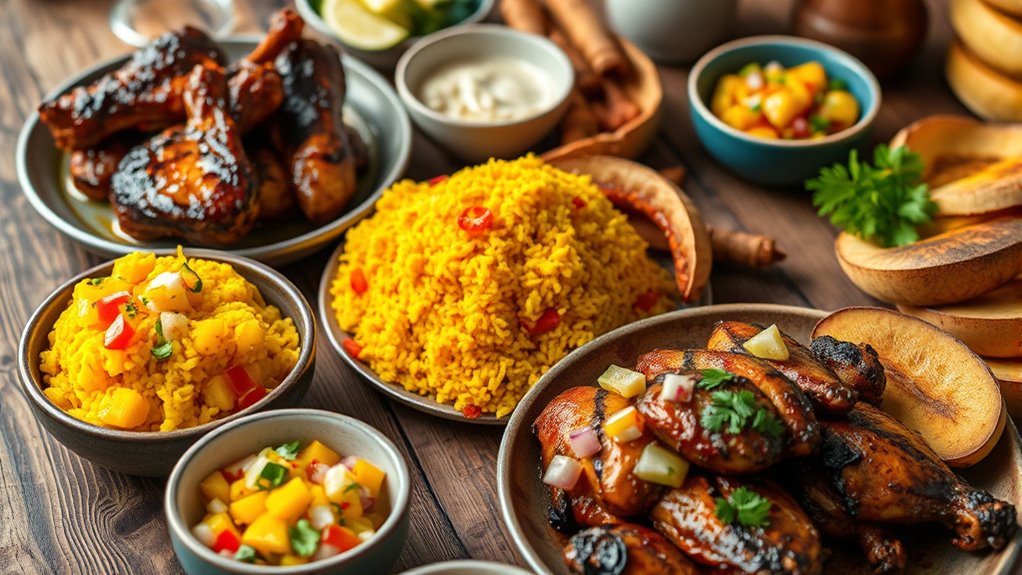
Across the Caribbean, each island boasts signature dishes that reflect its unique history, culture, and local ingredients. On Jamaica, you’ll find jerk chicken, seasoned with allspice, Scotch bonnet peppers, and thyme, offering a spicy, smoky flavor. Barbados is famous for flying fish and cou-cou, a hearty cornmeal and okra dish. In Cuba, hearty ropa vieja features slow-cooked beef in tomato-garlic sauce, showcasing Spanish influence. Trinidad and Tobago serve up doubles—curried chickpeas sandwiched in fried flatbreads—and flavorful goat curry with Indian spices. Puerto Rico’s mofongo, made from fried mashed plantains, highlights African and Spanish traditions. These signature dishes embody regional ingredients and culinary history, offering a delicious glimpse into each island’s identity and cultural heritage. Additionally, understanding the regional ingredients used in these dishes can deepen appreciation for their authentic flavors and preparation methods.
Popular Street Foods and Snack Offerings in the Caribbean
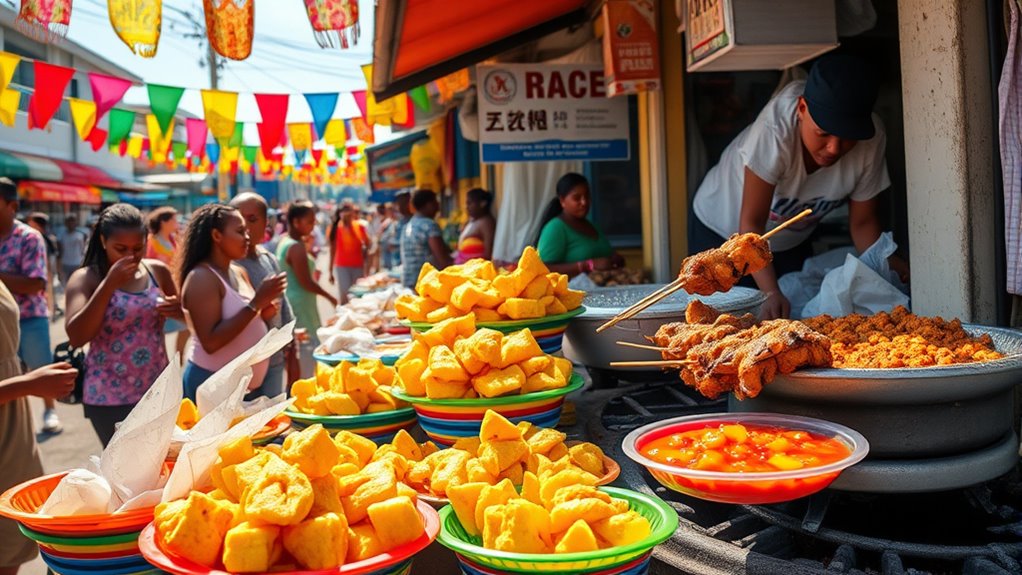
You’re likely to encounter vibrant street foods and snacks that capture the Caribbean’s bold flavors and cultural diversity. From spicy doubles and conch fritters to sweet rum cakes and peanut drops, these offerings reflect local ingredients and culinary history. Exploring these treats reveals how street food varies across islands while maintaining a shared love for bold, hearty flavors. Embracing minimalism in presentation allows these colorful dishes to stand out and speaks to the region’s appreciation for simplicity in style.
Iconic Caribbean Snacks
Street foods are the heartbeat of Caribbean culinary culture, offering quick, flavorful bites that reflect the islands’ diverse influences. When you try iconic Caribbean snacks, you’ll experience bold spices, fresh seafood, and hearty ingredients. Doubles from Trinidad are a must-try, with curried chickpeas sandwiched in fried flatbreads topped with tangy chutneys. Conch fritters showcase the region’s seafood bounty, deep-fried with a flavorful batter. Mofongo, mashed plantains mixed with garlic and spices, is a Puerto Rican favorite often served with meat or broth. Peanut drops and rum cake highlight the Caribbean’s sweet traditions, blending rich flavors and tropical ingredients. These snacks pack a punch of authentic taste, celebrating the islands’ vibrant flavors and diverse culinary heritage in every bite. Exploring these treats can deepen your understanding of best anime movies and the cultural storytelling they embody.
Street Food Variations
Have you ever tasted the vibrant flavors of Caribbean street food? If not, you’re missing out on a lively mix of bold spices and fresh ingredients. In Trinidad, doubles offers a spicy chickpea filling between fried flatbreads, topped with chutneys and hot sauce. Barbados serves conch fritters, crispy bites packed with seafood flavor. Puerto Rico’s mofongo features mashed plantains shaped into balls, often filled with meat or broth. Jamaica’s fried peanut drops are sweet, crunchy candies, while rum cake adds a moist, spicy finish to any snack. These street foods reflect local ingredients and cultural influences, offering quick, satisfying bites that capture the islands’ culinary spirit. Each variation showcases the Caribbean’s bold, diverse flavors in easy, portable forms perfect for on-the-go enjoyment. Proper email marketing strategies can help promote these delicious treats to a wider audience.
Sweet Treats and Desserts
Caribbean street foods aren’t just about savory bites; they also feature an array of sweet treats that capture the islands’ vibrant flavors. You’ll find candies, cakes, and confections that highlight local ingredients like tropical fruits, spices, and rum. Peanut drops, hard candies made from peanuts and sugar, are a common sweet, offering a crunchy, nutty flavor. Rum cake, moist and spiced, is a festive favorite enjoyed during celebrations. You might also indulge in sweet fried plantains, often coated in cinnamon or caramel. Another popular treat is Jamaican ginger cake, rich and spicy with a tender crumb. These desserts reflect Caribbean creativity, blending native fruits with African, European, and Asian influences, making every bite a delicious glimpse into island culture. Notably, Vetted electric bike conversion kits, like the PEXMOR and AW models, exemplify innovative technology that enhances urban mobility across the islands.
Traditional Cooking Techniques and Taste Profiles
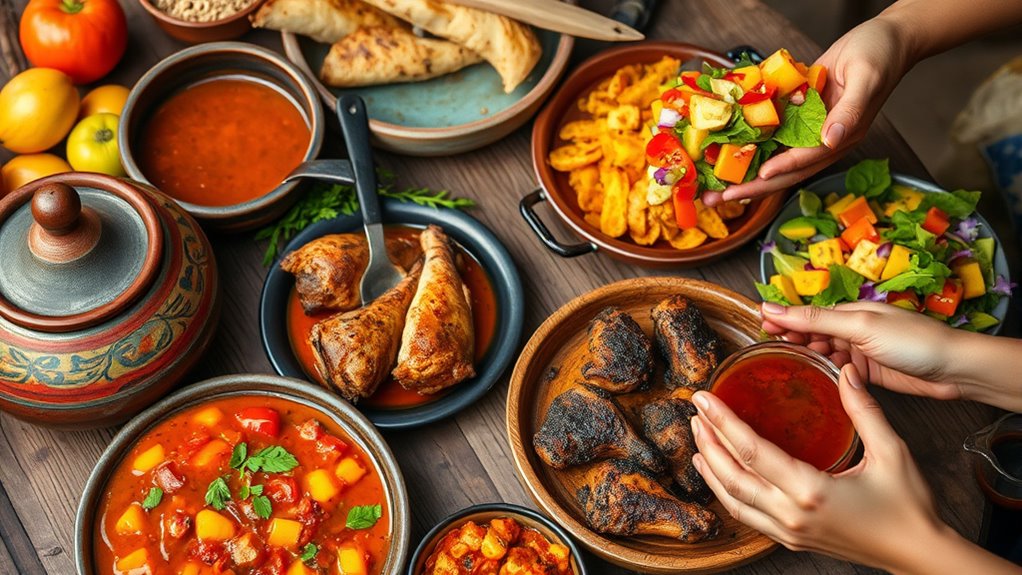
Traditional cooking techniques in the Caribbean often emphasize slow, careful preparation to develop rich flavors and tender textures. You’ll find methods like marinating meats with spices and herbs, slow-cooking stews, and smoking meats to infuse smoky depth. Here are four key techniques that define Caribbean taste profiles:
- Marination: Using spicy blends with Scotch bonnet peppers, garlic, and herbs to tenderize and add bold flavor.
- Slow-cooking: Simmering dishes like goat curry or ropa vieja to enhance tenderness and deepen spices.
- Smoking: Jerk chicken and other meats are smoked or grilled over wood, adding smoky, spicy layers.
- Steaming and Stewing: Seafood and vegetables are gently cooked to preserve freshness and develop complex flavors. Promoting biodiversity in local ingredients can also enhance the variety and sustainability of traditional dishes.
These methods create the signature hearty, spicy, and aromatic flavors Caribbean cuisine is known for.
Distinctive Culinary Traits of Major Caribbean Nations
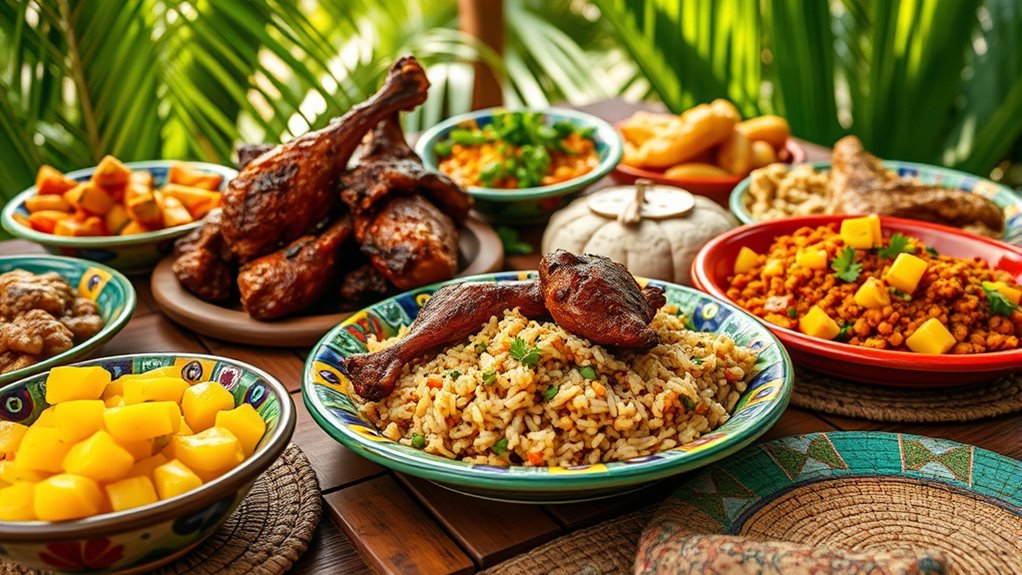
Each major Caribbean nation showcases its unique culinary traits shaped by history, geography, and cultural influences. Jamaica stands out with its spicy jerk chicken, featuring allspice, Scotch bonnet peppers, and smoky grilling techniques. Barbados is famous for flying fish and cou-cou, a hearty cornmeal and okra dish reflecting maritime roots. Cuba’s cuisine highlights slow-cooked ropa vieja, seasoned with tomatoes, garlic, and spices, reflecting Spanish traditions. Trinidad and Tobago blend Indian, African, and European influences, evident in street foods like doubles and flavorful goat curry. Puerto Rico’s mofongo, made from fried plantains, showcases African roots combined with Spanish flavors. Each country’s dishes emphasize bold seasonings, local ingredients, and cooking methods that celebrate their diverse cultural heritage. Regional culinary diversity is a testament to the rich history and cultural exchanges across the Caribbean.
Frequently Asked Questions
How Has Caribbean Cuisine Evolved With Modern Influences?
Caribbean cuisine evolves constantly by blending traditional flavors with modern influences like global ingredients and culinary techniques. You can see this in the rise of fusion dishes, innovative street foods, and contemporary cooking methods like grilling and sous-vide. Chefs experiment with local ingredients, incorporate international spices, and adapt classic recipes for healthier or more sustainable options, making Caribbean food exciting and relevant while honoring its rich heritage.
What Role Do Indigenous Ingredients Play in Contemporary Dishes?
Indigenous ingredients play a essential role in your contemporary Caribbean dishes, providing authentic flavors and cultural depth. You incorporate staples like yams, cassava, plantains, and local seafood to create hearty, flavorful meals. These ingredients often serve as the foundation for modern recipes, blending traditional techniques with new influences. By using these native elements, you keep the island’s culinary heritage alive while adding fresh twists that appeal to today’s tastes.
Are There Any Unique Fusion Dishes Combining Multiple Cultural Traditions?
Think of Caribbean dishes as a vibrant tapestry woven from many threads. Yes, you’ll find unique fusion dishes that blend multiple cultural traditions, like Jamaican jerk chicken with Indian curry spices or Trinidad’s doubles with African and Indian influences. These dishes are like culinary bridges, connecting diverse histories and flavors into one delicious, harmonious experience. They showcase how Caribbean cuisine constantly evolves, creating new traditions from its rich, multicultural roots.
How Do Caribbean Cooking Methods Vary Between Islands?
You’ll notice Caribbean cooking methods vary by island, reflecting local ingredients and cultural influences. In Jamaica, smoking and slow-cooking are common for jerk and stews, while Barbados emphasizes steaming and grilling seafood like flying fish. Trinidad uses curry and frying techniques influenced by Indian traditions, and Puerto Rico prefers mashing and roasting, especially for dishes like mofongo and roasted pork. Each island adapts techniques to its unique flavors and resources.
What Are the Health Benefits and Nutritional Aspects of Caribbean Ingredients?
You’ll find Caribbean ingredients packed with health benefits and nutrients. For example, plantains and yams provide complex carbs and fiber, supporting digestion and energy. Coconut milk offers healthy fats and antioxidants, while beans supply protein, fiber, and essential minerals. Spices like ginger, thyme, and allspice have anti-inflammatory properties. Seafood delivers omega-3 fatty acids for heart health. Overall, these ingredients promote balanced nutrition and boost your immune system.
Conclusion
Exploring Caribbean cuisine shows how diverse flavors and traditions come together to create something truly special. As you immerse yourself in its rich tapestry, remember that food tells a story worth savoring—it’s the heart and soul of the islands. Embrace the vibrant tastes and cultural fusion; after all, the proof of the pudding is in the eating. So, keep an open mind and let each bite take you on a memorable journey.