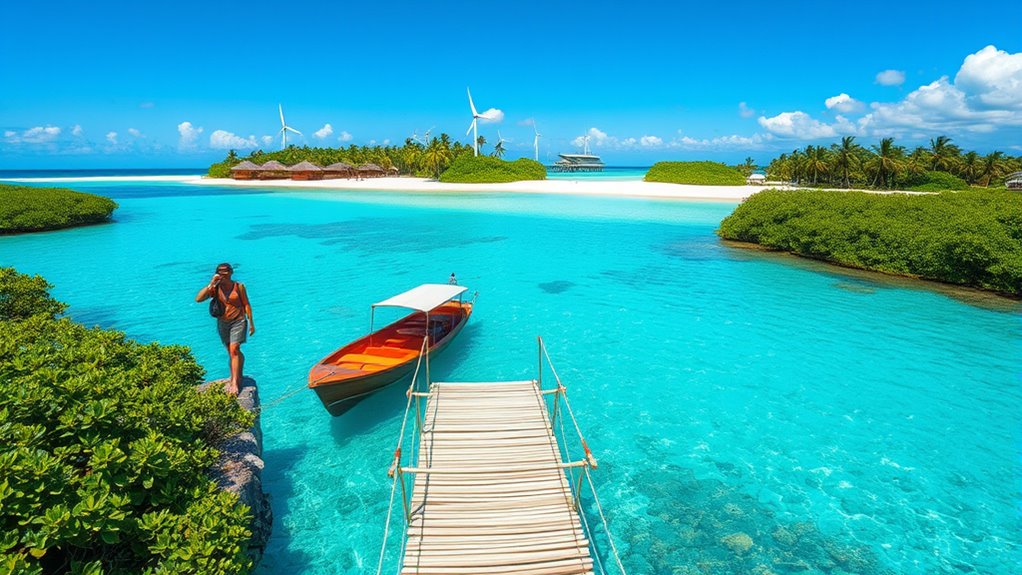

Sustainable travel in the Caribbean involves supporting eco-friendly practices that protect beaches, reefs, and rainforests while boosting local economies. You can choose high-value, nature-based experiences like eco-tours and community-led initiatives that promote conservation and cultural heritage. Responsible tourism also means respecting regional policies, reducing waste, and engaging with local communities. By making mindful choices, you help preserve this beautiful region’s natural and cultural treasures for future generations. Keep exploring to discover how you can make a positive impact.
Key Takeaways
- Promote eco-friendly tourism activities like eco-tours and adventure travel to minimize environmental impact.
- Implement environmental fees and regional standards to fund habitat protection and resource conservation.
- Support community-led initiatives and cultural tourism to ensure local benefits and preserve authenticity.
- Diversify tourism offerings beyond mass visits to reduce overcrowding and ecological strain.
- Foster collaboration among governments, businesses, and communities to develop sustainable policies and practices.
The Economic Significance of Tourism in the Caribbean

Tourism is the backbone of the Caribbean economy, contributing over 22% of the region’s GDP and supporting nearly 2.75 million jobs. This sector is essential for your country’s financial stability, with many jobs held by women and young people. In the Dominican Republic, tourism could add over $21 billion by 2025, highlighting its importance. Cruise ships and all-inclusive resorts dominate, providing most employment and attracting foreign investment. However, longer stays generate more revenue—about US$1,600 per trip—compared to cruise visits. To maximize benefits, you should focus on connecting tourism with local farmers, artisans, and entrepreneurs. Doing so ensures more money stays within communities, fostering sustainable growth and reducing dependency on large resorts or mass tourism models.
Environmental Challenges and Opportunities for Sustainable Development
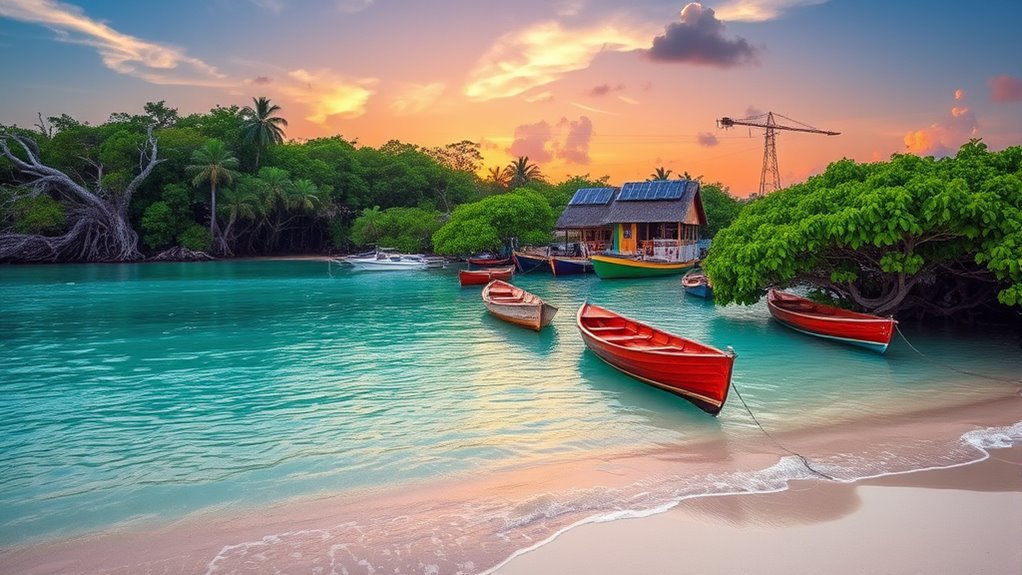
The Caribbean’s natural beauty attracts millions of visitors, but this popularity also puts significant pressure on the region’s delicate ecosystems. Overcrowded beaches, coral reefs, and rainforests face damage from mass tourism, threatening their long-term health and appeal. Heavy resource use and waste from large resorts and cruise ships lead to pollution and ecological degradation. However, these challenges also present opportunities. By enforcing environmental fees and strengthening regional cooperation, you can help protect essential habitats. Promoting high-value, low-impact tourism like adventure and nature-based experiences allows you to enjoy the region’s beauty while supporting conservation efforts. Encouraging sustainable practices and diversifying tourism types can reduce environmental stress, ensuring the Caribbean’s landscapes remain resilient for future generations. Additionally, implementing sustainable tourism practices can help preserve local biodiversity and promote long-term ecological balance.
Embracing Diversification: High-Value and Nature-Based Tourism
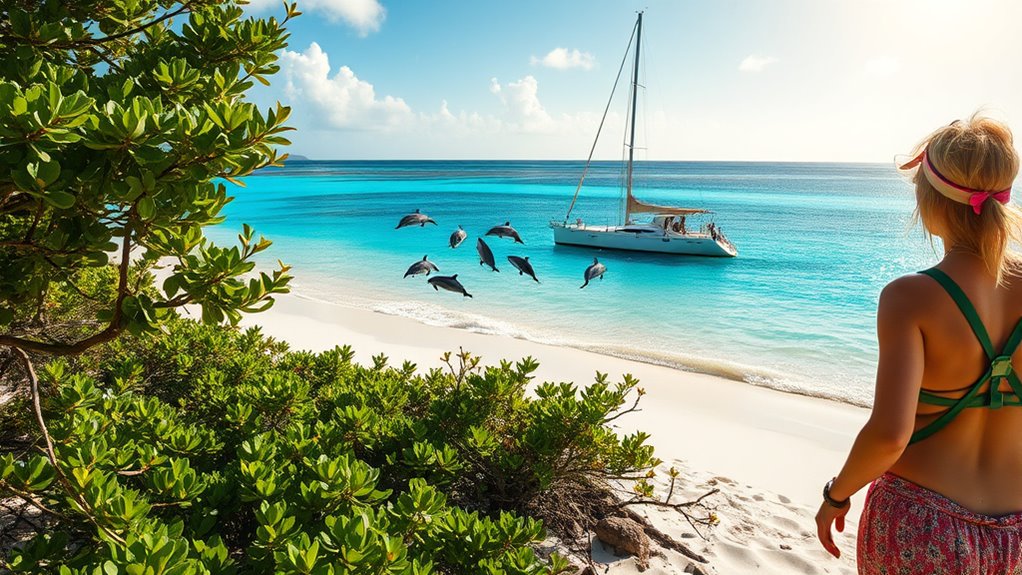
By shifting focus towards high-value, nature-based tourism, Caribbean destinations can diversify their offerings while minimizing environmental impacts. You can attract visitors seeking authentic, sustainable experiences that support conservation and local communities. For example, adventure activities like hiking, diving, or eco-tours generate higher spending per trip and foster deeper connections to the environment. Investing in protected areas and community-led initiatives guarantees benefits stay within local populations and promote ecological preservation. Creative tourism that highlights local culture and traditions also enhances inclusivity and sustainability. Employing cost-effective strategies such as online resource utilization and flat-fee attorneys can support sustainable development initiatives by reducing operational expenses. By prioritizing these segments, you reduce reliance on mass tourism, ease pressure on natural resources, and create resilient, diversified economies. Strategic investments and collaborations are essential to scale these models and realize their full potential.
Policy Frameworks and Governance for Inclusive Growth

Effective policy frameworks and strong governance are essential to fostering inclusive growth in Caribbean tourism. You need policies that promote equitable distribution of benefits, ensuring local communities, women, and youth participate actively. Reforms should include fair tax incentives and investment incentives that prevent harmful competition and encourage local reinvestment. Transparent decision-making and accountability build trust among stakeholders, making sustainable development possible. Regional collaboration is vital for harmonizing standards, sharing resources, and avoiding a race to the bottom environmentally and socially. You also must integrate tourism with local economic development by supporting skills training and community engagement. By aligning policies with sustainability goals, you guarantee tourism generates long-term benefits, reduces inequalities, and enhances the region’s resilience and social fabric. Additionally, implementing governance mechanisms that monitor and evaluate policy outcomes ensures continuous improvement and responsiveness to changing circumstances.
Building a Resilient and Responsible Tourism Future

Building a resilient and responsible tourism future requires proactive strategies that prioritize sustainability, community well-being, and environmental protection. You should focus on diversifying tourism offerings, like adventure and eco-tourism, to reduce reliance on mass tourism. Supporting local economies by connecting visitors with artisans and farmers keeps benefits within communities. Implementing environmental fees and regional standards helps safeguard natural resources. Collaboration among governments, businesses, and communities is essential for responsible growth. Consider this approach:
| Strategy | Impact |
|---|---|
| Diversify tourism sectors | Reduces environmental pressure and spreads benefits |
| Invest in community projects | Promotes social inclusion and local empowerment |
| Enforce environmental fees | Protects ecosystems and encourages sustainability |
| Strengthen regional policies | Enhances collective resilience and standards |
A key part of fostering sustainable tourism is promoting environmental awareness among travelers and local stakeholders to support long-term conservation efforts.
Frequently Asked Questions
How Can Local Communities Benefit More From Tourism Revenue?
You can benefit more from tourism revenue by supporting initiatives that connect tourism to local businesses, artisans, and farmers. Advocate for policies that guarantee a fair share of profits stays within your community, and participate in community-based tourism projects. Encourage sustainable practices and local ownership of tourism ventures. By engaging in these efforts, you help create jobs, boost local economies, and promote social and environmental sustainability for everyone.
What Specific Environmental Fees Are Effective for Sustainable Tourism?
You should consider implementing realistic environmental fees, such as reef preservation charges, beach access fees, or conservation levies, which directly fund ecological protection. These fees encourage responsible tourism behavior and generate revenue for local conservation efforts. By making fees transparent and reinvesting proceeds into environment management, you guarantee sustainable tourism practices that protect natural resources, benefit communities, and maintain the region’s appeal for future visitors.
How Does Tourism Impact Indigenous Cultures and Traditions?
Tourism can threaten indigenous cultures and traditions by overwhelming local customs with outside influences, leading to cultural erosion. You might see traditional practices commercialized or altered to meet tourist expectations, risking loss of authenticity. However, you can support cultural preservation by choosing responsible tour operators, engaging with authentic community-led experiences, and advocating for policies that protect indigenous heritage. Your conscious travel choices help guarantee cultures thrive alongside tourism development.
What Role Do Private Investors Play in Sustainable Tourism Development?
Private investors play a vital role in sustainable tourism development by funding eco-friendly projects and community initiatives. For example, investing in high-value, low-impact tourism like eco-lodges or cultural tours helps diversify the economy and reduce environmental pressures. Your investments can support local artisans, conservation efforts, and infrastructure, ensuring tourism benefits are shared more broadly. By prioritizing responsible investments, you help create resilient, inclusive, and environmentally sustainable tourism in the Caribbean.
How Can Technology Enhance Sustainable Travel Experiences in the Caribbean?
You can use technology to enhance sustainable travel experiences by providing real-time information on eco-friendly options, managing visitor flows, and promoting conservation efforts. Mobile apps and digital platforms make it easy for you to find local, authentic experiences while reducing environmental impacts. Virtual tours and augmented reality can educate travelers about ecosystems and culture, fostering respect and awareness. Embracing innovative tech helps you enjoy richer, responsible travel that benefits both communities and the environment.
Conclusion
As you explore sustainable travel in the Caribbean, remember that “a journey of a thousand miles begins with a single step.” By supporting eco-friendly initiatives, embracing diversification, and advocating for strong policies, you can help protect these beautiful islands for future generations. Your choices matter—every small action contributes to a resilient, responsible tourism industry that benefits both the environment and local communities. Together, we can make a lasting difference and preserve paradise for years to come.