
Jamaican cuisine reflects a rich mix of indigenous, African, European, Indian, and Chinese influences, resulting in vibrant dishes like jerk chicken, ackee and saltfish, and curry goat. You’ll find bold spices such as allspice, Scotch bonnet peppers, and coconut, used in traditional methods like jerk seasoning and smoking over pimento wood. If you want to explore these flavorful traditions and discover how they continue to evolve worldwide, more fascinating details await you.
Key Takeaways
- Jamaican cuisine is a fusion of indigenous, African, European, Indian, and Chinese influences, reflected in diverse dishes and cooking methods.
- Signature dishes like ackee and saltfish, jerk chicken, and curry goat symbolize resilience, boldness, and cultural heritage.
- Key ingredients include Scotch bonnet peppers, allspice, coconut, cassava, and sweet potatoes, used in a variety of flavorful dishes.
- Traditional techniques such as jerk smoking, grilling, frying, and steaming are central to authentic Jamaican cooking.
- Global popularity of jerk seasoning and festivals promotes Jamaican culinary traditions, blending innovation with cultural celebration.

Dimply's Jamaican Jerk Seasoning Mix – Dry Rub and Marinade for Chicken, Meat, Vegetables, Tofu – Bold Caribbean Spice Blend – Vegan, Gluten Free, No MSG, No Preservatives – 6 oz Bag, 6 Pack
BOLD JAMAICAN FLAVOR. This isn’t your average dry rub. Our jerk seasoning is a bold Jamaican blend with…
As an affiliate, we earn on qualifying purchases.
As an affiliate, we earn on qualifying purchases.
The Roots of Jamaican Culinary Heritage
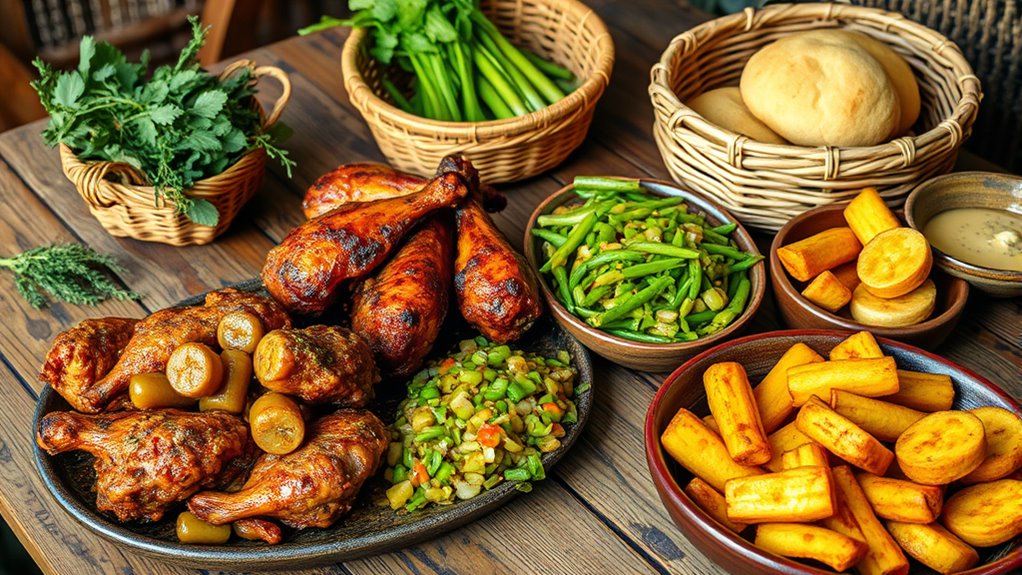
The roots of Jamaican culinary heritage run deep, shaped by the island’s diverse history and the various cultures that have settled there. You’ll find that the indigenous Taino people laid the foundation by using local ingredients like yams and tropical fruits, cooking with earth ovens and grilling methods. As African slaves arrived, they introduced slow-cooked one-pot dishes and spice blends, especially allspice and Scotch bonnet peppers, which remain central today. Spanish colonizers brought sugarcane, ginger, and plantains, adding new flavors and ingredients. British influence introduced baked goods and pastries, while global labor migrations from India and China infused the cuisine with new spices and cooking techniques. These layers of cultural exchange created a rich, vibrant culinary landscape that defines Jamaica’s food traditions today. Additionally, the use of antioxidants in local herbs and spices highlights the health-conscious aspect of traditional Jamaican cooking, emphasizing both flavor and wellness.

Cool Runnings Ackee & Saltfish Seasoning 300g – Perfect Caribbean Blend for Authentic Jamaican Breakfast and Brunch Dishes, Ideal for Saltfish, Ackee, and Vegetables
BOLD ACKEE & SALTFISH FLAVOR – Cool Runnings Ackee & Saltfish Seasoning delivers a bold and savory flavor…
As an affiliate, we earn on qualifying purchases.
As an affiliate, we earn on qualifying purchases.
Signature Dishes and Their Cultural Significance
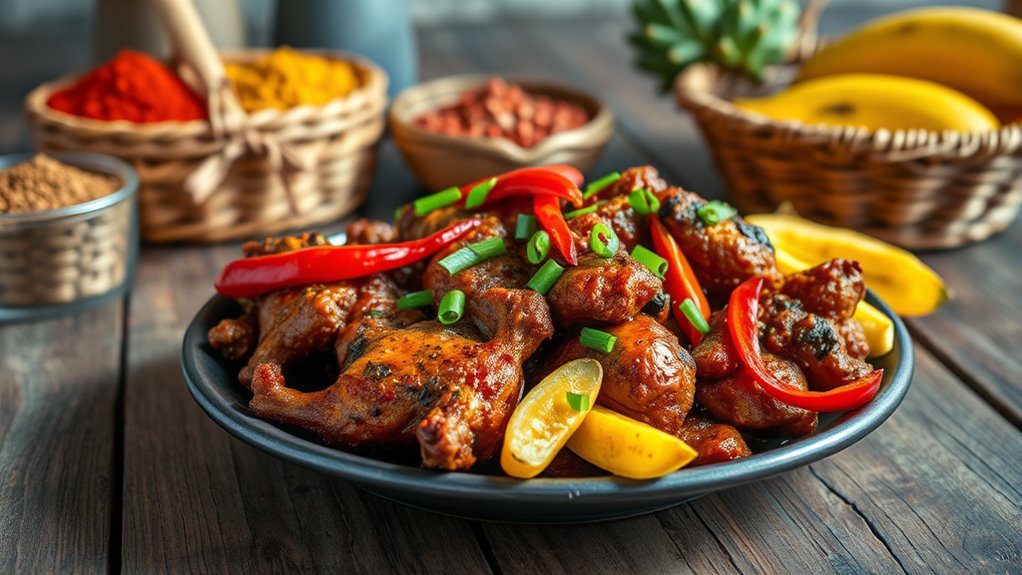
Jamaican signature dishes embody the island’s rich cultural tapestry and history, reflecting centuries of indigenous traditions, African influences, and European colonization. When you enjoy dishes like ackee and saltfish, you’re tasting a national symbol that combines indigenous fruit with imported salted cod, symbolizing resilience and adaptation. Jerk chicken or pork highlights the African technique of slow-cooking over pimento wood, infusing smoky, spicy flavors that represent Caribbean boldness. Curry goat showcases Indian influence, blending spices and hearty meat for communal gatherings. Fried dumplings serve as versatile staples, while escovitch fish reflects European preservation methods with a spicy twist. These dishes aren’t just food; they’re stories of survival, cultural exchange, and identity, celebrating Jamaica’s diverse and vibrant heritage. Culinary traditions also serve as a reflection of Jamaica’s history of resilience and adaptability in the face of various cultural influences.

Spur Tree Jamaican Crushed Scotch Bonnet Pepper Sauce – 5 oz by Spur Tree Jamaican
As an affiliate, we earn on qualifying purchases.
As an affiliate, we earn on qualifying purchases.
Key Ingredients and Spices That Define Jamaican Flavors
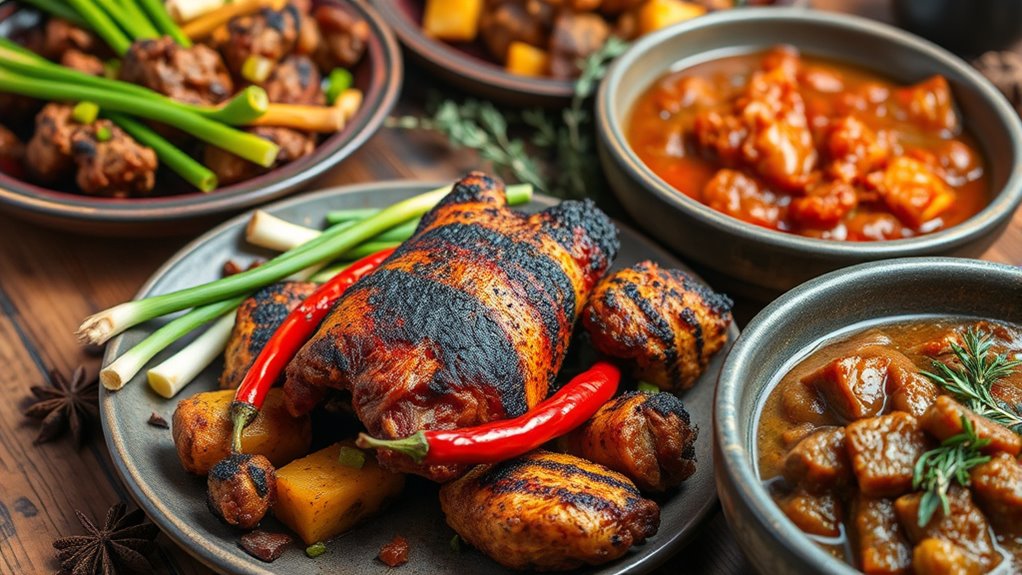
Bold and vibrant flavors define Jamaican cuisine, with key ingredients and spices playing a central role in creating its distinctive taste. You’ll find that ingredients like cassava and sweet potatoes form the backbone of many dishes, adding hearty textures and subtle sweetness. Scotch bonnet peppers bring intense heat and fruity aroma, elevating sauces and marinades. Allspice, known locally as pimento, is essential in jerk seasoning, providing warmth and depth. Coconut enriches both sweet and savory dishes, from cakes to stews, adding a creamy richness. Pimento wood is used for smoking meats, imparting a smoky, aromatic flavor. These ingredients and spices blend harmoniously, reflecting Jamaica’s diverse cultural influences and creating the bold, complex flavors that define Jamaican culinary identity.
![Blue Mountain Country Jamaican Curry Powder – 6 oz Shaker Bottle | Authentic West Indian Curry Spice Blend for Meat, Seafood, Vegetables & More [Pack of 2]](https://m.media-amazon.com/images/I/51zPt-9iVBL._SL500_.jpg)
Blue Mountain Country Jamaican Curry Powder – 6 oz Shaker Bottle | Authentic West Indian Curry Spice Blend for Meat, Seafood, Vegetables & More [Pack of 2]
True Jamaican Flavor – A traditional West Indian curry powder crafted with authentic Caribbean spices.
As an affiliate, we earn on qualifying purchases.
As an affiliate, we earn on qualifying purchases.
Traditional Cooking Techniques and Methods
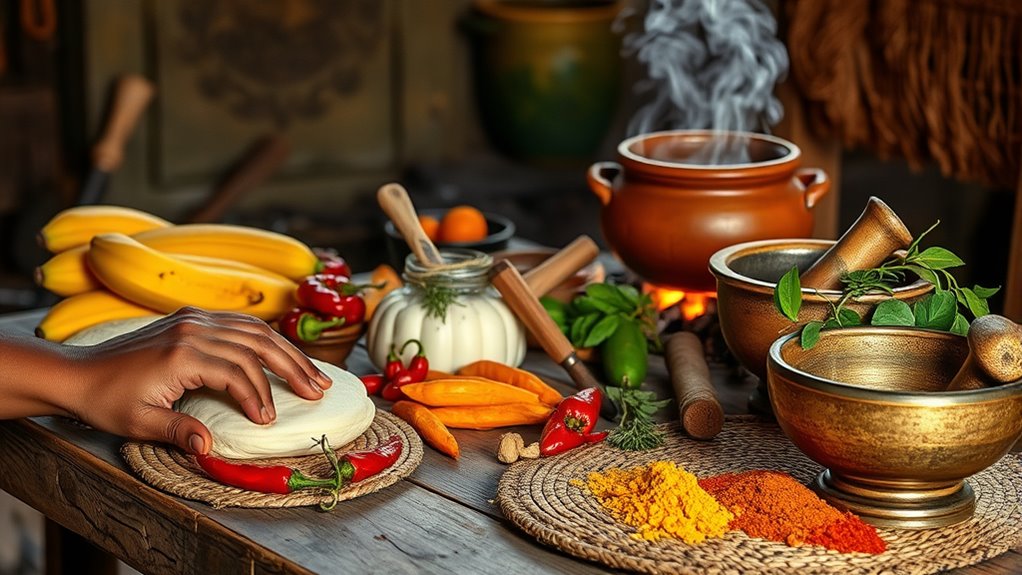
Traditional Jamaican cooking techniques showcase how ingredients and spices come to life through specific methods that have been passed down through generations. You’ll find jerk cooking, where meat is seasoned with spices like allspice and Scotch bonnet peppers, then slow-cooked over pimento wood for a smoky flavor. Grilling over open flames is common for jerk chicken and pork, giving dishes a charred, flavorful crust. Frying is often used for fried dumplings and fish, creating crispy textures. Steaming vegetables like callaloo helps retain their vibrant color and nutrients, while baking is used for pastries and breads influenced by European traditions. These techniques highlight Jamaica’s resourcefulness and deep cultural roots, ensuring each dish carries authentic flavors that reflect the island’s diverse culinary history.
The Global Influence and Contemporary Trends in Jamaican Cuisine
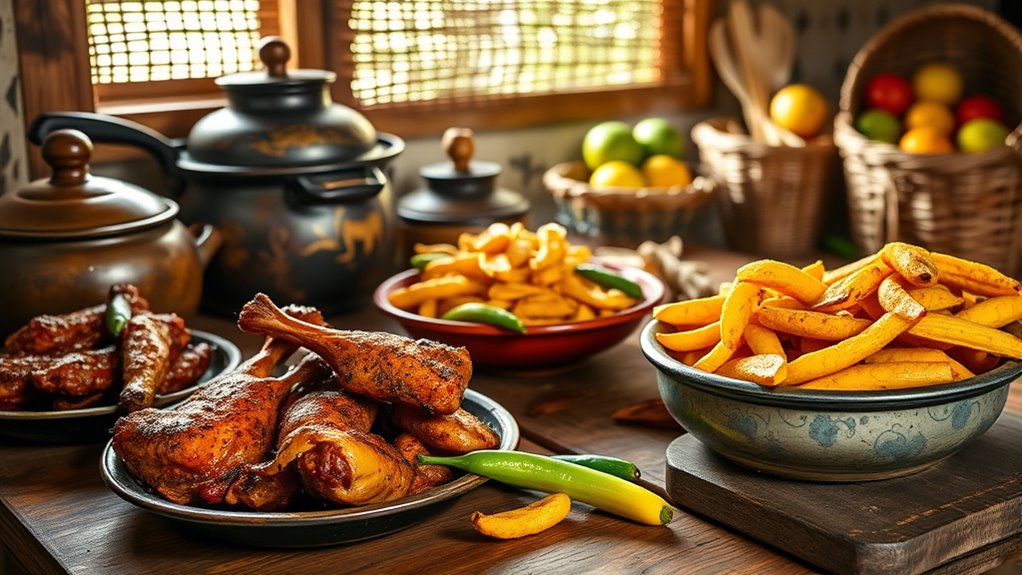
The global spread of Jamaican cuisine has been driven largely by migration, cultural exchange, and the popularity of iconic dishes like jerk chicken. Today, you see Jamaican flavors influence worldwide kitchens, blending traditional techniques with modern trends. Chefs incorporate Jamaican spices like allspice and Scotch bonnet peppers into fusion dishes, creating exciting new flavors. The popularity of jerk seasoning extends beyond Jamaica, used in burgers, seafood, and vegan options. Restaurants worldwide celebrate Jamaican culinary heritage through festivals and pop-ups, promoting cultural appreciation. This fusion approach keeps Jamaican cuisine fresh and relevant. Additionally, the cultural exchange facilitated by international chefs and food festivals helps preserve and innovate traditional recipes.
Frequently Asked Questions
How Did Indigenous Taino Cooking Methods Influence Modern Jamaican Cuisine?
You see, indigenous Taino cooking methods deeply influence modern Jamaican cuisine. They used earth ovens and grilling, techniques still common today. These methods helped develop local dishes by imparting unique smoky flavors and cooking styles. When you enjoy jerk chicken or fish, you’re experiencing a legacy of Taino grilling and baking. Their emphasis on using local ingredients and traditional cooking techniques remains an essential part of Jamaica’s culinary identity.
What Role Did British Baking Traditions Play in Jamaican Pastry Development?
Ever wondered how British baking traditions shaped Jamaican pastries? You’ll find they heavily influenced the development of baked goods like pastries, bread, and sweet treats. The British introduced techniques like baking with yeast and using flaky pastry methods, which Jamaicans adapted into their own recipes. This fusion created beloved snacks like Jamaican patties and bread, blending European skills with local ingredients, enriching the island’s culinary landscape.
How Have Indian and Chinese Cuisines Integrated Into Jamaican Culinary Practices?
You’ll find Indian and Chinese cuisines deeply integrated into Jamaican culinary practices through flavorful spices, cooking techniques, and dishes. Indian influences introduced curries, roti, and the use of spices like turmeric, cumin, and coriander. Chinese immigrants brought stir-frying, fried rice, and sweet and sour flavors. These traditions blend seamlessly with local ingredients and methods, creating a vibrant fusion that’s evident in dishes like peppered beef, fried chicken, and spicy vegetable dishes.
What Are the Health Benefits of Traditional Jamaican Spices Like Allspice and Scotch Bonnet?
Imagine harnessing nature’s fiery gifts—scotch bonnet peppers and allspice—to boost your health. These spices act like tiny warriors, fighting inflammation and boosting your immune system with antioxidants. Scotch bonnet peppers enhance circulation and metabolism, while allspice aids digestion and relieves pain. Using them regularly can improve your overall well-being, turning your meals into powerful, flavorful medicine straight from Jamaica’s vibrant land.
How Is Jamaican Cuisine Adapted for Contemporary Dietary Trends Globally?
You see, Jamaican cuisine adapts for contemporary dietary trends by incorporating healthier ingredients like lean meats, plant-based options, and reduced salt or sugar. Chefs also emphasize grilling, steaming, and baking instead of frying. They create plant-based jerk alternatives and use local superfoods like ackee and callaloo. This fusion of traditional flavors with modern health-conscious techniques helps Jamaican dishes appeal worldwide, meeting diverse dietary needs.
Conclusion
So, next time you savor jerk chicken or sip on sweet rum punch, remember—you’re actually tasting centuries of history, resilience, and a little bit of chaos. Jamaican cuisine isn’t just about flavors; it’s a vibrant story told through spices and traditions that have traveled the world. Ironically, what started as humble ingredients now commands global menus. Enjoy the delicious paradox—your plate is a passport to Jamaica’s rich, enduring soul.