Jamaica’s history is deeply rooted in its indigenous Taino origins, Spanish conquests, and British colonization, shaping its unique culture. You’ll find a legacy of African traditions through music like reggae, vibrant arts, and resilient communities that have fought for independence and social justice. The country’s symbols, language, and celebrations reflect a powerful pride and history of overcoming adversity. Exploring further reveals how Jamaica’s rich past continues to influence its dynamic culture today.
Key Takeaways
- Jamaica’s history includes indigenous Taino roots, Spanish and British colonization, and independence in 1962, shaping its cultural identity.
- The island’s culture blends African, European, and indigenous influences, reflected in music, art, language, and traditions.
- Key symbols like the Jamaican flag, national motto, and figures such as Marcus Garvey foster a strong sense of national pride.
- Reggae music and dancehall are globally recognized cultural expressions originating from Jamaica’s historical and social experiences.
- Jamaica’s legacy of resilience, resistance, and cultural pride continues to influence its modern societal development.
![The Evolution Of Ska - Calypso, Mento, Jamaican R&B & Bluebeat [ORIGINAL RECORDINGS REMASTERED] 2CD SET](https://m.media-amazon.com/images/I/51GQ9xV1+HL._SL500_.jpg)
The Evolution Of Ska – Calypso, Mento, Jamaican R&B & Bluebeat [ORIGINAL RECORDINGS REMASTERED] 2CD SET
As an affiliate, we earn on qualifying purchases.
As an affiliate, we earn on qualifying purchases.
Indigenous Roots and Early Settlements
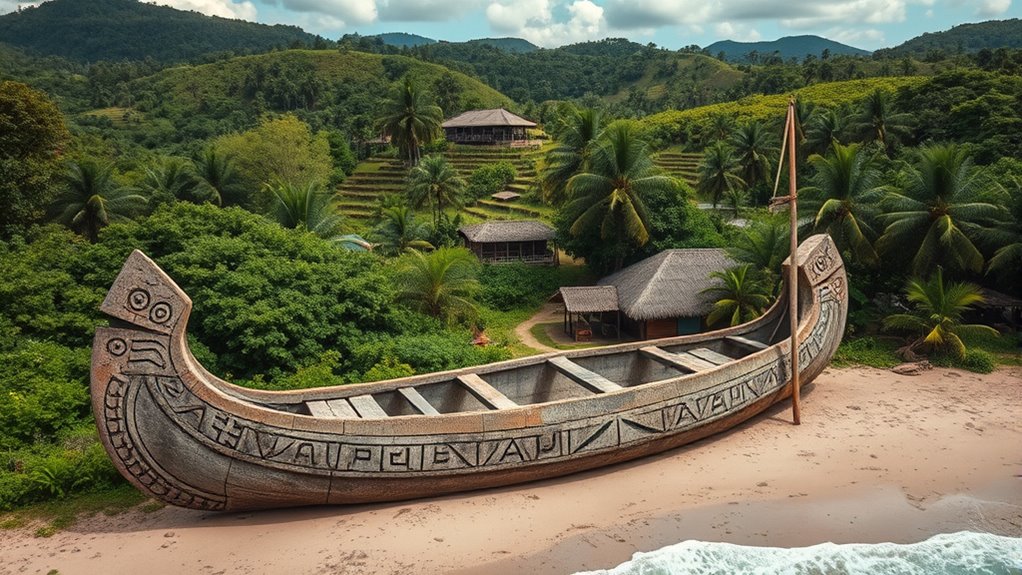
The indigenous Taino people were the first known inhabitants of Jamaica, settling there around 600 to 800 AD. You might imagine them living simply, fishing the coast and cultivating crops like corn and cassava. Their society revolved around farming, fishing, and crafting, with a strong spiritual tradition. For nearly 900 years, they thrived before European contact drastically changed their lives. When the Spanish arrived in the early 1500s, the Taino faced devastating consequences—many were killed or enslaved. Despite this, their influence persists in place names, cultural practices, and local legends. The Taino’s early presence laid the foundation for Jamaica’s rich history, even as their population was nearly wiped out during colonization. Their legacy remains an integral part of Jamaica’s indigenous roots.

JUHIOPOI Jamaica Flag Tapestry Wall Decoration, Art Tapestries Wall Hanging, Banner Wall Tapestry For Dorm Bedroom Living Room College Dorm Home Decor (40" x 60", Jamaican)
GREAT PRINTING – Using the highest grade ink and the highest heat dye sublimation printing technology to ensure…
As an affiliate, we earn on qualifying purchases.
As an affiliate, we earn on qualifying purchases.
Spanish Conquest and Colonial Foundations
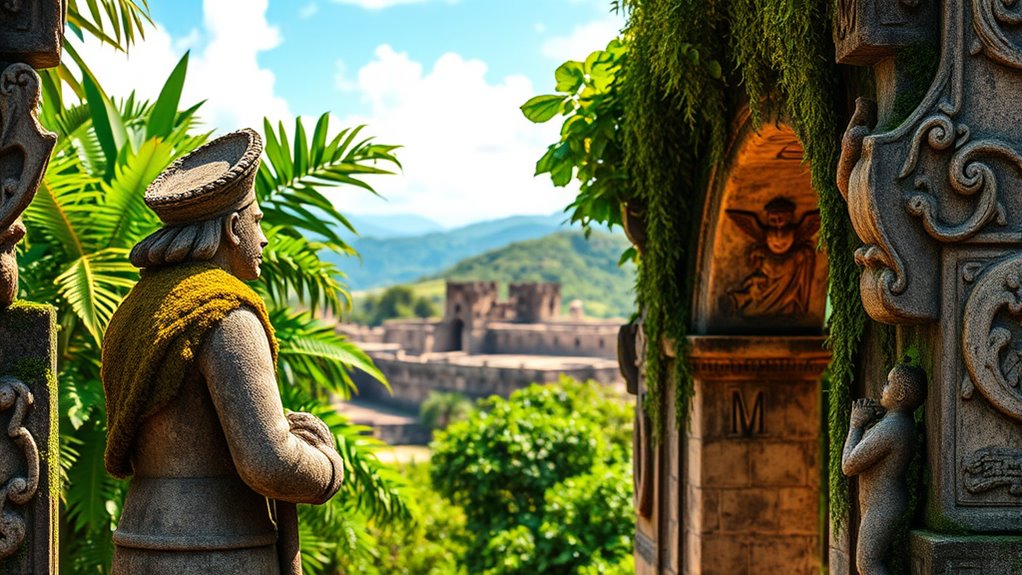
When the Spanish arrived in Jamaica around 1510, they established early settlements like Sevilla la Nueva and took control of the land. You should also consider how the Taino people, who had lived there for centuries, relied on fishing and farming corn and cassava for their livelihood. These foundations set the stage for Jamaica’s complex colonial history. Additionally, the Spanish introduced new crops and livestock that would influence the island’s agriculture for years to come, shaping its economic development. colonial influence
Early Spanish Settlements
Spanish explorers arrived in Jamaica around 1494, marking the start of their conquest and colonization efforts. You learn that in 1510, the Spanish established their first settlements, like Sevilla la Nueva, to control the island and extract resources. They quickly imposed their rule, often through force, and began converting the indigenous Taino people to Christianity. You discover that the Spanish focused on food production and animal hides, introducing European livestock and crops. As you study, you realize the Spanish also brought African slaves to work on plantations, laying the groundwork for Jamaica’s plantation economy. You see that their presence set the stage for future conflicts and cultural shifts, shaping Jamaica’s early colonial history. colonial legacy
Taino Economic Life
Before the Spanish arrived, the Taino people built their economy around fishing and farming. You’d find them catching fish in rivers and the sea, using nets and spears. They cultivated crops like corn, cassava, sweet potatoes, and yams, which provided them with steady food supplies. The Taino also gathered fruits, nuts, and medicinal plants from the forests. Their society was organized around small villages where everyone contributed to the economy through farming, fishing, and craft-making. They traded goods locally, exchanging shells, pottery, and tools. Their economy was sustainable, relying on natural resources and community cooperation. Additionally, their use of diverse designs in craft-making reflected their cultural expression and resourcefulness. When the Spanish came, they disrupted this system by introducing new crops, livestock, and forced labor, altering the Taino way of life forever.

Marcus Garvey: A Biography
As an affiliate, we earn on qualifying purchases.
As an affiliate, we earn on qualifying purchases.
British Rule and Cultural Influences
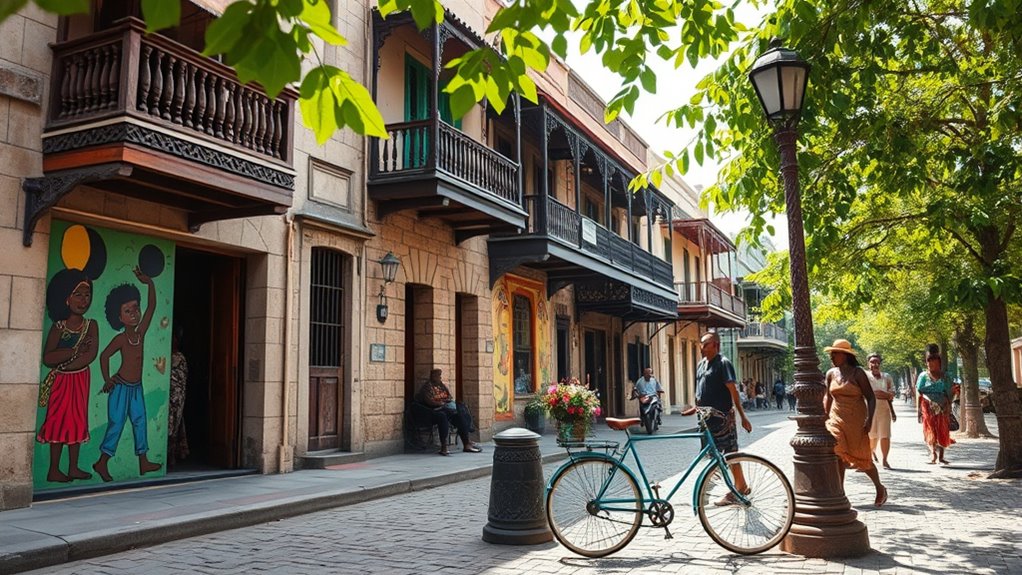
When British rule took over Jamaica, they left a lasting mark on the island’s language, culture, and institutions. You’ll notice their influence in the legal and political systems that still shape Jamaica today. These colonial imprints continue to define many aspects of the nation’s identity and governance. Additionally, the British introduced home improvement concepts that influenced architectural styles and community organization during their colonial period.
Colonial Language Legacy
Have you ever wondered how Jamaica’s colonial past continues to shape its language today? British rule left a lasting impact on Jamaica’s linguistic landscape. You’ll notice that English is the official language and used in schools, government, and media. However, the influence extends beyond formal settings.
- Patois: You might speak or hear Jamaican Patois, a vibrant creole blending English, West African languages, and other influences, reflecting the island’s history.
- Vocabulary: Many everyday words and expressions stem from British English, giving your speech a distinctive flavor.
- Pronunciation: British accents historically influenced Jamaican pronunciation, though local accents now add unique variation.
This linguistic legacy reminds you of the island’s colonial roots and cultural resilience, shaping how you communicate daily.
British Cultural Imprints
British rule has left a profound mark on Jamaica’s cultural landscape, shaping its language, institutions, and social practices. You’ll notice English as the official language, used in government, education, and media, reflecting British influence. The legal system, based on British common law, governs the country today. Many social customs and celebrations, such as formal dress codes and parliamentary traditions, trace back to British traditions. The education system was modeled after British models, emphasizing discipline and structure. Architectural styles, especially in government buildings, reveal colonial-era designs. Sports like cricket and rugby gained popularity through British influence, becoming integral to Jamaican culture. Additionally, predictive analytics is increasingly used in Jamaican businesses to improve decision-making and optimize operations. Overall, these imprints blend with local traditions, creating a unique cultural identity inspired by centuries of British rule.
Legal and Political Systems
The legal and political systems of Jamaica today are deeply shaped by its history of British rule, which established foundational structures still in place. You’ll notice how British influence persists in Jamaica’s parliamentary democracy, legal system, and governance. Additionally, the common law principles inherited from British law continue to guide the judicial process and legislative development in Jamaica. 1. The parliamentary system mirrors Britain’s model, with a prime minister and elected representatives. 2. The legal system follows common law principles, inherited from British law, guiding justice and legislation. 3. The political landscape is dominated by two major parties, reflecting Britain’s two-party tradition, shaping policies and elections. These structures influence Jamaica’s governance, ensuring stability but also confronting cultural challenges rooted in colonial history. Understanding this legacy helps you grasp how British rule continues to shape Jamaica’s political identity.

Jamaica Countryside Wall Art Poster Print, Rural Landscape, Heritage Artwork Culture Decor Travel Poster Vintage Art Work for Living Room and Bathroom Decorations (Jamaica, 11×14 inches (Unframed))
COLLECTIONS: Purchase more than one to have a collections of all your favorite countries!
As an affiliate, we earn on qualifying purchases.
As an affiliate, we earn on qualifying purchases.
The Legacy of Slavery and Emancipation
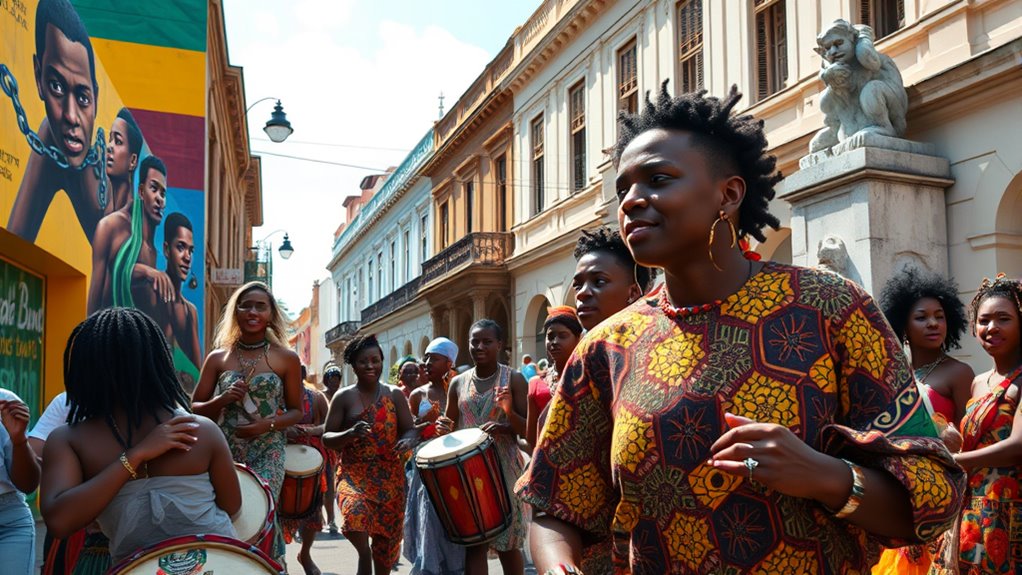
What lasting impacts did slavery and emancipation leave on Jamaica’s society? You see, they shaped the social fabric, creating deep racial divisions and a resilient culture rooted in African traditions. Post-emancipation, economic disparities persisted, with many freed slaves facing limited opportunities. The table below highlights key effects:
| Impact | Description | Long-term Effect |
|---|---|---|
| Cultural Heritage | Retention of African customs and music | Unique Jamaican identity |
| Social Stratification | Racial and class divisions | Ongoing inequality |
| Economic Challenges | Limited land and resources for former slaves | Poverty and reliance on exports |
| Political Movements | Struggles for rights and recognition | Rise of national heroes |
| Identity Formation | Pride in African roots and independence | Strong cultural pride |
These legacies continue to influence Jamaica’s development today, shaping its cultural identity and societal structures.
Uprising and Political Unrest
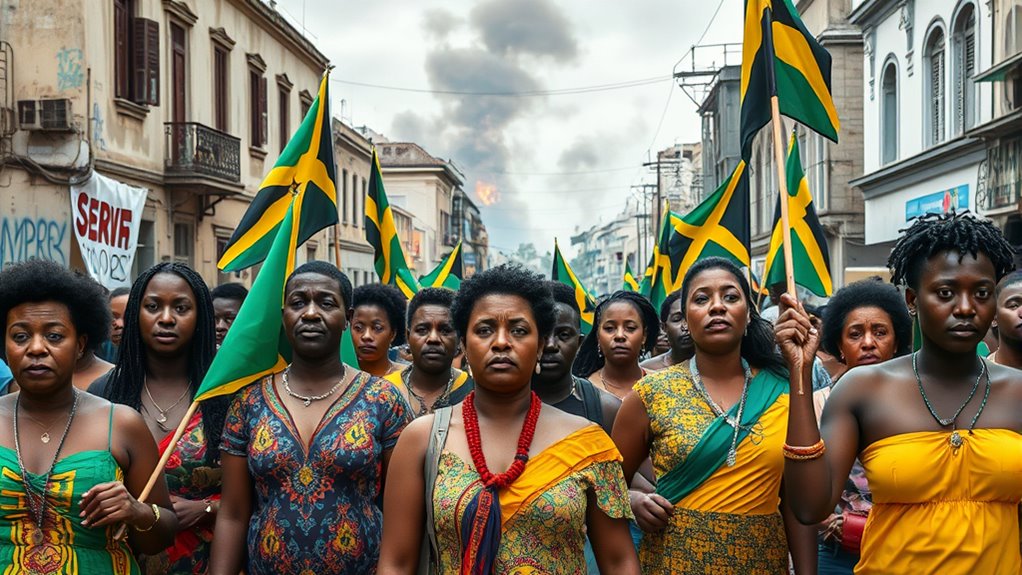
Why did Jamaica experience such frequent outbreaks of rebellion and unrest throughout its history? You can see that unrest stemmed from systemic injustice, economic hardship, and colonial control. These factors fueled anger and resistance. Additionally, the influence of for sale 100 reflects ongoing economic challenges that contributed to social unrest. Here are key moments:
- The 1865 Morant Bay Rebellion, led by Paul Bogle, erupted over land and justice issues, resulting in brutal suppression.
- The 1938 labor riots, driven by poor working conditions and racial inequality, pushed demands for political change.
- Throughout the 20th century, political unrest flared as factions fought over independence, economic policies, and social reforms.
Each uprising reflected deep frustrations with colonial rule, inequality, and lack of political power, shaping Jamaica’s fight for autonomy and justice.
Path to Modernization and Self-Government

As Jamaica modernized, it expanded its infrastructure and urban centers, transforming Kingston into a bustling capital by the late 19th century. Political reforms gradually increased local participation, paving the way for greater autonomy. These developments laid the foundation for Jamaica’s journey toward self-government and independence. The evolving economic benefits and cost savings from modernization efforts contributed to improved living standards and facilitated greater self-sufficiency across the island.
Infrastructure and Urban Growth
Jamaica’s journey toward modernization is marked by significant developments in infrastructure and urban growth, especially during the late 19th and early 20th centuries. You’ll notice how Kingston transformed into the island’s economic hub, with new roads, bridges, and public transport systems boosting connectivity. During this period, efforts focused on modernizing cities and improving transportation, laying the groundwork for future growth. Here are three key advances:
- Construction of roads, bridges, and a tramcar system to facilitate movement within urban areas.
- Early adoption of communication technology, including the introduction of the telephone in the 1880s.
- Relocation of the capital to Kingston in 1872, emphasizing urban expansion and economic importance.
- The integration of automation technology in city infrastructure projects contributed to more efficient urban management.
These developments propelled Jamaica toward a more connected, modern society.
Political Reforms and Autonomy
The development of Jamaica’s infrastructure and urban centers laid the foundation for broader political changes. As Kingston grew, it became a hub for political activity and demands for self-governance. In 1944, a new constitution introduced universal male suffrage, giving more people a voice in government. This marked a significant step toward independence, empowering Jamaicans to participate actively in political processes. Over time, pressure increased for full autonomy, leading to constitutional reforms that gradually transferred power from Britain to local leaders. By the early 1960s, Jamaica had achieved full independence on August 6, 1962. You now experience a government rooted in democratic principles, with elected officials shaping policies and guiding the nation’s future. This journey reflects Jamaica’s ongoing pursuit of self-determination and modernization.
Jamaica’s Journey to Independence
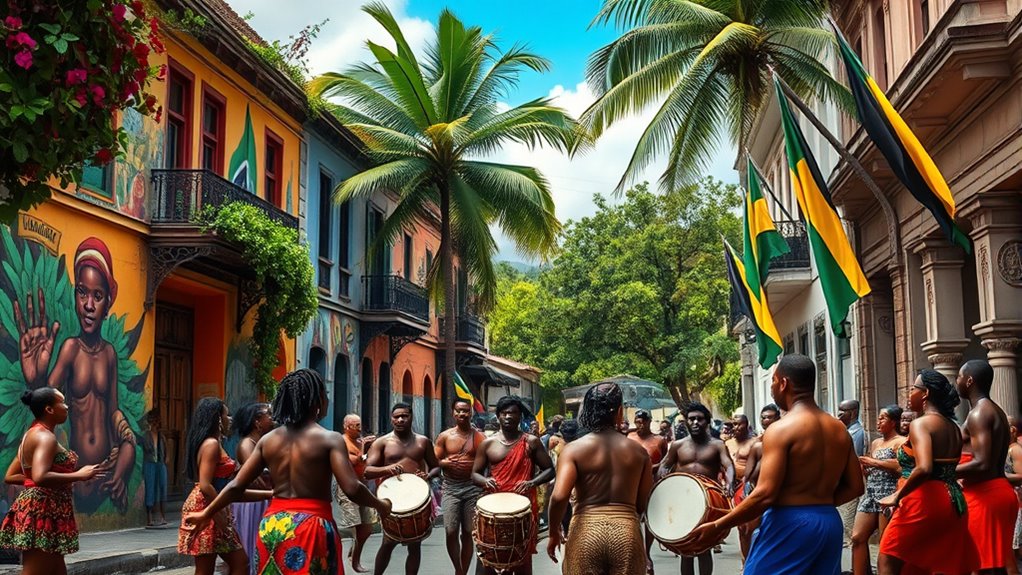
Have you ever wondered how Jamaica transformed from a British colony into an independent nation? Your journey begins with the push for self-governance in the early 20th century. By the 1940s, demands for political reform grew stronger, leading to key milestones.
- In 1944, Jamaica adopted a new constitution granting universal male suffrage, giving more people a voice.
- The 1950s saw increased political activism, with leaders like Alexander Bustamante advocating for independence.
- Finally, on August 6, 1962, Jamaica achieved independence, ending colonial rule and establishing its own government.
This journey reflects resilience and determination, shaping Jamaica’s path toward sovereignty and self-identity.
Building a National Identity
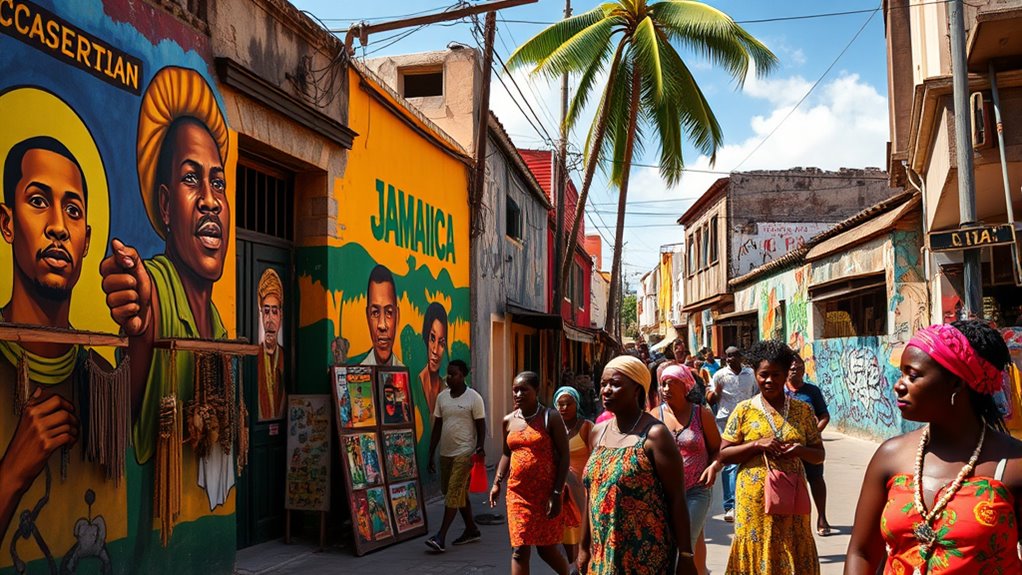
Ever wondered how Jamaica forged a strong sense of national identity amid its diverse cultural influences? You see, it’s a blend of history, language, symbols, and resilience. The Jamaican motto, “Out of Many, One People,” captures this unity. You can also look at symbols like the flag, which features black, green, and gold, representing strength, hope, and resources. Music genres like reggae became global icons, emphasizing themes of freedom and resistance. Additionally, national heroes like Paul Bogle and Marcus Garvey symbolize the fight for justice. This shared history of struggle and triumph unites Jamaicans across backgrounds. Here’s a quick overview:
| Cultural Element | Significance | Example |
|---|---|---|
| National Symbols | Foster unity and pride | Flag, motto |
| Music | Express identity and resilience | Reggae |
| Historical Figures | Inspire patriotism | Marcus Garvey |
| Language | Reflects colonial and local roots | Patois, English |
| Celebrations | Reinforce cultural bonds | Independence Day |
Cultural Expressions and Global Impact
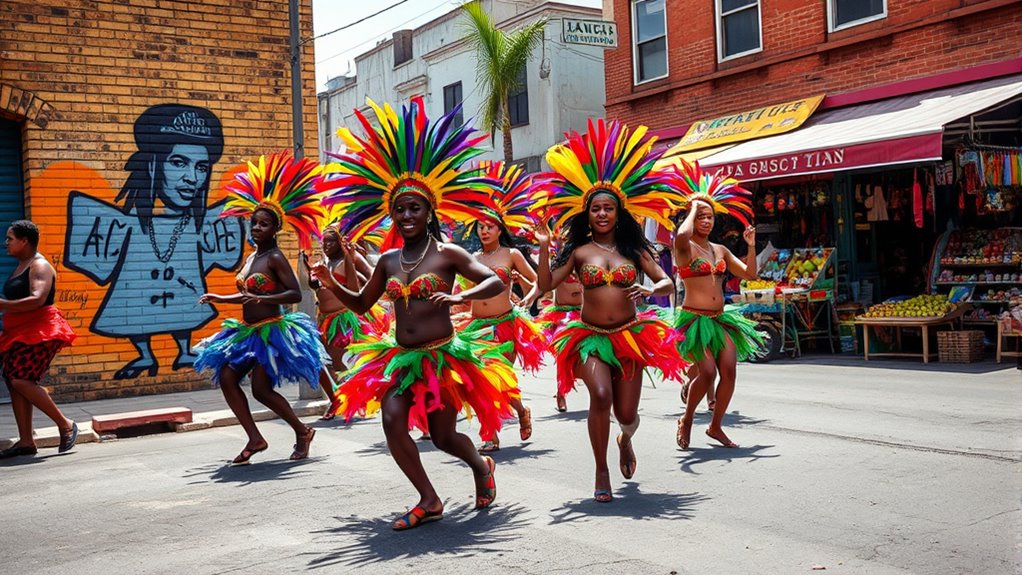
Jamaica’s rich cultural expressions, especially its music and dance, have made a profound impact worldwide. You likely know reggae, which spreads messages of peace and resistance across the globe. Beyond music, Jamaica’s influence extends through:
- Dancehall: This energetic genre shapes youth culture and inspires international artists.
- Cuisine: Jerk seasoning and ackee and saltfish are celebrated worldwide, showcasing Jamaican flavors.
- Festivals and Carnival: Events like Reggae Sumfest attract visitors, promoting tourism and cultural pride.
Your exposure to Jamaica’s culture highlights its power to inspire creativity and foster unity. These expressions have helped position Jamaica as a vibrant hub of artistic innovation, shaping global perceptions and encouraging cultural exchange.
Contemporary Challenges and Achievements
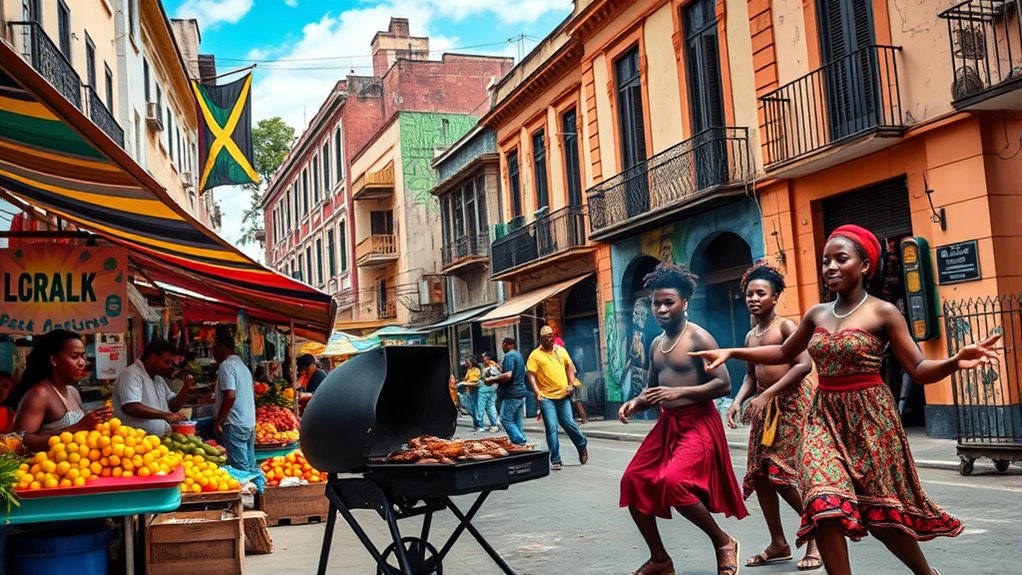
Despite its rich cultural legacy and global influence, Jamaica faces significant contemporary challenges that threaten its progress. The country struggles with high debt levels and economic dependence on bauxite, tourism, and remittances. Crime rates remain alarmingly high, impacting safety and development prospects. Political tensions between the Jamaica Labour Party and the People’s National Party sometimes hinder effective governance. Social issues, including poverty, unemployment, and inequality, still affect many Jamaicans. However, Jamaica also celebrates notable achievements. Its vibrant music, especially reggae, continues to influence worldwide culture. The nation has made strides in education, sports, and renewable energy initiatives. Overall, Jamaica’s resilience and cultural strength keep it moving forward despite ongoing obstacles.
Frequently Asked Questions
How Did the Taino People’s Culture Influence Modern Jamaican Traditions?
You can see the Taino people’s influence in modern Jamaican traditions through their art, language, and farming practices. Their vibrant pottery and carvings inspire local craftwork, while some words and place names trace back to Taino roots. Additionally, their farming techniques for crops like cassava and corn still impact local agriculture today. Their rich cultural legacy lives on in Jamaica’s celebrations, music, and community life, reflecting their lasting influence.
What Role Did Maroons Play in Jamaica’s Resistance Against Colonization?
You see, the Maroons were like fierce firebrands burning bright in Jamaica’s history, leading the resistance against colonization. They escaped slavery, formed independent communities, and fought off British forces through guerrilla tactics. Their resilience kept the spirit of freedom alive, and they even negotiated treaties for autonomy. Today, they symbolize strength and independence, inspiring Jamaicans to stand firm against oppression and preserve their cultural identity.
How Did Jamaica’s Indigenous Roots Shape Its Early Economic Practices?
Your indigenous roots, especially the Taino people, shaped Jamaica’s early economy through fishing and cultivating crops like corn and cassava. You can see their influence in traditional practices focused on sustainable resource use and local food production. These practices prioritized self-sufficiency and community sharing, laying a foundation that influenced later economic activities. Even after colonization, some of these indigenous methods persisted, reflecting their deep connection to the land and resources.
In What Ways Did British Rule Alter Jamaica’s Original Cultural Landscape?
You see a vibrant mix of cultures in Jamaica today, but British rule dramatically changed its original landscape. They introduced English language, British legal systems, and Christian churches, replacing indigenous practices. While the island’s natural beauty remains, the cultural fabric shifted from Taino and African roots to a colonial influence. This juxtaposition highlights how the British imposed their customs, reshaping Jamaica’s identity and leaving a lasting impact on its cultural landscape.
What Are the Lasting Impacts of Slavery on Jamaica’s Social Fabric Today?
You can see the lasting impacts of slavery in Jamaica’s social fabric through deeply rooted racial divisions, economic disparities, and cultural expressions. Many Afro-Jamaicans still face social and economic challenges, while their rich cultural traditions in music, dance, and religion reflect resilience. The legacy of slavery also influences ongoing struggles for justice and equality, shaping how communities interact and how the nation addresses inequality today.
Conclusion
As you walk through Jamaica’s vibrant streets today, you carry the echoes of its history—indigenous roots, colonial struggles, and a resilient spirit that refused to be silenced, even during times like the Boston Tea Party. Your journey reveals a culture born from adversity and triumph, constantly evolving yet deeply rooted in its past. Embrace this legacy, for Jamaica’s story is a living demonstration of freedom, unity, and the unbreakable human spirit.