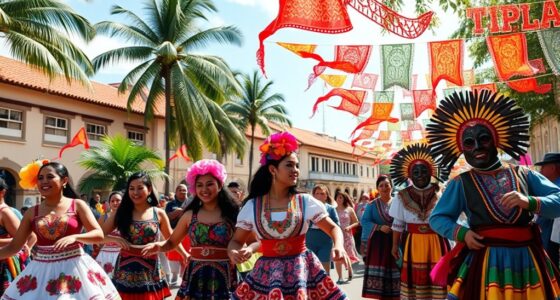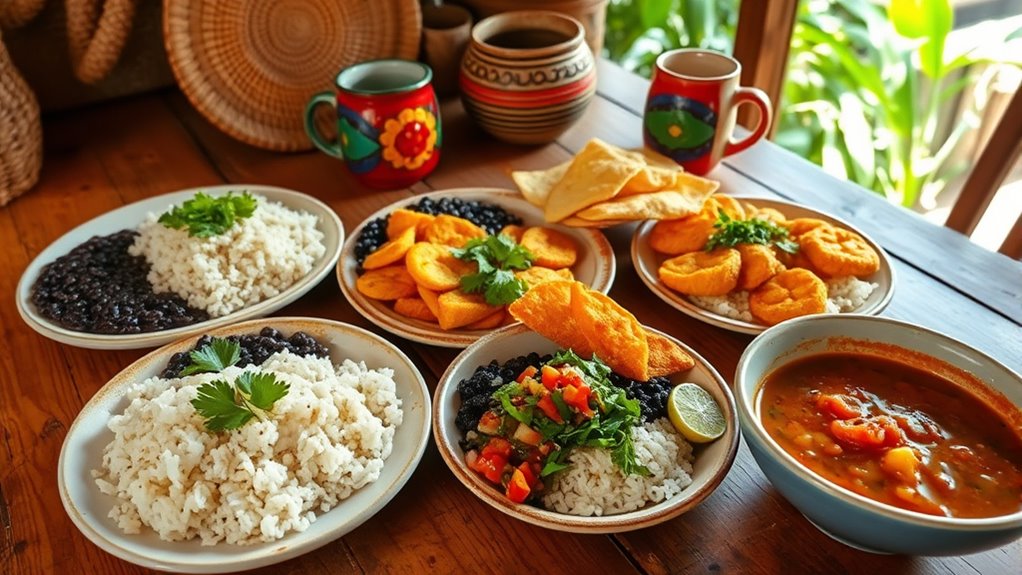

Costa Rican cuisine features staple ingredients like rice, beans, plantains, fresh tropical fruits, and seafood, blending indigenous, Spanish, and Afro-Caribbean influences. You’ll find hearty dishes such as Gallo Pinto, Casado, and Arroz con Pollo, prepared with traditional techniques like frying and slow cooking. Meals are social events, emphasizing community and family. With regional variations and modern twists, Costa Rican food celebrates local flavors and cultural heritage—keep exploring to discover more about these vibrant culinary traditions.
Key Takeaways
- Costa Rican cuisine centers on rice, black beans, tropical fruits, plantains, and fresh meats, reflecting indigenous and Spanish influences.
- Staple dishes include Gallo Pinto for breakfast, Casado for lunch, and Arroz con Pollo, emphasizing balanced, hearty meals.
- Traditional cooking techniques feature frying, slow cooking, steaming, and grilling to enhance natural flavors.
- Food fosters social bonds through family gatherings, community festivals, and shared street foods like Chifrijo.
- Regional variations highlight coastal seafood dishes and inland hearty stews, preserving culinary heritage through local ingredients and recipes.

Costa Rica Rican Flag Heat Resistant Oven Mitts and Pot Holders Set of 4-500°f Protection Utensil Pocket for Grilling, Baking, Cooking
500°f Extreme Heat Protection:Featuring Double-Layer Construction With Tough Polyester Shell And Thick Insulation, These Costa Rica Rican Flag…
As an affiliate, we earn on qualifying purchases.
As an affiliate, we earn on qualifying purchases.
Staple Ingredients and Dietary Patterns

In Costa Rican cuisine, rice and black beans are the foundation of most meals, and you’ll find them served daily across the country. These staples reflect the country’s agricultural roots and provide energy for daily activities. Alongside, you’ll enjoy fresh tropical fruits like pineapple, papaya, banana, coconut, and jocote, which are common snacks and dessert ingredients. Plantains are versatile too, prepared fried as maduros or green as patacones. Meat, including chicken, beef, pork, and fish, often accompanies meals, though vegetarians find options in urban areas. Bread also plays a essential role, appearing as tostadas or empanadas, baked or fried. Together, these ingredients create a balanced diet emphasizing hearty, flavorful, and accessible foods rooted in Costa Rica’s natural bounty. Additionally, traditional cooking techniques and local flavors are preserved through culinary heritage, which continues to influence the country’s vibrant food scene.

Costa Rican Cookbook: Simple, Fresh, and Vibrant Costa Rican Cooking
As an affiliate, we earn on qualifying purchases.
As an affiliate, we earn on qualifying purchases.
Iconic National Dishes
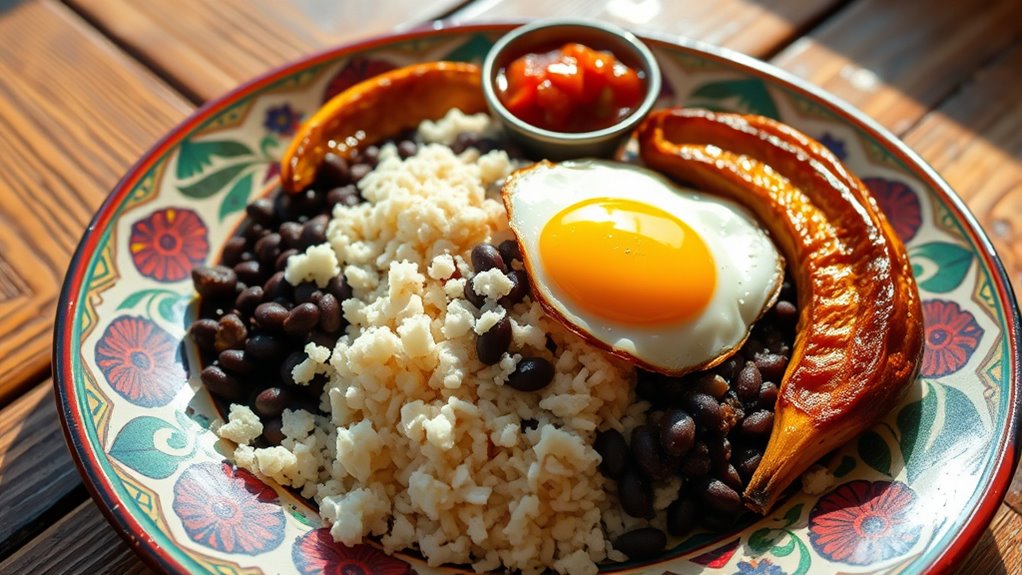
Costa Rican cuisine is celebrated for its iconic dishes that reflect the country’s rich cultural heritage and agricultural abundance. You’ll find Gallo Pinto, the national breakfast staple of rice and black beans stir-fried with onions, red peppers, cilantro, and Salsa Lizano, often served with eggs and fried plantains. For lunch, the casado offers a balanced plate of rice, beans, meat or fish, fried plantains, and vegetables, showcasing everyday flavors. Arroz con Pollo, a festive yellow rice dish with chicken, peas, carrots, and corn, is popular during celebrations. Another favorite is Chifrijo, a snack bowl of rice, kidney beans, fried pork, and salsa, perfect for social gatherings. These dishes embody Costa Rica’s simple yet flavorful culinary spirit, rooted in local ingredients and traditions. Incorporating mindful decluttering principles can help preserve traditional recipes and cooking tools by organizing them thoughtfully and responsibly.

Healthy Rican Sazon Seasoning 7.6 oz Large Pouch Puerto Rican Latin Spice Blend No Red 40 Gluten Free Keto Whole30 Approved No MSG Preservatives Artificial Flavors Non GMO Low Sodium (Sazon Large)
LARGER SIZE: 7.6 OZ size in a resealable pouch. Better Value, same great Flavor. This extra-large pouch sazón…
As an affiliate, we earn on qualifying purchases.
As an affiliate, we earn on qualifying purchases.
Traditional Cooking Techniques and Methods

Traditional Costa Rican cooking relies heavily on techniques like frying and slow cooking to develop rich flavors and textures. You’ll often fry plantains, empanadas, and meats to achieve crispy, savory results. Slow cooking is key for dishes like Olla de Carne, where patience allows flavors to meld deeply over several hours. Use achiote to color rice dishes such as Arroz con Pollo, adding mild seasoning and vibrant hue. You might also simmer ingredients with salsa Lizano or local herbs to enhance taste. Grilling is common for meats, especially in outdoor gatherings, while steaming vegetables preserves their freshness. These methods reflect a practical approach rooted in tradition, focusing on maximizing flavor while keeping preparations straightforward and hearty.

Costa Rican Cookie and Snack Variety Pack/Caja de Galletas y Snacks de Costa Rica – Includes Chiky, Merendina, Yipy, Tritapita, Bizcocho Palmareño, Galleta María, Cremas – 32 Pieces Total
FAMOUS COSTA RICAN SNACKS / SNACKS FAMOSOS DE COSTA RICA: Enjoy a variety pack of the most beloved…
As an affiliate, we earn on qualifying purchases.
As an affiliate, we earn on qualifying purchases.
Structure of Typical Meals and Cultural Significance

You’ll notice that Costa Rican meals are designed around the time of day and social connections. Breakfast fuels your day with hearty, energy-boosting foods like Gallo Pinto, while main meals like casado serve as social and nourishing gatherings. In the evening, lighter dishes provide comfort without heaviness, reflecting a balanced approach to daily life. Additionally, the use of traditional ingredients such as fresh vegetables, rice, and beans is central to maintaining authentic flavors.
Breakfast: Hearty and Energy-Boosting
Have you ever wondered what fuels Costa Ricans through their busy mornings? Breakfast is hearty and energy-boosting, often centered around Gallo Pinto—rice and black beans stir-fried with onions, peppers, and salsa Lizano. It’s typically served with scrambled or fried eggs, fresh cheese, and fried plantains. This meal reflects the importance of sustenance and tradition, preparing locals for a busy day. Here’s a quick overview:
| Main Ingredients | Preparation Style | Cultural Significance |
|---|---|---|
| Rice and beans | Stir-fried with seasonings | Daily staple and symbol of unity |
| Eggs | Fried or scrambled | Protein source for energy |
| Plantains | Fried or baked | Local flavor and tradition |
Main meals in Costa Rica serve as more than just nourishment; they are essential social gatherings that reflect the country’s warm hospitality and sense of community. During these meals, you’ll find families sharing dishes like casado, which combines rice, beans, meat or fish, fried plantains, and vegetables, representing balance and tradition. Breakfast often starts with Gallo Pinto, served with eggs and cheese, fueling your day. Lunch is the main event, bringing people together over hearty, inexpensive dishes that sustain physical labor and reinforce bonds. Evenings feature lighter options like soups or stews, emphasizing comfort and relaxation. These meals embody Costa Rican values—generosity, togetherness, and respect for local ingredients—making every shared plate a celebration of community and culture. The holistic approach to meal planning highlights the importance of balancing nutrition, tradition, and social connection in Costa Rican cuisine.
Evening Dishes: Light and Comforting
In Costa Rica, evening meals tend to be lighter and more relaxed, providing a comforting end to the day. You might enjoy a warm bowl of black bean soup or a simple salad with fresh tropical fruits. These dishes emphasize ease and digestion, often featuring local ingredients like plantains, rice, and vegetables. Imagine this:
| Savory | Sweet |
|---|---|
| Sopa Negra (black bean soup) | Fresh pineapple slices |
| Light fish or chicken stew | Ripe banana with honey |
| Steamed vegetables | Coconut flan |
| Toasted bread with cheese | Papaya salad |
These meals reflect the Costa Rican spirit of “Pura Vida,” emphasizing comfort, community, and nourishment without heaviness. They’re perfect for winding down while still honoring local flavors. Foraging practices can influence the availability of fresh ingredients and traditional recipes in the region.
Regional Influences and Culinary Fusion
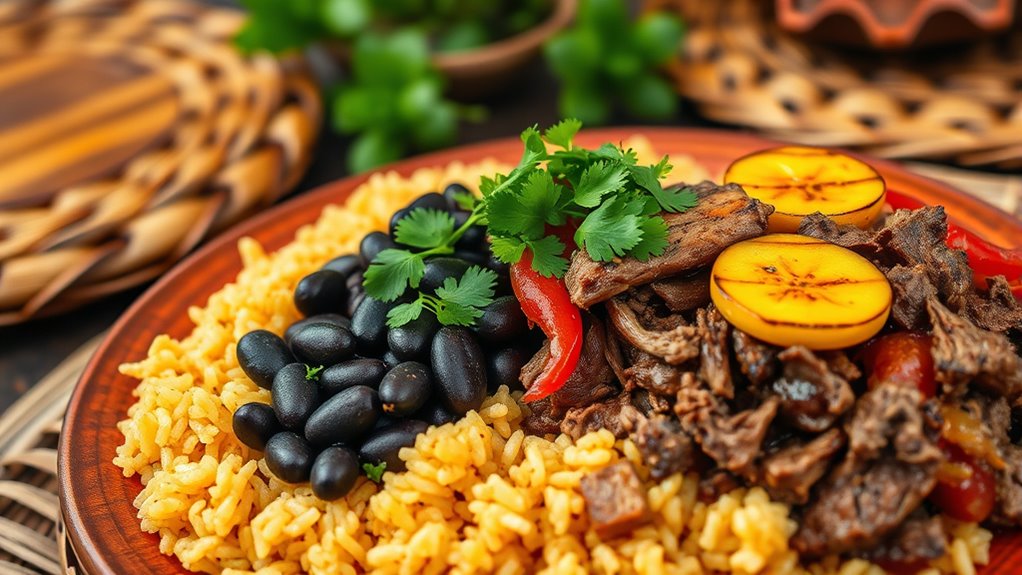
You can see how Costa Rican cuisine reflects a blend of indigenous and Spanish roots, creating a rich tapestry of flavors. Local ingredients like plantains, beans, and tropical fruits fuse with Spanish influences seen in dishes like empanadas and bread. This culinary fusion showcases how regional traditions adapt and evolve, making Costa Rican food uniquely vibrant. Cultural influences play a significant role in shaping the diverse flavors found across the country.
Indigenous and Spanish Roots
Costa Rican cuisine reflects a rich fusion of indigenous traditions and Spanish colonial influences, shaping its unique flavors and dishes. You’ll find staples like beans, rice, plantains, and tropical fruits, which come from native roots. Spanish colonizers introduced ingredients like wheat, dairy, and techniques such as baking and frying. This blending creates dishes like empanadas, flavored with cinnamon, and the use of achiote for vibrant color. The harmony of these influences is seen in recipes that combine local ingredients with colonial cooking methods, fostering a culinary identity rooted in history. Cultural fusion continues to define Costa Rican food, blending diverse elements into a cohesive culinary expression.
Fusion of Local Flavors
Regional influences and culinary fusion shape Costa Rican cuisine by blending diverse flavors, ingredients, and techniques from neighboring Central American countries, indigenous communities, and colonial history. You’ll notice how indigenous staples like plantains, beans, and tropical fruits combine with Spanish elements such as empanadas and breads, creating a rich tapestry of flavors. A prime example is Gallo Pinto, which mixes rice and beans with salsa Lizano, a local condiment rooted in indigenous and colonial traditions. Coastal regions incorporate Caribbean influences with spicy seasonings and seafood, while Afro-Caribbean flavors add depth to dishes like rice and beans. This culinary fusion reflects Costa Rica’s history of trade, migration, and cultural exchange, resulting in a vibrant, adaptable cuisine that celebrates diversity and regional identity. Additionally, the incorporation of advanced fusion techniques demonstrates how contemporary chefs innovate while respecting traditional flavors.
Sweet Treats and Beverage Traditions
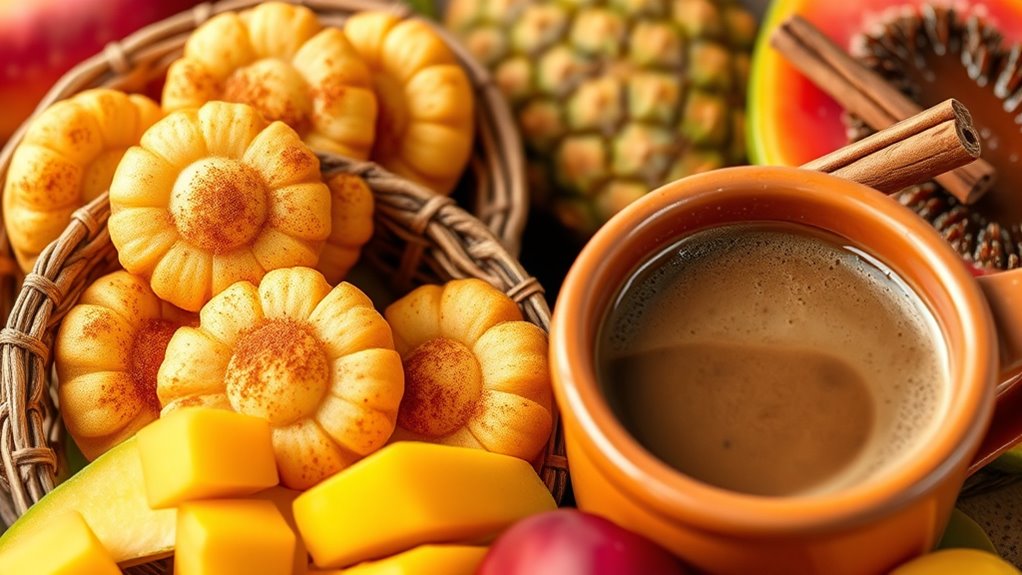
Sweet treats and beverages hold a special place in Costa Rican cuisine, reflecting the country’s rich agricultural bounty and cultural heritage. You’ll find desserts like tres leches cake, soaked in three kinds of milk, offering a creamy, sweet experience. Fresh fruit juices, made from tropical fruits like pineapple, papaya, and guava, are common refreshers, especially in hot weather. Honey products from regional fruits like jocote add natural sweetness to baked goods and traditional treats. Coffee, a national symbol, is enjoyed daily, often alongside breakfast or as a social ritual. You might also indulge in fried plantains—maduro—or sweet empanadas spiced with cinnamon. These sweet treats and drinks celebrate Costa Rica’s lush produce and blend indigenous and colonial influences, creating a vibrant, flavorful tradition. Additionally, traditional culinary techniques such as wood-fired baking enhance the unique flavors of many desserts.
The Role of Food in Costa Rican Social Life
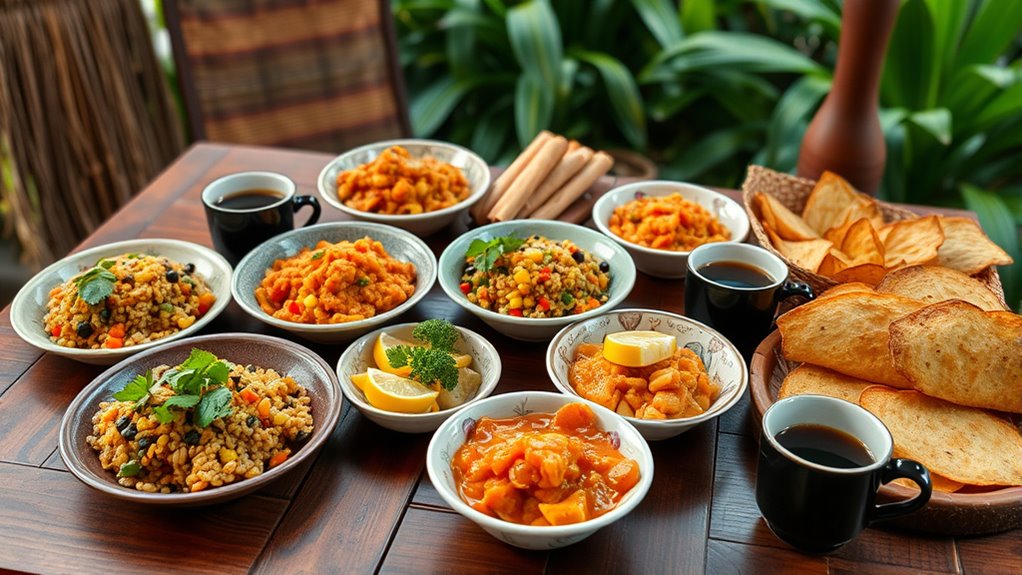
Food plays an essential role in shaping social interactions and community bonds throughout Costa Rica. When you share a meal, you’re participating in a deeply rooted tradition of togetherness and hospitality. Meals are more than sustenance; they’re moments to connect and celebrate. For example:
- Family gatherings often feature dishes like Gallo Pinto and Olla de Carne, strengthening bonds across generations.
- Community festivals showcase local specialties, fostering pride and unity among residents.
- Sharing street food or bar snacks like Chifrijo at social venues encourages relaxed conversations and camaraderie.
Through these shared eating experiences, Costa Ricans reinforce friendships, honor traditions, and express their warm “Pura Vida” spirit. Food isn’t just nourishment—it’s a crucial part of social life.
Variations and Family Recipes Across Regions
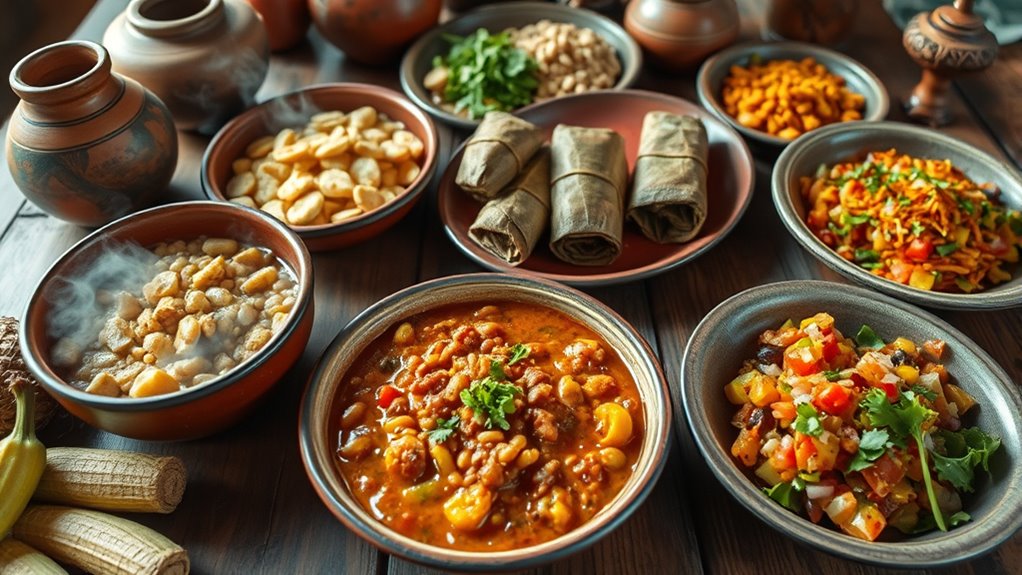
Costa Rican cuisine showcases a rich tapestry of family recipes and local variations that reflect the country’s diverse geography and cultural influences. In coastal regions, you’ll find dishes emphasizing seafood, like ceviche and grilled fish, while inland areas favor hearty stews and rice-based dishes. Families often tweak recipes based on available ingredients; for instance, some households prepare Gallo Pinto with added spices or herbs unique to their region. In the Nicoya Peninsula, you might encounter a version of Casado with fresh fish, whereas in the Central Valley, chicken or beef are more common. Traditional recipes like empanadas or tamales also vary by family, incorporating local flavors or ingredients passed down through generations. These regional differences highlight Costa Rica’s culinary adaptability and cultural diversity. Digital literacy programs have also played a role in preserving and sharing traditional recipes and culinary techniques across generations.
Preservation of Culinary Heritage and Modern Trends
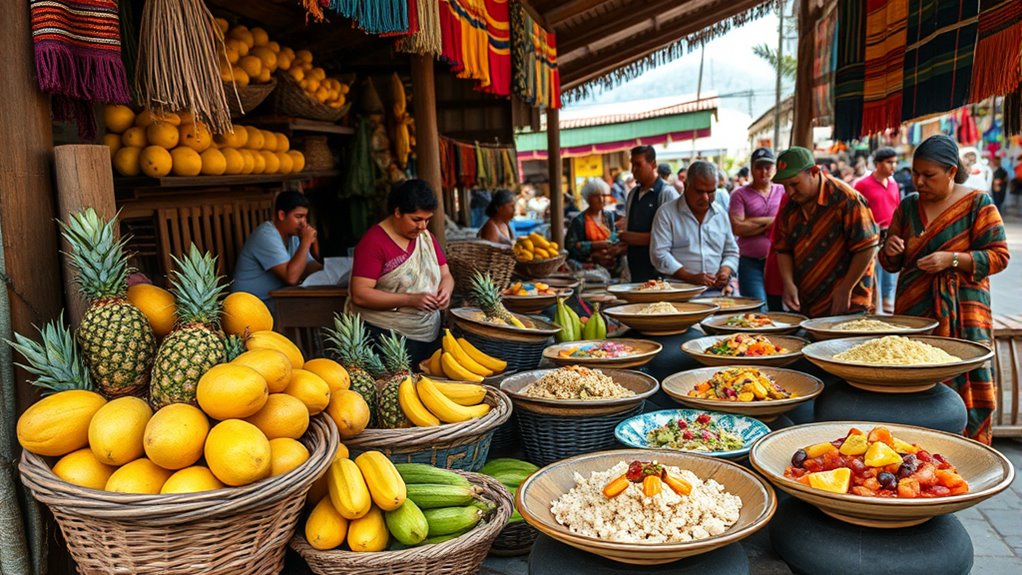
As traditional Costa Rican recipes face the pressures of globalization and urbanization, communities and culinary experts actively work to preserve these cultural treasures. You can see efforts through local festivals, culinary classes, and the promotion of traditional ingredients in markets. To keep these traditions alive, consider these approaches:
- Supporting local artisans and farmers who grow native ingredients like plantains, cilantro, and achiote.
- Documenting family recipes and sharing them through social media or community events to pass down culinary knowledge.
- Incorporating modern trends, such as fusion cuisine or healthier cooking methods, while respecting traditional flavors and techniques.
Frequently Asked Questions
How Do Costa Rican Dishes Vary Between Coastal and Inland Regions?
You’ll notice Costa Rican dishes vary between coastal and inland regions. On the coast, seafood like fish and shrimp dominate, often featured in ceviche or grilled dishes. Inland, you’ll find heartier meals with more meats, beans, and rice, reflecting agricultural abundance. Coastal areas incorporate tropical fruits and coconut more prominently, while inland dishes emphasize fresh vegetables and local herbs. These regional differences highlight the country’s diverse culinary landscape.
What Are Traditional Methods Used for Preparing Costa Rican Coffee?
Imagine the aroma of freshly brewed Costa Rican coffee wafting through lush plantations—that’s the essence of traditional preparation. You’ll find that locals often harvest ripe beans, then sun-dry and roast them over open flames, enhancing their rich flavors. Some prefer the drip method, allowing water to slowly seep through the grounds, while others use a French press to preserve the bold, full-bodied taste—truly a ritual blending nature and craft.
How Do Family Recipes Influence Regional Variations of National Dishes?
Family recipes shape regional variations of Costa Rican dishes by allowing cooks to adapt ingredients and techniques based on local traditions and available produce. You might add a unique spice or alter cooking times, making each version distinct. These personalized touches reflect cultural heritage and community preferences, creating a rich tapestry of flavors across regions. Your family’s culinary secrets help keep the essence of traditional dishes alive while adding regional character.
What Role Do Indigenous Ingredients Play in Modern Costa Rican Cuisine?
You’ll find indigenous ingredients are the backbone of modern Costa Rican cuisine, shaping flavors that feel like a gust of fresh air. Tropical fruits like papaya, pineapple, and coconut, along with native vegetables and herbs, bring authenticity to dishes. These ingredients act as the soul of the food, connecting past and present, and ensuring that traditional flavors remain vibrant, like a rainbow after a storm.
Are There Specific Festivals That Highlight Traditional Costa Rican Foods?
You’ll find that festivals like the Día de la Anexión and Festival de la Ciudad highlight traditional Costa Rican foods. During these events, you’re encouraged to indulge in local dishes like Gallo Pinto, casado, and hearty stews, showcasing regional flavors and culinary heritage. These celebrations let you experience authentic tastes, connect with cultural roots, and enjoy communal feasts that emphasize the country’s rich food traditions and vibrant, festive spirit.
Conclusion
Just like a vibrant tapestry woven with rich flavors and traditions, Costa Rican cuisine tells a story of community and history. Imagine sharing a hearty casado with friends, each bite connecting you to generations of locals who cherish these recipes. Food here isn’t just sustenance; it’s a celebration of culture and identity. Embrace these culinary roots, and you’ll discover how every meal reflects the heart and soul of Costa Rica.