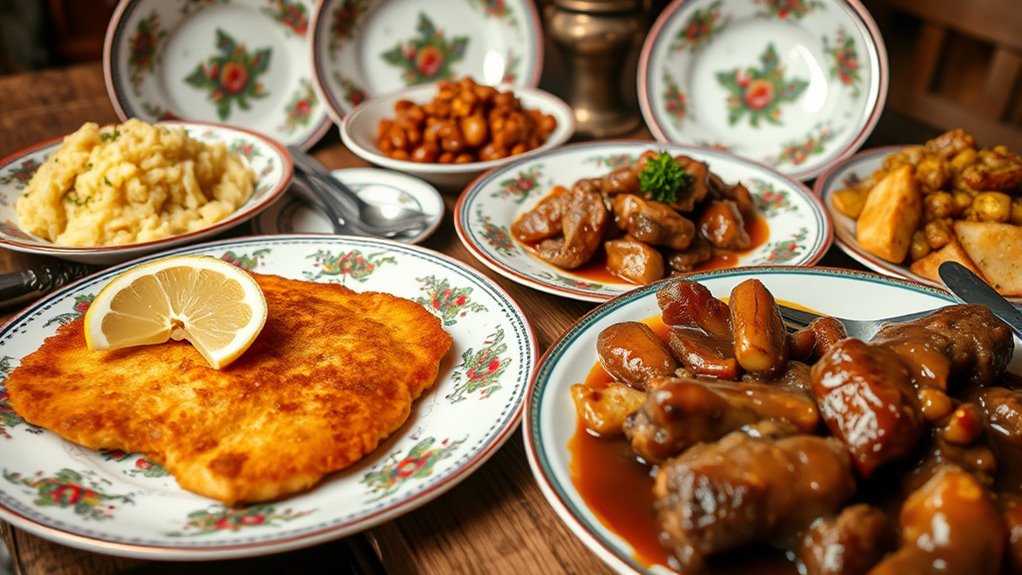

Austria’s cuisine blends Central European, Italian, Hungarian, and Ottoman influences, resulting in hearty, flavorful dishes. You’ll find classics like Wiener Schnitzel, goulash, and strong coffee traditions alongside delicious pastries such as Apfelstrudel and Sachertorte. Regional and Alpine flavors highlight smoked meats, dairy, wild mushrooms, and seasonal ingredients. To explore Austria’s rich culinary history, ingredients, and regional specialties further, you’ll uncover a fascinating blend of tradition and flavor that continues to shape its food culture.
Key Takeaways
- Austrian cuisine is deeply influenced by the diverse culinary traditions of the Austro-Hungarian Empire, blending Central European, Italian, Hungarian, and Ottoman flavors.
- Core ingredients include meats, dairy, seasonal vegetables, wild mushrooms, and freshwater fish, preserved through smoking and curing for year-round use.
- Classic dishes like Wiener Schnitzel, Gulasch, and Tafelspitz reflect regional flavors and historical culinary influences.
- Austria’s pastry tradition features iconic sweets such as Apfelstrudel, Sachertorte, and Kaiserschmarrn, often paired with coffeehouse beverages.
- Seasonal and alpine practices emphasize hearty, warming dishes with local ingredients like smoked meats, root vegetables, and mountain herbs.
The Historical Roots of Austrian Cuisine
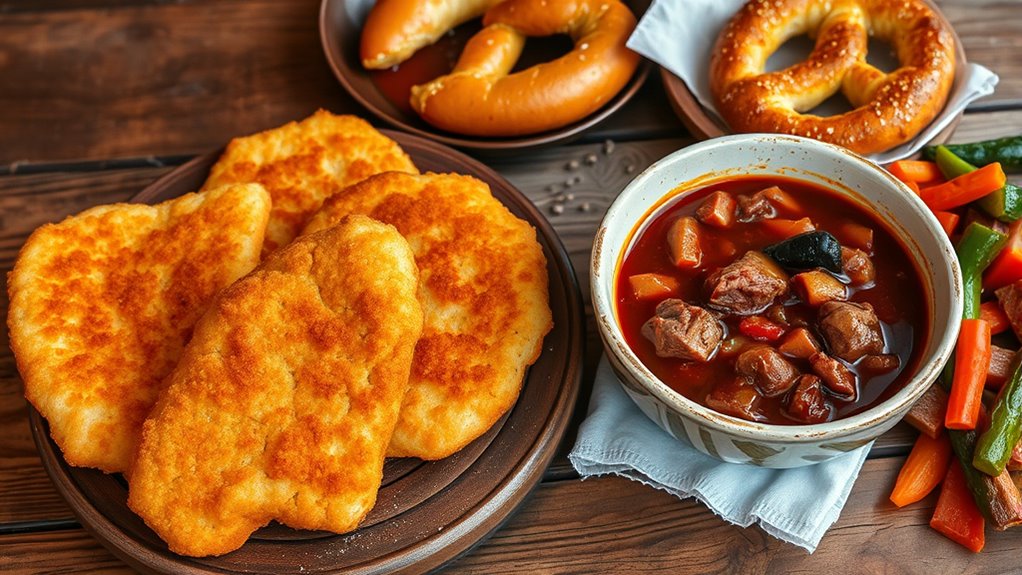
The roots of Austrian cuisine run deep in the history of the Austro-Hungarian Empire, which served as a melting pot of diverse cultures and culinary traditions. You can see this influence in dishes that blend Central European, Italian, Hungarian, Bohemian, and Ottoman flavors. The empire’s vast reach introduced recipes and ingredients from sixteen languages and regions, shaping Austria’s culinary identity. For example, Wiener Schnitzel reflects Italian influence, while goulash hints at Hungary’s culinary style. The Ottoman Empire’s legacy is evident in coffee and pastries like Apfelstrudel. These exchanges weren’t just peaceful; migrations and conflicts led to accidental adoptions and adaptations. As a result, Austrian cuisine is a layered, dynamic mix of traditions that evolved through centuries of cultural interaction. Additionally, the diverse ingredients incorporated into Austrian dishes exemplify the extensive cultural exchanges facilitated by the empire’s vast territories.
Fundamental Cooking Techniques and Key Ingredients

You’ll find that classic Austrian cooking relies on techniques like frying, boiling, braising, roasting, and stewing to bring out rich flavors. Essential regional ingredients include meats such as beef, pork, and offal, along with dairy products like cheese, milk, and butter. These staples, combined with seasonal vegetables and local herbs, form the foundation of authentic Austrian dishes. Incorporating traditional cooking methods can enhance the depth and authenticity of these culinary creations.
Classic Cooking Methods
Austrian cuisine relies on a set of fundamental cooking techniques that shape its hearty and flavorful dishes. You’ll find frying, boiling, braising, roasting, and stewing central to many recipes. For example, stews like Gulasch use paprika and slow cooking to develop rich flavors. When preparing meats like Wiener Schnitzel or Tafelspitz, you’ll bread, fry, or boil them to perfection. Roasting enhances flavors in dishes such as roasted pork or beef, while boiling is essential for preparing broth-based dishes or tender vegetables. Stewing and braising allow tough cuts to become tender, often infused with herbs and spices. These methods work in harmony with key ingredients like fresh meats, dairy, root vegetables, and wild mushrooms, creating the robust taste characteristic of Austrian cuisine. Additionally, temperature control during cooking is vital to achieving the desired textures and flavors in traditional dishes.
Essential Regional Ingredients
Essential regional ingredients form the backbone of Austrian cuisine, shaping the flavors and character of its dishes. You’ll find that potatoes, especially in dishes like Erdäpfelsalat, serve as versatile staples, providing hearty sustenance. Freshwater fish, such as trout and char, are prized in mountain regions, often prepared simply to highlight their delicate flavors. Wild mushrooms, or Schwammerl, add earthy depth to stews and sauces, especially in autumn. Dairy products like butter, cheese, and milk are fundamental, used in baking pastries or enriching sauces. Root vegetables—carrots, turnips, and parsnips—are crucial for winter meals, while grains like wheat and rye form the basis for bread and dumplings. You’ll notice these ingredients reflect Austria’s alpine landscape and seasonal cycles, emphasizing freshness and tradition. Biodiversity in local ecosystems supports the variety of these ingredients, ensuring their availability and quality for traditional cooking.
Meat and Dairy Staples
Meat and dairy products form the cornerstone of Austrian cuisine, reflecting both its alpine environment and long-standing culinary traditions. You’ll find beef, pork, and offal used in many dishes, often paired with local wines rather than relying solely on the meat’s flavor. Hearty sausages, roasts, and stews highlight the importance of meat in everyday meals. Dairy is equally essential, especially in mountain regions where milk, cheese, and butter fuel labor-intensive lifestyles. You’ll notice dairy features prominently in dishes like Kaiserschmarrn and in rich sauces. Freshwater fish and wild mushrooms also add regional variety. Seasonal changes influence ingredient choices, with root vegetables and grains in winter and dairy and meats from mountain pastures during warmer months. The quality of ingredients significantly impacts the authenticity and flavor of traditional Austrian dishes.
Iconic Dishes and Regional Specialties
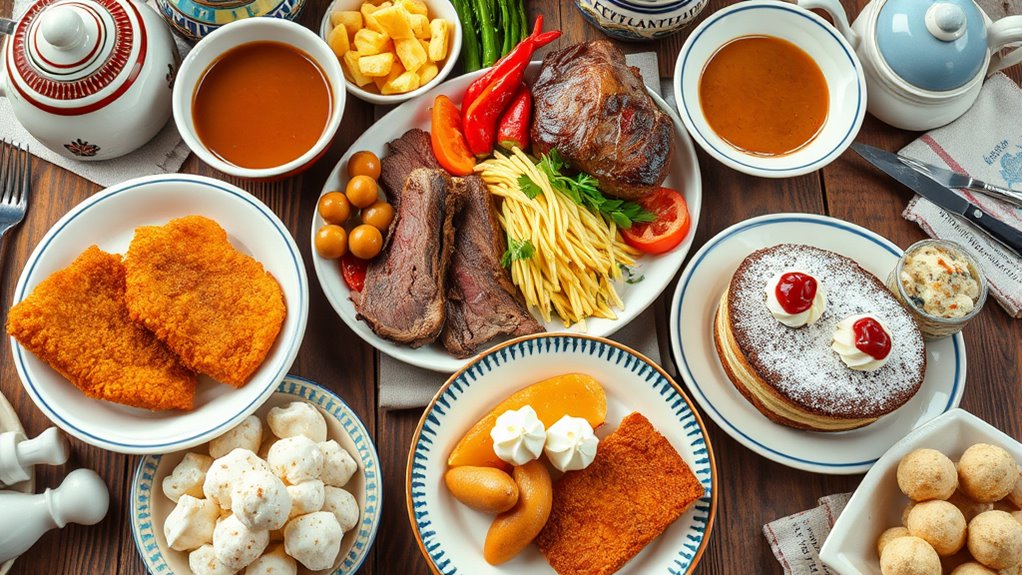
Among Austria’s many culinary treasures, several dishes stand out as icons of its rich regional diversity. You’ll recognize Wiener Schnitzel, a crispy breaded veal cutlet served with parsley potatoes and cranberry sauce. In Vienna, Tafelspitz offers tender boiled beef with root vegetables, a favorite among locals. Gulasch, inspired by Hungarian cow-herder cuisine, appears across the country as a paprika-spiced stew. Tiroler Gröstl reflects Tyrolean alpine traditions—a hearty fry-up of potatoes, onions, and leftover meat topped with a fried egg. Erdäpfelsalat, a tangy potato salad with vinegar, onions, and sometimes bacon, accompanies many main dishes. These regional specialties showcase Austria’s culinary history, blending influences from neighboring countries and local ingredients into robust, comforting flavors. Additionally, the use of traditional cooking techniques like slow braising and smoking enhances the depth of flavors in many Austrian dishes.
Traditional Austrian Pastries and Sweets

Austria’s rich culinary tradition extends beyond hearty main dishes to its world-famous pastries and sweets, which showcase a blend of local ingenuity and historical influences. You can’t visit Austria without indulging in Apfelstrudel, a delicate pastry filled with spiced apples, inspired by Ottoman baklava and phyllo dough techniques. Sachertorte, a dense chocolate cake layered with apricot jam and topped with glossy chocolate glaze, reflects a mix of French, German, and Ottoman culinary traditions. Kaiserschmarrn, a fluffy shredded pancake, is often served with fruit compotes, offering imperial roots. Palatschinken, thin Austrian crêpes filled with jam or sweet cheese, showcase multicultural influences. These desserts are more than treats — they’re a delicious reflection of Austria’s rich history and diverse cultural tapestry.
Beverage Pairings and Coffee Culture

Beverage pairings play a vital role in enhancing the flavors of traditional Austrian dishes, with wines chosen based on their ability to complement sauces and preparation styles. You’ll find Grüner Veltliner, Austria’s signature white wine, pairs beautifully with dishes like Wiener Schnitzel or Goulash, balancing acidity and richness. Light reds, such as Zweigelt, work well with heartier meat dishes, adding depth without overpowering flavors. Coffee culture is equally integral, with Vienna’s historic cafés serving as social hubs. Here, you can enjoy a robust Melange or a delicate Einspänner alongside a slice of Apfelstrudel. Be it wine or coffee, Austria’s beverage traditions are designed to elevate your culinary experience, reflecting centuries of cultural influences and regional preferences. Additionally, traditional fermentation techniques play a significant role in shaping Austria’s unique beverage profiles, contributing to the rich tapestry of its culinary heritage.
Regional Variations and Alpine Culinary Influences
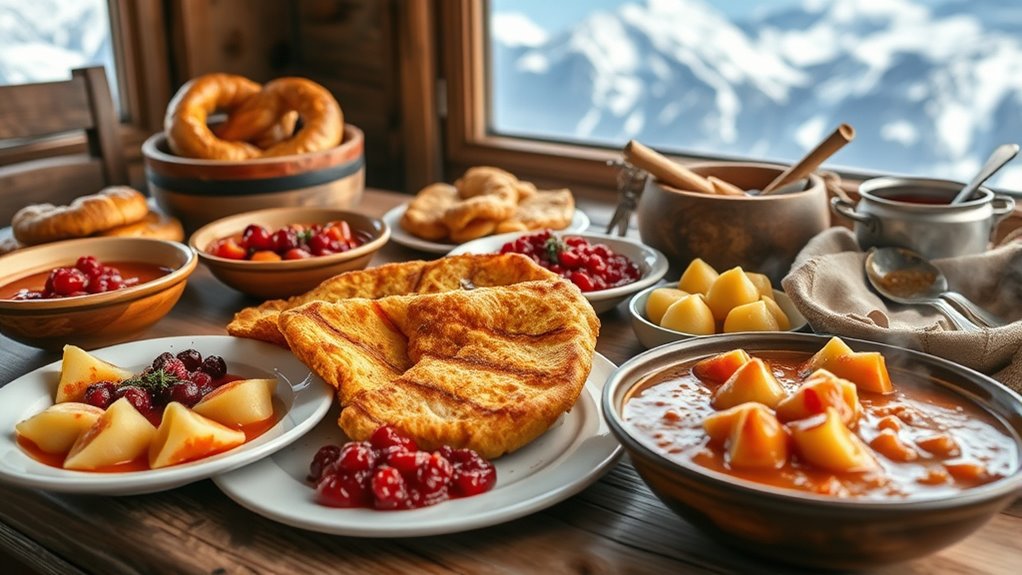
The rugged terrain and cooler climate of Austria’s Alpine regions shape distinctive culinary traditions that emphasize hearty, warming dishes. You’ll notice a focus on dairy, smoked meats, and root vegetables, which provide energy and comfort in harsh weather. In mountain huts, Brettljause showcases local smoked meats, cheeses, and fresh bread, perfect for sustenance. Tyrol’s specialties like Speckknödel and Tiroler Gröstl highlight rustic, mountain-influenced flavors. In Styria, you encounter unique dishes like Frittatensuppe made from local ingredients. Salzburg’s regional sweets, such as Salzburger Nockerln, reflect a love for light, egg-based desserts. Overall, Alpine influences emphasize simple, robust ingredients prepared with techniques suited to the mountainous environment, creating a distinctive culinary identity rooted in tradition and the landscape. Additionally, traditional food preservation methods like smoking and curing are essential to maintaining the availability of ingredients throughout long winters.
The Role of Meat, Fish, and Dairy in Austrian Cooking

Meat and dairy are the backbone of Austrian culinary traditions, especially in alpine regions. You’ll find hearty dishes featuring beef, pork, and dairy products that reflect the area’s mountain lifestyle. These ingredients are essential, shaping everything from main courses to regional specialties and desserts. Additionally, the use of local ingredients enhances the authenticity and flavor of traditional Austrian dishes.
Central Role of Meat
Austrian cuisine places a strong emphasis on meat, especially beef, pork, and offal, which form the foundation of many traditional dishes. You’ll find these meats prepared through various methods like roasting, braising, and stewing, highlighting their importance. Dishes such as Tafelspitz showcase tender boiled beef, while Wiener Schnitzel features breaded veal cutlets that are crispy and flavorful. Pork is central in hearty recipes like Tiroler Gröstl and bacon dumplings, often paired with regional wines or fresh horseradish. Offal, including liver and kidneys, appears in rustic stews and regional specialties. These meats are not only central to the flavors but also reflect Austria’s historical reliance on locally available ingredients, shaping its rich culinary identity. Incorporating traditional meat preparation techniques helps preserve the authentic flavors and cultural heritage of Austrian cooking.
Dairy in Alpine Cuisine
In alpine regions of Austria, dairy products play a vital role in shaping traditional cuisine, especially given the abundance of mountain pastures and dairy farms. You’ll find that milk, cheese, and butter are foundational ingredients in many hearty dishes. Fresh dairy sustains mountain communities during long winters, making it essential for both cooking and preservation. You might enjoy local cheeses like Bergkäse or Emmental, often used in fondue or melted over bread. Dairy also enriches pastries such as Apfelstrudel and Sachertorte, adding richness and texture. In mountain huts, you’ll often see dairy products paired with smoked meats and root vegetables, creating satisfying, seasonally adapted meals. Dairy’s integral presence highlights Austria’s alpine heritage and resourcefulness in utilizing local, fresh ingredients.
Seasonal and Local Ingredients Shaping the Cuisine
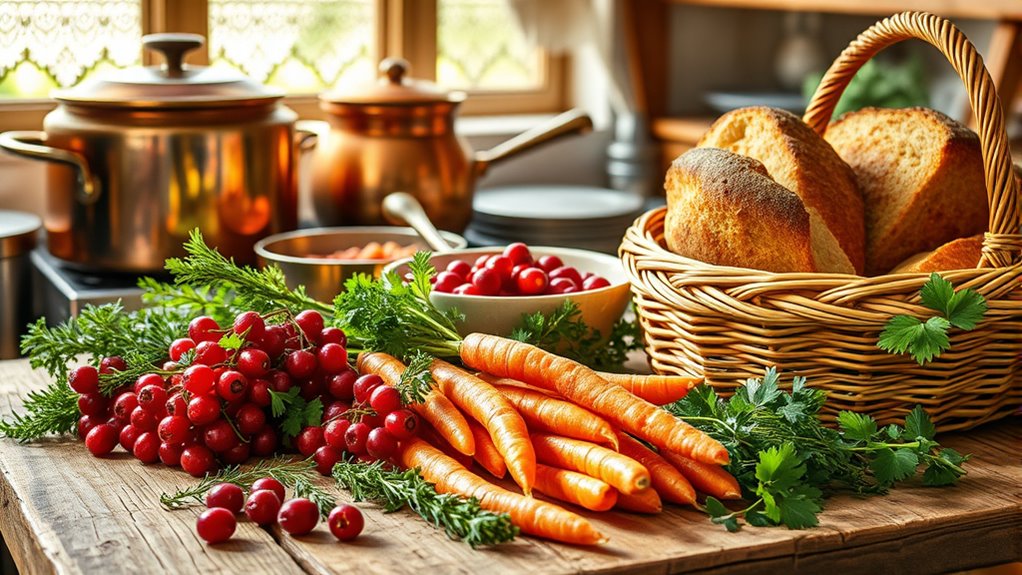
Seasonal and local ingredients are the backbone of Austrian cuisine, shaping menus and flavor profiles throughout the year. You’ll find that root vegetables like carrots, turnips, and potatoes dominate winter dishes, providing hearty sustenance. In the warmer months, fresh herbs, wild mushrooms, and mountain berries add vibrant flavors to regional recipes. Dairy products from alpine farms, such as milk, cheese, and butter, are essential year-round, often used in traditional pastries and hearty stews. Wild game and freshwater fish are also seasonal staples, reflecting Austria’s diverse landscapes. Local markets showcase ingredients that are harvested at their peak, ensuring authentic taste and quality. By relying on what’s available locally and seasonally, Austrian cooks create dishes that are both flavorful and deeply connected to their environment.
Frequently Asked Questions
How Has Austria’s History Influenced Its Modern Culinary Identity?
You see Austria’s history shaping its culinary identity through its diverse influences from the Austro-Hungarian Empire, Ottoman Empire, and neighboring countries. You taste this in dishes like Wiener Schnitzel, Goulash, and Apfelstrudel, which blend rustic roots with refined techniques. Coffee culture, introduced by Turks, remains essential. Migrations, wars, and peaceful exchanges have layered flavors, making Austrian cuisine dynamic, multicultural, and rich with tradition and innovation.
What Are Some Lesser-Known Traditional Austrian Dishes?
Like uncovering hidden gems, lesser-known Austrian dishes invite you to explore beyond the classics. You’ll find dishes like Kasnocken, pasta dumplings topped with melted cheese, and Backhendl, crispy fried chicken from Carinthia. Also, try Stelze, spiced pork knuckles with sauerkraut, and Buchteln, sweet yeast rolls filled with jam. These regional specialties showcase Austria’s rich culinary diversity, blending rustic flavors with subtle sophistication.
How Do Regional Ingredients Shape Austria’s Diverse Cuisine?
You see that regional ingredients shape Austria’s diverse cuisine by influencing which dishes become popular locally. In the Alps, dairy, smoked meats, and root vegetables create hearty mountain meals like Brettljause or Tiroler Gröstl. In Styria, fresh herbs and vegetables inspire dishes like Frittatensuppe. Coastal regions feature freshwater fish, while vineyards provide grapes for wine pairings. These ingredients reflect Austria’s varied landscapes and cultural influences, creating a rich, regional culinary tapestry.
What Are Unique Austrian Cooking Techniques Not Widely Known?
You might not realize that Austria uses unique techniques like braising meats with aromatic herbs and slow-cooking stews to maximize flavor. You’ll also find that making their signature pastries involves delicate phyllo dough layering and precise rolling, influenced by Ottoman traditions. Additionally, traditional methods like smoking meats for flavor and preparing dishes with seasonal ingredients showcase Austria’s resourcefulness and deep culinary heritage, setting their cooking apart from other cuisines.
How Do Austria’s Wine and Beverage Traditions Complement Its Food?
Think of Austrian wines and beverages as the perfect dance partners that elevate every dish you enjoy. You’re encouraged to pair Grüner Veltliner with delicate schnitzel, letting its crisp acidity sing alongside tender meat. Richer stews find harmony with fruity reds, while a sip of coffee or a shot of schnapps acts as a warm encore, completing the culinary symphony. These traditions turn dining into a memorable, flavor-filled performance.
Conclusion
Discover Austria’s authentic allure through its rich, rustic recipes and vibrant traditions. From hearty meats to heavenly pastries, each bite tells a story of history, harmony, and heritage. Embrace the enchanting essence of Austrian cuisine—where timeless techniques meet tantalizing tastes. Let the lively layers of local flavors and legendary landmarks lift your culinary curiosity. Immerse yourself in this delightful domain and savor the soulful symphony of Austria’s culinary culture.