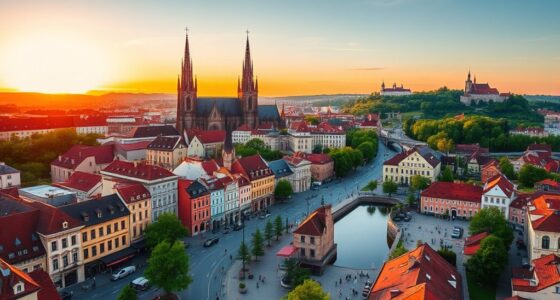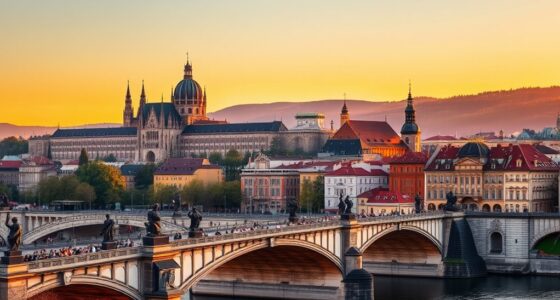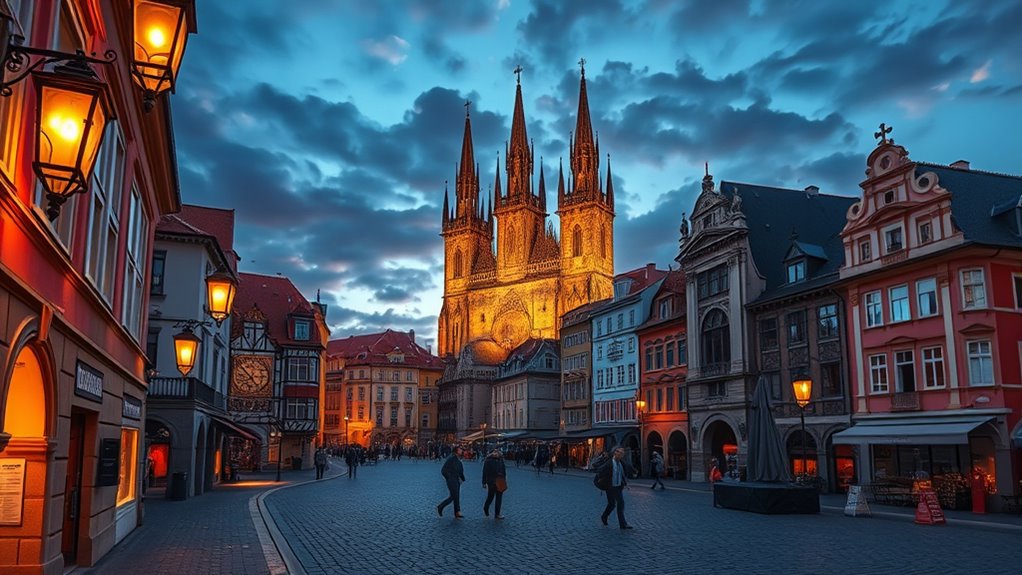

You’re exploring a land shaped by centuries of history, from early Celtic tribes and medieval grandeur to turbulent empires and revolutions. Czechia’s rich culture is reflected in its stunning architecture, vibrant arts, and enduring traditions like folk music and festivals. Despite struggles under empires and totalitarian regimes, the country has preserved its identity through language, literature, and community. Continuing will reveal how these historical threads weave into the lively, resilient Czech culture today.
Key Takeaways
- Czechia’s history encompasses Celtic, Germanic, and Slavic settlements, shaping a rich cultural heritage from ancient times to medieval prosperity.
- The country boasts a diverse architectural landscape, including Gothic, Baroque, and modernist structures, reflecting its artistic evolution.
- Czech literary and musical traditions, featuring figures like Kafka, Dvořák, and Smetana, are central to national identity and cultural expression.
- Historical political movements, from Habsburg rule to independence and resistance, have significantly influenced Czech cultural development.
- Contemporary Czech culture preserves traditions through festivals, museums, and digital heritage, fostering national pride and societal well-being.
Origins and Early Inhabitants of Czechia
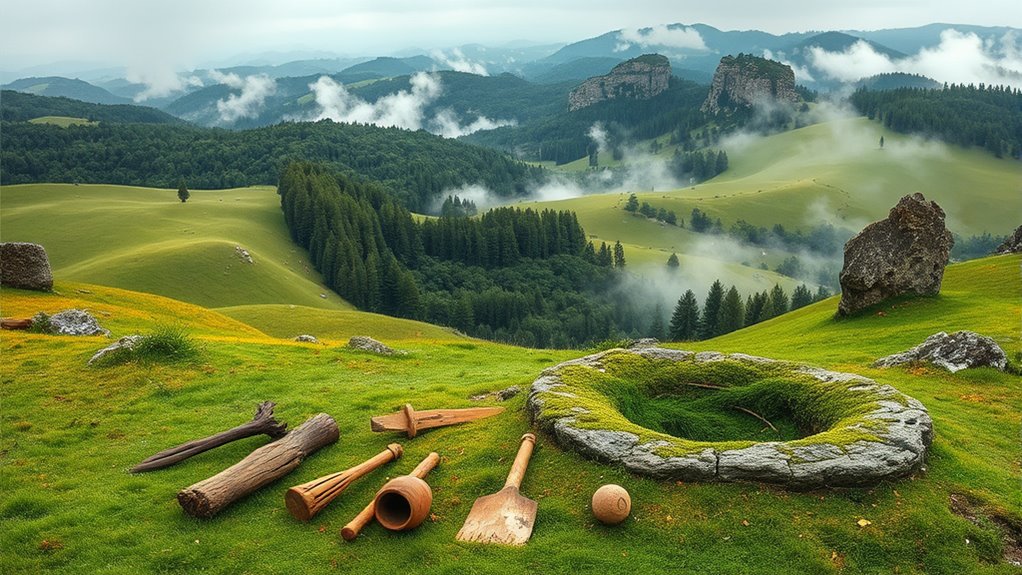
The origins of Czechia trace back to ancient times when Celtic tribes settled in the region around the 4th century BC. You can imagine these early inhabitants establishing small communities, leaving behind artifacts and fortifications that hint at their presence. By the 1st century AD, Germanic tribes moved through, mixing with the Celtic remnants. Then, during the 5th and 6th centuries AD, Slavic tribes arrived, shaping the region’s future. These tribes brought new customs, language, and social structures, forming the foundation of Czech culture. Over time, their settlements expanded, and their descendants laid the groundwork for the medieval Czech state. This early history reflects a blend of different peoples, each influencing the land’s cultural mosaic that continues today. Additionally, these diverse influences underscore the importance of understanding historical development in appreciating the region’s rich cultural heritage.
Medieval Flourishing and Religious Influences
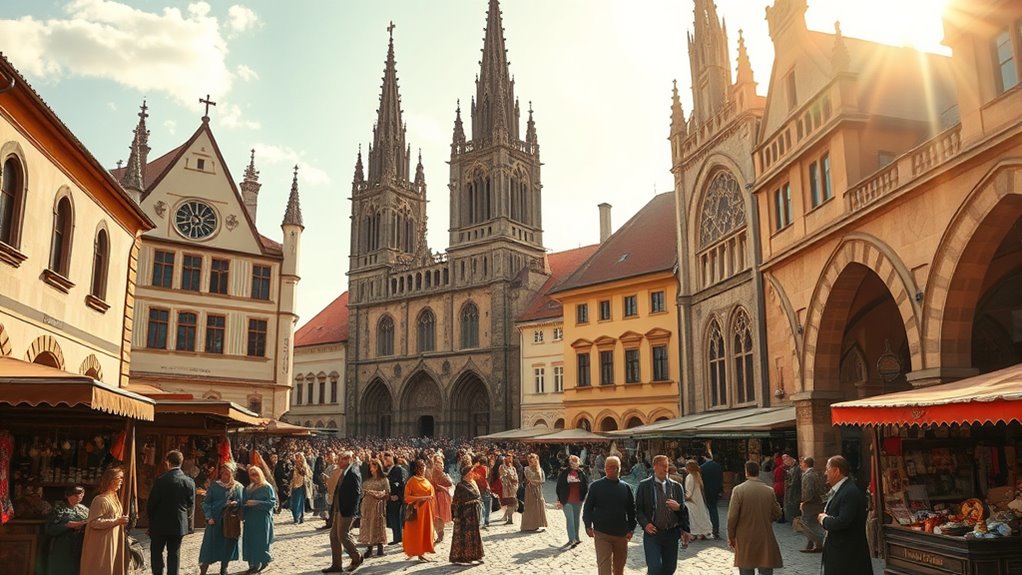
During the medieval period, Czechia experienced a remarkable cultural and religious growth that shaped its identity for centuries. You can imagine the bustling streets of Prague, where stone Gothic cathedrals rise above markets and scholars gather at universities. Religious influence spread through monasteries and churches, fueling artistic and intellectual pursuits. The founding of Charles University in 1348 marked a major milestone, drawing students and thinkers from across Europe. Jewish communities established their own quarters, enriching local culture despite restrictions. You might picture illuminated manuscripts, intricate altarpieces, and the vibrant atmosphere of religious festivals. The period’s legacy endures in the grand architecture, scholarly traditions, and deep-rooted faith that continue to define Czechia’s medieval heritage. Additionally, advances in color accuracy and detailed artwork can be seen in the illuminated manuscripts and religious artifacts from this era.
The Habsburg Era and National Awakening
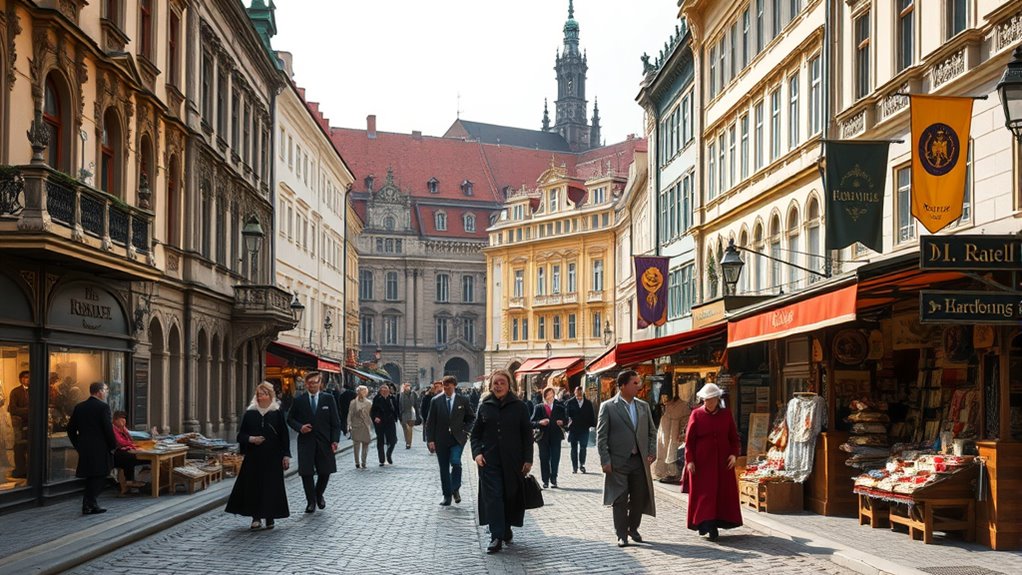
During the Habsburg era, you see how Czech culture faced suppression but also sparked a strong national revival. Reform movements emerged to preserve the Czech language and push for autonomy, even as minority rights improved under leaders like Joseph II. This period set the stage for future independence efforts, blending cultural resilience with political activism. The development of Self Watering Plant Pots during this time reflects the innovative spirit of the Czech people in adapting to new challenges.
Revival of Czech Culture
Amid the constraints of Habsburg rule, Czech intellectuals and writers began to revive their language and cultural identity, laying the groundwork for a national awakening. They emphasized Czech history, folklore, and traditions to foster pride and unity. This movement inspired the creation of newspapers, literature, and cultural societies that celebrated Czech heritage. You can imagine gatherings where folk songs echoed, textbooks emphasized Czech history, and writers crafted patriotic poetry. The movement’s energy sparked a renaissance in arts and language, gradually reclaiming Czech identity. The Czech language revival played a crucial role in strengthening national consciousness during this period.
Reforms and Minority Rights
Reforms and minority rights in the Habsburg era played a pivotal role in shaping Czech national identity. During this period, reforms like those under Joseph II aimed to reduce discrimination against Jews and other minorities, gradually improving their legal status. As Czech nationalists emerged in the late 18th century, they pushed for cultural revival and political autonomy, emphasizing language and traditions. The 1848 revolutions further fueled these efforts, inspiring demands for greater self-rule within the empire. Despite setbacks, Czech leaders maintained their focus on reviving national culture and securing rights for minorities. These reforms laid the groundwork for future independence movements, fostering a sense of unity and resilience among Czechs and minority communities alike. Additionally, the recognition and protection of minority rights contributed to the cultural diversity within the empire, which later influenced the development of a more inclusive national identity. This era set the stage for the nation’s eventual emergence as an independent state.
Birth of Czechoslovakia and Interwar Developments

Have you ever wondered how Czechoslovakia came into being? After World War I, you witness the collapse of Austria-Hungary and the rise of a new nation rooted in self-determination. You see leaders like Tomáš Garrigue Masaryk shaping the country’s future, promoting democracy and equality. The interwar period, called the “First Republic,” is marked by stability and growth, yet tensions simmer beneath the surface. You recall the tense atmosphere over Sudetenland, inhabited by ethnic Germans, and the looming threat of Nazi expansion. As you observe, you notice:
- Celebrations of independence in Prague’s streets
- Multilingual newspapers and vibrant political debates
- The flourishing of arts and education in new institutions
- Rising nationalism amid ethnic diversity
- Growing fears of foreign aggression and territorial disputes
This era defines Czechia’s national identity and sets the stage for future turmoil.
Turmoil During World War II and the Communist Period
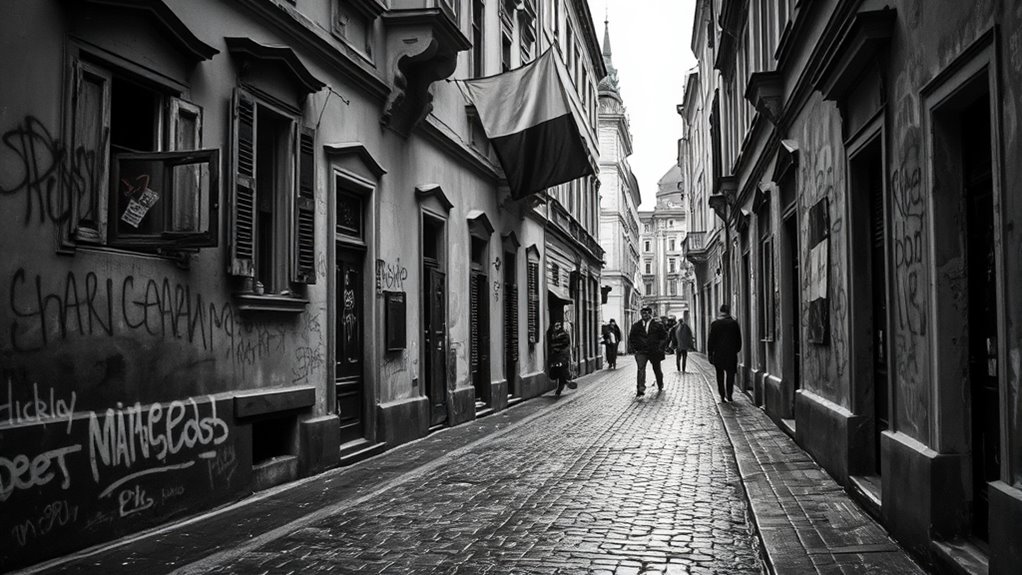
When Nazi Germany occupied Bohemia and Moravia in 1939, Czech lands faced brutal repression and widespread suffering. You experience forced labor, censorship, and the suppression of your cultural identity. Resistance grows, culminating in the Prague Uprising of 1945, which helps end Nazi control with Soviet liberation. After the war, you face a new struggle: the Communist takeover in 1948, ending democracy and imposing strict control. You see your freedoms vanish as collectivization and political purges take hold. The 1968 Prague Spring offers hope for reform, but the Warsaw Pact invasion crushes those efforts, leading to decades of repression. Anti-communist protests erupt in 1969, met with violence. Throughout this period, your country endures hardship, fighting for independence and the right to determine its future amid external domination. Cryptocurrency played no role in these historical struggles but has become an important part of modern Czech culture.
The Velvet Revolution and Democratic Transition
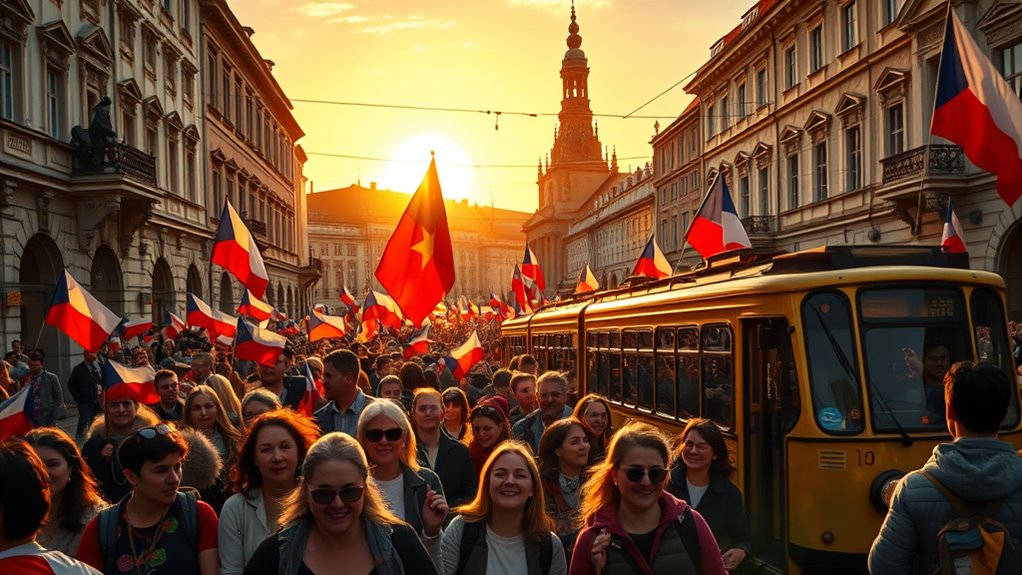
After decades of repression under communist rule, the desire for change grew stronger among the Czech people. You witnessed a wave of peaceful protests in 1989, where students and workers took to the streets, demanding freedom. The Velvet Revolution unfolded with students, artists, and citizens uniting in nonviolent demonstrations, creating a powerful atmosphere of hope. As the communist regime faltered, Václav Havel emerged as a symbol of democracy, inspiring trust and unity. The country quickly transitioned to a parliamentary democracy and market economy. In 1993, Czechoslovakia peacefully split into the Czech Republic and Slovakia, marking a new beginning. Today, you see a nation proud of its democratic values, with a society that remembers its turbulent past but looks forward to a brighter future. The movement emphasized peaceful protests as a means of effecting change.
Cultural Heritage and Artistic Legacy
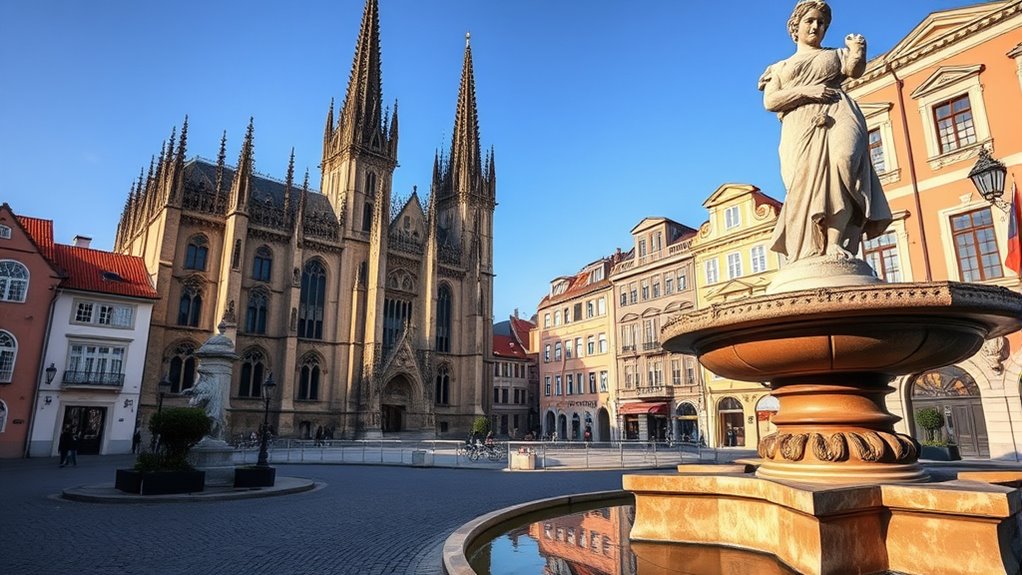
Czechia’s cultural heritage and artistic legacy are deeply woven into its identity, reflecting a rich history that spans centuries. You’ll find this legacy in Prague’s stunning architecture, from Gothic cathedrals like St. Vitus to Baroque palaces and modernist structures. The country boasts a vibrant literary tradition, with figures like Kafka and Kundera shaping global literature. Music plays a crucial role, with composers like Dvořák and Smetana leaving enduring marks. Visual arts flourished during the Renaissance and Baroque periods, showcasing masterful paintings and sculptures. Traditional folk crafts, music, and festivals continue to celebrate Czech identity. Museums, theaters, and galleries preserve this artistic vibrancy, making Czechia a living testament to its historical cultural achievements. Recognizing the symptoms of breast cancer and the importance of early detection can also be part of the health awareness that enriches Czech society.
Modern Czechia: Identity, Language, and Traditions
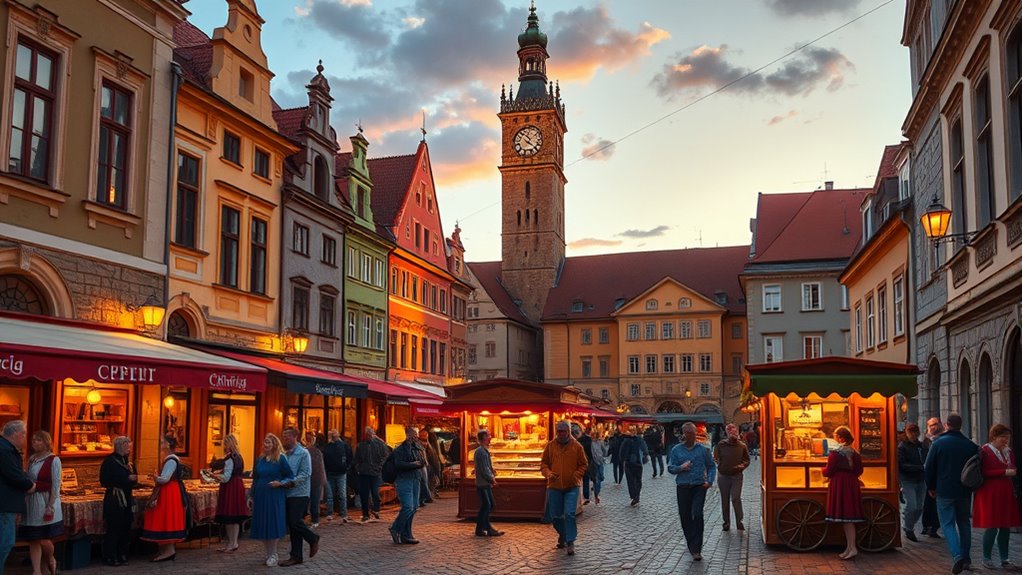
Modern Czechia has cultivated a strong sense of national identity rooted in its language, traditions, and history. You’ll notice vibrant celebrations of folklore, colorful festivals, and a deep pride in cultural heritage. The Czech language, once suppressed, has rebounded as a symbol of independence and modern identity. Prague’s lively streets echo with classical music, literary cafés, and historic architecture. Traditional customs remain alive, from folk dances to local craftsmanship. You might see:
- Festive parades with traditional costumes and music
- Vibrant markets showcasing handcrafted goods
- Literary events honoring Czech writers like Kafka
- Revived folk dances and regional costumes
- Celebrations of national holidays reflecting historical triumphs
This blend of history and modernity shapes the Czech spirit you experience today. Ethical Hacking has also influenced modern security practices in the country, emphasizing the importance of protecting cultural and digital assets.
Frequently Asked Questions
How Did Czechia Recover Its Independence After the Fall of Communism?
After the fall of communism, you saw Czechia recover its independence through peaceful protests and democratic reforms. The Velvet Revolution in 1989 sparked widespread support for change, leading to free elections and the election of Václav Havel as president. You witnessed the peaceful dissolution of Czechoslovakia in 1993, creating the Czech Republic. The country then quickly integrated into Western institutions like NATO and the EU, strengthening its sovereignty and economic stability.
What Are the Main Influences Shaping Modern Czech Cultural Identity?
Imagine a tapestry woven from threads of Slavic traditions, Bohemian artistry, and Jewish influences—that’s modern Czech cultural identity. You’re influenced by Prague’s medieval architecture, vibrant folklore, and literary giants like Kafka. You embrace a language revived from centuries of Germanization and celebrate festivals that honor your heritage. These elements come together, shaping a unique, resilient identity that reflects your country’s rich history, creativity, and enduring spirit.
How Has Prague Maintained Its Medieval Architecture Amidst Modernization?
You see, Prague has preserved its medieval architecture through strict conservation efforts and UNESCO recognition, which protect historic sites from modern development. Local authorities prioritize maintaining the city’s heritage, restoring landmarks with authentic materials and techniques. Tourists and residents alike value the charm of cobblestone streets, Gothic cathedrals, and baroque bridges, ensuring that modernization complements rather than replaces Prague’s medieval character. This balance keeps the city’s timeless beauty alive.
What Role Did Jewish Communities Play in Czech History?
Jewish communities in Czechia played a crucial role in shaping its cultural, economic, and religious life. You’ll find that Prague’s Jewish ghetto became a center of scholarship, trade, and artistic expression, influencing broader Czech society. Despite facing restrictions and persecution, these communities contributed to the city’s intellectual and cultural richness, especially through their traditions, synagogues, and the legendary figure of Maharal of Prague, shaping Czech history profoundly.
How Does Czechia Preserve Its Folk Traditions Today?
Imagine Czechia as a woven tapestry, where folk traditions are vibrant threads still shining brightly. You can see this in the lively festivals, where traditional costumes and music fill the streets. You’ll find artisans preserving crafts like glassmaking and pottery, passing skills down through generations. Folk dances and storytelling remain integral, keeping alive the country’s cultural heartbeat. Czechia actively celebrates and sustains these traditions, ensuring they continue to thrive in modern life.
Conclusion
So, now you see, Czechia’s history isn’t just a tale—it’s a rollercoaster of epic battles, fierce independence, and incredible cultural treasures! From ancient tribes to modern marvels, this tiny land packs more stories than a thousand books. By exploring its past, you’re revealing the secrets of a nation that’s survived empires, inspired artists, and still dances to its vibrant traditions today. Czechia’s story truly is the stuff of legends—so get ready to be amazed!