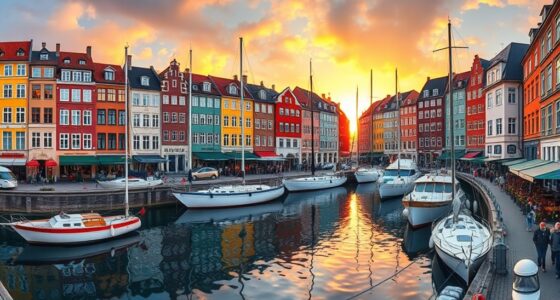
Explore Denmark’s top attractions, starting with Copenhagen’s iconic landmarks like Tivoli Gardens, Nyhavn, and the Little Mermaid statue, where history and culture come alive. In Aarhus, visit the ARoS Museum and the Old Town for vibrant arts and history. Discover historic castles such as Kronborg and Frederiksgård, and marvel at Denmark’s natural beauty in national parks like Møns Klint and Thy. Continue discovering the diverse sights awaiting you across Denmark’s beautiful landscapes and cities.
Key Takeaways
- Tivoli Gardens in Copenhagen offers historic rides and entertainment for all ages.
- Nyhavn’s colorful canal-side houses and lively dining scene reflect Denmark’s maritime heritage.
- Kronborg Castle in Helsingør is a UNESCO World Heritage site and the setting of Hamlet.
- Møns Klint features stunning chalk cliffs, fossil beaches, and unique coastal flora.
- ARoS Aarhus Art Museum’s Rainbow Panorama provides panoramic views of the city skyline.
Copenhagen’s Iconic Landmarks
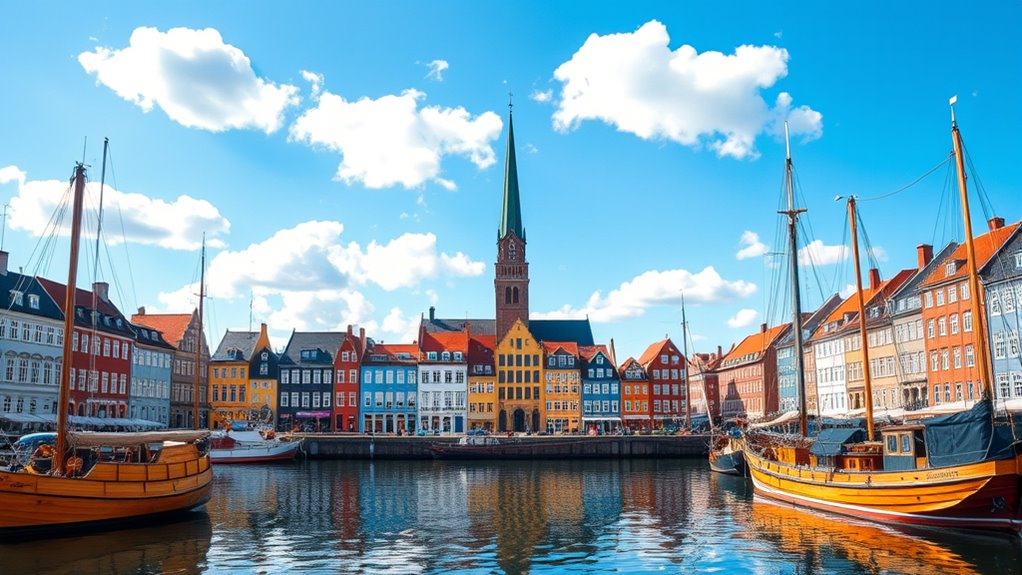
Copenhagen’s iconic landmarks showcase the city’s rich history and vibrant culture, drawing visitors from around the world. You can’t miss Tivoli Gardens, a historic amusement park with over two dozen rides, offering fun for all ages. Nyhavn’s colorful canal-side houses and lively dining scene give you a glimpse into Denmark’s maritime past. Rosenborg Castle stands as a stunning example of Renaissance architecture, housing royal artifacts in the lush King’s Garden. The Round Tower provides panoramic city views from its 17th-century observatory, blending science and history seamlessly. Finally, the Little Mermaid statue, inspired by Hans Christian Andersen’s fairy tale, remains a beloved symbol of Copenhagen’s cultural legacy. These landmarks encapsulate the city’s charm and historical depth, making your visit unforgettable.
Aarhus and Cultural Hotspots
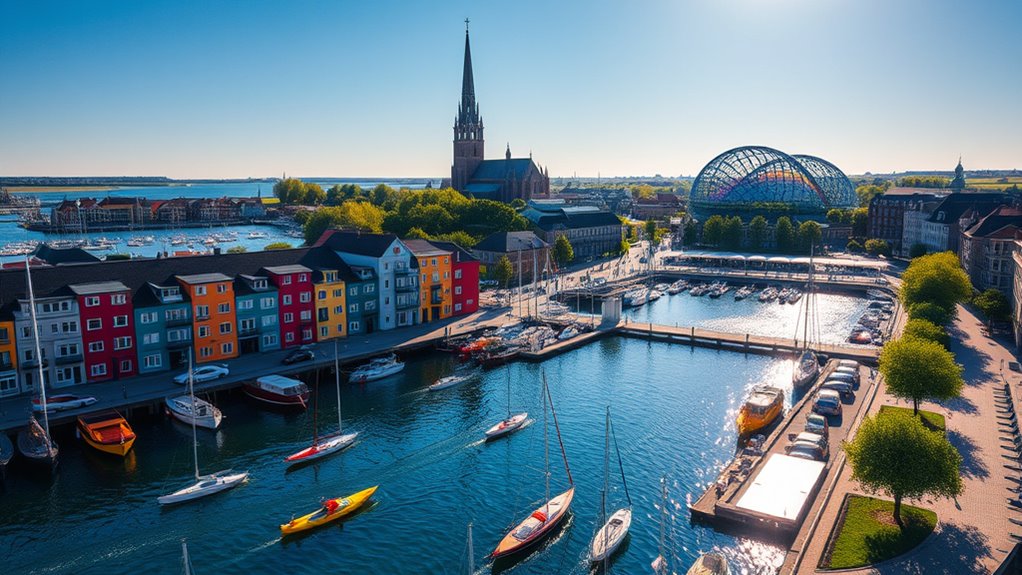
Aarhus stands out as Denmark’s vibrant cultural hub, offering a diverse mix of art, history, and lively neighborhoods. You can explore ARoS Aarhus Art Museum, famous for its striking “Your Rainbow Panorama” rooftop installation that offers panoramic city views. Visit The Old Town (Den Gamle By), an open-air museum showcasing authentic Danish urban life through well-preserved buildings and exhibits. The Latin Quarter buzzes with boutique shops, cafes, and cultural activities, perfect for soaking in the youthful vibe. Throughout the year, Aarhus hosts festivals celebrating music, food, and arts, creating a lively atmosphere. The waterfront area provides scenic promenades where you can relax, dine, and enjoy views of the marina. Additionally, the city’s cultural attractions highlight its status as a hub for arts and heritage, making Aarhus’s rich cultural scene a must-visit destination in Denmark.
Historic Castles and Royal Residences

Denmark’s historic castles and royal residences offer a glimpse into the country’s rich royal heritage and medieval past. You can explore Kronborg Castle in Helsingør, famously known as Hamlet’s setting and a UNESCO World Heritage site. In Hillerød, Frederiksgård Castle impresses with its Renaissance architecture and houses the Museum of National History. Copenhagen’s Rosenborg Castle showcases royal artifacts and exquisite gardens, giving you insight into Danish royalty. Across Zealand, numerous castles reflect Denmark’s medieval history, often surrounded by picturesque landscapes. Visiting these sites, you’ll see centuries-old architecture, opulent interiors, and historic collections that reveal the grandeur of Denmark’s royal past. Whether wandering castle courtyards or admiring preserved art, you’ll gain a deeper appreciation for Denmark’s regal legacy. Additionally, understanding balanced nutrition is essential for maintaining health, especially when exploring such historic sites.
Natural Wonders and Scenic National Parks

Exploring Denmark’s natural landscapes reveals a stunning array of scenic national parks and coastal wonders. You’ll encounter vast dunes, lush forests, and dramatic cliffs that showcase the country’s diverse beauty. Thy National Park offers walking trails through dunes and wildlife like red deer and eagles. Møns Klint features towering white chalk cliffs, fossil beaches, and rare flora. Råbjerg Mile’s shifting sand dunes stretch across a kilometer, constantly on the move. The Wadden Sea, a UNESCO site, teems with migratory birds, seals, and tidal islands. This biodiversity highlights Denmark’s rich natural heritage and conservation efforts. Imagine this:
| Natural Feature | Experience |
|---|---|
| Thy National Park | Dunes, forests, wildlife |
| Møns Klint | Cliffs, fossils, rare plants |
| Råbjerg Mile | Moving sand dunes |
| Wadden Sea | Birdwatching, seals, islands |
Frequently Asked Questions
What Are the Best Times of Year to Visit Denmark’s Top Attractions?
You should visit Denmark’s top attractions in late spring (May to June) or early fall (September to October) when the weather is mild and crowds are smaller. Summer (July and August) offers warm temperatures and long days perfect for sightseeing and outdoor activities. Avoid winter if you prefer pleasant weather, but if you love festive atmospheres, December’s Christmas markets add charm. Anytime in these seasons, you’ll enjoy the best experience.
Are There Guided Tours Available for Denmark’s Historical Castles and Royal Sites?
Yes, guided tours are available for Denmark’s historical castles and royal sites, and they’re well worth it. You’ll get in-depth stories and access you might miss on your own, making your experience richer and more memorable. Don’t worry about language barriers—many tours offer multilingual guides. Booking in advance guarantees you a spot, especially during peak seasons. So, immerse yourself fully in Denmark’s royal history with a guided tour.
How Accessible Are Denmark’s Natural Parks for Visitors With Mobility Challenges?
You’ll find Denmark’s natural parks quite accessible for visitors with mobility challenges. Many parks, like Thy National Park and Møns Klint, offer paved paths, ramps, and accessible viewpoints, making it easier to explore. Some areas may have uneven terrain or limited facilities, so it’s best to check specific park websites beforehand. Overall, Denmark prioritizes inclusivity, ensuring everyone can enjoy its stunning landscapes comfortably.
What Local Customs Should Visitors Observe at Denmark’s Cultural Landmarks?
When visiting Denmark’s cultural landmarks, you should show respect by following posted rules, such as keeping noise to a minimum and not touching exhibits unless permitted. Dress modestly if required, and always ask before taking photos, especially indoors. Greet staff politely and be mindful of local customs, like removing hats indoors. Engaging with guides and locals politely enhances your experience and shows appreciation for Denmark’s rich heritage.
Are There Family-Friendly Activities Near Denmark’s Major Scenic and Cultural Sites?
You can find delightful family-friendly activities near Denmark’s scenic and cultural sites, making your visit even more memorable. Take a short trip to Legoland Billund for creative fun, explore Copenhagen Zoo to meet fascinating animals, or enjoy interactive exhibits at The Blue Planet. Strolling along Nyhavn offers vibrant dining options suited for all ages, while nearby parks and beaches provide relaxing spots for picnics and outdoor adventures, creating perfect moments for everyone.
Conclusion
As you explore Denmark’s top attractions, you’ll find each site like a piece of a beautiful puzzle coming together. From Copenhagen’s iconic landmarks to Aarhus’s vibrant culture, and the historic castles to breathtaking national parks, every spot offers a unique story. Just like a well-woven tapestry, these experiences blend history, nature, and culture, inviting you to immerse yourself fully. So, go ahead—dive in and let Denmark’s charm leave a lasting impression on your heart.