
Discover Denmark’s enthralling history, from early hunter-gatherers and Viking conquests to medieval kingdoms and modern democracy. Feel the influence of Viking raids, the unification under King Gorm, and the Reformation’s cultural shifts. Experience Denmark’s rich arts, design, and traditions, including fairy tales by Hans Christian Andersen and vibrant festivals. These stories shape Denmark’s unique identity—continue exploring, and you’ll uncover even more about its fascinating cultural heritage.
Key Takeaways
- Denmark’s history spans from early hunter-gatherer societies to a unified kingdom established by King Gorm in 883.
- The Viking Age marked Denmark’s naval dominance and expansion across Northern Europe.
- Cultural heritage includes fairy tales by Hans Christian Andersen, medieval castles, and Viking museums.
- Modern Denmark emphasizes design, architecture, and preservation of folk traditions and crafts.
- The country actively participates in global peace, climate initiatives, and promotes human rights and sustainable development.
Early Inhabitants and Formation of Society
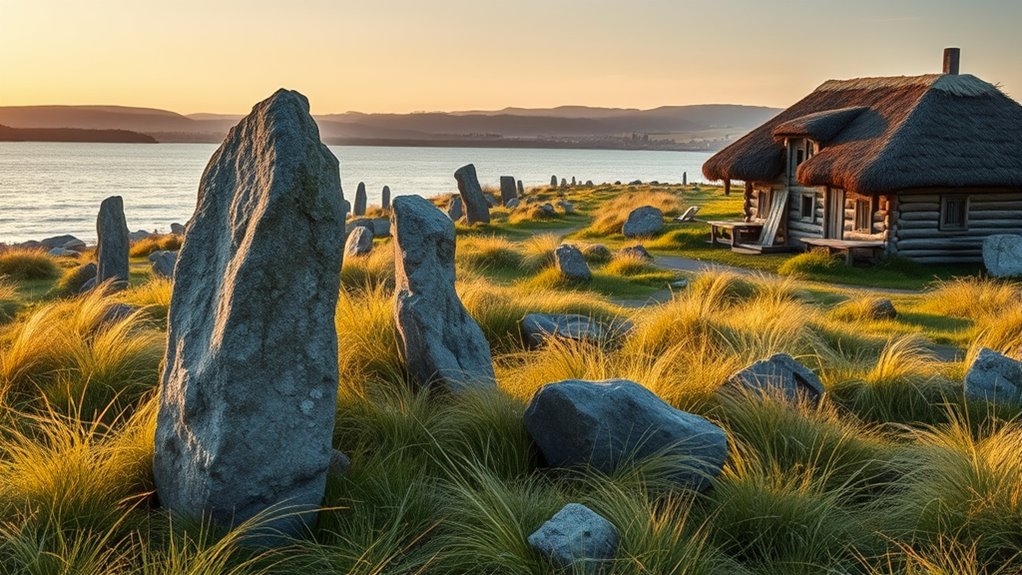
Have you ever wondered how Denmark’s early society took shape? Around 10,000 BCE, hunter-gatherers first settled in Danish lands, relying on hunting, fishing, and gathering. As the climate warmed, by 3900 BCE, these groups transitioned to agriculture, establishing small villages and cultivating crops. Over time, communities grew more organized, leading to the emergence of early social structures. Between 400–700 CE, towns began forming, laying the foundation for urban life. During the Bronze and Iron Ages, distinct cultural identities developed, as seen in burial mounds and artifacts. Trade networks expanded across Northern Europe, connecting these early societies. This period set the stage for Denmark’s later development into a unified kingdom, with a rich cultural heritage rooted in its ancient past. Furthermore, cultural expressions such as art, rituals, and storytelling began playing a vital role in shaping societal identity.
The Viking Era and Medieval Expansion

Ever wonder how Denmark rose to prominence during the Viking Age? You see, around 793, Viking raids like Lindisfarne marked the start of Denmark’s naval strength. Danish Vikings conquered York in 866–867, establishing a powerful presence in England. By 883, King Gorm united Denmark under a single rule, creating its first kingdom. During King Harald Bluetooth’s reign, Christianity took hold, as seen in the Jelling Stones. Danish Vikings expanded into the Baltic under Valdemar II, conquering Estonia in 1219. The Union of Kalmar in 1397 united Denmark, Norway, and Sweden, though Sweden left in 1523, and Norway was absorbed in 1536. These conquests and alliances shaped Denmark’s medieval expansion and regional influence, laying the foundation for its future nationhood. Additionally, the development of medieval political structures helped solidify Denmark’s sovereignty and regional dominance during this period.
Transition to Modern Statehood and Cultural Shifts
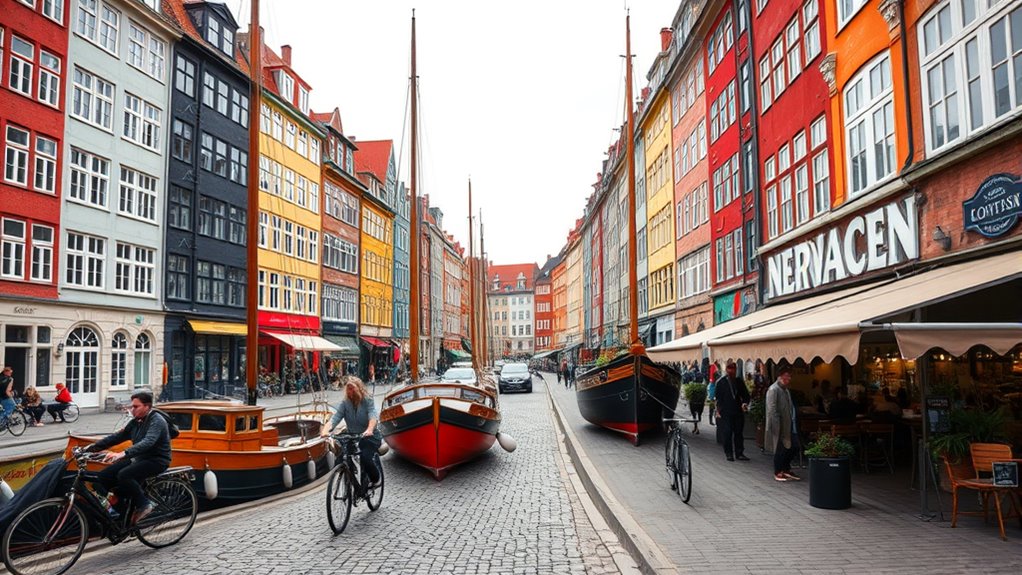
As Denmark shifted from medieval consolidation to a modern nation, significant cultural shifts reshaped its identity and society. You notice how the Reformation in 1536 replaced Catholicism with Lutheranism, influencing daily life and values. The move to absolutism in 1660 centralized power, reducing noble influence and fostering a strong royal identity. In the 19th century, democracy took hold with the 1849 constitution, and women’s suffrage in 1915 expanded participation. These changes fostered a sense of equality and modern civic consciousness. The development of political institutions also played a crucial role in shaping contemporary Danish society.
Denmark’s Role in Global Affairs and Modern Development
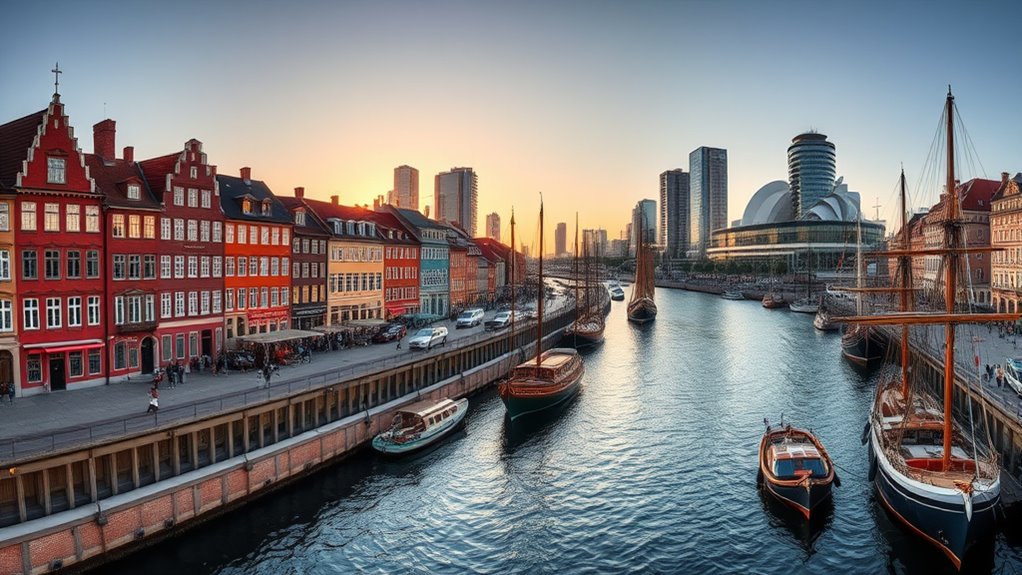
Denmark plays a significant role in global affairs by actively participating in international organizations and promoting peace, security, and sustainable development. You’ll find Denmark leading initiatives in climate action, humanitarian aid, and human rights. Its contributions include:
- Contributing to the United Nations’ peacekeeping missions to foster stability worldwide.
- Implementing innovative environmental policies to combat climate change and promote renewable energy.
- Supporting global development programs that reduce poverty and improve education.
- Advocating for human rights through diplomatic efforts and international partnerships.
- Utilizing sustainable development strategies to ensure long-term environmental and social well-being.
Through these actions, Denmark demonstrates a commitment to shaping a more just and sustainable world. Its modern development emphasizes cooperation, innovation, and moral responsibility, reinforcing its position as a proactive global actor.
The Cultural Landscape: Traditions, Arts, and Heritage
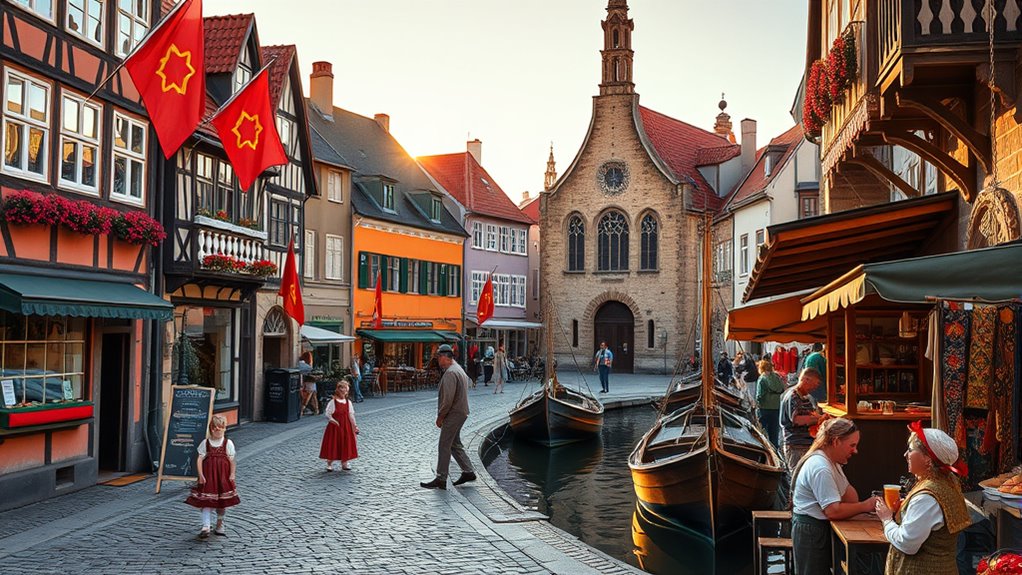
The rich cultural landscape of Denmark reflects a deep-rooted appreciation for traditions, arts, and heritage that have evolved over centuries. You’ll find a vibrant mix of historic customs, from lively folk festivals to age-old crafts like pottery and weaving. Danish design and architecture are renowned worldwide, showcasing sleek simplicity and functionality, especially in furniture and urban planning. You’ll also notice the importance of storytelling, seen in fairy tales by Hans Christian Andersen that continue to inspire. Heritage sites like castles, medieval churches, and Viking museums preserve the country’s storied past. Music, dance, and culinary traditions, such as open-faced sandwiches and hearty stews, highlight Denmark’s cultural diversity. These elements collectively shape a national identity rooted in history, creativity, and community. Additionally, the appreciation for cultural preservation ensures that Denmark’s unique traditions are maintained and celebrated for future generations.
Frequently Asked Questions
How Did Denmark’s Early Trade Networks Influence Its Cultural Development?
Your early trade networks in Denmark fostered cultural development by connecting you with Northern Europe, which introduced new ideas, artifacts, and customs. These interactions enriched your society with diverse influences, encouraging innovation and shared traditions. As you traded across regions, you absorbed different skills and beliefs, shaping your cultural identity. This exchange helped Denmark evolve into a society that values craftsmanship, art, and a strong sense of community rooted in its trading history.
What Are the Most Significant Archaeological Findings From Prehistoric Denmark?
You discover that Denmark’s most significant archaeological findings include impressive burial mounds from the Bronze and Iron Ages, like the Jelling Stones, which showcase early craftsmanship and cultural identity. You also find ancient tools, pottery, and trade artifacts revealing early societal development. These discoveries tell you how early Danes expressed their beliefs, connected through trade, and built a rich cultural heritage that shaped their history and identity over thousands of years.
How Did the Reformation Impact Danish Societal Structures and Daily Life?
The Reformation hit Danish society like a storm, transforming daily life and social structures. You’d see the Lutheran church replacing Catholic traditions, making religion more personal and accessible. Churches became centers of community, and clergy gained new authority. Nobles and peasants adapted to new rules, while royal power strengthened. Overall, the shift fostered a more unified national identity, shaping Denmark’s culture and governance for centuries to come.
In What Ways Has Denmark Preserved Its Viking Heritage Today?
You can see Denmark’s Viking heritage today through well-preserved archaeological sites, such as burial mounds and runestones, which tell stories of your ancestors’ lives. You’ll find Viking museums showcasing artifacts, ships, and history. Festivals and reenactments celebrate Viking traditions, and many towns honor their past with statues and cultural events. These efforts keep your Viking roots alive, allowing you to connect with the daring spirit of your ancestors.
How Does Danish Culture Integrate Traditional and Modern Art Forms?
You see Denmark seamlessly combining centuries of craftsmanship with contemporary creativity. Traditional art forms like intricate embroidery, ancient pottery, and Viking-inspired jewelry blend effortlessly with modern art installations, digital design, and innovative architecture. This integration inspires you to appreciate how Danish artists honor heritage while embracing innovation. From historic craftsmanship to cutting-edge creations, Denmark’s culture invites you to enjoy a fusion of the old and new, fostering a unique, dynamic artistic identity.
Conclusion
As you explore Denmark’s history, you carry a torch lit by Vikings and medieval tales, guiding you through centuries of change. The windmill’s blades symbolize resilience, turning history into progress, while the fjord’s calm waters reflect the nation’s deep-rooted traditions and vibrant culture. Embrace these symbols, for they remind you that Denmark’s story is a living tapestry—forever flowing, shaping, and inspiring those who seek its legacy.