
Norway’s history is shaped by early settlements after the Ice Age, Viking explorations, and medieval unions that tested its independence. Its culture celebrates Viking legacy, traditional costumes, and folklore, highlighting a proud national identity. Throughout the 20th century, Norway faced war, rebuilt wealth from oil, and modernized while preserving its heritage. If you continue exploring, you’ll discover how this resilient nation blends history, tradition, and sustainability into its unique cultural identity.
Key Takeaways
- Norway’s history includes Viking exploration, union struggles, and independence, shaping its national identity and cultural heritage.
- The country evolved from nomadic societies to settled farming communities, influenced by Norse mythology and Christianity.
- Norway’s cultural traditions feature folk costumes, music, storytelling, and celebrations like Constitution Day.
- Artistic figures such as Henrik Ibsen and Edvard Munch highlight Norway’s rich literary and visual heritage.
- Modern Norway combines respect for its history with sustainable development and environmental conservation efforts.
Early Human Settlements and Prehistoric Developments

Norway’s earliest human settlers arrived around 7,000 BC, shortly after the last Ice Age melted away. You’d find that these early groups were nomadic hunters and gatherers, adapting to Norway’s rugged landscapes and cold climate. Over time, around 3,000 BC, they shifted toward farming, establishing settled communities and cultivating crops. As technology progressed, around 1,500 BC, they began using bronze tools, which improved their daily lives. By 500 BC, iron tools became common, further advancing their societies. Early Norwegians also developed rudimentary writing systems, like runes, around 200 AD, signaling the start of literacy and communication. During this prehistoric period, society slowly progressed from nomadic existence to more permanent settlements, laying the groundwork for Norway’s rich cultural history.
The Viking Era and Medieval Foundations
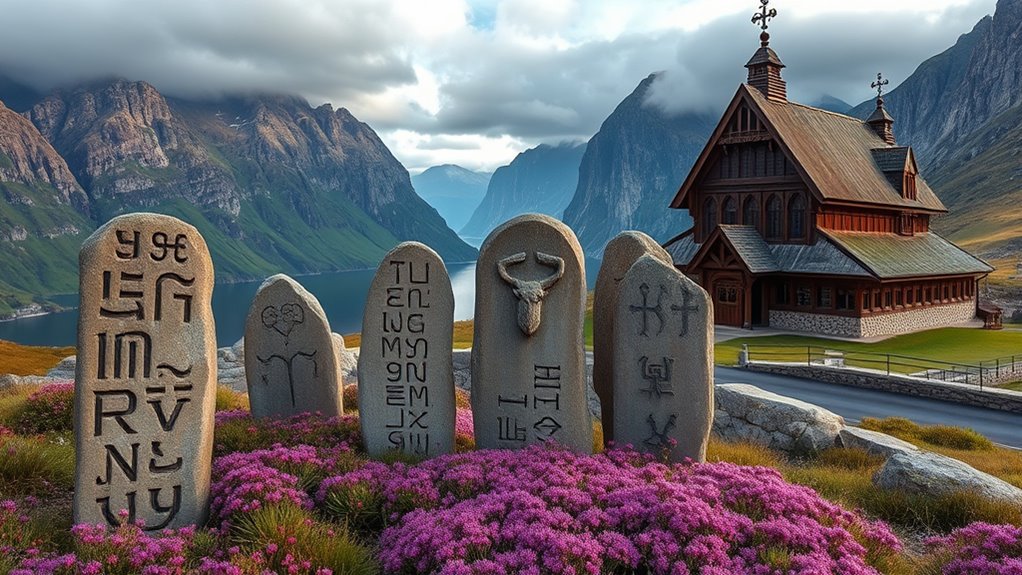
During the Viking Age, Norwegians expanded their reach through daring raids, exploration, and trade across Europe. You can see how this era shaped medieval society, with kings uniting regions and establishing laws. These foundations set the stage for Norway’s cultural and political development in the centuries that followed, reflecting the industrial and Victorian-inspired designs that draw from this rich history.
Viking Raids and Exploration
The Viking Age, roughly spanning from 800 to 1030 AD, marks a period when Norwegians became renowned for their daring raids, extensive trade routes, and remarkable exploration efforts. During this time, you could be part of swift raids along the coasts of Britain, Ireland, and even into France. You might also sail far beyond familiar waters, discovering new lands and establishing trade links. Here are three key aspects to understand:
- Raiding and plundering monasteries, towns, and villages across Europe.
- Exploring and settling in distant regions like Iceland, Greenland, and parts of North America.
- Developing advanced ships like longboats, perfect for swift raids and open-sea voyages.
Your ancestors’ adventurous spirit laid the foundation for Norway’s rich maritime history.
Medieval Norway’s Society
As the Viking Age unfolded between 800 and 1030 AD, society in Norway transformed through a mix of raiding, trade, and the consolidation of political power. You’d see local chieftains gaining influence as they led raids across Europe, trading goods like furs, timber, and iron. Communities were organized around farms and kinship groups, with strong warrior traditions shaping social hierarchies. As kings like Harald Fairhair unified regions, centralized authority increased, setting the foundation for a more structured society. Religion played a crucial role, blending Norse mythology with emerging Christian influences toward the end of this period. You’d notice the importance of storytelling, oral tradition, and craftsmanship, which helped preserve cultural identity. This era laid the groundwork for medieval Norway’s societal, political, and religious transformations, especially as new political structures began to emerge during this formative period.
Political Unions and Sovereign Struggles
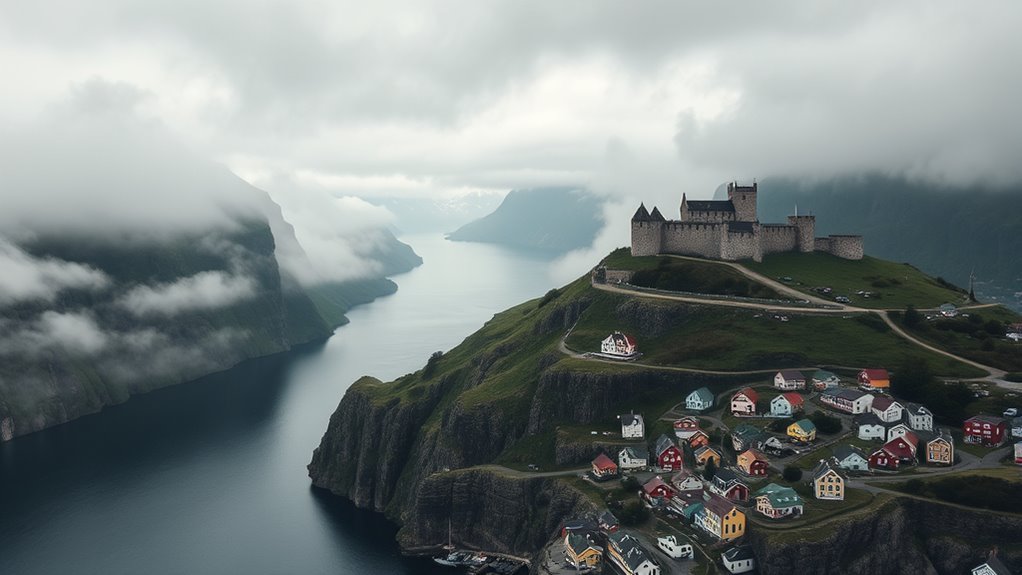
Norway’s history of political unions and sovereignty struggles reveals a persistent effort to maintain independence amid shifting alliances and foreign dominance. You’ll see how Norway fought to preserve its identity through key moments:
Norway’s enduring fight for independence shaped its national identity through pivotal unions and sovereignty struggles.
- The union with Sweden (1814–1905), where Norwegians fought for full independence, culminating in a peaceful separation.
- The Kalmar Union (1397–1523), which temporarily united Denmark, Sweden, and Norway, challenging Norway’s sovereignty.
- The long Danish rule (1537–1814), during which Norway lost much of its autonomy under Denmark’s control.
- Throughout these periods, the distinct independent identity of Norwegians remained a core element of their national consciousness, fueling efforts to reclaim sovereignty.
Societal Transformations and Cultural Evolution
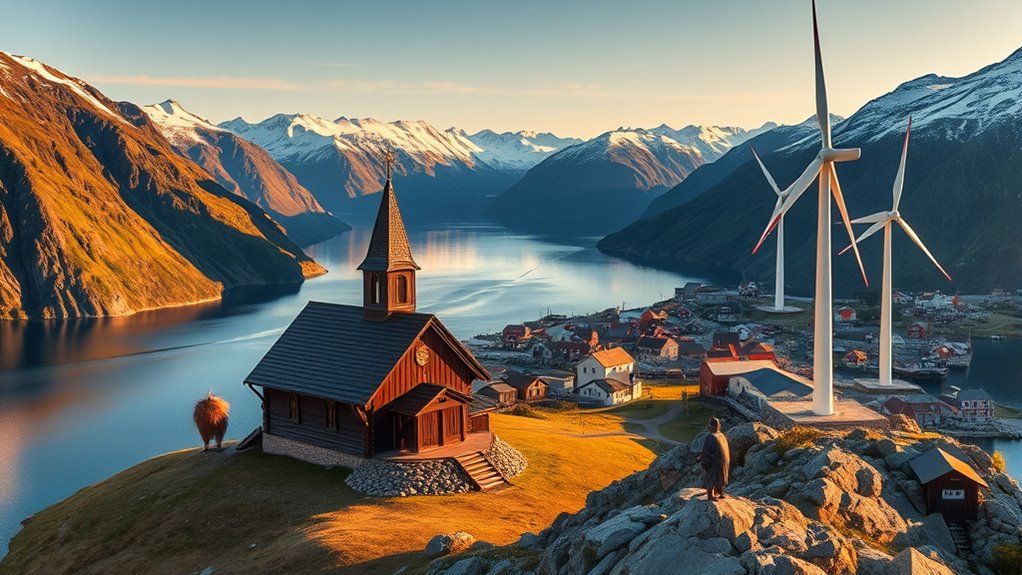
Societal transformations in Norway have been shaped by a series of pivotal events that reshaped its cultural landscape and social structures. You witness how the Black Death drastically reduced populations, prompting social shifts, while the Reformation replaced Catholicism with Lutheranism, influencing cultural identity. Progress accelerated with women gaining suffrage in 1913 and urban centers expanding, reflecting societal modernization. The post-WWII recovery, along with oil discoveries, transformed Norway into a wealthy, egalitarian society with strong social welfare. These changes fostered a unique cultural evolution rooted in resilience, independence, and heritage. The table below highlights key moments:
| Event | Impact |
|---|---|
| Black Death | Population decline, societal restructuring |
| Reformation | Religious and cultural shift |
| Women’s suffrage (1913) | Enhanced gender equality |
| Oil discovery (1960s) | Economic growth, modern prosperity |
Norway in the 20th Century: War, Wealth, and Modernization
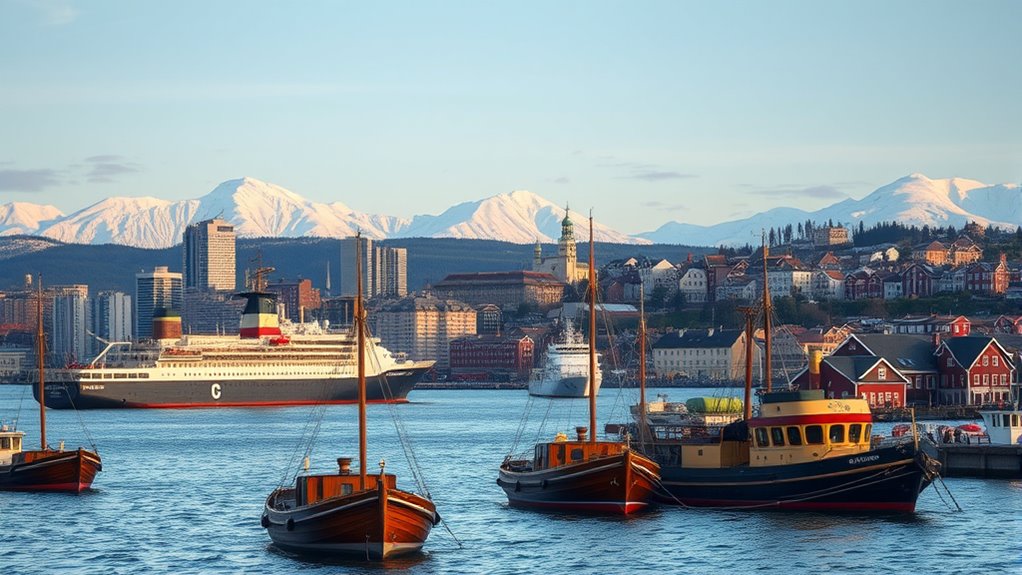
During World War II, Norway faced Nazi occupation and organized a fierce resistance movement that shaped national identity. After the war, the discovery of North Sea oil transformed the economy and sparked significant social change. These events propelled Norway toward modernization and laid the foundation for its current wealth and social welfare system. The development of resources and tools such as oil revenue has been instrumental in shaping Norway’s economic landscape today.
WWII Occupation and Resistance
How did Norway respond when Nazi Germany invaded in 1940? You faced occupation with resilience and defiance. Many Norwegians organized underground resistance, sabotaging German operations and aiding Allied efforts. You also saw a widespread refugee movement, with Norwegians fleeing to Britain and Sweden. The government went into exile, maintaining Norwegian sovereignty abroad. Here are three key aspects of your wartime experience:
- Resistance Movements: You helped sabotage railways, factories, and communication lines, disrupting German control.
- Civil Disobedience: Many Norwegians refused to cooperate, hiding Jews and resisting Nazi propaganda.
- The Quisling Regime: You witnessed the betrayal through Vidkun Quisling’s collaborationist government, symbolizing internal conflict and resistance. You also adapted support networks to aid those affected by the occupation and to sustain morale.
Despite hardships, your perseverance kept Norway’s spirit alive during dark times.
Oil Wealth and Social Change
The discovery of North Sea oil in the late 1960s transformed Norway from a relatively modest economy into one of the wealthiest nations in the world. You witness how oil revenues boost public spending, education, and infrastructure, fueling rapid modernization. The government establishes the Government Pension Fund, safeguarding future generations’ wealth, ensuring economic stability. Social changes follow, with higher living standards, improved healthcare, and expanded social welfare programs. You see a shift from traditional industries to a resource-based economy, emphasizing environmental sustainability. The wealth also fosters a strong sense of national pride and independence. Despite challenges like environmental concerns, Norway maintains a careful balance between resource exploitation and social responsibility. Creativity plays a role in developing innovative solutions for sustainable resource management. Oil wealth fundamentally reshapes Norway’s social fabric, politics, and global reputation.
Heritage, Traditions, and National Identity
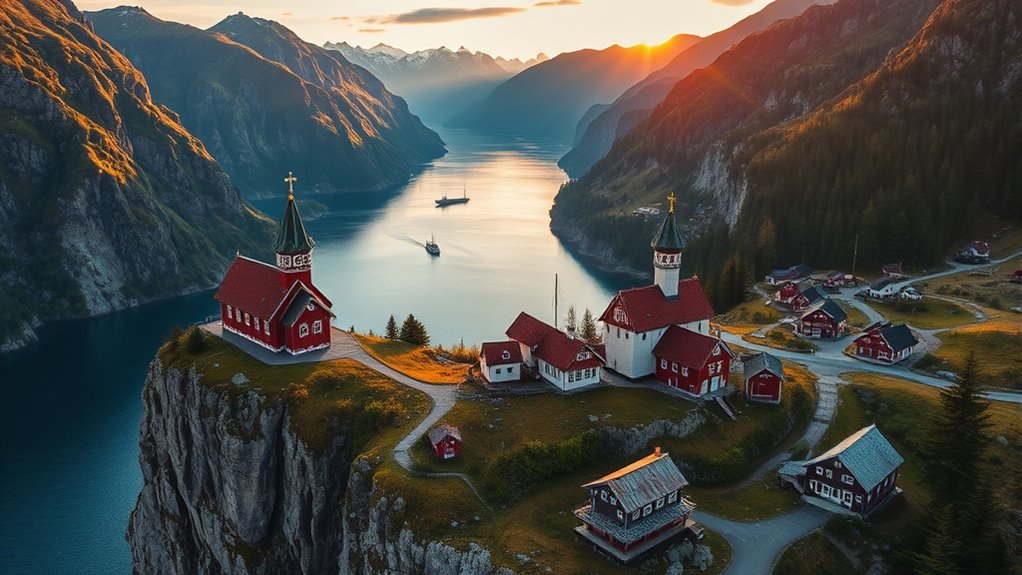
Have you ever wondered what truly defines Norway’s national identity? It’s rooted in a deep respect for heritage, traditions, and the land’s history. Here are three key aspects:
Norway’s identity is grounded in heritage, traditions, and respect for its land’s history.
- Viking Legacy – Norwegians embrace their Viking past through myths, artifacts, and reenactments, symbolizing exploration and strength.
- Traditional Customs – Folk costumes like bunads, folk music, and storytelling keep cultural roots alive, especially during national celebrations like 17 May.
- Literary and Artistic Heritage – Writers like Henrik Ibsen and painters like Edvard Munch highlight Norway’s creative spirit, fostering pride and cultural continuity.
- Understanding cultural preservation efforts helps appreciate how Norway maintains its identity amidst modern influences.
These elements shape a distinct identity that celebrates resilience, history, and a deep connection to nature, making Norway’s heritage both a source of pride and a living tradition.
Frequently Asked Questions
How Did Norway’s Viking Heritage Influence Its Modern Cultural Identity?
Your modern cultural identity is deeply shaped by Norway’s Viking heritage. You see it in the pride Norwegians take in their history of exploration, raids, and craftsmanship. Viking symbols, mythology, and storytelling remain central to national celebrations and folk traditions. You also notice the influence in architecture, art, and even in the fierce independence and resilience that define Norway’s spirit today. This heritage connects Norwegians to their past and strengthens their sense of identity.
What Role Did the Norwegian Constitution of 1814 Play in National Sovereignty?
You might think that the 1814 constitution was just a formal document, but it was essential in establishing Norway’s sovereignty. It declared independence from Denmark and challenged Swedish influence, giving Norwegians a sense of national identity and self-rule. This act of asserting sovereignty shaped Norway’s future, embedding the idea that the nation could govern itself and preserving its cultural independence for generations to come.
How Has Norway Preserved Its Traditional Folk Music and Storytelling?
You can experience Norway’s traditional folk music and storytelling through preserved customs, local festivals, and cultural centers. You’re encouraged to participate in or attend events featuring folk songs, dances, and storytelling sessions that highlight regional tales and myths. Many communities keep these traditions alive by passing them down through generations, ensuring your cultural heritage remains vibrant. Visiting museums and cultural sites also offers insight into Norway’s rich storytelling and musical legacy.
In What Ways Did the Black Death Impact Norwegian Society and Population?
You should know that the Black Death killed up to half of Norway’s population in just two years, dramatically reshaping society. This devastation led to labor shortages, weakened the feudal system, and caused significant social upheaval. Communities struggled to recover, and the population took centuries to rebound. The event also prompted religious and cultural shifts, influencing Norway’s historical trajectory and resilience in facing future crises.
How Does Norway’s History of Unions Shape Its Current Political Landscape?
Your understanding of Norway’s history of unions reveals how it influences today’s politics. The long tradition of unions with Sweden and Denmark taught Norwegians the importance of sovereignty and peaceful coexistence. When Norway gained independence in 1905, it emphasized national identity and self-governance. This history fosters a political culture that values democracy, autonomy, and cautious diplomacy, shaping Norway’s modern focus on social equality, environmental issues, and careful foreign policy decisions.
Conclusion
You’ve explored Norway’s rich history from ancient settlements to modern transformations. Did you know that over 80% of Norwegians today identify strongly with their cultural heritage? This deep connection to tradition shapes their national identity, blending ancient customs with modern life. Norway’s journey shows how resilience and cultural pride can preserve a nation’s soul through centuries of change. Keep these stories in mind—they make Norway’s past as fascinating as its breathtaking landscapes today.