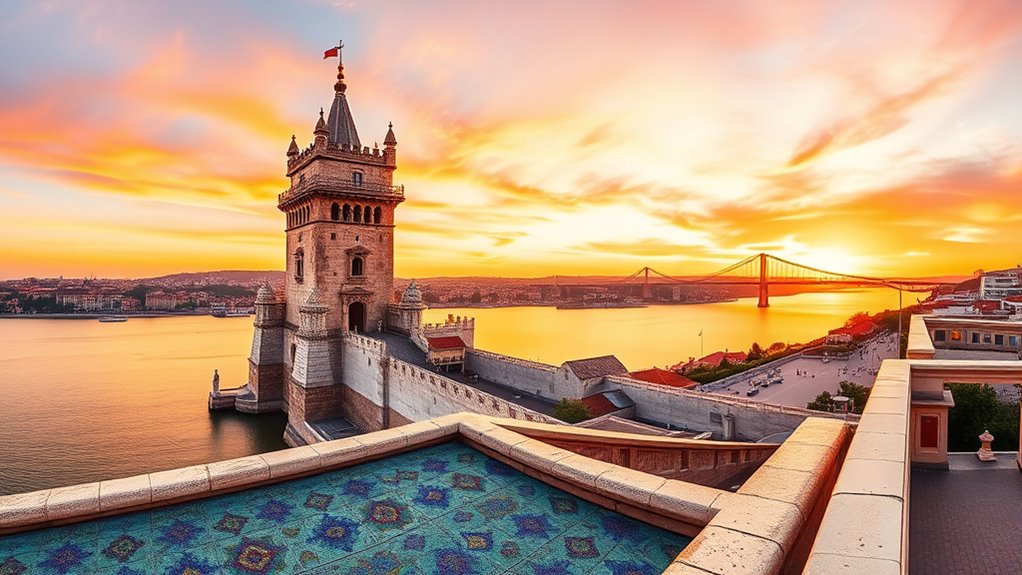

Portugal’s top attractions include Lisbon’s historic landmarks like the Tower of Belém and Jerónimos Monastery, showcasing stunning Manueline architecture. You can explore medieval charm in Guimarães and admire the romantic palaces and gardens of Sintra. Don’t miss Porto’s vibrant cityscape and cuisine, Évora’s well-preserved medieval center, or the archaeological wonders of Côa Valley. For natural beauty, visit Madeira’s Laurisilva Forest or the volcanic vineyards of Pico Island. Discover more about these incredible sites as you explore further.
Key Takeaways
- Lisbon’s historic landmarks like the Tower of Belém and Jerónimos Monastery showcase Portugal’s Age of Discoveries.
- Sintra’s colorful Pena Palace and mystical gardens epitomize romantic architecture and scenic beauty.
- Porto’s vibrant cityscape features iconic bridges, historic stations, and renowned Port wine cellars.
- Évora’s medieval and Renaissance center highlights well-preserved architecture, Roman ruins, and unique sites like the Chapel of Bones.
- The Côa Valley’s prehistoric rock engravings offer a fascinating glimpse into Portugal’s ancient artistic heritage.
Lisbon’s Historic Landmarks: Tower of Belém and Jerónimos Monastery
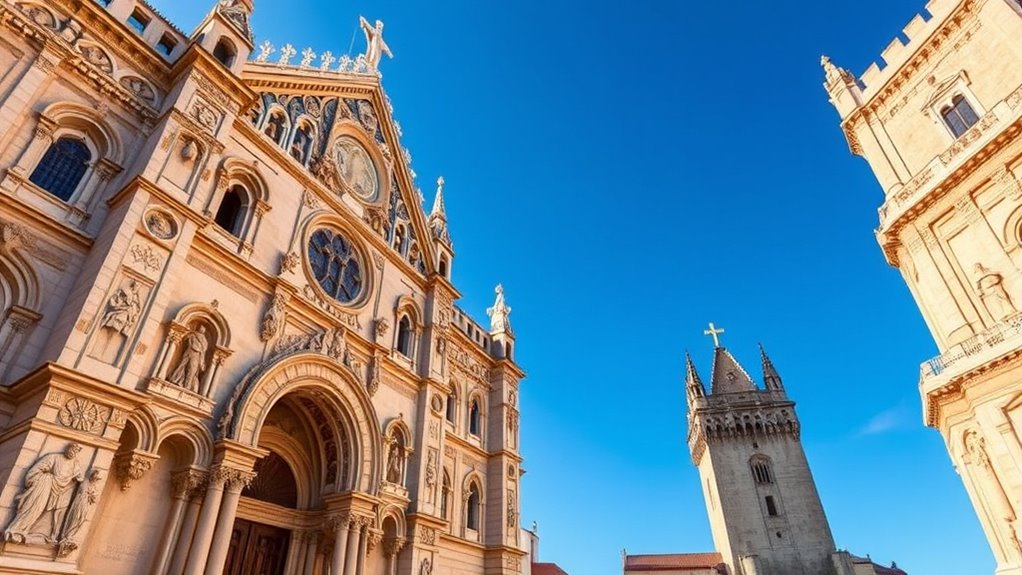
Lisbon’s Tower of Belém and Jerónimos Monastery stand as iconic symbols of Portugal’s Age of Discoveries and maritime history. You’ll notice the Tower’s distinctive Manueline architecture, built in the early 16th century to defend the city’s entrance. Its ornate stonework, battlements, and watchtowers reflect Portugal’s seafaring prowess. Nearby, the Jerónimos Monastery impresses with intricate Manueline detailing, honoring explorers like Vasco da Gama. Its grand cloisters and detailed sculptures showcase Portugal’s maritime achievements and religious devotion. Both sites are UNESCO World Heritage landmarks, drawing visitors worldwide. You can explore their historical significance, admire their architecture, and imagine the era when Portugal led global exploration. These landmarks encapsulate Portugal’s maritime legacy and are must-see attractions in Lisbon. Additionally, diverse architectural designs serve to elevate the aesthetic appeal of these historic sites, making them even more captivating for visitors.
The Medieval Charm of Guimarães: Birthplace of Portugal

Guimarães captures the essence of Portugal’s medieval origins, earning its reputation as the birthplace of the nation. As you explore its narrow cobblestone streets, you’ll notice well-preserved medieval architecture that transports you back in time. The imposing Guimarães Castle dominates the skyline, offering insight into medieval defense strategies. Nearby, the Palace of the Dukes of Braganza showcases noble life during the Middle Ages. The historic center features charming squares, ancient walls, and churches that tell stories of Portugal’s early history. Walking through these streets, you feel the deep sense of cultural heritage and national pride. Guimarães’s authentic medieval atmosphere makes it a must-visit, providing a vivid glimpse into Portugal’s foundational era. medieval architecture in Guimarães is remarkably well-preserved, allowing visitors to fully appreciate the historical significance of the city.
Exploring Sintra’s Romantic Palaces and Gardens

Nestled amidst lush forests and rolling hills, Sintra’s enchanting palaces and gardens invite you to step into a fairytale world. You’ll marvel at the Pena Palace, with its vibrant colors and eclectic architecture that blends Romanticism and Moorish styles, offering panoramic views of the surrounding landscape. Stroll through the Quinta da Regaleira’s mystical gardens, filled with secret tunnels, grottoes, and symbolic sculptures that spark your imagination. The Moorish Castle’s ancient walls let you walk through history, overlooking the lush forests below. As you explore, you’ll discover beautifully landscaped gardens, ornate terraces, and enchanting pavilions that embody the romantic spirit of 19th-century architecture. Sintra’s palaces and gardens create an immersive experience, transporting you into a dreamlike world of wonder. Additionally, the preservation of these historic sites reflects ongoing efforts to protect cultural heritage and ensure future generations can enjoy their timeless beauty.
Porto’s Architectural Heritage and Vibrant Cuisine Scene
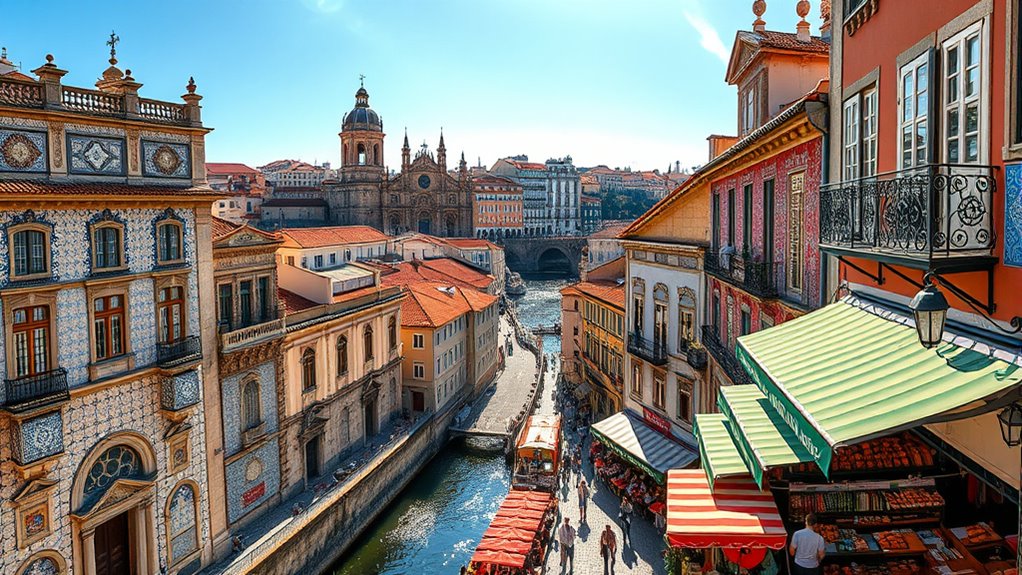
You’ll be captivated by Porto’s iconic architectural landmarks, from the stunning Torre dos Clérigos to the historic Luiz I Bridge. As you explore, you’ll also discover the city’s vibrant cuisine scene, famous for its hearty Francesinha sandwiches and world-renowned Port wine. Both the architecture and food reflect Porto’s rich history and lively spirit. Exploring the city’s cultural heritage offers a deeper appreciation of its unique blend of tradition and modernity.
Iconic Architectural Landmarks
Porto’s architectural heritage showcases an impressive blend of historical styles, from medieval structures to modernist designs, making the city a visual feast for visitors. You’ll notice the intricate Manueline details of the Torre dos Clérigos, the elegant curves of the Dom Luís I Bridge, and the colorful facades of Ribeira’s buildings. The city’s landmarks tell stories of its rich past and vibrant present. As you explore, you’ll encounter:
- Clérigos Tower: towering baroque spire offering panoramic views
- Ribeira District: lively riverside with colorful, historic buildings
- Palácio de Cristal Gardens: lush, scenic spaces with views of the Douro River
- São Bento Railway Station: stunning azulejo-tiled interior murals
- Casa da Música: striking modern concert hall blending architecture and acoustics
These landmarks highlight Porto’s diverse architectural charm and cultural significance. Additionally, the city’s architectural diversity reflects its evolution over centuries, showcasing a rich tapestry of styles that attract architecture enthusiasts from around the world.
Culinary Delights and Traditions
Discover how Porto’s rich architectural heritage seamlessly complements its vibrant culinary scene, creating an immersive experience for visitors. As you stroll through the city, you’ll encounter historic buildings, colorful tiled facades, and lively markets that reflect centuries of tradition. Porto is famous for its hearty cuisine, especially the iconic Francesinha sandwich, packed with meats and smothered in spicy sauce. Don’t miss tasting local Port wine right from the cellars along the Douro River, where centuries-old architecture enhances the tasting experience. Traditional taverns and modern eateries serve fresh seafood, hearty stews, and sweet treats like pastel de nata. The blend of visual grandeur and flavorful dishes invites you to savor Porto’s cultural richness in every bite and view. Architectural heritage plays a significant role in shaping the city’s unique ambiance and atmosphere.
Évora’s Well-Preserved Medieval and Renaissance Center
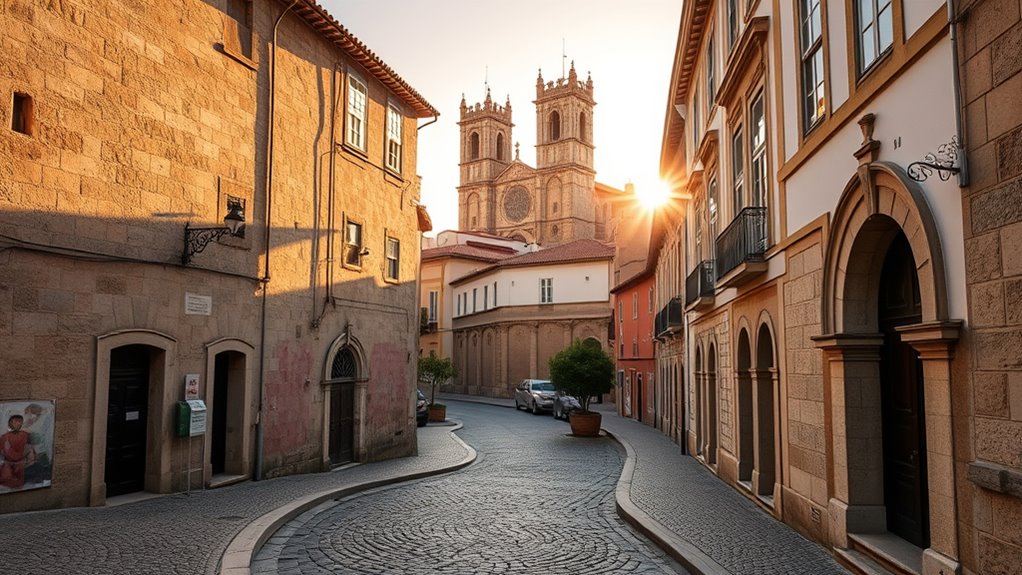
As you explore Évora’s historic center, you’ll notice its impressive medieval architecture, including ancient city walls and Roman temples. The Renaissance influence is evident in the elegant palaces and churches that line the narrow streets. This well-preserved city offers a vivid glimpse into Portugal’s architectural history across two significant eras. Cookies are used to enhance your browsing experience and can be customized or disabled according to your preferences.
Medieval Architectural Highlights
Évora’s historic center stands as a remarkable example of Portugal’s medieval and Renaissance architecture, offering a well-preserved glimpse into its rich past. As you explore, you’ll notice the narrow cobblestone streets, fortified walls, and historic buildings that tell stories of centuries gone by. Key highlights include:
- The 13th-century Évora Cathedral with its Gothic and Renaissance elements
- The medieval walls surrounding the city, still intact
- The Roman Temple of Évora, one of the best-preserved in Portugal
- The Chapel of Bones, decorated with human skulls and bones
- The Palace of the Dukes of Cadaval, showcasing Renaissance architecture
These structures create an enthralling atmosphere, allowing you to step back in time and experience Portugal’s medieval and Renaissance splendor firsthand. The preservation efforts over the years have ensured that these architectural treasures remain accessible and inspiring for visitors today.
Renaissance Heritage Influence
The well-preserved medieval and Renaissance center of Évora vividly illustrates Portugal’s architectural evolution during these influential periods. You’ll notice the harmonious blend of Gothic structures with Renaissance details, reflecting a period of cultural growth. As you explore, the city’s iconic Roman Temple, also called the Temple of Diana, stands out, showcasing classical influence. The Cathedral of Évora combines Gothic grandeur with Renaissance refinements, revealing a transitional style. Narrow cobbled streets lead you past ornate palaces and civic buildings that highlight Renaissance craftsmanship. You’ll feel transported back in time, witnessing how medieval foundations supported Renaissance embellishments. This historic core perfectly captures Portugal’s changeover from medieval austerity to Renaissance elegance, making Évora a living testament to Portugal’s rich architectural heritage. Additionally, the Renaissance influence in Évora is evident in the detailed facades and artistic sculptures that adorn many buildings, emphasizing the city’s role as a cultural hub during this transformative era.
The Religious and Architectural Marvels of Batalha and Coimbra
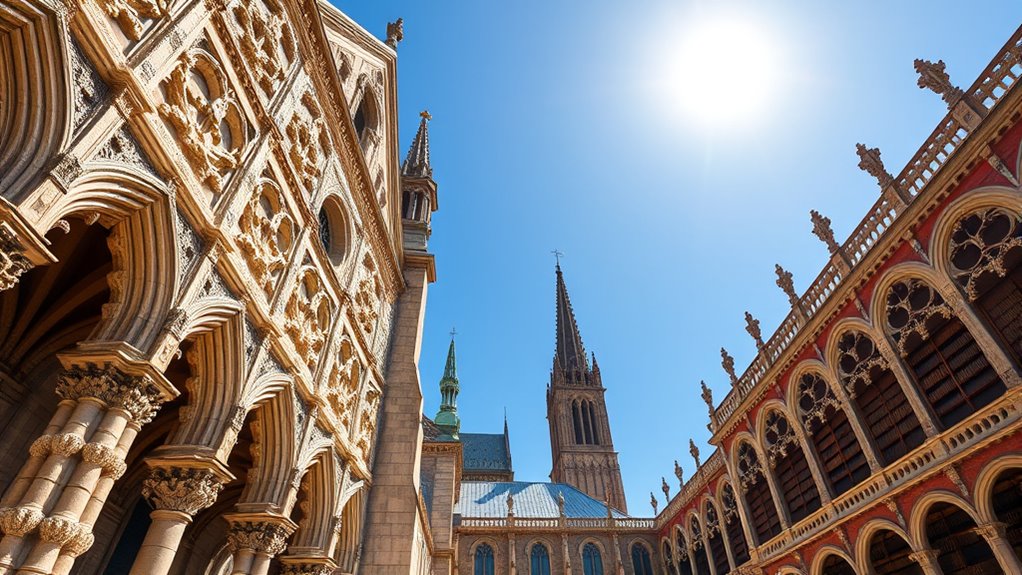
Nestled in Portugal’s rich religious and architectural history, Batalha and Coimbra stand out as remarkable showcases of medieval craftsmanship and spiritual devotion. In Batalha, the Monastery of Batalha impresses with its soaring Gothic arches, intricate Manueline details, and stunning stained glass windows that tell stories of Portugal’s independence. Meanwhile, Coimbra’s University and its historic center reveal a blend of Renaissance and Baroque architecture, reflecting centuries of academic tradition. You’ll find:
Explore Portugal’s rich heritage with Gothic, Manueline, Renaissance, and Baroque masterpieces in Batalha and Coimbra.
- Gothic grandeur and detailed stone carvings in Batalha’s monastery
- The ornate cloisters and chapels of the Monastery of Santa Clara-a-Velha
- The ancient University of Coimbra’s Royal Palace and Joanina Library
- Narrow cobblestone streets echoing medieval life
- The impressive Santa Cruz Monastery with its religious sculptures
- Recognizing the symbolism present in the religious and architectural elements enhances appreciation of their historical significance.
Both sites invite you to explore Portugal’s spiritual and architectural legacy.
The Archaeological Wonders of the Côa Valley

Discover one of Portugal’s most remarkable archaeological sites in the Côa Valley, where thousands of Paleolithic rock engravings span over 20,000 years. As you explore this open-air gallery, you’ll see intricate animal figures carved into limestone cliffs, offering a rare glimpse into early human life. These engravings, some dating back to the Magdalenian period, reveal hunting scenes, animals, and abstract symbols. The site challenges the idea that prehistoric art was confined to caves, showcasing how early humans used the landscape itself as a canvas. Recognized as a UNESCO World Heritage Site, the Côa Valley combines natural beauty with profound historical significance. Visiting here, you’ll connect directly with humanity’s distant past and marvel at our ancestors’ artistic expression.
The Unique Vineyards of Pico Island and the Azores

If you visit Pico Island in the Azores, you’ll encounter a stunning landscape where volcanic terrain meets centuries-old vineyards. The island’s unique vineyards are built into the rugged landscape, showcasing centuries of human adaptation to volcanic soil and climate. These terraces, supported by stone walls, create a mosaic across the hillside. You’ll see:
- Steep, winding pathways linking tiny, cultivated plots
- Traditional stone wine cellars carved into the volcanic rock
- Endemic grape varieties thriving in challenging conditions
- Vines growing on volcanic ash and lava
- Small, family-run wineries producing renowned Pico wines
This landscape is a UNESCO World Heritage Site, highlighting its cultural and environmental significance. As you wander here, you’ll witness how nature and tradition shape one of Portugal’s most distinctive viticultural regions.
Natural Beauty and Biodiversity in Madeira’s Laurisilva Forest

Continuing your exploration of Portugal’s diverse natural landscapes, Madeira’s Laurisilva Forest stands out as a pristine example of subtropical rainforest. As you wander through its lush, verdant canopy, you’ll notice the dense greenery teeming with endemic species like the Madeira laurel and Madeira firecrest. The forest’s humid climate fosters incredible biodiversity, supporting rare plants, mosses, and fungi. You can hike along well-marked trails that wind through ancient trees, waterfalls, and hidden groves. This UNESCO World Heritage site protects a fragile ecosystem that’s essential for maintaining regional climate stability and water resources. As you immerse yourself in this vibrant landscape, you’ll appreciate the importance of preserving such a unique natural treasure, rich in both beauty and biodiversity.
Frequently Asked Questions
Which UNESCO Sites in Portugal Are Best Visited for Their Historical Significance?
You should visit the Jerónimos Monastery, the Monastery of Alcobaça, and Guimarães for their rich history. The Jerónimos Monastery honors Portugal’s Age of Discoveries, while Alcobaça showcases early Gothic art and royal history. Guimarães, as Portugal’s birthplace, offers medieval streets and historic significance. These sites give you a deep understanding of Portugal’s cultural roots, medieval architecture, and pivotal moments in its history.
Are There Guided Tours Available at the Tower of Belém and Jerónimos Monastery?
You’ll find guided tours at the Tower of Belém and Jerónimos Monastery, offering a chance to step into Portugal’s maritime past and religious grandeur. As you walk through stone corridors and climb ancient battlements, guides bring stories to life, revealing secrets behind Manueline architecture and explorers’ legends. These tours deepen your understanding, transforming your visit into an immersive journey through history, culture, and the echoes of Portugal’s golden Age of Discoveries.
How Accessible Are the Remote UNESCO Sites Like Pico Island and Madeira’s Laurisilva Forest?
You’ll find that remote UNESCO sites like Pico Island and Madeira’s Laurisilva Forest are quite accessible, though they require some planning. Ferry rides or flights connect you to these islands, and local transport or guided tours make exploring easier. Once there, you can enjoy hiking, vineyard visits, or nature walks. Just remember to check schedules and transportation options in advance to make your journey smooth and enjoyable.
What Are the Best Times of Year to Visit Portugal’s Natural UNESCO World Heritage Sites?
You should visit Portugal’s natural UNESCO sites during spring (March to June) and fall (September to November). Spring blossoms symbolize renewal, perfect for exploring the Laurisilva Forest and Pico Island’s vineyards, when weather is mild and crowds are fewer. Fall’s golden hues mirror harvest time, ideal for enjoying vineyard tours and scenic hikes. Summer can be hot and crowded, while winter offers peaceful solitude, making these seasons your best bet for immersive natural beauty.
Can I Explore UNESCO Cultural Landscapes Like Sintra and Alentejo Independently?
Yes, you can explore UNESCO cultural landscapes like Sintra and Alentejo independently. You’ll have the freedom to set your own pace and discover hidden gems along the way. Just plan ahead by researching routes, opening hours, and transportation options. Renting a car often makes travel easier and more flexible, especially in less accessible areas. Bring a good map or GPS, and enjoy immersing yourself in Portugal’s rich history and natural beauty at your own pace.
Conclusion
Portugal’s treasures beckon, each destination offering secrets waiting to be uncovered. From ancient monasteries to breathtaking landscapes, the country’s rich history and vibrant culture invite you to explore deeper. But beyond these highlights lies a tapestry of hidden gems, whispering stories only the curious can discover. Will you unravel Portugal’s mysteries and leave with a story of your own, or let these wonders quietly slip away into the sunset? The choice is yours.