
Portugal’s history begins with its medieval roots, marked by the rise of its first king, Afonso Henriques, and its fight for independence. During the Age of Exploration, explorers like Vasco da Gama expanded their reach worldwide, shaping a vast maritime empire. The country’s rich culture features Fado music, colorful azulejos, and vibrant festivals. Its colonial past influences modern Portugal today. To discover more, explore how these pivotal moments continue to shape Portugal’s identity and traditions.
Key Takeaways
- Portugal’s history began with its independence in 1143, solidified through key battles and treaties, shaping its national identity.
- The Age of Exploration expanded Portugal’s influence globally, establishing colonies and trade routes in Africa, Asia, and South America.
- Cultural heritage includes UNESCO-recognized Fado music, azulejos tiles, and religious festivals like Our Lady of Fátima.
- Portugal’s colonial legacy influences its diverse culture, blending European traditions with those of its former colonies such as Brazil and Goa.
- Modern Portugal focuses on sustainable tourism, renewable energy, and preserving its rich cultural traditions amidst a dynamic global landscape.
The Foundations of Portugal: From County to Kingdom
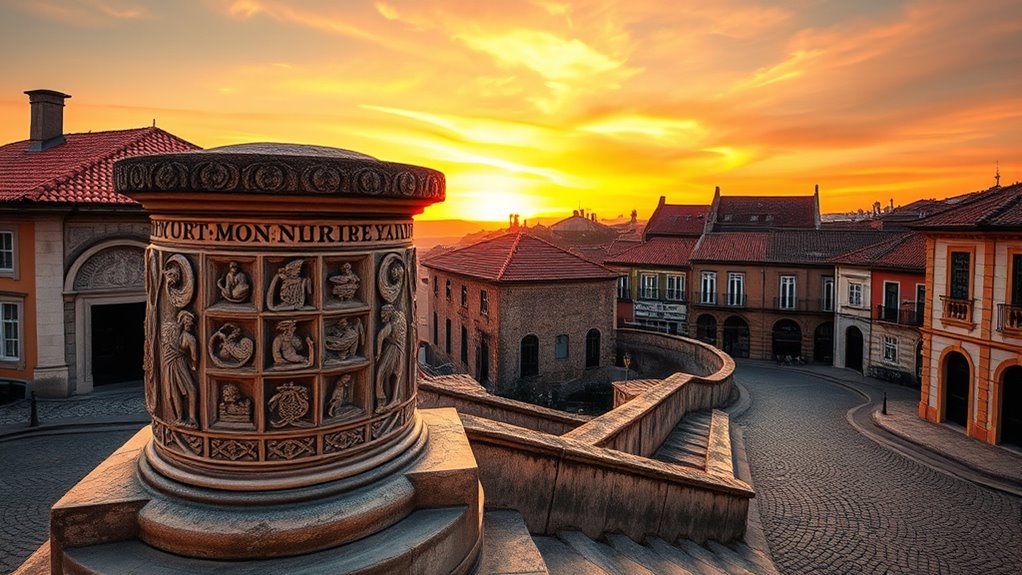
The foundation of Portugal as an independent entity begins with key battles and treaties that established Afonso Henriques as its first ruler. You’ll learn that on June 24, 1128, the Battle of São Mamede saw Afonso defeat his mother’s forces, solidifying his control over the County of Portugal. Then, on October 5, 1143, the Treaty of Zamora recognized him as the first King of Portugal, formally asserting independence from León and Castile. In 1179, Pope Alexander III officially acknowledged Afonso I’s kingship and Portugal’s sovereignty through the Manifestis Probatum. During this early period, the Afonsine dynasty was established, uniting territories and defending against neighboring kingdoms. Meanwhile, early rulers expanded southward, pushing Muslim control out of the region, shaping Portugal’s territorial boundaries. Additionally, the development of early medieval institutions helped consolidate royal authority and establish Portugal’s national identity.
The Age of Exploration and Global Expansion

Have you ever wondered how Portugal transformed from a small kingdom into a global maritime power? During the Age of Exploration, you’d see Portuguese explorers pushing boundaries. They sailed along Africa’s coast, rounded Cape Bojador, and opened sea routes to India. Vasco da Gama’s voyage established trade dominance, while Pedro Álvares Cabral claimed Brazil. Portugal’s ships connected continents, creating a vast empire. This expansion boosted wealth and cultural exchange, leaving lasting legacies. Here’s a quick look at key milestones:
| Year | Event | Impact |
|---|---|---|
| 1415 | Conquered Ceuta | First overseas possession |
| 1488 | Dias rounds Cape of Good Hope | Sea route to India |
| 1498 | Da Gama reaches India | Dominance in spice trade |
| 1500 | Cabral lands in Brazil | New territories |
| 1521 | Spice trade flourishes | Economic prosperity |
This era shaped Portugal’s global footprint, further expanding its influence across continents.
Key Political Shifts and Territorial Milestones
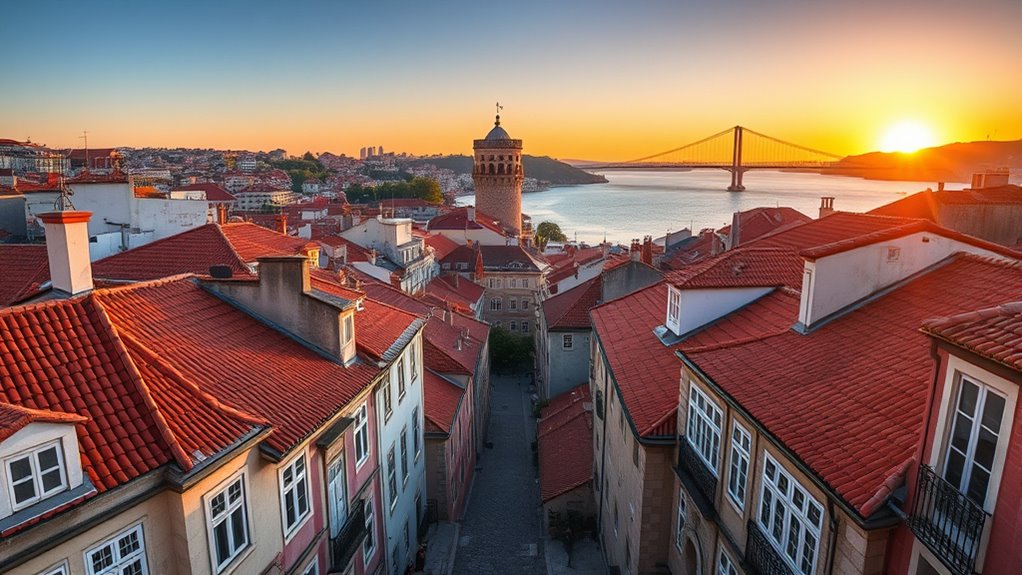
Portugal’s political landscape has shifted dramatically over the centuries, marked by pivotal battles and treaties that shaped its sovereignty. The Battle of São Mamede in 1128 established Afonso Henriques as ruler, and the 1143 Treaty of Zamora recognized Portugal’s independence from León. Pope Alexander III’s 1179 recognition cemented this status. The Battle of Aljubarrota in 1385 secured independence from Castile and installed the Aviz dynasty. The Iberian Union (1580–1640) temporarily united Portugal with Spain, but the Portuguese Restoration War reestablished independence under the House of Braganza. The 1820–1825 liberal revolution led to Portugal’s first constitution and Brazil’s independence. The 1910 revolution ended the monarchy, and the 1974 Carnation Revolution restored democracy, ending authoritarian rule and colonial wars. The treaties and battles played a crucial role in defining Portugal’s territorial boundaries and sovereignty throughout history.
Portugal’s Rich Cultural Heritage and Traditions

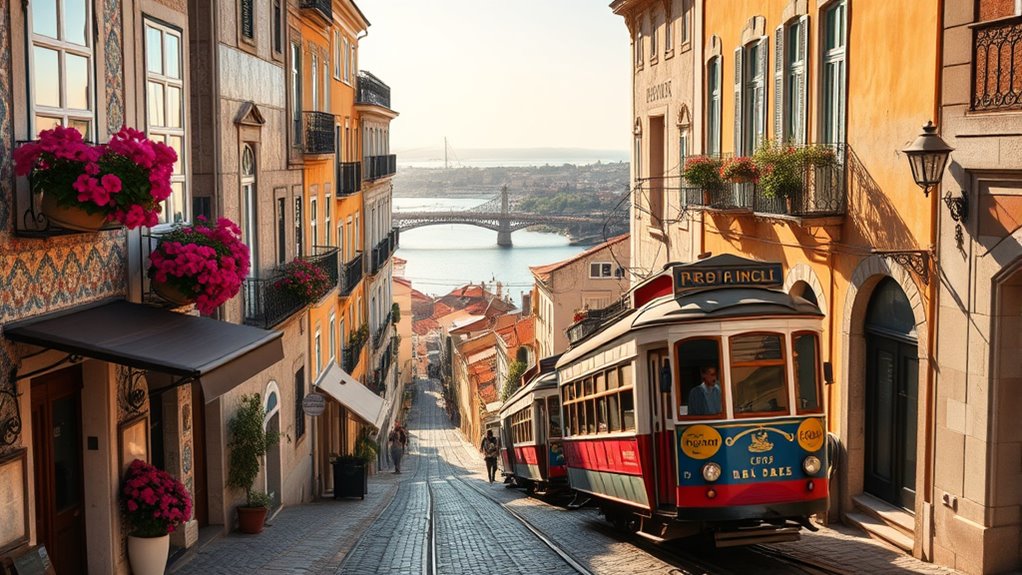
Portugal’s rich cultural heritage is alive in its vibrant traditions, from soulful music to stunning art forms that reflect centuries of history. You experience this through Fado, hauntingly beautiful music expressing longing, recognized by UNESCO. Azulejos, intricate painted tiles, adorn buildings and tell stories across eras. Religious festivals like Our Lady of Fátima draw millions, emphasizing faith and community. Culinary traditions, such as codfish dishes, pastel de nata, and port wine, showcase maritime and monastic influences. These elements reveal Portugal’s deep-rooted history, blending artistic expression, spirituality, and gastronomy. The preservation of cultural heritage continues to strengthen national identity and pride. Embrace the diversity of these traditions, which continue to shape national identity and cultural pride.
Portugal’s Colonial Legacy and Modern Developments
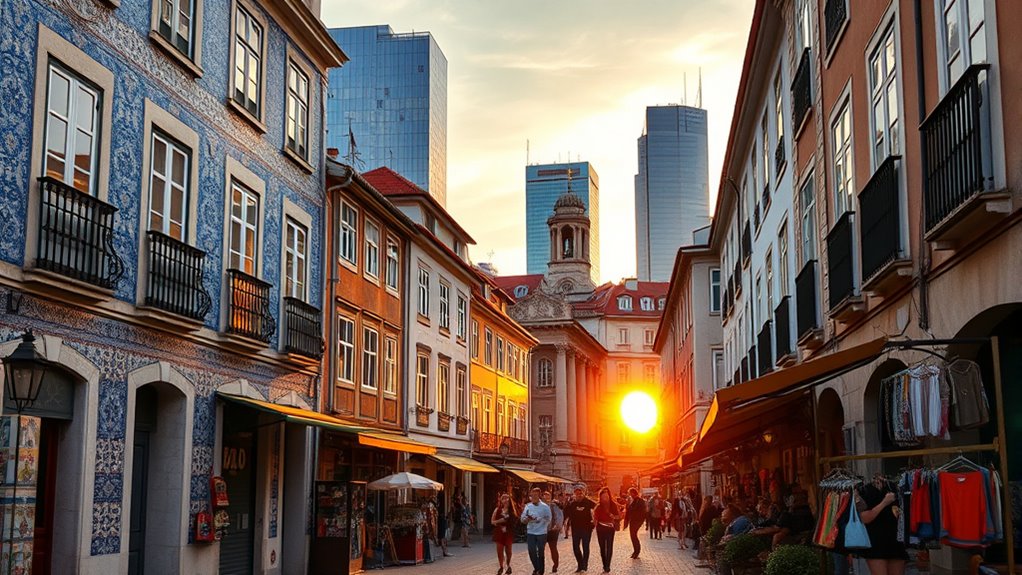
The legacy of Portugal’s colonial past continues to influence its identity and global relationships today. You see this in its vibrant cultural mix, blending European and former colonies’ traditions. Portugal’s historical trade routes and territories, like Brazil, Goa, and Macau, still shape economic ties and diplomatic connections. Though the empire declined after Brazil’s independence in 1822, Portugal remains committed to preserving its cultural heritage, such as azulejos, fado, and religious festivals. Modern developments focus on sustainable tourism, renewable energy, and technological innovation, helping the country adapt to global challenges. You’ll notice Portugal’s efforts to reconcile its colonial history through cultural exchanges and memorials. While past conflicts and exploitation are acknowledged, Portugal actively promotes multiculturalism, economic cooperation, and environmental sustainability in its ongoing national journey. Additionally, Portugal’s approach to ethical hacking and cybersecurity reflects its commitment to safeguarding digital infrastructure amidst increasing global cyber threats.
Frequently Asked Questions
How Did Portugal Transition From a County to an Independent Kingdom?
You see Portugal became an independent kingdom after Afonso Henriques led the Battle of São Mamede in 1128, defeating his mother’s forces. Then, in 1143, the Treaty of Zamora recognized him as the first King of Portugal. The Pope’s official recognition in 1179 confirmed Portugal’s independence from León and Castile. This marked Portugal’s progression from a county to a sovereign kingdom, establishing its own identity and borders.
What Were the Main Influences on Portugal’s Unique Cultural Heritage?
You’re influenced by Portugal’s rich history, including its maritime discoveries, which shaped its global connections. The blend of Moorish, Christian, and Roman traditions created distinctive art, architecture, and music like Fado. Religious devotion, especially Our Lady of Fátima, deeply impacts culture. Additionally, iconic tiles (azulejos) and culinary favorites like codfish and port wine reflect Portugal’s maritime and monastic roots, making its heritage uniquely vibrant and diverse.
How Did Portugal Establish Its Dominance in Global Trade During the Age of Discoveries?
You can see Portugal’s dominance in global trade during the Age of Discoveries through its pioneering maritime explorations. You should note how explorers like Vasco da Gama found sea routes to India and Bartolomeu Dias rounded the Cape of Good Hope, opening direct trade links. These breakthroughs allowed Portugal to control spice routes, establish colonies, and expand its empire, making it a major power in international trade during the 15th and 16th centuries.
What Impact Did the Iberian Union Have on Portuguese Sovereignty?
The Iberian Union temporarily weakened Portuguese sovereignty because Portugal shared its crowns with Spain from 1580 to 1640. During this period, your country’s independence was compromised, and you faced Spanish influence over your political decisions. After 1640, you fought to restore your sovereignty through the Portuguese Restoration War, regaining independence and reinforcing your nation’s identity and autonomy.
How Has Portugal’s Colonial History Shaped Its Modern Identity?
You can see Portugal’s colonial past in its vibrant streets, colorful tiles, and diverse cultural influences. The legacy of explorers and global trade shaped your nation’s identity, blending European traditions with African, Asian, and American elements. This history fuels your pride, reflected in music, cuisine, and language. Though rooted in conquest and discovery, Portugal now embraces its multicultural heritage, fostering a unique sense of identity that spans continents.
Conclusion
As you explore Portugal’s history, you’ll see it’s like a vibrant tapestry woven with exploration, culture, and change. From its humble beginnings as a county to a global maritime power, Portugal’s story is full of bold adventures and rich traditions. Just as a river carves its path through the landscape, Portugal’s legacy flows through time, shaping its identity today. Embrace its vibrant culture—you’ll find it as warm and inviting as a sunny Portuguese day.