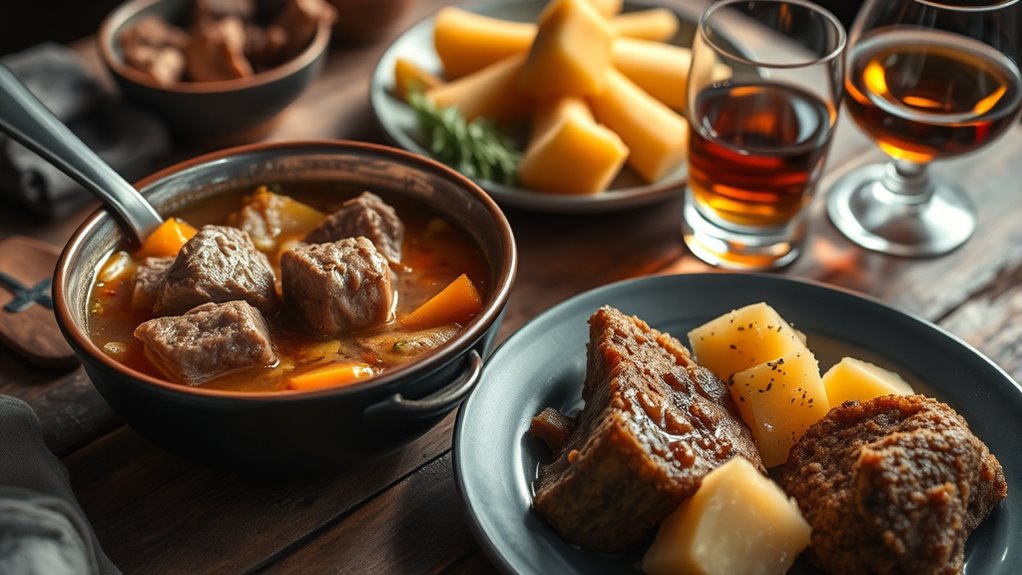

Scottish cuisine centers on hearty ingredients like oats, root vegetables, seafood, and game meats. You’ll find traditional dishes such as haggis, Cullen Skink, and Scotch Broth, prepared with techniques like smoking, boiling, and stewing. Regional influences and historic trade shaped unique flavors, while foraging still brings wild herbs, berries, and seaweed into modern plates. If you continue exploring, you’ll discover how Scotland’s food traditions blend history, regional pride, and contemporary innovations.
Key Takeaways
- Scottish cuisine is based on ingredients like oats, root vegetables, seafood, and dairy, with regional variations shaping traditional dishes.
- Classic dishes include haggis, Cullen Skink, Scotch Broth, and Clapshot, prepared through techniques like boiling, smoking, and stewing.
- Climate, trade, and historical influences have shaped Scottish food, emphasizing preservation methods like smoking and salting.
- Modern trends blend tradition with innovation, incorporating international flavors, foraging, and advanced culinary techniques.
- Food plays a cultural role in celebrations like Burns Night and Hogmanay, with foraged ingredients highlighting regional culinary identity.
Foundations of Scottish Food: Staples and Ingredients
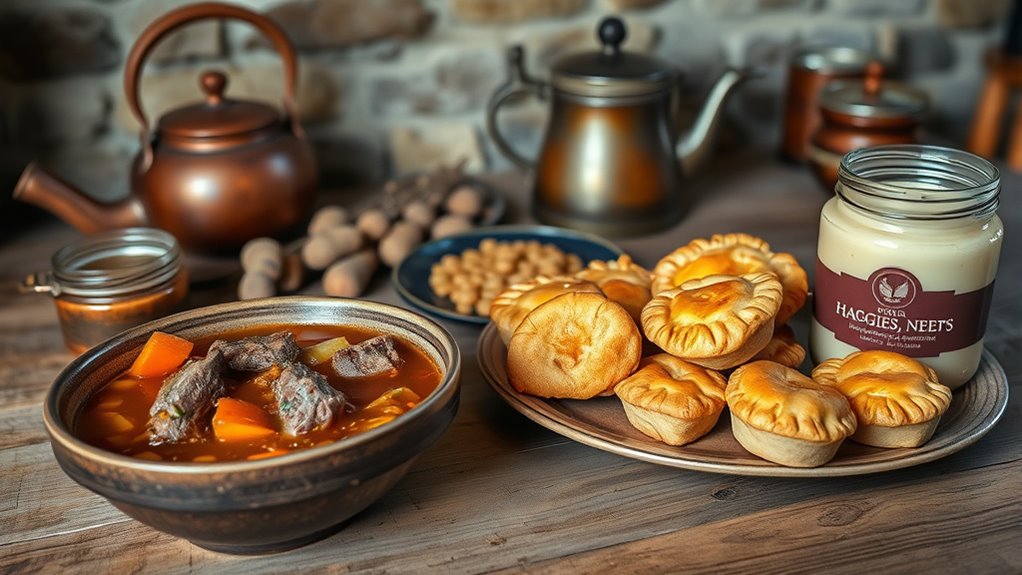
Scottish cuisine relies heavily on a few core ingredients that have shaped its traditional dishes for centuries. You’ll find oats at the heart of many meals, used to make oatcakes, porridge, and brose—simple, hearty mixtures of oats with water or milk. Root vegetables like turnips, potatoes, kale, and cabbage are staples, thriving in Scotland’s cool, damp climate. Seafood is essential, with fish and shellfish harvested from the coast, reflected in dishes like Cullen Skink. Dairy products such as milk, butter, and cheese also play a significant role, enriching many recipes. Additionally, game meats like venison and wild birds feature prominently, especially among the landowning classes, adding flavor and variety to traditional Scottish fare. These ingredients form the foundation of Scotland’s culinary identity. Vetted – Halloween Product Reviews
Classic Dishes That Define Scottish Cuisine

Among the most recognizable dishes that showcase Scotland’s culinary heritage are haggis, Cullen Skink, and Scotch broth. These dishes reveal the country’s resourcefulness and connection to local ingredients. You’ll find haggis, made from sheep offal and oats, often served with neeps and tatties. Cullen Skink showcases Scotland’s coastal bounty with smoked haddock, potatoes, and onions in a hearty soup. Scotch broth combines barley, lamb, and root vegetables into a warming stew. To explore further:
Discover Scotland’s hearty classics: haggis, Cullen Skink, and Scotch broth, celebrating local ingredients and timeless tradition.
- Haggis — the iconic, savory pudding celebrating Scottish tradition
- Cullen Skink — a smoky, flavorful fish soup from the coast
- Scotch Broth — a nourishing, vegetable-rich stew
- Clapshot — a turnip and potato mash, often accompanying meat dishes
These dishes embody the heart of Scottish cuisine, emphasizing local ingredients and simple preparation. Additionally, financial management principles such as budgeting and resource allocation play a role in sustaining traditional culinary practices and supporting local food economies.
Historical Influences Shaping Scottish Eating Habits
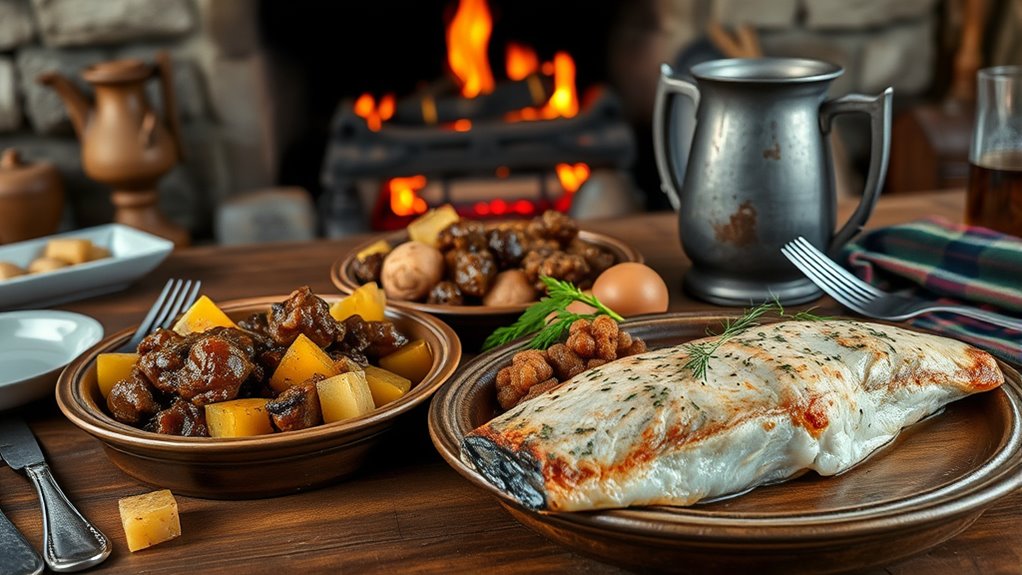
Scottish eating habits have been shaped by its climate and agriculture, making simple, hardy ingredients like oats and root vegetables staples. Socioeconomic class influenced food choices, with the nobility enjoying game and spices, while common folk relied on oats and vegetables. Cultural and foreign influences, especially French, introduced new techniques and flavors that enriched traditional dishes over time.
Climate and Agriculture
The region’s climate has profoundly shaped the ingredients and dishes that define traditional Scottish cuisine. You’ll find that hardy crops and local resources dominate Scottish dishes due to the often cool, wet weather. Here are four ways climate influences your food:
- Oats thrive because they tolerate Scotland’s damp, cool conditions, forming the basis for oatcakes and porridge.
- Root vegetables like turnips, potatoes, and cabbage grow well in the cooler climate, becoming dietary staples.
- Seafood is abundant, as Scotland’s extensive coastline makes fishing and foraging for fish and shellfish practical.
- Dairy farming flourishes in the cooler climate, providing milk, butter, and cheese integral to traditional recipes.
- The climate also affects the preservation methods used in Scottish cuisine, such as smoking and salting fish and meat to ensure year-round availability.
Socioeconomic Class Impact
Historical socioeconomic divisions deeply influenced Scottish eating habits, shaping both the ingredients available and the dishes enjoyed by different social classes. Nobility and wealthy landowners indulged in game meats, imported spices, and refined cooking techniques, often hosting elaborate feasts. Common folk relied on hearty, affordable staples like oats, root vegetables, and locally caught seafood, emphasizing simplicity and practicality. Porridge, oatcakes, and vegetable stews were everyday fare for the working class, while the aristocracy enjoyed more luxurious ingredients. Food preservation methods, such as drying and smoking, allowed for storage and travel, supporting mobility and social distinctions. Over time, these differences persisted, with social class dictating access to certain ingredients and culinary traditions, shaping Scotland’s diverse food landscape. Additionally, the use of traditional preservation methods played a crucial role in maintaining dietary patterns and social separation.
Cultural and Foreign Influences
Cultural and foreign influences have played a significant role in shaping Scottish eating habits over centuries. These influences introduced new ingredients, techniques, and flavors that enriched traditional cuisine.
- The Auld Alliance with France brought culinary terms, spices, and cooking methods, evident in dishes like French-influenced sauces and pastry techniques.
- Scandinavian contact introduced preservation methods and ingredients, influencing seafood dishes and the hearty, simple style of Scottish cooking.
- British colonization and trade expanded access to spices, sugar, and imported goods, shaping festive foods and desserts like shortbread and tablet.
- Modern globalization continues to influence Scottish cuisine, blending traditional ingredients with international flavors, resulting in innovative dishes that honor the past while embracing the present.
Traditional Cooking Techniques and Food Preparation
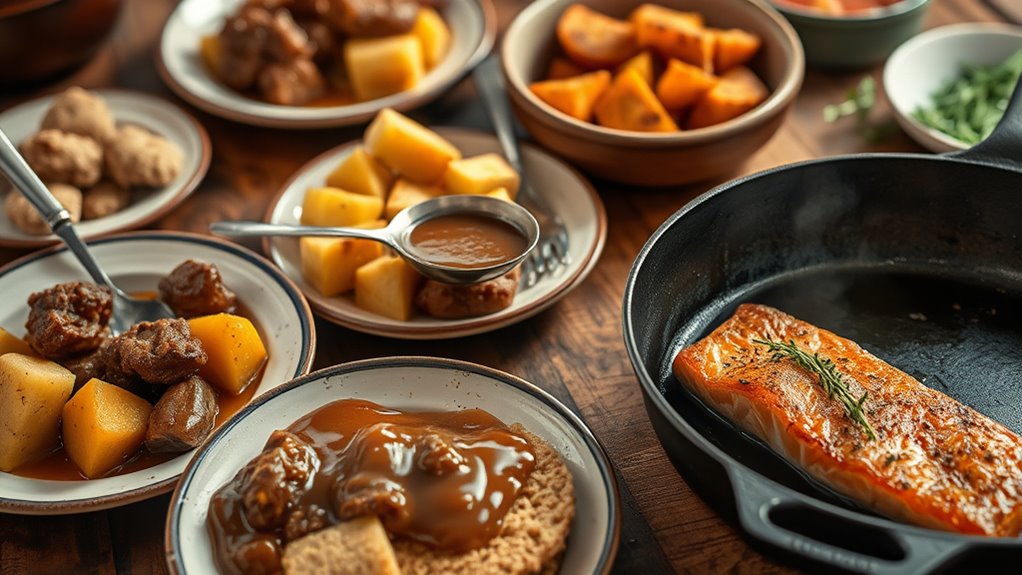
Traditional Scottish cooking techniques emphasize simplicity and resourcefulness, often relying on outdoor hearths, griddles, and basic methods to prepare hearty dishes. You might cook oatcakes on a girdle or bake them in an open fire, using minimal ingredients. Boiling, stewing, and roasting are common, reflecting a no-waste approach. Preservation methods like smoking and drying ensure food lasts longer, especially for travel. You’ll notice the use of whole animals, especially in dishes like haggis, highlighting resourcefulness. The table below illustrates key techniques and their purposes:
| Technique | Purpose |
|---|---|
| Girdle cooking | Quick, even heating for oatcakes |
| Boiling | Softening vegetables and meats |
| Stewing | Developing rich flavors in hearty dishes |
| Smoking | Preserving fish and meats |
| Roasting | Cooking larger cuts of meat |
Regional and Clan Variations in Recipes
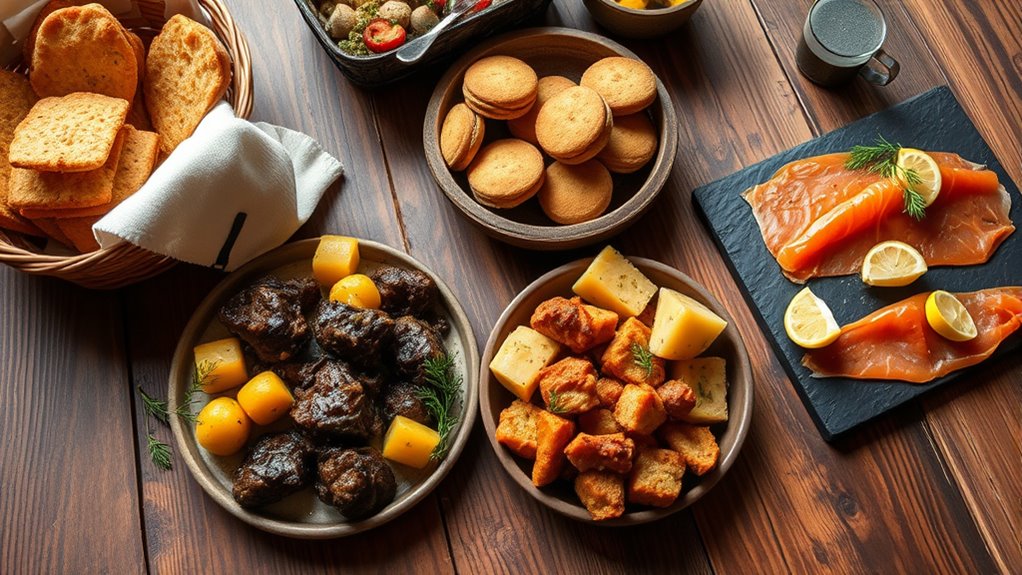
You’ll notice that different regions and clans in Scotland have distinct recipes, shaped by local ingredients and traditions. For example, coastal areas often feature seafood-based dishes, while inland communities rely more on root vegetables and game. These variations reflect both the available ingredients and the unique cultural identities of each clan and region.
Regional Ingredient Differences
Scotland’s diverse regions and clans have long shaped distinct culinary identities, leading to notable variations in ingredients and recipes. You’ll find differences based on geography, climate, and local resources. For example:
- In the Highlands, venison and game meats dominate, reflecting hunting traditions and rugged terrain.
- Along the coasts, seafood like haddock, shellfish, and smoked fish are staples, emphasizing Scotland’s maritime focus.
- The Lowlands favor dairy products and root vegetables, benefiting from more temperate, fertile land.
- Orkney and the Northern Isles incorporate unique ingredients like seaweed and local grains, influencing their distinct dishes.
- These regional ingredient differences are also influenced by climate variations, which affect the availability of certain foods throughout the year.
These regional ingredient differences give Scottish cuisine its rich variety, making each area’s food uniquely reflective of its environment.
Clan Recipe Traditions
How much do regional and clan affiliations influence Scottish recipes? Quite a bit, actually. Different clans and regions developed unique variations based on local ingredients and traditions. For example, Highland clans often favored hearty game and simple preparations like stews with wild meats, while Lowland clans incorporated more dairy and vegetables into their dishes. Some clans had signature recipes passed down through generations, such as specific haggis styles or unique ways of preparing seafood along the coast. These distinctions helped reinforce clan identity and pride. Over time, recipes evolved to reflect available ingredients and regional tastes, creating a rich tapestry of culinary traditions. Additionally, cultural identity continues to play a role in preserving and celebrating these regional culinary variations, both through family traditions and public festivals.
Variations in Cooking Styles
Regional and clan identities have long shaped Scottish cooking styles, creating distinct flavors and preparations across the country. You’ll notice differences in recipes, ingredients, and techniques depending on where you are. Here are four key variations:
- Highland vs. Lowland: Highland dishes often feature game meats like venison and hearty stews, while Lowland recipes favor dairy, grains, and vegetables.
- Island Influences: Coastal areas emphasize seafood like smoked haddock and shellfish, with dishes such as Cullen Skink.
- Clan Traditions: Some clans have signature meals, such as the MacGregor’s preference for game or the Campbell’s for hearty broths.
- Regional Spices and Herbs: While rare spices were historically limited, regions used local herbs like thyme and juniper, shaping flavor profiles uniquely.
- Herbal Use in Cooking: The use of local herbs played a significant role in developing regional tastes, often replacing more expensive imported spices.
Celebratory Foods and Cultural Food Practices
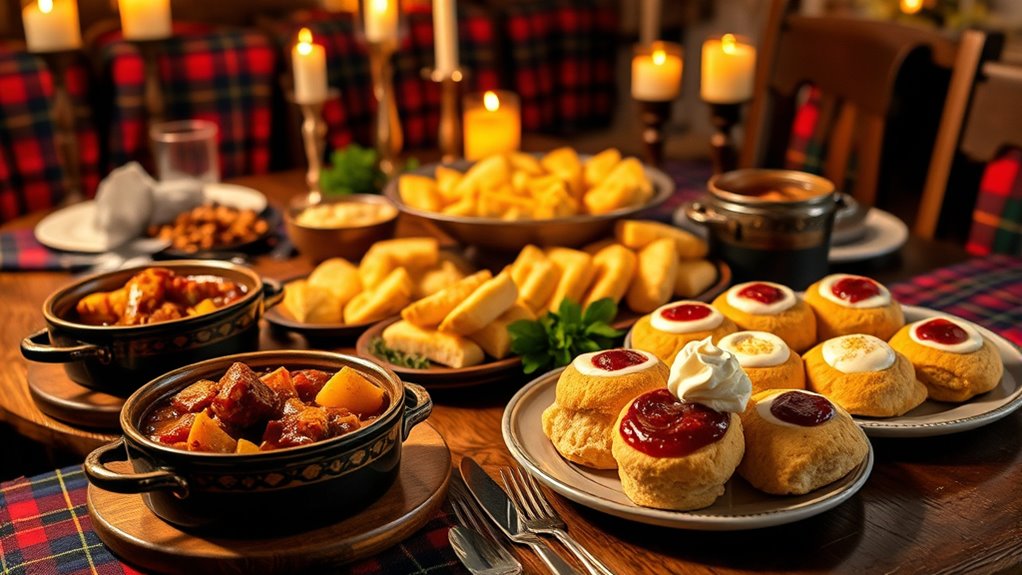
Celebratory foods hold a special place in Scottish culture, serving as symbols of tradition and community during important festivals and events. When you gather for Burns Night on January 25, you’ll enjoy haggis, neeps, and tatties, honoring poet Robert Burns. During Hogmanay, New Year’s, you might indulge in whisky and shortbread, sharing warmth and good cheer. Highland games feature hearty fare like game meats and regional specialties, reflecting local pride. Clan gatherings often include traditional dishes unique to regions, emphasizing local ingredients. Participating in these food practices reinforces social bonds, such as communal feasts and storytelling. Celebrating Scottish heritage through these foods helps you connect with history, folklore, and the enduring spirit of community that defines Scottish culture. Additionally, digital literacy plays a role in preserving and sharing these culinary traditions through online recipes, virtual tours, and cultural workshops.
The Role of Foraging and Wild Ingredients in Scotland
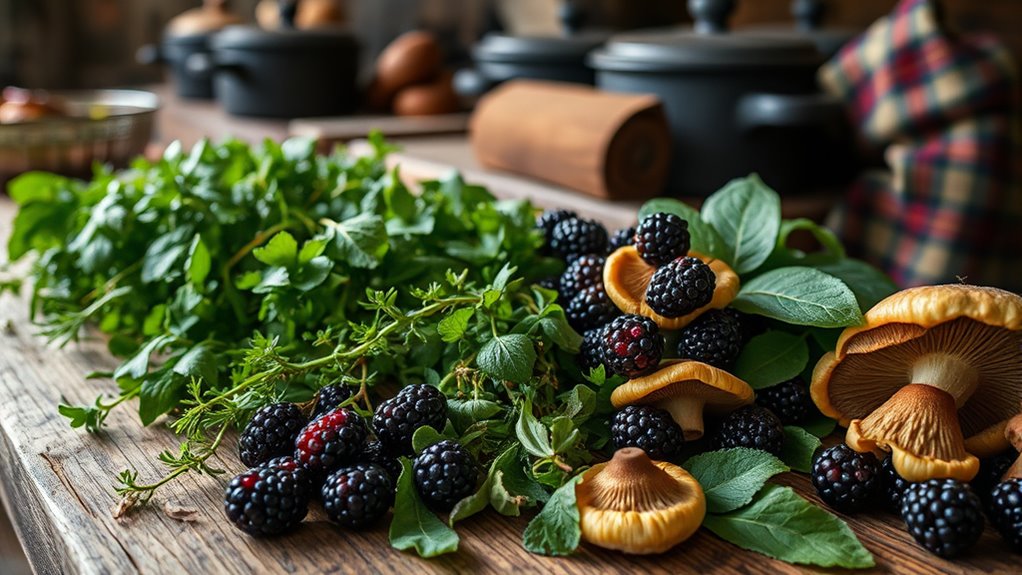
Did you know that foraging has played an essential role in shaping Scotland’s culinary landscape? It’s a tradition that links you directly to the land and seasons. You can gather a variety of wild ingredients that enhance local dishes and preserve seasonal flavors. Here are four key foraged items:
Foraging connects you to Scotland’s land, seasons, and authentic flavors.
- Berries like bilberries and lingonberries, used in desserts and jams.
- Mushrooms such as chanterelles and cep, added to stews and sauces.
- Wild herbs like sorrel and nettles, enriching soups and salads.
- Seaweed varieties, which flavor broths and are rich in nutrients.
Foraging keeps Scottish cuisine rooted in natural, local ingredients and adds unique flavors to both traditional and modern dishes. It’s a sustainable practice that continues to influence Scottish gastronomy today. Understanding seasonal foraging peaks helps ensure the best quality and abundance of these ingredients.
From Hearth to Fine Dining: Evolution of Scottish Foodways
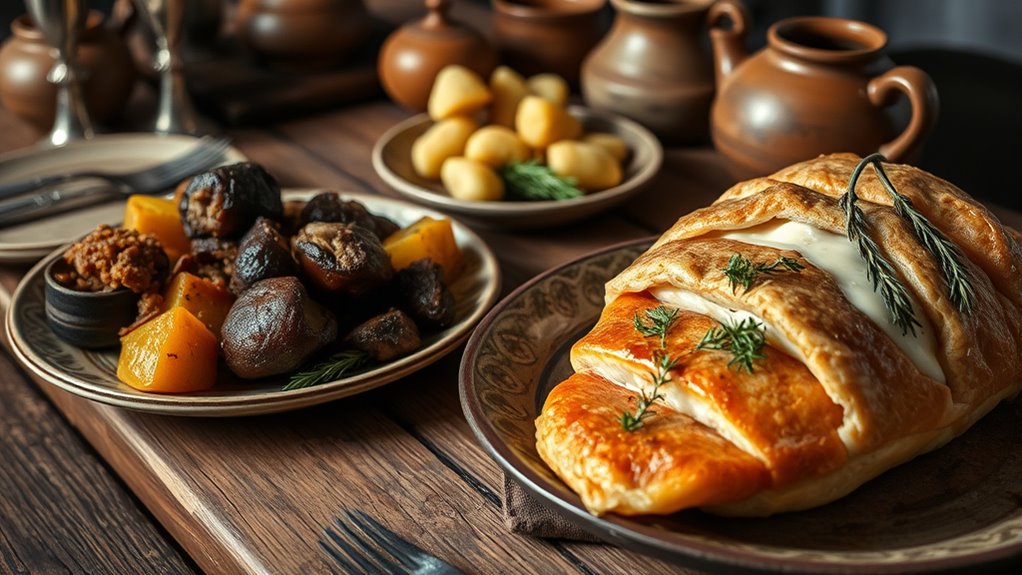
You’ll see how traditional cooking techniques like hearth-based methods have evolved into sophisticated culinary practices. Foraging and seasonal flavors continue to influence modern dishes, blending old traditions with fresh ingredients. Today’s Scottish cuisine combines these roots with innovative techniques, creating a vibrant and refined food scene. Modern culinary techniques also incorporate contemporary presentation styles, elevating Scottish dishes to an art form.
Traditional Cooking Techniques
Traditional Scottish cooking techniques have evolved considerably from simple hearth-based methods to sophisticated culinary practices found in modern fine dining. You’ll notice how methods like cooking on a “girdle” or open flame shaped early dishes. Over time, techniques such as boiling, roasting, and smoking became refined, influencing today’s presentations. Here are four key techniques:
- Girdle Cooking – used for oatcakes and bannocks, cooked on a flat griddle over an open flame.
- Boiling and Simmering – essential for hearty soups like Scotch Broth or Cullen Skink.
- Smoking – crucial for preserving fish such as haddock for Cullen Skink.
- Roasting and Spit-Baking – historically used for game meats and whole livestock, now adapted for modern roasting.
These methods reflect a focus on flavor, preservation, and resourcefulness, linking traditional practices to contemporary cuisine.
Foraging and Seasonal Flavors
Foraging has long been a essential part of Scottish foodways, allowing communities to harvest wild herbs, berries, mushrooms, and greens that enhance seasonal dishes. You can gather wild raspberries, blackberries, and heather honey, adding sweetness to desserts or sauces. Mushrooms like chanterelles and ceps are prized for their earthy flavors, often incorporated into stews or served simply sautéed. Greens such as wild kale and nettles provide necessary nutrients and flavor, especially in spring and early summer. Foragers also collect seaweed and shellfish from Scotland’s coasts, enriching coastal recipes. These seasonal ingredients reflect the land’s natural bounty and influence traditional dishes like Cullen Skink or hearty broths. Today, chefs incorporate foraged ingredients to celebrate Scotland’s rich natural landscape and emphasize sustainability.
Modern Culinary Innovations
Scottish cuisine has evolved considerably from its humble, hearth-based origins to achieve recognition in the world of fine dining. Modern chefs blend traditional ingredients with innovative techniques, creating dishes that honor heritage while appealing to contemporary tastes. You’ll find a focus on seasonal, local produce, often prepared with a creative twist.
Here are four key innovations shaping Scottish cuisine today:
- Incorporating international flavors, such as Asian spices or Mediterranean herbs, into traditional recipes.
- Developing vegetarian and vegan options, like vegetarian haggis introduced in 1984.
- Emphasizing foraged ingredients, such as wild herbs, mushrooms, and seaweeds, in gourmet dishes.
- Elevating presentation and plating to match fine dining standards, showcasing Scotland’s culinary artistry.
Modern Trends and Innovations in Scottish Gastronomy

Recent years have seen Scottish cuisine embrace innovation, blending age-old ingredients with contemporary techniques to create exciting new flavors. Modern chefs experiment with local produce, incorporating foraged herbs, wild mushrooms, and seasonal vegetables into refined dishes. Plant-based options like vegetarian haggis have gained popularity, reflecting shifting dietary preferences. International influences, such as Asian spices and Mediterranean herbs, are subtly integrated without overpowering traditional flavors. Scotland’s food scene now emphasizes sustainable sourcing, farm-to-table practices, and innovative presentation. Modern gastronomy also explores fermentation, pickling, and sous-vide methods, elevating classic recipes. Chefs push boundaries, creating a dynamic culinary landscape that honors Scotland’s heritage while appealing to global palates. This blend of tradition and innovation keeps Scottish gastronomy vibrant and evolving.
Native Drinks and Their Cultural Significance

Traditional drinks hold a special place in Scotland’s cultural identity, embodying centuries of social customs, festivities, and craftsmanship. You’ll find that drinks like whisky, ale, and herbal infusions connect you to Scottish history and community. Here are four key aspects:
- Whisky: Scotland’s renowned spirit, symbolizing craftsmanship and regional pride, often enjoyed neat or in cocktails.
- Ale and Cider: Traditional brews linked to local traditions, served at gatherings and festivals.
- Irn-Bru: A uniquely Scottish carbonated soft drink, famous for its vibrant color and cultural significance.
- Herbal Infusions: Native botanicals like heather and juniper used in homemade tinctures and teas, reflecting Scotland’s natural landscape.
These beverages aren’t just for drinking—they’re cultural symbols that tell stories of Scottish life and heritage.
Frequently Asked Questions
How Has Scottish Cuisine Influenced Neighboring Countries’ Food Traditions?
Scottish cuisine has influenced neighboring countries through shared ingredients like oats, root vegetables, and seafood, which appear in Irish, Welsh, and Northern English dishes. You’ll notice traditional dishes like haggis and hearty soups inspiring regional variations. Scottish preservation techniques and simple, wholesome flavors also shape local cooking styles. This culinary exchange fosters a sense of regional identity, blending Scottish staples with local traditions to create a shared heritage across the British Isles.
What Are Some Lesser-Known Regional Scottish Dishes Not Widely Recognized?
You might not know about dishes like clapshot, a hearty mash of turnips and potatoes from Orkney, or Cullen Skink, a smoky haddock soup from the coast. There’s also brose, a simple oat mixture, and shortbread, a buttery biscuit often enjoyed during celebrations. These lesser-known regional dishes highlight Scotland’s diverse ingredients and traditions, offering a richer taste of local culture beyond the more famous haggis or whisky.
How Do Scottish Food Practices Vary Between Urban and Rural Areas?
In rural areas, you’ll find traditional practices like foraging for wild herbs, mushrooms, and berries, and preparing hearty dishes like Scotch broth with locally grown vegetables and meats. In cities, you’re more likely to experience modern adaptations, fusion cuisines, and restaurant dining with international influences. Urban areas emphasize convenience and innovation, while rural communities preserve age-old methods, seasonal ingredients, and regional specialties, maintaining a strong connection to Scotland’s culinary roots.
What Role Do Scottish Food Festivals Play in Preserving Culinary Heritage?
You step into a Scottish food festival, where history breathes life into every bite like an ancient song. These festivals act as vibrant storytellers, preserving culinary heritage by showcasing traditional dishes, local ingredients, and age-old cooking techniques. They ignite pride and curiosity, inviting you to taste the echoes of Scotland’s past. Through lively celebrations and shared recipes, festivals keep the spirit of Scottish cuisine alive for generations to come.
How Is Scottish Cuisine Adapting to Contemporary Dietary Trends Like Veganism?
You see Scottish cuisine is evolving with the times by embracing veganism. Chefs now create plant-based versions of traditional dishes like haggis, using ingredients such as mushrooms, lentils, and grains to mimic the flavors and textures. They incorporate local foraged herbs and seasonal vegetables, keeping the dishes authentic while catering to modern dietary choices. This adaptation helps preserve Scottish culinary heritage while making it accessible and inclusive for everyone.
Conclusion
So, there you have it—Scotland’s culinary story in a compact summary. From hearty stews to fine whisky, your taste buds are in for a wild ride. Embrace the wild ingredients, savor the history, and maybe even try a haggis or two—if you dare. After all, Scottish cuisine isn’t just food; it’s a bold, fiery declaration that you’re ready to conquer the Highlands, one delicious bite at a time. Cheers to that!