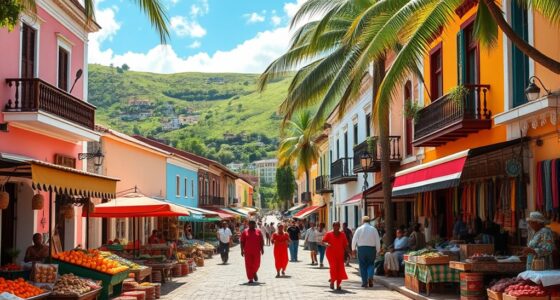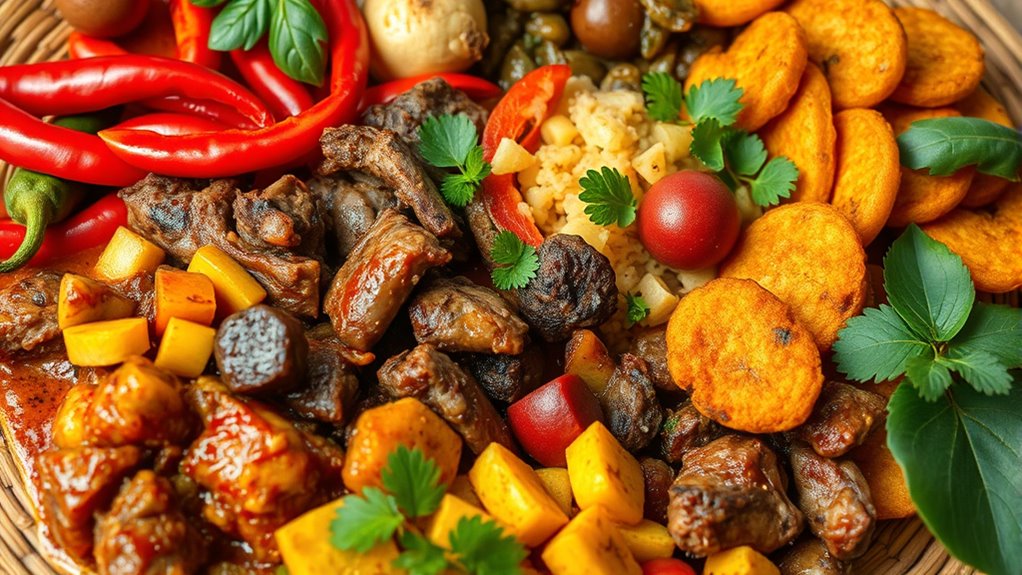

Grenadian cuisine is rich in vibrant flavors, featuring dishes like oil down, curried goat, and roti that showcase the island’s mix of African, European, and indigenous influences. Key ingredients include spices like nutmeg, cinnamon, ginger, and fresh seafood, along with tropical staples such as breadfruit, callaloo, and coconut milk. Food plays a central role in festivals and community gatherings, strengthening bonds and celebrating heritage. If you continue exploring, you’ll discover how tradition and local flavors create a unique, soulful culinary experience.
Key Takeaways
- Grenadian cuisine features hearty dishes like oil down, showcasing communal cooking and local ingredients such as breadfruit, callaloo, and coconut milk.
- Spices like nutmeg, cinnamon, ginger, and turmeric are central, reflecting diverse European, African, and indigenous influences.
- Seafood and meat dishes, including land crab, lobster, and curry goat, highlight the island’s rich marine and livestock resources.
- Traditional sweets like nutmeg ice cream, cocoa treats, and coconut drops celebrate Grenada’s agricultural heritage and cocoa industry.
- Food plays a vital cultural role during festivals and gatherings, symbolizing community pride, heritage preservation, and social bonding.

68oz Stainless Steel Oil Filter Pot, Multifunctional 2 in 1 Oil Strainer Pot for Camping, Large Capacity Bacon Grease Saver with Strainer, Kitchen Cooking Oil Container, Mini Deep Fryer with Basket
【Efficient Oil Filtration】: This stainless steel oil filter pot exceptional straining capabilities; 2 in 1 oil strainer pot…
As an affiliate, we earn on qualifying purchases.
As an affiliate, we earn on qualifying purchases.
National and Signature Dishes of Grenada

Grenada’s culinary identity is defined by its iconic national dish, oil down, which embodies the island’s rich flavors and resourcefulness. You’ll find it’s a hearty, one-pot stew featuring breadfruit, callaloo, coconut milk, and salted meat like pork or chicken. The name reflects how coconut oil cooks down into the ingredients, creating a savory blend. Variations include smoked turkey, saltfish, pumpkin, and spices like turmeric, garlic, and Scotch bonnet peppers, adding depth and heat. Oil down’s communal nature makes it a centerpiece at gatherings and celebrations. Its simplicity highlights Grenada’s ability to turn everyday ingredients into a flavorful, satisfying dish that captures the island’s culinary spirit and resourcefulness. It’s a true reflection of Grenada’s rich food heritage. Additionally, traditional cooking methods and the use of local ingredients showcase the island’s commitment to preserving its culinary traditions.

Smokehouse by Thoughtfully, Gourmet Grilling Spice Set in Mini Glass Bottles, Vegan and Vegetarian, Grill Seasoning Flavors Include Caribbean, Jamaican Jerk, Jalapeno, Montreal and More, Pack of 10
VARIETY SAMPLER – Includes a set of 10 uniquely flavored grilling spices and rubs in mini bottles
As an affiliate, we earn on qualifying purchases.
As an affiliate, we earn on qualifying purchases.
Key Ingredients and Spices in Grenadian Cuisine
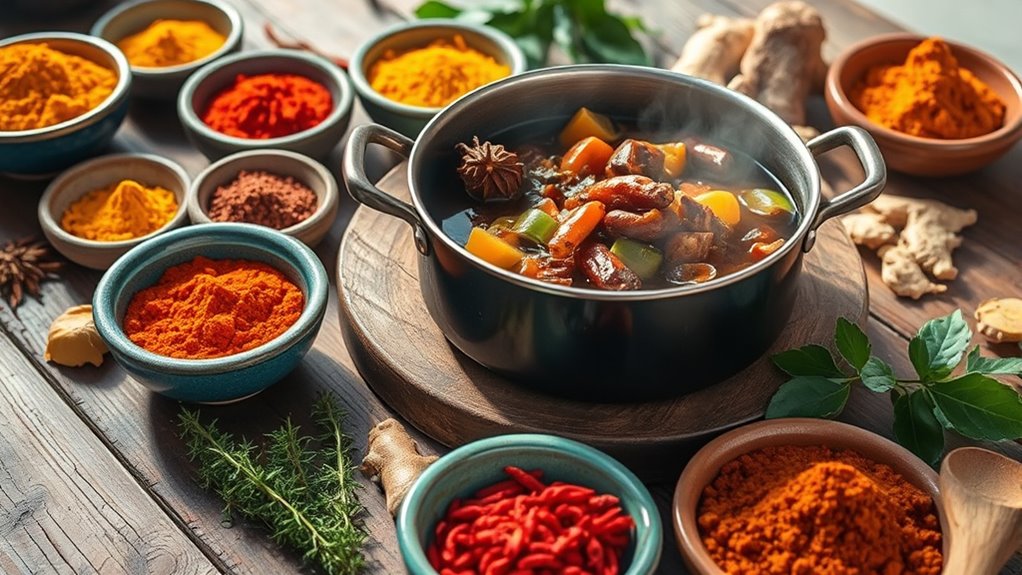
Spices play an essential role in shaping the bold flavors of Grenadian cuisine, reflecting the island’s rich agricultural heritage. You’ll find nutmeg, cinnamon, ginger, turmeric, thyme, bay leaf, clove, and lemongrass grown abundantly, infusing dishes with aromatic depth. These spices are core ingredients in many recipes, from savory stews to flavorful curries. Coconut milk is another crucial component, adding richness and balancing spicy heat. Breadfruit and callaloo, a native leafy green, are staples that contribute unique textures and flavors. Fresh produce like green bananas, sweet potatoes, and mangoes complement the spices, bringing seasonal freshness. Together, these ingredients create the vibrant, fragrant, and hearty taste profile that defines Grenadian cuisine, showcasing the island’s diverse agricultural bounty. Incorporating traditional raw food preservation methods can help maintain the freshness of these ingredients and enhance the overall flavor profile.
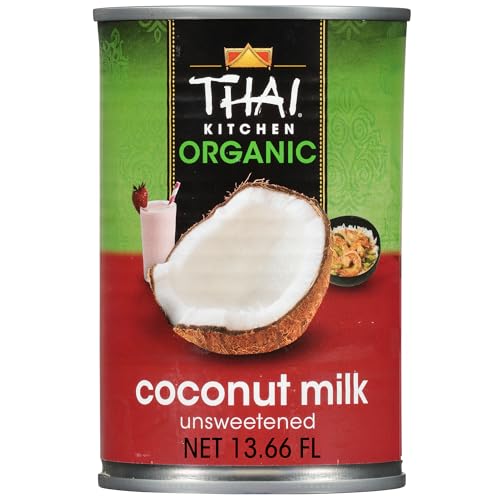
Thai Kitchen Organic Unsweetened Coconut Milk, 13.66 fl oz (Pack of 12)
Full fat coconut milk organic
As an affiliate, we earn on qualifying purchases.
As an affiliate, we earn on qualifying purchases.
Seafood and Meat Specialties Unique to the Island

Seafood and meat play a vital role in Grenadian cuisine, showcasing the island’s rich maritime resources and culinary creativity. You’ll find land conch, called lambi, prepared as Lambie Souse—a tangy or spicy stew that highlights local flavors. Crab back features seasoned land crab meat served in its shell with baked breadcrumbs and spicy sauce, offering a savory experience. Turtle toes, made from lobster and conch meat, are deep-fried balls served in lobster shells, a unique treat despite the name. Salted fish, especially saltfish, is a breakfast staple paired with fried bake. For meat lovers, dishes like curry goat, smoked turkey wings, pig tails, and salted pork are common, used in hearty stews and rice dishes that reflect resourcefulness and local tradition. The diversity of these ingredients showcases the island’s rich culinary heritage and the resourcefulness of its people.

OLD BAY Seasoning, Classic Seafood, Non GMO, Gluten Free, Unique Blend of 18 Herbs & Spices for Shrimp, Crab Dip, Seafood & More, 6 oz
CROWD-PLEASING FLAVOR: OLD BAY Classic Seafood Seasoning combines celery salt, paprika, and spices to deliver iconic Chesapeake Bay…
As an affiliate, we earn on qualifying purchases.
As an affiliate, we earn on qualifying purchases.
Traditional Desserts and Sweets of Grenada

Traditional desserts and sweets hold a special place in Grenadian culture, showcasing the island’s rich agricultural bounty and love for bold flavors. You’ll find treats that highlight local ingredients like cocoa, coconut, and tropical fruits. Nutmeg ice cream is a favorite, blending the island’s iconic spice into a cool, creamy delight. Grenadian fudge, made with cocoa beans and flavored with ginger, nutmeg, or coconut, offers a rich, smooth experience. Coconut drops, a sweet candy made from shredded coconut and sugar, reflect the tropical abundance. Sweet potato pudding is a comforting dessert, combining earthy sweetness with spices. Cocoa balls and cocoa tea celebrate Grenada’s renowned cocoa industry, while coconut-based treats emphasize the island’s tropical flavors. These sweets connect deeply to local traditions and agricultural roots.
Cultural Influences Shaping Grenadian Cooking

Grenadian cooking is a vibrant tapestry woven from diverse cultural influences that have shaped the island’s culinary identity. You’ll find African, East Indian, indigenous Caribbean, and European traditions blending seamlessly in every dish. These influences bring a rich variety of spices, cooking techniques, and ingredients that define Grenada’s flavors. African roots contribute hearty stews and one-pot meals like oil down, while East Indian heritage introduces curries and roti. Indigenous ingredients such as breadfruit and callaloo reflect the island’s native culture. European influences, especially from the British and French, add a touch of colonial history through baked goods and preserved foods. Together, these cultures create a unique, flavorful culinary landscape that celebrates Grenada’s history and multicultural identity. Exploring the historical trade routes helps to understand how colonial spices like nutmeg and cinnamon became integral to local cuisine.
Grenadian cuisine blends African, Indian, indigenous, and European flavors into a vibrant, multicultural culinary tapestry.
- Spices like nutmeg and cinnamon highlight colonial trade history
- Curry and roti reveal Indian migration influences
- Indigenous ingredients showcase native traditions
- African techniques influence communal, one-pot dishes
- European baking traditions add variety to desserts
Typical Meal Patterns and Food Etiquette
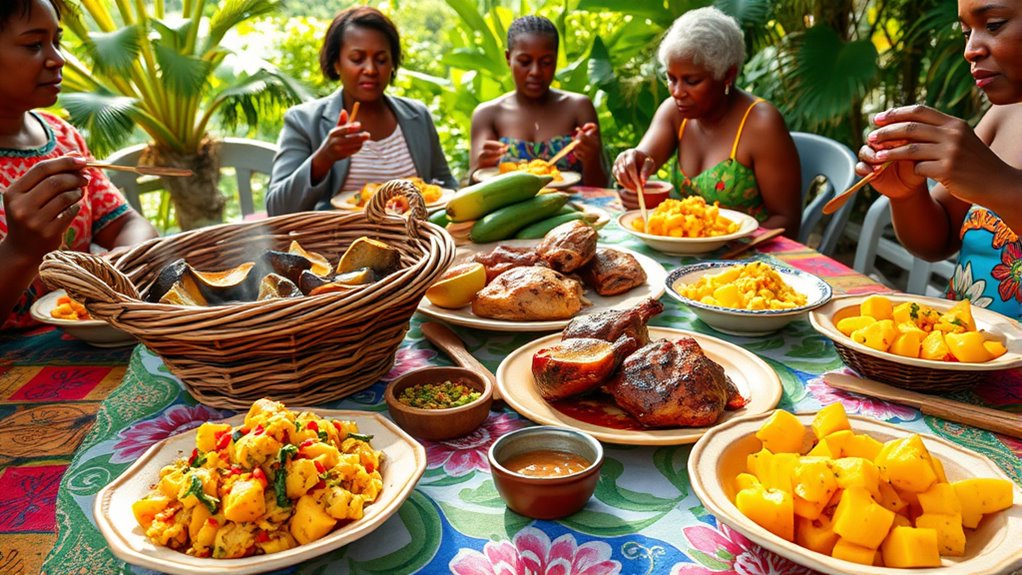
The rich blend of cultural influences in Grenadian cuisine extends beyond flavors to how meals are typically enjoyed and shared. You often gather around large, communal dishes like oil down, emphasizing family and friendship. Meals are lively events, with everyone participating, eating with hands or forks, depending on the dish. Breakfast usually features fried bake with saltfish or fresh fruits, eaten casually or with friends. Street food plays a big role, with vendors offering roti and seafood snacks. Table manners are informal but respectful, especially during special occasions. Sharing food symbolizes unity, and hosting guests with generosity is customary. Additionally, understanding food etiquette helps maintain harmonious social interactions during shared meals.
The Role of Spices and Local Produce in Flavoring
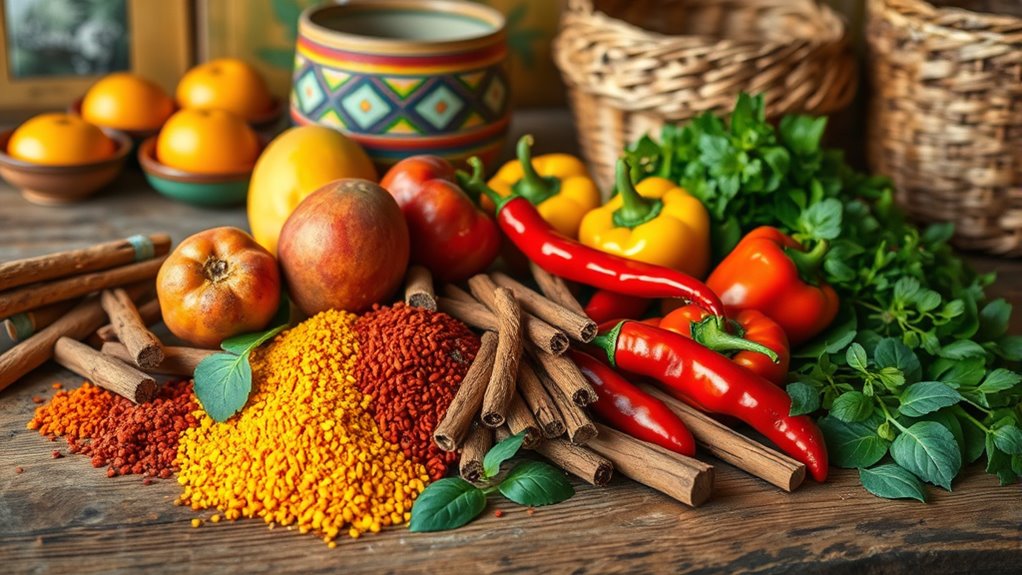
Spices and local produce form the vibrant backbone of Grenadian cuisine, infusing every dish with bold, authentic flavors. You’ll notice the abundant use of nutmeg, cinnamon, ginger, turmeric, and thyme, which grow naturally on the island and define its flavor profile. These spices add warmth, depth, and a distinctive aroma to dishes like oil down, curry goat, and pelau. Fresh ingredients such as breadfruit, callaloo, green bananas, and tropical fruits enhance the richness and authenticity. You’ll often see coconut milk used to add creaminess and balance spice levels. The local produce and spices are essential, not just for taste but to connect you with Grenada’s agricultural heritage. Additionally, the use of local herbs and vegetables further emphasizes the freshness and regional character of Grenadian cooking.
The Significance of Food in Grenadian Festivals and Community Gatherings
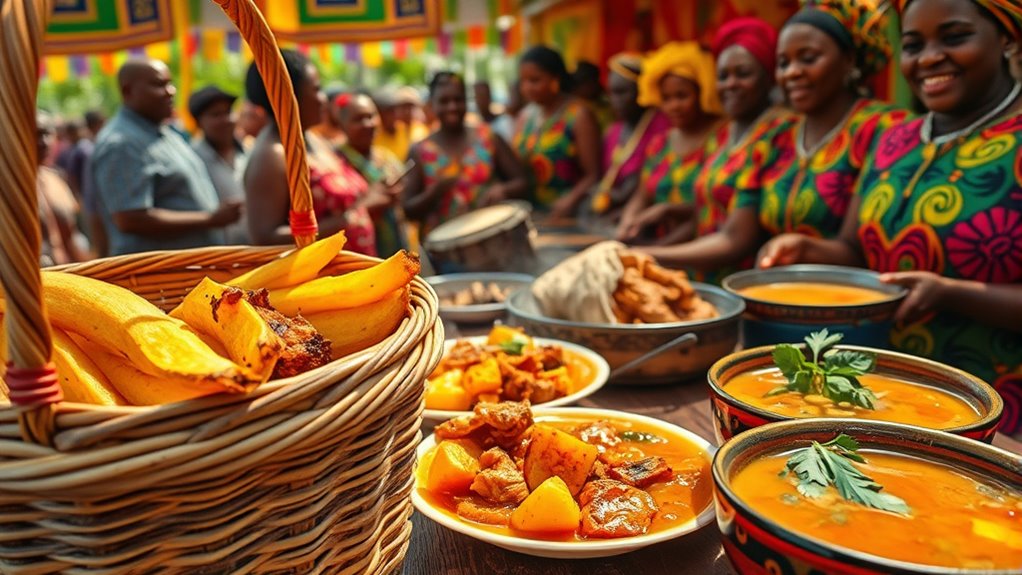
Food plays a central role in Grenadian festivals and community gatherings, bringing people together to celebrate shared traditions. You’ll see traditional dishes like oil down and pelau served at these events, often prepared through communal cooking practices. These meals are more than sustenance—they’re a vibrant expression of culture and community identity. Emphasizing halal culinary traditions, these gatherings often showcase the rich flavors and techniques that define Grenadian cuisine.
Traditional Dishes at Festivals
During Grenadian festivals and community gatherings, traditional dishes take center stage, serving as an essential expression of cultural identity and social unity. These dishes bring people together, celebrating shared heritage and local flavors. You’ll often find Oil Down, the national dish, bubbling in large pots, symbolizing the island’s rich spice history. Pelau, with its sweet-savory aroma, is a crowd favorite, while spicy curried goat adds flavor and warmth. Roti, filled with curried meats or vegetables, is enjoyed as street food during festivities. Sweet treats like nutmeg ice cream and coconut drops are passed around, highlighting Grenada’s tropical produce. These dishes aren’t just food; they’re a crucial part of the community’s way of celebrating, connecting, and honoring their roots. Additionally, colorful food displays during festivals enhance the visual appeal and cultural significance of the culinary traditions.
Communal Cooking Practices
Communal cooking plays an essential role in Grenadian festivals and gatherings, serving as a way to strengthen social bonds and celebrate shared heritage. When you participate in preparing traditional dishes like oil down or pelau, you connect with others through teamwork and shared effort. These events often involve cooking large quantities of food in communal pots, emphasizing unity and collective pride. You’ll find neighbors, friends, and family coming together, exchanging stories and techniques while preparing meals that reflect local flavors and ingredients. Food becomes more than sustenance; it’s a symbol of community strength and cultural identity. Whether at a festival or a neighborhood gathering, communal cooking fosters a sense of belonging, keeping Grenadian culinary traditions alive and vibrant.
Food as Cultural Expression
Traditional dishes like oil down and pelau come alive during Grenada’s festivals and community gatherings, transforming meals into vibrant expressions of cultural identity. These foods are more than just sustenance; they symbolize history, heritage, and community spirit. When you join a celebration, you’ll see how sharing these dishes fosters unity and pride. Food becomes a way to honor ancestors and showcase local flavors. During festivals, the aroma of spices and cooked meats fills the air, inviting everyone to partake. It’s a time to connect through tradition, storytelling, and communal joy. Your participation in these events highlights how food acts as a powerful cultural marker, celebrating Grenada’s diverse influences and collective memory.
- Preserving cultural stories through recipe sharing
- Reinforcing community bonds with shared meals
- Celebrating local ingredients and flavors
- Honoring ancestors and traditions
- Expressing identity through culinary pride
Frequently Asked Questions
What Are Some Lesser-Known Traditional Grenadian Dishes?
You’ll want to try lesser-known Grenadian dishes like Lambie Souse, a tangy conch stew, or Crab Back, where seasoned crab meat is baked in shells with spices. Turtle Toes, made from lobster and conch meat balls, also offer a unique taste. Additionally, coconut drops, a sweet coconut candy, and sweet potato pudding showcase the island’s diverse flavors. These dishes reflect Grenada’s rich culinary heritage beyond the popular favorites.
How Does Grenadian Cuisine Incorporate Indigenous Ingredients?
You’ll find Grenadian cuisine brilliantly blends indigenous ingredients like callaloo, breadfruit, and coconuts into everyday eats. You can taste this in dishes like oil down, where leafy callaloo and hearty breadfruit simmer with rich coconut milk, or in hearty stews that highlight local produce. These ingredients honor the island’s heritage, creating comforting, cultural cuisine that celebrates Grenada’s naturally nurtured, native flavors in every flavorful forkful.
Are There Specific Dining Customs Unique to Grenada?
You’ll find that Grenada has unique dining customs, like communal meals during festivals and family gatherings, emphasizing sharing and togetherness. Street food plays a crucial role, with vendors offering roti and seafood snacks. Breakfast often features fried bake with saltfish. You’ll notice spicy flavors and locally sourced ingredients highlight daily meals. Respect for elders and hospitality are key, with food serving as a central way to connect and celebrate Grenadian culture.
What Influences Modern Grenadian Fusion Cuisine?
When it comes to modern Grenadian fusion cuisine, the sky’s the limit. You’re influenced by the island’s rich history, blending African, East Indian, indigenous Caribbean, and European flavors into every plate. Spices like nutmeg and turmeric, local ingredients like breadfruit and callaloo, and international techniques come together seamlessly. This melting pot of traditions proves that a little bit of everything can come together to create something truly special and vibrant.
How Is Food Used to Celebrate Grenadian Cultural Festivals?
You celebrate Grenadian cultural festivals with vibrant food displays that showcase the island’s rich flavors. You’ll find hearty dishes like oil down and pelau shared among families and communities, symbolizing unity. Traditional treats like nutmeg ice cream and coconut drops are enjoyed during festivities. Street vendors offer roti and seafood snacks, while spice-laden stews and sweets highlight Grenada’s culinary heritage, making food a central part of your celebration.
Conclusion
Exploring Grenada’s culinary traditions is like opening a vibrant tapestry of flavors, colors, and stories. Each dish, spice, and ingredient reflects the island’s rich history and lively culture, turning every meal into a celebration. As you savor these authentic tastes, you’ll discover that Grenadian cuisine isn’t just about food — it’s a lively dance of tradition and community that leaves a lasting flavor on your soul. Immerse yourself and let your palate travel to this Caribbean paradise.