Ohio’s history is rooted in pioneering spirit, from its early settlement in 1788 to joining the Union in 1803. The state played key roles in the War of 1812 and the Civil War, shaping national events. Its cities grew along railroads and canals, reflecting progress and innovation. Ohio’s iconic Buckeye symbol embodies resilience and community pride. Its rich culture, political leaders, and contributions continue to influence America. Keep exploring to discover more about Ohio’s vibrant heritage and legacy.
Key Takeaways
- Ohio’s founding as the 17th state in 1803 and its pioneering settlement heritage reflect its frontier origins.
- The state played a vital role in U.S. military history, including the War of 1812 and Civil War contributions.
- Ohio’s growth was driven by infrastructure like the National Road, Ohio and Erie Canal, and railroads, fostering urban development.
- Cultural symbols such as the Buckeye emblem and fair traditions highlight Ohio’s resilience and agricultural pride.
- Ohio has significantly influenced American politics and culture, producing presidents and shaping national history.

The Ultimate Ohio State Buckeyes Trivia Book: A Collection of Amazing Trivia Quizzes and Fun Facts for Die-Hard Buckeyes Fans!
As an affiliate, we earn on qualifying purchases.
As an affiliate, we earn on qualifying purchases.
Early Settlement and State Formation
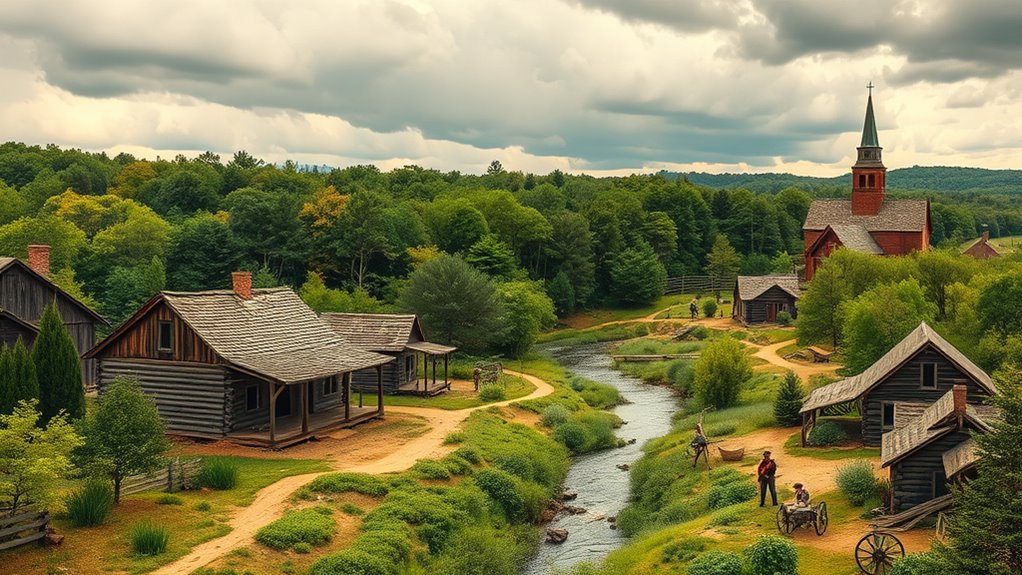
Have you ever wondered how Ohio became part of the United States? It officially joined as the 17th state on March 1, 1803, making it the first from the Northwest Territory. Before that, the Northwest Ordinance of 1787 set the groundwork, banning slavery and establishing Ohio’s governance. The first permanent settlement, Marietta, was founded in 1788, marking the start of American expansion into the region. After Native Americans faced defeat at the Battle of Fallen Timbers in 1794, the 1795 Treaty of Greenville opened Ohio to settlers. Ohio drafted its first constitution in 1802, rejecting slavery and creating a framework for government. These steps laid the foundation for Ohio’s growth and integration into the young United States. Tableware plays a role in social gatherings and celebrations that became prominent as Ohio developed its cultural identity.

Ohio State Buckeyes Fans Reserved Parking Sign Metal 8 x 12 embossed
Embossed aluminum parking sign in team colors
As an affiliate, we earn on qualifying purchases.
As an affiliate, we earn on qualifying purchases.
Ohio’s Military and Political Contributions
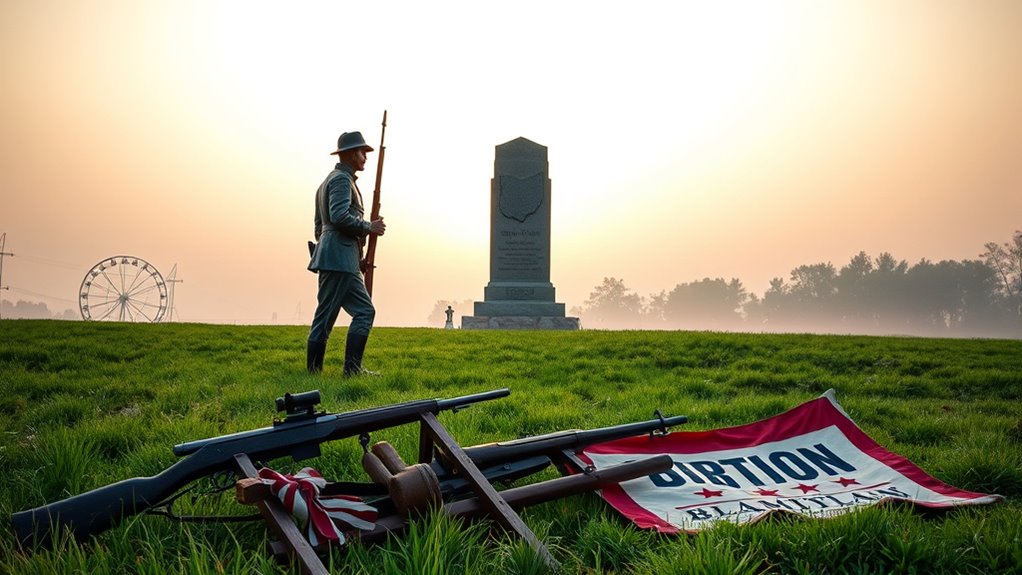
Did you know Ohio has played a pivotal role in shaping the nation’s military and political history? You can see this through Ohioans’ contributions during key conflicts like the War of 1812, where the Battle of Lake Erie secured American control of the Great Lakes. Ohio produced influential leaders such as William Henry Harrison, the 9th President, and Ulysses S. Grant, a Civil War general and president. During the Civil War, Ohio supported the Union and provided thousands of soldiers. Politically, Ohio has been a breeding ground for national leaders and policymakers, shaping debates on slavery, civil rights, and governance. Its early leaders helped establish the framework for statehood and contributed to the expansion of federal authority, cementing Ohio’s importance in U.S. history. Additionally, Ohio’s angel number influences reflect its deep-rooted significance in the nation’s spiritual and cultural development.

Civil War Memorabilia – The Civil War – American History Poster – 8×10 Southern States Confederacy Vintage Map Replica – The Confederate Secession – Americana – American US Map – Historic Wall Art
8×10 UNFRAMED PRINTS – NOT Canvas or Tin Sign
As an affiliate, we earn on qualifying purchases.
As an affiliate, we earn on qualifying purchases.
Growth of Cities and State Infrastructure

The growth of cities and infrastructure in Ohio transformed the state from frontier land into a vital hub of commerce and industry. You see this development reflected in the rise of Columbus, which expanded rapidly after its founding in 1812, with streets like High Street shaping its growth. The construction of the National Road and Ohio and Erie Canal linked Ohio to eastern markets and encouraged migration. Railroads reached Akron in the 19th century, boosting industry and trade. As a result, Ohio’s population surged from 45,000 in 1800 to over 2 million by 1860. These improvements laid the foundation for Ohio’s economic strength and urbanization, creating a network that fueled growth across the state. The development of transportation infrastructure played a crucial role in connecting Ohio’s cities and promoting settlement.

Poets of Ohio; Selections Representing the Poetical Work of Ohio Authors, from the Pioneer Period to the Present Day
As an affiliate, we earn on qualifying purchases.
As an affiliate, we earn on qualifying purchases.
Cultural Symbols and State Identity
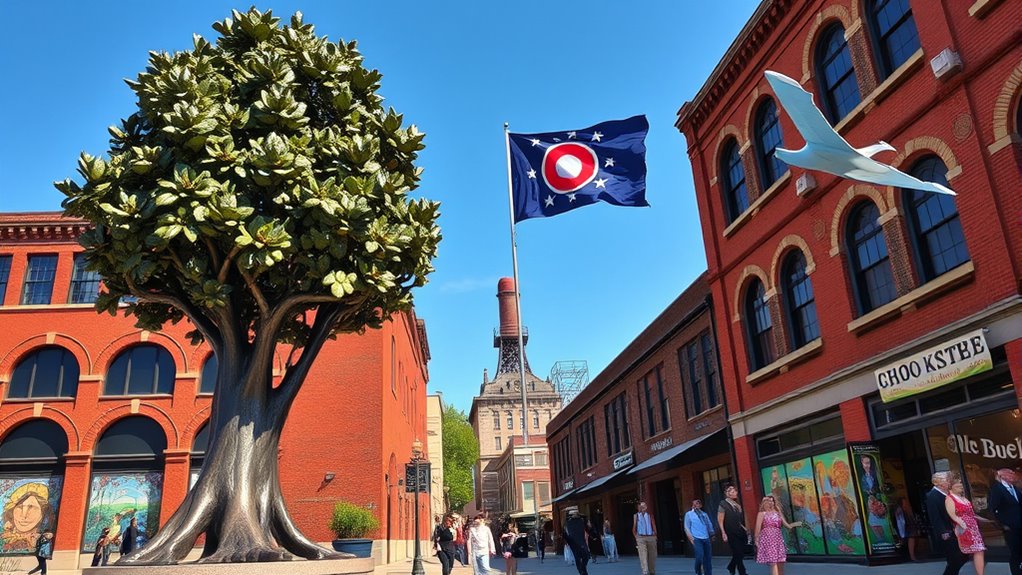
You can see Ohio’s unique identity in the Buckeye symbol, which embodies the state’s resilience and natural beauty. The state’s long-standing fair tradition, starting in Cincinnati in 1850, highlights Ohio’s agricultural and industrial pride. These symbols and traditions reflect Ohio’s pioneering spirit and help define its vibrant cultural heritage. Additionally, Ohio’s rich history in anime movies and animated films demonstrates its influence on popular culture and entertainment.
Buckeye Symbol Significance
The Buckeye symbol holds a special place in Ohio’s cultural identity, representing the resilience and pioneering spirit of its residents. You’ll find it everywhere—from sports teams to state emblems—embodying qualities like determination and community pride. The nickname “Buckeye State” comes directly from the native tree and the admiration early settlers had for the buckeye’s hardy nature. When you see a buckeye nut, it’s a reminder of Ohio’s natural beauty and resourcefulness. Its significance includes:
- Symbol of perseverance and strength
- Representation of Ohio’s natural environment
- Popular good luck charm among locals
- Central to state pride and heritage
- Used in various logos and cultural symbols
This small but powerful emblem continues to unite Ohioans and celebrate their shared history. Incorporate natural materials to reflect Ohio’s rustic and resourceful spirit in cultural symbols.
State Fair Heritage
Have you ever wondered how Ohio’s rich tradition of celebrating agriculture and industry shapes its identity? The Ohio State Fair, one of the earliest and most prominent state fairs in the nation, embodies this heritage. Since opening in Cincinnati in 1850, it has showcased Ohio’s farming, craftsmanship, and technological advancements. The fair draws millions of visitors each year, highlighting livestock competitions, agricultural exhibits, and entertainment that reflect the state’s rural roots and industrial progress. It’s a symbol of Ohio’s hardworking spirit, community pride, and commitment to progress. Over the years, the fair has become more than just a gathering; it’s a celebration of Ohio’s evolving identity, emphasizing the importance of agriculture, industry, and cultural traditions that continue to define the state today. Additionally, events like the fair often evoke dreams of achievement and aspiration, symbolizing Ohioans’ hopes for prosperity and continued growth.
Pioneering Spirit Reflection
Ohio’s identity is deeply rooted in its pioneering spirit, which is vividly reflected through its symbols and cultural traditions. As you explore Ohio, you’ll recognize how this resilient energy shapes its symbols and community pride. The Buckeye emblem, for example, symbolizes determination and connection to the land. You’ll see this spirit in the state’s celebrations, like the early State Fair, showcasing agricultural achievements. Ohio’s history of settling new territories and leading in industry echoes its pioneering essence. You can observe this in:
- The Buckeye nickname honoring native flora and resilience
- Historic cities like Marietta and Columbus embodying early settlement growth
- State symbols representing strength and perseverance
- Cultural festivals celebrating Ohio’s frontier roots
- Educational institutions fostering innovation and leadership
These elements reflect Ohio’s unyielding pioneering spirit, shaping its unique identity today. Additionally, Ohio’s commitment to technological innovation demonstrates how its pioneering spirit continues to evolve in modern industries, especially in areas like automation and education.
Legal Developments and Governance
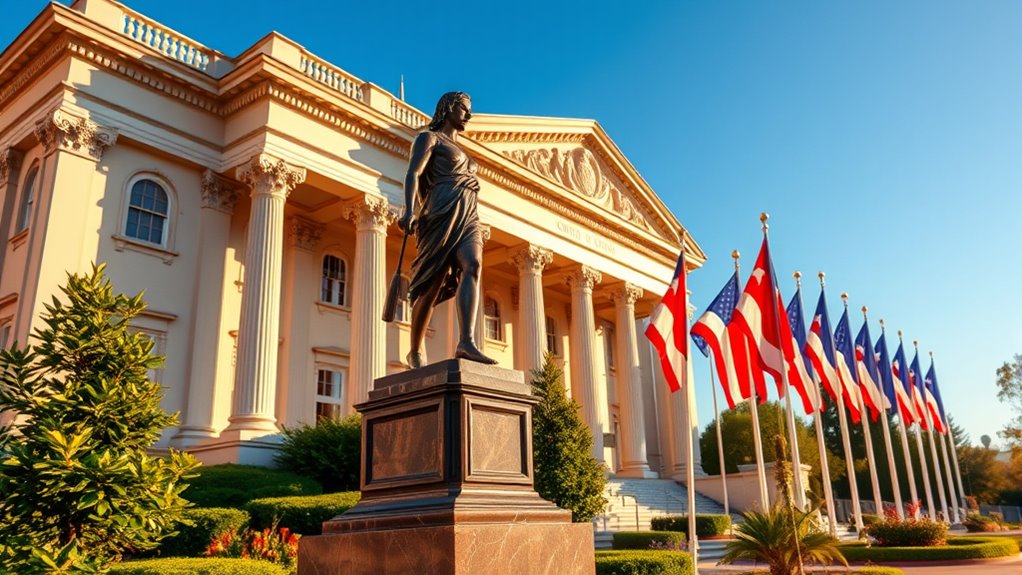
Legal developments and governance in Ohio evolved considerably throughout the 19th century, shaping the state’s political landscape. You witness Ohio’s move to centralize power when Columbus became the state capital in 1816, streamlining governance. The state’s Constitution and legal framework expanded, with officials like the Attorney General being elected statewide by 1849 to protect interests and assure accountability. During the Civil War, Ohio’s legal system supported abolition and resisted efforts to extradite escaped slaves, reflecting its Union loyalty. Voter registration laws, introduced in 1868, aimed to prevent fraud and boost election integrity. Throughout the century, Ohio actively participated in national debates over slavery and unionism, strengthening its political identity and shaping its laws to reflect evolving social values. Additionally, the state’s legal system and governance structures were influenced by the broader context of Dog breeds and their roles in society, reflecting Ohio’s diverse cultural heritage.
Ohio’s Role in National History
Ohio has long played a significant role in shaping the nation’s history through its contributions to political, military, and social developments. You can see this in how Ohio influenced leadership and major events that defined the country.
Ohio has significantly shaped U.S. history through pivotal political, military, and social contributions.
- It produced U.S. presidents like William Henry Harrison and Ulysses S. Grant, shaping national policies.
- Ohio was vital during the War of 1812, with the Battle of Lake Erie securing American control of the Great Lakes.
- During the Civil War, Ohio supported the Union, and Lincoln lay in state at the Ohio Statehouse after his assassination.
- The state’s early settlement and infrastructure projects, like the National Road, promoted westward expansion.
- Ohio’s political and military leaders helped forge a unified nation, cementing its place in U.S. history.
- The state’s strategic location and innovative transportation initiatives further contributed to its historical significance.
Frequently Asked Questions
What Are Some Unique Local Traditions in Ohio?
You’ll find Ohio’s unique local traditions in events like the Ohio State Fair, where agricultural displays and rides bring communities together annually. Celebrate Buckeye spirit by sporting Ohio State University gear or participating in local parades honoring history. Don’t miss the annual Maple Sugar Festivals, showcasing traditional sugaring techniques. Ohioans also cherish their craft beer scene, with many towns hosting Oktoberfest celebrations, reflecting the state’s cultural diversity and community pride.
How Has Ohio’s Music Scene Evolved Over Time?
Imagine Ohio’s music scene as a river that started with humble folk tunes, flowing into jazz and blues in Cleveland, and then rushing into rock and roll in the 20th century. You see vibrant local bands, big festivals, and diverse genres shaping a rich soundscape. Over time, Ohio’s music evolved like a symphony, blending traditions and innovation, making it a essential part of America’s musical heartbeat.
What Are Ohio’s Most Famous Cultural Festivals?
You’ll find Ohio’s most famous cultural festivals celebrating everything from music and food to heritage. The Cincinnati Oktoberfest highlights German traditions, while the Columbus Arts Festival showcases local and national artists. Don’t miss the Ohio State Fair, a massive event featuring rides, food, and entertainment, and the Cleveland International Film Festival, which draws film enthusiasts. These festivals let you experience Ohio’s diverse culture and vibrant community spirit firsthand.
How Does Ohio Celebrate Its Historical Heritage Today?
You’ll find Ohio’s history celebrated everywhere, from grand festivals that turn the entire state into living history books to vibrant parades honoring its past heroes. Museums, historical sites, and reenactments are everywhere, making you feel like you’ve stepped into a time machine. State fairs and heritage days bring the stories of Ohio’s pioneers, soldiers, and presidents to life, so you can truly experience the rich, unforgettable tapestry of Ohio’s incredible history today.
What Indigenous Tribes Originally Inhabited Ohio?
You should know that the original indigenous tribes inhabiting Ohio include the Shawnee, Miami, Delaware, and Wyandot. These tribes lived across the region for centuries before European settlers arrived. They built villages, cultivated crops, and played essential roles in Ohio’s early history. Today, their descendants preserve their heritage through cultural events, museums, and tribal initiatives, honoring their ancestors’ legacy and influence on Ohio’s identity.
Conclusion
As you explore Ohio’s rich history and vibrant culture, you realize it’s more than just a place on the map; it’s a tapestry woven with resilience and pride. From early settlement to its national impact, Ohio truly has a story worth telling. Remember, in history, as in life, you often find that the sun shines brightest after the storm. Ohio’s enduring spirit proves that what’s worth having doesn’t come easy, but it’s always worth the effort.