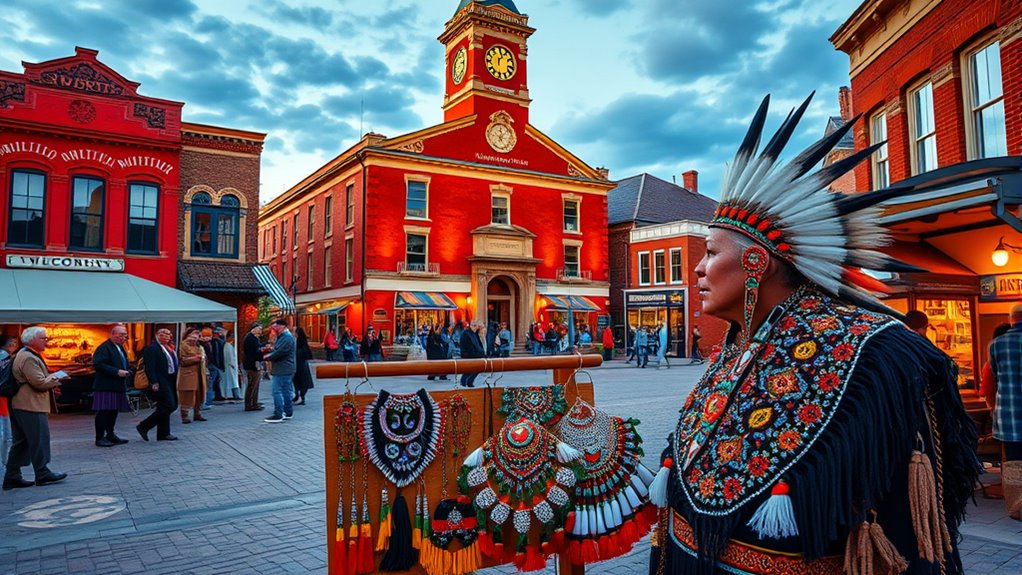

Wisconsin’s history and culture are deeply shaped by Native American heritage, with tribes like the Ojibwe and Ho-Chunk influencing land, traditions, and art. Immigrants from Germany, Scandinavia, and Eastern Europe brought their customs, foods, and festivals, enriching the state’s diversity. The state’s evolution includes a strong drive for innovation, from railroads and cheese-making to progressive political reforms. If you explore further, you’ll find how these elements created a vibrant, resilient community that continues to thrive today.
Key Takeaways
- Wisconsin’s history began with Native American tribes and European immigration, shaping a diverse cultural mosaic.
- Achieved statehood in 1848, establishing educational and political institutions that fostered community development.
- The state developed a strong economy through railroads, dairy farming, and cheese-making industries.
- Cultural influences from German, Scandinavian, Dutch, French Canadian, and Eastern European immigrants remain prominent.
- Progressive social reforms and the founding of the Republican Party in 1854 highlight Wisconsin’s commitment to innovation and justice.
The Formation of Wisconsin’s Territorial and State Identity

The formation of Wisconsin’s territorial and state identity began with its establishment as a separate territory in 1836, marking the start of its political and cultural development. You can see this in how the government organized itself, with Madison chosen as the permanent capital and the first territorial legislature meeting at Belmont. Despite economic setbacks like the Panic of 1837, Wisconsin pushed forward, opening land offices and building infrastructure. When it achieved statehood in 1848, it quickly established its institutions, including the university and first state legislature. This period laid the foundation for Wisconsin’s evolving identity, shaped by new governance, economic ambition, and a growing sense of community that would influence its future development. The development of state institutions and the fostering of local communities further strengthened its unique cultural identity.
The Cultural Mosaic and Ethnic Influences
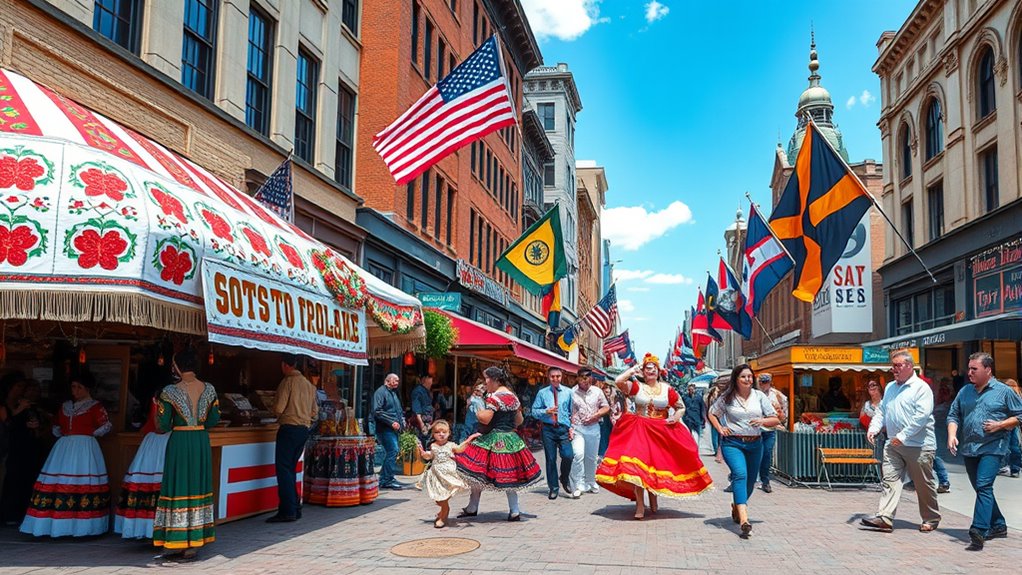
Wisconsin’s culture reflects a rich mix of ethnic roots and Native American heritage that shape its identity today. You’ll see this diversity in the communities, traditions, and history that continue to influence the state. Exploring these influences reveals how Wisconsin became a true cultural mosaic. Additionally, the state’s celebration of its cultural diversity fosters a vibrant environment where different traditions and histories coexist harmoniously.
Diverse Ethnic Roots
As you explore Wisconsin’s history, you’ll find that its cultural fabric is woven from a rich tapestry of ethnic influences. This diversity shapes the state’s identity today. You’ll notice:
- German immigrants, who brought traditions like beer brewing and Christmas markets
- Scandinavian settlers, contributing Lutheran churches and folk art
- Dutch communities, known for dairy farming and religious practices
- French Canadians, influencing place names and cuisine
- Eastern Europeans, adding vibrant festivals and culinary flavors
These groups established communities, influenced local customs, and helped develop Wisconsin’s economy. Their customs blended over time, creating a unique cultural mosaic. Cultural diversity isn’t just history; it’s part of how Wisconsin celebrates its heritage today. Your experience in Wisconsin reflects this rich, multi-ethnic legacy.
Native American Heritage
Native American tribes have left an enduring mark on Wisconsin’s cultural landscape, shaping its history long before European settlers arrived. Their influence is evident in place names, traditions, and art that persist today. Tribes like the Ojibwe, Oneida, and Ho-Chunk signed treaties and maintained their cultural practices despite challenges. Their contributions include crafting intricate beadwork, storytelling, and sustainable land management techniques. Understanding this heritage helps you appreciate Wisconsin’s rich ethnic mosaic. Here’s a glimpse of Native American influence:
| Tribe | Cultural Contribution | Land Markers |
|---|---|---|
| Ojibwe | Anishinaabe language, crafts | Names like Chequamegon |
| Ho-Chunk | Traditional dances, pottery | Devil’s Lake |
| Oneida | Agriculture, weaving | Green Bay area |
Their cultural resilience exemplifies how Native communities have preserved their identities while adapting over centuries.
Economic Development and Innovation Through the Years

From the early days of settlement, Wisconsin’s economy has continually evolved through innovation and strategic development. You can see this in how the state shifted from agriculture to diverse industries. Early on, railroads expanded trade and movement, fueling growth. The dairy industry, especially cheese-making, became a cornerstone, transforming Wisconsin into America’s dairyland. You’ll also notice the rise of manufacturing and technological innovation, with companies establishing roots in urban centers like Milwaukee. This progression reflects Wisconsin’s commitment to economic development and embracing new technologies. Development of the dairy industry and cheese production expanded rapidly, establishing Wisconsin’s reputation in dairy products. Expansion of railroads connecting key cities facilitated regional commerce. Growth of manufacturing and industrial hubs diversified the economy further. Introduction of banking and financial institutions supported business growth. Investment in technological and infrastructural projects propelled modernization. These advancements laid the foundation for Wisconsin’s modern economy, emphasizing resilience and adaptability through decades of change.
Educational Foundations and Progression
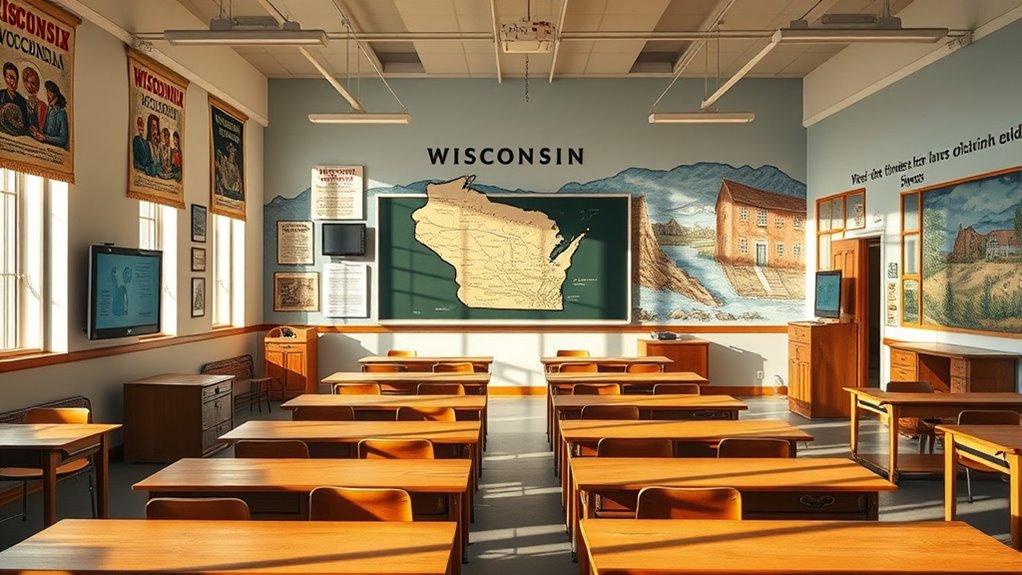
Educational development in Wisconsin built on its economic growth, establishing a strong foundation for accessible and specialized learning. You’ll find that the first university, the University of Wisconsin, was incorporated in 1848, just as statehood was achieved, and classes began in 1849. This marked a commitment to higher education for residents. Free, tax-supported schools started appearing in 1849, making education accessible to more people. Specialized institutions, like the school for the deaf in Delavan, opened in 1852, reflecting a focus on inclusive learning. Literacy rates improved, and education became a key driver of community growth. These early efforts laid the groundwork for a diverse and expanding educational system, emphasizing both general literacy and specialized training to support the state’s evolving economy. Additionally, the development of public school systems helped ensure that education reached a broader population, fostering long-term community and economic prosperity.
Societal Reforms and Political Movements
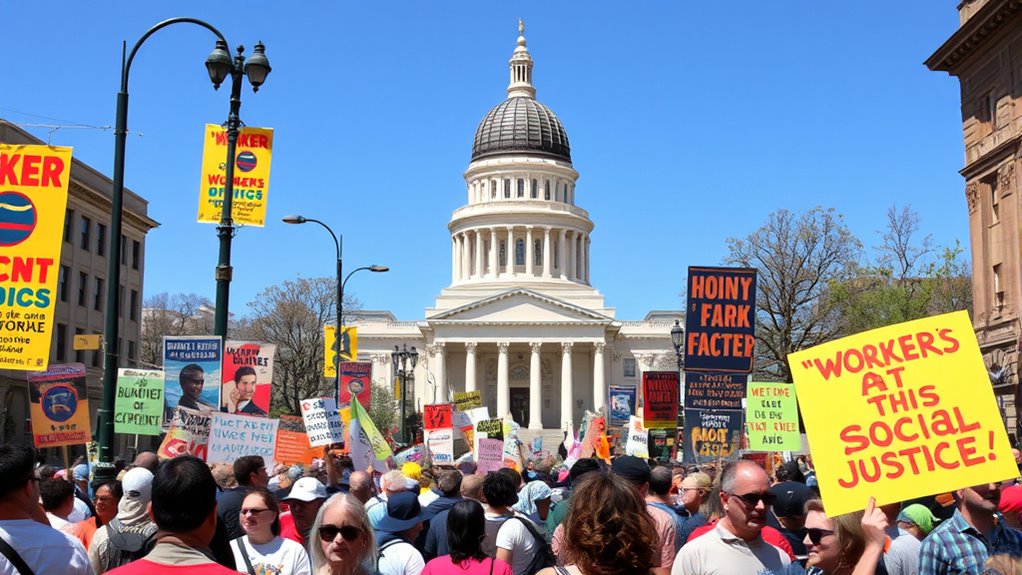
You can see how Wisconsin led the way in societal reforms by abolishing capital punishment in 1853 and declaring the Fugitive Slave Law unconstitutional in 1854. These actions fueled the rise of the Republican Party, founded in Ripon in 1854, which became a major political force. Meanwhile, advocates for women’s rights, like those publishing the “Deutsche Frauenzeitung,” pushed for equality and social progress. The state also played a significant role in promoting electric power generation as part of its industrial development.
Abolition of Capital Punishment
Have you ever wondered how Wisconsin’s approach to justice evolved over time? In 1853, the state took a bold step by abolishing capital punishment, reflecting a shift toward more humane treatment. This move was driven by societal debates about morality and justice, highlighting progressive ideals. You can see this change in:
- The influence of reform-minded politicians advocating for mercy
- Public opinion favoring more humane punishment methods
- The state’s early stance aligned with broader abolitionist movements
- The legal shift emphasizing rehabilitation over retribution
- Wisconsin’s reputation as a leader in criminal justice reforms
- The ongoing impact of the abolition on criminal justice policies today
This abolition marked a significant milestone, shaping the state’s legal philosophy and reinforcing its commitment to humane societal standards. It set a precedent that influenced future criminal justice policies nationwide.
Rise of the Republican Party
The abolition of capital punishment in Wisconsin reflected a broader wave of societal reforms that challenged traditional authority and pushed for moral progress. During this period, political movements like the rise of the Republican Party gained momentum. Founded in Ripon in 1854, the party united anti-slavery advocates, reformers, and those seeking change. You see, this movement was fueled by opposition to the expansion of slavery and a desire for economic modernization. It drew support from diverse groups, including farmers, abolitionists, and reform-minded citizens. The party’s rise marked a shift toward progressive politics in Wisconsin. To visualize its impact, consider this table:
| Key Aspects | Details |
|---|---|
| Founding Year | 1854 |
| Main Focus | Anti-slavery, reform |
| Support Base | Farmers, abolitionists |
| Political Impact | Shift toward progressivism |
Additionally, the movement’s success was partly driven by the political climate, which was increasingly receptive to reforms and change.
Women’s Rights Advocacy
Women’s rights advocacy in Wisconsin gained momentum during the mid-19th century, reflecting broader societal reforms aimed at gender equality. You can see this shift in the rise of women’s publications like the *Deutsche Frauenzeitung*, which supported women’s rights and education. Women organized meetings, pushed for suffrage, and challenged traditional roles. Key moments include efforts to improve educational access and fight for legal recognition of women’s property rights. You might find it fascinating that Wisconsin’s activism contributed to national movements. The movement also benefited from the emergence of top 10 anime films, which inspired cultural shifts and provided new avenues for expression and advocacy.
Key Events Shaping Wisconsin’s Heritage
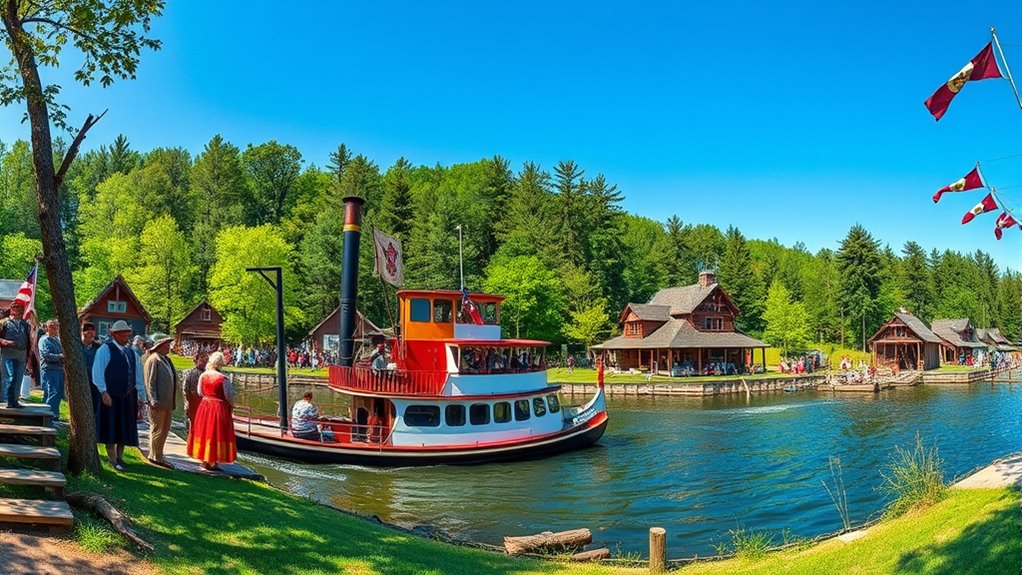
Key events that have shaped Wisconsin’s heritage include pivotal moments in its political, social, and economic history. You witness the formation of Wisconsin Territory in 1836, which set the stage for statehood in 1848. The signing of treaties with Native tribes and waves of German and New England immigrants created a diverse cultural foundation. Economically, the development of railroads and cheese-making factories fueled growth, while educational institutions like the University of Wisconsin emerged. Politically, Wisconsin led reforms such as abolishing capital punishment and opposing the Fugitive Slave Law. The founding of the Republican Party in 1854 marked a significant shift. These events collectively shaped Wisconsin into a state known for innovation, diversity, and social progress, defining its unique heritage today.
Frequently Asked Questions
How Did Wisconsin’s Native American Tribes Influence Its Early History?
You see, Wisconsin’s Native American tribes profoundly shaped your state’s early history through treaties, land negotiations, and cultural influence. They established boundaries, traded with settlers, and contributed to the region’s identity. Native tribes like the Winnebago played key roles in shaping policies and land use. Their traditions, stories, and presence remain embedded in Wisconsin’s history, influencing its development and preserving their legacy for future generations.
What Role Did Wisconsin’s Immigrant Communities Play in Shaping Its Culture?
You see that Wisconsin’s immigrant communities, especially Germans and New England settlers, shaped its culture by bringing their traditions, language, and customs. They established farms, built communities, and contributed to the state’s diverse society. Through cultural events, media like the “Deutsche Frauenzeitung,” and their influence on local industries, you can see how these groups helped mold Wisconsin’s unique identity and vibrant cultural landscape today.
How Has Wisconsin’s Economy Transitioned From Agriculture to Industry?
You’ve watched Wisconsin’s economy shift from plowing fields to bustling factories. Once all about wheat and dairy, it now thrives on industry, thanks to railroad expansion and canal building that connected farms to markets. You see the rise of manufacturing and industrial hubs replacing the quiet farm life. Wisconsin’s progression is a testament to how quick you can go from milking cows to making metal, all in a matter of decades.
What Are the Origins of Wisconsin’s Unique Political Landscape?
You see, Wisconsin’s unique political landscape roots in its early history, including the founding of the Republican Party in 1854 in Ripon, driven by anti-slavery sentiments. You also notice how diverse immigrant groups, especially Germans and New Englanders, influenced political ideas and reform movements. Over time, these factors cultivated a politically active, progressive environment that continues to shape the state’s distinctive political identity today.
How Have Major Events Like the Civil War Impacted Wisconsin’s Development?
You see, the Civil War shaped Wisconsin’s development by fueling its economy, strengthening its identity, and advancing social reforms. It boosted manufacturing and agriculture, created jobs, and fostered a sense of unity. It also inspired societal changes, like supporting women’s rights and abolishing slavery. The war’s impact fueled political activism, reinforced state pride, and set the stage for Wisconsin’s future growth and influence in national affairs.
Conclusion
As you explore Wisconsin’s rich tapestry, you’ll see a land woven with vibrant threads of history, culture, and innovation. Like a mighty river flowing through time, its stories ripple with resilience and change. From its diverse roots to groundbreaking ideas, Wisconsin’s heritage is a living, breathing mosaic. Embrace its spirit, and you’ll find yourself part of a story that continues to evolve—an enduring symphony of progress and pride that calls you to keep the melody alive.