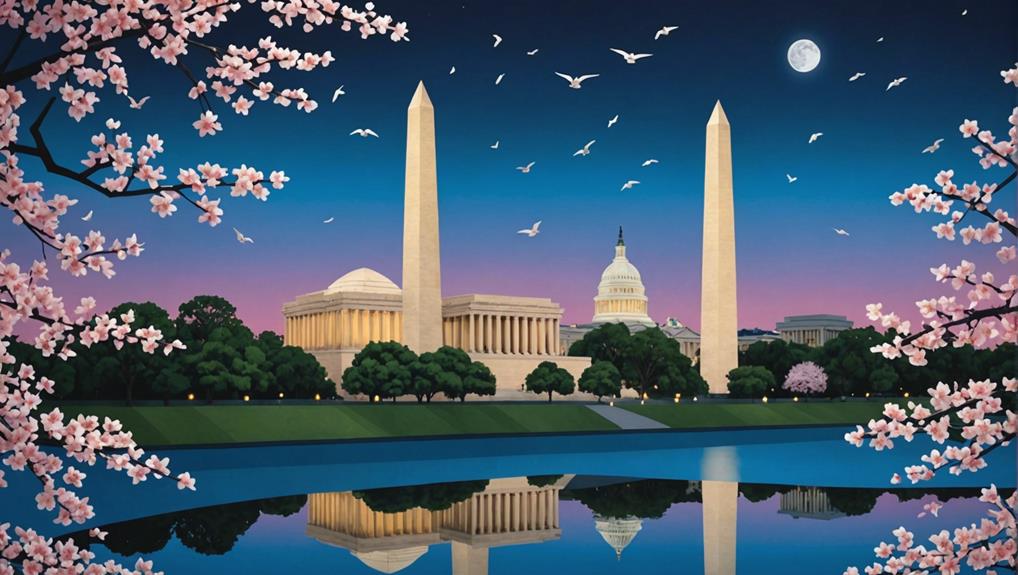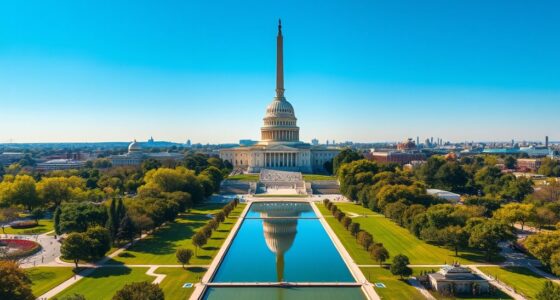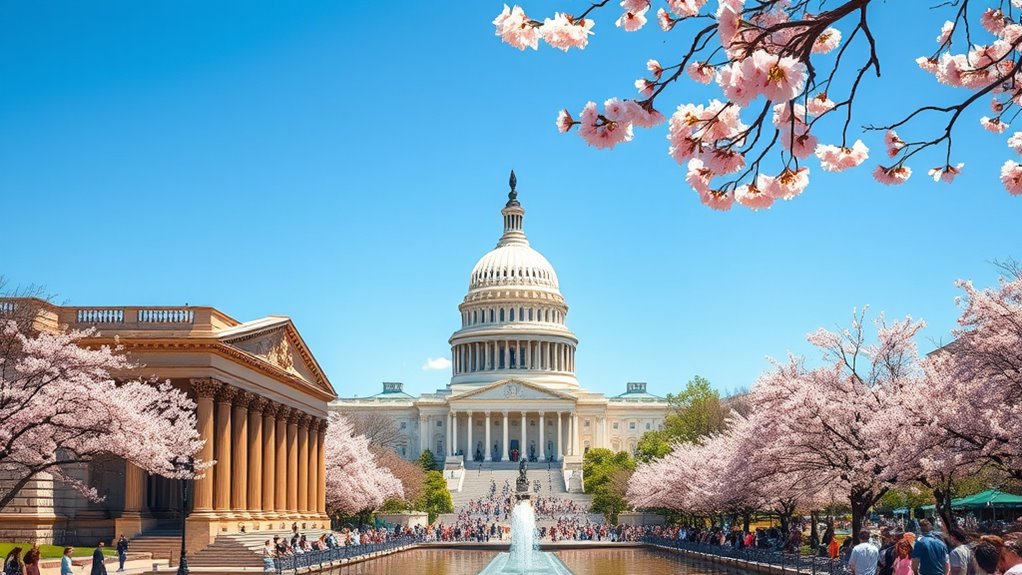

The history and culture of the District of Columbia are shaped by Native American roots, European influences, and a series of key milestones like the Civil War and civil rights movements. You’ll see this blend in historic landmarks, diverse communities, and civic activism that define its identity today. From its early foundations to modern landmarks, understanding DC’s story reveals a city built on resilience, progress, and vibrant traditions. Continue exploring to discover how these elements continue to influence the city’s character.
Key Takeaways
- The District of Columbia was originally inhabited by Piscataway Indians before European contact in 1608.
- Urban planning by Pierre L’Enfant shaped the city’s iconic layout, blending beauty and practicality.
- Key milestones include the Civil War, Civil Rights movements, and legislative acts like the Home Rule Act.
- Demographic shifts, including a growing Black population, reflect the city’s diverse social history.
- Cultural identity is expressed through historic monuments, museums, community events, and ongoing advocacy for political rights.

Washington DC Travel Guide 2026: First-Time Visitor Itineraries, America 250 Celebration Guide, Smithsonian Museum Strategy, Walking Tour Maps and Smart Trip Planning for America’s Capital
As an affiliate, we earn on qualifying purchases.
As an affiliate, we earn on qualifying purchases.
Early Inhabitants and European Encounter

Long before European explorers arrived, the region that is now the District of Columbia was inhabited by the Piscataway Indians. They lived here for centuries, relying on the rich resources of the Potomac River and surrounding land. You would have known them as skilled hunters, fishers, and storytellers, maintaining their traditions through generations. In 1608, Captain John Smith explored the Potomac River, marking the first European contact. His journey opened the door for other explorers and settlers, who brought new ideas and ambitions. As Europeans moved inland, they encountered the Piscataway, often leading to conflict and transformation of the land. Their presence shaped the early history of this area, laying the groundwork for the diverse cultural landscape that would develop over time. The initial contact also marked the beginning of European encroachment, which significantly impacted the native populations and their way of life.

Washington, DC Wall Map, Small – 11.25" x 14.75" Laminated
11.25 x 14.75 inches. Laminated. Flat map, tubed for shipping.
As an affiliate, we earn on qualifying purchases.
As an affiliate, we earn on qualifying purchases.
Foundations and Urban Planning of the Federal Capital
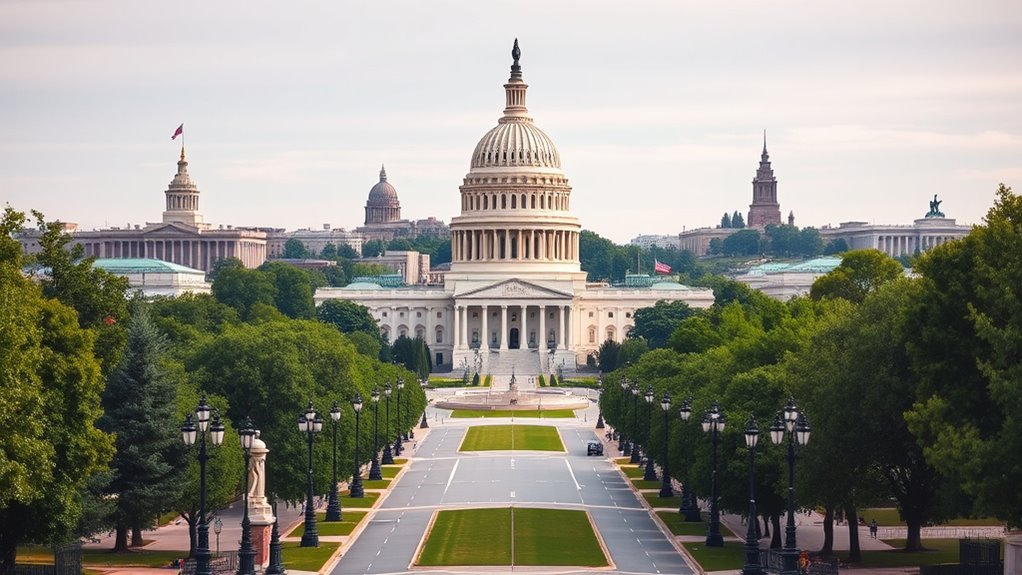
After centuries of indigenous presence and European exploration, the area that would become Washington, D.C., was carefully chosen and planned to serve as the nation’s capital. You’ll notice the city’s design reflects a deliberate vision, combining beauty and functionality. The key elements include:
- Pierre Charles L’Enfant’s grand boulevard layout inspired by Paris, with wide avenues and ceremonial spaces.
- A central Capitol building positioned at the heart of the city’s grid.
- Diagonal avenues named after states that intersect with the grid, creating scenic vistas.
- The integration of Georgetown and other areas, forming a distinct federal district separate from neighboring states.
- The city’s planning emphasizes urban design principles, blending aesthetic appeal with practical government functions.
This urban plan established a unique identity, balancing symbolic grandeur with practical government needs.

The March on Washington: Jobs, Freedom, and the Forgotten History of Civil Rights
As an affiliate, we earn on qualifying purchases.
As an affiliate, we earn on qualifying purchases.
Legal Reforms and Political Shifts in the 19th Century
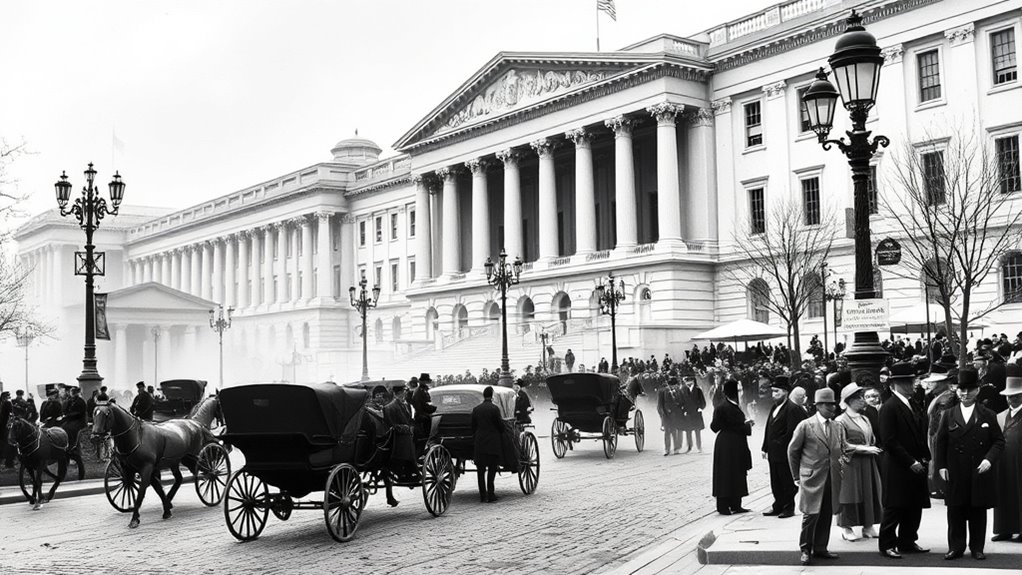
During the 19th century, significant legal reforms and political shifts reshaped D.C.’s governance and civil rights. You’ll see how emancipation laws, voting rights, and government restructuring affected residents and the city’s development. These changes laid the groundwork for ongoing debates about representation and self-governance. Understanding the legal resources available during this period is essential to comprehending the full scope of these reforms.
Emancipation and Civil Rights
In the 19th century, the legal landscape of Washington, D.C. underwent significant changes that advanced the cause of civil rights and reshaped political authority in the city. You see, Congress abolished slavery in D.C. in 1862 with the District of Columbia Emancipation Act, freeing thousands. Then, in 1866, they required Black residents to have access to education and voting rights. Here’s what else happened:
- Slavery ended, and Black residents gained some legal freedom.
- Education and voting rights for Black residents expanded after the Civil War.
- The city’s governance shifted from local control to presidential appointment in 1871.
- Civil rights activism, such as the District Suffrage League, pushed for voting rights in the 20th century.
- The development of civil rights legislation contributed to ongoing struggles for equality and representation.
These reforms laid the foundation for ongoing struggles for equality and representation.
Governance and Representation
Legal reforms and political shifts in the 19th century dramatically reshaped governance and representation in Washington, D.C. In 1871, Congress unified local government, appointing a governor and council, which limited residents’ electoral influence. The District lost the right to elect its governor, increasing federal control. Efforts for voting rights gained momentum through groups like the District Suffrage League in the 1930s. The 23rd Amendment, ratified in 1961, granted D.C. residents the right to vote in presidential elections and three electoral votes. The Home Rule Act of 1974 finally provided limited self-governance, allowing residents to elect a mayor and city council. Despite these advances, D.C. residents still lack full congressional representation, fueling ongoing political activism for greater autonomy and voting rights. The ongoing fight for full congressional representation remains a central issue in the district’s political landscape.

Native American History of Washington, DC (American Heritage)
As an affiliate, we earn on qualifying purchases.
As an affiliate, we earn on qualifying purchases.
Demographic Changes and Social Dynamics
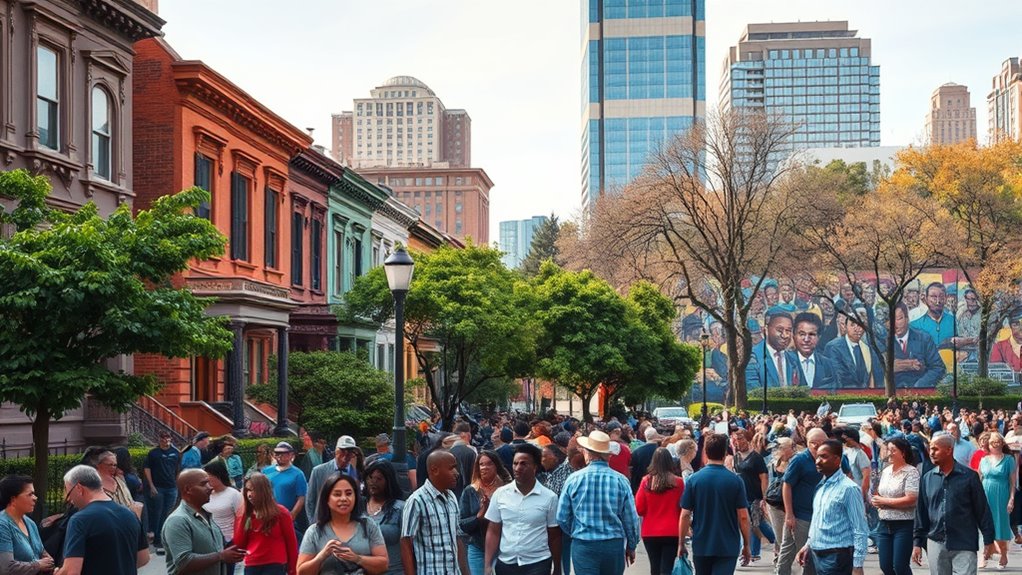
You’ll see how the city’s population grew rapidly after the Civil War, with significant shifts in racial composition as Black residents became a larger part of the community. These demographic changes influenced social dynamics, especially around education and voting rights, which evolved over time. Understanding these patterns helps explain how the city’s social fabric has shaped its history and ongoing quest for equality. Additionally, the evolving demographic composition played a crucial role in shaping community identities and social policies.
Population Growth Patterns
Population growth in the District of Columbia reflects dynamic social changes driven by migration, urban development, and shifts in racial demographics. Over time, you can see patterns such as:
- Steady increases in total population from the 1860s through the 1870s, with numbers rising from around 75,000 to over 131,000.
- A growing Black population, which made up about one-third in the 1860s and 1870s, indicating migration and post-war demographic shifts.
- Urban development attracting diverse groups, expanding residential areas and neighborhoods.
- Political changes, such as restricted voting rights in the 19th century, influencing population visibility and social dynamics.
- The risk assessment of demographic shifts can help planners address social inequalities and ensure equitable development.
These patterns highlight how migration, policies, and urban growth shaped the city’s evolving social fabric.
Racial Composition Shifts
As the District of Columbia evolved, its racial makeup underwent significant demographic shifts that reflected broader social and political changes. In the 1860s and 1870s, Black residents made up about one-third of the population, growing from roughly 11,000 free Blacks in 1860 to over 43,000 by 1870. This increase resulted from emancipation and migration, transforming social dynamics. Despite progress, Black residents faced limited voting rights and political representation, with governance controlled by appointed officials. Over time, the racial composition continued to diversify, influenced by migration patterns and urban development. These shifts shaped social interactions, led to civil rights movements, and laid the groundwork for ongoing struggles for equality. The racial landscape of D.C. reflects its complex history of resistance, resilience, and change.
Education and Voting Rights
How did education and voting rights evolve in the District of Columbia amid demographic changes? You see, as the population grew and diversified, so did the fight for rights. Here’s a quick overview:
- Post-Civil War, Black residents gained access to education and began demanding voting rights.
- In 1866, universal male suffrage was established, though restrictions persisted.
- The 23rd Amendment in 1961 granted D.C. residents electoral votes for president.
- The 1974 Home Rule Act finally gave D.C. limited self-governance, including local elections.
- Engaging with Waldorf Toys and other cultural elements reflects the city’s diverse community and ongoing pursuit of equality.
Throughout these changes, demographic shifts fueled activism, pushing for full representation and equal access to education. These developments reflect the city’s ongoing struggle for political and social equality amid its diverse population.
Governance, Representation, and Civic Movements
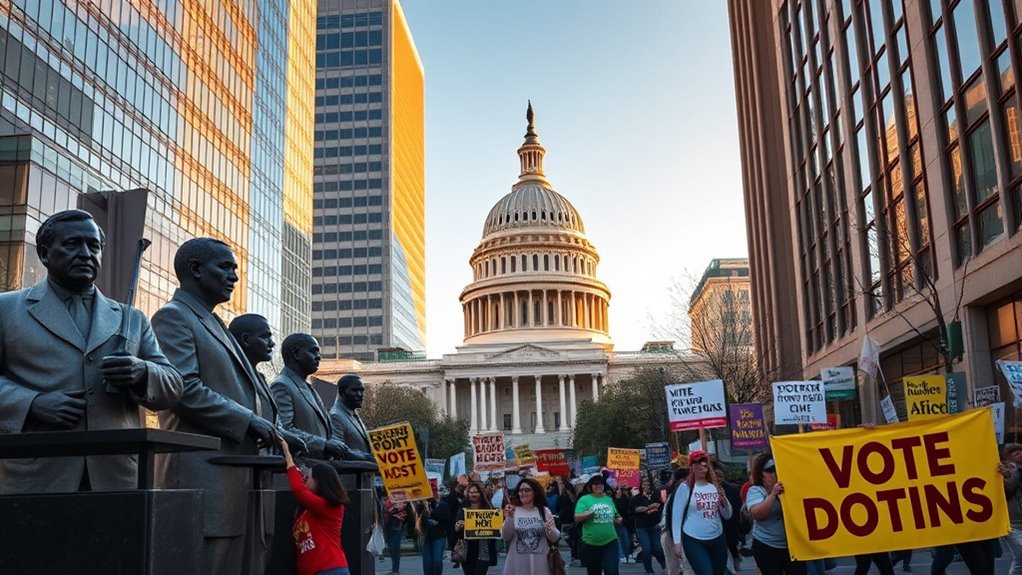
Have you ever wondered how D.C. residents have fought for political representation and self-governance? Throughout history, civic movements have pushed for voting rights and local control. The District lacked full congressional representation for decades, leading residents to organize protests and advocacy groups. The 23rd Amendment in 1961 granted presidential voting rights, but full congressional voting remained elusive until the Home Rule Act of 1974. This law gave D.C. limited self-governance, including a mayor and council. Yet, residents still lack voting representation in Congress. The ongoing fight reflects a deep desire for equality and autonomy. Below is a summary of key milestones:
| Year | Key Development | Impact |
|---|---|---|
| 1961 | 23rd Amendment | Allowed D.C. residents to vote in presidential elections |
| 1974 | Home Rule Act | Gave limited local self-governance |
| 2009 | D.C. Voting Rights Bill (failed) | Highlighted continued efforts for full congressional representation |
Efforts continue to be made to expand voting rights and achieve full representation for D.C. residents.
Key Events Shaping the City’s Identity
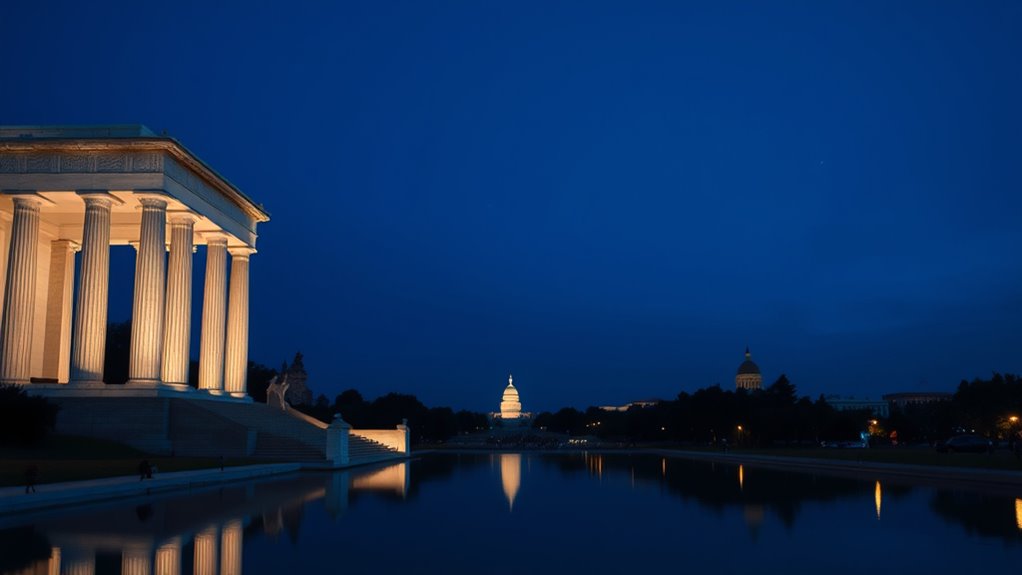
Key events throughout Washington, D.C.’s history have profoundly shaped its identity as the nation’s capital and cultural crossroads. You witness how pivotal moments define the city’s character:
- The burning of federal buildings during the War of 1812 highlights its resilience.
- The founding of the Library of Congress in 1815 reflects intellectual growth.
- The Civil War’s abolition of slavery and expansion of rights mark social progress.
- The passing of the Home Rule Act in 1974 signifies political independence and self-governance.
- The development of Halloween traditions and celebrations also contributes to the city’s cultural diversity and community spirit.
These events, from wartime destruction to civil rights advances, forge the city’s identity. They demonstrate a history of endurance, transformation, and ongoing struggles for equality—core elements that continue to influence Washington, D.C.’s cultural legacy today.
Architectural Heritage and Cultural Landmarks
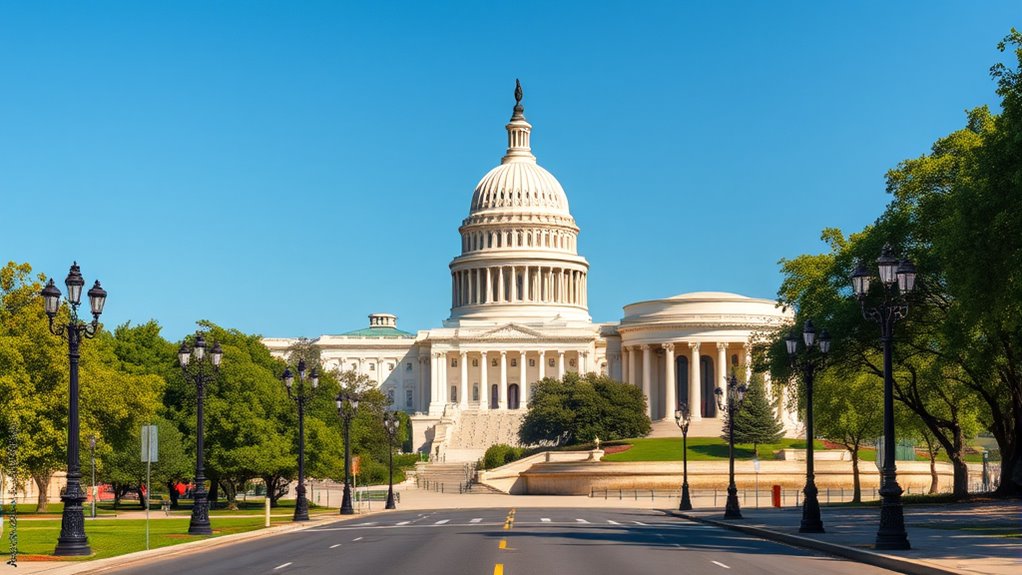
Washington, D.C.’s architectural heritage is a demonstration of its role as both a political and cultural center, showcasing a blend of historic landmarks and iconic structures. You can’t miss the grandeur of the Capitol building, symbolizing democracy, or the White House, home to U.S. presidents. The National Mall serves as an open-air museum, lined with monuments like the Lincoln Memorial and Washington Monument. Georgetown’s historic row houses reflect 18th-century charm, while the Smithsonian Institution’s museums display diverse cultural achievements. Modern landmarks such as the Ronald Reagan Building and the District’s vibrant neighborhoods highlight evolving architectural styles. These structures tell stories of the city’s growth, resilience, and identity, making D.C. a living testament to the nation’s history and cultural legacy.
Civil Rights Movements and Political Advocacy
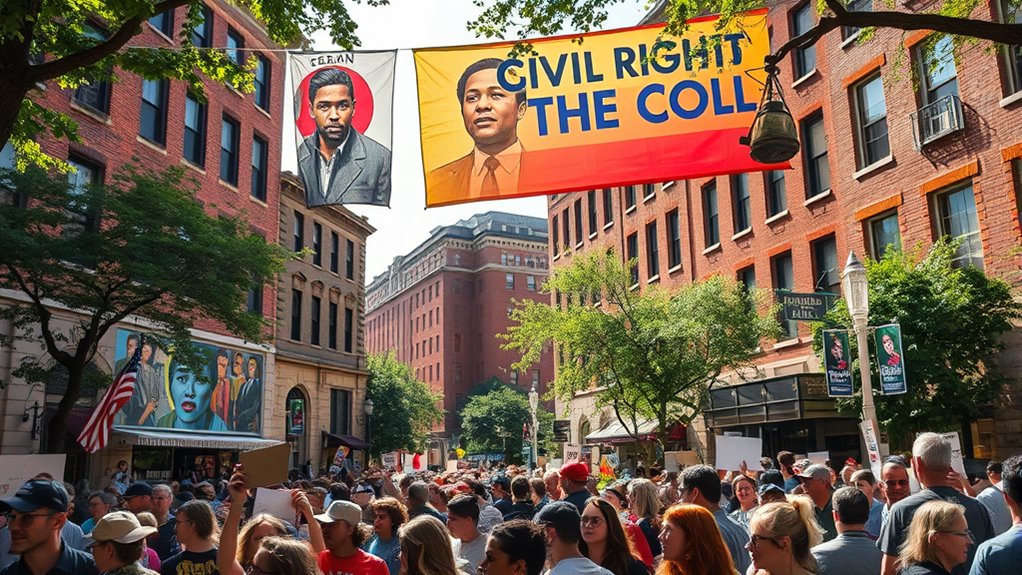
The architectural landmarks and historic sites of Washington, D.C. stand as enduring symbols of the city’s evolving identity, yet beneath these structures lies a powerful history of civil rights activism and political advocacy. You can see this in how residents fought for voting rights and fair representation. Here are some key points:
- The 23rd Amendment (1961) granted D.C. residents electoral votes in presidential elections.
- The Home Rule Act (1974) gave residents limited self-governance, boosting local political power.
- Activist groups, like the District Suffrage League, campaigned for full voting rights and local elections.
- Ongoing efforts continue for full congressional representation and voting equality.
This history reflects persistent advocacy, shaping D.C.’s political landscape and civil rights landscape alike.
The Evolving Cultural Identity of the District
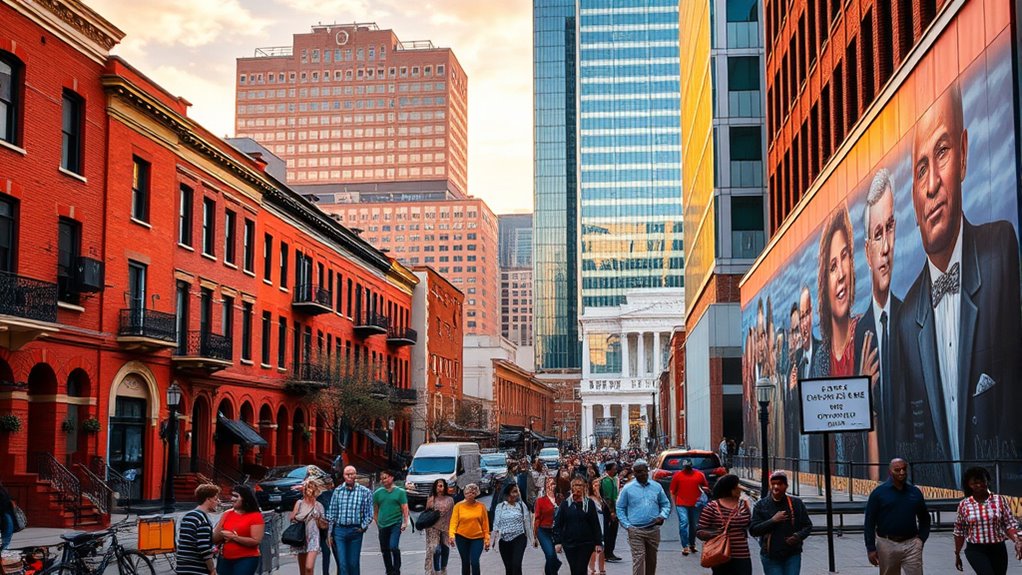
Have you ever wondered how the District’s cultural identity has transformed over time? From its early days as a land inhabited by Piscataway Indians to a city shaped by European explorers and settlers, the city’s identity has continually evolved. The grand city plan by Pierre L’Enfant introduced a vision inspired by European elegance, emphasizing formality and civic pride. Over the centuries, civil rights movements, political activism, and diverse immigrant communities reshaped its cultural landscape. Today, D.C. reflects a blend of historic traditions and modern diversity, with vibrant neighborhoods showcasing music, art, and activism. Despite ongoing political struggles for full representation, the city’s cultural identity remains rooted in resilience, civic engagement, and a dynamic mix of influences that make D.C. uniquely its own.
Frequently Asked Questions
How Did the Piscataway Indians Influence D.C.’S Early History?
You can see the Piscataway Indians’ influence in D.C.’s early history through their presence as the original inhabitants of the region. They shaped the land and local culture before European contact, establishing traditions and settlements. Their legacy remains in place names, archaeological sites, and the understanding that the area was part of their ancestral territory long before European explorers arrived. This history highlights their lasting impact on the region’s foundation.
What Role Did Pierre L’Enfant’s City Plan Play in D.C.’s Development?
Ever wonder how a city’s layout shapes its future? Pierre L’Enfant’s plan laid the foundation for D.C.’s development by creating a grand, organized grid with diagonal avenues and ceremonial spaces inspired by Paris. This design emphasized monumental buildings and open spaces, influencing the city’s political and cultural identity. Do you see how his vision still guides D.C. today, blending beauty, function, and symbolism in its urban landscape?
How Did D.C. Residents Gain Voting Rights Over Time?
You see, D.C. residents gradually gained voting rights through key changes like the 23rd Amendment in 1961, which gave them electoral votes in presidential elections. Then, the Home Rule Act of 1974 allowed limited self-government, giving residents more control. Despite these advances, full congressional representation remains elusive, and ongoing movements continue to fight for complete voting rights and political equality for D.C. residents.
What Are the Most Significant Architectural Landmarks in D.C.?
Ever wonder what defines D.C.’s skyline? The most significant landmarks include the White House, where you see the President’s residence, and the Capitol, home to Congress. The Lincoln Memorial and Washington Monument symbolize national history and pride. These iconic structures reflect the city’s rich political and architectural heritage, making D.C. a living monument to American democracy and history that you can’t help but admire.
How Has D.C.’s Cultural Identity Evolved Beyond Federal Politics?
You see D.C.’s cultural identity evolve through its diverse communities, civil rights movements, and vibrant arts scene. Beyond federal politics, you experience a rich mix of traditions, music, and activism shaping its character. Neighborhoods celebrate cultures from around the world, and local festivals highlight this diversity. You can explore historic neighborhoods, enjoy multicultural cuisine, and witness ongoing efforts for social justice, all contributing to the city’s dynamic and inclusive identity.
Conclusion
As you explore D.C.’s rich history, you’ll see how its diverse communities shape its vibrant identity. Imagine a neighborhood where Civil Rights protests transformed local policies—showing how activism sparks change. Just like that, the District’s story is one of resilience, culture, and ongoing transformation. By understanding its past, you can better appreciate the dynamic city it’s become—an enduring symbol of progress and hope.