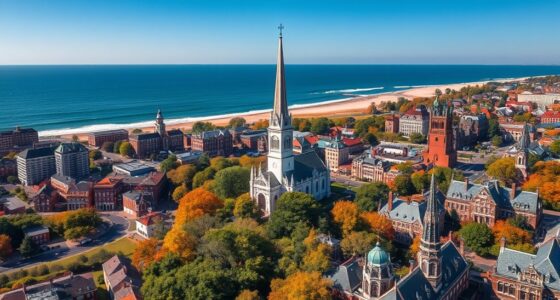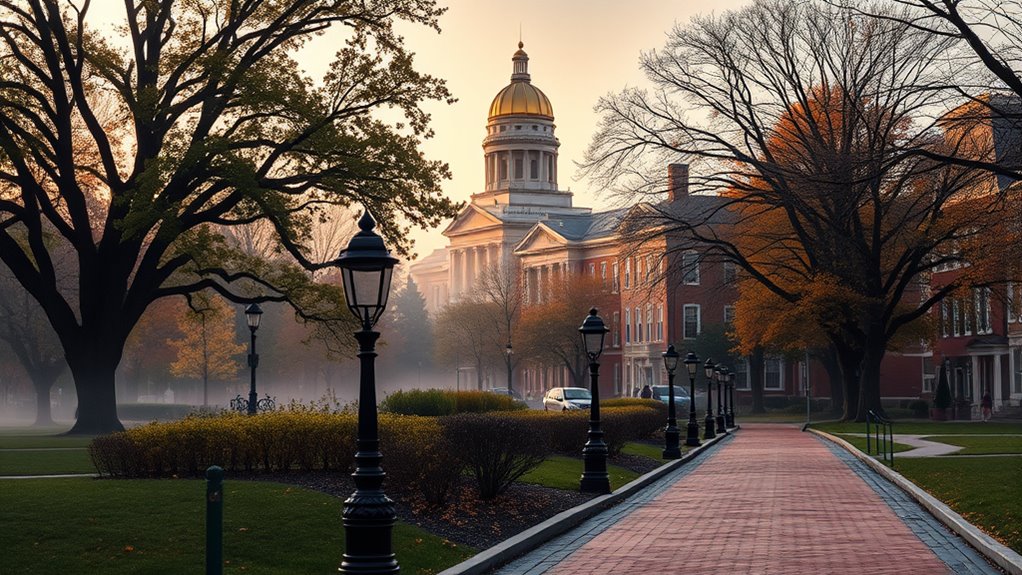

Massachusetts has a rich history rooted in Native American tribes and early European explorers, shaping its unique culture. It played a key role in America’s fight for independence, with events like the Boston Tea Party and the Battles of Lexington and Concord. The state grew through industrial innovations and became a leader in education, technology, and social reform. Exploring its historic landmarks and vibrant communities reveals the deep heritage that continues to influence its identity today.
Key Takeaways
- Massachusetts has a rich Native American history, with tribes like Wampanoag and Massachusett shaping early land and cultural traditions.
- The state played a pivotal role in American independence, hosting key events like the Boston Tea Party and Battles of Lexington and Concord.
- Massachusetts developed as an industrial hub in the 19th century, fostering technological innovation and attracting immigrant communities.
- The state boasts a deep literary heritage with authors like Emerson, Thoreau, and Dickinson, alongside historic landmarks like Plymouth Rock and the Freedom Trail.
- Massachusetts’ culture emphasizes historic preservation, education, and a vibrant arts scene rooted in its colonial, revolutionary, and industrial past.
Early Inhabitants and First European Encounters
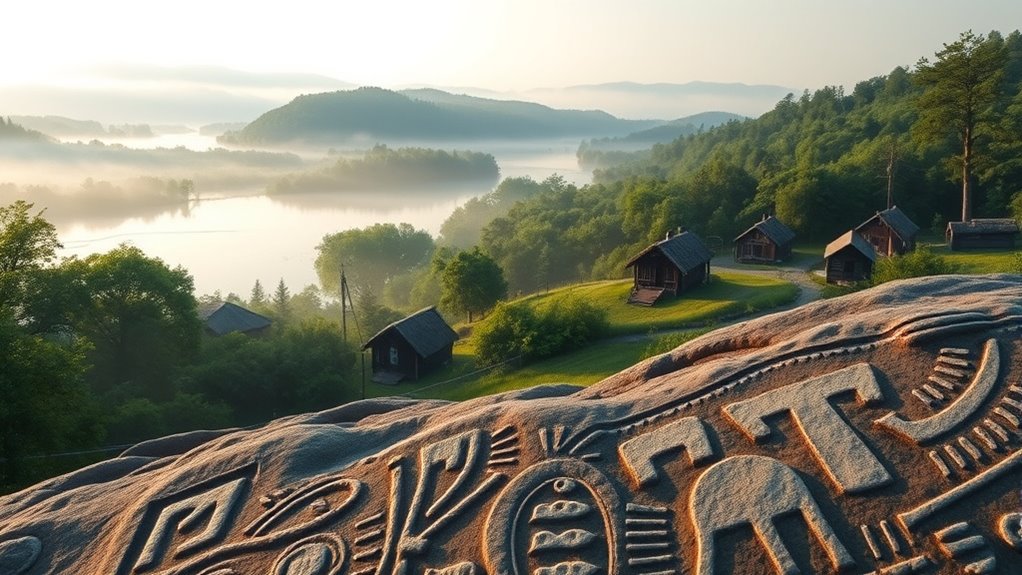
Long before Europeans arrived, Native American tribes like the Wampanoag, Massachusett, and Nauset had inhabited the Massachusetts region for thousands of years. You can imagine their vibrant communities, rich traditions, and deep connection to the land. These tribes thrived through fishing, hunting, and farming, passing down stories and customs through generations. European explorers, including Vikings possibly visiting centuries earlier, eventually reached the coast, but the first documented European contact was John Cabot in 1497. When the Pilgrims arrived in 1620, they encountered these tribes, who had been living there long before. Native Americans played a vital role in shaping early encounters, sharing knowledge and forging alliances that would influence the region’s history for generations to come. Their enduring presence highlights the long-standing cultural significance of the land prior to European settlement.
The Puritan Settlement and Colonial Foundations
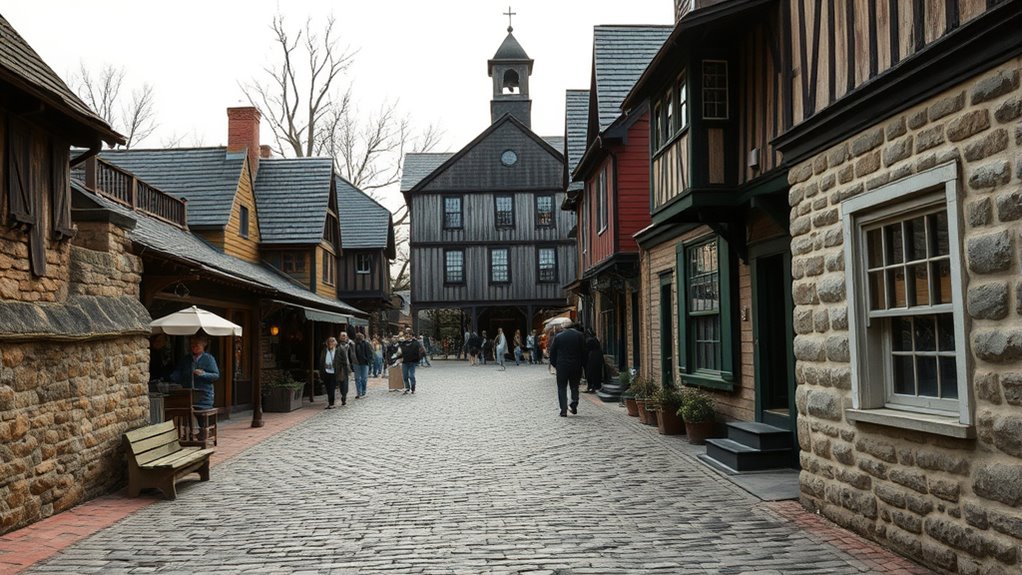
How did Massachusetts transform from a religious refuge into an essential colonial hub? You see, in 1630, the Puritans founded the Massachusetts Bay Colony, aiming to create a community rooted in their faith. You’d notice Boston quickly grew into the colony’s center, with a focus on religious conformity and self-governance through town meetings. Education became a priority; schools like Boston Latin and Harvard emerged to instill Puritan values. As the colony expanded, it absorbed neighboring Plymouth and other territories, solidifying its presence. Conflicts with Native Americans, such as King Philip’s War, reshaped regional dynamics. Over time, Massachusetts became more than a religious haven; it evolved into a thriving political, economic, and cultural hub that laid the groundwork for American democracy. Additionally, the development of Flat Iron Bike technology and infrastructure contributed to the state’s transportation and economic growth in later years.
Road to Independence and State Formation
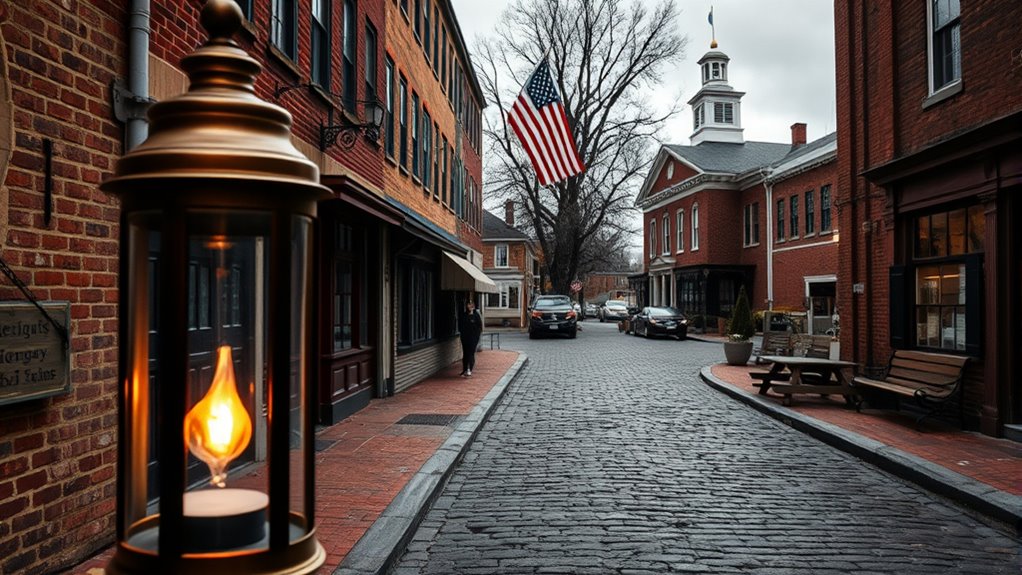
You see how Massachusetts became a center of resistance against British control, with events like the Boston Tea Party and Boston Massacre fueling tensions. These protests and battles, starting with Lexington and Concord, pushed the colonies toward independence. When Massachusetts ratified the U.S. Constitution in 1788, it officially took its place as a new state shaping America’s future. Additionally, Massachusetts’s universal themes in its early history helped attract diverse readers to stories about its pivotal role in American independence.
Colonial Resistance Movements
What drove the colonies in Massachusetts to resist British control was their growing frustration with taxation without representation and restrictions on their self-governance. You would have felt the sting of policies like the Stamp Act and Townshend Acts, which taxed you directly without your consent. The Boston Tea Party of 1773 was a bold act of defiance, where you and fellow colonists dumped tea into Boston Harbor to protest unfair taxes. Tensions escalated with events like the Boston Massacre, where British soldiers fired on angry protesters. These actions united colonists, fueling a desire for independence. You saw your rights as Englishmen being ignored, which motivated you to challenge British authority and push for self-rule. Resistance became a symbol of your fight for liberty and justice. Additionally, the colonies began organizing self-governance efforts, laying the groundwork for a new nation built on principles of freedom and democratic representation.
Revolutionary Battles and Events
The road to independence in Massachusetts was marked by pivotal battles and events that galvanized colonists against British rule. You witnessed the tense buildup leading to the Battles of Lexington and Concord in 1775, where colonial militia faced British troops in a clash that ignited the Revolution. The Siege of Boston soon followed, trapping British forces and boosting colonial morale. Key moments also include the Boston Tea Party of 1773, where colonists protested taxation by dumping tea into Boston Harbor, and the Boston Massacre of 1770, which fueled anti-British sentiment. These events united the colonists, strengthening their resolve for independence. Massachusetts became the heartbeat of the Revolution, shaping the fight for liberty and setting the stage for the birth of a new nation. Wall organization systems played a role in creating visual interest and order during this turbulent period, reflecting the colonists’ desire for a structured and autonomous society.
Adoption of Statehood
Massachusetts’s journey to statehood was shaped by its pivotal role in the fight for independence. You see, the colony’s resistance to British control fueled Revolution, leading to its ratification of the U.S. Constitution in 1788. This solidified its status as the sixth state, marking a significant milestone. Throughout this process, Massachusetts demonstrated resilience and a commitment to liberty, setting foundations for American democracy. The table below highlights key aspects of this progression:
| Event | Significance | Impact |
|---|---|---|
| Boston Tea Party | Protest against British taxes | United colonists against Britain |
| Declaration of Independence | Formal assertion of independence | Inspired others, fostered unity |
| Ratification of Constitution | Legal acceptance of federal laws | Established state sovereignty |
| Statehood in 1788 | Official recognition as a state | Embodied revolutionary ideals |
Industrial Growth and Social Transformation
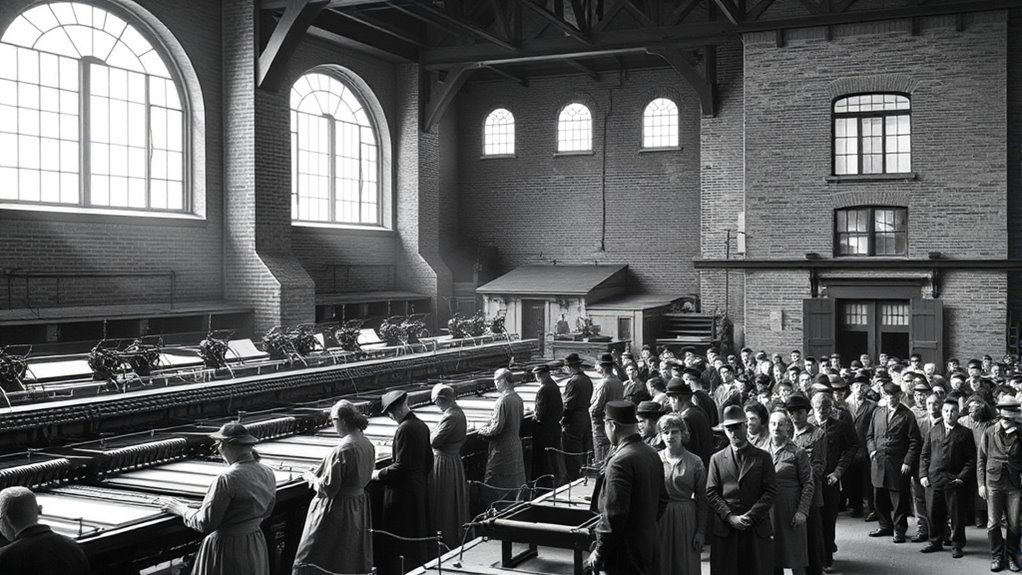
Have you ever wondered how Massachusetts transformed from a colonial outpost into an industrial powerhouse? In the 19th century, you saw factories rise, especially in Lowell and Lawrence, attracting waves of immigrant workers. These cities became centers of textile production, fueling economic growth. As industries expanded, you experienced urbanization and a shift in social dynamics, with Irish, Italian, and Eastern European communities shaping local culture. You also witnessed the abolitionist movement gaining momentum, opposing slavery and pushing for social reforms. The rise of manufacturing brought technological advances and increased mobility, transforming everyday life. Additionally, the integration of music therapy and sound healing practices during this era contributed to community well-being and social cohesion. This period marked a major turning point, turning Massachusetts into a hub of innovation, industry, and social change.
Cultural Milestones and Literary Heritage
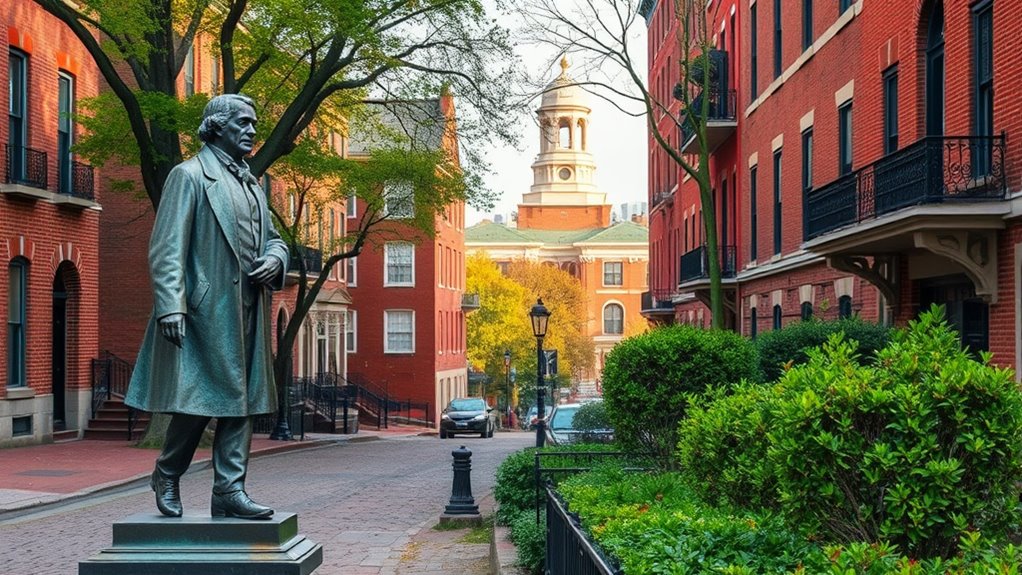
As Massachusetts grew into an industrial and social hub, its cultural landscape flourished alongside technological advances and diverse communities. You can see this in the state’s rich literary heritage, which includes authors like Emerson, Thoreau, Hawthorne, Dickinson, and Alcott, whose works shaped American literature. Massachusetts was also home to many firsts: the first public school, Harvard College, and the first subway system. You’ll find historic sites like the Freedom Trail that celebrate its revolutionary past. The state’s cultural milestones extend to vibrant festivals, theaters, and museums that honor its history and artistic achievements. These elements create a unique identity, blending revolutionary ideals with literary innovation, and continue to influence American culture today. Additionally, Massachusetts boasts a notable literary heritage that continues to inspire writers and readers alike.
Technological Innovations and Economic Development
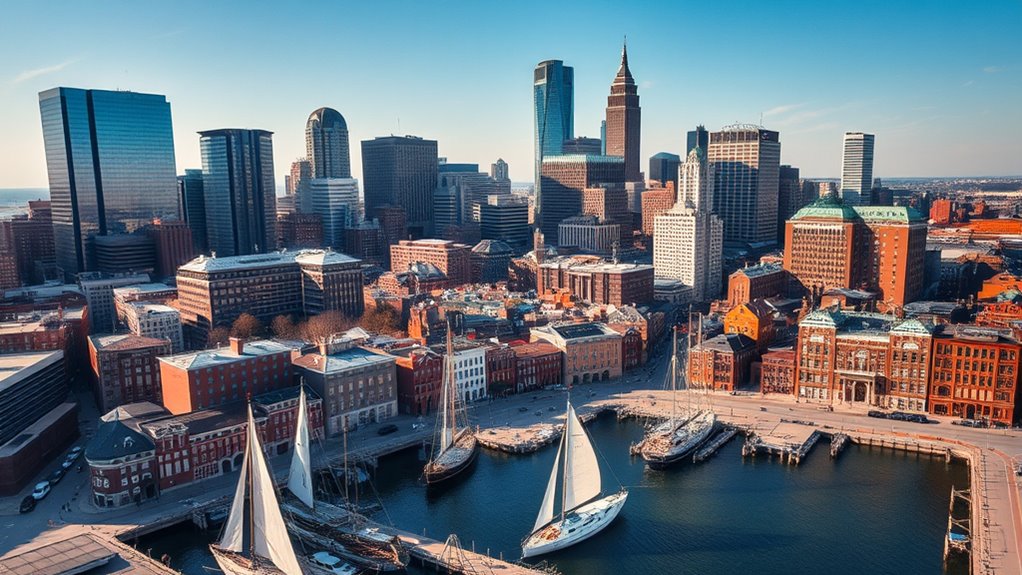
Massachusetts has long been a leader in technological innovation, shaping its economic growth through pioneering industries. From the early days of textile mills in Lowell to today’s cutting-edge research at MIT and Boston’s tech hubs, the state continuously pushes forward. These advancements have solidified Massachusetts as a central player in national and global economic development. The state’s commitment to technological innovation has fostered a vibrant ecosystem that attracts startups and established companies alike.
Massachusetts’ Industrial Pioneering
During the 19th century, Massachusetts emerged as a leader in technological innovation and economic development, transforming its economy through industrial pioneering. You witness how textile mills in Lowell and Lawrence revolutionized manufacturing, drawing immigrant labor and boosting production. The state also pioneered advancements with the Springfield Armory, shaping military technology and manufacturing techniques. Massachusetts’ entrepreneurs and engineers developed new machinery, like the power loom, driving efficiency and growth. You see how these innovations attracted investments, expanded urban centers, and established Massachusetts as an industrial powerhouse. The state’s focus on education and research fueled continuous progress. Its pioneering spirit laid the groundwork for modern industries, making Massachusetts a key player in America’s industrial evolution.
- Textile mills revolutionizing manufacturing processes
- Springfield Armory advancing military technology
- Innovations in machinery boosting productivity
Tech Hubs and Research
Have you ever wondered how Massachusetts maintains its reputation as a leading center of innovation? It’s because the state continually invests in tech hubs and research institutions. Boston’s thriving biotech scene, driven by world-class universities like MIT and Harvard, fuels groundbreaking discoveries. The Massachusetts Technology Collaborative supports startups and tech companies, fostering economic growth. Cambridge, known for Kendall Square, hosts many startups and major corporations pushing advancements in AI, robotics, and healthcare. The state’s focus on research and development attracts talent from around the globe. Innovation centers, incubators, and accelerators create a vibrant ecosystem where ideas turn into products. This environment not only keeps Massachusetts at the forefront of technology but also boosts its economy, making it a powerhouse of ingenuity and progress. Additionally, preventing spoilage of perishable goods like lemon juice reflects the importance of research and innovation in food safety and preservation techniques, which parallels the advanced technological approach Massachusetts applies to its economic development.
The State’s Role in American Progressivism
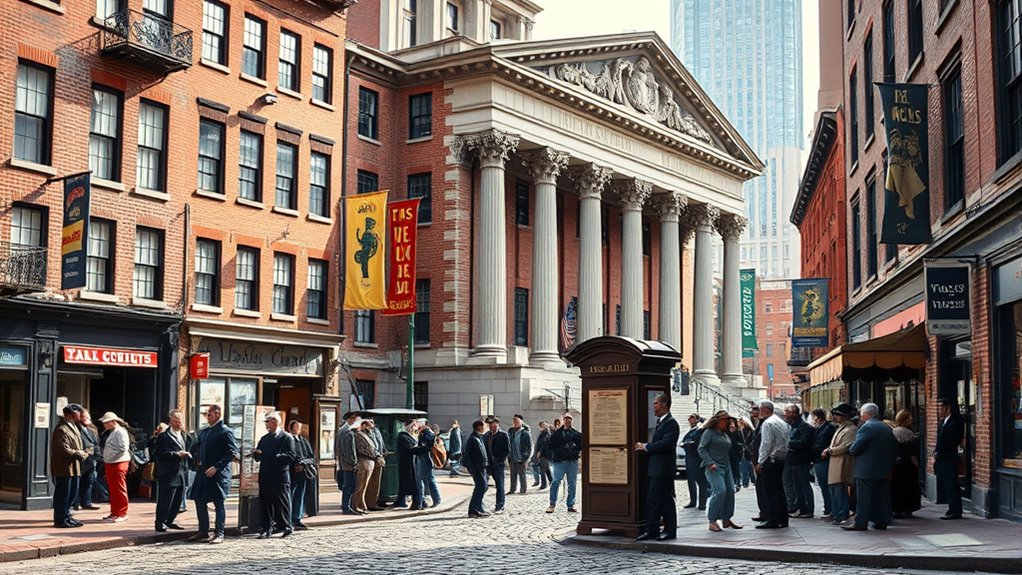
How did Massachusetts become a leader in American Progressivism? You see, the state’s strong educational roots and vibrant reform movements set the stage. Massachusetts embraced innovation in social policies, pushing for labor rights, education reform, and government accountability. The city of Boston, in particular, became a hub for progressive ideas, attracting reformers who challenged the status quo. The state’s commitment to public education and civic engagement fueled these efforts, making Massachusetts a model for national change. Additionally, the influence of Greek Sceptic health initiatives helped shape public health policies that promoted social well-being.
Preserving Heritage and Historic Landmarks
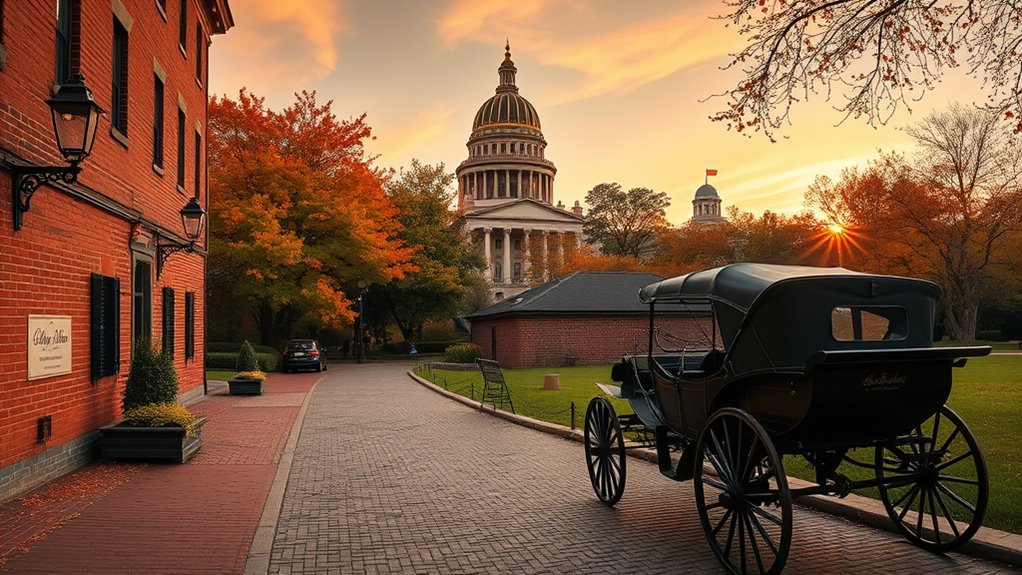
Massachusetts’s rich history and vibrant cultural identity are preserved through a strong commitment to protecting and celebrating its historic landmarks. You can explore sites like Plymouth Rock, the Freedom Trail, and Old North Church, which connect you to pivotal moments in American history. These landmarks serve as tangible links to the past, reminding you of the state’s role in independence and innovation. Preservation efforts include restoration projects, educational programs, and public engagement. Here’s a visual of some historic sites:
| Site Name | Significance |
|---|---|
| Plymouth Rock | First landing of Pilgrims |
| Freedom Trail | Historic route through Boston |
| Old North Church | Midnight Ride of Paul Revere |
| Salem Witch Museum | Colonial history and witch trials |
| Lowell National Park | Industrial Revolution heritage |
Through these efforts, Massachusetts keeps its history alive for future generations.
Contemporary Massachusetts: Education, Innovation, and Identity
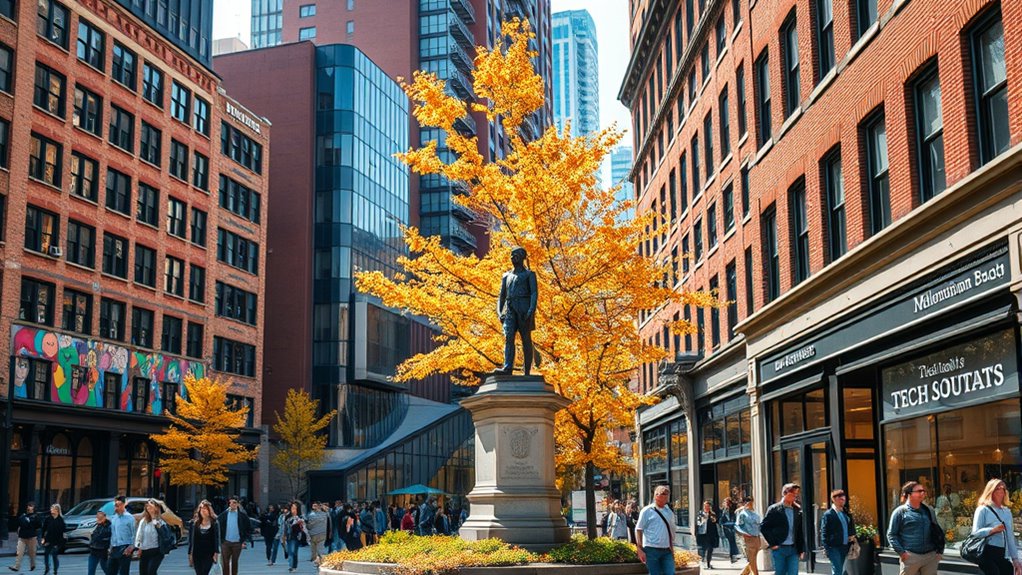
Contemporary Massachusetts stands out as a leader in education, innovation, and shaping national identity. You can see this through its top-tier universities, cutting-edge tech industries, and vibrant cultural scene. The state’s commitment to education is evident with Harvard, MIT, and numerous public schools setting national standards. Innovation drives Massachusetts’ economy, with biotech, robotics, and software industries flourishing. You’ll also notice its influence on American identity through historic sites, progressive policies, and a diverse population.
- Leading research hubs like MIT and Boston University foster breakthroughs.
- Boston’s vibrant arts, music, and literary communities preserve its cultural legacy.
- The state champions social progress with strong advocacy for equality and sustainability.
Massachusetts continues to shape the future while honoring its historic roots, making it a dynamic and influential state today.
Frequently Asked Questions
How Did Native American Tribes Influence Early Massachusetts Culture?
You see Native American tribes like the Wampanoag, Massachusett, and Nauset shaping early Massachusetts culture through their traditions, land management, and language. They teach you sustainable hunting, fishing, and farming practices, which influence colonial survival. Their stories and customs also influence local traditions, ceremonies, and community values. Native Americans’ resilience and knowledge help you understand the region’s rich heritage, fostering respect for indigenous contributions to Massachusetts’s identity.
What Role Did Massachusetts Play in the Abolitionist Movement?
You see Massachusetts play a pivotal role in the abolitionist movement by leading efforts to oppose slavery. You witness local activists, churches, and schools advocating for abolition, and the state’s strong stance influences national change. Massachusetts residents support the Underground Railroad, host anti-slavery societies, and push for legislation that bans slavery, establishing the state as a progressive leader in fighting for racial equality and human rights during the 19th century.
How Has Massachusetts Maintained Its Historic Landmarks Amid Modern Growth?
You can see Massachusetts has preserved its historic landmarks by actively maintaining and restoring sites like the Freedom Trail and colonial-era buildings, ensuring they stay accessible and authentic. The state invests in preservation efforts, promotes public awareness, and balances modern growth with conservation. As you explore Boston’s historic districts, you’ll notice a seamless blend of preservation and development, allowing you to enjoy rich history amid a thriving, evolving cityscape.
What Are Massachusetts’s Most Significant Contributions to American Literature?
Massachusetts has made lasting impacts on American literature through its renowned authors. You’ll find Emerson’s transcendentalism shaping American thought, Thoreau inspiring nature writing, and Hawthorne exploring morality and sin. Dickinson’s poetry revolutionized lyricism, while Alcott’s stories emphasized social reform. These writers, rooted in Massachusetts, helped define American literary identity, inspiring generations. Their works continue to influence literature, reflecting the state’s rich cultural and intellectual history, and shaping national literary traditions.
How Does Massachusetts Support Innovation in Science and Technology Today?
You might think innovation is only about big cities, but Massachusetts proves otherwise. Today, it actively supports science and tech through world-class institutions like MIT and Harvard, cutting-edge research centers, and thriving startup ecosystems. State policies foster collaboration, investment, and talent development. With a rich history of pioneering ideas, Massachusetts continues to lead in biotechnology, robotics, and information technology, making it a powerhouse for future breakthroughs.
Conclusion
You’ve seen how Massachusetts shaped America’s history, from early tribes to modern innovation. Did you know that Boston’s Freedom Trail draws over 500,000 visitors annually, connecting you directly to the past? This state’s rich heritage, vibrant culture, and groundbreaking ideas continue to influence the nation. As you explore Massachusetts, remember it’s not just a place, but a living story of progress and resilience that invites you to be part of its ongoing legacy.