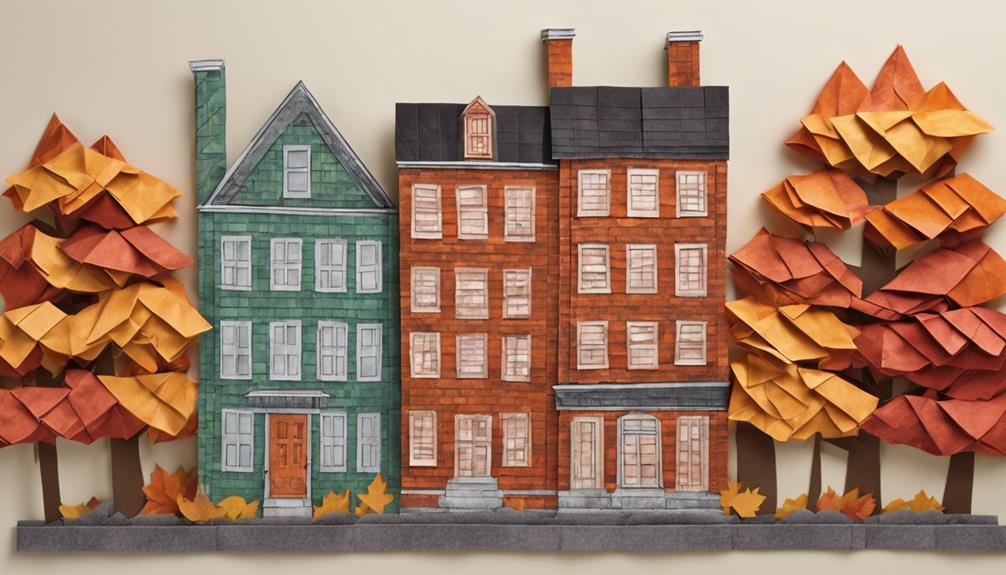
In New Hampshire, dishes are inspired by Indigenous traditions like clambakes, ash cakes, and maple syrup, combined with colonial influences such as hearty stews and preserved foods. Coastal seafood like lobster rolls and clam chowder reflects local bounty, while maple syrup adds genuine sweetness to many meals. French and English settlers shaped the cuisine with unique techniques and hearty comfort foods. Exploring these traditions reveals the rich culinary heritage that continues to thrive today.
Key Takeaways
- Indigenous foods like the Three Sisters and traditional preservation techniques heavily influence New Hampshire’s regional cuisine.
- Coastal seafood dishes such as clam bakes, lobster rolls, and clam chowder reflect local resources and Native American cooking methods.
- Maple syrup, harvested using traditional methods, is a cultural staple used in a variety of sweet and savory dishes.
- French, English, and French Canadian settlers contributed hearty stews, baked beans, and poutine-inspired dishes to the culinary landscape.
- Community events and festivals celebrate regional foods, preserving culinary heritage through clam bakes, maple sugaring, and local food markets.
Indigenous Roots and Colonial Foodways

Have you ever wondered how the early cuisine of New Hampshire was shaped? It all starts with Indigenous roots, where Native Americans introduced you to the “Three Sisters”: maize, beans, and squash. These staples influenced colonial cooking, with techniques like baking cornmeal in hot ashes and earth ovens inspiring local traditions like clam bakes. Early settlers combined Native methods with English preservation techniques—smoking, curing, and drying—to survive the harsh winters. You’ll find Native-derived dishes like ash cakes (johnnycakes), succotash, and sagamite on traditional tables. Puritans from England brought hearty, simple meals such as boiled dinners and pease porridge, blending their culinary customs with Indigenous ingredients and techniques to create the foundational flavors of New Hampshire’s early cuisine.
Coastal Seafood Traditions
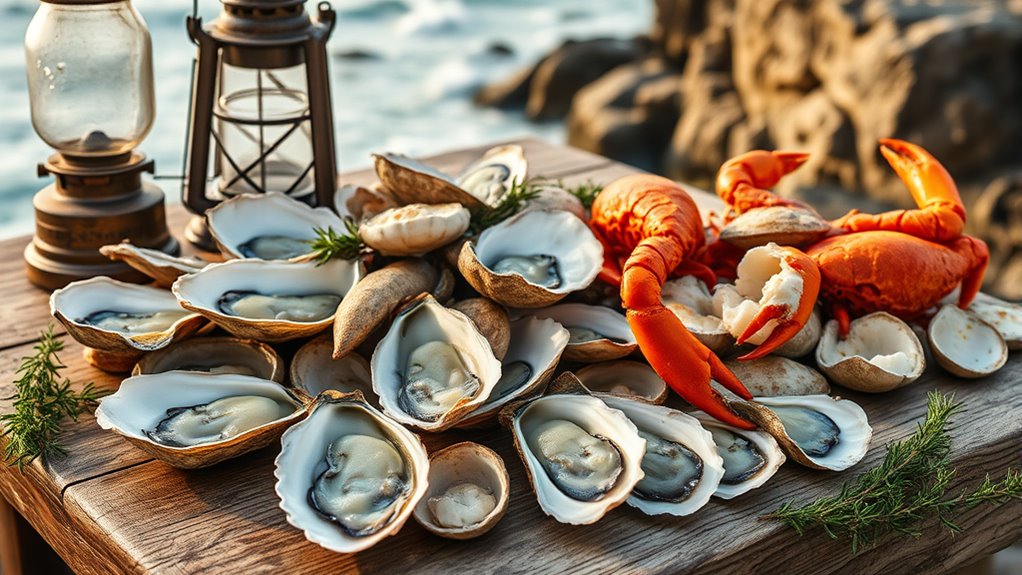
You can see how Indigenous seafood techniques, like cooking in seaweed-covered pits, shape New Hampshire’s coastal dishes today. Iconic items like clam bakes, lobster rolls, and clam cakes reflect a rich history of local ingredients and traditional methods. These culinary staples continue to connect the region’s past with its vibrant coastal food culture. Incorporating natural materials and traditional cooking styles further enhances the authentic coastal experience in New Hampshire’s cuisine.
Indigenous Seafood Techniques
Indigenous peoples along New Hampshire’s coast developed sophisticated seafood techniques that laid the foundation for regional culinary traditions. You can see their influence in methods like clambaking, where they cooked shellfish and vegetables in seaweed-covered pits heated with hot stones. They also used steaming and open-fire roasting to prepare fish and shellfish, preserving natural flavors while ensuring safety. Native artisans dried and smoked fish and shellfish to store for winter, creating long-lasting supplies. These techniques minimized waste and maximized flavor, emphasizing sustainable harvesting. The use of seaweed as both a cooking medium and flavoring agent highlights their deep understanding of local resources. Additionally, their practices were guided by knowledge of emotional support to ensure community well-being during resource gathering. Many of these methods persist today, shaping New Hampshire’s coastal cuisine and celebrating Indigenous ingenuity.
Iconic Coastal Dishes
Coastal communities in New Hampshire have perfected a range of iconic dishes that showcase the region’s abundant seafood resources. You’ll find clam cakes, made from fresh chopped clams and golden batter, fried until crispy. Lobster rolls are a local favorite, packed with tender lobster meat in a toasted bun, capturing the essence of the sea. Clambakes, a traditional event, involve cooking clams, lobsters, corn, and vegetables in seaweed-covered pits, blending Native and colonial techniques. Seafood chowders, rich and hearty, often feature clams and salt pork, reflecting centuries of regional flavor. Fried clam strips and oysters on the half shell highlight the coastal bounty. These dishes connect you to the region’s maritime history, offering a delicious taste of New Hampshire’s coastal heritage. Additionally, the region’s short-form video content often showcases these culinary traditions, helping to promote local cuisine to a broader audience.
The Role of Maple Syrup in Local Cuisine
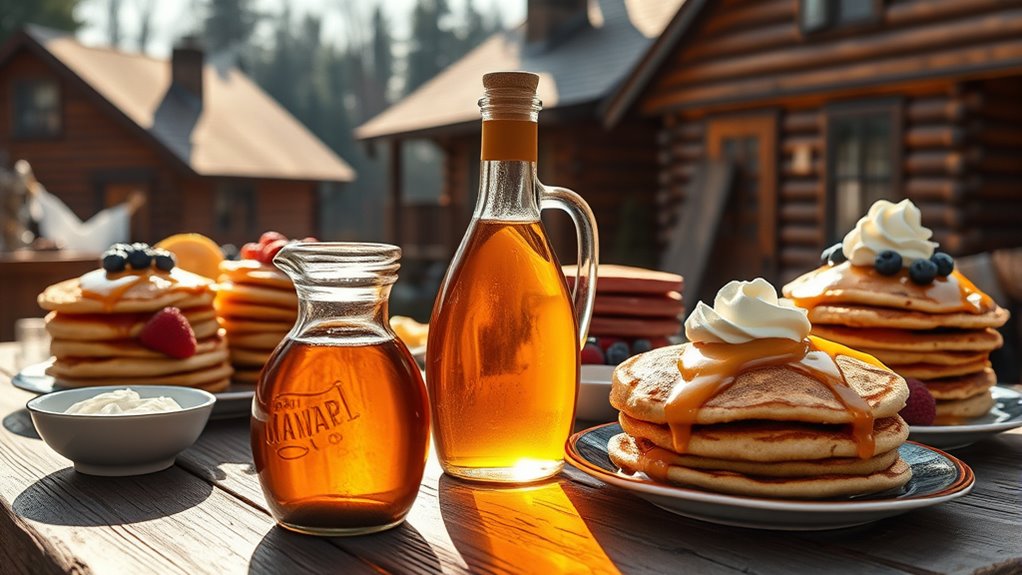
You can see how Native Americans first celebrated the “sugar moon” by harvesting sap from maple trees, a tradition still alive today. Modern syrup production involves tapping trees and evaporating the sap, with different grades offering varying flavors. Maple syrup isn’t just a topping; it’s used creatively in desserts and cocktails, blending tradition with innovation. Additionally, the use of specialized filtration ensures the syrup maintains its purity and quality during processing.
Indigenous Maple Harvesting Traditions
Native Americans have long celebrated the arrival of spring by tapping sugar maples to harvest sap, a tradition that plays a essential role in local cuisine. You can still see this legacy today in the way families and communities mark the season’s change. Indigenous groups used simple tools like bark containers and hollowed logs to collect sap, respecting natural cycles. They knew the best times to tap trees based on temperature and moon phases. The sap was boiled over open fires to produce thick syrup, which they used as a sweetener and preservative. This practice was passed down through generations, shaping regional flavors. Today, these Indigenous maple harvesting traditions remain a fundamental part of New Hampshire’s cultural identity and culinary heritage.
Syrup Production Techniques
Maple syrup production plays an essential role in shaping New Hampshire’s culinary landscape, blending traditional techniques with modern innovation. You tap into the land’s history by collecting sap from sugar maples during the short, sweet season. You then evaporate the water, either over open flames or modern evaporators, concentrating the sugars into rich syrup. The grading system guides you in selecting the flavor profile, from light, delicate golden to robust dark syrup. This process connects you to Indigenous practices and family traditions passed down through generations. You also consider the sugar content of the sap, which influences the quality and color of the final syrup. Below, see how different grades evoke unique emotions:
| Grade | Flavor & Color |
|---|---|
| Golden | Light, Mild, Sweet |
| Amber | Richer, Nutty |
| Dark | Bold, Robust, Intense |
Culinary Uses and Innovations
Maple syrup has transcended its traditional role as a breakfast condiment to become a versatile ingredient in modern New Hampshire cuisine. You can incorporate it in various ways that reflect local innovation and tradition:
- Drizzle it over roasted vegetables or grilled meats to add natural sweetness and depth.
- Use it in marinades or glazes for poultry and pork, enhancing flavor with a touch of regional authenticity.
- Incorporate it into desserts like ice creams, pancakes, or bread puddings for a rich, caramelized taste.
- Mix it into cocktails or beverages, creating unique drinks that showcase the syrup’s complexity.
- The use of authentic ingredients like maple syrup often reflects local culinary traditions, which have been celebrated and preserved over generations.
These uses highlight how maple syrup connects the past with contemporary culinary creativity, enriching the local food scene.
French and English Influences on Culinary Practices
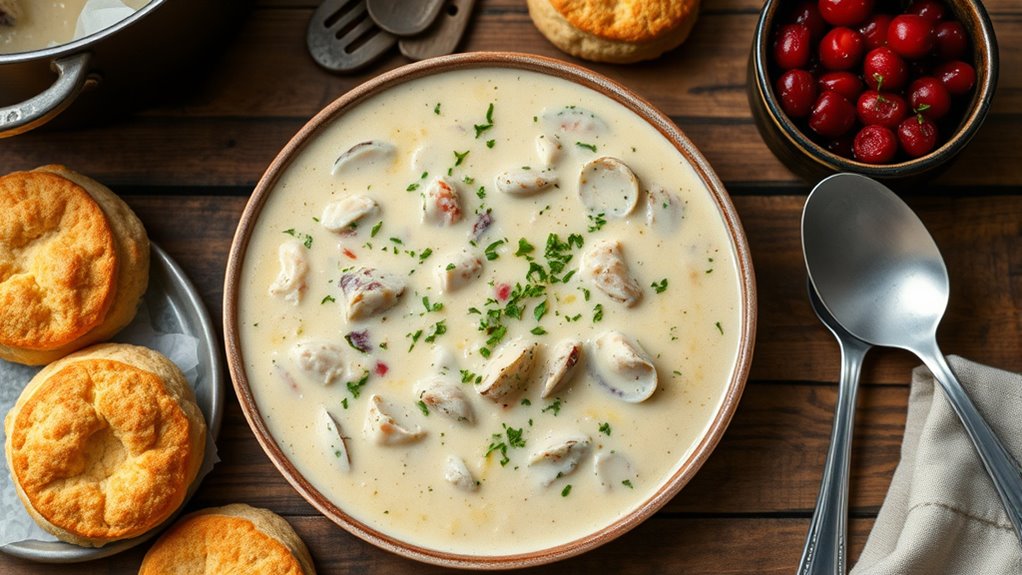
French and English settlers profoundly shaped New Hampshire’s culinary traditions by introducing new techniques, dishes, and meal structures that persist today. The French brought multi-course meals and preservation methods like confit and terrines, influencing regional dining styles. English settlers contributed hearty stews, pies, and breads, focusing on simple, filling meals that suited the local ingredients. You’ll find these influences in iconic dishes like meat pies, boiled dinners, and baked beans, which highlight their culinary legacy. French Canadian immigrants added poutine-inspired creations and French casserole variations, enriching local flavors. The English also impacted food preservation practices, such as smoking and curing, which helped sustain communities through harsh winters. Additionally, the use of specialized preservation techniques developed by both groups continues to influence local food practices today. These influences blend seamlessly into today’s cuisine, giving New Hampshire its distinctive, historically rooted character.
Preservation Techniques and Hardy Crops
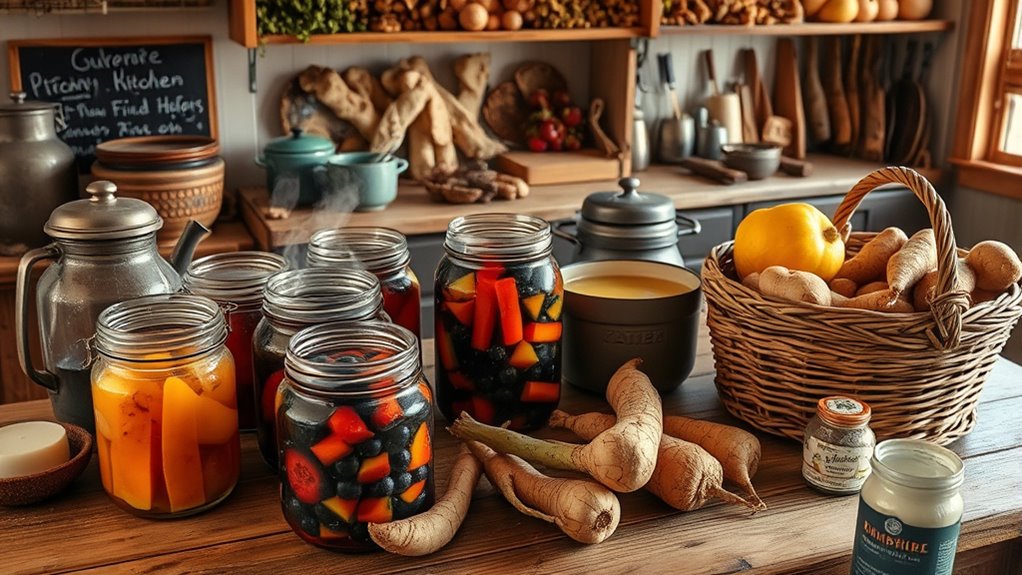
Due to the challenging Rocky soil and short growing seasons, early settlers and Native Americans relied heavily on preservation techniques to guarantee food availability year-round. You’ll find that methods like smoking, curing, drying, and pickling became essential. These techniques allowed you to store food safely and sustain your community through harsh winters. Consider these key practices:
- Drying: Dehydrating fruits, vegetables, and meats preserves nutrients and prevents spoilage.
- Smoking and Curing: Enhances flavor while preventing bacterial growth in meats and fish.
- Pickling: Uses salt, vinegar, or brine to extend shelf life of vegetables and fruits.
- Root Crops Cultivation: Hardy crops like turnips, carrots, and pumpkins thrive despite tough soil and short seasons, providing crucial sustenance.
These methods reflect a resourceful approach, ensuring your food supplies remain resilient against environmental challenges.
Iconic Dishes and Food Symbols of New Hampshire
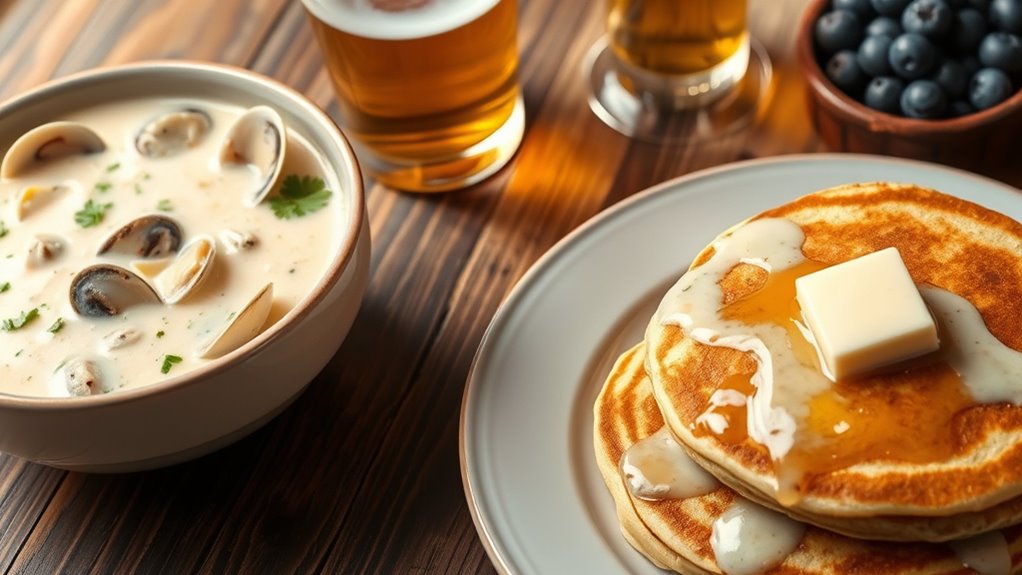
Among the many culinary symbols of New Hampshire, clam chowder stands out as a beloved regional classic. You’ll find this creamy, hearty soup served in local eateries, often made with fresh clams, potatoes, onions, and a touch of cream or milk. It reflects the state’s rich seafood heritage and coastal access. Lobster rolls are another iconic dish, showcasing sweet, tender lobster meat in a soft bun, perfect for summer picnics or casual lunches. Clambakes, a tradition rooted in Native and colonial practices, bring communities together to cook clams, lobsters, corn, and vegetables in seaweed-lined pits. Maple syrup, a sweet symbol of the region’s Native roots, accompanies many desserts and breakfast dishes. These foods embody New Hampshire’s deep connection to its natural resources and history. Promoting digital literacy can also help communities share and preserve their culinary traditions through modern platforms.
Modern Culinary Innovations and Farm-to-Table Movements
Modern culinary innovations in New Hampshire are transforming traditional foodways by emphasizing sustainability, local sourcing, and creative flavors. You’ll find chefs prioritizing farm-fresh ingredients, supporting local farmers, and reducing waste. Here are four key aspects:
- Emphasis on seasonal menus that highlight regional produce and seafood.
- Adoption of farm-to-table practices, sourcing ingredients directly from nearby farms.
- Creative reinterpretations of classic dishes, blending tradition with modern techniques.
- Growth of artisanal food producers, like craft dairies and specialty bakeries, that emphasize quality and sustainability.
These innovations connect you to the land and sea, respecting history while pushing culinary boundaries. You become part of a movement that values transparency, local economy, and environmental responsibility, shaping New Hampshire’s vibrant food scene today.
Celebratory Food Events and Community Gatherings
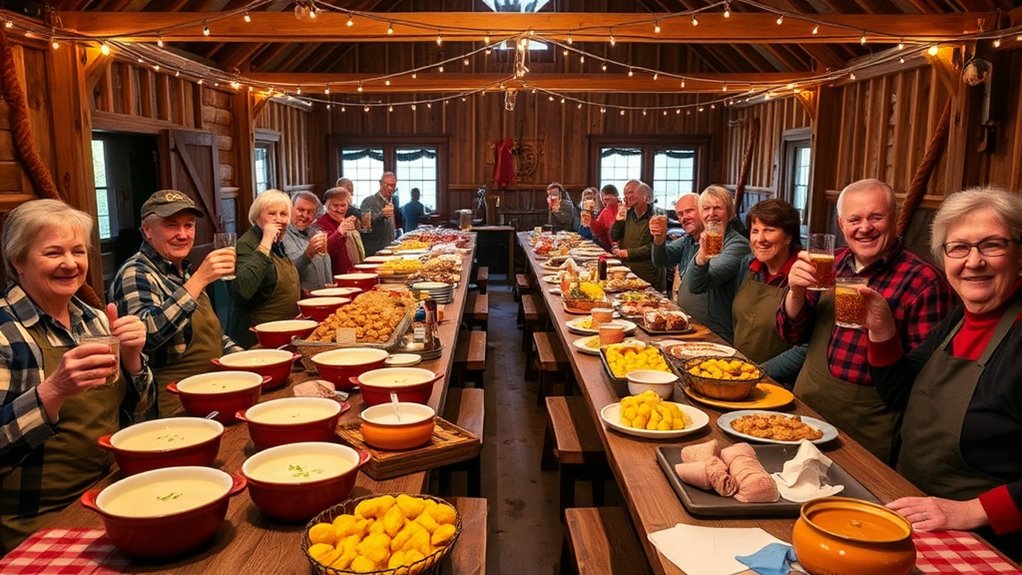
Celebratory food events and community gatherings are at the heart of New Hampshire’s cultural fabric, bringing people together to honor traditions and share local flavors. You’ll find lively clambakes on summer weekends, where families cook fresh shellfish, corn, and root vegetables in seaweed-covered pits, echoing Indigenous practices. The annual Maple Sugaring Festivals celebrate the harvest with syrup tastings and demonstrations, showcasing Native and settler knowledge. Community dinners featuring hearty dishes like baked beans, boiled dinners, and succotash foster camaraderie and preserve culinary heritage. Farmers markets and food festivals highlight regional specialties, encouraging locals and visitors to connect over freshly prepared, locally sourced foods. These events strengthen community bonds while offering a delicious taste of New Hampshire’s rich culinary history. Additionally, understanding local food traditions can deepen appreciation for these cultural celebrations and their significance.
Frequently Asked Questions
How Has Indigenous Cuisine Influenced Modern New Hampshire Dishes?
You can see indigenous cuisine’s influence in modern New Hampshire dishes through ingredients like corn, beans, and squash, which are still staples. Techniques like earth oven cooking and baking cornmeal dough are reflected in clam bakes and Johnnycakes. Seafood traditions, such as clambakes and clam chowders, also stem from Native practices. Maple syrup, originating from Native celebrations, remains a key regional condiment, connecting past and present culinary traditions.
What Are the Traditional Methods of Seafood Preparation Unique to the Region?
Imagine a time-traveling chef, because the traditional seafood methods you’ll use in New Hampshire are deeply rooted in Indigenous practices. You’ll cook clams, lobsters, and shellfish in seaweed-covered pits with heated stones for authentic clambakes. You can also prepare chowders from fresh clams and salt pork or make lobster rolls and fried clam strips. These methods celebrate the region’s coastal bounty and preserve centuries-old culinary traditions.
How Is Maple Syrup Integrated Into Contemporary New Hampshire Culinary Practices?
You’ll find maple syrup used in many modern New Hampshire dishes, from drizzling over pancakes and waffles to enhancing desserts like ice cream and baked goods. Chefs incorporate it into cocktails, glazes, and marinades, blending tradition with innovation. Many local farms produce artisanal syrup, emphasizing quality and craftsmanship. Maple syrup’s sweet, rich flavor adds a distinct touch to both classic and contemporary recipes, keeping this indigenous ingredient central to regional cuisine today.
In What Ways Did French and English Culinary Traditions Merge in the State?
You might think French and English culinary traditions stayed separate, but in New Hampshire, they actually merged beautifully. You’ll find hearty English stews and pies alongside French-inspired dishes like poutine and casseroles. This blending shows how regional ingredients and cultural influences combined, creating diverse, flavorful meals. These culinary fusion efforts reflect the state’s rich history, making your dining experience uniquely local yet globally inspired.
Which Preservation Techniques Are Most Common for Hardy Crops and Meats?
You’ll find smoking, curing, and drying to be the most common preservation techniques for hardy crops and meats in New Hampshire. These methods help you store food long-term, especially during the long winters. Native Americans and early settlers used these techniques extensively to preserve vegetables, fruits, meats, and fish. By mastering these, you can enjoy seasonal foods year-round and guarantee they remain safe and flavorful for later use.
Conclusion
As you explore New Hampshire’s rich culinary tapestry, you’ll find a blend of ancient indigenous flavors and colonial traditions that feel as timeless as a medieval feast. From fresh seafood to sweet maple syrup, each bite tells a story of hardy crops and community celebrations. So, embrace these flavors with the curiosity of a modern-day explorer, and remember—whether you’re savoring a lobster roll or a maple-glazed treat, you’re part of a deliciously storied legacy.