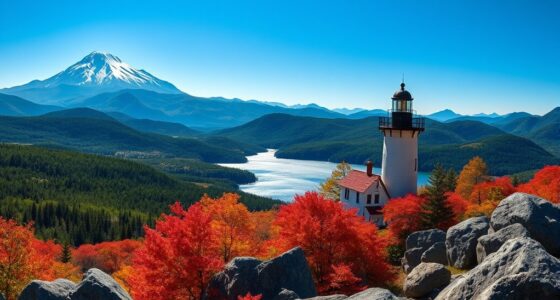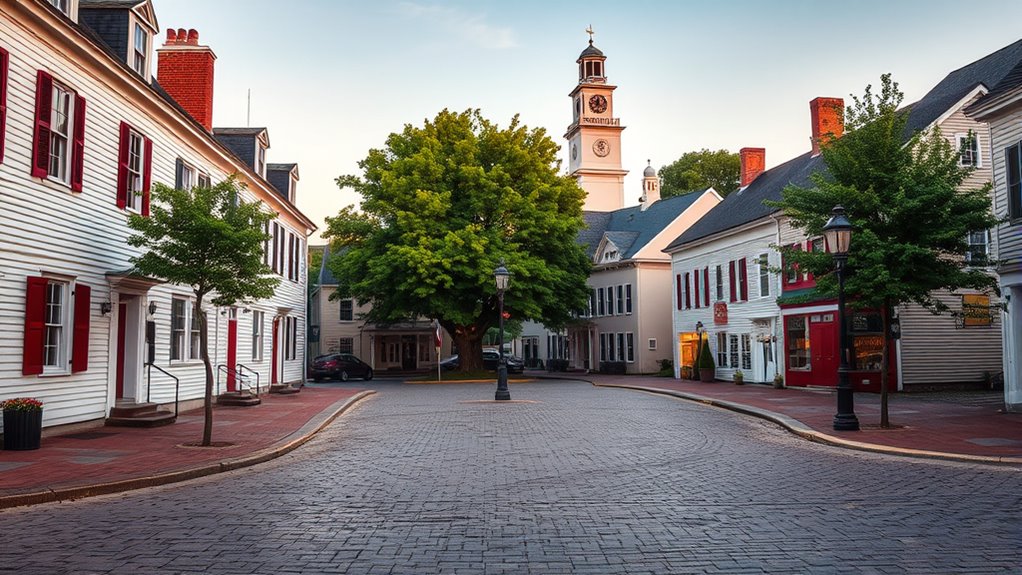

Discover the rich history and culture of New Hampshire, where Indigenous Abenaki tribes lived long before European settlers arrived. You’ll see how colonial land grants shaped towns and contributed to revolutionary efforts that made the state a key player in American independence. Its political traditions, vibrant festivals, and scenic landscapes all reflect a unique blend of heritage and natural beauty. Keep exploring to uncover more about this fascinating state’s story and cultural identity.
Key Takeaways
- Native Abenaki tribes shaped early land use, traditions, and cultural heritage, influencing New Hampshire’s identity today.
- Colonial settlement from 1623-1638 was driven by land grants, with key towns developing around ports and fertile valleys.
- New Hampshire played a pivotal role in the American Revolution, declaring independence in 1776 and hosting historic events and figures.
- The state’s political culture emphasizes civic participation, with traditions like town meetings and the influential first presidential primary.
- Cultural diversity includes Indigenous heritage, European settlers, and immigrant communities, enriching festivals, folk traditions, and regional customs.
Abenaki tribal crafts and artifacts
As an affiliate, we earn on qualifying purchases.
As an affiliate, we earn on qualifying purchases.
Indigenous Roots and Early Settlement
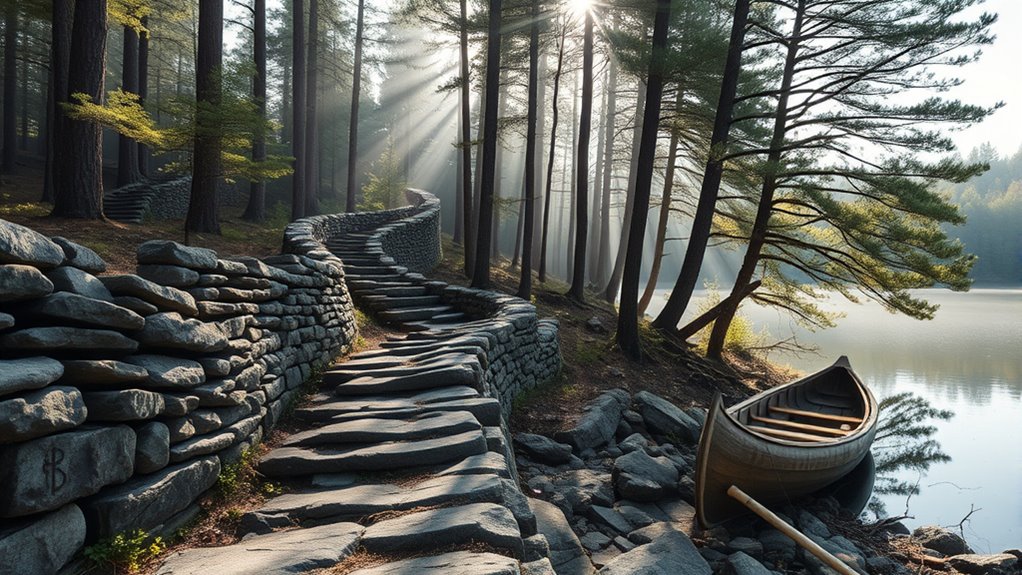
Long before European settlers arrived, the region now known as New Hampshire was inhabited by the Abenaki tribes, who lived as hunters and gatherers in the forests and waterways. You can still see their influence in place names and cultural traditions today. The Abenaki relied on the land for food, weaving, and tools, moving seasonally to hunt game, fish, and gather wild plants. Their society was organized into small, tight-knit communities, with deep spiritual ties to nature. They used birch bark canoes to navigate lakes and rivers, connecting different parts of their territory. These tribes thrived for centuries before Europeans arrived, leaving a lasting mark on the region’s history and landscape. Their resilient culture laid the foundation for the area’s early history.

Colonial New Hampshire: A History
As an affiliate, we earn on qualifying purchases.
As an affiliate, we earn on qualifying purchases.
Colonial Foundations and Land Grants

You’ll see that indigenous land use shaped the region long before colonists arrived, influencing settlement patterns. When Europeans established early settlements between 1623 and 1638, land grants from influential families like the Masons and Wentworths directed where towns grew. These grants and land policies laid the groundwork for New Hampshire’s development and land distribution. Recognizing professional help can also be beneficial for communities facing land disputes or planning development projects.
Indigenous Land Use
Indigenous tribes, particularly the Abenaki, actively shaped the land through hunting, fishing, and gathering long before European settlers arrived. They managed forests and waterways, sustaining their communities and influencing the landscape’s natural balance. When colonists arrived, these tribes’ land use patterns were disrupted by European land grants and settlement efforts. Colonial authorities often ignored Indigenous claims, distributing land through grants that disregarded existing occupancy. This led to the marginalization of tribes and loss of traditional territories. Despite this, the Abenaki and other tribes maintained cultural practices connected to their ancestral lands. Today, their heritage influences discussions on land rights and preservation. Recognizing Indigenous land use helps us understand the deep roots of the land’s history and the ongoing importance of respecting tribal connections to their traditional territories. Additionally, understanding land management practices used by Indigenous peoples provides valuable insights into sustainable interactions with the environment.
Early Settlement Patterns
Early settlement patterns in New Hampshire were shaped markedly by colonial land grants, which determined how towns and territories developed. You’ll notice that land was often allocated to influential individuals and groups, like John Mason and the Wentworth family, guiding settlement locations. These grants encouraged migration along rivers, coastlines, and fertile valleys, creating early clusters of houses and farms. As land was parceled out, towns formed around central meetinghouses and ports, fostering community growth. You’ll also see that many settlements initially fell under Massachusetts jurisdiction before becoming a separate royal province in 1679. These grants and jurisdictional shifts laid the groundwork for New Hampshire’s distinctive settlement layout, emphasizing maritime access, agricultural land, and strategic locations that shaped its early development. Additionally, the land distribution process played a crucial role in shaping the social and economic landscape of the emerging colonies.
Land Grant Influences
Land grants played a crucial role in shaping New Hampshire’s colonial foundations by determining settlement patterns and community development. You’ll notice that early land grants, often awarded to influential families like the Wentworths and Mason, directed where settlers established farms and towns. These grants encouraged organized expansion from coastal ports into inland areas, creating a patchwork of small communities. As land was parceled out, it fostered social hierarchies and economic activity centered around agriculture, timber, and trade. The distribution of land also influenced land disputes and boundary definitions, shaping the state’s political borders. Overall, land grants provided the foundation for New Hampshire’s growth, guiding settlement and community development from its earliest days and leaving a lasting mark on its landscape. Notably, the process of granting land was often accompanied by land speculation, which accelerated settlement and development.

Hand-Crafted Wooden Canoe with Paddles Miniature Replica (1-pc) 7-inch
Hand-crafted of wood
As an affiliate, we earn on qualifying purchases.
As an affiliate, we earn on qualifying purchases.
Path to Independence and Revolutionary Contributions
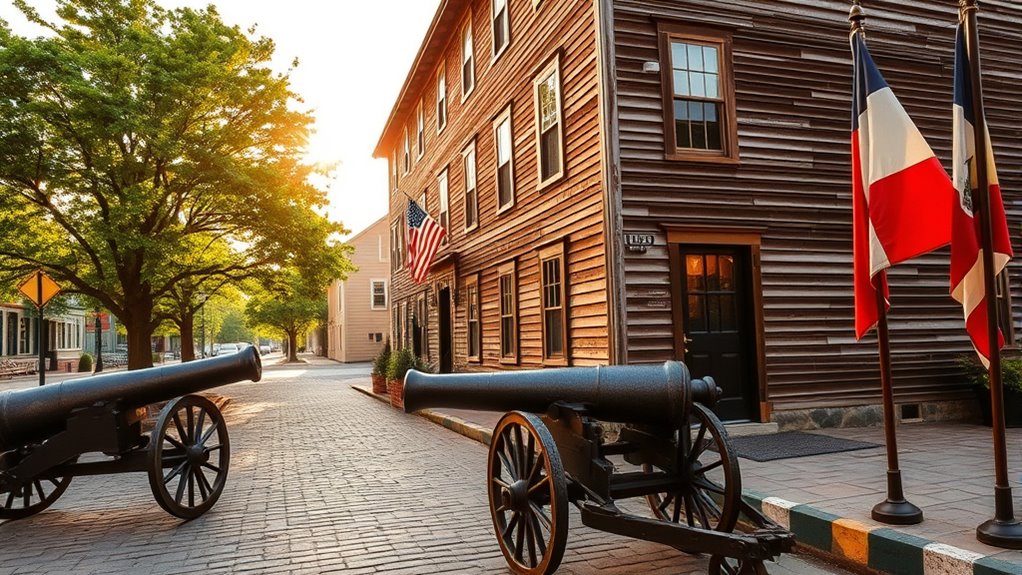
You see that New Hampshire was quick to take a stand for independence, declaring itself free from Britain in early 1776. The state also played a crucial role in the Revolutionary War, providing troops, ships, and supplies to the cause. Its early push for independence helped shape both its identity and the future of the nation. Additionally, New Hampshire’s involvement in revolutionary efforts laid the groundwork for future state and national governance.
Early Colonial Resistance
The colonies in what is now New Hampshire played a pivotal role in resisting British rule, setting the stage for independence. You can see this in several key acts of defiance.
- The first colony to declare independence from Britain on January 5, 1776, shows your early push for freedom.
- Portsmouth’s residents organized protests and boycotts, challenging British taxes and trade restrictions.
- Local militias formed to defend against British troop movements, actively resisting colonial authority.
- The importance of high contrast ratios in creating vivid images mirrors how these early acts of defiance helped create a clear and compelling path toward independence, inspiring future generations.
Revolutionary War Impact
New Hampshire played a crucial role in the American Revolution by actively contributing troops, ships, and supplies that helped secure independence. You might not know that it was the first colony to declare independence from Britain, doing so on January 5, 1776—five months before the Declaration of Independence. The state also led in adopting its own constitution in 1776, demonstrating its commitment to self-governance. During the war, New Hampshire supplied soldiers, ships, and munitions, including notable raids on British forts and the construction of ships like USS Ranger and USS Raleigh in Portsmouth. Its strategic contributions, along with its resolve, helped shape the revolution’s success. Following independence, New Hampshire became the ninth state to ratify the U.S. Constitution in 1788, cementing its essential role in the nation’s birth. AI Security technologies such as real-time threat monitoring and data protection methods could have further enhanced the security of military supplies and communications during the revolution.

New Hampshire Adventure Bucket List: 50 Scratch-Off Cards for Outdoor Activities, Tourist Attractions, and Road Trips – Perfect Travel Gift and Guide for Exploring New Hampshire
50 NEW HAMPSHIRE ADVENTURES – Explore the state of New Hampshire with this unique adventure bucket list! Travel…
As an affiliate, we earn on qualifying purchases.
As an affiliate, we earn on qualifying purchases.
Statehood and Political Milestones
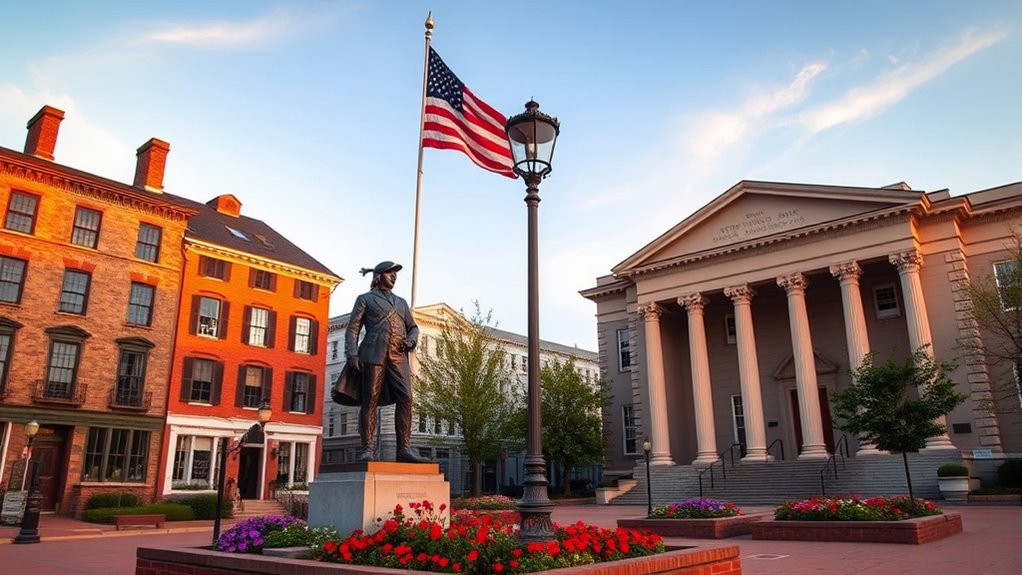
Since achieving statehood, New Hampshire has played a significant role in shaping American political history. You should know that:
- It was the first colony to declare independence from Britain on January 5, 1776, five months before the Declaration of Independence.
- It became the first state to adopt its own constitution in 1776, establishing a strong tradition of self-governance.
- Since 1952, New Hampshire has hosted the nation’s first presidential primary, influencing national politics and candidate strategies.
- The state’s political culture emphasizes individual liberty and active participation, shaping both state and national leadership.
These milestones reflect the state’s commitment to independence and civic engagement. New Hampshire’s political culture emphasizes individual liberty and active participation, shaping both state and national leadership. Its early leadership in independence and the primary system continues to influence American politics today.
Shifts in Economic Foundations
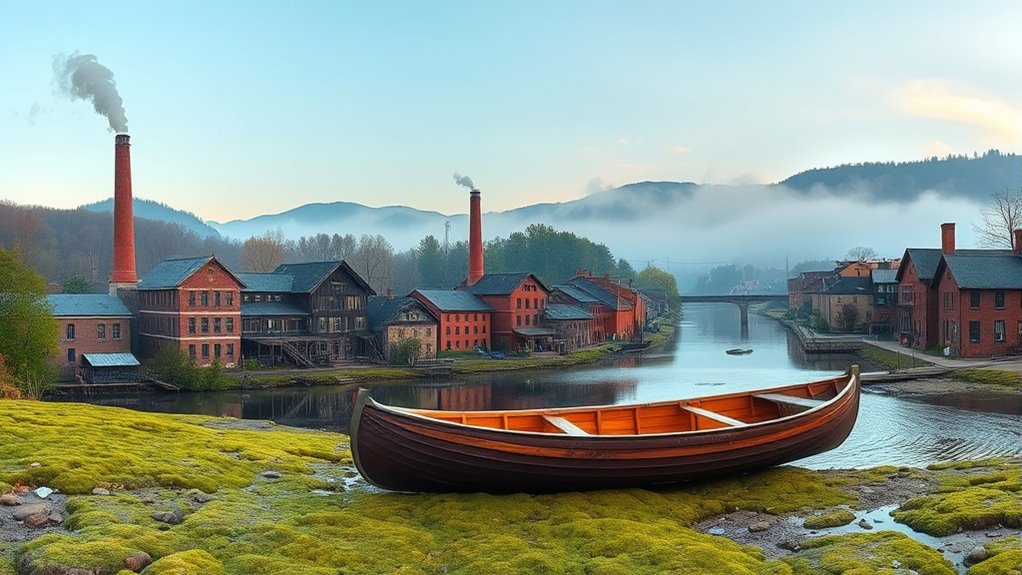
You’ve seen how New Hampshire’s economy started with farming, fishing, and timber, but it shifted as industries grew. The textile mills brought manufacturing jobs and attracted immigrant workers, transforming the state’s workforce. Today, tourism and service sectors have become dominant, replacing the once-thriving textile industry. Additionally, the state’s evolving retirement planning strategies have helped support its aging population amid these economic changes.
From Agriculture to Industry
Initially, New Hampshire’s economy relied heavily on fishing, timber, and subsistence farming, reflecting the state’s natural resources and colonial livelihood. As the Industrial Revolution took hold, the landscape shifted dramatically. You see,:
- Textile mills sprung up along rivers, transforming the economy into manufacturing hubs.
- Immigrants from France and Ireland moved in, fueling labor for factories.
- Lumbering expanded in northern regions, supporting both industry and export.
This shift drew people from rural areas into towns and cities, boosting economic growth. The once mainly agricultural economy now depended on industry and resource extraction. By the mid-20th century, manufacturing declined, giving way to high-tech industries and services. Today, you find a diversified economy, but the roots of industry shape New Hampshire’s development.
Textile Mills Decline
The decline of textile mills in New Hampshire marked a significant shift in the state’s economic landscape. As manufacturing slowed in the late 20th century, many mills shut down, causing job losses and economic restructuring. You can see this progression in the table below, which highlights key factors in the decline:
| Factor | Impact | Outcome |
|---|---|---|
| Global competition | Cheaper imports flood markets | Mill closures, job losses |
| Technological change | Outdated machinery, less efficiency | Factory shutdowns |
| Shift to services | Growing sectors in tourism, tech | Economic diversification |
| Aging infrastructure | Deteriorating facilities | Increased maintenance costs |
| Labor costs | Rising wages, offshoring | Reduced domestic employment |
This shift reshaped communities, prompting economic diversification and new opportunities. Additionally, technological advancements continue to influence the industrial landscape, encouraging modernization and adaptation.
Tourism and Services Rise
As the textile industry declined due to global competition and outdated infrastructure, New Hampshire began shifting its economic focus toward tourism and services. You’ll notice this change through the rise of popular destinations like the White Mountains, Lakes Region, and Seacoast. These areas attract visitors year-round, boosting local businesses and hospitality sectors.
- You’ll see historic sites, scenic trails, and outdoor activities that draw millions each year.
- The state’s vibrant festivals and seasonal events keep tourism lively, especially in autumn and winter.
- The service industry, including restaurants, hotels, and retail, now plays a crucial role in supporting the economy.
This shift has helped diversify New Hampshire’s economy and sustain growth beyond manufacturing.
Cultural Diversity and Demographic Changes
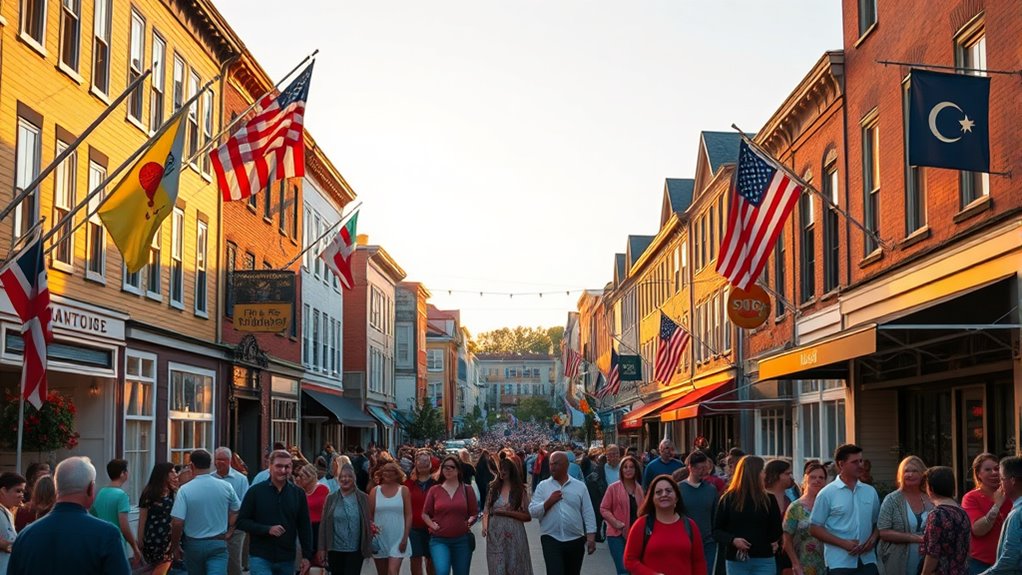
Over the centuries, New Hampshire’s demographic landscape has transformed through waves of immigration and cultural influences, shaping its diverse communities. Early on, Indigenous Abenaki tribes inhabited the region, living as hunters and gatherers. European settlers, mainly English, established towns like Dover and Portsmouth in the 17th century, bringing their customs. In the 19th century, waves of Irish and French Canadian immigrants arrived, seeking work in mills and industries, adding to the cultural fabric. Today, you see this diversity reflected in vibrant festivals, culinary traditions, and community events. While the population remains chiefly of European descent, ongoing immigration continues to enrich the state’s cultural landscape. This evolving demographic mosaic highlights New Hampshire’s resilience and openness, making it a dynamic place where old traditions blend with new influences.
Religious Influences and Folk Traditions
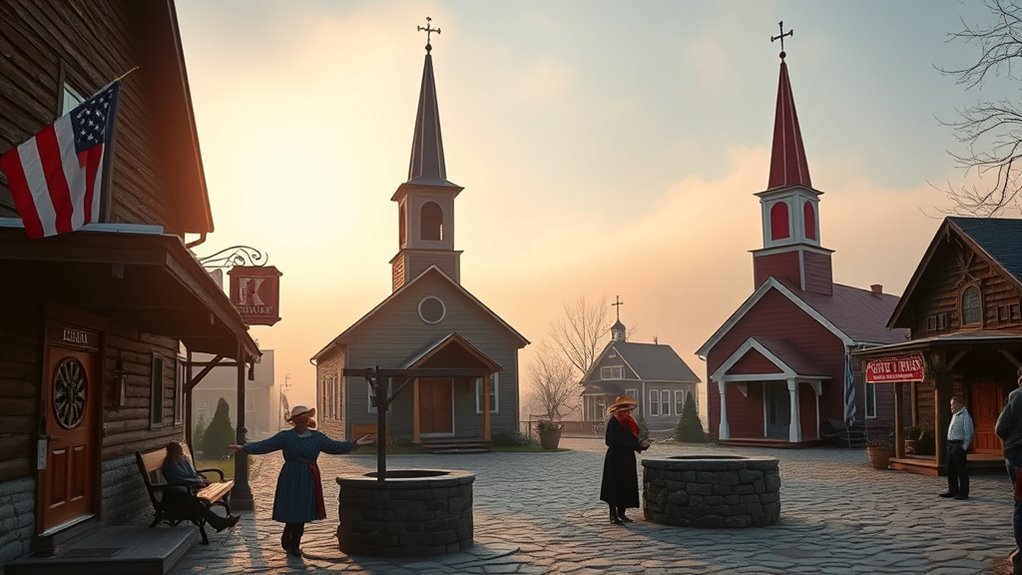
Religious beliefs have profoundly shaped New Hampshire’s cultural identity since its earliest days. You’ll notice how faith influenced community life and local customs.
- Early Puritan settlers brought strict religious practices, which shaped social norms and educational values.
- Folk traditions like quilting, storytelling, and seasonal festivals reflect a blend of religious heritage and local culture.
- Maritime and farming communities celebrate unique religious festivals, preserving rituals passed down through generations.
These traditions foster a strong sense of community and resilience, even as society modernizes. Religious influences are woven into folk arts, holiday celebrations, and local customs, creating a vibrant cultural fabric. Despite changing demographics, many of these traditions persist, connecting residents to their historical roots.
Political Identity and Electoral Significance
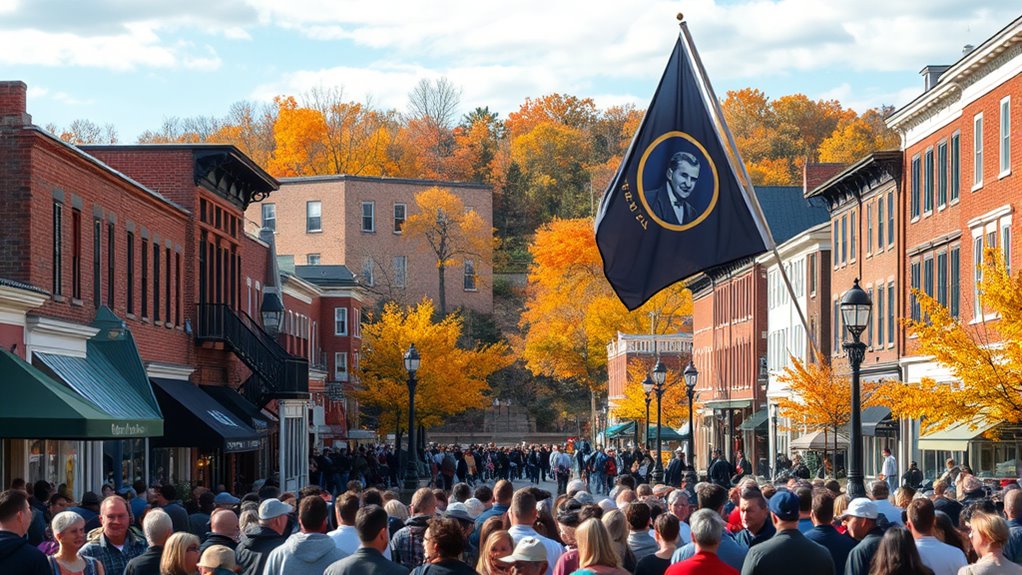
Have you ever wondered why New Hampshire plays such a pivotal role in American presidential elections? It’s because the state holds the first primary every cycle, drawing intense media attention and candidate visits. This early contest can boost a candidate’s national momentum or derail campaigns quickly. Your participation and high voter turnout reflect New Hampshire’s strong civic engagement and independent spirit, rooted in its history of pioneering political independence. The state’s nickname, “The Granite State,” symbolizes resilience and determination, qualities seen in its voters and politicians alike. While the primary doesn’t guarantee victory, it shapes the national conversation and influences the election’s direction. As a result, New Hampshire’s electoral significance extends beyond its size, embodying the nation’s democratic spirit and political culture.
Natural Landscapes and Environmental Heritage
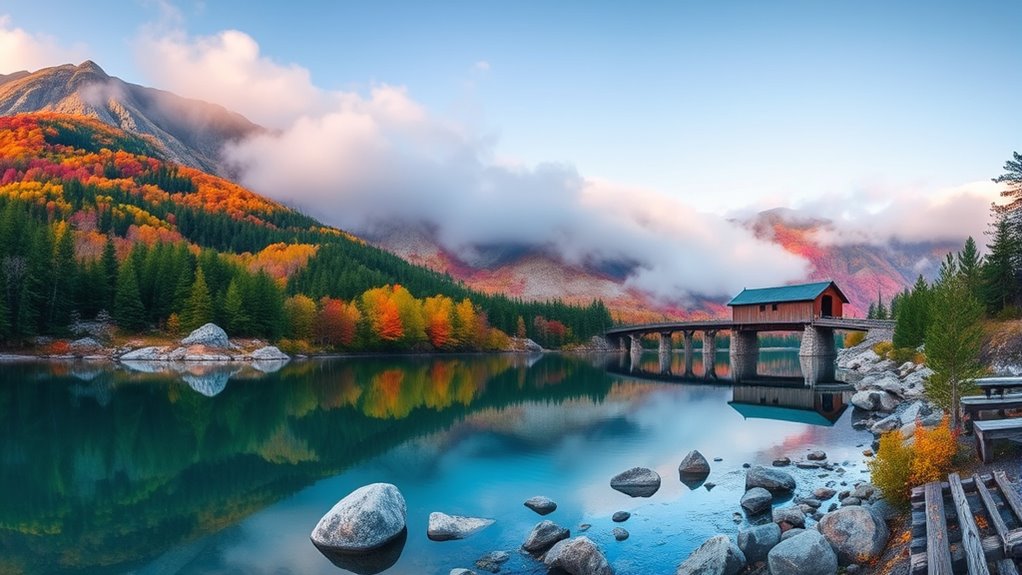
New Hampshire’s rugged terrain and glacial history have sculpted its stunning landscapes, creating a diverse environment that supports a rich array of ecosystems. You’ll find lush forests, pristine lakes, and rugged mountains that define the state’s natural heritage. These landscapes are home to wildlife like black bears, moose, and white-tailed deer, which thrive in protected habitats. The White Mountains, Lakes Region, and Seacoast each offer unique ecological features and scenic beauty. You can explore state parks, national forests, and conservation areas that preserve these natural treasures. Your experience with New Hampshire’s environment is shaped by efforts to sustain its forests, waterways, and wildlife, ensuring this pristine landscape remains vibrant for future generations.
New Hampshire’s landscapes support diverse ecosystems, wildlife, and conservation efforts that preserve its natural beauty for future generations.
- Mountain ranges and forests
- Lakes and waterways
- Wildlife conservation
Recreation, Conservation, and Scenic Attractions
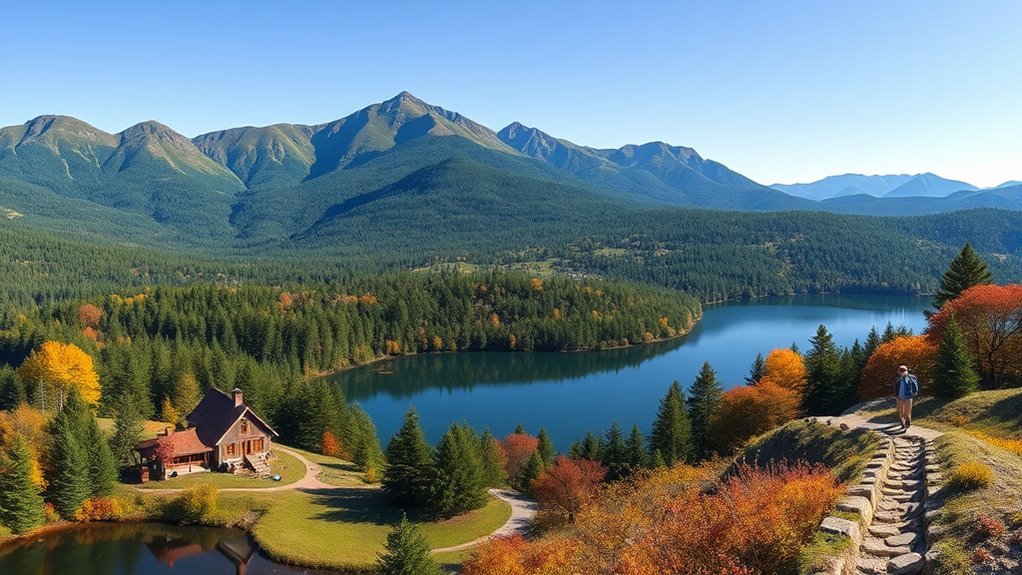
The diverse landscapes of New Hampshire come alive through its vibrant recreation and conservation efforts, making it a popular destination for outdoor enthusiasts. You can hike the rugged White Mountains, explore scenic lakes in the Lakes Region, or relax along the picturesque Seacoast. State parks and national forests protect these natural features, offering camping, fishing, and wildlife viewing opportunities. Conservation initiatives guarantee forests, waterways, and historic sites remain pristine. Seasonal festivals and outdoor activities celebrate the state’s natural beauty and cultural heritage. Whether skiing in winter or kayaking in summer, you’ll find endless ways to enjoy New Hampshire’s scenic attractions. This commitment to preservation and recreation makes the state a haven for those seeking outdoor adventure and scenic tranquility.
Frequently Asked Questions
How Did Indigenous Abenaki Tribes Influence Local Culture?
You can see the Abenaki tribes’ influence in local culture through their enduring traditions, crafts, and place names. They contributed to the region’s storytelling, art, and sustainable practices that still inspire environmental efforts today. Their deep connection to the land shapes outdoor recreation and conservation. You might also notice their legacy in local festivals and community events that celebrate Native heritage, keeping their history alive for future generations.
What Role Did New Hampshire Play in Early American Diplomacy?
Imagine a lighthouse guiding ships through fog — that’s New Hampshire’s role in early American diplomacy. You see, it was among the first colonies to assert independence, lighting the way for others. By ratifying the U.S. Constitution and supporting revolutionary efforts, you helped shape national unity. Your state’s bold stance and strategic influence served as a beacon, inspiring fellow colonies to navigate their paths toward independence and nationhood.
How Has the Textile Industry Shaped New Hampshire’s Economy?
The textile industry has markedly shaped New Hampshire’s economy by transforming it from an agriculture-based state to a manufacturing hub. You benefit from the industry’s growth through job opportunities in mills and related sectors, especially during its peak in the 19th and early 20th centuries. Although the industry declined after 1960, its legacy remains, influencing regional development and fostering a resilient economic foundation in textiles and manufacturing.
What Are Unique Folk Arts Specific to New Hampshire?
You’ll find that New Hampshire’s folk arts are rich and unique, reflecting its maritime and rural heritage. You might craft traditional woodworking, such as furniture and carved signs, or enjoy quilting and handwoven textiles passed down through generations. Seasonal festivals celebrate these arts with demonstrations and markets. These practices preserve community bonds, showcase local craftsmanship, and honor the state’s cultural resilience, making folk arts a vibrant part of New Hampshire’s identity.
How Does New Hampshire’s Environmental Policy Impact Tourism?
Your visit benefits from New Hampshire’s environmental policies that emphasize eco-friendly efforts, ensuring pristine peaks, peaceful lakes, and protected parks. These policies promote sustainable tourism, safeguarding scenic spots and supporting outdoor activities like hiking, boating, and skiing. By prioritizing preservation, you enjoy fresh air and flourishing wildlife, making your trip more memorable. Responsible regulation maintains the natural beauty that draws visitors, securing a sustainable, scenic, and satisfying experience for all.
Conclusion
You now hold the tapestry of New Hampshire’s rich history and vibrant culture in your hands. From its indigenous roots to its scenic landscapes, this state is a living storybook, each chapter adding depth to its identity. As you explore its past and present, remember that New Hampshire’s spirit is like a mountain stream—ever flowing, shaping, and reflecting the beauty of its land and people for generations to come.