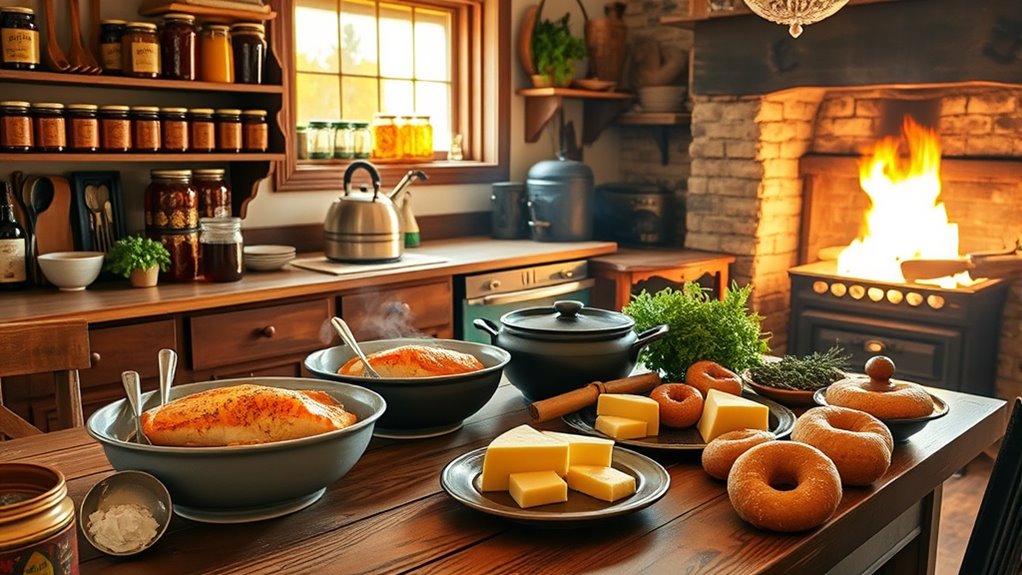

Vermont’s cuisine blends Native American and European traditions, emphasizing local ingredients and preservation methods. You’ll find signature flavors like pure maple syrup, hearty cheeses, and regional dishes such as pancakes, lamb, and apple pie. Farmers’ markets and artisan producers highlight fresh, sustainable foods, while traditional preservation techniques keep seasonal bounty alive. Modern twists build on this rich history, creating a vibrant food scene. Exploring further reveals how these influences shape Vermont’s unique culinary identity.
Key Takeaways
- Vermont cuisine blends Native American and European influences, emphasizing local ingredients like maple syrup, wild game, and native plants.
- Signature dishes include maple syrup-infused breakfasts, hearty stews, and regional favorites like apple pie with aged cheddar.
- Preservation techniques such as water bath and pressure canning support self-sufficiency and seasonal bounty.
- The state’s dairy industry, especially cheese-making, plays a central role in its culinary identity.
- Modern culinary innovations focus on farm-to-table practices, sustainability, and integrating traditional flavors into contemporary dishes.
Historical Roots of Vermont Cooking
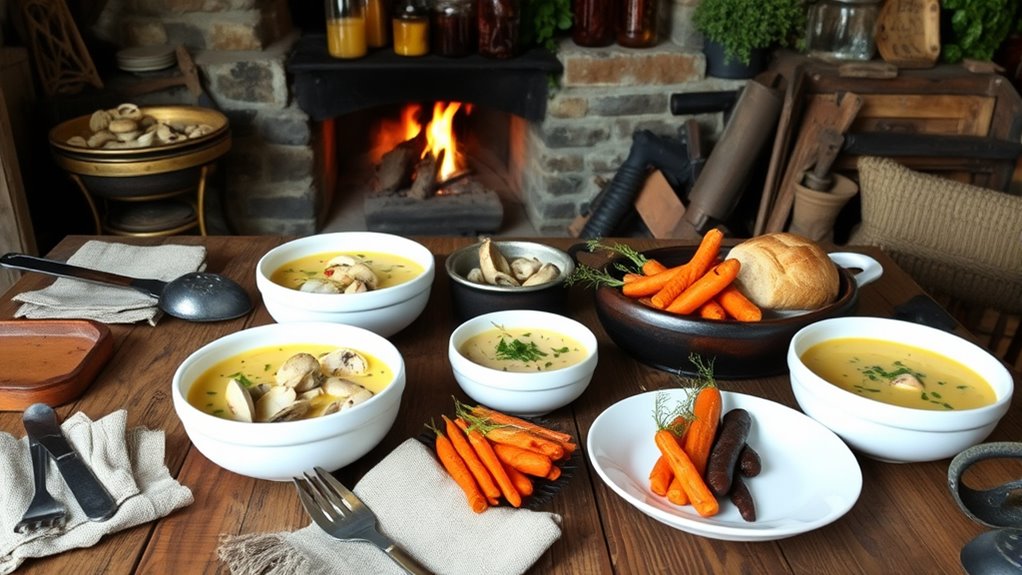
The roots of Vermont cooking run deep, blending Native American traditions with European settler influences to create a distinctive culinary history. You’ll find that early Vermont dishes involved long, slow roasts of large meats, similar to Native American methods, often served with pickled vegetables. Recipes were simple, passed down orally, and assumed extensive cookery knowledge. Traditional meals included spiced salt-preserved beef, eaten cold for breakfast or supper. Early cookbooks targeted experienced cooks, emphasizing local, preserved ingredients. These culinary practices reflect a home-centered life where Native techniques merged with European flavors. Over generations, this fusion shaped Vermont’s food identity, emphasizing hearty, preserved, and locally sourced ingredients that continue to influence regional cuisine today. Recognizing cultural influences in Vermont’s culinary history reveals how diverse traditions have shaped its unique flavors.
Signature Staples and Flavors
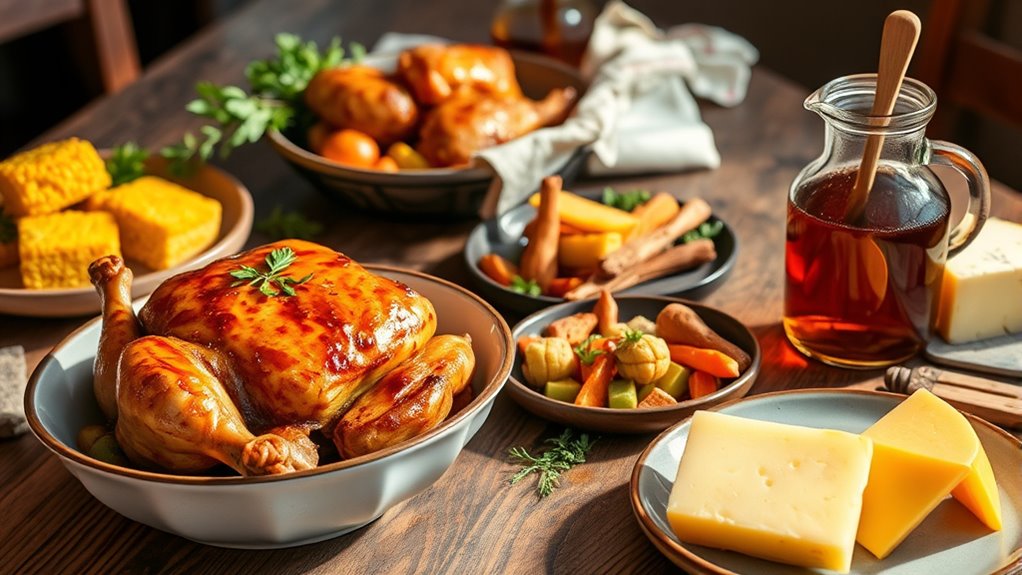
Vermont’s cuisine is distinguished by its signature staples and bold flavors that reflect the region’s rich agricultural heritage. You’ll notice how maple syrup, the state’s official flavor, is a cornerstone, sweetening everything from breakfast pancakes to innovative cocktails. Local cheeses like cheddar and other dairy products are celebrated, supporting Vermont’s thriving dairy industry. Fresh blueberries, fiddleheads, and lamb meats highlight the state’s connection to seasonal and native ingredients. You’ll also find pickled vegetables and fruit preserves that showcase traditional home-canning techniques. These flavors are deeply rooted in Vermont’s history, blending indigenous, European, and immigrant influences, creating a unique culinary identity. Whether in farm-to-table dishes or artisanal products, Vermont’s bold and authentic flavors reflect its deep commitment to local, sustainable food traditions. Incorporating wall organization systems and creative presentation methods can further elevate the visual appeal of Vermont’s rustic and seasonal dishes.
The Maple Syrup Heritage

Have you ever tasted authentic Vermont maple syrup? If not, you’re missing out on a key part of Vermont’s culinary heritage. You’ll find that real maple syrup is a staple in Vermont households, especially during the sugaring season in early spring. You can visit small, family-run sugarhouses where the process remains traditional—collecting sap from sugar maples and boiling it down over wood fires. The syrup ranges from light Golden to dark Very Dark, each with distinct flavor notes. Unlike artificial syrups, Vermont’s pure maple syrup contains no additives and is celebrated for its rich, natural sweetness. It’s more than just a pancake topping; you’ll see it used in cocktails, glazes, and desserts, reflecting its integral role in Vermont’s food culture.
Farm-to-Table and Artisan Food Scene

You can experience Vermont’s vibrant farm-to-table movement by exploring local markets and restaurants that prioritize fresh, seasonal ingredients. These establishments emphasize sourcing directly from nearby farms, ensuring dishes are as flavorful and sustainable as possible. Artisan food producers play a key role, offering handmade cheeses, baked goods, and craft beverages that showcase regional craftsmanship and quality. Incorporating local ingredients is essential to maintaining the authenticity and freshness of Vermont’s culinary traditions.
Local Sourcing Practices
The farm-to-table movement thrives in Vermont, where local farmers and artisans prioritize seasonal ingredients and sustainable practices. You’ll find that many restaurants source directly from nearby farms, ensuring freshness and supporting the local economy. Farmers markets like the Stowe Farmer’s Market showcase cheeses, craft beverages, and gourmet foods, emphasizing community and mastery. Local producers focus on organic and environmentally friendly methods, reducing their carbon footprint and preserving land health. Maple syrup, a Vermont hallmark, is harvested sustainably from family-run sugarhouses. Artisan foods, including cheeses, baked goods, and cured meats, often come from small-scale producers committed to quality. This close connection between farm and plate fosters authentic flavors and a resilient, regional food identity rooted in local sourcing. Additionally, many producers practice sustainable farming techniques, which help protect the environment and ensure long-term viability of local agriculture.
Vermont’s vibrant farm-to-table scene thrives on seasonal menus that highlight the freshest local ingredients. As a diner, you’ll notice how restaurants adapt their offerings to reflect what’s in harvest, ensuring peak flavor and quality. From early spring fiddleheads to summer blueberries and ripe apples in fall, menus change throughout the year, emphasizing sustainability and regional abundance. Chefs prioritize ingredients sourced from nearby farms, supporting local economies and reducing environmental impact. You’ll find dishes that celebrate the season’s bounty, like wood-fired pizzas topped with fresh vegetables or hearty stews featuring seasonal meats. This commitment to freshness means every bite captures Vermont’s landscape’s essence, making your dining experience authentic, vibrant, and deeply connected to the land’s natural rhythms. Incorporating seasonal ingredients into menus is a key aspect of Vermont’s culinary identity.
Artisan Food Producers
Artisan food producers play a pivotal role in Vermont’s vibrant farm-to-table movement by creating high-quality, locally sourced products that showcase the region’s agricultural richness. You’ll find small-scale farms and craft producers emphasizing sustainability and regional flavors. They focus on traditional methods, ensuring authenticity and freshness in every bite. Embracing Cultural Intelligence helps these producers connect with diverse consumers and adapt their offerings to new markets. You might explore: – Artisanal cheeses like those from Cabot and Vermont Creamery, crafted with local milk. – Craft beverages such as Vermont-made ciders and small-batch beers. – Specialty baked goods and condiments featuring seasonal ingredients, often sold at farmers’ markets. These producers strengthen community ties and keep Vermont’s culinary heritage alive. Their dedication to quality and local sourcing makes Vermont’s food scene unique, authentic, and deeply connected to the land.
Popular Regional Dishes

Have you ever tasted a breakfast of fluffy pancakes topped with pure Vermont maple syrup? In Vermont, this simple yet iconic dish captures the essence of local flavor. Pancakes are often served with crispy local bacon, creating a hearty start to the day. Vermont’s love for lamb also shines through in dishes like roasted lamb or lamb stew, showcasing regional agriculture. In northern parts, poutine—fries topped with cheese curds and gravy—reflects Canadian influence and is a popular comfort food. Apple pie holds a special place, often served with aged cheddar cheese or vanilla ice cream. Pickled vegetables and homemade jams preserve seasonal bounty, adding a tangy touch to meals. These dishes embody Vermont’s commitment to fresh, local ingredients and traditional flavors. Best Beaches in nearby coastal areas offer a relaxing complement to the hearty regional cuisine.
The Role of Local Dairy and Cheeses
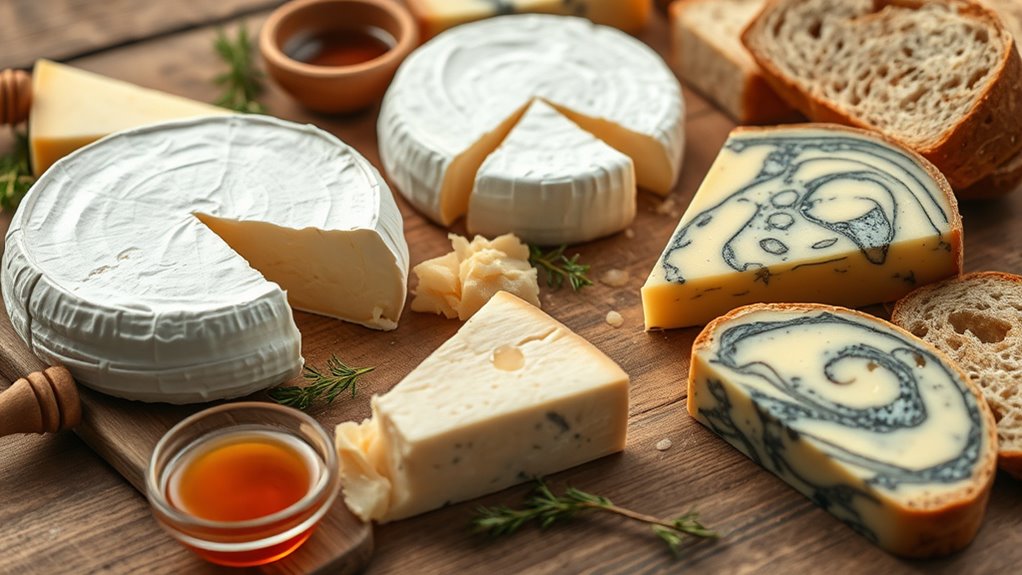
Local dairy farming and cheese production are at the heart of Vermont’s culinary identity, shaping the flavors that define the region. You’ll find that Vermont’s cheeses are celebrated nationwide, thanks to a commitment to quality and tradition. The state’s dairy industry supports the local economy and influences many dishes, from breakfast to dinner. You might enjoy:
- Aged Cheddar, with its sharp, creamy profile that pairs perfectly with apples or crackers
- Fresh, soft cheeses like chèvre, used in salads and spreads
- Artisan varieties such as Monterey Jack and Colby, featured in classic comfort foods
Vermont’s cheeses reflect a deep-rooted farm-to-table ethos, emphasizing local ingredients and craftsmanship. By savoring these cheeses, you connect with a culinary legacy that highlights the land’s richness and the skill of local producers.
Traditional Preservation and Canning Practices
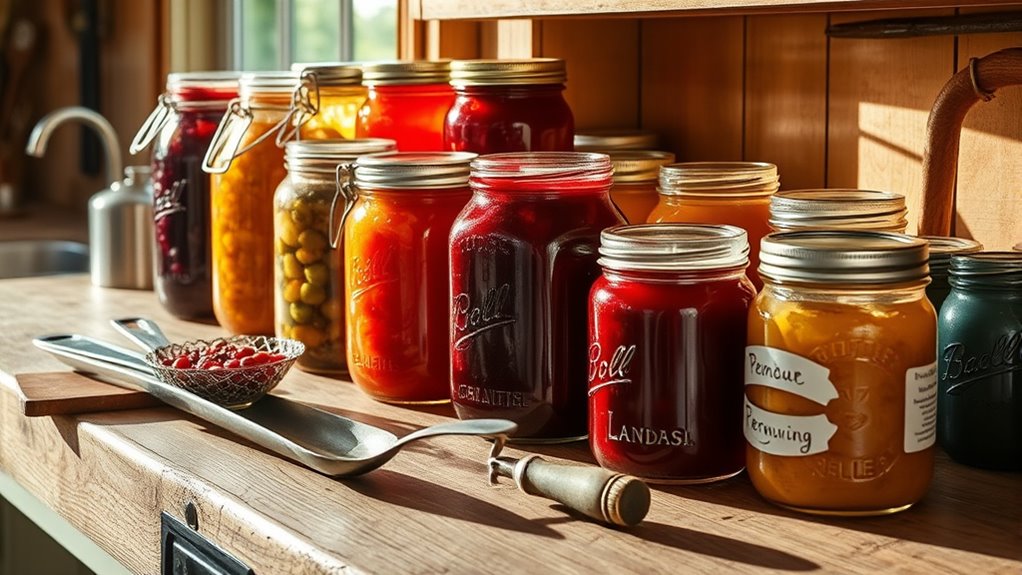
Traditional preservation and canning practices are deeply rooted in Vermont’s history, allowing families to extend the bounty of each season well into the winter months. You likely use methods passed down through generations, such as boiling water bath canning and pressure canning, to safeguard fruits, vegetables, and meats. Pickling vegetables like cucumbers, beets, and cabbage creates tangy preserves that brighten winter meals. You may also prepare fruit jams, jellies, and apple sauces, often sweetened with local honey or maple syrup. Canning offers a way to retain fresh flavors, maintain nutritional value, and avoid preservatives. These practices foster a self-sufficient lifestyle, connect you to regional traditions, and ensure that seasonal abundance can be enjoyed year-round. Preservation remains an essential part of Vermont’s culinary heritage.
Additionally, understanding proper canning techniques can help prevent spoilage and ensure safety during storage.
Cultural Influences and Culinary Fusion
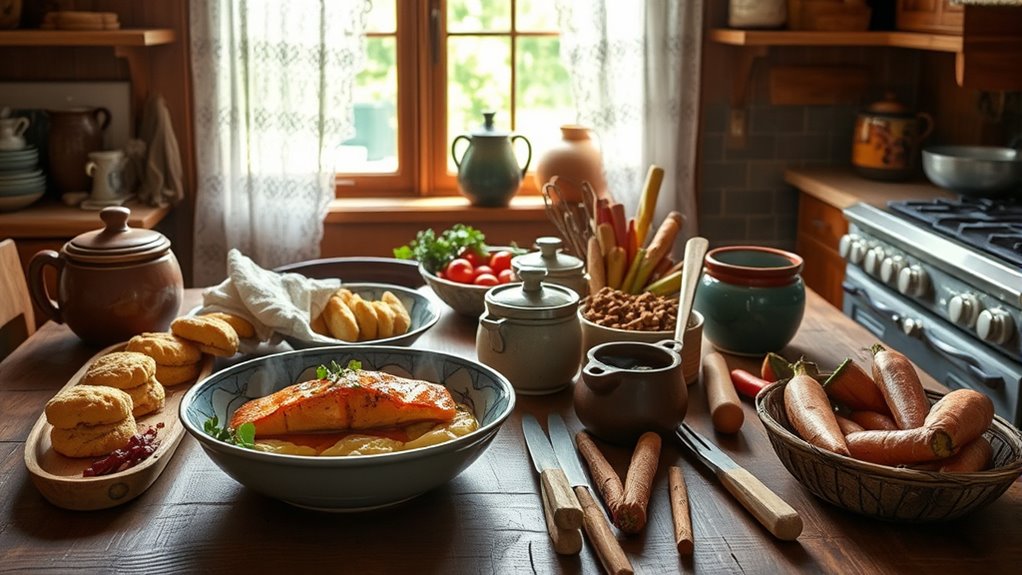
Vermont’s culinary scene reflects a rich blend of indigenous Abenaki traditions and European influences, shaping local flavors and techniques. You’ll notice how immigrant communities, especially French-Canadian and English settlers, contributed recipes and preservation methods that remain part of the cuisine today. This fusion creates a unique food culture rooted in history, land, and the diverse people who call Vermont home.
Indigenous and European Roots
Indigenous peoples, particularly the Abenaki, laid the foundation for Vermont’s culinary heritage through their use of native ingredients and cooking techniques. They relied on local resources like maple sap, wild game, and native plants, developing methods such as sugaring and smoking. When European settlers arrived, they adapted and merged their traditions, creating a unique culinary fusion. You can see this influence in traditional preserved meats, wild berries, and the use of salt and spices. Promoting biodiversity by preserving native plants and wildlife has helped maintain the availability of these traditional ingredients for future generations.
Immigrant Contributions and Traditions
Immigrants have played a vital role in shaping Vermont’s culinary landscape by bringing their unique ingredients, techniques, and flavors. French-Canadian immigrants, for example, introduced hearty stews, poutine, and preserved foods that remain popular today. Their influence is evident in dishes like tourtière and maple-syrup-infused recipes, blending seamlessly with local traditions. English settlers contributed baked goods, hearty roasts, and traditional puddings, which still influence Vermont’s comfort foods. Over time, these immigrant communities adapted their recipes to local ingredients, creating culinary fusion that defines Vermont’s food scene. You’ll find flavors from Quebec, England, and other regions woven into the fabric of Vermont cuisine, reflecting a diverse heritage that celebrates both preservation and innovation. This blending enriches Vermont’s culinary identity, making it uniquely vibrant.
Modern Vermont Food Innovations

Modern Vermont food innovations build on a rich tradition of locally sourced ingredients and sustainable practices, blending tradition with creativity. You’ll find chefs and farmers pushing boundaries, developing exciting dishes and products. For example:
Vermont’s culinary scene fuses tradition with innovation through local ingredients and sustainable practices.
- Crafting farm-to-table menus that highlight seasonal ingredients in inventive ways
- Using maple syrup in cocktails, desserts, and gourmet sauces to expand its culinary role
- Developing plant-based and alternative proteins that reflect Vermont’s commitment to sustainability
These innovations emphasize local provenance and environmental responsibility, transforming Vermont’s culinary scene. Artisanal producers experiment with new flavors, while farms adopt regenerative practices. The focus remains on quality, tradition, and innovation, ensuring Vermont’s food scene stays vibrant and forward-thinking. You’ll experience a blend of innovation rooted in Vermont’s historic ingredients and culinary ethos.
Frequently Asked Questions
How Have Indigenous Abenaki Traditions Influenced Vermont’s Current Cuisine?
You can see Abenaki influences in Vermont’s cuisine through the use of wild ingredients like fiddleheads and berries, which they traditionally gathered. Their preservation methods, such as pickling vegetables and fruits, still shape local food practices today. You might also notice indigenous techniques in cooking methods and flavor profiles, blending Native traditions with European and French-Canadian influences, creating a unique regional culinary identity rooted in respect for the land and seasonal bounty.
What Are the Most Unique Vermont-Specific Ingredients Not Commonly Found Elsewhere?
You’ll find Vermont-specific ingredients like pure maple syrup, which is deeply embedded in local food culture, and artisanal cheeses from renowned producers like Cabot. Unique wild foods such as fiddleheads and native blueberries grow abundantly here, adding regional flair. Local lamb and farm-fresh, seasonal produce further set Vermont apart. These ingredients reflect Vermont’s commitment to sustainability, tradition, and the farm-to-table movement, making its cuisine truly distinct.
How Do Seasonal Changes Impact Vermont’s Traditional Cooking Methods?
You notice how Vermont’s seasonal shifts deeply influence your cooking routines. In spring, you gather fiddleheads and fresh herbs, preserving them for later. Summer calls for enjoying berries and farm-fresh vegetables, often grilled or made into cool salads. Fall’s harvest inspires hearty stews and maple-glazed dishes, while winter prompts slow roasting and preserving. These seasonal changes shape your methods, making Vermont’s cuisine a reflection of the land’s natural rhythm and bounty.
In What Ways Do Immigrant Communities Shape Vermont’s Culinary Landscape Today?
You see immigrant communities shaping Vermont’s culinary scene through their vibrant flavors and cooking techniques. They introduce dishes like poutine and French-inspired baked goods, blending their traditions with local ingredients. You can enjoy authentic foods at farmers’ markets and restaurants, supporting diverse culinary expressions. These communities also bring unique preservation methods and recipes that enrich Vermont’s food culture, making it more dynamic and reflective of its multicultural roots.
What Sustainable Practices Are Most Common in Vermont’s Farm-To-Table Movement?
You’ll find Vermont’s farm-to-table movement bursting with sustainable practices that could make even the most eco-conscious blush. Farmers prioritize organic methods, use renewable energy, and practice crop rotation to keep the land healthy for generations. They emphasize local sourcing, reducing carbon footprints, and composting waste like it’s a national sport. Community-supported agriculture (CSA) programs connect you directly to local farms, making sustainability as natural as Vermont’s breathtaking mountains.
Conclusion
Imagine Vermont’s culinary scene as a vibrant quilt, each patch representing a tradition, flavor, and innovation. From rich dairy to sweet maple, your palate becomes a journey through history and modern creativity. Embrace the farm-fresh spirit and cultural influences that weave together to create a unique tapestry of taste. Vermont’s cuisine isn’t just food; it’s a living story, inviting you to savor its rich, delicious heritage with every bite.