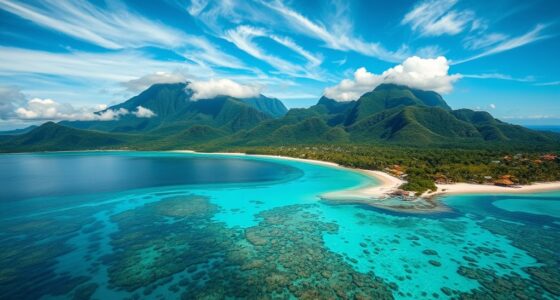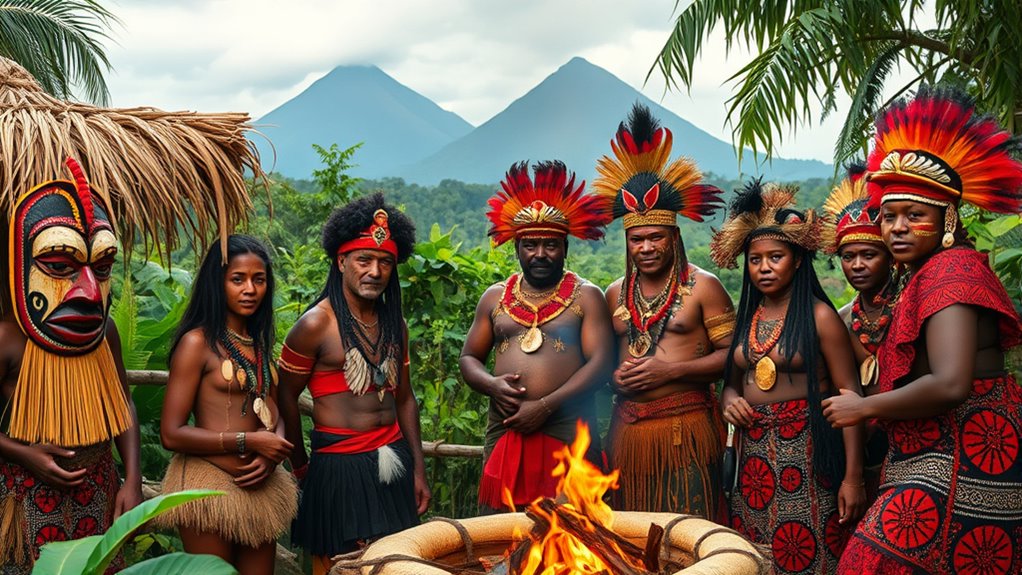

You’ll discover Melanesia’s history begins with ancient peoples migrating across the region over 45,000 years ago, shaping diverse cultures, languages, and arts. European contact in the 16th century introduced new influences, but traditional practices centered on ancestors, spirits, and community still thrive today. Despite challenges like climate change and modernization, Melanesian cultures remain vibrant, preserving their unique identities through rituals, artworks, and storytelling. Continuing your exploration uncovers how these traditions adapt and endure amid change.
Key Takeaways
- Melanesia’s history dates back 45,000 years, marked by early migrations, European contact, and colonial impacts transforming social structures.
- The region is culturally diverse with over 1,293 languages, featuring unique art forms like carvings, masks, and body paintings used in rituals.
- Traditional practices focus on ancestor worship, spiritual connections, and rituals involving masks, dance, and ceremonial objects.
- Contemporary efforts aim to preserve cultural heritage through festivals, education, and blending traditional craftsmanship with modern techniques.
- Environmental and social challenges threaten cultural continuity, but communities actively adapt and maintain their diverse identities and practices.

UEMIS Hand Carved Traditional Wooden Mask,Chinese Nuo Opera Masks,Wood Hanging Asian Mask,Hand Carved Painted Wooden Mask, 15*10 inches
Design: Hand-carved and painted wooden mask of Chinese Nuo opera. It is the oldest dance mask of the…
As an affiliate, we earn on qualifying purchases.
As an affiliate, we earn on qualifying purchases.
Early Settlements and Prehistoric Times

Melanesia’s early settlements date back thousands of years, with New Guinea being inhabited for approximately 45,000 years. You can imagine early humans migrating across the region, adapting to diverse environments. These first inhabitants, mainly Papuans, developed unique tools and survival strategies suited for rainforest and coastal life. Around 35,000 years ago, the Solomon Islands saw their first settlers, likely moving by sea or canoe. Vanuatu and New Caledonia were settled roughly 4,000 years ago, marking the spread of Austronesian peoples into the islands. These early populations laid the groundwork for the region’s rich cultural tapestry. Over time, they developed distinct lifestyles and technologies, setting the stage for future cultural diversity and interactions across Melanesia. The development of distinct cultural practices in different islands further contributed to the region’s diverse heritage.
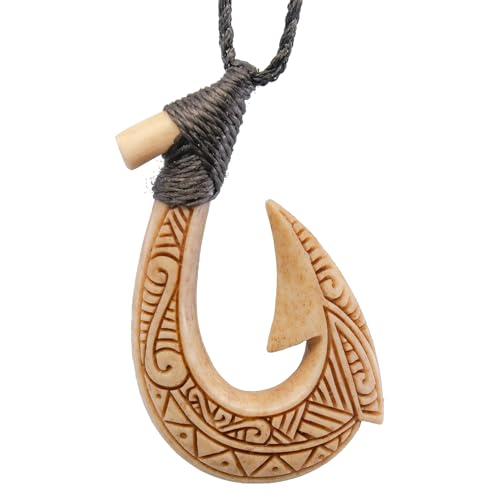
Aged bone Hawaiian fish hook necklace with scrimshaw. Hand carved.
Hand Carved bone with detailed scrimshaw. Please message me if you want me to use white bone instead…
As an affiliate, we earn on qualifying purchases.
As an affiliate, we earn on qualifying purchases.
Cultural Diversity and Traditional Practices
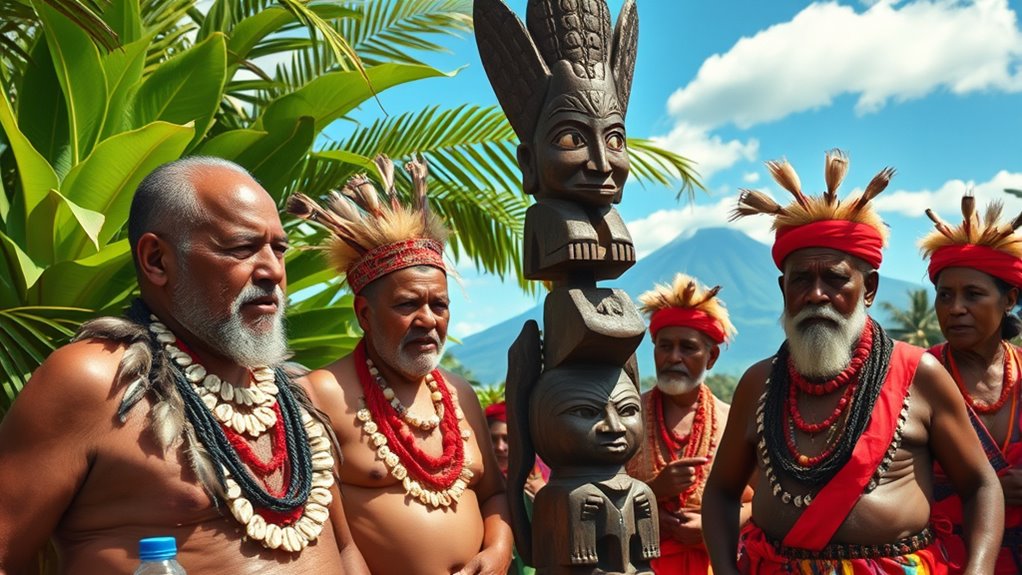
You’ll see that Melanesia’s cultural diversity is reflected in its hundreds of languages and unique art forms, like carvings and body decorations. Traditional rituals and spiritual beliefs remain essential, connecting communities to their ancestors and environment. Exploring these practices reveals how language, art, and spirituality shape Melanesian identities today. The use of artistic expression plays a significant role in preserving and transmitting cultural stories and histories across generations.
Language and Art Diversity
How rich is the cultural tapestry of Melanesia? You’ll find a stunning diversity in both language and art. With over 1,293 languages, the region’s linguistic complexity reflects its many communities and histories. Art forms, like carvings, body decorations, and masks, serve as essential cultural expressions. These traditions often develop independently but also influence each other through trade and contact. The table below highlights key aspects:
| Language Diversity | Art Forms |
|---|---|
| 1,293+ languages | Carvings, masks, body paintings |
| Many isolated dialects | Ritual objects and tattoos |
| Oral storytelling | Sculptures and adornments |
| Regional dialects | Ceremonial artifacts |
| Multilingualism | Artistic symbols of identity |
Your experience of Melanesia’s cultural richness reveals a region where language and art form the heart of community life.
Rituals and Beliefs
Rituals and beliefs form the core of traditional practices across Melanesia, shaping community identity and spiritual life. You’ll find that spiritual connections often center on ancestors and spirits rather than gods, guiding daily life and social customs. Rituals are deeply embedded in events like initiations, funerals, and harvests, often involving intricate art, dance, and body decorations. These ceremonies serve to honor spirits, seek protection, and reinforce social bonds. You might participate in or observe rituals where masks, carvings, and symbolic objects play essential roles. These practices are passed down through generations, maintaining cultural continuity despite external influences. They reflect a profound respect for spiritual forces, emphasizing harmony with nature, community unity, and ancestral reverence that define Melanesian cultural identity. Additionally, Fokos highlights the importance of preserving these traditional practices in the face of modern change, ensuring that these rich cultural expressions endure for future generations.

Bowitzki UV Neon Face and Body Paint 8 x 30ml /1 oz Liquid Large Kit Black Light Glow in the Dark Makeup Set Fluorescent Painting for Adults Music Festivals Party Halloween Christmas
Bowitzki UV neon glow paint includes:30ml tube cream paint * 8 pieces,2 different size brushes,2 body paint sponges
As an affiliate, we earn on qualifying purchases.
As an affiliate, we earn on qualifying purchases.
European Encounters and Colonial Impact
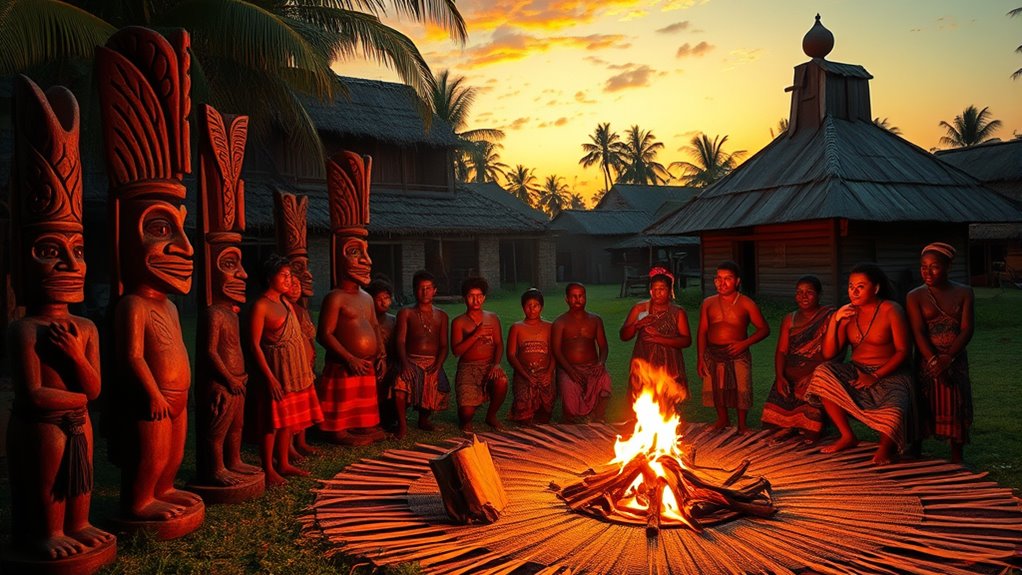
When Europeans first arrive in Melanesia, they bring new diseases and disrupt longstanding trade networks. Colonial powers quickly take control, replacing local authority structures with their own systems. These encounters leave a lasting impact on the region’s culture, economy, and social organization. The introduction of artistic expression and other cultural elements by Europeans further influenced the traditional practices of Melanesian societies.
European Contact Effects
European contact with Melanesia began in the late 16th century, but it wasn’t until the mid-19th century that sustained interactions truly transformed the region. You see, Europeans brought new diseases like malaria, which devastated local populations. They also disrupted traditional trade routes and authority structures, weakening indigenous social systems. Christian missionaries arrived, introducing new beliefs and practices that challenged existing spiritual traditions. The sandalwood trade became a major economic activity, prompting increased contact and exploitation. European powers claimed territories, leading to colonial governance and the imposition of unfamiliar laws and technologies. These encounters altered Melanesian societies profoundly, reshaping their economies, social hierarchies, and cultural practices. The lasting impact of these early contacts still echoes today, influencing the region’s political, social, and cultural landscape, including colonial legacies that persist in contemporary governance and identity.
Colonial Power Changes
Colonial powers established a significant presence in Melanesia during the late 19th and early 20th centuries, reshaping the region’s political and social landscape. You see, European countries like Britain, Germany, Australia, and Japan claimed territories, often disregarding local boundaries and authority systems. This led to the imposition of new governance, legal systems, and economic structures. You might notice how colonial administrations introduced Western technologies, altered land use, and suppressed indigenous traditions. Conflicts arose as colonial authorities enforced their rule, disrupting existing social orders. The region’s societies were forced to adapt or resist these changes. Over time, colonial influence became deeply embedded, leaving legacies that continue to shape political boundaries, economic practices, and cultural identities in Melanesia today. Additionally, the introduction of Western education systems and new religious influences further transformed indigenous cultures and social structures.
Melanesian ceremonial artifacts
As an affiliate, we earn on qualifying purchases.
As an affiliate, we earn on qualifying purchases.
The Colonial Era and Its Effects
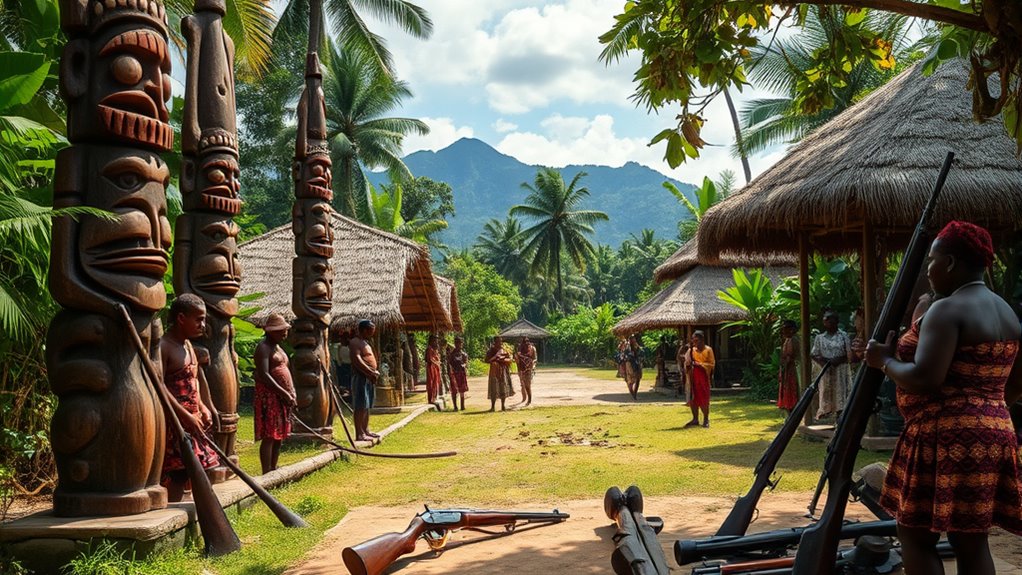
The colonial era dramatically reshaped Melanesia’s social, political, and economic landscape. You see, European powers, like Britain, Germany, and Australia, claimed territories, disrupting traditional systems. They introduced new technologies, governance, and resource extraction methods, often ignoring local customs. Colonial authorities enforced borders, sometimes splitting or merging communities, leading to lasting tensions. Economically, they prioritized resource exports like sandalwood and minerals, which altered local economies. The table below highlights key impacts:
| Impact | Description | Consequence |
|---|---|---|
| Cultural Disruption | Suppressed indigenous practices | Loss of traditions |
| Political Changes | Imposed new leadership structures | Weakening of traditional authority |
| Economic Shift | Resource extraction and trade | Dependency on colonial exports |
| Social Impact | Introduction of Western diseases | Population decline |
| Infrastructure | Roads, ports, and colonial buildings | Limited local development |
Contemporary Melanesian Society and Challenges

Today, Melanesian societies are maneuvering the lasting effects of their colonial past while endeavoring to preserve their unique cultural identities. You see communities balancing traditional practices with modern influences, often facing economic challenges and political instability. Many nations struggle with development, limited resources, and reliance on foreign aid, which can threaten local customs. You might notice younger generations embracing global trends, risking the erosion of traditional languages, art, and rituals. At the same time, efforts are underway to revive and sustain cultural heritage through festivals, education, and local initiatives. Environmental issues, such as climate change and deforestation, pose urgent threats. Additionally, the adoption of unique and wicked planters and innovative gardening tools reflects a broader tendency toward blending traditional and modern practices in daily life. Despite these challenges, Melanesians remain resilient, working to maintain their diverse identities amidst ongoing social and economic transformations.
Artistic Expressions and Ritual Significance
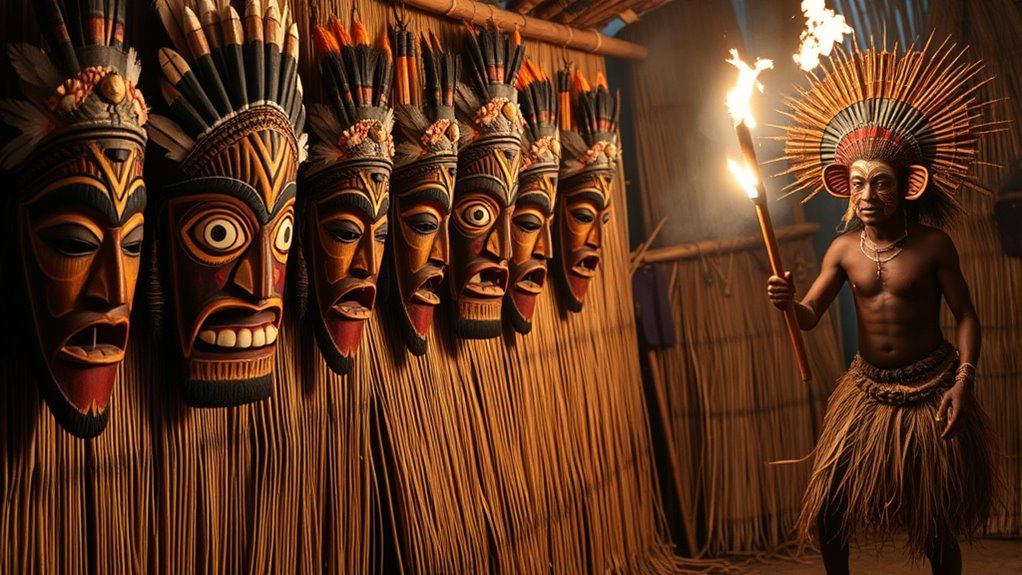
Artistic expressions in Melanesia serve as essential expressions of cultural identity and spiritual beliefs. You observe that carvings like the *malangan* tell stories, honor ancestors, and mark important events. Body decorations, including paint and tattoos, are integral to rituals, symbolizing social status or spiritual protection. Ritual objects, such as masks and sculptures, are crafted with intricate detail, often believed to house spirits or serve as conduits to the divine. These artworks are not merely aesthetic; they carry deep spiritual and communal significance, connecting individuals to their ancestors and the natural world. Trade networks historically facilitated the exchange of artistic ideas, enriching cultural practices. Despite external influences, these traditions remain crucial, preserving Melanesian spiritual life and reinforcing shared identity through visual and material culture.
The Evolving Identity and Heritage of Melanesia
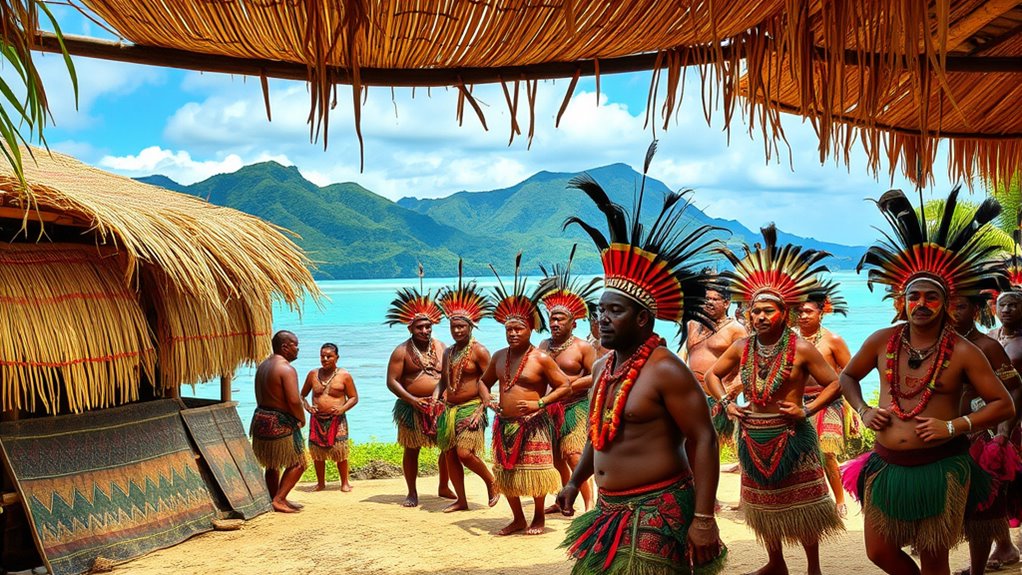
As Melanesia moves through a dynamic process of change, its cultural identity continually adapts while still honoring deep-rooted traditions. You’ll see how the region’s heritage evolves through interactions with modern influences, yet retains its unique spirit.
A rich tradition of craftsmanship continues to thrive, blending indigenous techniques with contemporary art forms.
You recognize how art and rituals remain essential, serving as links to ancestral roots amid modernization.
This ongoing transformation reflects resilience and adaptability. Melanesia’s identity is a living mosaic, shaped by history, external influences, and the community’s desire to preserve its heritage for future generations.
Frequently Asked Questions
How Have Melanesian Languages Evolved Over Thousands of Years?
You see that Melanesian languages have evolved through a complex mix of migration, trade, and contact with outsiders. Over thousands of years, these languages diversified into over 1,293 dialects, with some merging or disappearing due to social changes. You’ll find that Austronesian influences blended with Papuan roots, creating unique linguistic patterns. Continuous interaction and adaptation have shaped their evolution, reflecting the region’s rich cultural history and diverse communities.
What Are the Key Differences Between Papuan and Austronesian Cultures?
You’ll find that Papuan and Austronesian cultures are worlds apart, like night and day. Papuan societies tend to be small, with complex kinship systems, spiritual rituals, and intricate art focused on ancestors. In contrast, Austronesian cultures emphasize seafaring, trade, and linguistic diversity. They often have more structured leadership and shared maritime traditions. Both enrich Melanesia’s cultural tapestry, but their origins and social practices highlight their distinct identities.
How Did Traditional Melanesian Societies Organize Their Leadership Structures?
You’ll find that traditional Melanesian societies often organize leadership through kinship ties and clan systems rather than centralized authority. Chiefs or elders lead by consensus, relying on respect and social roles rather than formal titles. Leadership is usually based on lineage, age, or wisdom, and decisions are made collectively. This decentralized structure emphasizes community participation, maintaining social harmony and ensuring everyone’s voice is valued in decision-making.
In What Ways Has Modern Technology Influenced Melanesian Art and Rituals?
Modern technology acts like a bridge, transforming Melanesian art and rituals in exciting ways. You can now see intricate carvings and rituals shared instantly across the globe through social media, expanding their reach and influence. Digital tools help preserve traditional practices and create new art forms, blending old and new. This fusion enriches Melanesian culture, allowing you to experience its vibrant spirit, no matter where you are.
What Role Do Spiritual Beliefs Play in Contemporary Melanesian Communities?
You find that spiritual beliefs remain central in contemporary Melanesian communities. They guide daily life, rituals, and art, connecting people with ancestors and spirits. You see practices like ceremonies and carvings that honor spiritual beings, preserving cultural identity. These beliefs also influence social norms and community cohesion, helping you understand how tradition continues to shape modern life despite external influences and changing times.
Conclusion
You might think Melanesia’s history is just about ancient tribes and colonial struggles, but it’s so much more. Its rich cultural diversity, vibrant art, and resilient communities show a dynamic story of adaptation and identity. While challenges remain, Melanesia’s heritage continues to thrive, proving that even amid change, its unique traditions and spirit endure. Embrace this fascinating history—you’ll see how it shapes the vibrant future of the region today.